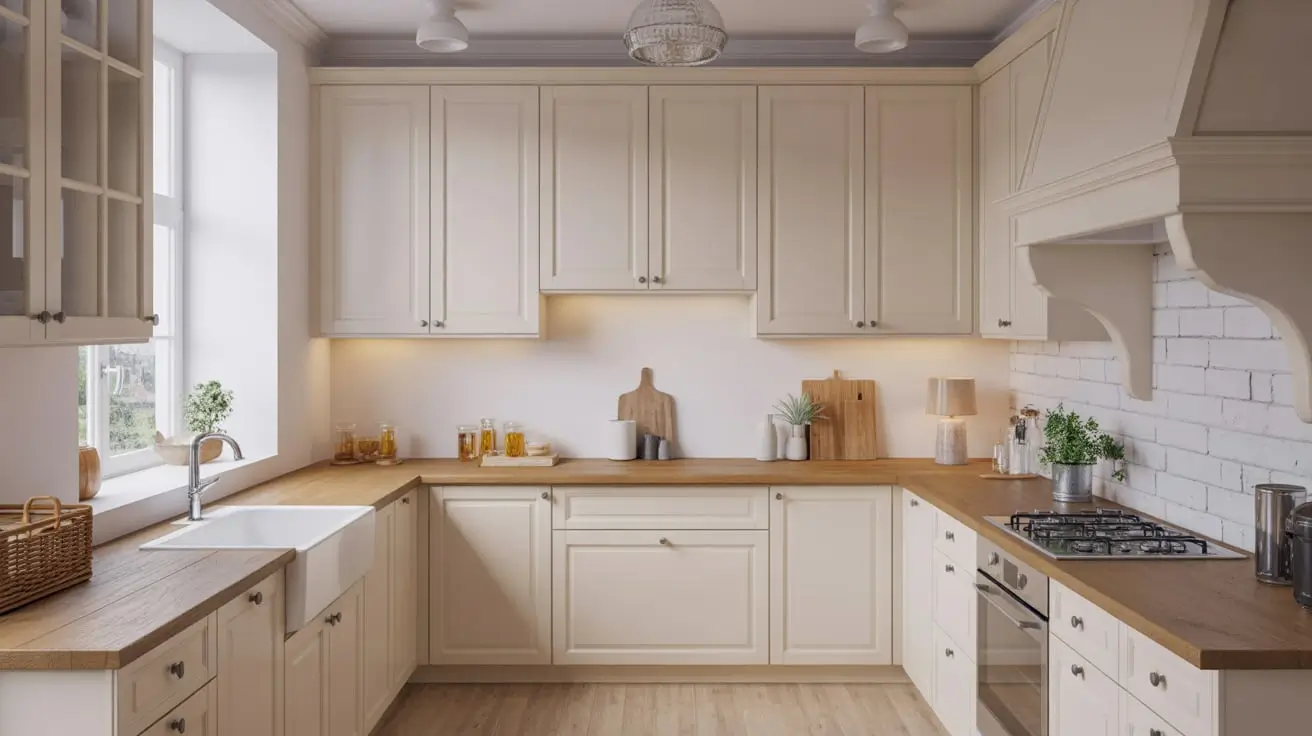
15 Elegant White and Wood Kitchen Ideas for Stylish Spaces

You know that feeling when you walk into a kitchen and it just feels right? The kind of space that makes you want to brew coffee and actually enjoy doing the dishes? (Okay, maybe not the dishes part, but you get the idea.) White and wood kitchens create that exact vibe—they’re the design equivalent of a warm hug with a perfectly chilled glass of wine.
I’ve spent way too many hours scrolling through kitchen inspiration, trust me. What I’ve learned is that white and wood combinations never get old. They work in tiny apartments, sprawling farmhouses, and everything in between. The contrast between crisp white surfaces and warm wooden tones creates balance that somehow feels both modern and timeless.
Let me walk you through 15 killer ways to nail this look in your own space. Whether you’re planning a full renovation or just dreaming about one, these ideas will give you serious kitchen envy.
1. Scandinavian White and Light Oak Kitchen
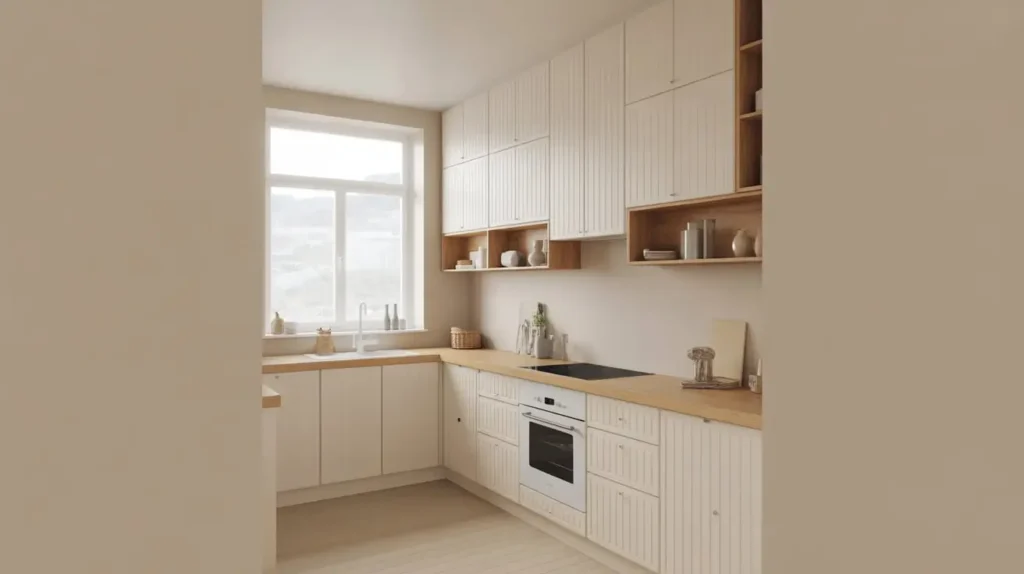
Scandinavian design basically invented the white and wood kitchen game, and honestly? They nailed it from the start.
This style pairs bright white cabinets with light oak or birch wood to create that signature Nordic brightness. The wood tones stay pale—think honey or natural blonde finishes that reflect light rather than absorb it. You’ll see clean lines everywhere, minimal hardware (or none at all), and an obsession with functionality that borders on poetic.
What makes this approach work so well is the intentional simplicity. Scandinavian kitchens don’t hide behind ornate details or flashy features. They let the materials speak for themselves. The light oak brings just enough warmth to prevent the white from feeling sterile or cold.
Here’s what you typically find in this setup:
- Flat-panel cabinets in matte or semi-gloss white
- Light oak flooring or wood accents
- Minimal metal hardware in brushed nickel or completely integrated handles
- Open shelving to display everyday items
- Pendant lighting in simple geometric shapes
I love how this style makes small kitchens feel twice their actual size. The light color palette bounces natural light around like nobody’s business. Plus, it’s incredibly forgiving when it comes to clutter—though the Scandinavian aesthetic will make you want to keep things tidy. Funny how that works, right?
2. Modern White Cabinets with Walnut Accents
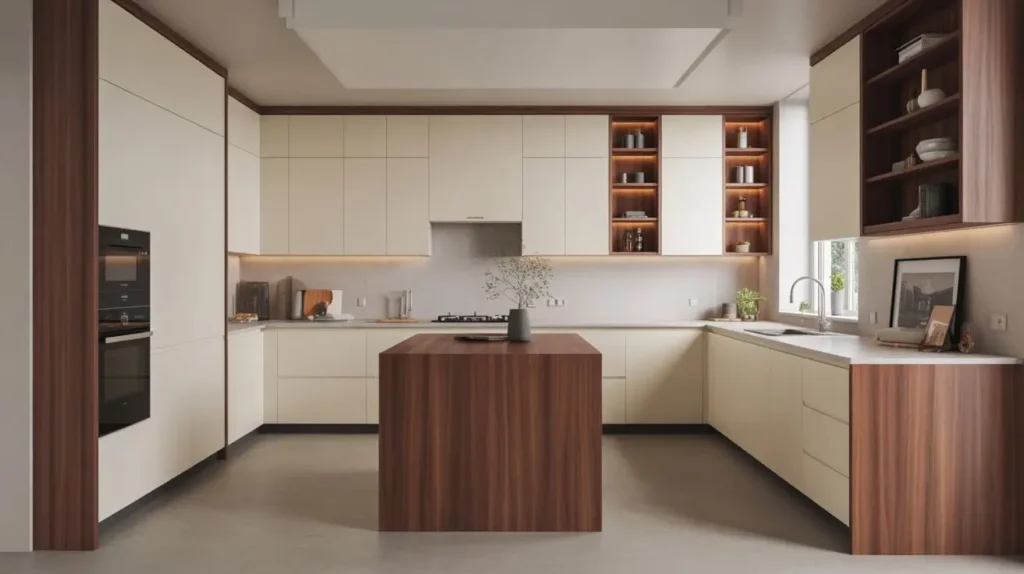
Want drama? Pair your white cabinets with rich walnut wood and watch what happens.
This combination brings serious sophistication to your kitchen. The deep chocolate tones of walnut create a striking contrast against pure white surfaces. You can introduce walnut through various elements—floating shelves, a statement island, countertop edges, or even just as accent panels on select cabinet doors.
The beauty of walnut lies in its natural grain patterns. Each piece tells its own story with those flowing lines and color variations. When you place it against white, those details become focal points rather than background noise.
This approach works particularly well in modern and contemporary kitchens where you want that “wow” factor. The high contrast between light and dark creates visual interest without needing busy patterns or excessive decoration.
Key elements to consider:
- Waterfall-edge walnut islands that make a statement
- Walnut open shelving against white subway tiles
- Walnut cabinet toe kicks for subtle sophistication
- Mixed cabinet fronts with walnut lowers and white uppers
- Walnut cutting boards and accessories that tie the look together
Fair warning though—walnut isn’t cheap. But IMO, if you’re going to splurge on one element in your kitchen, this is a solid choice. The investment pays off every single time you walk into the room and feel like you’re in a design magazine.
3. Minimal White Kitchen with Wood Island
Sometimes less really is more, you know?
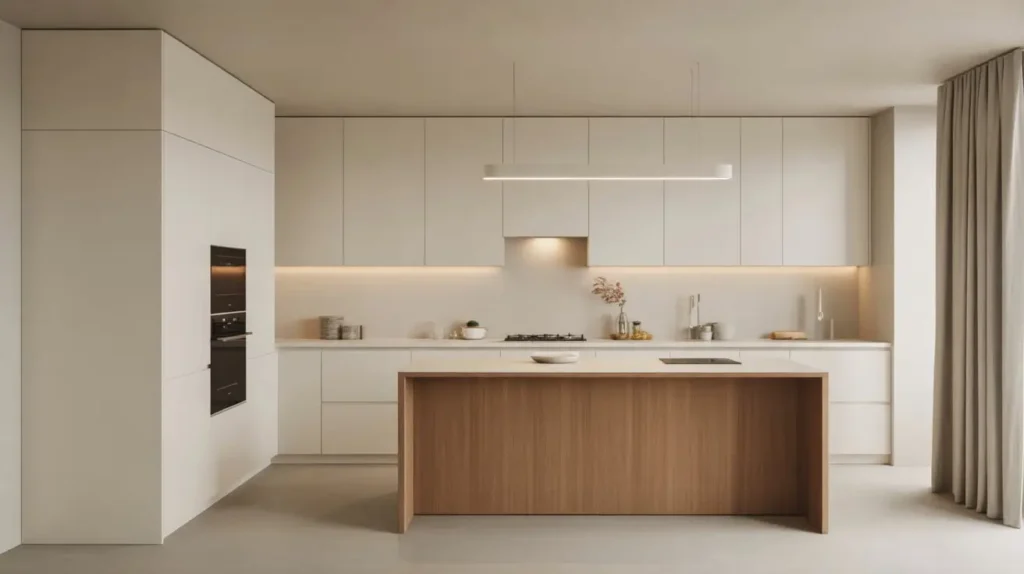
The minimal white kitchen takes restraint to a beautiful extreme. Picture this: sleek white cabinets covering most of your kitchen, and then one gorgeous wood island standing proud in the center like a piece of functional art.
This design strategy creates a clear focal point. Your eye immediately goes to that island because it’s the only element breaking up all that white. You can use any wood tone here—light oak for a softer look, walnut for drama, or even reclaimed wood for character.
The island becomes your kitchen’s personality. Everything else stays quiet and lets it shine. I’ve seen this work incredibly well in open-plan spaces where the kitchen flows into living areas. The wood island acts as a subtle divider without blocking sightlines or making the space feel chopped up.
What to think about:
- Handleless white cabinets for maximum minimalism
- Integrated appliances that disappear into white cabinetry
- Waterfall countertop on the island in matching wood
- Hidden storage to maintain clean lines
- Simple backsplash in white or neutral tones
The trick here is committing fully to the minimal aesthetic. You can’t go halfway. Either you embrace the clean simplicity or you don’t—there’s no middle ground that works as well.
4. White and Wood Japandi Kitchen Style
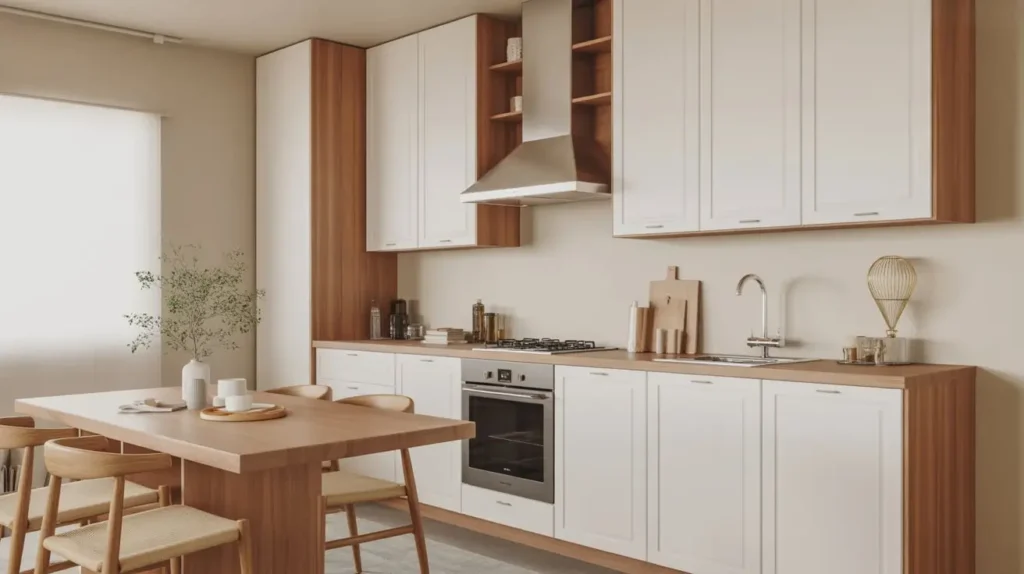
Japandi combines Japanese and Scandinavian design principles, and the result is basically chef’s kiss 🙂
This hybrid style takes the best from both worlds. You get the warm minimalism of Scandinavian design mixed with the mindful simplicity of Japanese aesthetics. Think natural materials, muted colors, and a zen-like calm that makes your kitchen feel like a meditation space that happens to have a really nice stove.
The color palette stays neutral and earthy. Whites are often softer—cream or off-white rather than stark white. Wood tones lean toward medium shades with visible grain. Everything serves a purpose, and that purpose better be beautiful and functional.
Japandi kitchens emphasize craftsmanship and quality over quantity. You’ll see handmade ceramics, carefully chosen textiles, and wood that’s been treated with respect and attention. The vibe is quiet luxury—nothing screams for attention, but everything whispers good taste.
Essential Japandi elements:
- Shoji-inspired cabinet details or sliding panels
- Medium-toned wood in oak or ash
- Matte finishes on both white surfaces and wood
- Natural fiber accents like woven baskets or linen textiles
- Low-profile hardware that barely registers visually
- Organic shapes in lighting and accessories
This style requires discipline. You can’t just throw things together and call it Japandi. Each piece needs to earn its place. But when you nail it? Your kitchen becomes the most peaceful room in your house.
Also Read: 15 Stunning Kitchen Backsplash with White Cabinets Ideas
5. Bright White Kitchen with Natural Wood Beams
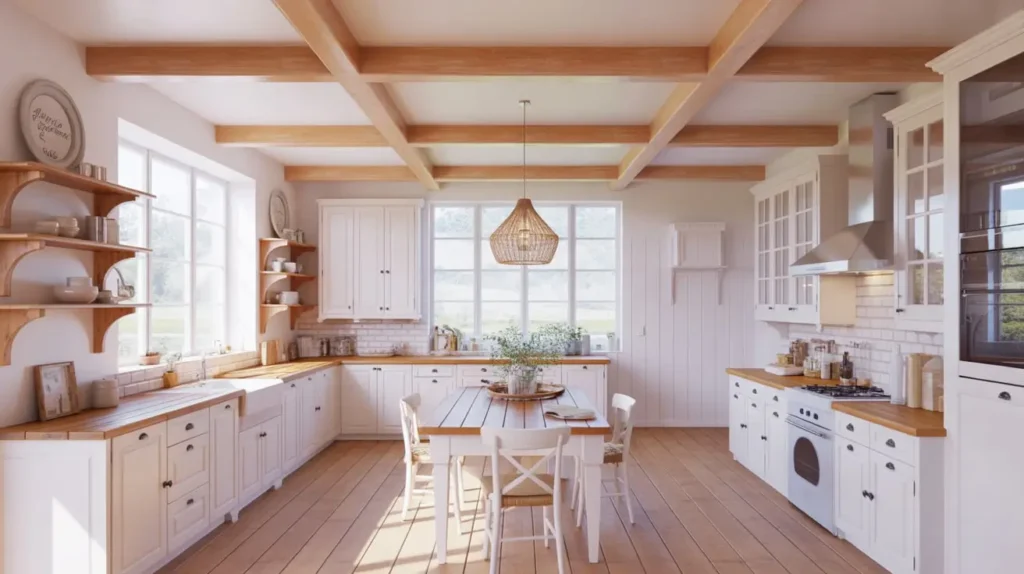
Want to add architectural interest without a massive renovation? Exposed wood beams might be your answer.
Picture a bright, airy kitchen with white everything—cabinets, walls, countertops, the works. Now add rustic wood beams across the ceiling. Suddenly you’ve got depth, character, and a focal point that draws the eye upward. This trick makes ceilings feel higher while adding warmth that prevents all that white from going sterile.
The beams can be authentic structural elements or decorative additions (no judgment here—faux beams have come a long way). Either way, they introduce a horizontal line pattern that breaks up vertical cabinet runs and creates visual rhythm.
This approach works beautifully in farmhouse kitchens, but don’t sleep on it for modern spaces either. Sleek, clean-lined beams in a darker wood can add sophistication to contemporary white kitchens without feeling country or rustic.
Think about these details:
- Beam color and finish (natural, stained, or painted)
- Spacing and size relative to your kitchen dimensions
- Coordinating wood tones with other kitchen elements like islands or shelving
- Lighting integration (you can run pendant lights from beams)
- Ceiling height requirements (you need adequate clearance)
I’ve seen this transformation in person, and it’s wild how much character beams add. They give newer homes instant history and make existing architectural features feel intentional rather than leftover.
6. White Flat-Panel Cabinets with Wood Backsplash
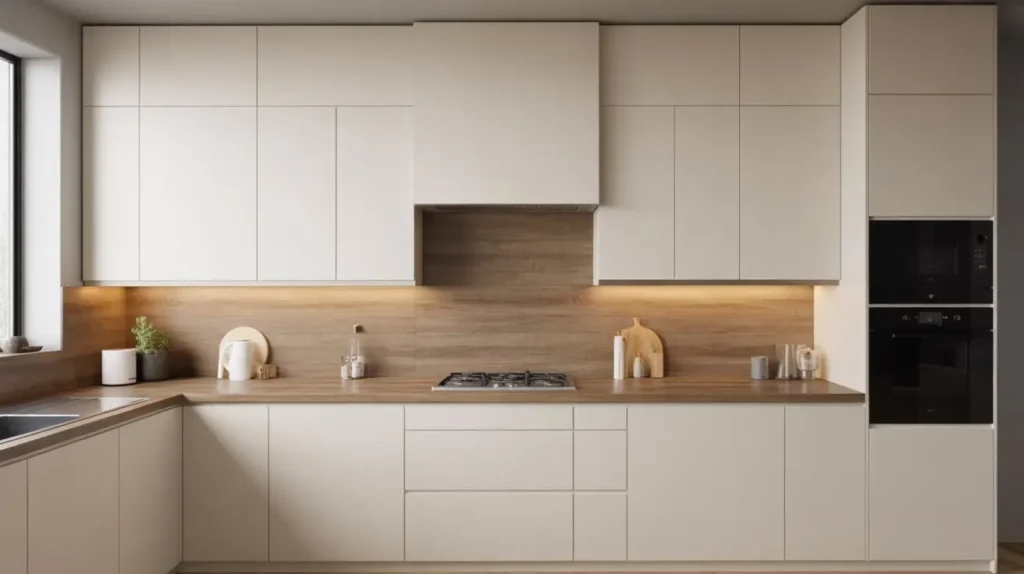
Who says your backsplash has to be tile? Break the rules a little.
Wood backsplashes are having a moment, and for good reason. They add unexpected texture and warmth right at eye level where you’ll actually notice and appreciate it. Against white flat-panel cabinets, a wood backsplash creates a feature wall effect that’s both practical and gorgeous.
You’ll want to seal that wood properly (obviously—steam and water aren’t wood’s best friends). But with the right treatment, wood backsplashes hold up surprisingly well. You can go with horizontal planks for a shiplap vibe, vertical slats for height emphasis, or even herringbone patterns for something more dynamic.
The wood grain adds organic movement to what might otherwise feel like a very geometric, rigid kitchen. It’s that imperfect, natural element that makes spaces feel lived-in and welcoming rather than showroom-sterile.
Your wood backsplash options:
- Reclaimed wood for rustic character and sustainability
- Tongue and groove planks in oak or maple
- Wood-look tile if you want the aesthetic without the maintenance concerns
- Slatted wood panels with shadow gaps for dimension
- Stained or natural finish depending on your overall color scheme
Just keep the wood backsplash contained to areas that won’t get absolutely destroyed by water. Maybe skip it directly behind the sink? Use your common sense here, folks.
7. Cozy White Kitchen with Warm Wood Open Shelves
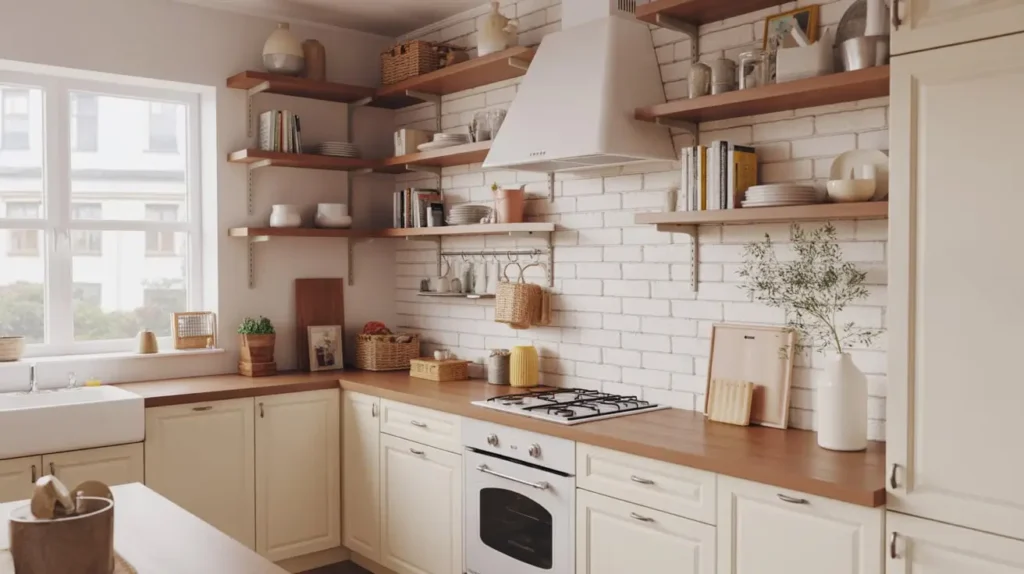
Open shelving—you either love it or you’re lying to yourself about your organizational skills.
But seriously, open wood shelves against white walls or cabinets create such an inviting, accessible feel. You replace some upper cabinets with floating wood shelves, and suddenly your kitchen feels less like a closed-off workspace and more like a cozy gathering spot.
The wood brings warmth right where you need it most—at eye level. White cabinets below keep things bright and clean, while those wood shelves add personality and a place to display your actually-nice dishes (you know, the ones you got as wedding gifts and never use).
This setup works especially well in smaller kitchens. Open shelves don’t have the visual weight of closed cabinets, so they make spaces feel larger and airier. Plus, they practically force you to keep things organized because everything’s on display. Accountability through design—genius or evil? You decide.
What makes this work:
- Thick wood shelves (2-3 inches) for a substantial look
- Matching or coordinating wood tone with other kitchen elements
- Strategic placement (not every wall needs open shelving)
- Curated display items that look cohesive
- Proper support brackets that can handle the weight
- Easy-to-reach height for actual functionality
FYI, you’ll need to dust these more often than closed cabinets. That’s just physics. But the visual payoff usually outweighs the extra maintenance for most people.
8. Luxury White Kitchen with Dark Wood Contrast
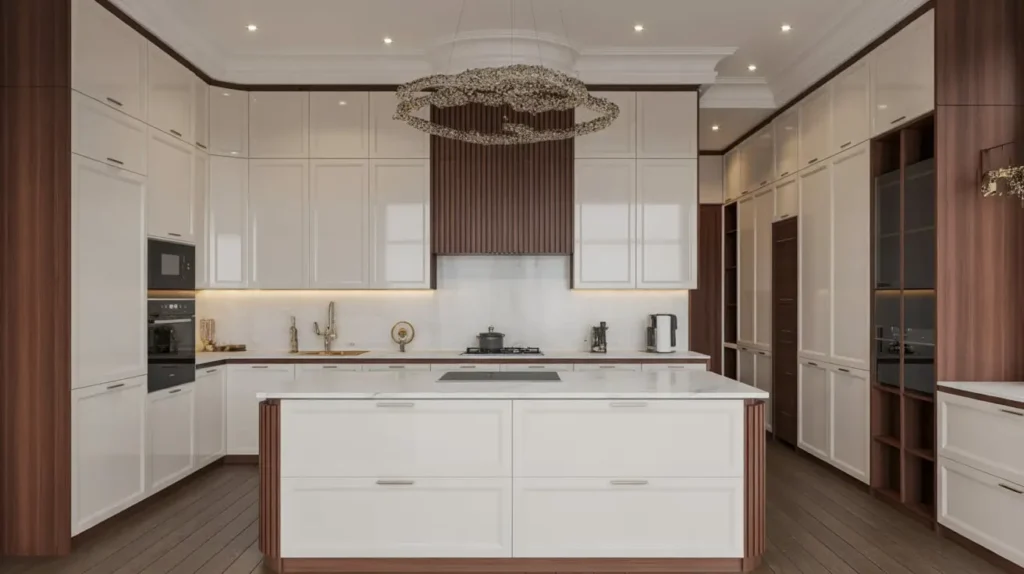
Ready to go full luxury? Dark wood in a white kitchen screams high-end design.
We’re talking espresso, ebony, or black-stained wood paired with pristine white cabinetry. This isn’t subtle—it’s bold, dramatic, and unapologetically elegant. The extreme contrast creates a tuxedo effect that feels formal and sophisticated.
This combination works best in larger kitchens with plenty of natural light. Dark wood can make small spaces feel cramped, but give it room to breathe and it becomes absolutely stunning. You might use dark wood for a massive island, floor-to-ceiling pantry doors, or even a full wall of wood-fronted cabinets opposite your white ones.
The key to nailing luxury is in the details. You need quality materials, expert craftsmanship, and thoughtful finishing touches. Cheap dark wood looks cheap. But the good stuff? It elevates everything around it.
Luxury elements to consider:
- Book-matched wood grain for dramatic visual impact
- High-gloss finishes on both white and dark surfaces
- Premium hardware in polished metals
- Integrated lighting that highlights the wood grain
- Marble or quartz countertops in white with subtle veining
- Professional-grade appliances that match the overall quality
This isn’t the budget-friendly option on this list, let’s be real. But if you’ve got the resources and want a kitchen that makes guests audibly gasp, dark wood contrast delivers every single time.
9. Small White and Wood Kitchen with Airy Layout
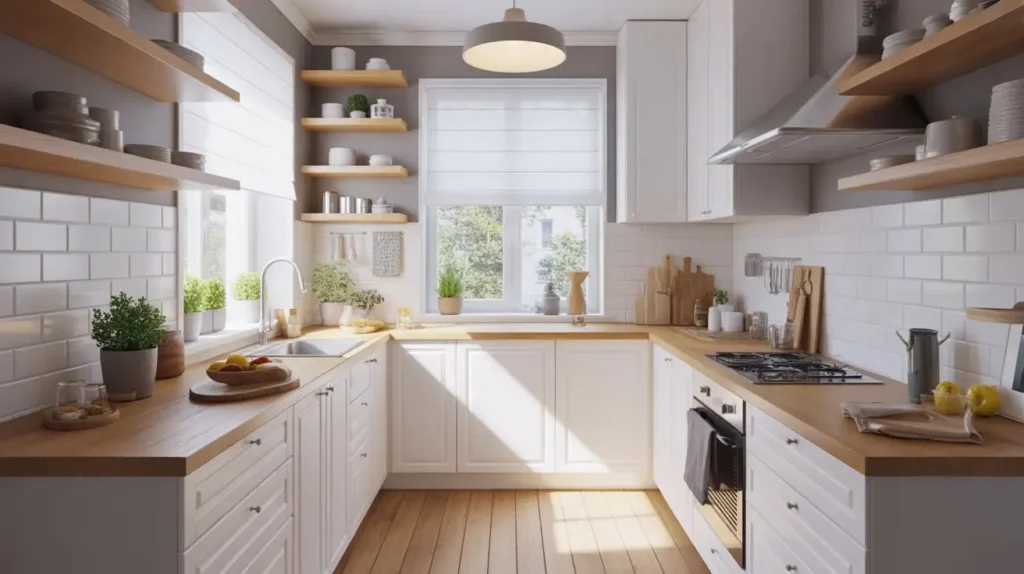
Small kitchen? Join the club—most of us are working with less space than we’d like.
The white and wood combination is actually your secret weapon for making compact kitchens feel bigger. White cabinets reflect light and create the illusion of more space, while strategic wood accents add warmth without visual heaviness.
The trick is keeping the wood relatively light in tone and using it sparingly. Maybe you do wood countertops but keep cabinets white. Or perhaps wood flooring with white everything else. You’re creating breathing room while still getting that beautiful material mix.
Layout matters tremendously in small spaces. An airy, open layout means removing upper cabinets where possible, choosing shallow-depth cabinets, and maximizing every inch of vertical space. Glass cabinet doors (with wood frames, naturally) can also help spaces feel less closed-in.
Small kitchen strategies:
- Light wood tones (oak, maple, birch) over dark ones
- Minimal upper cabinets to reduce visual clutter
- Reflective white surfaces on walls, cabinets, and counters
- Open shelving in wood for frequently used items
- Compact wood elements like a small breakfast bar or butcher block section
- Smart storage solutions that maximize every inch
Size is just a number anyway, right? (Okay, that’s only partially true, but good design can seriously punch above its square footage.)
10. White Shaker Kitchen with Natural Wood Countertops
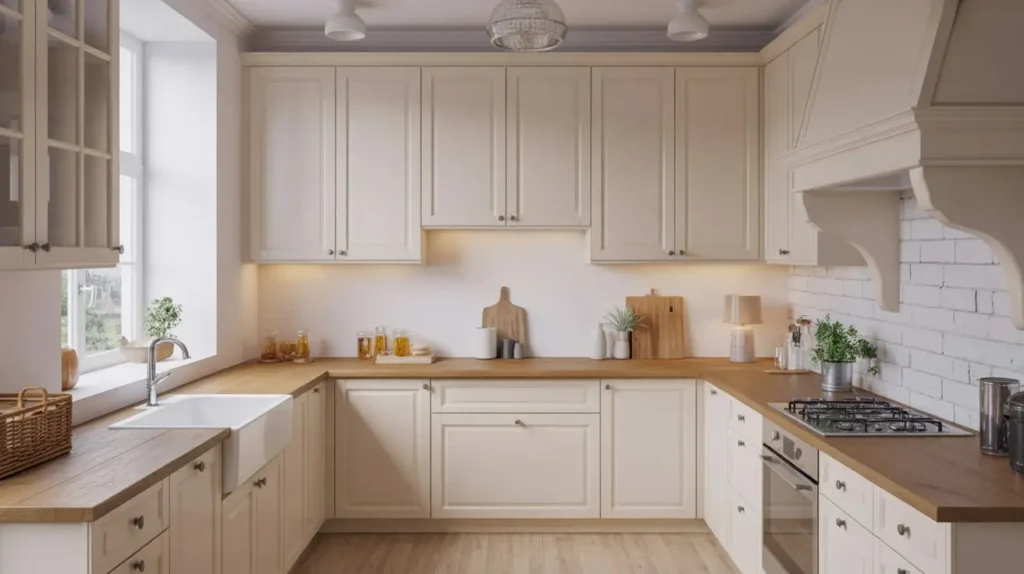
Shaker cabinets are like the little black dress of kitchen design—classic, versatile, and somehow always appropriate.
White Shaker cabinets bring traditional charm with their recessed panel design and clean lines. Pair them with natural wood countertops, and you’ve got a kitchen that feels both timeless and warm. The wood counters soften the formality of Shaker styling while adding organic texture.
Wood countertops aren’t just beautiful—they’re incredibly functional. They work as built-in cutting boards, develop a lovely patina over time, and can be sanded and refinished if they get damaged. Sure, they need more maintenance than granite or quartz, but that’s part of their charm. They age rather than deteriorate.
The Shaker style’s simplicity lets the wood grain shine. You’re not competing with ornate cabinet details or busy hardware. The recessed panels create subtle shadows and depth, while the wood counters provide the visual interest and warmth.
Considerations for this combo:
- Wood species (butcher block maple, walnut, oak, or teak)
- Finish type (oil, varnish, or specialized wood counter sealant)
- Maintenance commitment (regular oiling and sealing)
- Edge profile (square, rounded, or waterfall)
- Coordination with other wood in the kitchen
- Hardware finish that complements both white and wood
This pairing works in almost any home style—farmhouse, transitional, traditional, or even leaning modern. It’s that versatile.
Also Read: 15 Amazing White Oak Kitchen Cabinets and Dream Kitchens
11. Contemporary White Kitchen with Wood Slat Details
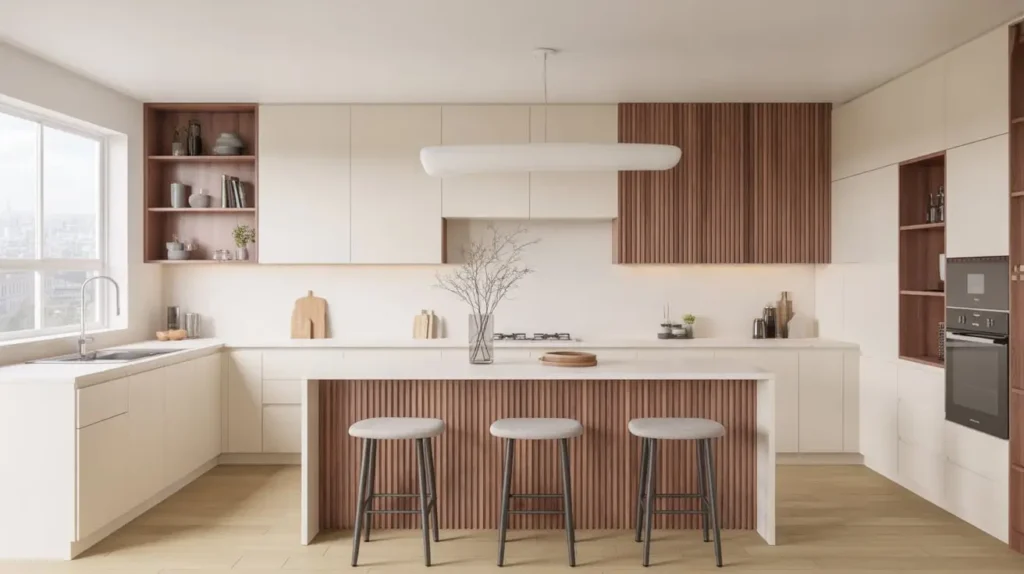
Wood slats add dimension and contemporary flair that flat surfaces just can’t match.
Picture vertical or horizontal wood slats creating textured panels on your kitchen island, a feature wall, or even ceiling details. Against a backdrop of sleek white cabinets, these slatted wood elements introduce shadow play and architectural interest.
The gaps between slats create depth and movement. Light filters through, creating subtle shadows that change throughout the day. It’s dynamic design that feels alive rather than static.
This technique is very on-trend right now in contemporary design. You’ll see it in high-end renovations and new builds that want that modern-organic aesthetic. The slats can hide practical elements too—like LED strip lighting, speakers, or even ventilation.
Wood slat applications:
- Island base panels with vertical slats
- Accent walls behind open shelving
- Range hood covering in slatted wood
- Ceiling details creating visual interest overhead
- Pantry door fronts for texture and semi-concealment
- Breakfast bar dividers separating kitchen from living spaces
The spacing and width of your slats completely changes the vibe. Wide slats with narrow gaps feel more substantial and rustic. Narrow slats with wider gaps lean more delicate and modern. Play around with proportions before committing.
12. White and Wood Kitchen with Integrated Breakfast Bar
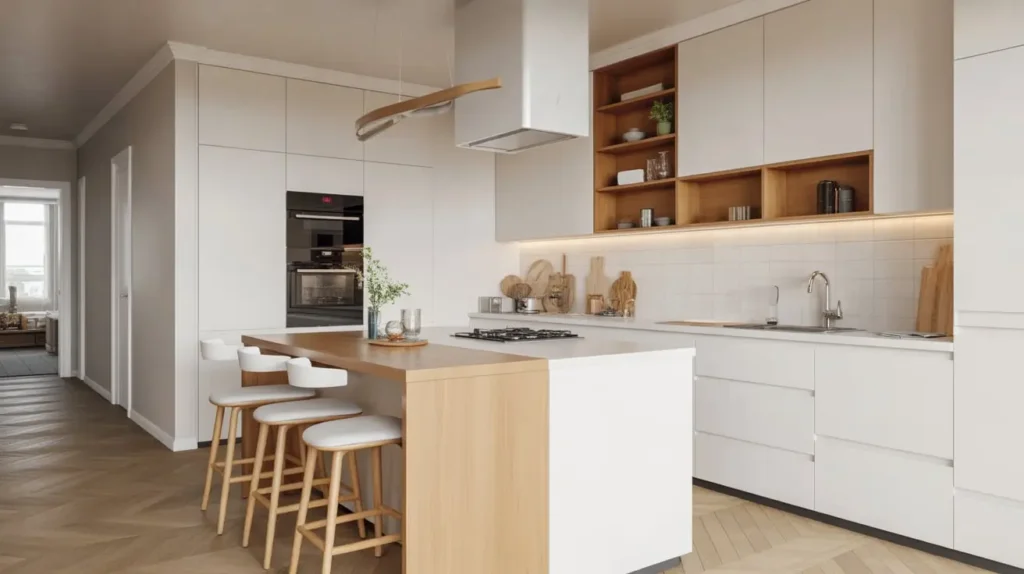
Breakfast bars are clutch for modern living—where else are you actually going to eat your cereal while scrolling through your phone?
An integrated breakfast bar seamlessly extends from your kitchen, creating casual dining space without requiring a separate table. When you build it with wood countertop material and pair it with white cabinets, you get a beautiful transition zone between kitchen and living areas.
The wood on the breakfast bar can match your kitchen island or counters, or it can be a contrasting element all its own. Either way, it defines the eating area while maintaining visual connection to the rest of the kitchen.
This setup is perfect for open-plan living. The breakfast bar acts as a subtle boundary between spaces without blocking sightlines or conversation. You can cook while chatting with family or guests perched at the bar. Revolutionary? No. But incredibly practical and pleasant? Absolutely.
Breakfast bar essentials:
- Proper overhang (12-15 inches for comfortable seating)
- Appropriate height (counter-height or bar-height depending on preference)
- Support brackets or legs if the span is wide
- Coordinating stools that complement the wood and white scheme
- Power outlets for laptops and phone charging (seriously, add these)
- Good lighting overhead for functionality
I’ve spent countless mornings at breakfast bars, and the ones with wood surfaces just feel better. They’re warmer under your arms, they age beautifully, and they make quick meals feel more intentional somehow.
13. Matte White Kitchen with Soft Wood Flooring
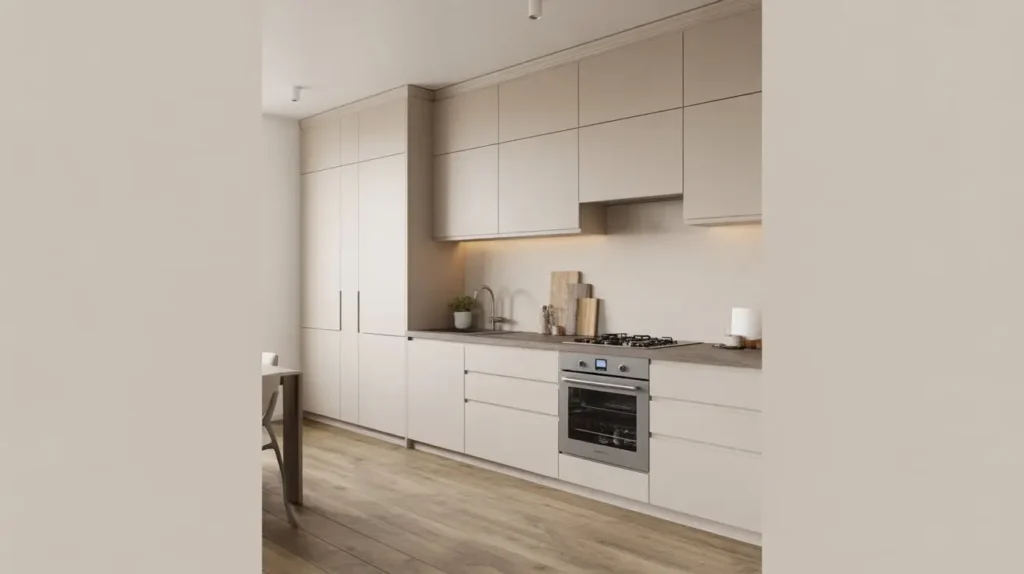
Finishes matter way more than people realize, and matte finishes? They’re having a major moment.
Matte white cabinets create a soft, sophisticated look that feels modern without being cold. The lack of shine makes them incredibly forgiving—fingerprints and smudges basically disappear. Pair these with soft wood flooring in light to medium tones, and you’ve got a kitchen that’s elegant, comfortable, and endlessly livable.
The matte white creates a canvas that lets other elements shine. Your wood flooring becomes more prominent because it’s not competing with glossy reflections. The grain patterns and natural color variations get to be the stars.
Soft wood tones—think white oak, light maple, or ash—complement matte white beautifully. They add warmth without overwhelming the space. The overall effect is calming and cohesive, like everything was designed to work together from the start (which, ideally, it was).
Why this combination works:
- Matte finishes hide imperfections better than gloss
- Soft wood tones feel current and livable
- Low contrast creates a sophisticated, cohesive look
- Easy maintenance (both surfaces are forgiving)
- Versatile backdrop for changing décor and accessories
- Timeless appeal that won’t feel dated in five years
The matte trend isn’t going anywhere, folks. It’s too practical and too beautiful. This is one bandwagon worth jumping on.
14. White Kitchen with Wood-Framed Range Hood
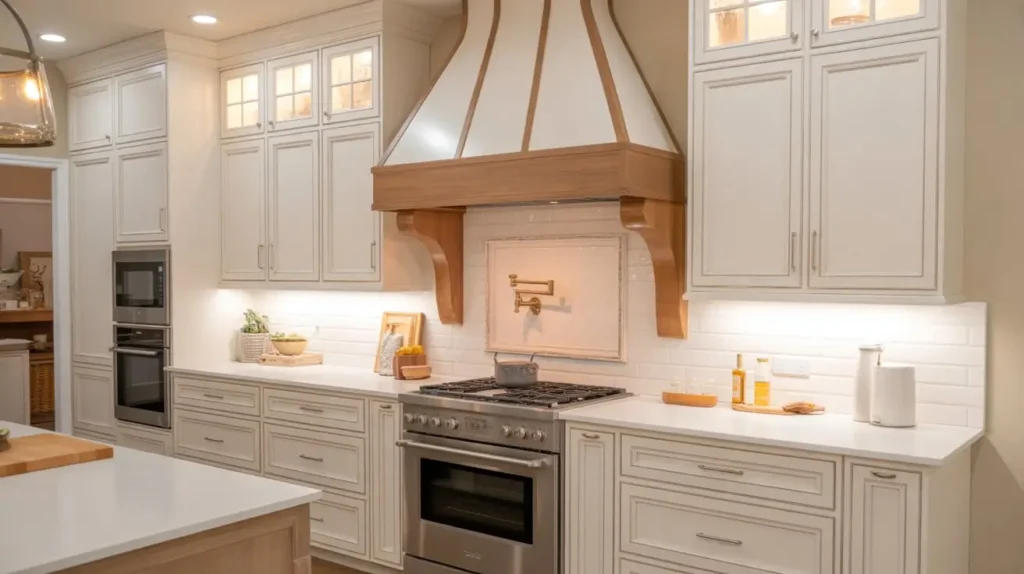
Your range hood doesn’t have to be stainless steel or the same white as your cabinets—it can be a statement piece.
A wood-framed range hood creates an instant focal point in your kitchen. It anchors the cooking zone and adds architectural presence that standard hoods just can’t match. The wood frame can be simple and modern or elaborate and traditional, depending on your overall design direction.
This element works because it breaks up the expanse of white cabinets with something substantial and eye-catching. Ever walked into a kitchen and immediately looked at the range area? That’s the power of a well-designed hood.
You can build the wood frame around a standard insert, making this more achievable than a fully custom hood. The wood can match your island, shelving, or flooring, tying different elements together. Or it can be a contrasting wood tone that stands alone as its own statement.
Range hood considerations:
- Proportions relative to your range (the hood should be at least as wide as your cooktop)
- Wood species and finish that coordinates with your kitchen
- Style (modern, rustic, traditional, or transitional)
- Ventilation requirements (the beauty means nothing if it doesn’t function)
- Hood height (standard is 24-30 inches above the cooktop)
- Maintenance (wood near cooking areas needs proper sealing)
I love how this one element can completely change a kitchen’s character. It’s like giving your kitchen a personality transplant with a single feature.
15. Two-Tone White and Wood Kitchen Design
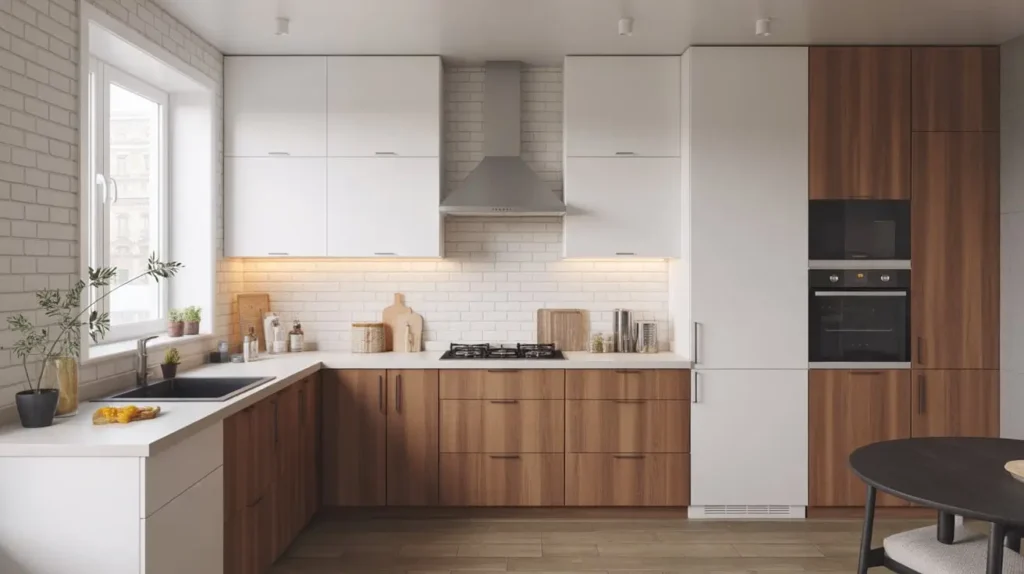
Why choose between white and wood when you can have both—generously?
Two-tone kitchens split the difference, typically putting wood cabinets on the bottom and white cabinets on top, or vice versa. You might also do a wood island with white perimeter cabinets. This approach lets you maximize both materials’ benefits while creating clear visual zones.
The two-tone strategy adds depth and interest to your kitchen. It prevents that sea-of-sameness effect that can happen with all-white or all-wood kitchens. Your eye has somewhere to land, distinct areas to explore, and contrast that creates energy.
The key is choosing wood and white tones that complement rather than clash. If your white has warm undertones, pair it with honey or medium-toned woods. Cool whites look stunning with lighter woods like white oak or birch. And basically any white works with walnut because walnut is just that good :/
Two-tone tactics:
- Wood lowers, white uppers for a grounded look
- White lowers, wood uppers for unexpected drama (less common but striking)
- Wood island, white perimeter for focused contrast
- Alternating cabinets for bold pattern play (advanced move)
- Coordinating hardware and fixtures that work with both colors
- Balanced proportions so neither color overwhelms
This approach gives you the brightness and airiness of white with the warmth and richness of wood. You’re not sacrificing anything—you’re getting the best of both worlds.
Bringing It All Together
Look, I could keep going because white and wood kitchens offer basically infinite possibilities. But these 15 ideas give you a solid foundation to work from, whether you’re planning a gut renovation or just refreshing your current space.
What makes this combination so enduring? White and wood balance each other perfectly. White brings brightness, cleanliness, and spaciousness. Wood adds warmth, texture, and that organic element that makes spaces feel human and welcoming. Together, they create kitchens that function beautifully while looking effortlessly stylish.
The specific approach you choose depends on your home’s architecture, your personal style, and your budget. Maybe you go full Scandinavian with light oak and bright white. Perhaps you lean luxurious with dark walnut and pristine white lacquer. Or you might mix and match elements from different ideas here to create something entirely your own.
The beauty of white and wood is its flexibility. You can go minimal or maximal, traditional or contemporary, budget-friendly or high-end. The material combination stays consistent while the expression changes dramatically based on how you use it.
So whether you’re sketching out your dream kitchen or actively choosing cabinet samples, remember this: white and wood has worked for decades and will keep working for decades more. It’s not a trend that’ll look dated in five years—it’s a classic combination that adapts to whatever style surrounds it.
Now stop reading and start planning. Your dream white and wood kitchen isn’t going to design itself. And trust me, once you nail this look, you’ll actually want to spend time in your kitchen.