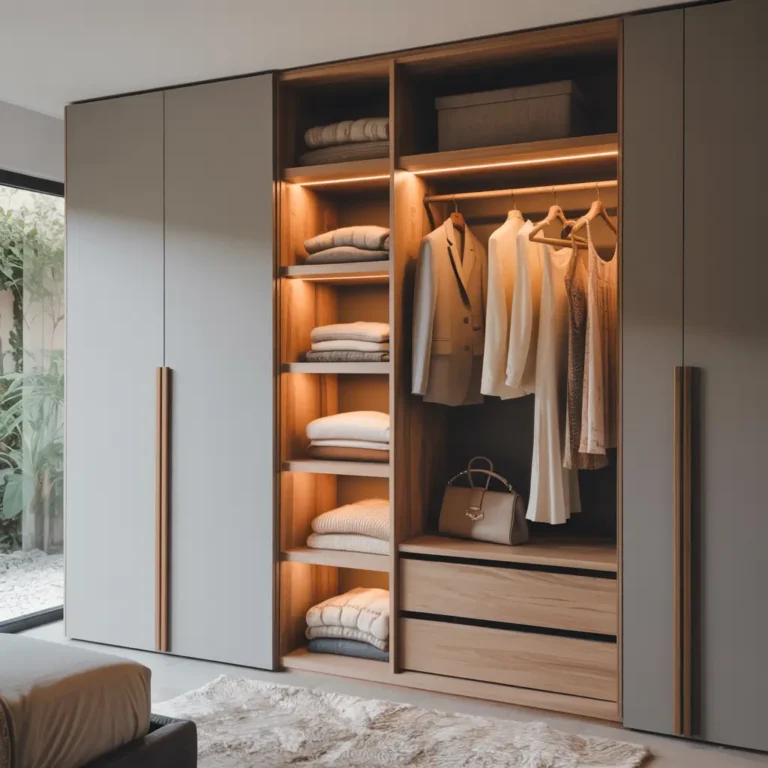
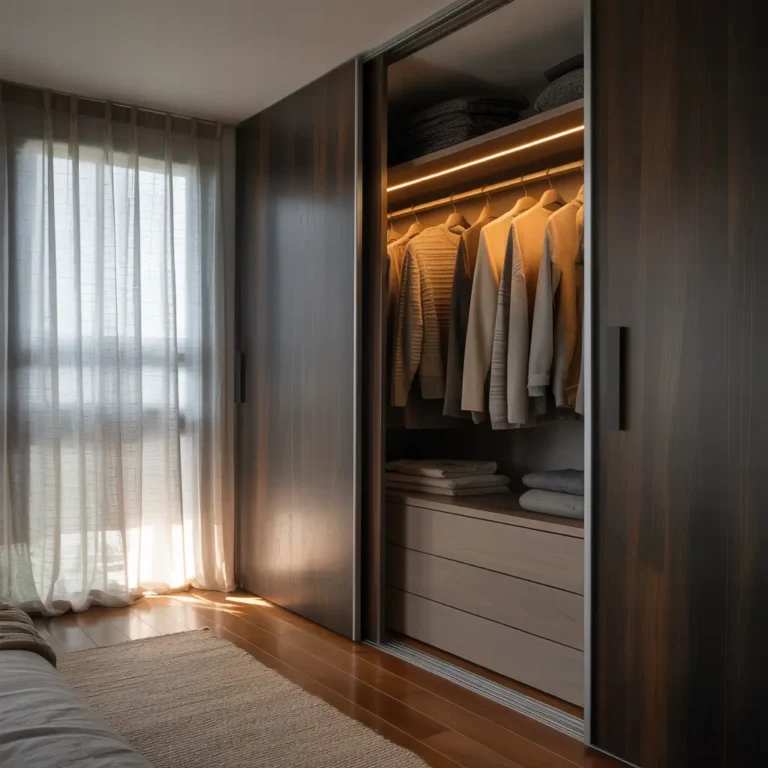
15 Creative Wardrobe Shutter Design Chic Inspirations

Let’s be real for a second. How many times have you stared at your wardrobe and thought, “This thing looks like it belongs in my grandmother’s guest room”? Yeah, me too. We spend thousands on the perfect mattress, obsess over kitchen countertops, and then completely phone it in when it comes to the giant furniture piece that dominates our bedroom. It makes zero sense.
Your wardrobe shutters aren’t just doors. They’re the face of your most personal space. Every morning, those shutters greet you before you’ve had your coffee. Every night, they send you off to sleep. So why settle for boring?
I’ve spent way too many weekends wandering through furniture showrooms, scrolling Pinterest until 2 AM, and interrogating interior designer friends at parties (sorry, Priya). What I’ve learned? The right shutter design transforms not just your storage, but your entire room’s vibe. And no, you don’t need a celebrity budget to pull it off.
So grab your favorite beverage. We’re about to explore 15 wardrobe shutter designs that actually deserve your attention. No fluff, no generic advice—just real inspiration you can use.
High Gloss Acrylic Shutter Design
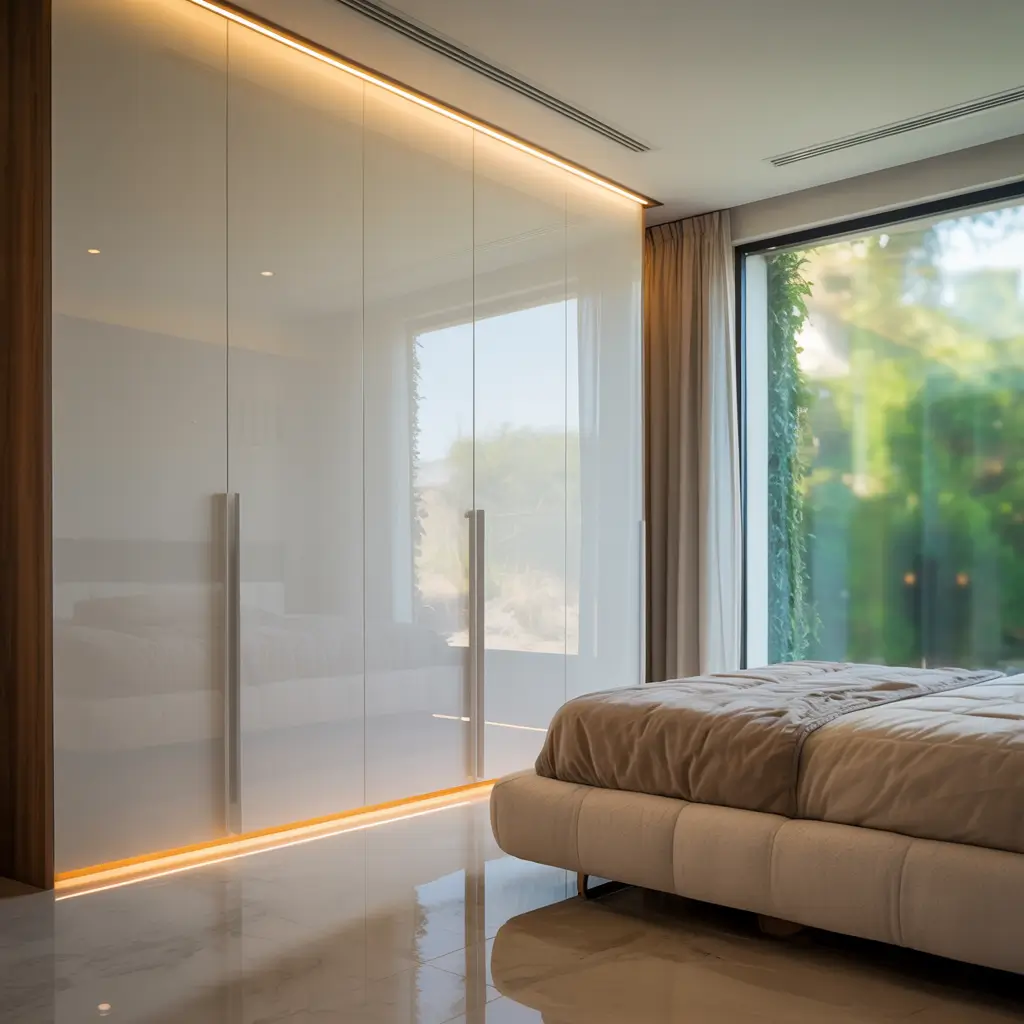
Remember when glossy finishes felt aggressively 2000s? Like something from a flashy music video? Well, they’ve evolved. High gloss acrylic shutters have made a serious comeback, and honestly? I’m here for it.
Why Gloss Works (When It Works)
Here’s the thing about high gloss acrylic—it reflects light like nobody’s business. Got a cramped bedroom with one sad window? These shutters bounce whatever natural light you’ve got around the room, making everything feel airier. It’s basically optical illusion magic.
But—and this matters—gloss shows everything. Fingerprints, dust, that mysterious smudge from who-knows-what. I learned this the hard way with my first glossy kitchen cabinets. Beautiful? Absolutely. High maintenance? You bet.
Pro tip: Choose high gloss acrylic if you love that sleek, modern aesthetic and don’t mind a quick wipe-down now and then. The color payoff is incredible—deep blacks look almost liquid, and bold colors pop with intensity you can’t get from other finishes.
Best Spaces for Gloss
- Small bedrooms needing visual expansion
- Modern or contemporary interiors with clean lines
- Rooms with statement lighting that can play off the reflective surface
Matte Finish Minimal Panel Shutters
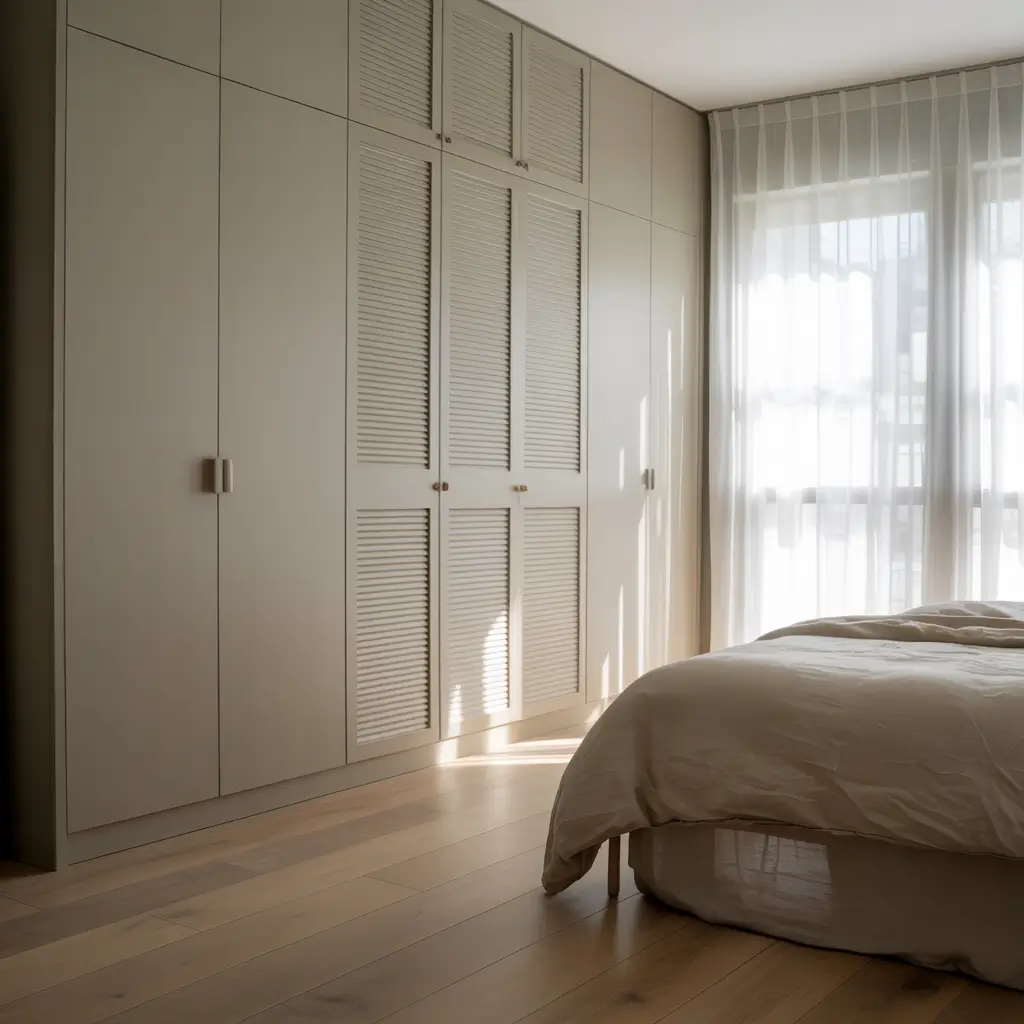
Okay, so gloss isn’t your thing. I get it. Some of us prefer our furniture to not double as a mirror. Enter matte finish minimal panels—the introvert’s dream shutter.
The Quiet Confidence of Matte
There’s something almost rebellious about matte finishes in our hyper-polished world. They don’t scream for attention. They don’t reflect your bedhead back at you first thing in the morning. They just… exist beautifully.
Matte minimal panels strip away ornamentation and let material quality and proportion do the talking. The texture feels sophisticated—like that friend who shows up to brunch in a perfectly fitted white t-shirt and immediately makes everyone else feel overdone.
What Makes Minimal Panels Special
- Fingerprints vanish into the surface (game changer, honestly)
- Color reads as richer and deeper without light interference
- Pairs effortlessly with literally any decor style
- Creates visual calm in busy bedrooms
IMO, matte minimal panels work best when you commit fully. Thin frames, integrated handles, maybe some subtle texture variation. Don’t half-ass the minimalism and add chunky hardware—that’s like wearing sneakers with a tuxedo. Technically possible, but why?
Sliding Mirror Panel Shutter Design
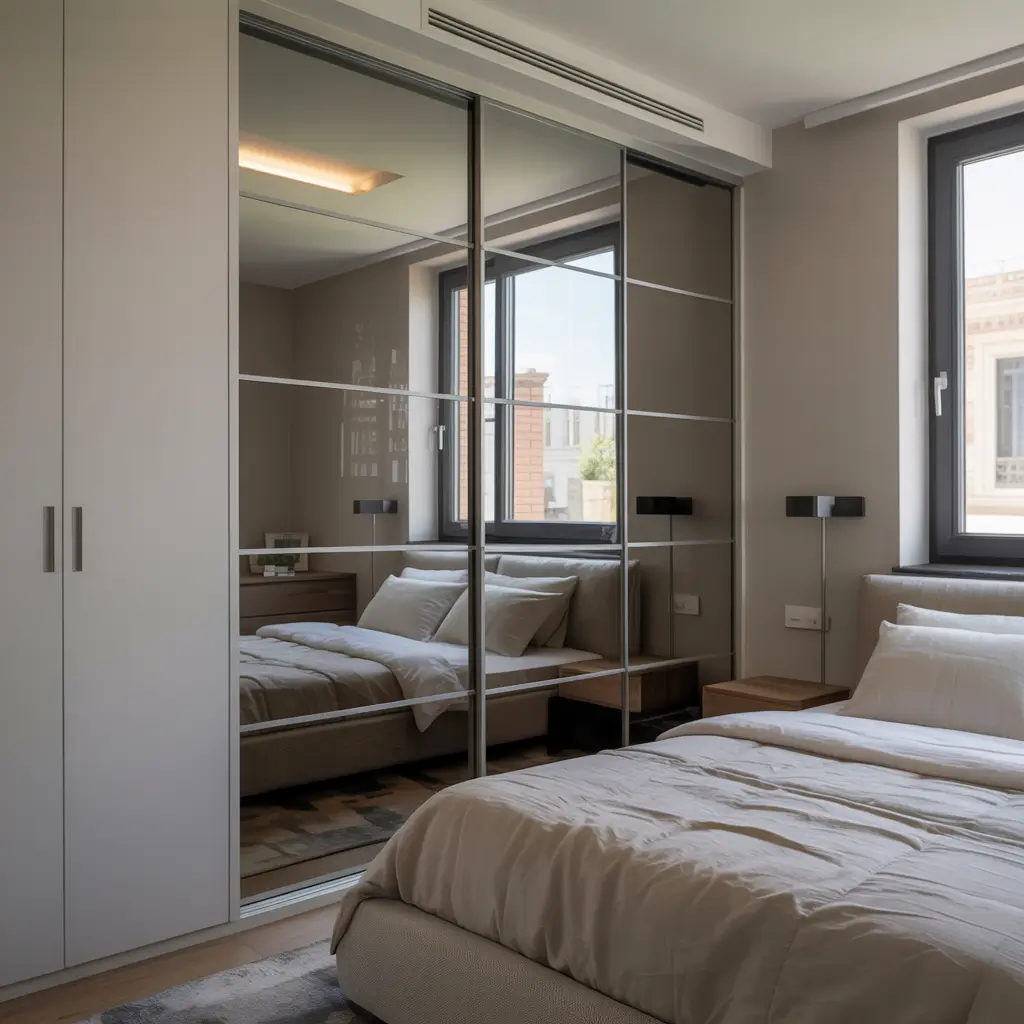
Full disclosure: I used to hate mirrored wardrobes. They reminded me of cheap hotel rooms and 1980s fitness videos. But designers have reclaimed this idea, and the new iterations actually deserve respect.
Mirrors That Actually Enhance Your Space
The trick? Frame treatment and proportion. Modern sliding mirror panels use slim, elegant framing—or sometimes no visible frame at all. The mirror becomes an architectural element rather than an afterthought.
Here’s what nobody tells you: strategic mirror placement doubles your visual space without construction. I installed floor-to-ceiling mirrored shutters in my narrow guest room, and guests constantly ask if I expanded the space. Nope—just good design.
Practical Benefits You Can’t Ignore
- Eliminates need for separate full-length mirror
- Amplifies natural light dramatically
- Creates depth in shallow rooms
- Functions as morning outfit check station
One caveat: Consider what the mirror reflects. You want pleasant views—art, windows, nice bedding—not clutter or that pile of laundry you keep meaning to fold. 🙂
Fluted Glass Wardrobe Shutters
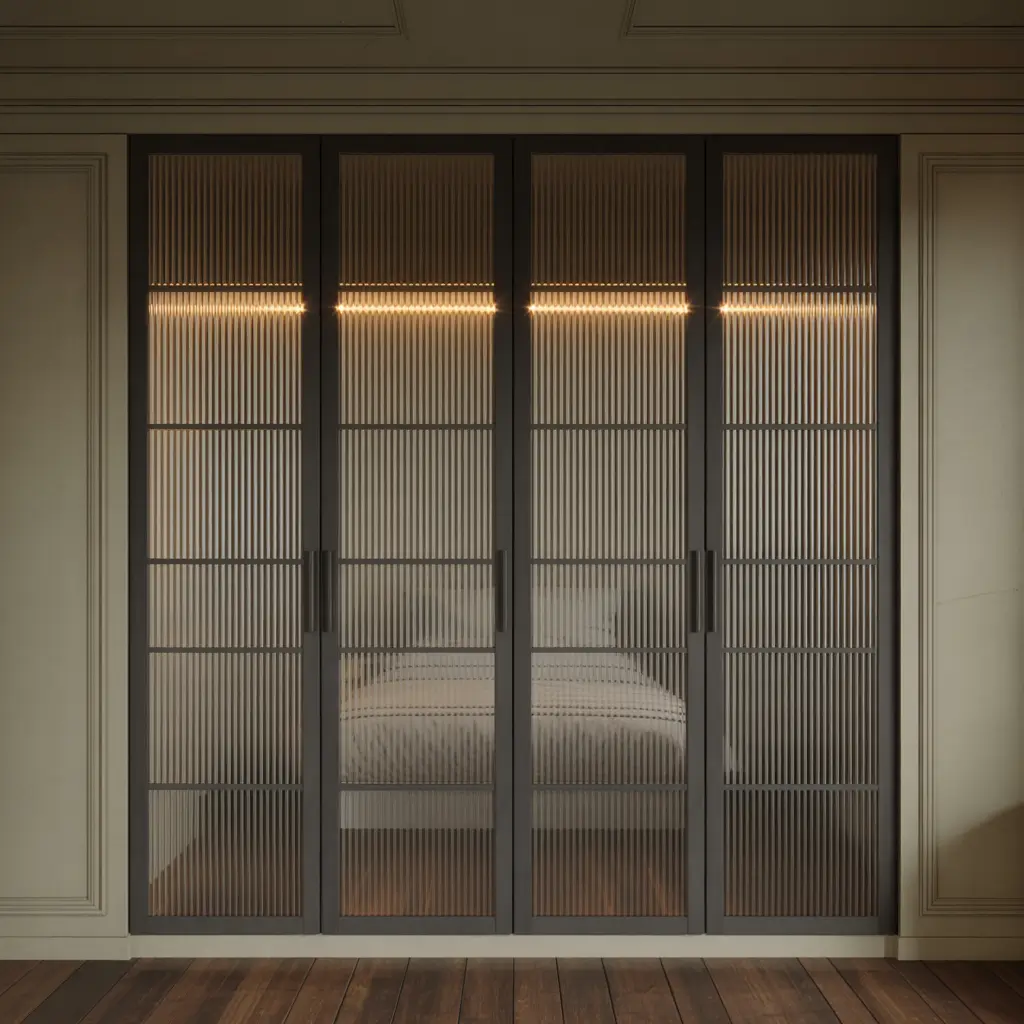
If I had to pick a current obsession, fluted glass might be it. This isn’t your basic frosted glass situation. Fluted glass features vertical ridges that create texture, privacy, and the most gorgeous light diffusion.
Why Fluted Glass Hits Different
The vertical lines draw your eye upward, subtly emphasizing ceiling height. The texture catches light in ways that change throughout the day—morning softness, afternoon drama, evening glow. It’s like having a living surface.
Plus, fluted glass offers privacy without opacity. Your wardrobe contents stay hidden, but the space doesn’t feel heavy or closed off. For small bedrooms especially, this maintains that crucial sense of openness.
Styling Your Fluted Glass
| Element | Best Pairing |
|---|---|
| Frame material | Black metal for edge, natural wood for warmth |
| Hardware | Minimal or integrated—let the glass speak |
| Room style | Japandi, contemporary, art deco revival |
| Lighting | Warm tones that enhance the texture |
I recently saw fluted glass paired with brass framing in a boutique hotel, and I haven’t stopped thinking about it. The combination felt simultaneously vintage and utterly current.
Dual Tone Laminate Shutter Design
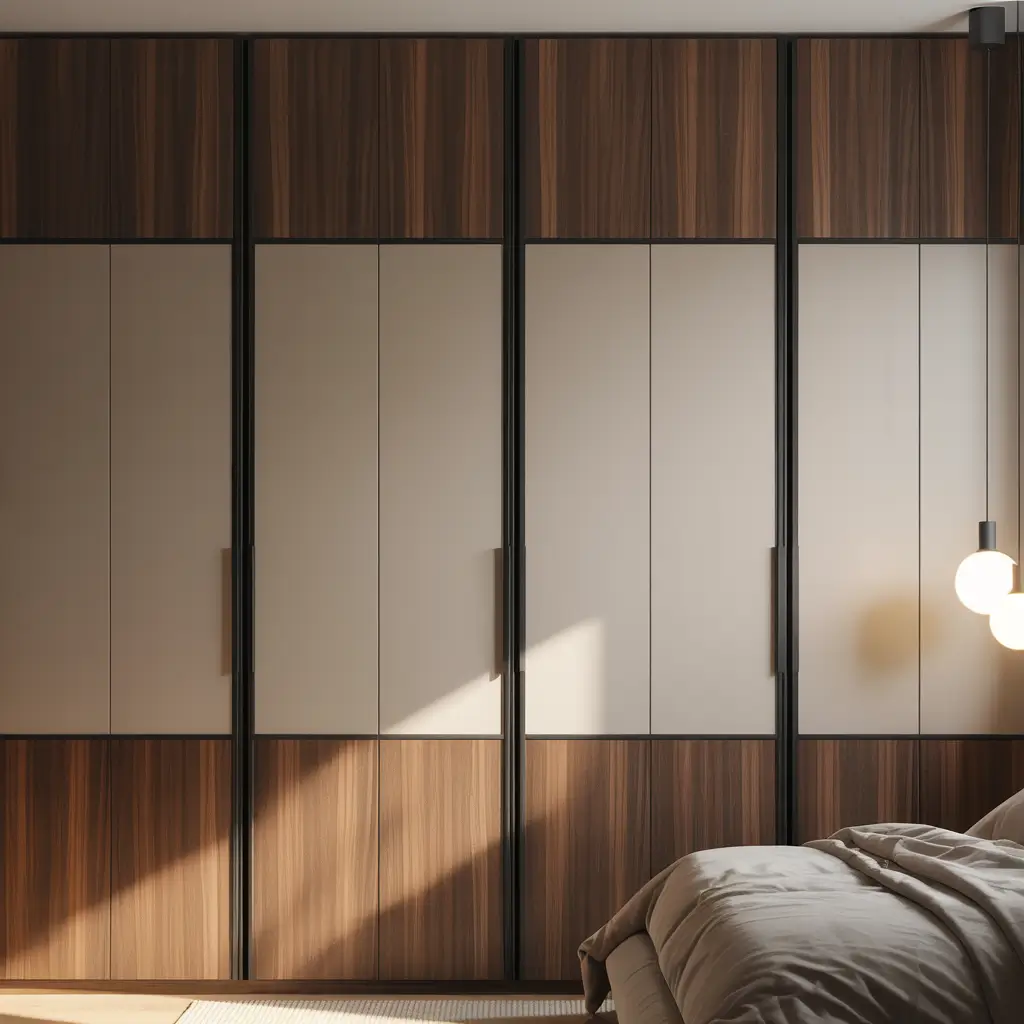
Who decided wardrobes need to be one color? Probably the same people who think beige is a personality. Dual tone laminate shutters reject this nonsense entirely.
The Art of Color Blocking
Dual tone design uses two complementary or contrasting colors to create visual interest and define zones. Maybe dark charcoal frames light oak panels. Perhaps navy surrounds crisp white centers. The combinations are endless, but the effect is consistently striking.
What I love most? This approach lets you anchor your bedroom’s color scheme through a single statement piece. Your wardrobe becomes the room’s anchor, and everything else coordinates around it.
Successful Dual Tone Strategies
- High contrast: Black and white for graphic impact
- Tonal variation: Two shades of the same color for subtle sophistication
- Natural meets bold: Wood tone with saturated color for balance
- Frame and field: Treat the frame as one color, panels as another
Fair warning: This requires confidence. Half-measures look indecisive. Commit to your color choices and carry them through with purpose.
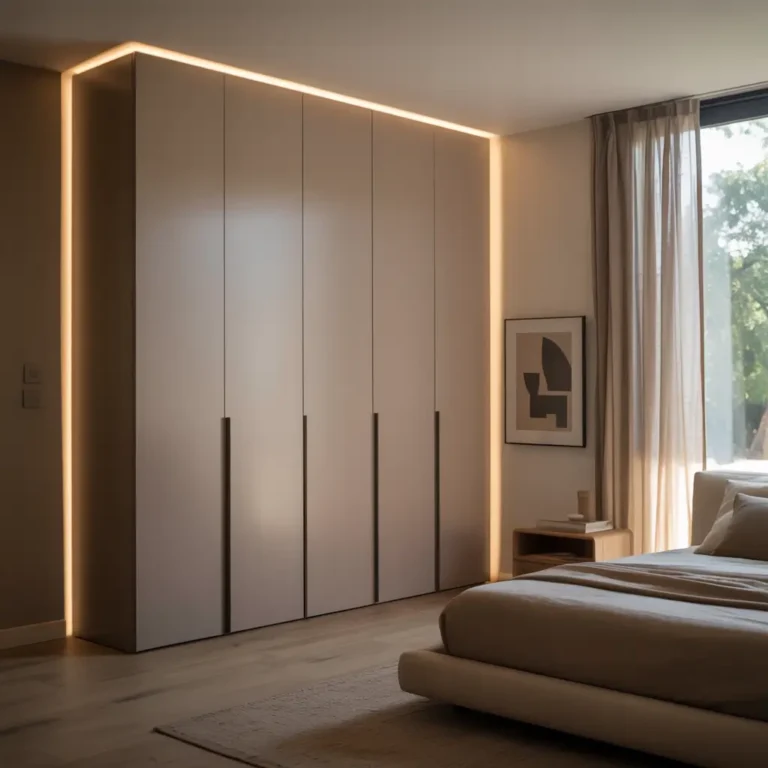
Handleless Seamless Shutter Style
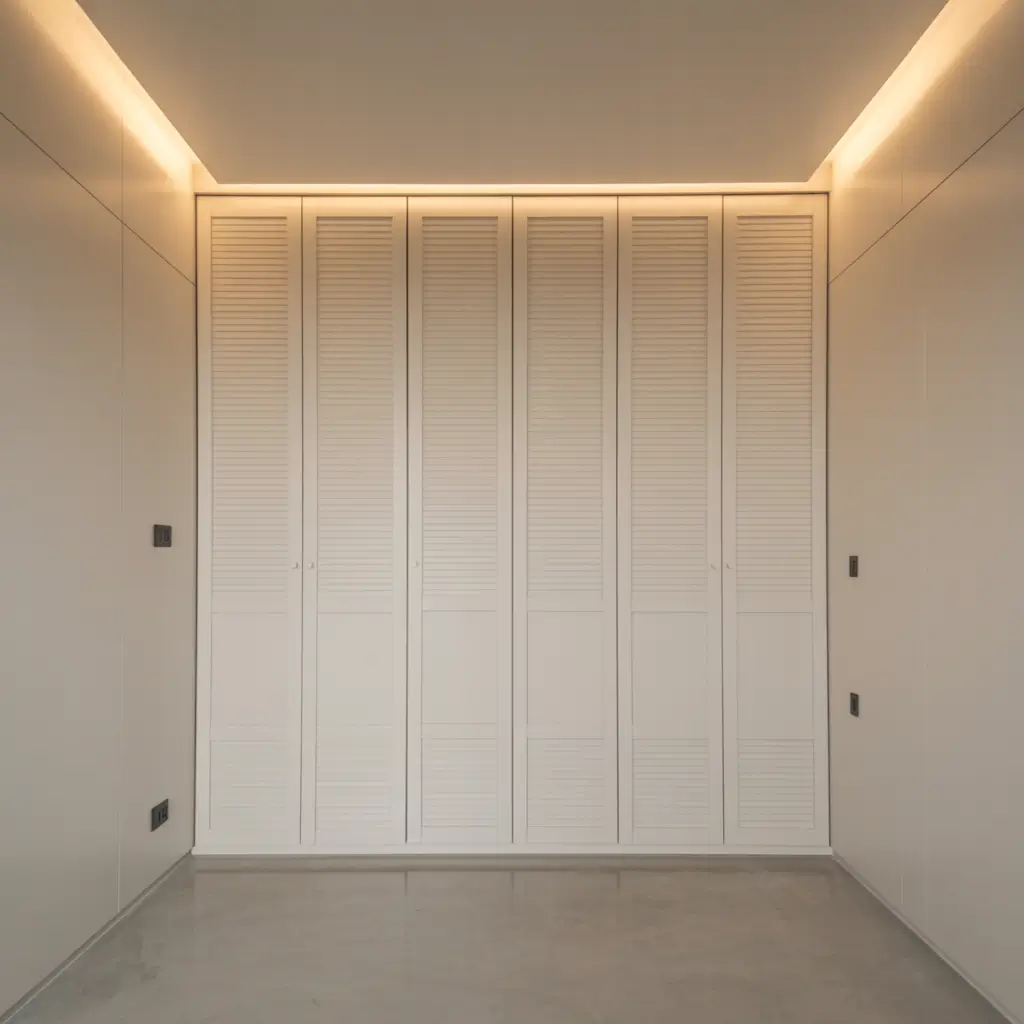
Handles are functional, sure. But are they necessary? Designers have been questioning this for years, and handleless seamless shutters prove the answer is increasingly “nah.”
The Beauty of Nothing
Handleless designs use push-to-open mechanisms, integrated grooves, or touch-latch systems to eliminate visible hardware. The result reads as architectural—more built-in wall feature than freestanding furniture.
This style demands precision. Gaps must be consistent. Surfaces must be perfectly aligned. When executed well, though? It’s the closest your bedroom gets to gallery-level minimalism.
Living With Handleless
I’ll be honest—there’s a learning curve. You can’t blindly grab a handle anymore. You must locate the opening mechanism, apply appropriate pressure, wait for the release. For the first week, you’ll look slightly ridiculous fumbling at your own wardrobe.
But then it becomes second nature. And the uninterrupted visual plane rewards your patience. No hardware catching on clothing. No dated pulls to replace in five years. Just clean, continuous surface.
Also Read: 15 Stylish Sliding Door Wardrobe Designs for Small Rooms
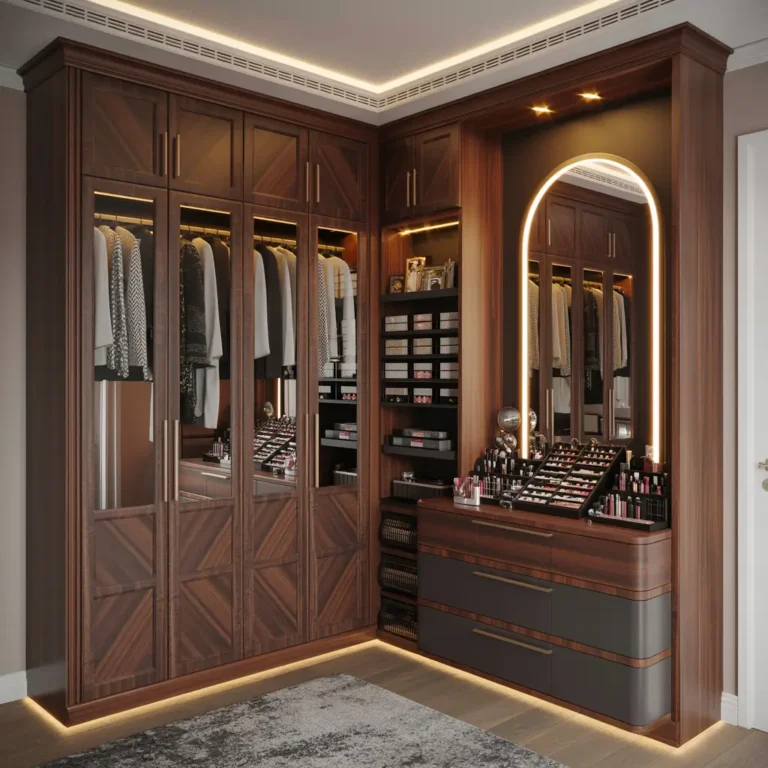
Wooden Veneer Classic Panel Shutters
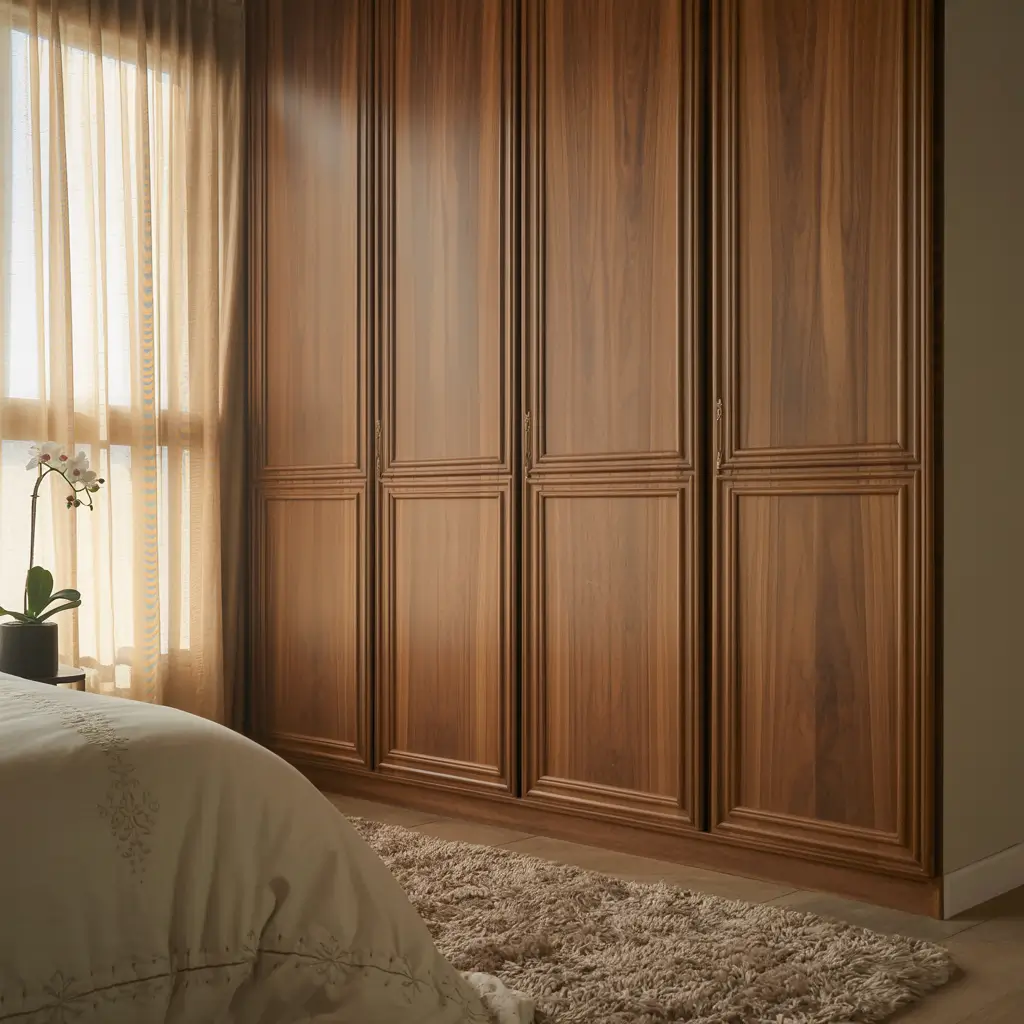
Sometimes you want warmth. Real, organic, “this-has-been-here-forever” warmth. Wooden veneer classic panels deliver exactly that, and they’ve earned their permanent place in design history.
Veneer vs. Solid Wood: The Real Talk
Solid wood wardrobes cost a fortune and fight humidity constantly. Quality veneer—thin slices of real wood bonded to stable substrates—offers identical aesthetics with superior performance and accessibility.
Modern veneers showcase incredible grain patterns: walnut’s dramatic swirls, oak’s honest straight grain, teak’s golden warmth. The key word is “quality.” Cheap veneer looks, well, cheap. Invest in reputable manufacturers who source premium materials.
Classic Panel Configurations
- Shaker style: Simple recessed rectangles, endlessly versatile
- Raised panels: More formal, traditional presence
- Board and batten: Vertical emphasis, cottage or farmhouse feel
- Flat panels: Contemporary interpretation of classic proportions
Wooden veneer ages beautifully, developing patina and character that manufactured materials simply can’t replicate. It’s the design equivalent of a perfectly broken-in leather jacket.
CNC Cut Pattern Shutter Design
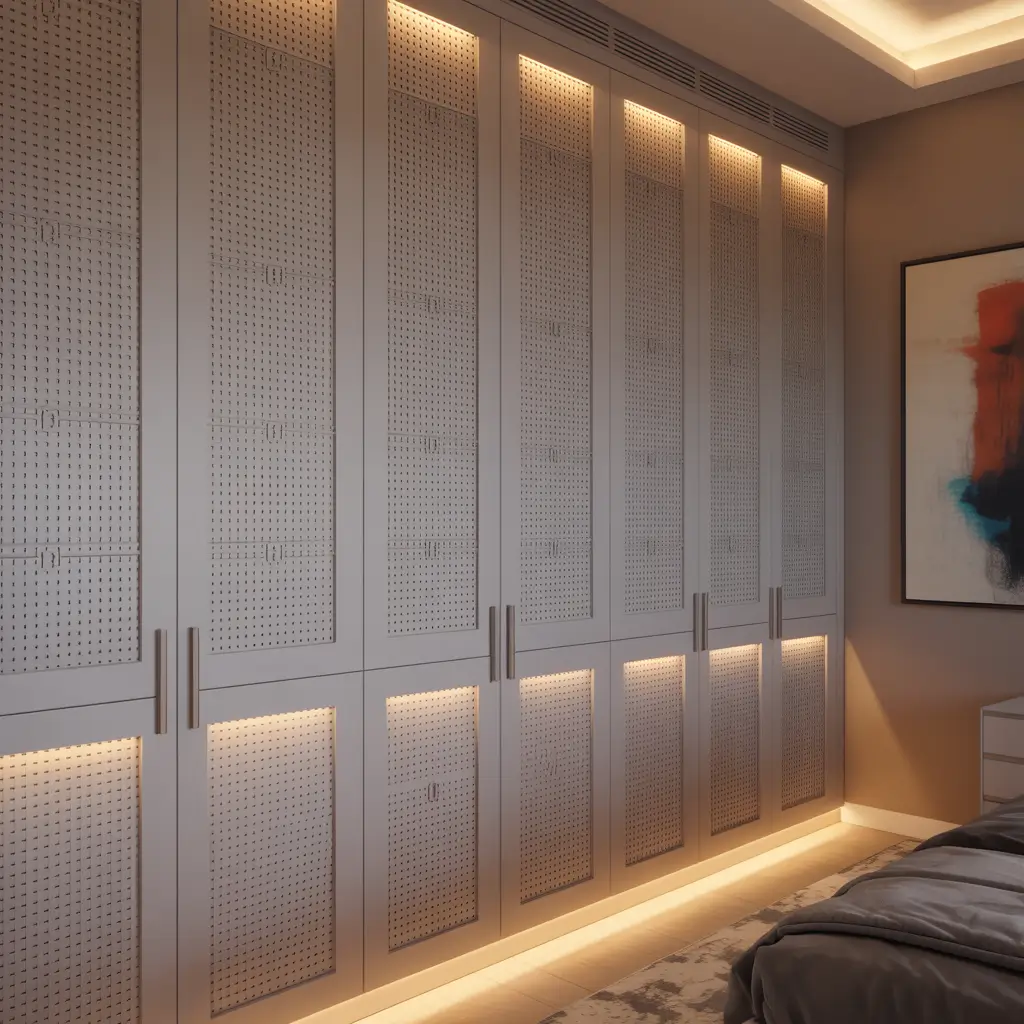
Technology meets tradition in CNC cut pattern shutters, and the results range from subtly sophisticated to outright spectacular. CNC (Computer Numerical Control) machining allows precise, repeatable patterns cut directly into shutter surfaces.
Pattern Possibilities
Geometric repeats. Organic flowing lines. Abstract artistic compositions. Custom motifs meaningful to you. The machine executes whatever the designer imagines, with precision no hand-crafting could match consistently.
What elevates CNC patterns from gimmick to genuine design? Scale and restraint. Oversized patterns feel contemporary and bold. Delicate, dense patterns read as traditional lace or screen influences. The wrong scale for your space looks like a mistake.
Light and Shadow Play
Here’s the magical part: CNC cut patterns transform with changing light. Morning sun casts dramatic shadows through the openings. Evening artificial light creates subtle glow effects. Your wardrobe literally changes personality throughout the day.
I saw a bedroom with CNC shutters featuring a stylized forest pattern. During daylight, tree shadows appeared on the interior wardrobe walls. At night, with interior lighting, the pattern glowed like a lantern. Absolutely stunning.
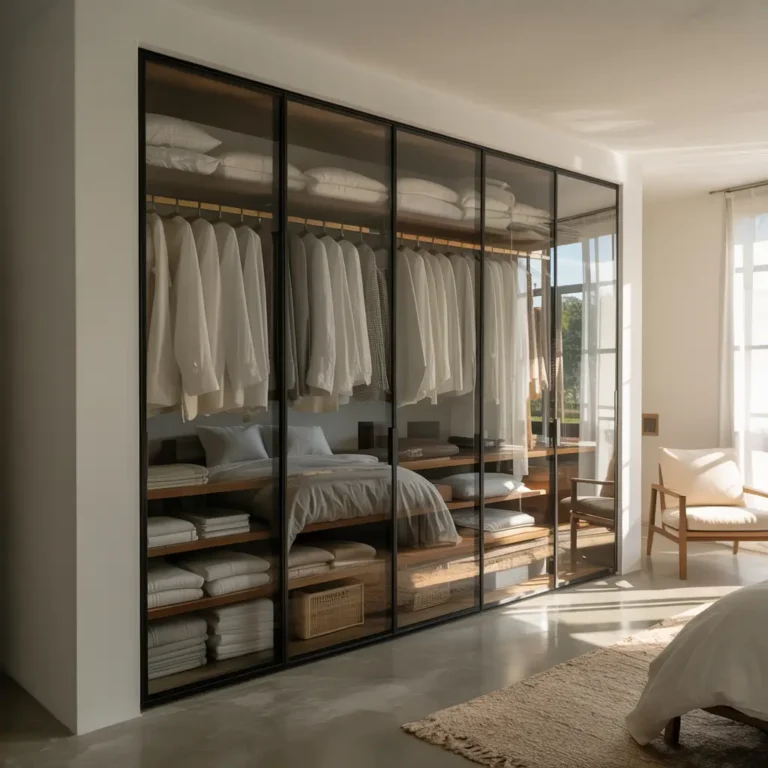
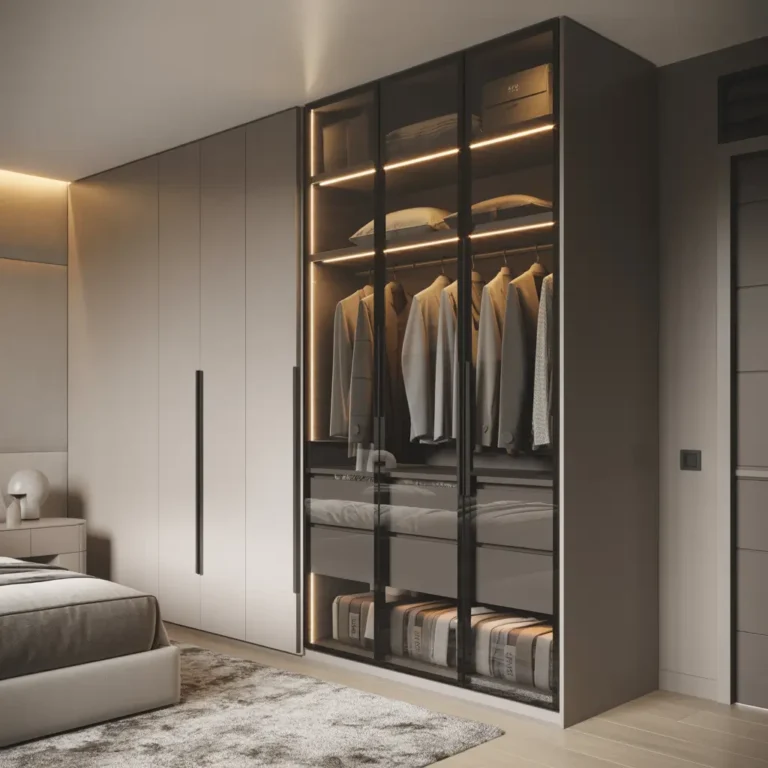
Tinted Glass Frame Shutter Style
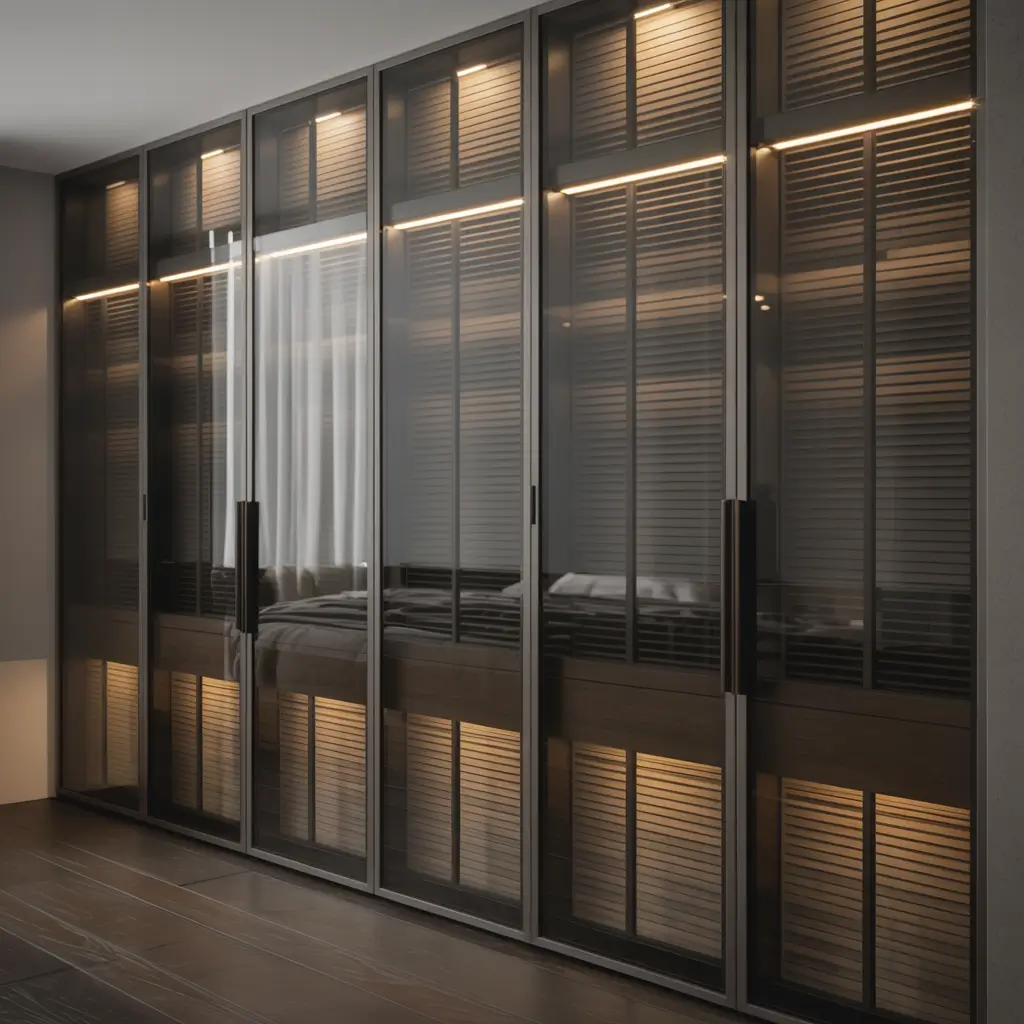
Clear glass exposes everything. Frosted glass feels safe but boring. Tinted glass occupies the sophisticated middle ground—filtered visibility with undeniable color presence.
The Tinted Glass Advantage
Gray, bronze, blue, green—tinted glass adds atmospheric color without paint or laminate. The tint filters both what you see through it and how light passes through, creating moody, layered effects.
This works particularly well when your wardrobe contains beautiful objects: curated shoe collections, folded textile displays, vintage luggage. The tint unifies visually while maintaining that coveted “peek but don’t stare” balance.
Frame Considerations
Tinted glass demands thoughtful framing. Options include:
- Minimal metal frames for industrial edge
- Substantial wood frames for warmth and contrast
- Frameless edge-grip systems for maximum transparency
FYI: Tint intensity dramatically affects function. Light tints offer subtle atmosphere. Heavy tints approach opacity. Request samples and test in your actual lighting conditions before committing.
Pastel Matte Contemporary Shutters
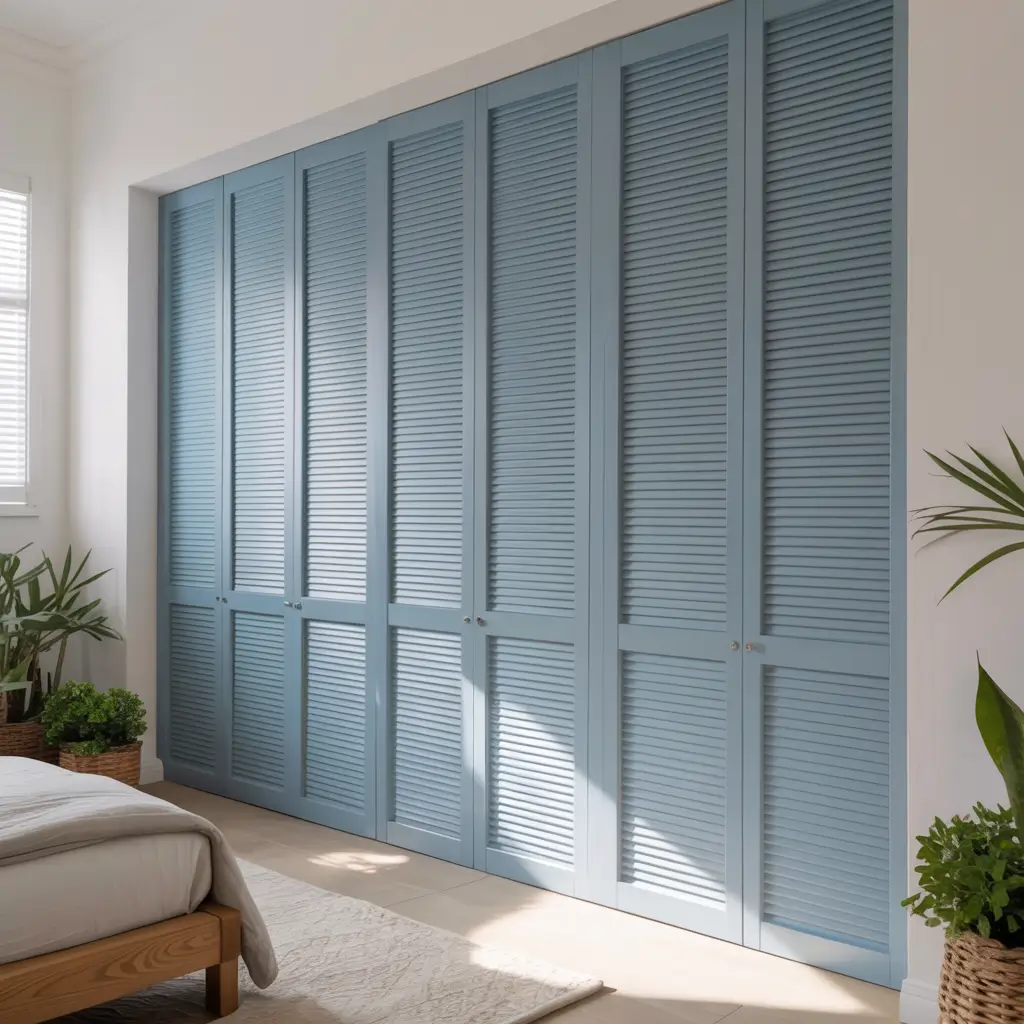
Not everyone wants their bedroom to feel like a corporate conference room. Pastel matte contemporary shutters bring soft color and approachable modernism to spaces that prioritize comfort alongside style.
Why Pastels Now
The design pendulum swings, and we’re definitely in a softer moment. Blush pink, sage green, powder blue, warm peach—these colors feel nurturing without regressing to nursery territory. The matte finish grounds the sweetness, preventing saccharine overload.
Pastel shutters work as neutral alternatives. They complement wood tones, work with metallic accents, and play nicely with both white and bold wall colors. Versatility with personality—that’s the promise.
Making Pastels Sophisticated
- Choose complex, muted pastels rather than pure candy colors
- Pair with substantial hardware in brass, black, or bronze
- Ensure crisp, clean lines in the shutter design itself
- Balance with natural materials like linen, wool, and wood
My neighbor committed to sage green matte shutters throughout her master suite. I initially worried it would feel too themed. Instead, it created the most serene, grown-up sanctuary. The color shifts with light—cool in morning, warm in evening—always interesting, never overwhelming.
Loft Style Black Frame Shutters
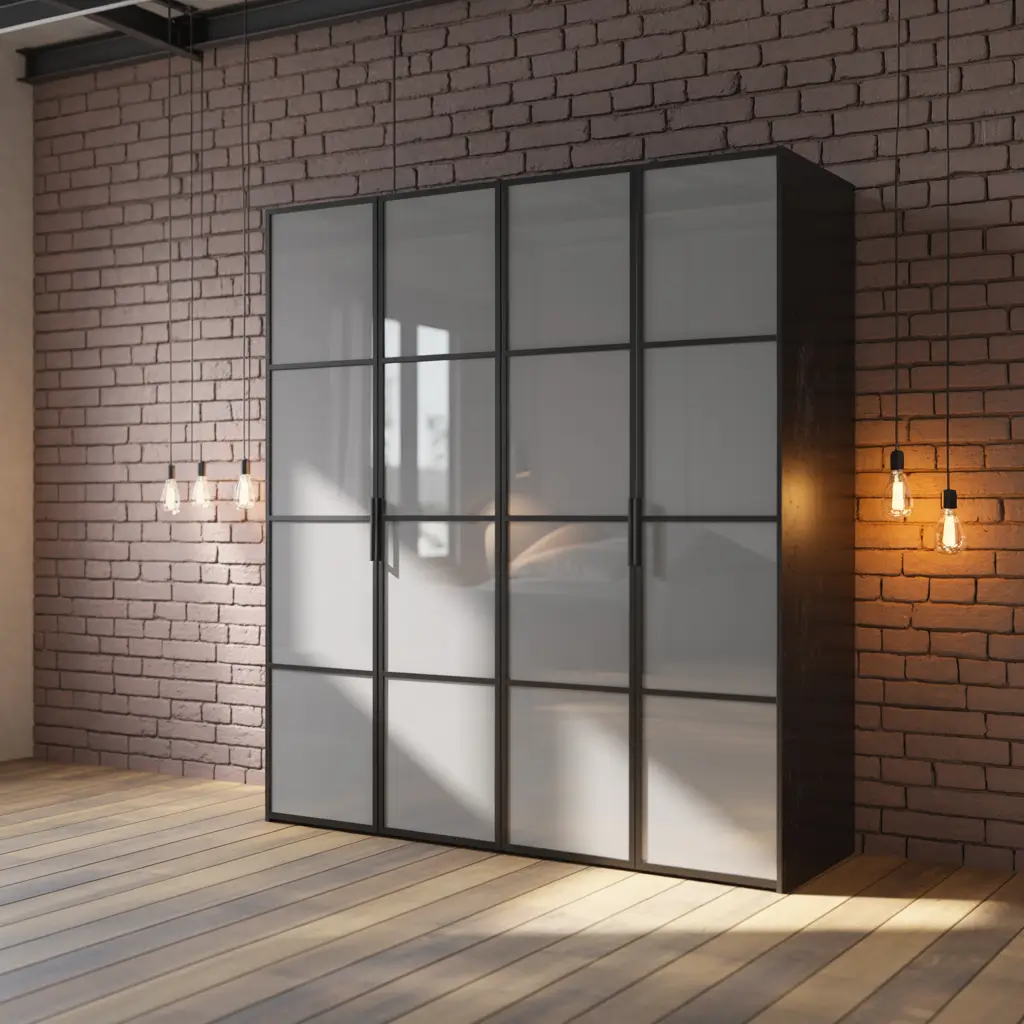
Industrial aesthetics aren’t just for actual converted warehouses anymore. Loft style black frame shutters bring urban edge and graphic strength to any bedroom craving character.
Defining Loft Style
Think exposed structure, honest materials, utilitarian beauty. Black metal framing—often steel or aluminum with visible welds and connections—creates grid patterns that feel architectural and intentional. Glass or solid panels fill the frames, but the black structure dominates visually.
This style refuses to disappear into the background. It demands attention and sets the room’s tone. Commit fully or choose something else—halfway industrial reads as confused.
Where Loft Style Thrives
- High ceiling spaces that can handle vertical emphasis
- Minimalist bedrooms needing visual anchor
- Mixed-material interiors combining wood, metal, and concrete
- Masculine or gender-neutral design schemes
The black frame creates natural artwork, especially when shadows play across surrounding walls. It’s dramatic without being decorative—structural beauty at its most honest.
Fabric Finish Soft Touch Shutters
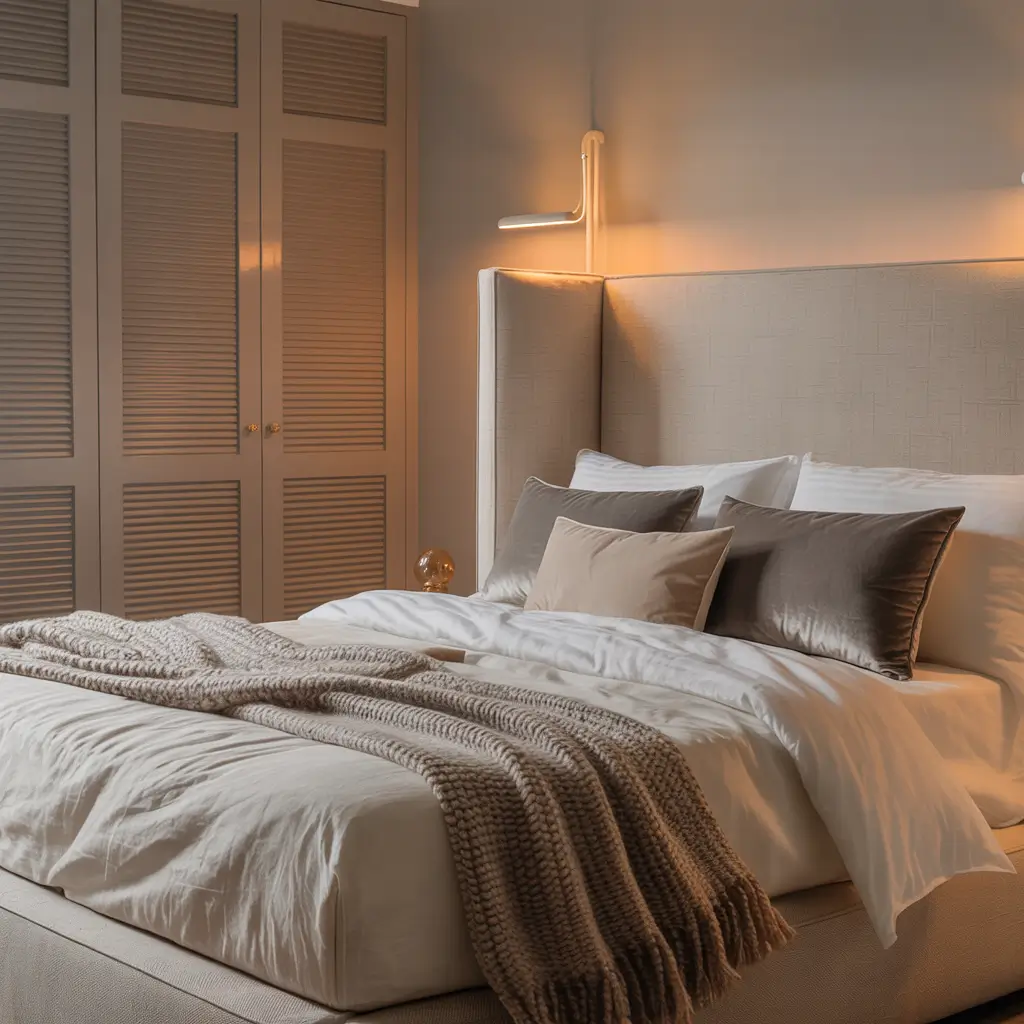
Hard surfaces dominate wardrobe design, which makes fabric finish soft touch shutters feel almost revolutionary. These combine textile aesthetics with practical durability, creating warmth other materials can’t match.
The Soft Touch Experience
Running your hand across fabric-finish shutters triggers something primal—comfort, security, domesticity. The surface absorbs light rather than reflecting it, eliminating glare and visual harshness. Colors read as deeper, richer, more complex.
Modern fabric finishes aren’t fragile. They’re engineered textiles—stain-resistant, fade-resistant, cleanable—that maintain appearance through real life. Kids, pets, rushed mornings? This surface forgives.
Fabric Finish Applications
| Texture | Effect | Best For |
|---|---|---|
| Linen-look | Casual elegance, natural vibe | Relaxed, coastal, or Scandinavian spaces |
| Velvet-touch | Luxurious depth, light absorption | Glamorous, dramatic bedrooms |
| Woven texture | Artisanal craft reference | Bohemian, eclectic, globally-inspired rooms |
| Micro-suede | Ultimate softness, modern appeal | Contemporary comfort-focused spaces |
I sat on a showroom bench upholstered in the same fabric as adjacent wardrobe shutters. The cohesive softness transformed the entire experience from “shopping for furniture” to “wanting to move in immediately.”
Metallic Accent Modern Shutter Design
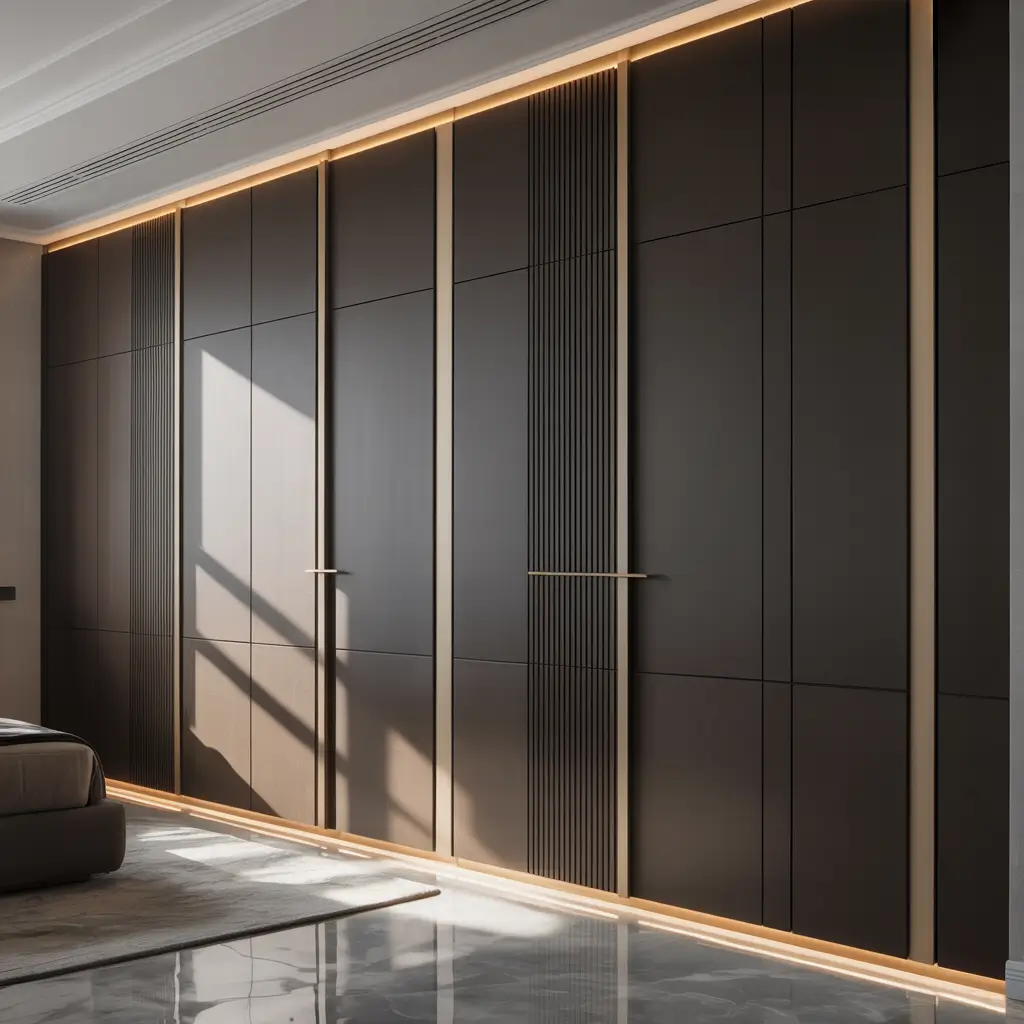
Subtle shimmer elevates ordinary to extraordinary. Metallic accent modern shutters incorporate brass, copper, bronze, or champagne gold details that catch light and add luxury without ostentation.
Metallic Integration Approaches
- Full metallic panels: Bold, reflective, definitely statement-making
- Framing accents: Metal borders on neutral panels for definition
- Inlaid strips: Horizontal or vertical metallic lines creating rhythm
- Hardware as jewelry: Oversized, sculptural pulls in precious metal finishes
The key is intentionality. Random metallic elements look accidental. Purposeful placement—whether generous or minimal—reads as sophisticated.
Metallic Maintenance Reality
Here’s my honest take: living with metallic finishes requires acceptance. Brass tarnishes. Copper develops patina. Even “sealed” finishes show wear patterns over time. You can fight this constantly, or you can embrace the living quality of metal.
I chose brass-accented shutters knowing they’d evolve. Two years in, the wear patterns actually tell our story—higher polish where hands touch daily, deeper tone in protected areas. It’s personal now. :/
Also Read: 15 Modern Sliding Wardrobe Design Inspirations for Homes
Hidden Groove Channel Shutter Style
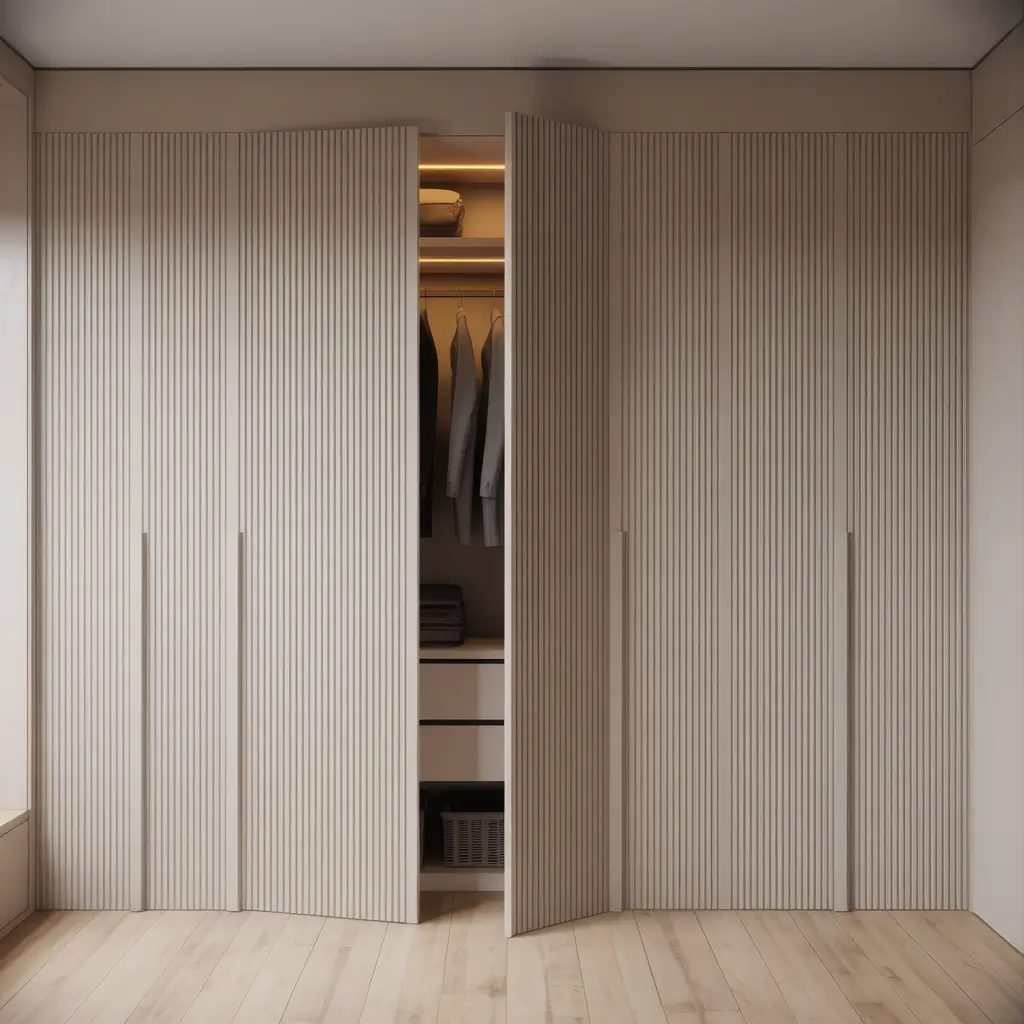
Sometimes the best design solutions hide in plain sight. Hidden groove channel shutters eliminate visible hardware through integrated channels that guide door movement—clean, minimal, slightly magical.
How Hidden Grooves Work
Instead of external tracks or visible rollers, precision-engineered channels within the shutter structure itself create smooth, guided motion. The door appears to float, gliding effortlessly with minimal visible mechanism.
This technology requires serious engineering. Tolerances are tight. Materials must resist wear. When executed properly, though, the result feels futuristic yet timeless—like good design should.
The Hidden Groove Aesthetic
Without visible tracks or hardware, your wardrobe reads as solid architectural mass. The movement surprise delights—guests invariably ask “how does that work?” when you demonstrate.
This style particularly suits:
- Ultra-minimalist interiors where every visual element counts
- Small bedrooms where track systems would dominate
- High-end projects where budget allows premium mechanisms
- Design purists who value innovation and refinement
Floor to Ceiling Seamless Wardrobe Shutters
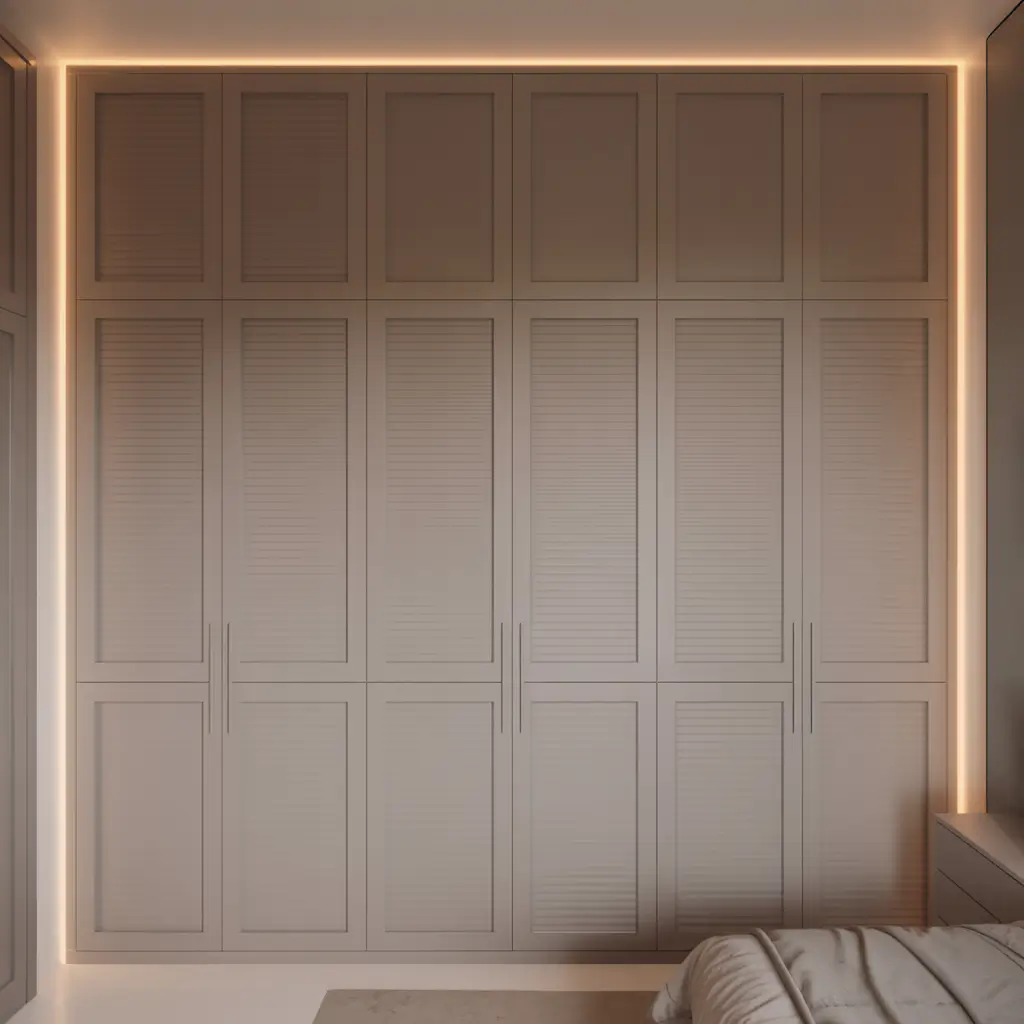
We end where maximal impact meets minimal appearance. Floor to ceiling seamless shutters eliminate every visual interruption—no frames, no visible divisions, no hardware—to create walls of pure surface.
The Seamless Ambition
True seamless design requires custom engineering. Your ceiling height, floor level, wall plumb—all must be precisely measured and accommodated. The shutters integrate with architecture rather than sitting against it.
The effect? Your wardrobe disappears as furniture and emerges as space. Storage becomes invisible, luxury becomes assumed, and your bedroom breathes differently.
Achieving True Seamlessness
- Recessed tracks disappear into floor and ceiling
- Touch-latch or push-to-open mechanisms eliminate handles
- Panel alignment creates continuous visual fields
- Material consistency extends across all surfaces
This is investment-level design. It requires skilled craftspeople, patient installation, and ongoing maintenance of precision. The reward? A bedroom that feels intentionally designed at the deepest level, where every element serves both function and beauty.
Choosing Your Perfect Shutter Style
We’ve covered fifteen distinct approaches, and honestly? Each could transform your bedroom in the right context. So how do you choose?
Ask Yourself the Real Questions
- What’s my actual lifestyle? Glossy surfaces and finger smudges don’t mix with rushed mornings and kids.
- What does my bedroom need? Light? Warmth? Visual expansion? Personality?
- What’s my maintenance tolerance? Be honest. Beautiful high-maintenance choices become burdens quickly.
- How long will this choice satisfy me? Trend-driven selections date faster than classic investments.
My Personal Bottom Line
After all my showroom wandering and designer interrogations, I’ve concluded that the best wardrobe shutter design serves your daily life while bringing genuine pleasure. It shouldn’t impress visitors at the expense of frustrating you every morning.
Whether that means the quiet confidence of matte minimal panels, the dramatic presence of loft style black frames, or the technological wonder of hidden groove channels depends entirely on who you are and how you live.
Your Wardrobe Deserves Better
We’ve explored fifteen creative wardrobe shutter designs, from reflective high gloss to tactile fabric finishes, from industrial black frames to ethereal fluted glass. Each offers distinct character and specific benefits. None represents universal perfection.
The common thread? Intentionality. Thoughtful choices based on real understanding of your space, your habits, your aesthetic sensibility. Your wardrobe shutters occupy prime visual real estate in your most personal space. They deserve consideration proportionate to their impact.
So what’s your next move? Measure your space. Collect images that resonate. Visit showrooms and actually touch materials. Talk to craftspeople about what’s possible within your parameters.
And please—whatever you choose—step away from the generic white sliding doors with plastic handles. Your bedroom thanks you in advance.
What shutter style speaks to you? Still debating between options? Sometimes the best choice emerges from conversation, not catalog browsing. The perfect wardrobe awaits your decision.