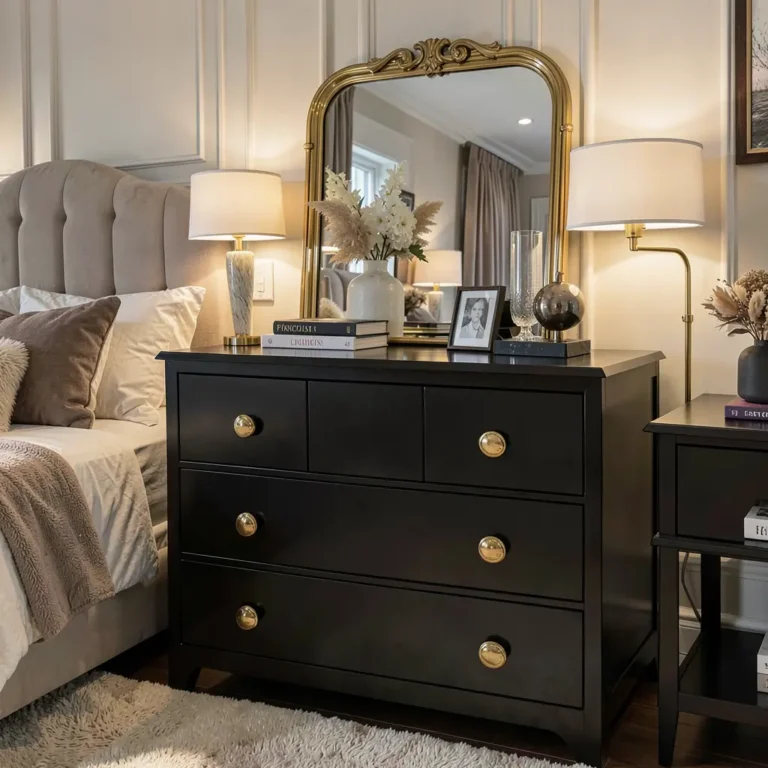
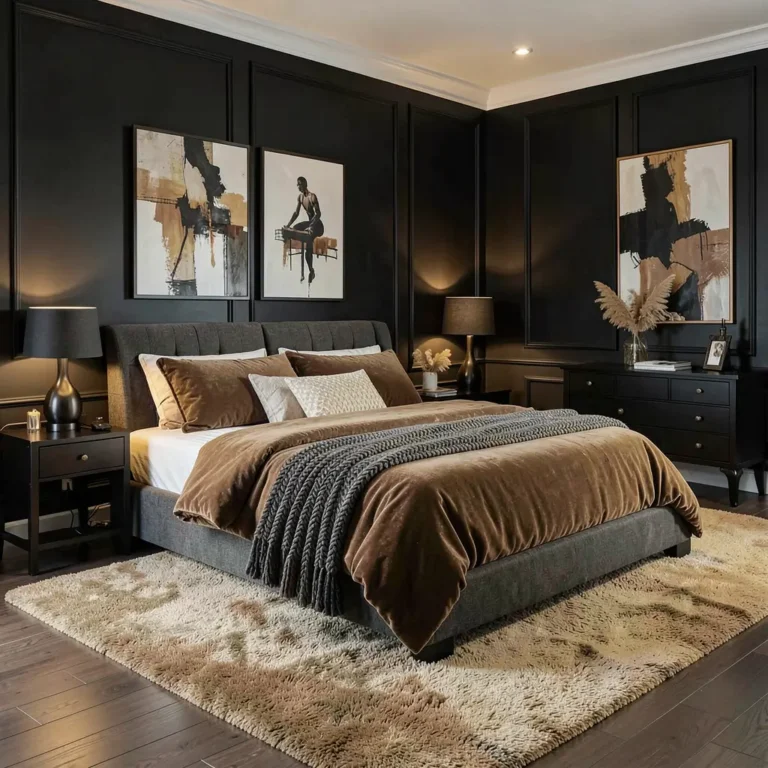
15 Elegant Classy Bedroom Looks for Cozy Luxury

Look, I get it. You walk into your bedroom after a long day, and something just feels… off. The space doesn’t give you that luxurious sanctuary vibe you’ve been dreaming about. Maybe you’ve been scrolling through Pinterest at 2 AM (no judgment—we’ve all been there), bookmarking those impossibly gorgeous bedroom photos and wondering how people actually achieve that level of elegance without selling a kidney.
Here’s the thing: creating a classy, cozy luxury bedroom doesn’t require an unlimited budget or a degree in interior design. I’ve spent years obsessing over bedroom aesthetics, experimenting with different looks, and honestly making some questionable design choices along the way. But through all that trial and error, I’ve discovered what actually works when you want to create a space that feels both sophisticated and inviting.
Today, I’m breaking down 15 elegant bedroom looks that nail that sweet spot between cozy and luxurious. We’re talking real, achievable styles that’ll transform your bedroom from “meh” to “wow, can I just stay in bed all day?” Let’s get started.
Modern Luxe Neutral Bedroom
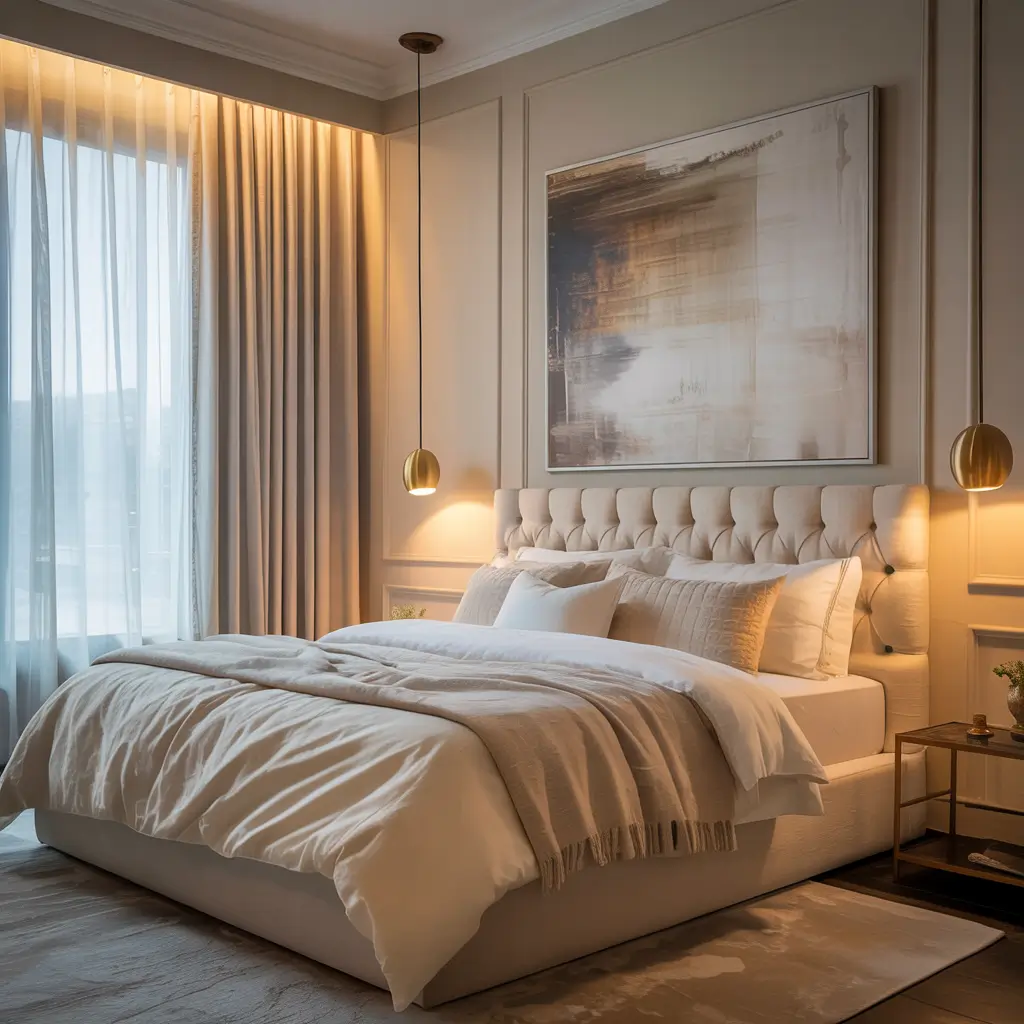
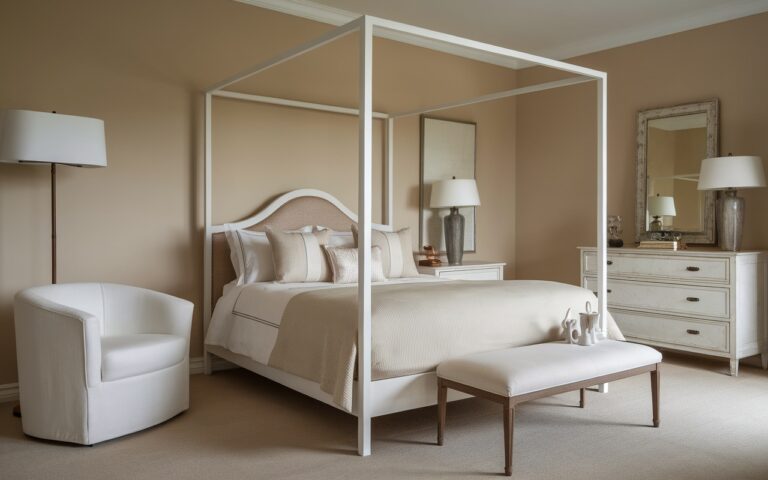
Ever notice how the most expensive hotels always lean heavily into neutrals? There’s a method to that madness. A modern luxe neutral bedroom creates this incredible foundation where everything just works together effortlessly.
I transformed my own bedroom using this approach last year, and honestly, it changed my entire relationship with the space. You start with a neutral color palette—think warm whites, soft taupes, and creamy beiges. The key here isn’t about playing it safe; it’s about creating layers.
Here’s what makes this look absolutely sing:
- Layered textures: Mix linen sheets with a chunky knit throw and velvet pillows
- Statement lighting: A sculptural pendant or modern chandelier becomes your jewelry
- Quality over quantity: One amazing upholstered headboard beats ten mediocre decorative items
- Subtle metallic accents: Brushed brass or matte gold hardware adds warmth without screaming “look at me”
The beauty of this style? You can switch up your mood with accessories without redoing the entire room. Feeling moody? Add charcoal accents. Want something softer? Introduce blush tones. The neutral base has your back.
What really sells this look is the lighting strategy. I’m talking multiple light sources at different heights—bedside lamps, wall sconces, maybe even some LED strips behind the headboard if you’re feeling fancy. This creates depth and makes the space feel intentionally designed rather than just… there.
Soft Beige & Gold Elegance
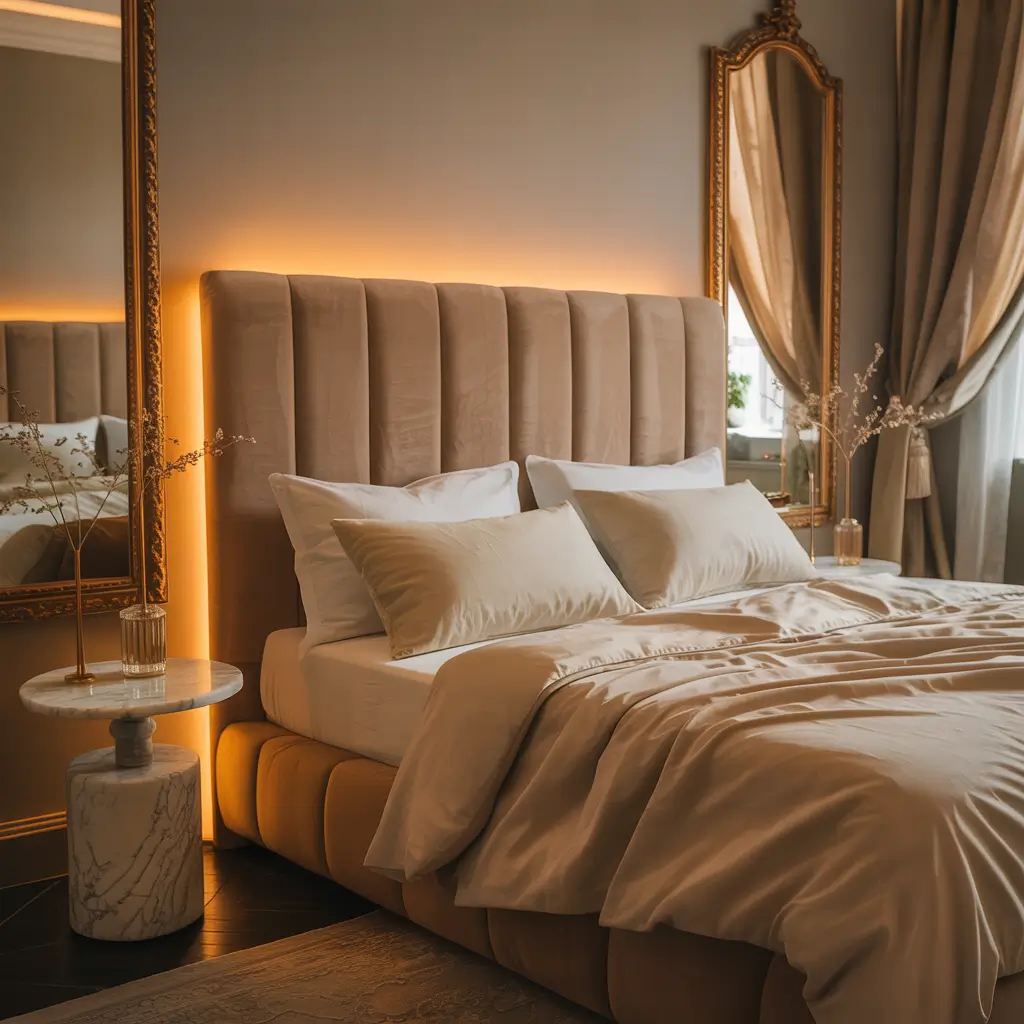
Okay, can we talk about how beige got a bad rap for being boring? Because when you pair it with gold accents, beige becomes the sophisticated older sibling who studied abroad and came back impossibly chic.
This look embraces warmth and opulence without tipping into gaudy territory (which, let me tell you, is a fine line). I watched my sister nail this aesthetic in her master bedroom, and every time I visit, I want to move in.
The magic happens when you choose the right beige. Not that flat, builder-grade beige that haunts rental apartments everywhere, but rich, warm beiges with undertones that change throughout the day. Pair these with gold elements strategically placed throughout the room.
Key elements that make this work:
- Warm beige walls that look almost peachy in morning light
- Gold-framed mirrors that reflect light and make the space feel larger
- Champagne-colored bedding with a subtle sheen
- Brass or gold light fixtures that serve as functional art pieces
- Natural wood furniture in honey or amber tones
FYI, the trick here is mixing your gold finishes. All matching gold can look like a furniture set from a catalog (and not in a good way). Mix brushed gold with polished brass, add some antique gold frames—this creates visual interest and feels collected over time.
The textiles matter enormously in this scheme. Choose high-thread-count linens in that perfect buttery beige, add a faux fur throw in cream, and layer in gold-embroidered pillows. The result? A bedroom that feels like a luxury boutique hotel, but better because it’s actually yours.
Classy Minimalist Retreat
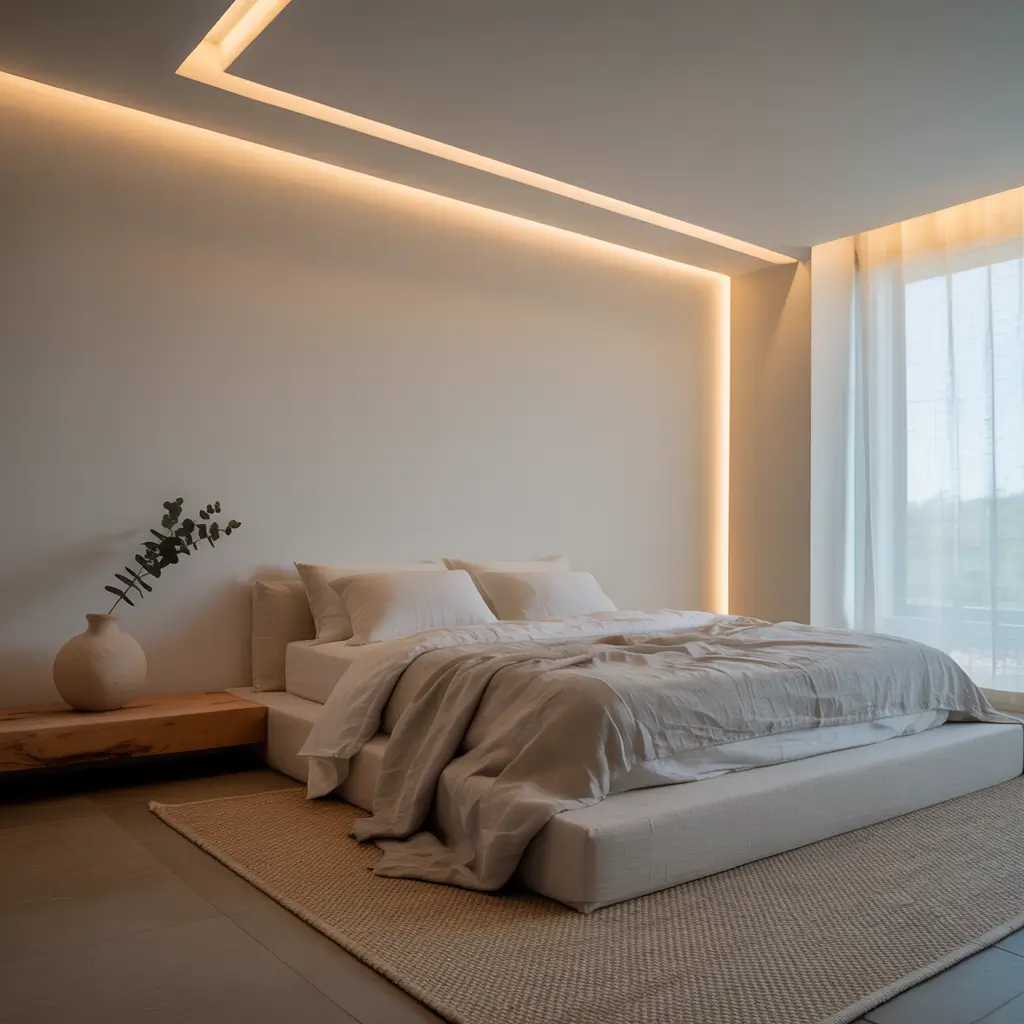
Here’s where I might lose some of you, but stick with me: minimalism doesn’t mean cold or sterile. A classy minimalist bedroom done right feels like the most peaceful exhale you’ve ever taken.
I used to think minimalism meant living like a monk with one chair and a mattress on the floor. Then I actually studied the philosophy behind it, and everything clicked. It’s not about having less for the sake of deprivation—it’s about intentionally choosing only what serves you.
Your minimalist bedroom should include:
- A statement bed with clean lines and quality construction
- Carefully curated decor (3-5 pieces max)
- Hidden storage that keeps clutter out of sight
- Neutral palette with maybe one accent color
- Quality window treatments that control light beautifully
What I love about this approach? You actually save money in the long run because you buy fewer things but invest in quality. That $200 linen duvet cover will outlast five cheap ones, and it’ll look better the entire time.
The key to nailing this without looking like you just moved in? Texture, texture, texture. A minimalist bedroom with all smooth surfaces feels institutional. Add a jute rug, linen curtains, a wooden bench, and suddenly you’ve got depth and interest without clutter.
One game-changing element: negative space. Leave some walls bare. Let your nightstand breathe with just a lamp and maybe one small object. This isn’t emptiness—it’s intentional calm. Your brain needs visual rest, especially in the room where you sleep.
Also Read: 15 Inspiring Green and Blue Bedroom Ideas to Transform Your Space with Calm & Style
Black and White Sophisticated Suite
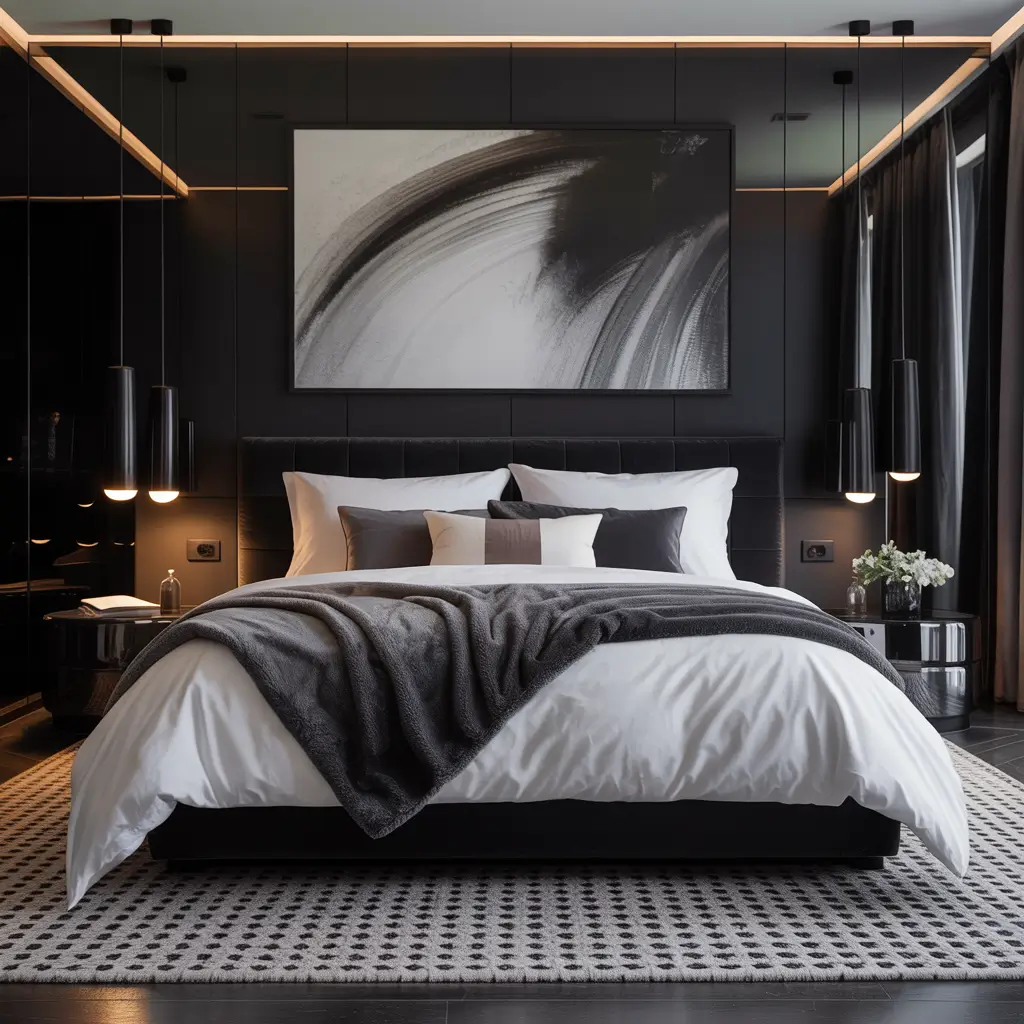
Want to know a secret? Black and white bedrooms photograph beautifully, but they can feel harsh if you don’t balance them correctly. I learned this the hard way when I went all-in on a high-contrast look and ended up feeling like I was sleeping in a crossword puzzle :/
The sophisticated version of this classic combination requires careful consideration of proportions and softness. You can’t just slap black furniture on white walls and call it a day (though teenage me definitely tried).
Here’s the winning formula:
- Start with one dominant color (usually white for walls and major pieces)
- Use the other as strategic accents (black bed frame, black-framed art)
- Add grey as your mediator to soften the contrast
- Introduce warm metallics like brass or copper to prevent coldness
- Layer in soft textiles to counteract the graphic nature
The most successful black and white bedrooms I’ve seen use the 60-30-10 rule: 60% white, 30% grey, and 10% black. This creates that sophisticated vibe without the headache-inducing contrast.
What really elevates this look? Graphic elements with organic touches. Maybe you have bold black-and-white geometric wallpaper on one accent wall, but you balance it with a fluffy white rug and soft grey linen bedding. The juxtaposition between structured and soft creates visual tension in the best possible way.
Pro tip: Introduce natural elements like wood or plants. A black and white room with a gorgeous wooden bench and some greenery suddenly feels livable and luxurious rather than showroom-esque.
Cozy Luxury Hotel-Inspired Bedroom
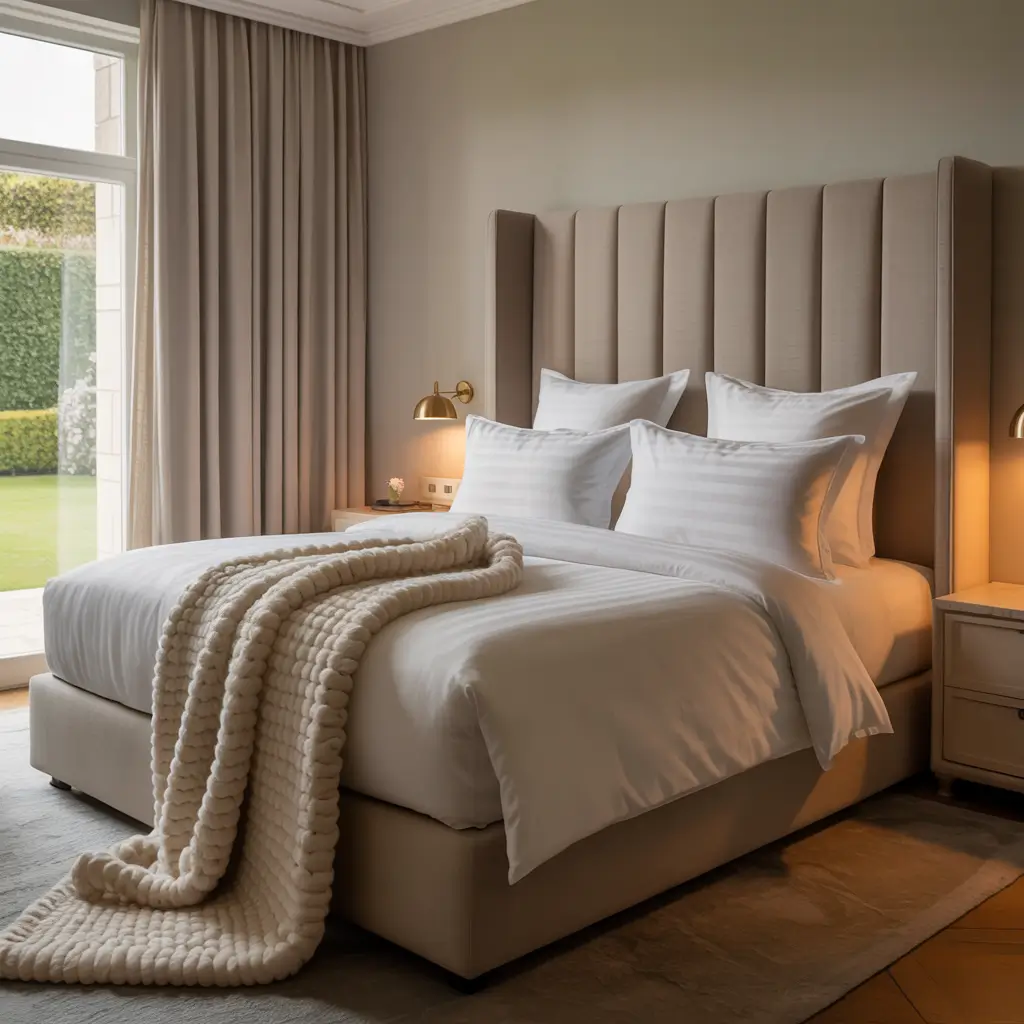
Ever sleep in a really nice hotel and think, “Why can’t my bedroom feel like this?” Spoiler alert: it absolutely can, and it’s more about specific design choices than budget.
I became obsessed with this concept after staying at a boutique hotel that made me never want to leave my room. I took photos of everything (subtly, because I’m not a weirdo), and when I got home, I analyzed what made that space so special.
Hotels master these essential elements:
- Layers upon layers of bedding: Multiple pillows in different sizes, duvet plus coverlet, throw at the foot
- Symmetry: Matching nightstands and lamps create visual calm
- Ambient lighting: They never rely on just overhead lights
- Plush textiles: Everything feels soft and substantial
- Minimal personal items: Only intentional decor makes the cut
The bedding situation deserves special attention. Hotels use crisp white linens as their base because they signal cleanliness and luxury (and they’re easy to bleach, but that’s besides the point). Layer on a duvet with a high-tog rating, add a decorative coverlet or quilt, and finish with a cashmere or faux fur throw.
Here’s what hotels know that we often forget: quality mattresses and pillows matter more than anything else. You can have the most beautiful room, but if you’re sleeping on a lumpy mattress, the whole vibe falls apart. Invest here first, then work on aesthetics.
The lighting strategy hotels use? Genius. They have bedside lamps for reading, ambient ceiling lights on dimmers, and often accent lighting that highlights architectural features. This multi-layered approach lets you adjust the mood throughout your evening routine.
Earthy Warm-Tone Classy Bedroom
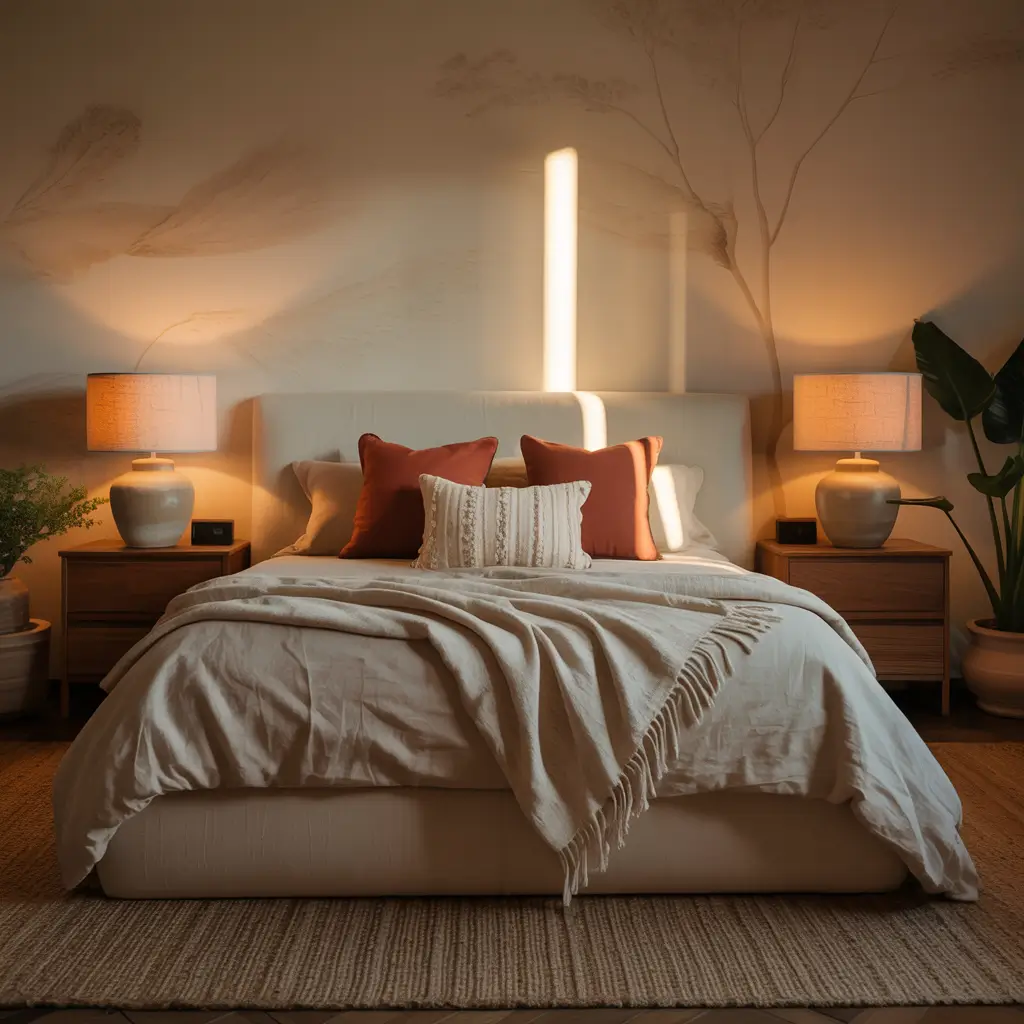
IMO, earthy warm-tone bedrooms are having a major moment right now, and unlike some trends, this one has serious staying power. There’s something fundamentally comforting about warm terracottas, rich ochres, and deep browns.
I recently helped a friend redesign her bedroom using this palette, and the transformation was stunning. She went from a cold, disconnected space to somewhere that literally wraps you in warmth the second you walk in.
The foundation of this look includes:
- Warm-toned paint colors: Think terracotta, burnt sienna, or warm taupe
- Natural materials: Wood, rattan, jute, linen, and leather
- Organic shapes: Curved furniture, round mirrors, flowing textiles
- Earth-inspired decor: Pottery, dried flowers, woven baskets
- Layered rugs: A jute base with a vintage wool rug on top
What makes this style feel classy rather than rustic? Sophistication in the details. Choose streamlined furniture silhouettes even if they’re in warm wood tones. Select pottery with modern shapes rather than chunky country-style pieces. The warmth comes from color and material, not from going full farmhouse.
The color layering here requires some finesse. You want depth, so you might pair a burnt orange accent wall with caramel-colored bedding, chocolate brown pillows, and cream curtains. Each shade is distinct but within the same warm family.
Texture becomes your best friend in this scheme. Smooth painted walls contrast with chunky woven throws. Sleek wooden furniture plays against nubby linen upholstery. This textural variety keeps the warm tones from feeling flat or one-dimensional.
Timeless White & Wood Elegance
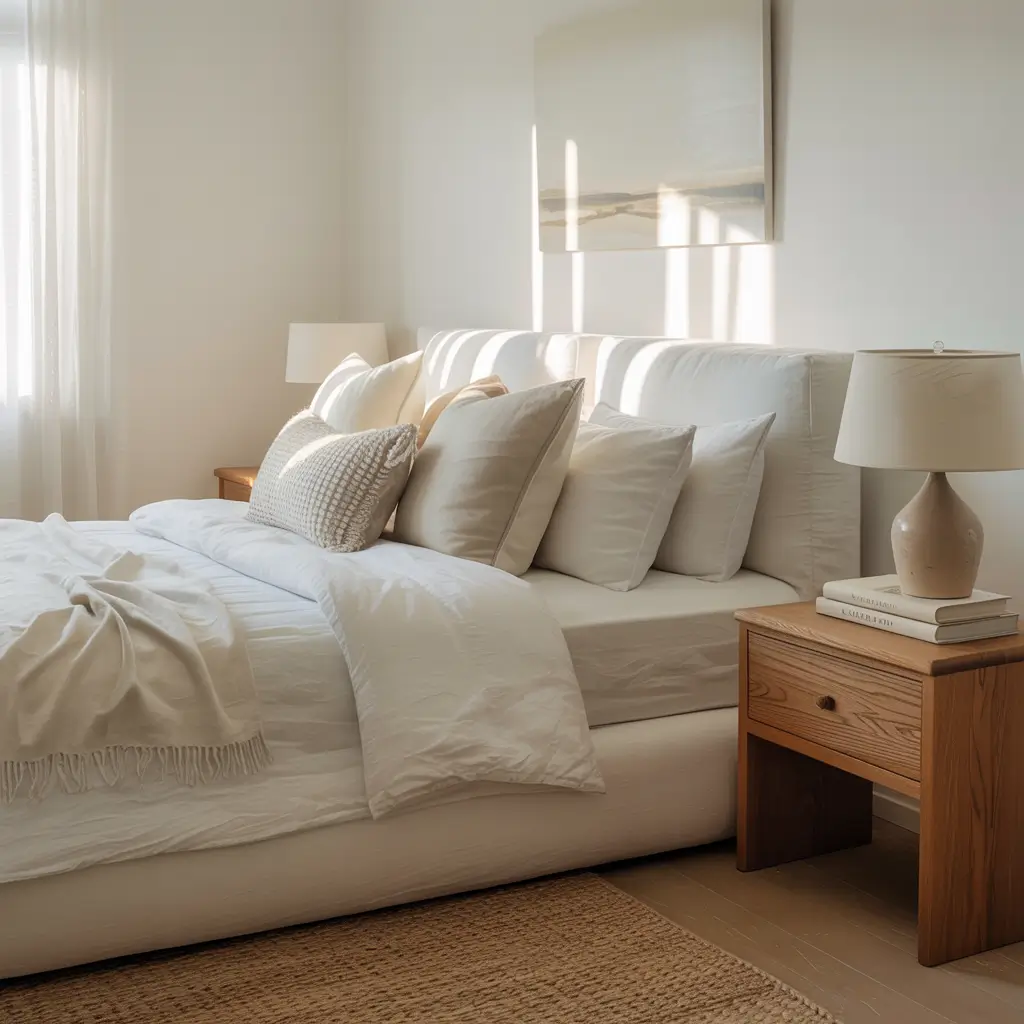
There’s a reason the white-and-wood combination never goes out of style: it’s basically the little black dress of interior design. Simple, elegant, and incredibly versatile.
I’ve returned to this combination again and again throughout my design journey because it creates such a clean, peaceful foundation while still feeling warm and inviting. Unlike all-white rooms that can feel cold, adding wood tones brings life and character.
Essential elements that nail this look:
- Crisp white walls and bedding as your neutral base
- Natural wood furniture with visible grain and character
- Minimal color palette (stick to whites, woods, and maybe one soft accent)
- Natural light maximized through sheer curtains
- Organic textures like linen, cotton, and wool
The wood selection matters more than you’d think. Light woods like oak, ash, or maple create a Scandinavian-inspired feel. Medium woods like walnut bring more warmth. Dark woods like mahogany or espresso-stained pieces add drama and sophistication.
My favorite approach? Mix wood tones thoughtfully. A light oak bed frame, medium-toned walnut nightstands, and a dark wood bench creates depth and interest. The key word is “thoughtfully”—you want it to look intentional, not like you grabbed random pieces from different furniture stores (even if you did).
What elevates this from basic to elegant? Quality craftsmanship and interesting details. A bed frame with beautiful joinery, a nightstand with dovetailed drawers, floating shelves with live edges—these details whisper quality rather than shouting it.
Modern Glam Bedroom Makeover
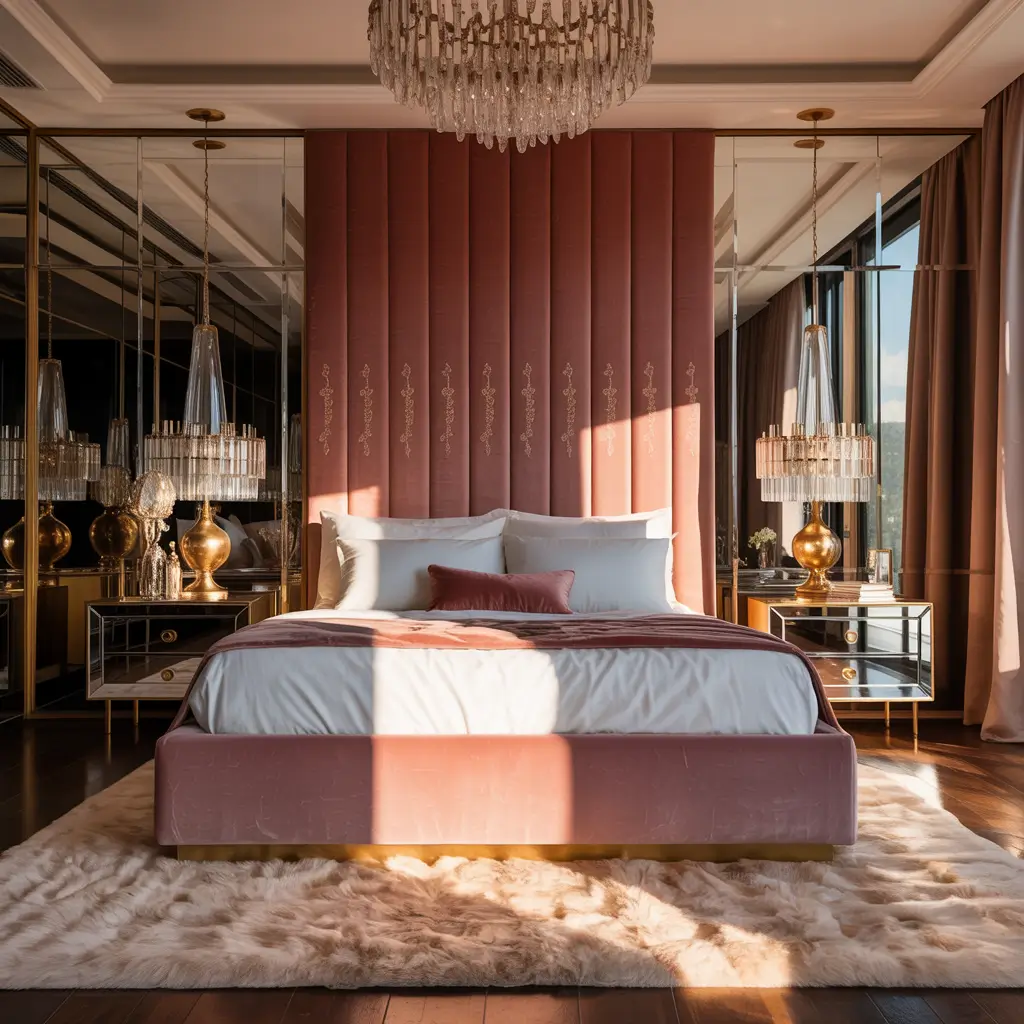
Okay, let’s talk about glamour, baby! 🙂 Modern glam bedrooms walk that fabulous line between opulent and tasteful, and when you get it right, you feel like you’re sleeping in a luxe penthouse every night.
I’ll admit, my first attempt at glam was… a lot. Too much mirror, too much sparkle, not enough restraint. But once I understood that modern glam is about selective luxury, everything came together.
The modern glam formula includes:
- One statement piece: A tufted velvet headboard, a crystal chandelier, or a dramatic mirror
- Metallic accents: Chrome, silver, or mirrored finishes
- Luxe fabrics: Velvet, silk, satin, and faux fur
- Neutral base: Usually white, grey, or soft blush
- Strategic sparkle: Sequined pillows, metallic art, or glass accessories
Here’s the thing about glam: less is genuinely more. One stunning crystal chandelier makes a statement. Five sparkly decorative items creates visual chaos. Choose your glam elements carefully and let them shine (literally).
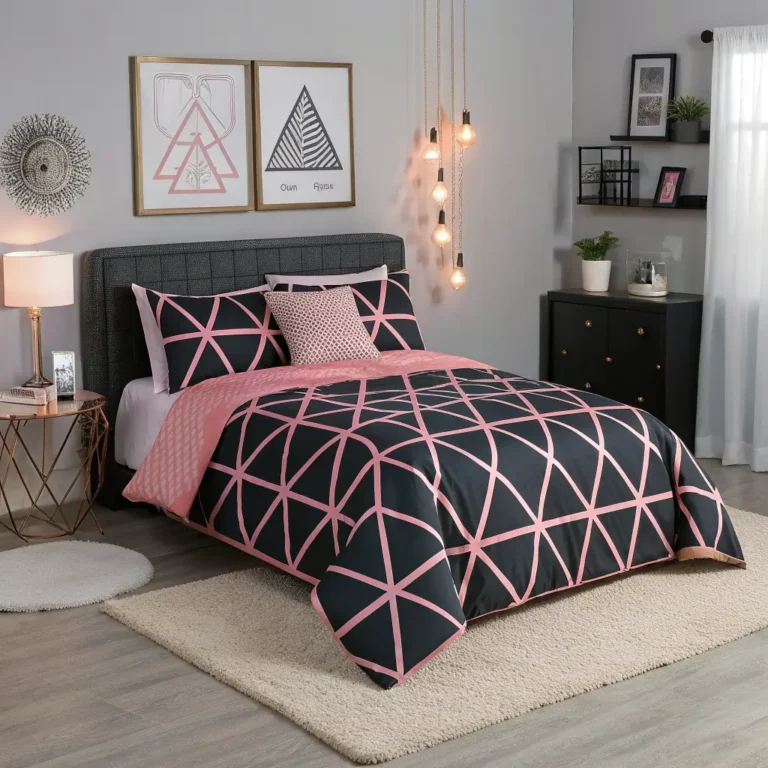
The color palette for modern glam usually stays pretty restrained. You might use soft greys, whites, and blush pinks with metallic silver or gold accents. This creates a sophisticated backdrop that lets your luxe pieces take center stage.
What I love about this style? You can adjust the glam level to your comfort. Want full Hollywood Regency? Go for a mirrored dresser and tufted velvet everywhere. Prefer glam-lite? Add a velvet throw and some metallic picture frames to an otherwise minimal space.
The lighting in a glam bedroom needs to be dramatic and dimensional. A statement chandelier obviously, but also mirrored lamps that reflect light, wall sconces that create ambiance, and maybe even some LED strips behind the headboard for that hotel suite vibe.
Also Read: 15 Stunning Navy Blue Bedroom Ideas to Transform Your Space
Serene Grey Monochrome Bedroom
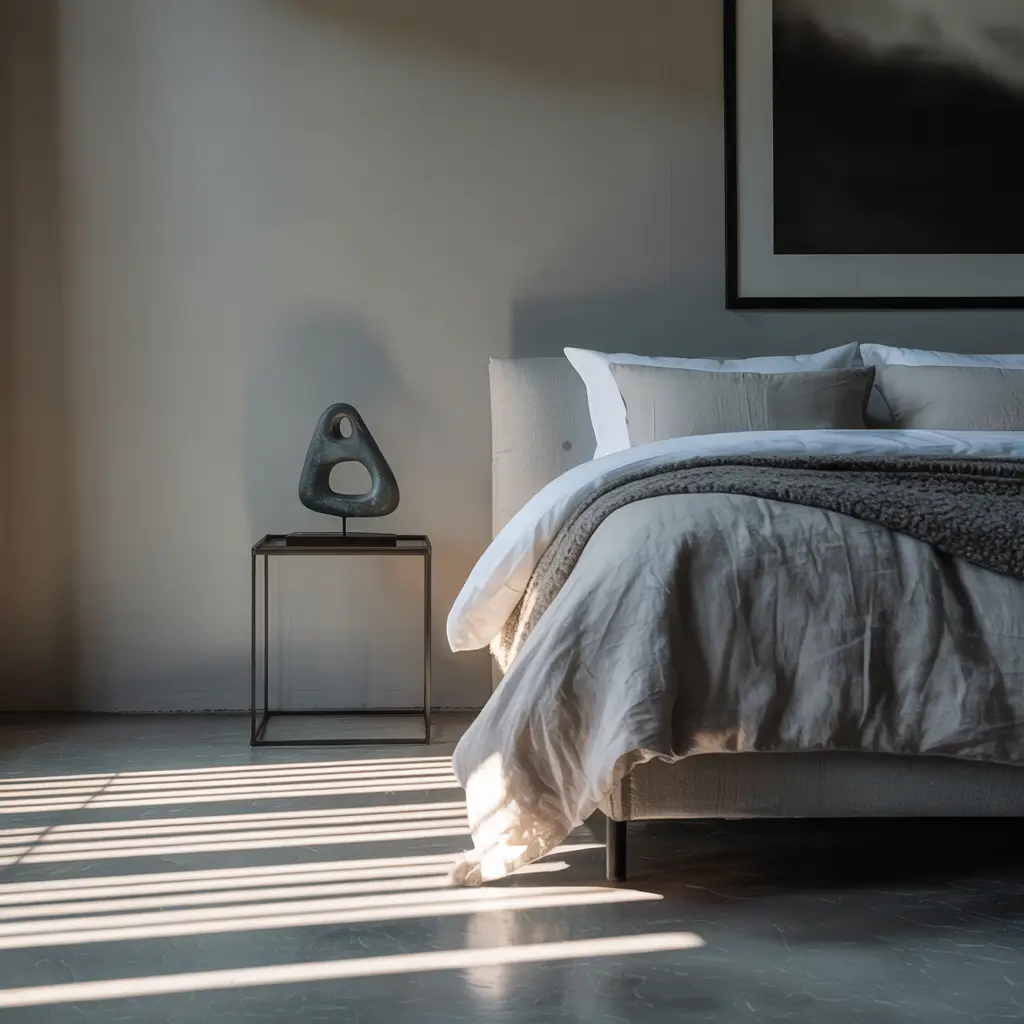
Grey gets a bad rap sometimes—people think it’s boring or depressing. But a serene grey monochrome bedroom done well? It’s like sleeping inside a peaceful cloud where stress doesn’t exist.
I created this look in my guest bedroom, and people literally comment on how calm they feel in that space. There’s something about removing color distractions that lets your brain fully relax.
Building a successful grey monochrome room requires:
- Multiple shades of grey: Light walls, medium furniture, dark accents
- Varied textures: This is non-negotiable in monochrome schemes
- Warm grey tones: Avoid cool greys that feel institutional
- Soft white accents: Prevents the space from feeling heavy
- Natural elements: Wood and plants keep it from feeling sterile
The texture thing? I cannot stress this enough. A grey room with all smooth surfaces looks like a parking garage. But add a chunky knit blanket, linen curtains, a wool rug, velvet pillows, and a rattan chair, and suddenly you’ve got depth and interest everywhere.
Lighting becomes crucial in grey spaces because it dramatically affects how the colors read. Warm LED bulbs (2700K-3000K) make greys feel cozy. Cool bulbs make them feel harsh. I learned this after installing daylight bulbs and wondering why my bedroom suddenly felt like an interrogation room.
The beauty of monochrome? You focus entirely on form, texture, and composition. That sculptural table lamp becomes a focal point. The way your throw drapes across the bed matters. It’s design in its purest form.
Classy Boho-Chic Neutral Space
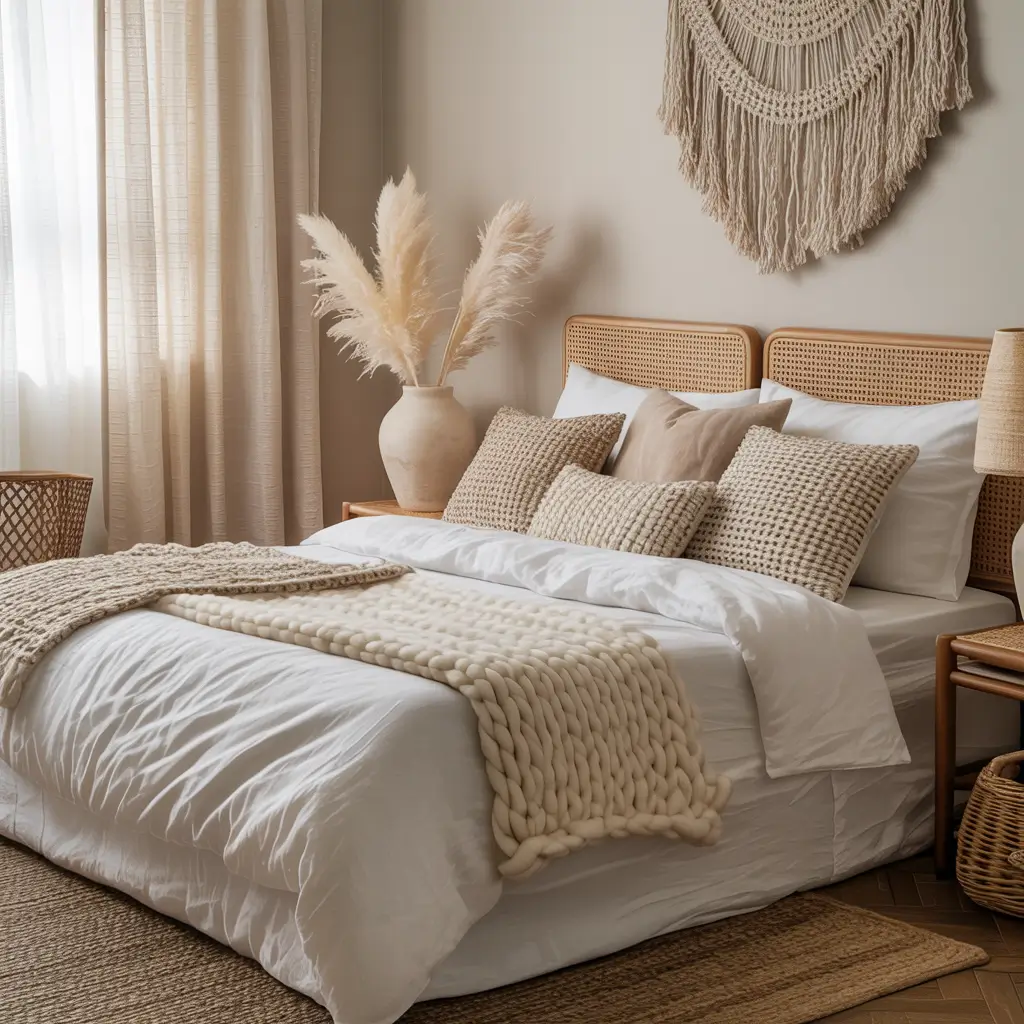
Here’s where we get a little playful while maintaining that elegant, classy vibe. Classy boho (yes, it exists!) combines the relaxed, collected feel of bohemian style with a refined neutral palette and quality pieces.
The difference between regular boho and classy boho? Restraint and curation. You’re not hanging seventeen macramé pieces and calling it a day. You’re thoughtfully incorporating bohemian elements within a sophisticated framework.
Essential components include:
- Neutral base colors: Cream, beige, warm white, soft grey
- Natural textures: Rattan, jute, linen, and woven materials
- Vintage or global-inspired pieces: One or two statement items
- Layered textiles: Mixed patterns in a cohesive color palette
- Organic elements: Plants, dried flowers, and natural wood
What makes this classy rather than cluttered? Edit ruthlessly. That beautiful Moroccan rug? Gorgeous. But pair it with simple, streamlined furniture rather than ornate pieces competing for attention. Let each boho element breathe.
I love incorporating handcrafted items in this style—a woven wall hanging, a hand-thrown ceramic vase, or a vintage kilim pillow. These pieces add character and tell a story without overwhelming the space.
The color palette stays neutral but warm. Think creamy whites, warm taupes, soft camels, and maybe some muted terracotta. You can introduce pattern through textiles, but keep the colors within this restrained palette for that elevated feel.
High-End Dark Academia Bedroom
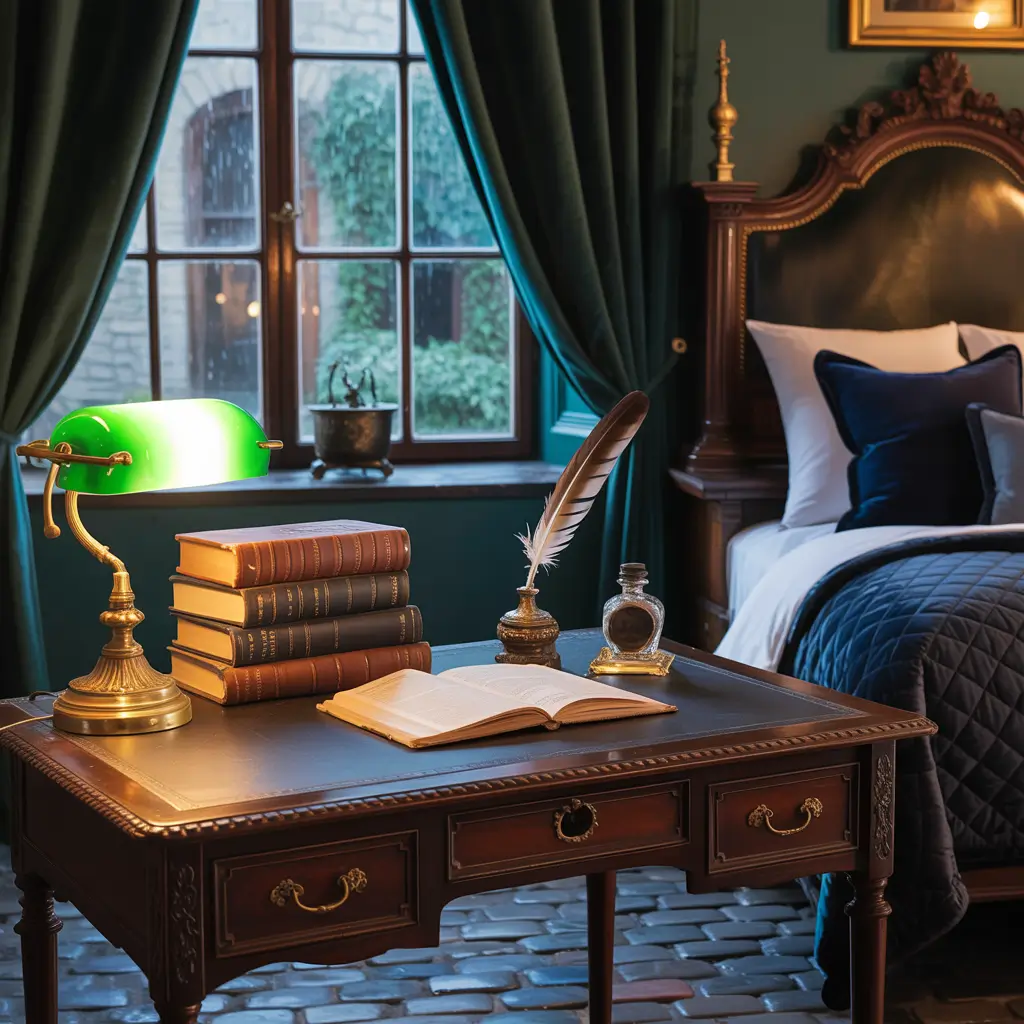
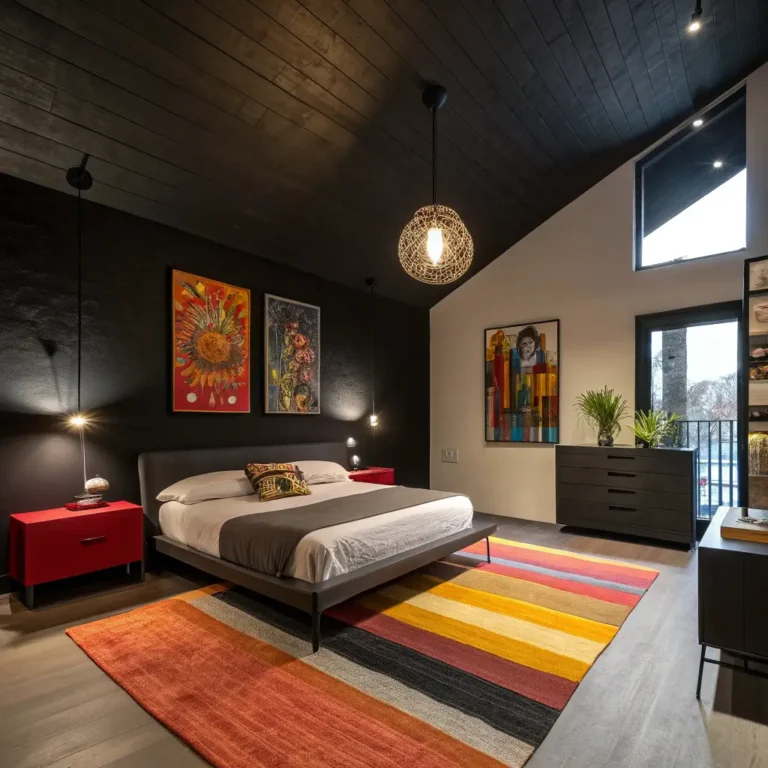
Ever dreamed of sleeping in an old library or an English manor? The dark academia aesthetic brings that moody, intellectual, vintage-scholarly vibe to your bedroom, and it’s honestly one of my favorite looks for creating cozy luxury.
This style embraces rich, dark colors and vintage elegance in a way that feels both dramatic and incredibly cozy. Think old books, leather, wood paneling, and the kind of atmosphere where you want to read poetry by candlelight (even if you’re actually scrolling TikTok).
Key elements that define this look:
- Deep, rich colors: Forest green, burgundy, navy, chocolate brown, or charcoal
- Dark wood furniture: Antique or antique-looking pieces with character
- Leather accents: A tufted leather bench or chair adds instant sophistication
- Vintage books: Displayed as decor, obviously
- Warm, ambient lighting: Table lamps with warm bulbs, never harsh overhead lights
- Classic artwork: Vintage prints, botanical illustrations, or old maps
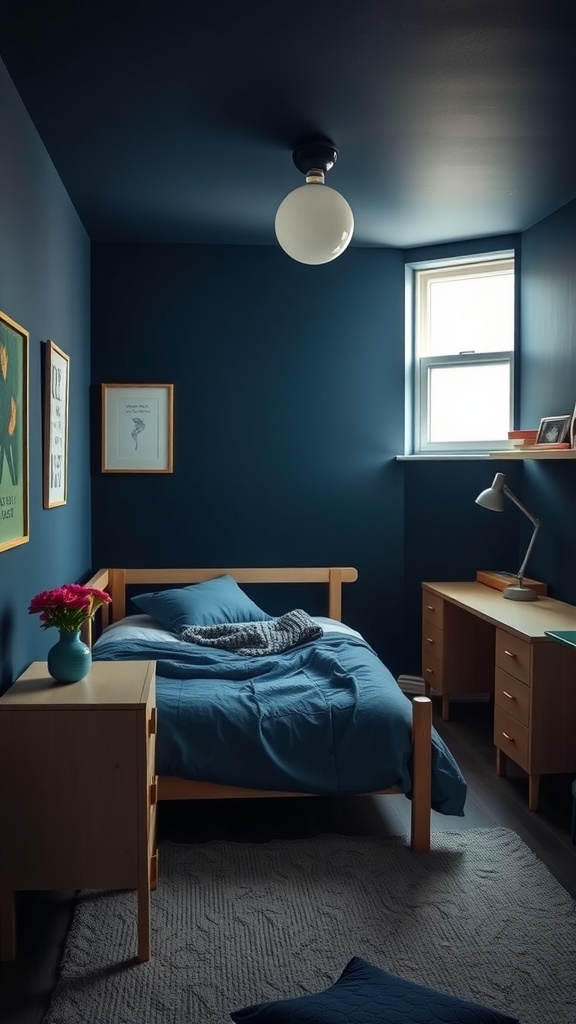
The wall color sets the entire mood here. Going dark on walls might feel scary, but it creates the most incredible cocoon effect. I painted one bedroom a deep forest green, and instead of feeling small, the room felt intimate and luxurious.
Layering is everything in dark academia spaces. Layer your bedding with a rich velvet duvet, wool blankets, and lots of pillows. Layer your lighting with multiple sources at different heights. Layer your decor with books, vintage objects, and framed artwork.
What prevents this from feeling too heavy or dark? Strategic use of warm metallics (brass, aged gold) and lighter accent colors. Cream bedding, a camel-colored leather chair, or cream curtains lighten the space while maintaining the sophisticated mood.
Elegant Blush & Cream Aesthetic
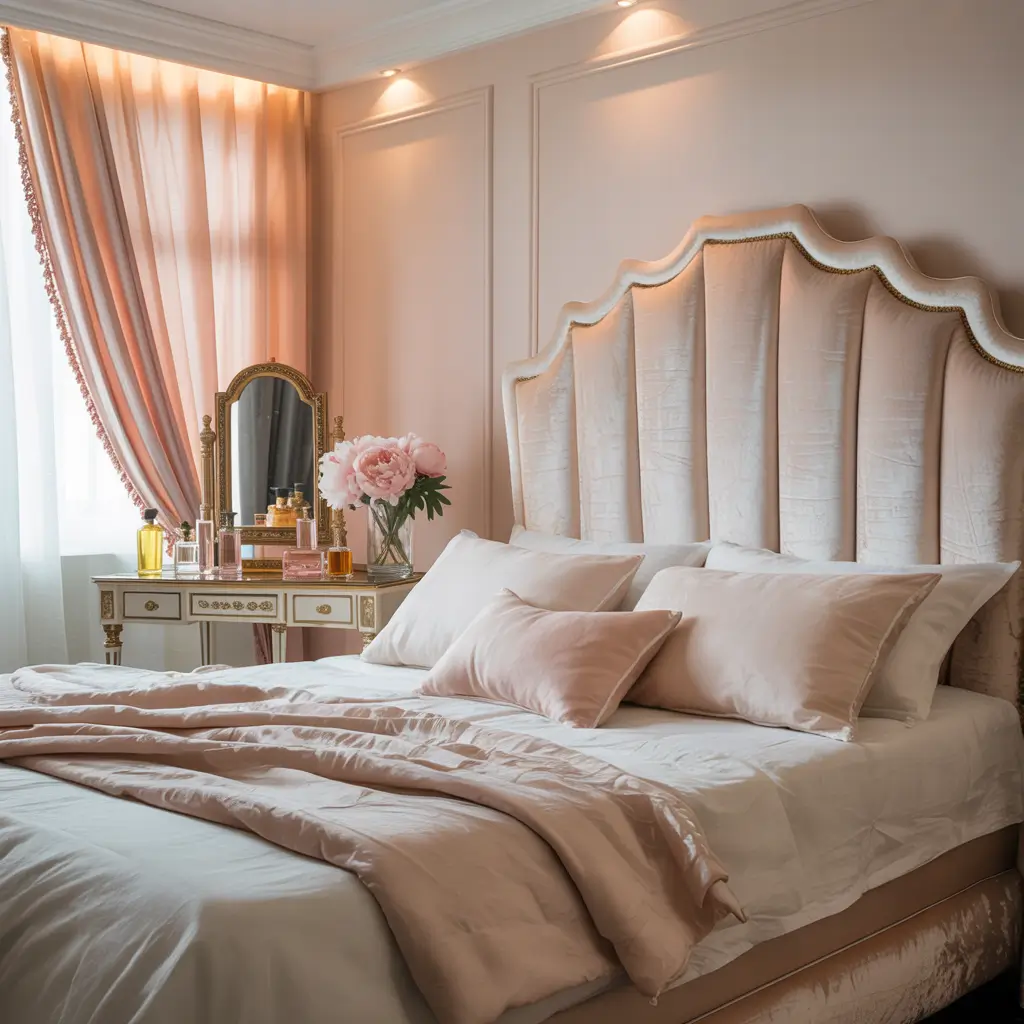
Blush pink in the bedroom could easily veer into little-girl territory, but when you pair it with cream and execute it with restraint, you get something incredibly elegant and surprisingly sophisticated.
I was skeptical about this combination until I saw it done right in a designer showroom. The key is treating blush as a neutral (which it basically is) rather than a bold color statement.
Creating this elegant look requires:
- Soft blush tones: Dusty rose, muted mauve, or barely-there pink
- Creamy whites: Not stark white, but warm, soft cream
- Quality fabrics: Linen, silk, or high-thread-count cotton
- Metallic accents: Rose gold, brass, or champagne finishes
- Minimal pattern: Solids or very subtle textures
The blush-to-cream ratio matters. You typically want cream as your dominant color (60-70%) with blush as your secondary color (20-30%) and then metallics and other accents filling in the rest. This keeps the space feeling light and sophisticated.
Texture becomes your secret weapon here. Since you’re working within such a subtle color palette, varied textures create all your visual interest. A velvet blush headboard, cream linen sheets, a chunky knit throw, and silk pillows—each texture catches light differently and adds dimension.
What I love about this palette? It photographs beautifully (hello, Instagram-worthy bedroom!), but more importantly, it creates a genuinely peaceful, feminine-without-being-girly space that feels like a luxurious retreat.
Classy Japandi-Style Bedroom
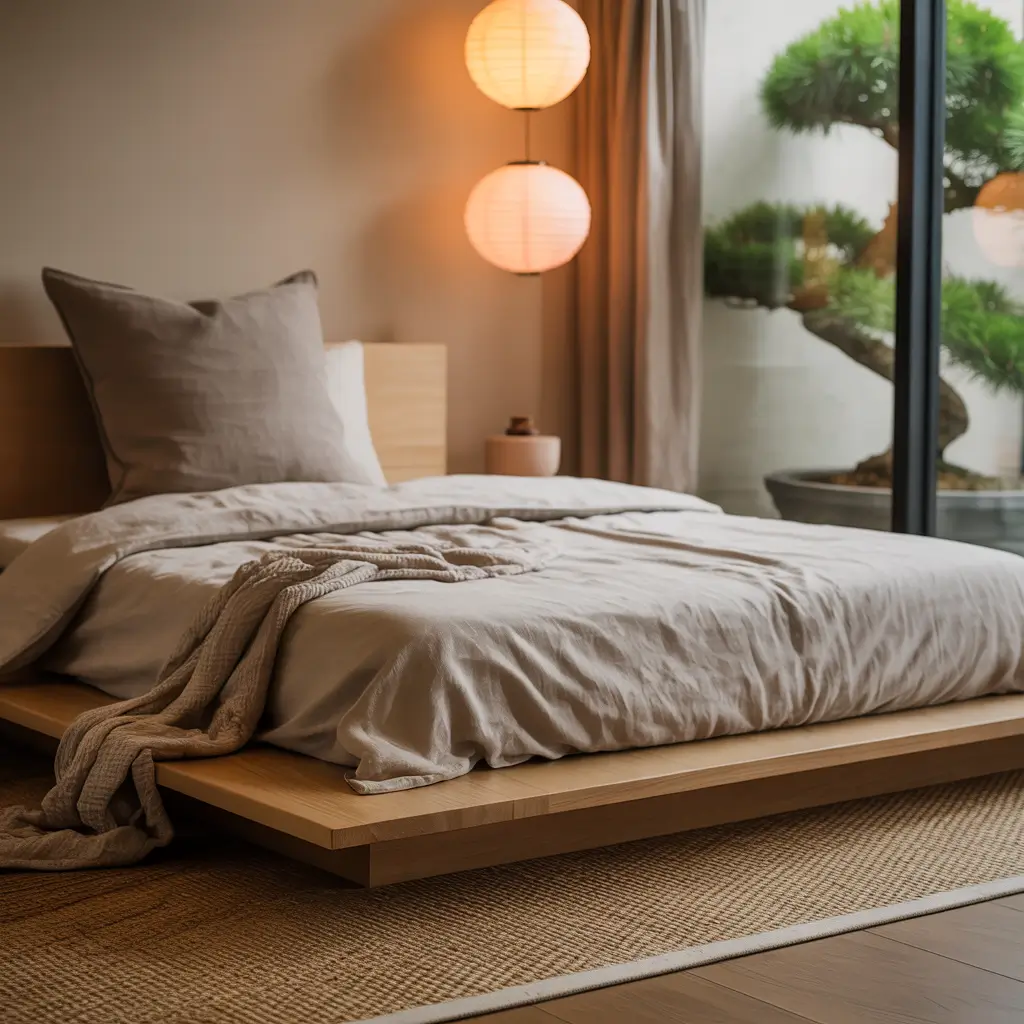
Japandi (the fusion of Japanese and Scandinavian design) might be trendy right now, but the principles behind it are timeless. This style creates minimalist luxury through perfect imperfection and thoughtful simplicity.
I’ve always been drawn to both Japanese and Scandinavian aesthetics, so when designers started combining them, it felt like someone finally put words to what I’d been trying to achieve. The result is clean, calm, and incredibly sophisticated.
Core elements of Japandi bedrooms:
- Neutral, natural color palette: Whites, beiges, greys, and black accents
- Low-profile furniture: Platform beds and low-slung pieces
- Natural materials: Light woods, bamboo, linen, cotton, and stone
- Minimal decor: Only functional or deeply meaningful items
- Wabi-sabi philosophy: Embracing imperfection and natural wear
- Clean lines with organic elements: Balance between structured and natural
The furniture in a Japandi bedroom has simple, clean lines but with visible craftsmanship. A platform bed in light oak with beautiful joinery, for example. A minimalist nightstand with perfectly proportioned drawers. Nothing fussy, but everything intentional.
What makes this style luxurious despite its minimalism? Quality materials and exceptional craftsmanship. One beautifully made linen duvet cover beats ten cheap decorative pillows. A handcrafted ceramic vase beats a shelf full of tchotchkes.
The color palette stays restrained—mostly neutrals with maybe one muted accent color like sage green or soft grey-blue. This creates a sense of calm that’s essential to both Japanese and Scandinavian design philosophies.
Luxury Mirrored Furniture Look
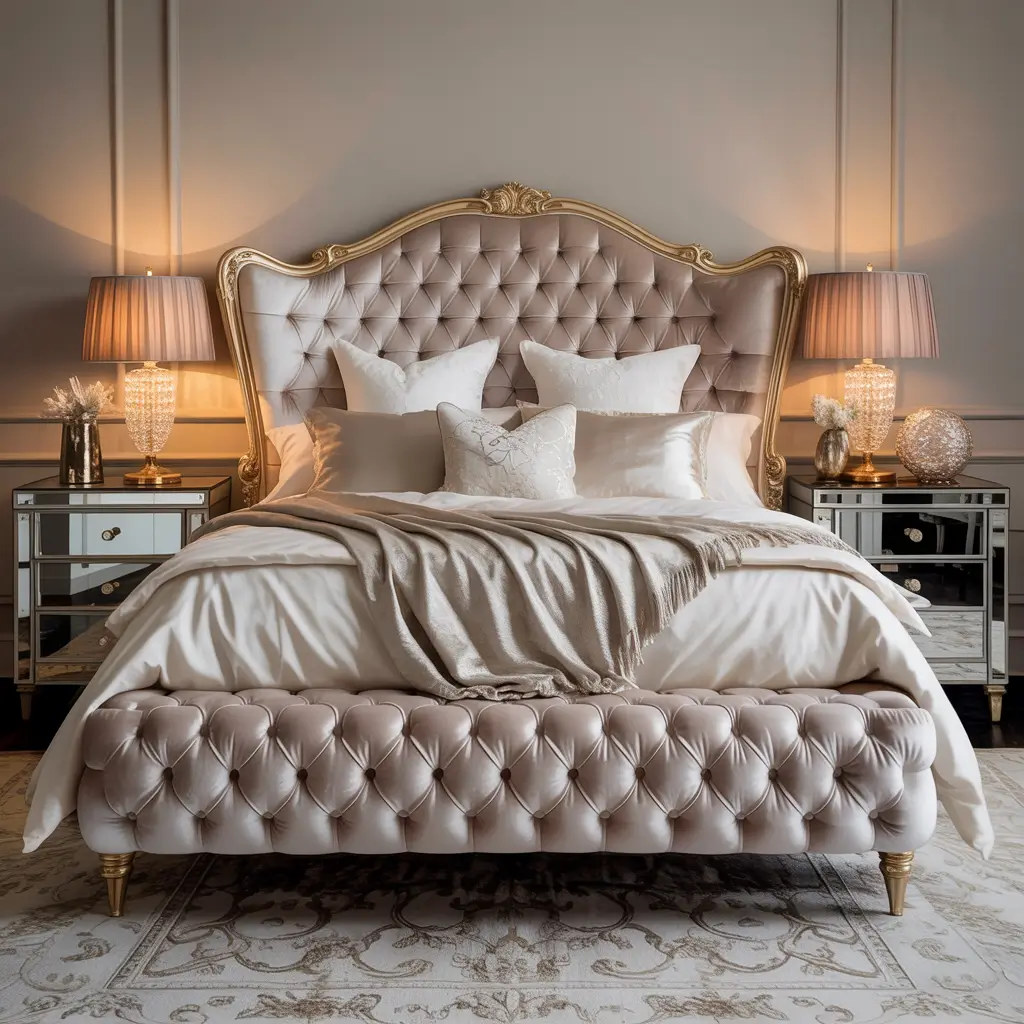
Mirrored furniture: either your design dream or your cleaning nightmare. But when you use it strategically, mirrored pieces create glamorous, light-filled luxury that makes spaces feel larger and more expensive.
Full disclosure: I initially avoided mirrored furniture thinking it was too “look at me” for everyday life. Then I added one mirrored nightstand to my bedroom, and the way it bounced light around the room completely changed my mind.
Using mirrored furniture elegantly means:
- Limit your mirrored pieces: One or two statement items, not every surface
- Balance with matte finishes: Prevents the space from feeling like a disco ball
- Choose quality pieces: Cheap mirrored furniture looks cheap
- Consider placement carefully: Position where it reflects something beautiful
- Pair with luxe textiles: Velvet, silk, and soft fabrics balance the reflective surfaces
The most successful luxury mirrored bedrooms use mirrored furniture as accent pieces rather than the entire furniture set. A mirrored dresser makes a gorgeous statement. Mirrored nightstands add glamour without overwhelming. A mirrored bed frame? That might be too much unless you’re going full maximalist glam.
What I learned about mirrored furniture: it actually makes rooms feel larger by reflecting light and creating visual depth. In a small bedroom, one mirrored piece strategically placed across from a window can dramatically brighten the space.
The style you pair with mirrored furniture matters. It works beautifully with modern glam, art deco, or contemporary styles. It can clash with rustic or traditional looks unless you’re very intentional about mixing styles.
Scandinavian Classy Minimal Bedroom
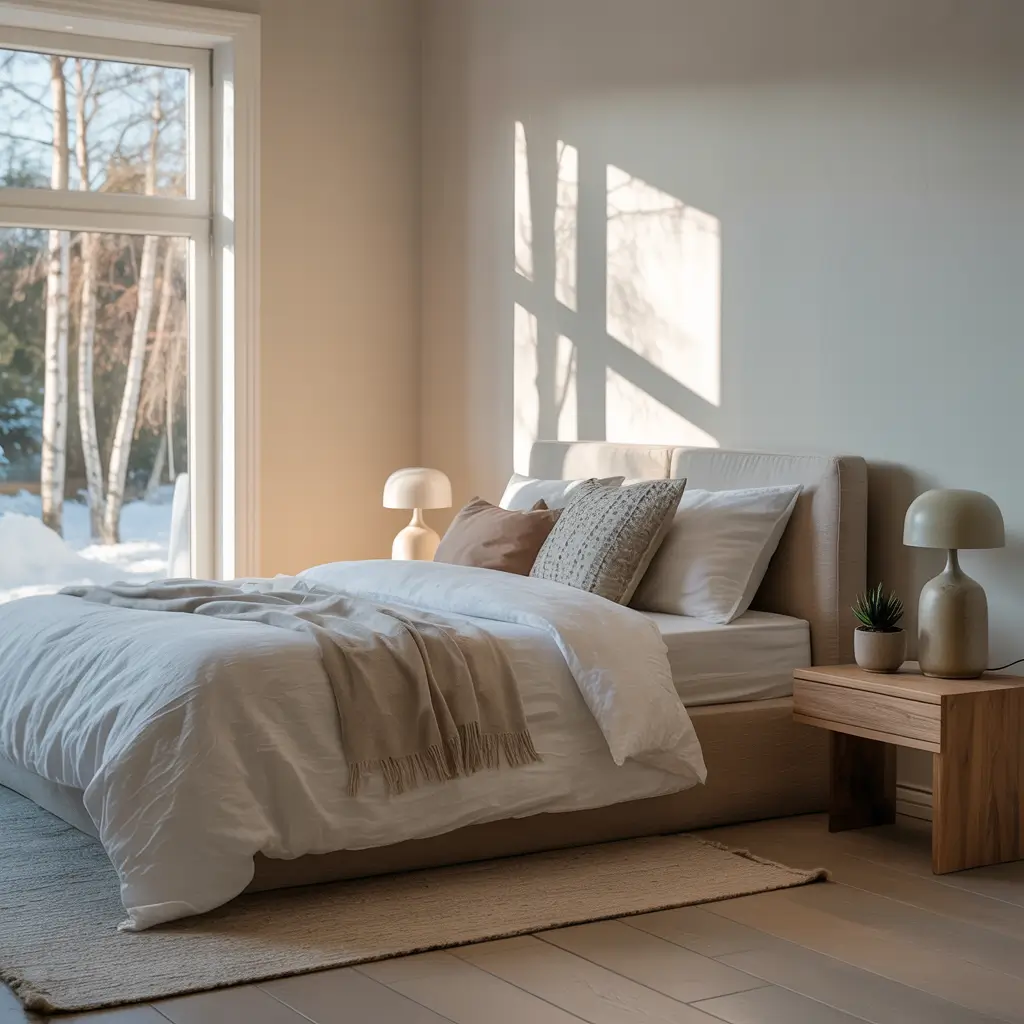
We’re ending with one of my absolute favorites: the Scandinavian minimal bedroom. This style perfected functional beauty and cozy minimalism long before it became trendy, and it remains one of the most livable, elegant approaches to bedroom design.
What makes Scandi minimalism classy rather than just empty? It’s the focus on quality, light, and hygge (that Danish concept of cozy contentment that doesn’t translate perfectly but we all understand intuitively).
The Scandinavian bedroom includes:
- White or very light walls: Maximizes the limited northern light
- Light wood furniture: Birch, ash, or light oak
- Minimal color palette: Whites, greys, and natural wood tones
- Functional design: Everything serves a purpose
- Cozy textiles: Sheepskin rugs, wool throws, linen bedding
- Plenty of candles: For that hygge atmosphere
- Simple, beautiful objects: A few carefully chosen decorative pieces
The lighting approach in Scandinavian bedrooms is brilliant. Since natural light is precious in Nordic countries, they maximize it with sheer white curtains and strategically placed mirrors. Then they create warmth through multiple light sources—candles everywhere, warm-toned lamps, and pendant lights with soft glows.
What I love most about this style? It’s genuinely low-maintenance and highly functional while still being beautiful. You don’t need to fuss with a million decorative pillows. You don’t need to keep expensive surfaces pristine. Everything is designed to be lived in and enjoyed.
The color palette rarely ventures beyond neutrals, but there’s so much textural variety that it never feels boring. Smooth painted walls, grainy wood floors, nubby wool blankets, soft linen sheets, fluffy sheepskin rugs—every surface offers tactile interest.
Bringing It All Together
So there you have it—15 distinct approaches to creating an elegant, classy bedroom that doesn’t sacrifice coziness for luxury. Whether you’re drawn to the warmth of earthy tones, the drama of dark academia, or the simplicity of Scandinavian design, the underlying principles remain consistent.
What makes any bedroom feel truly luxurious? It’s not about expensive furniture or designer labels. It’s about intentional choices, quality over quantity, and creating a space that genuinely serves your needs. It’s choosing one beautiful duvet over five mediocre throws. It’s investing in proper lighting instead of relying on that sad overhead fixture. It’s editing ruthlessly so every item in your bedroom earns its place.
The most important thing I’ve learned through all my bedroom experiments and redesigns? Your bedroom should feel like a retreat that’s specifically tailored to you. Love bold drama? Go dark academia or modern glam. Crave simplicity? Embrace Japandi or Scandinavian minimalism. Need warmth? Earthy tones or soft blush and cream will wrap you in coziness.
Start with one style that speaks to you, identify the core elements that make it work, and begin implementing them gradually. You don’t need to transform your entire bedroom overnight (despite what those home makeover shows suggest). Sometimes the most elegant spaces evolve slowly, thoughtfully, and with careful consideration.