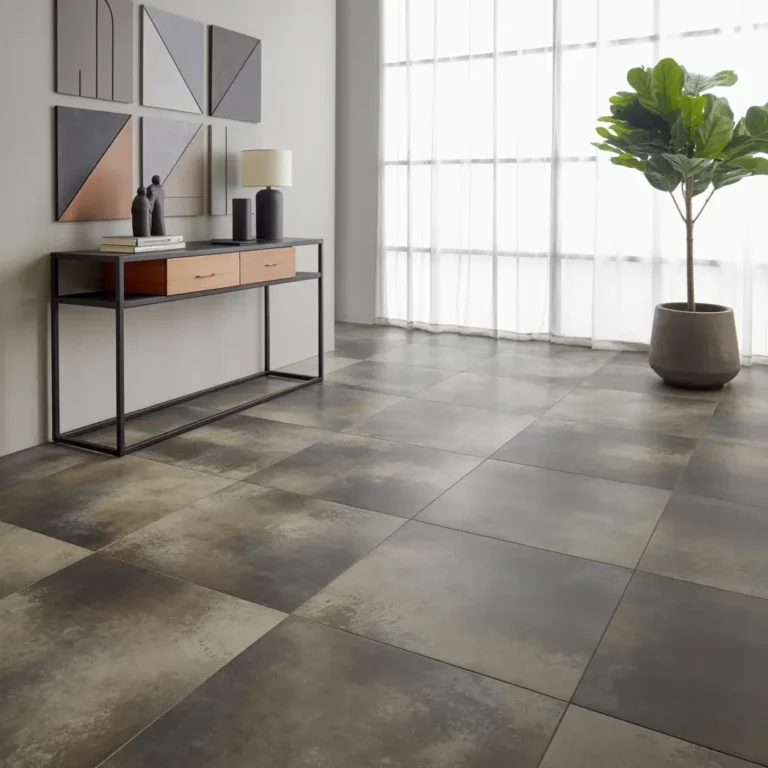
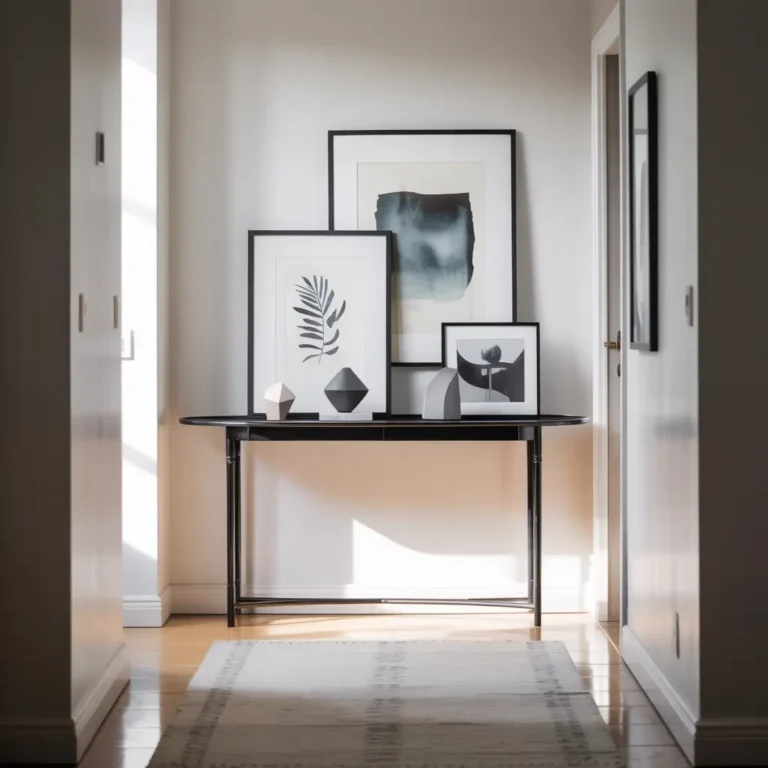
15 Brilliant Front Foyer Ideas Entryway Transformations

Your front foyer sets the entire mood for your home. It’s the first thing guests see when they walk through your door, and honestly? It’s the last thing you glimpse before heading out into the chaos of daily life. So why do so many of us treat this space like an afterthought—a dumping ground for shoes, keys, and that pile of mail we keep meaning to sort through?
I’ve spent years obsessing over entryway design, probably because my own front foyer was an absolute disaster for way too long. We’re talking mismatched furniture, zero storage solutions, and a vibe that screamed “we gave up here.” But after countless Pinterest boards, one too many home improvement shows, and some serious trial and error, I’ve learned what actually works.
Whether you’re working with a grand double-height space or a narrow hallway that barely fits a welcome mat, I’ve got you covered. These 15 brilliant front foyer ideas will transform your entryway from forgettable to unforgettable. Let’s get into it.
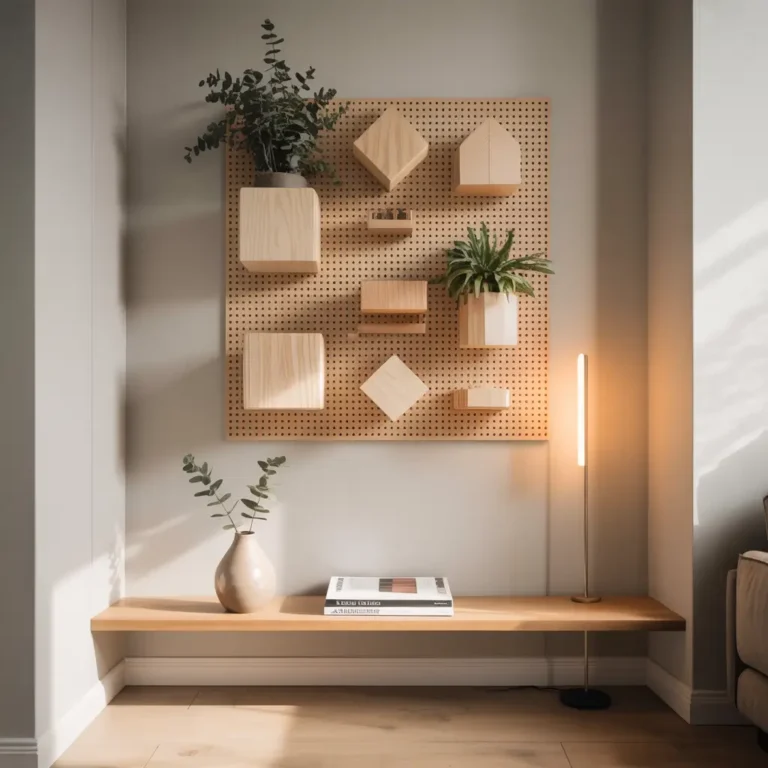
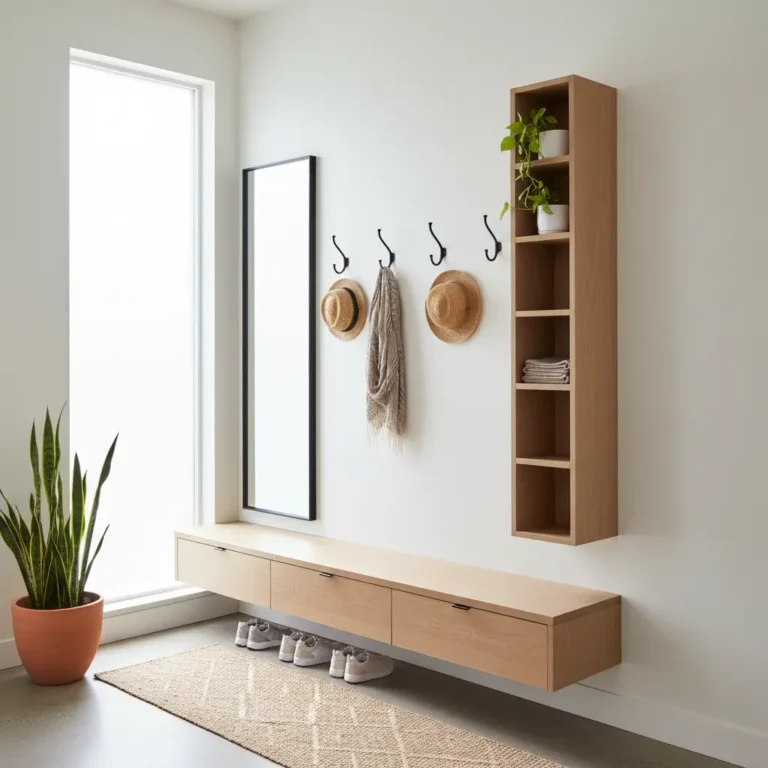
1. Modern Minimalist Front Foyer Entryway
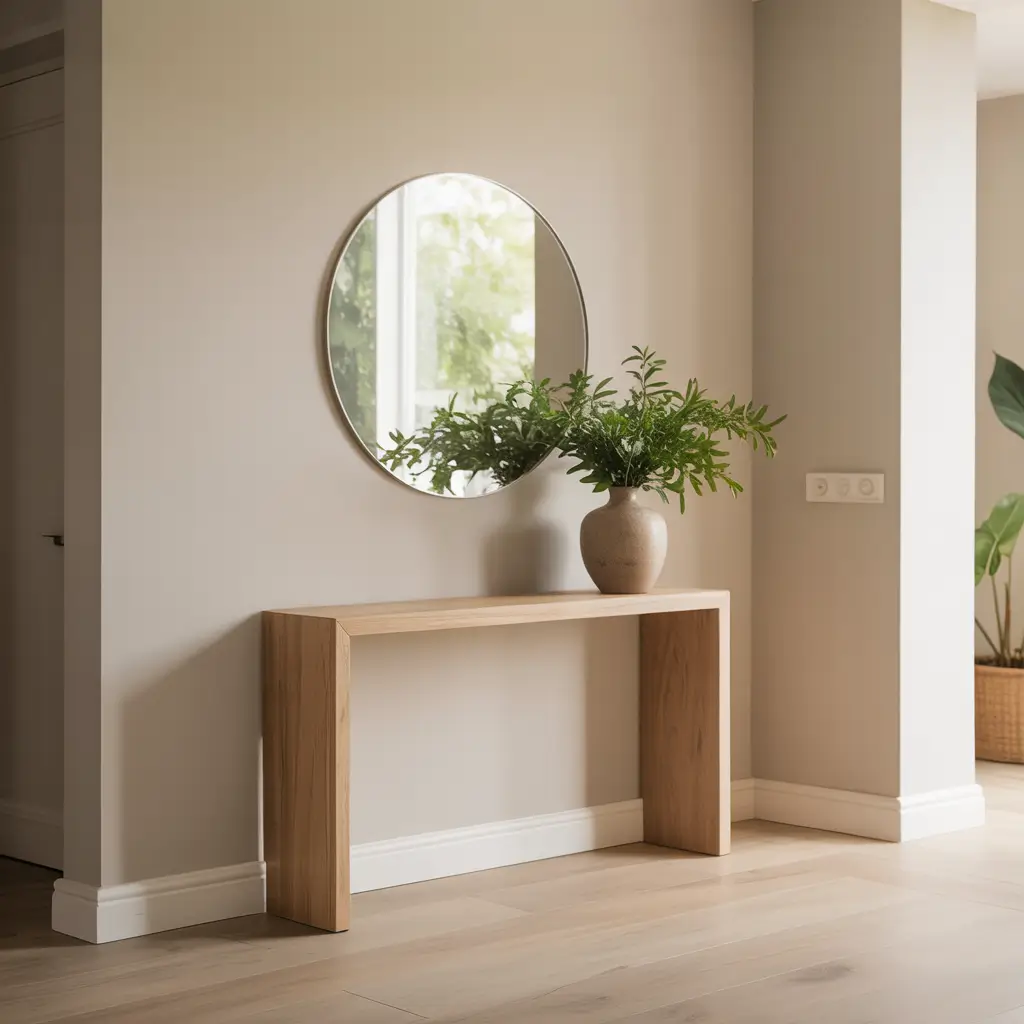
Less really is more when it comes to the modern minimalist approach. This style strips away the clutter and focuses on clean lines, neutral tones, and purposeful pieces. Think sleek console tables, a single piece of statement art, and maybe a geometric pendant light overhead.
The key here? Every item must earn its place. You’re not displaying things just for the sake of filling space. That random vase your aunt gifted you five years ago? It’s time to say goodbye unless it genuinely sparks joy and fits the aesthetic.
Essential Elements for Minimalist Success
- Floating shelves in white or natural wood
- A slim-profile console table with hidden storage
- Monochromatic color palette (whites, grays, blacks)
- One bold art piece or sculptural element
- Concealed coat hooks or a minimalist coat rack
I’ll be honest—this style requires discipline. You can’t let things pile up because every stray item becomes immediately noticeable. But when you nail it? Your entryway feels like a breath of fresh air every single time you walk through.
2. Small Space Smart Storage Foyer
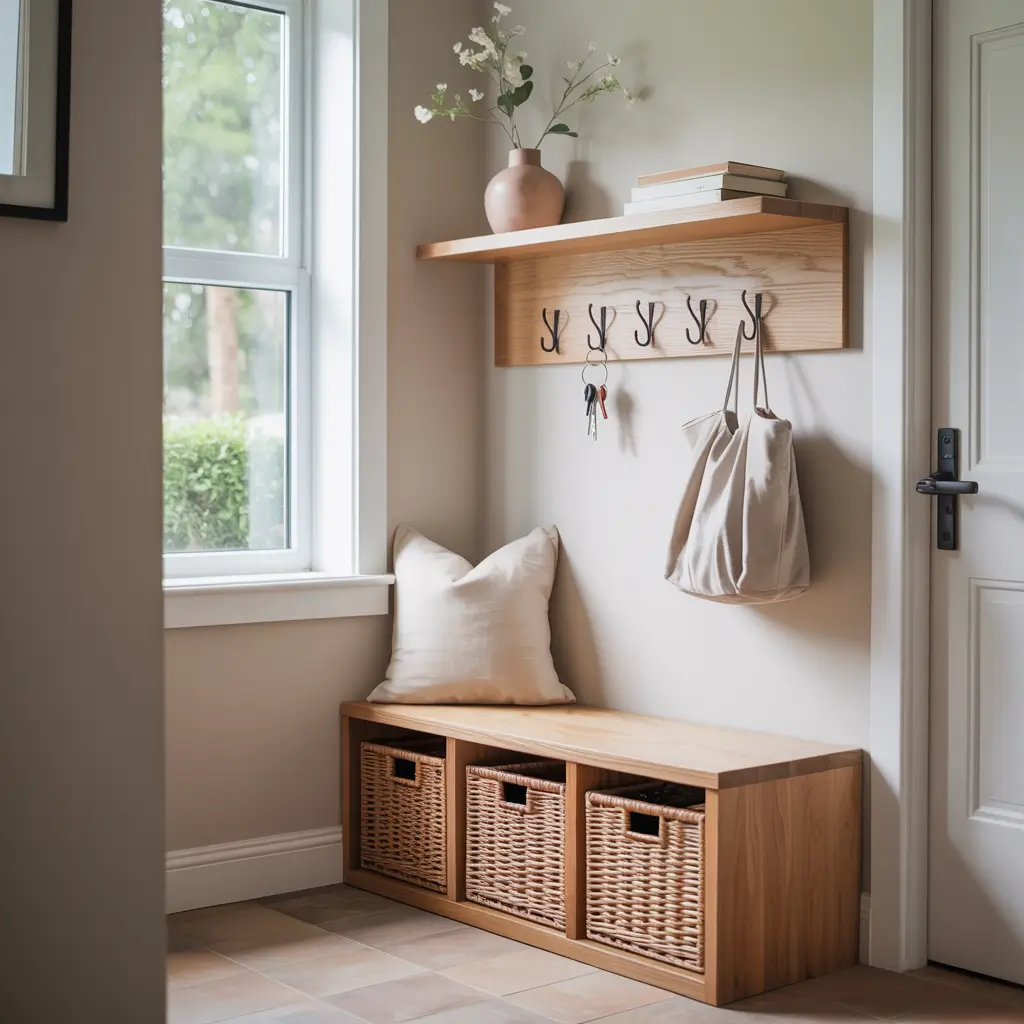
Got a tiny entryway? Join the club. Most of us aren’t blessed with sprawling foyers, and that’s perfectly okay. Smart storage solutions can make even the tiniest space work overtime.
The trick is thinking vertically. When floor space is limited, your walls become prime real estate. Wall-mounted coat racks, floating shelves, and over-the-door organizers are your new best friends. And have you considered a slim console table with built-in drawers? Game changer.
Storage Solutions That Actually Work
- Bench seating with hidden compartment underneath
- Wall-mounted key holders with mail slots
- Vertical shoe racks or stackable cubbies
- Hooks at varying heights (adults and kids)
- Narrow umbrella stands that tuck into corners
The biggest mistake people make with small entryways? Trying to cram in too much furniture. Choose multipurpose pieces that serve double or triple duty. A bench that stores shoes inside, a mirror with hooks attached, or a console table with baskets underneath—these are the heroes of small space design.
3. Farmhouse Rustic Front Entryway Charm
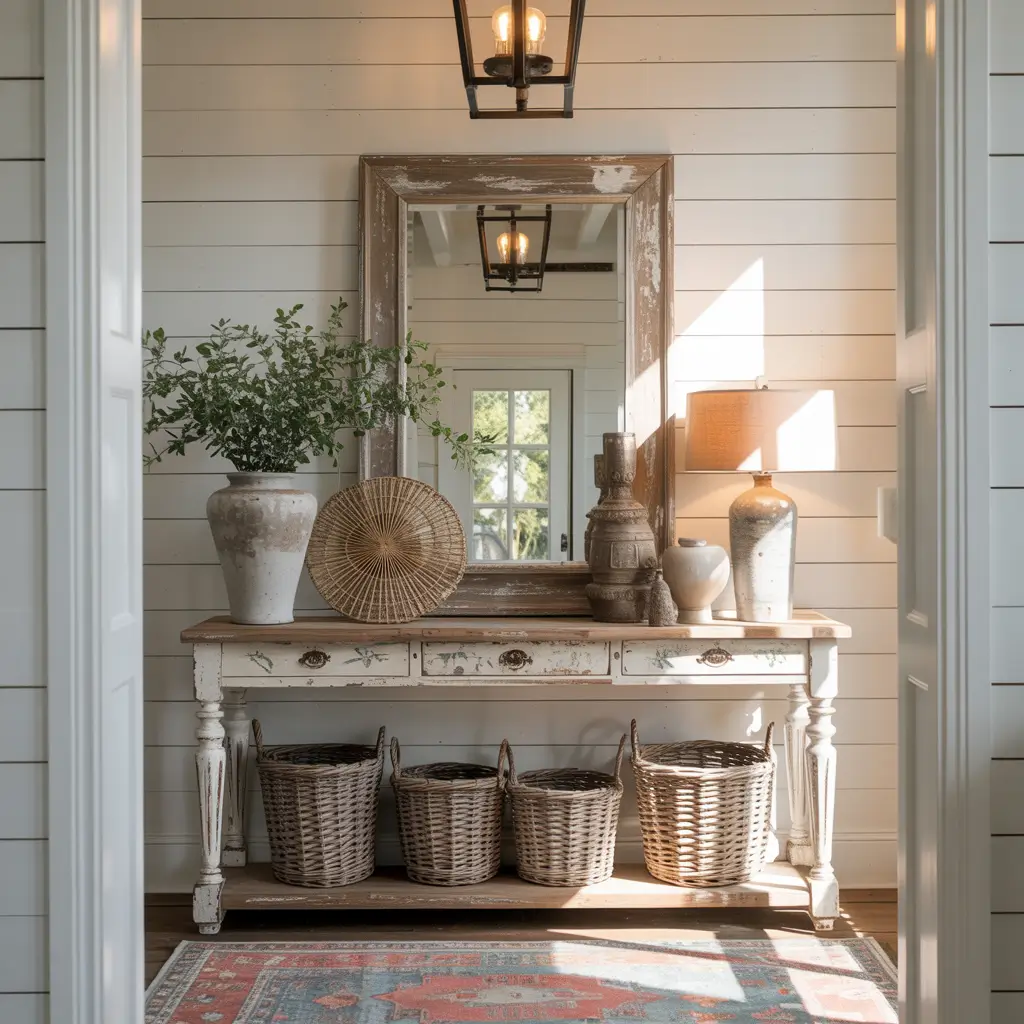
There’s something undeniably warm about farmhouse style. It wraps you in comfort the moment you step through the door, and isn’t that exactly what a home should feel like?
This aesthetic leans heavily on natural materials, vintage finds, and that perfectly imperfect vibe. We’re talking reclaimed wood benches, galvanized metal accents, and woven baskets overflowing with cozy throws. Shiplap walls? Absolutely. A weathered wooden sign with some heartfelt quote? Why not.
Building That Farmhouse Feel
- Distressed wood console table or vintage dresser
- Shiplap or beadboard wall treatment
- Wrought iron hooks and hardware
- Natural fiber rugs (jute, sisal, or braided cotton)
- Greenery in galvanized planters or mason jars
- Vintage-inspired pendant lighting
What I love about farmhouse entryways is their forgiving nature. Scuffs, scratches, and wear add to the charm rather than detracting from it. This makes it perfect for busy households with kids, pets, or both. Your entryway can actually live and breathe without you having a breakdown over every imperfection.
4. Luxury Glam Front Foyer Styling
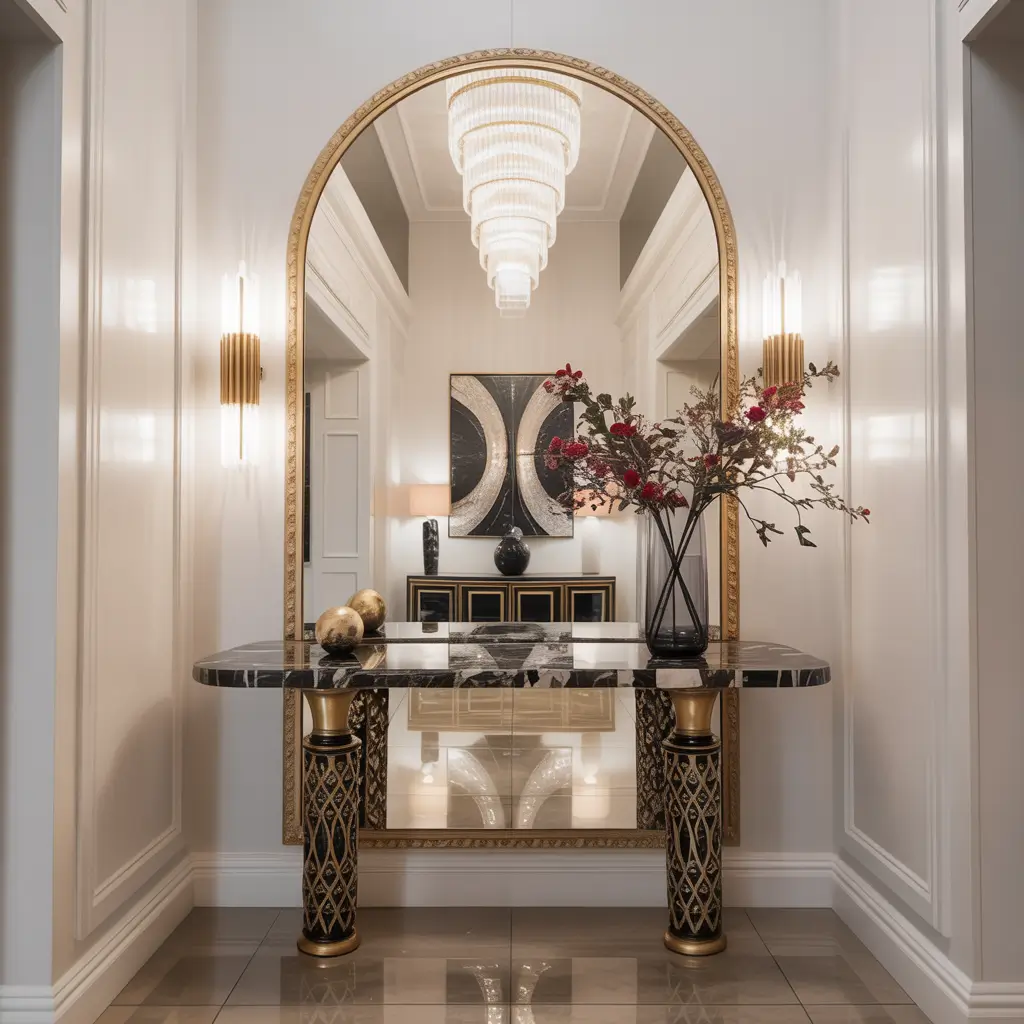
Want your entryway to make a serious statement? Luxury glam is where it’s at. This style doesn’t whisper—it announces your arrival with crystal chandeliers, metallic accents, and unapologetically bold choices.
Think mirrored furniture, velvet upholstery, and gold or brass hardware everywhere. A tufted bench, an ornate mirror, and maybe even some faux fur elements. Yes, it’s extra. That’s the whole point.
Creating That High-End Look
- Crystal or statement chandelier lighting
- Mirrored or lacquered furniture pieces
- Metallic finishes (gold, brass, chrome)
- Luxurious textiles (velvet, silk, faux fur)
- Oversized framed mirrors with decorative edges
- Fresh flowers or high-quality faux arrangements
Here’s a secret: you don’t need a mansion-sized budget to achieve this look. Strategic splurges on key statement pieces combined with more affordable supporting elements can create that high-end feel without maxing out your credit cards. Focus your investment on lighting and one standout furniture piece—those make the biggest visual impact.
5. Narrow Hallway Style Entryway
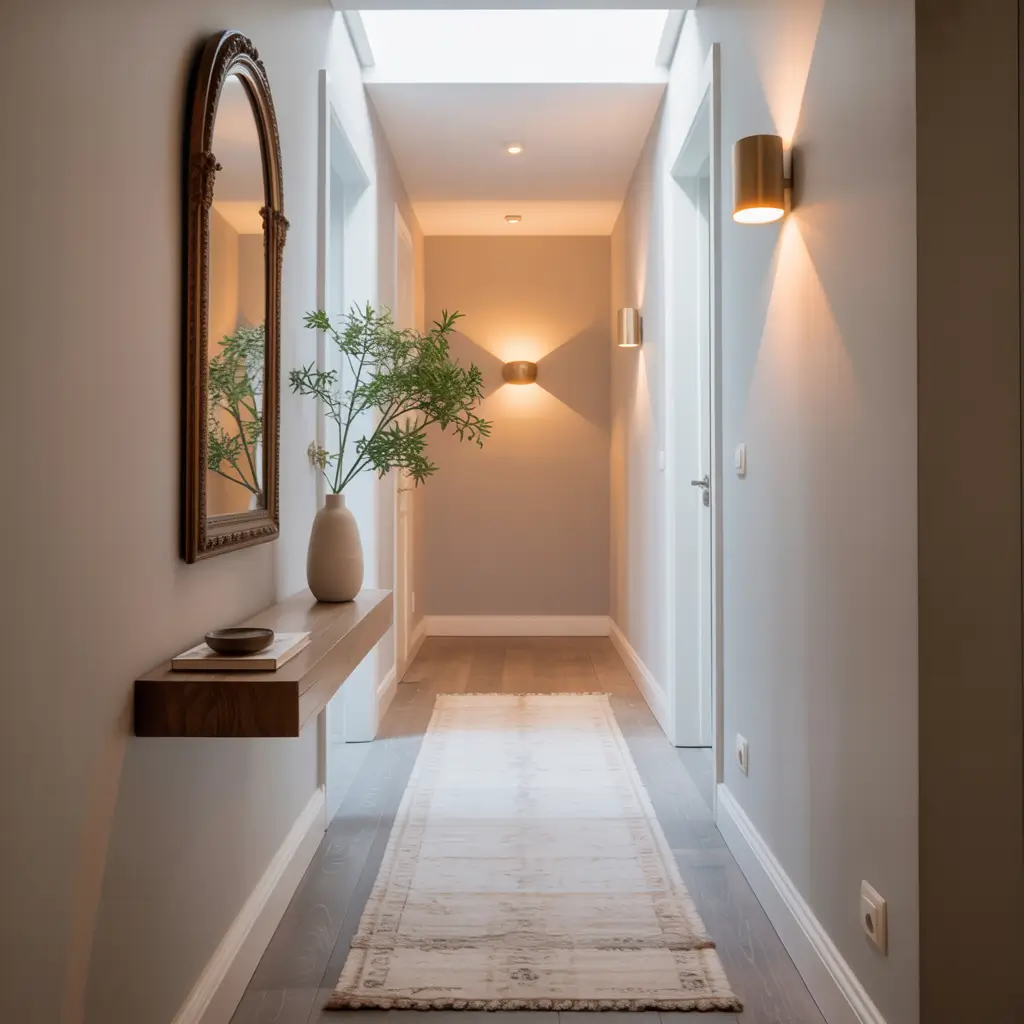
Narrow entryways present unique challenges, but they’re far from hopeless. The goal here is creating visual flow while maximizing every usable inch of that skinny space.
Mirrors are your secret weapon. A large mirror on one wall instantly doubles the visual space and bounces light around. Pair that with a super slim console table—I’m talking 12 inches deep or less—and you’ve got function without sacrificing walkway space.
Narrow Space Survival Guide
- Extra slim console tables (look for 8-12 inch depths)
- Long horizontal mirrors to expand visual width
- Wall-mounted hooks instead of floor-standing coat racks
- Runner rugs to create visual length
- Lighter color palettes to open up the space
- Strategic lighting to eliminate dark corners
One thing I learned the hard way? Avoid placing furniture on both sides of a narrow hallway. It creates a claustrophobic bowling alley effect that makes everyone uncomfortable. Keep one wall functional and leave the other relatively clear, maybe with just some art or a mirror.
Also Read: 15 Elegant Foyer Ideas Entryway for a Luxe Look
6. Bright and Airy White Foyer Design
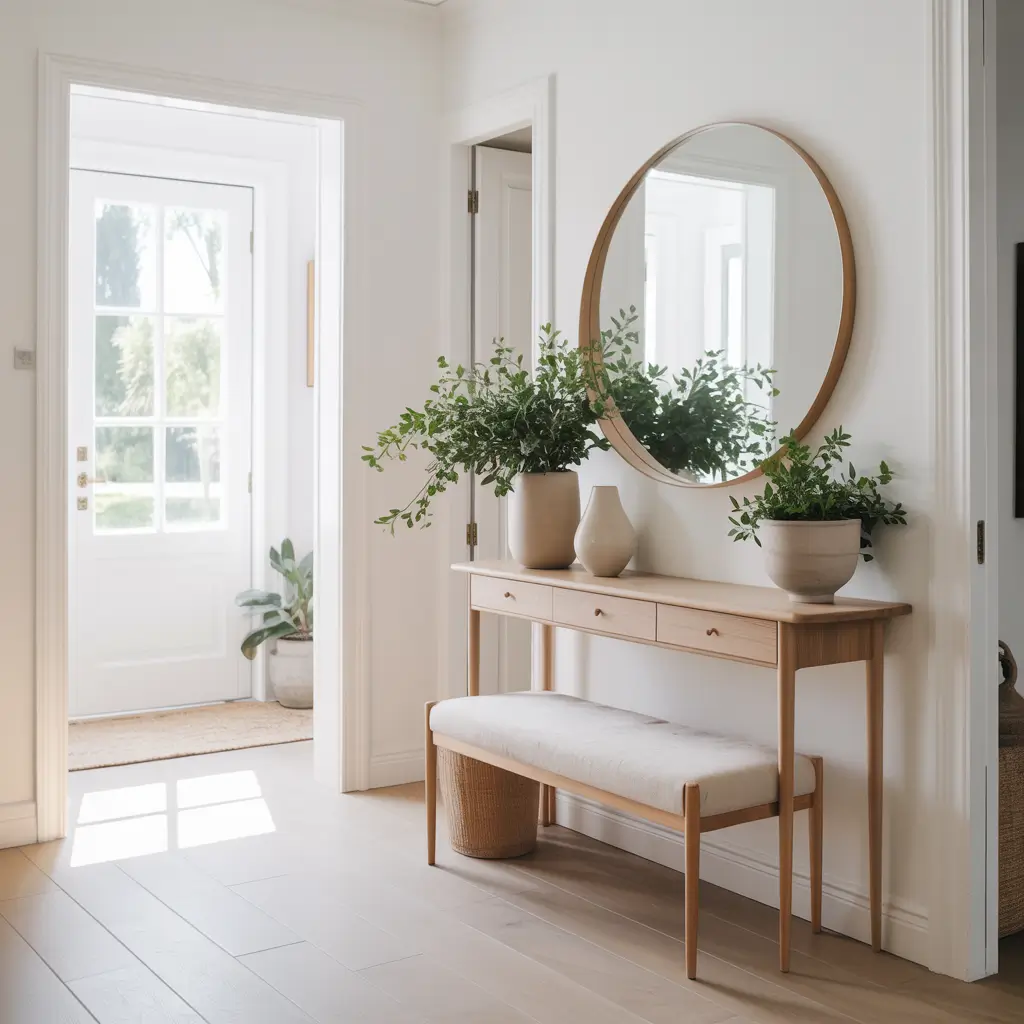
White foyers feel fresh, clean, and eternally classic. There’s a reason interior designers keep returning to this look—it works in practically any home and provides the perfect backdrop for everything else.
But let’s address the elephant in the room: white can feel sterile if you’re not careful. The key is layering different shades and textures to create depth and warmth. Crisp white walls, creamy white furniture, and warm white textiles all play together beautifully.
Keeping White Interesting
- Layer various white tones and off-whites
- Incorporate natural textures (rattan, wood, linen)
- Add warm metallic accents (brass, gold, copper)
- Include greenery for life and color pops
- Use textured rugs and throws for dimension
- Consider subtle patterns in white-on-white
The practical concern with white? Dirt shows everything. I recommend washable paint finishes and durable, easy-clean materials for high-traffic entryways. Nobody wants to repaint their foyer every six months because muddy handprints have taken over. FYI, semi-gloss paint is your friend here—it wipes clean like a dream.
7. Cozy Bench and Basket Entryway
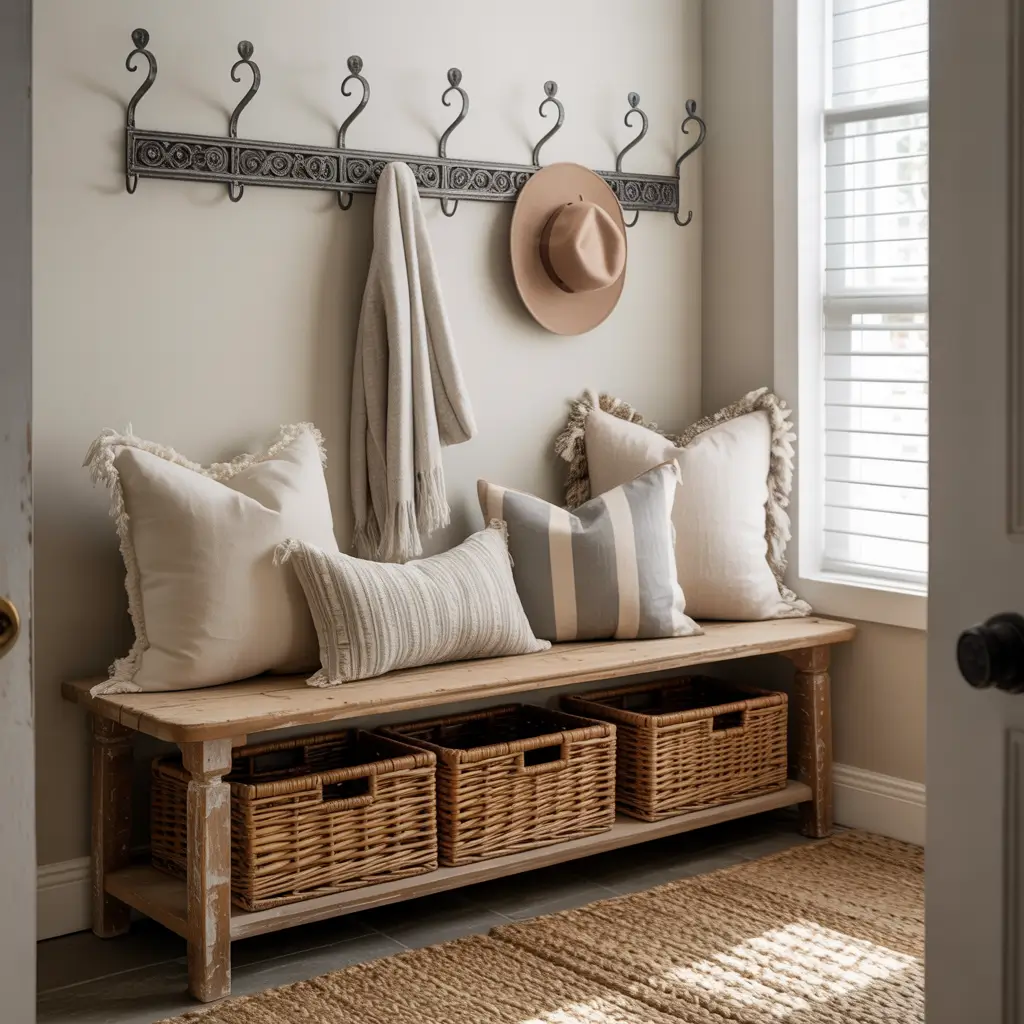
This combo is basically the Swiss Army knife of entryway design. A bench provides seating for putting on shoes, and baskets underneath handle all the storage. Simple, effective, and incredibly inviting.
What makes this approach so successful is its practical warmth. It acknowledges that entryways are working spaces where real life happens—muddy boots get removed, bags get dropped, and people actually need to sit down sometimes.
Getting the Combo Right
- Choose a bench height that works for shoe removal (17-19 inches)
- Opt for baskets that fit snugly but slide out easily
- Add cushions or pillows for comfort and style
- Install hooks above the bench for coats and bags
- Consider a bench with a back for added coziness
- Label baskets if multiple family members share the space
I’ve tested various basket materials, and my honest opinion? Woven seagrass or wire baskets beat fabric bins every time for durability and aesthetics. They breathe better, look better with age, and don’t collect dust the same way. Plus, they maintain their shape even when overloaded with winter gear.
8. Statement Mirror Front Foyer Look
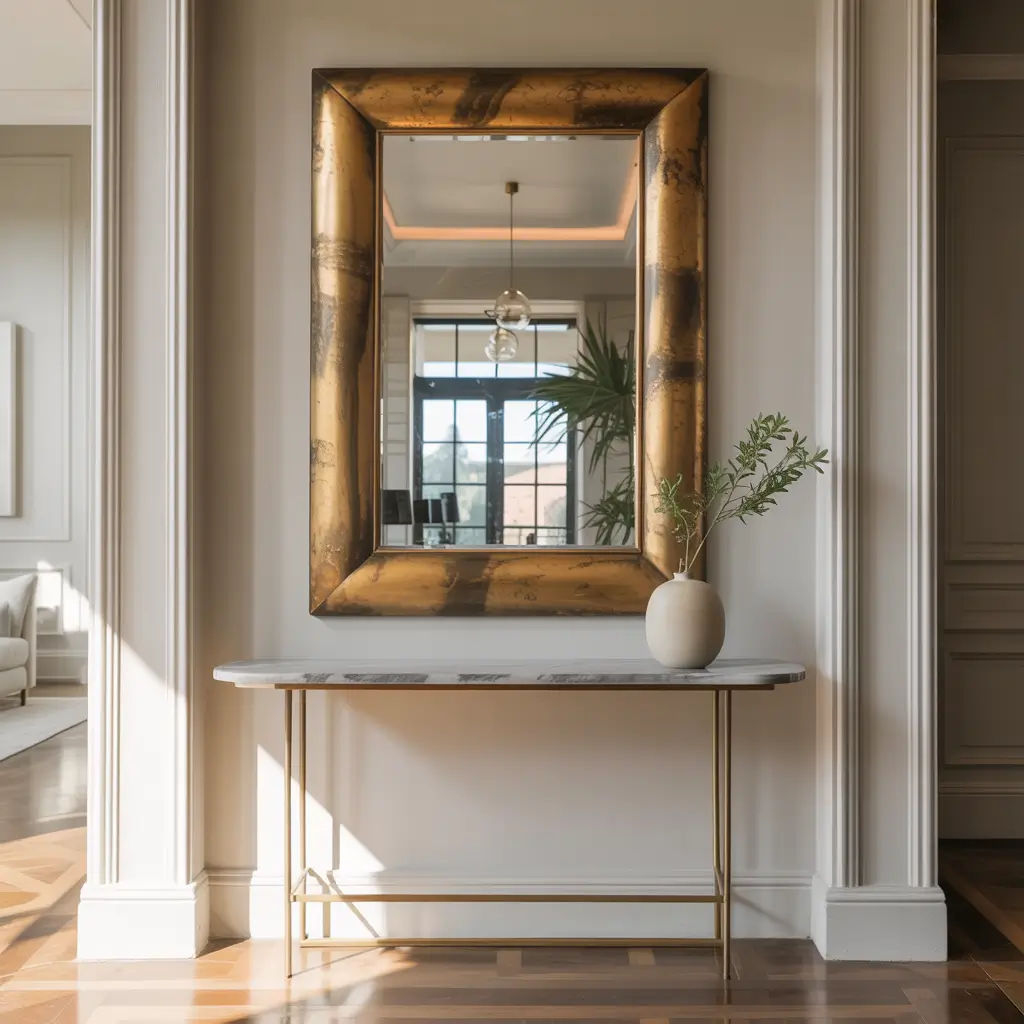
Never underestimate the power of an incredible mirror. A statement mirror can single-handedly transform a boring entryway into a show-stopping space. It reflects light, creates the illusion of more square footage, and gives you one last look before heading out.
The size matters here—go bigger than you think you need. An oversized mirror makes a bold impact, while a too-small mirror can look timid and out of place. When in doubt, scale up.
Mirror Selection Tips
- Round mirrors soften angular spaces
- Rectangular mirrors complement traditional architecture
- Sunburst designs add vintage glamour
- Frameless options work for ultra-modern spaces
- Ornate frames suit traditional or glam aesthetics
- Lean large mirrors against walls for casual drama
The placement matters almost as much as the mirror itself. Center it above a console table, hang it across from a window to maximize light reflection, or lean it dramatically against a wall. Whatever you choose, make sure it’s at a height where you can actually use it. A mirror that only reflects your ceiling? Pretty useless 🙂
9. Dark and Moody Dramatic Entryway
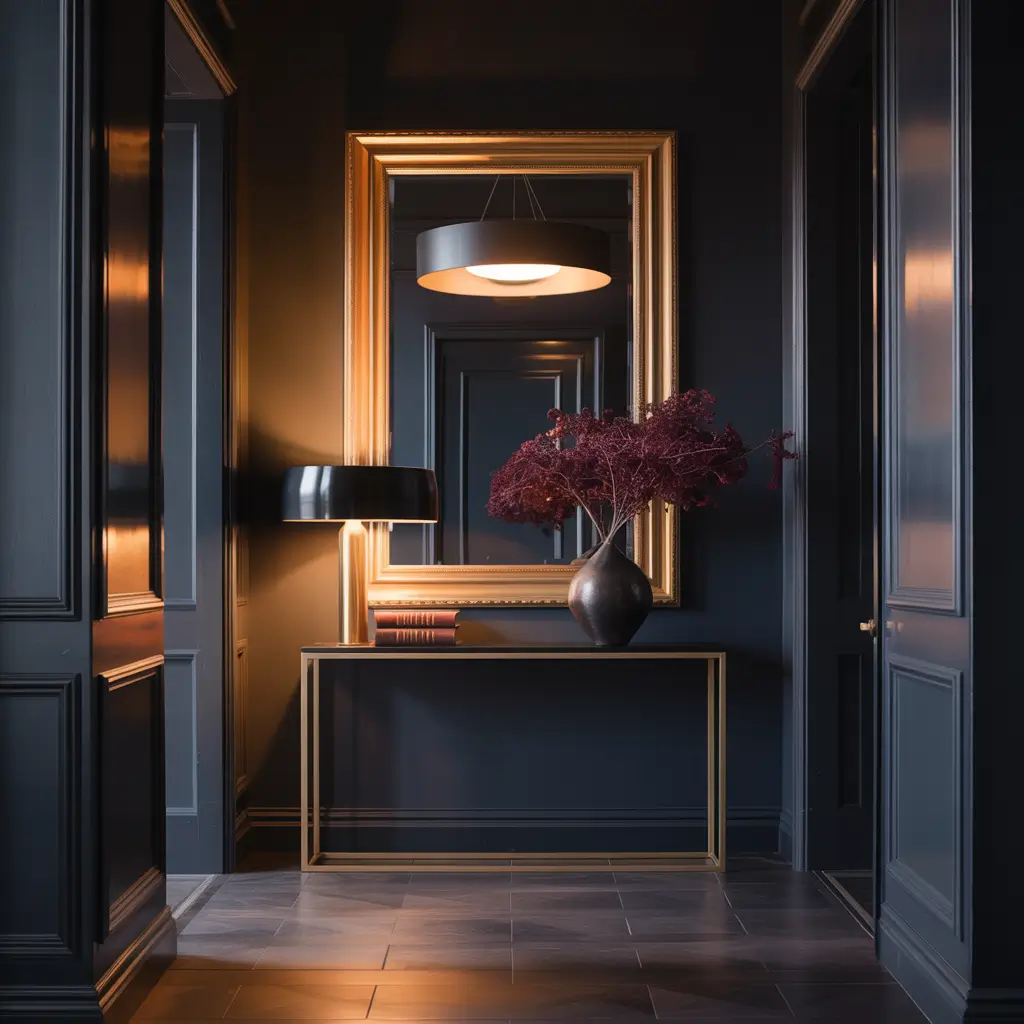
Ready to take a risk? Dark and moody entryways flip the script on conventional design wisdom. While most advice pushes light colors for small spaces, deep jewel tones and rich blacks create intimacy and drama that light colors simply cannot achieve.
This approach works best when you commit fully. A half-hearted attempt at dark walls with light furniture can feel disjointed. Go all in with dark wall colors, complementary furniture, and moody lighting.
Embracing the Dark Side
- Deep wall colors (navy, forest green, charcoal, black)
- Warm metallic accents to prevent coldness
- Layered lighting with dimmers
- Rich wood tones and leather elements
- Dramatic artwork or gallery walls
- Velvet or heavy textiles for luxury feel
The biggest concern people have? “Won’t it feel like a cave?” Here’s the thing—proper lighting eliminates that problem. A statement pendant, wall sconces, and perhaps a lamp on your console table create warmth and prevent the space from feeling oppressive. The contrast between dark walls and glowing light is actually quite stunning.
10. Scandinavian Inspired Front Entryway
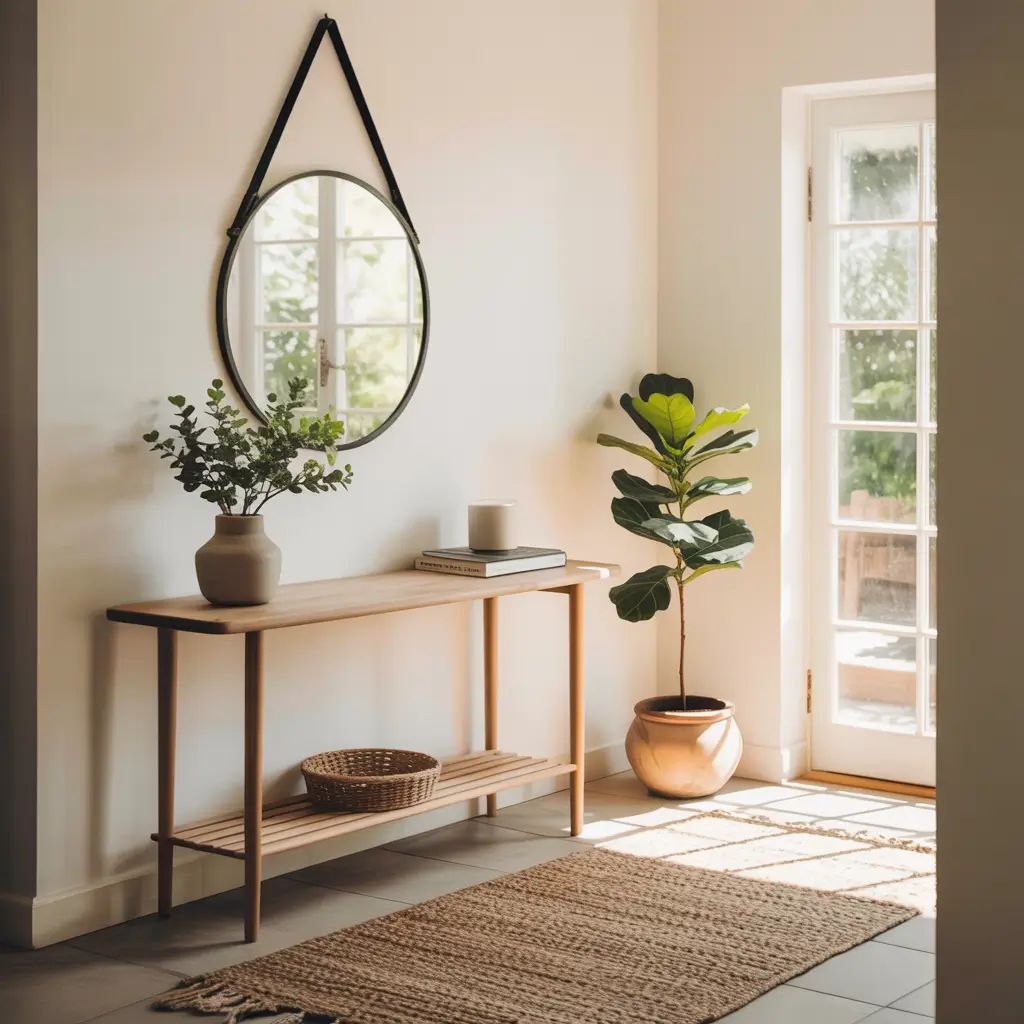
Scandinavian design balances minimalism with warmth in a way that feels effortlessly livable. It’s clean but not cold, simple but not boring. Functionality drives every decision, yet the result looks thoughtfully curated.
The color palette stays neutral—whites, grays, and natural wood tones dominate. But unlike stark minimalism, Scandi design incorporates cozy textiles and organic shapes that invite you to actually use the space.
Achieving That Scandi Vibe
- Light wood furniture (oak, birch, ash)
- White walls with warm undertones
- Sheepskin throws and woven textiles
- Simple geometric patterns
- Functional storage solutions
- Plants and natural elements
- Black accents for contrast
What I appreciate most about Scandinavian entryway design is its year-round appeal. It feels fresh in summer and cozy in winter without requiring seasonal overhauls. The neutral foundation allows you to swap out textiles seasonally if you want, but it works perfectly well left alone.
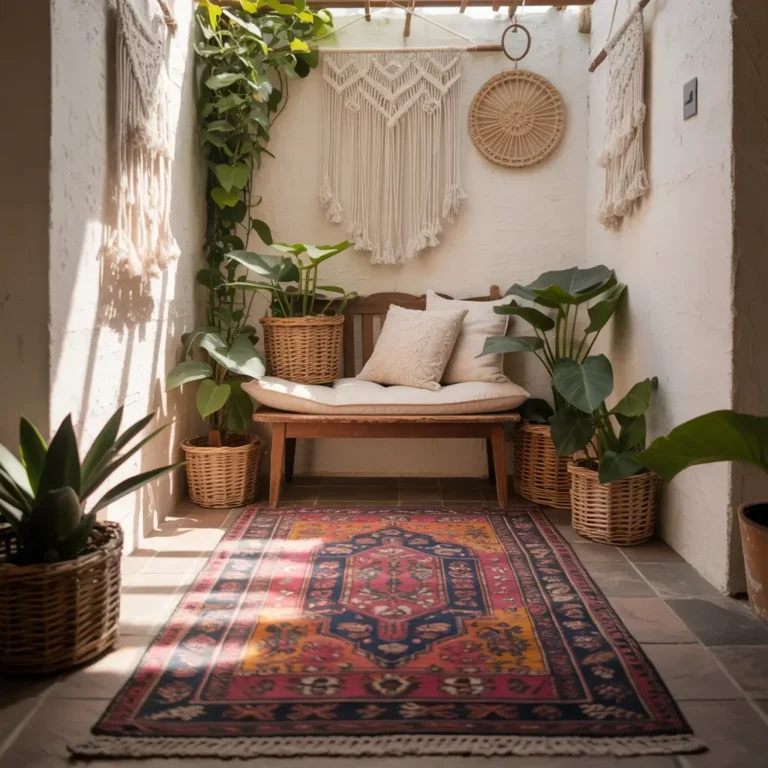
11. Boho Chic Layered Texture Foyer
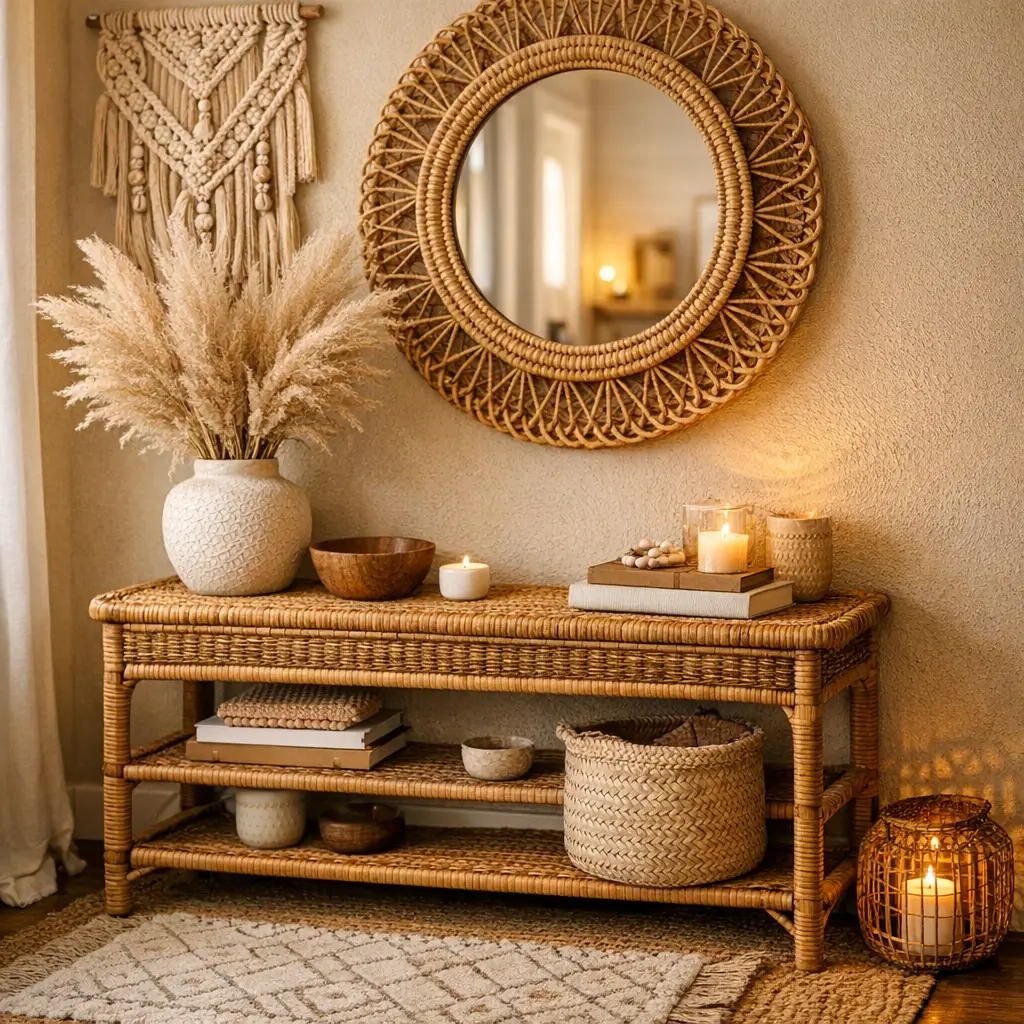
Boho style throws the rulebook out the window and invites you to layer, mix, and personalize to your heart’s content. More isn’t necessarily too much—it’s curated maximalism that tells your story through collected pieces and global influences.
Texture is everything here. A flat, matchy-matchy approach kills the boho vibe instantly. You want rattan, macramé, woven textiles, vintage wood, brass, ceramics, and plants. So many plants.
Building Your Boho Layers
- Layered rugs in various patterns and textures
- Macramé wall hangings or woven art
- Rattan or wicker furniture pieces
- Collection of plants at varying heights
- Vintage or thrifted unique finds
- Global textiles and patterns
- Brass and natural material accessories
The potential pitfall? Clutter versus curated chaos—there’s a fine line. Boho entryways can tip into overwhelming territory if you’re not careful. Edit ruthlessly and ensure every piece contributes to the overall story. Random stuff you haven’t sorted through is not boho; it’s just mess pretending to have personality.
12. Classic Traditional Elegant Entryway
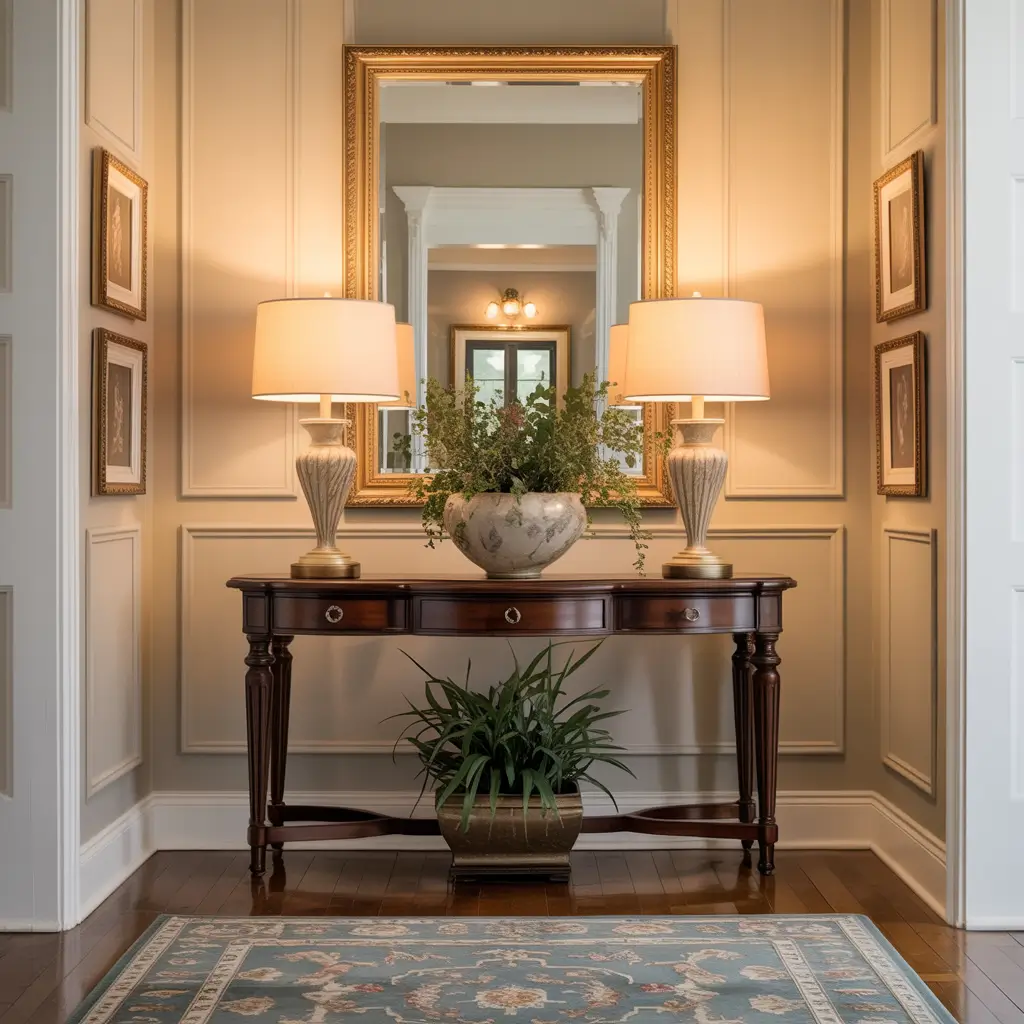
Traditional entryways never go out of style. There’s a reason this aesthetic has endured for centuries—it’s timeless, elegant, and universally appealing. Think symmetry, rich wood tones, classic furniture silhouettes, and refined details.
This style suits older homes beautifully but can also add gravitas to newer construction. Crown molding, wainscoting, and quality hardware elevate the space immediately.
Traditional Design Elements
- Symmetrical arrangements (matching lamps, paired accessories)
- Classic furniture shapes (demilune tables, traditional benches)
- Rich wood finishes (mahogany, walnut, cherry)
- Oriental or Persian style rugs
- Framed artwork in gilded frames
- Crystal or brass traditional lighting
- Fresh flowers in elegant vessels
IMO, traditional entryways work best when you invest in quality over quantity. A beautifully crafted console table will serve you for decades and looks better with age. Cheap reproductions, on the other hand, announce themselves immediately and cheapen the entire effect.
Also Read: 15 Creative Small Foyer Ideas Entryway for Beginners
13. Contemporary Black and Wood Foyer
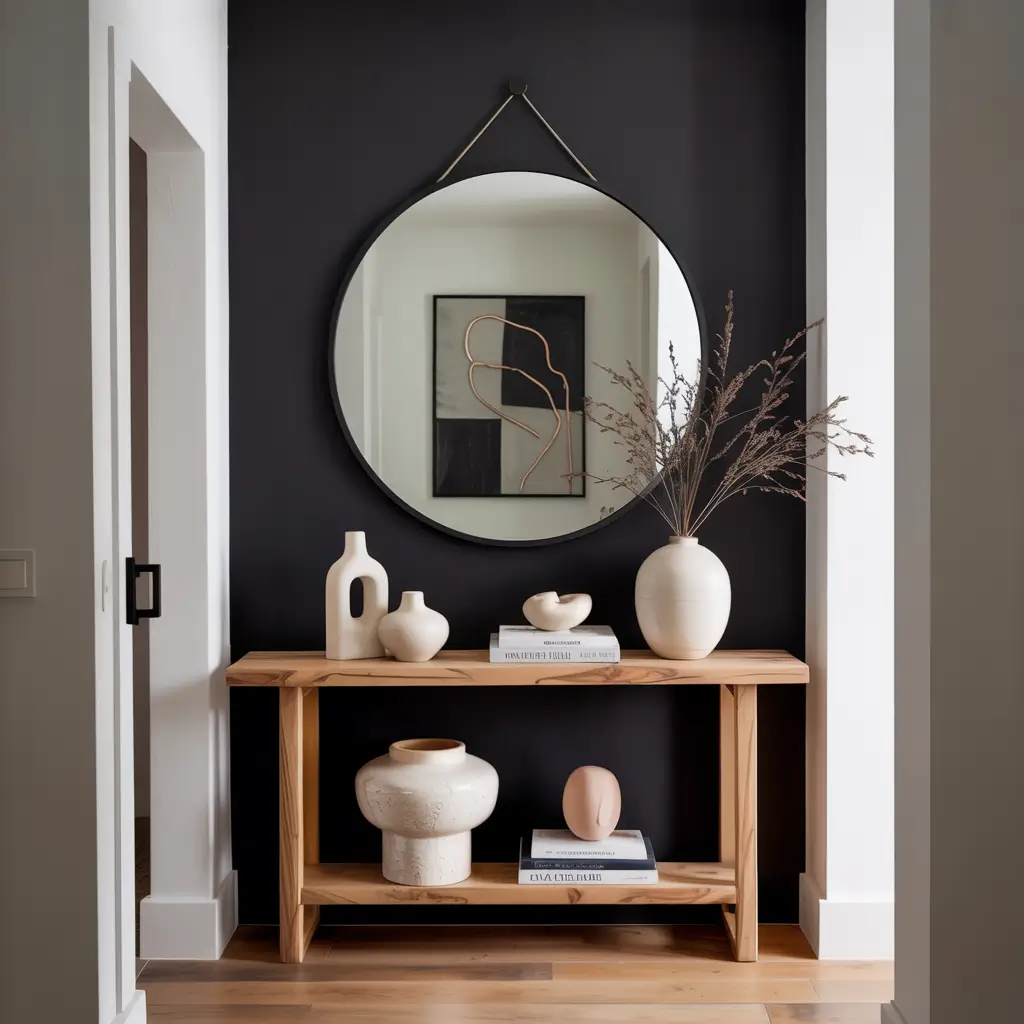
This combination has exploded in popularity, and honestly? It deserves the hype. Black accents paired with natural wood create a sophisticated contrast that feels current without being trendy.
The beauty lies in the balance. Too much black overwhelms the space; too much wood loses the contemporary edge. Finding that sweet spot produces an entryway that feels both warm and modern.
Nailing the Black and Wood Combo
- Black metal hardware and frames
- Natural wood furniture with clean lines
- Black accent lighting fixtures
- Warm wood tones (not too orange, not too yellow)
- White or neutral walls for breathing room
- Minimalist accessories in black and natural materials
- Strategic greenery to soften the contrast
The wood tone matters more than you might think. Warm walnut or white oak pair beautifully with black, while orange-toned woods can clash awkwardly. Test samples together before committing to major furniture purchases.
14. Budget-Friendly DIY Styled Entryway
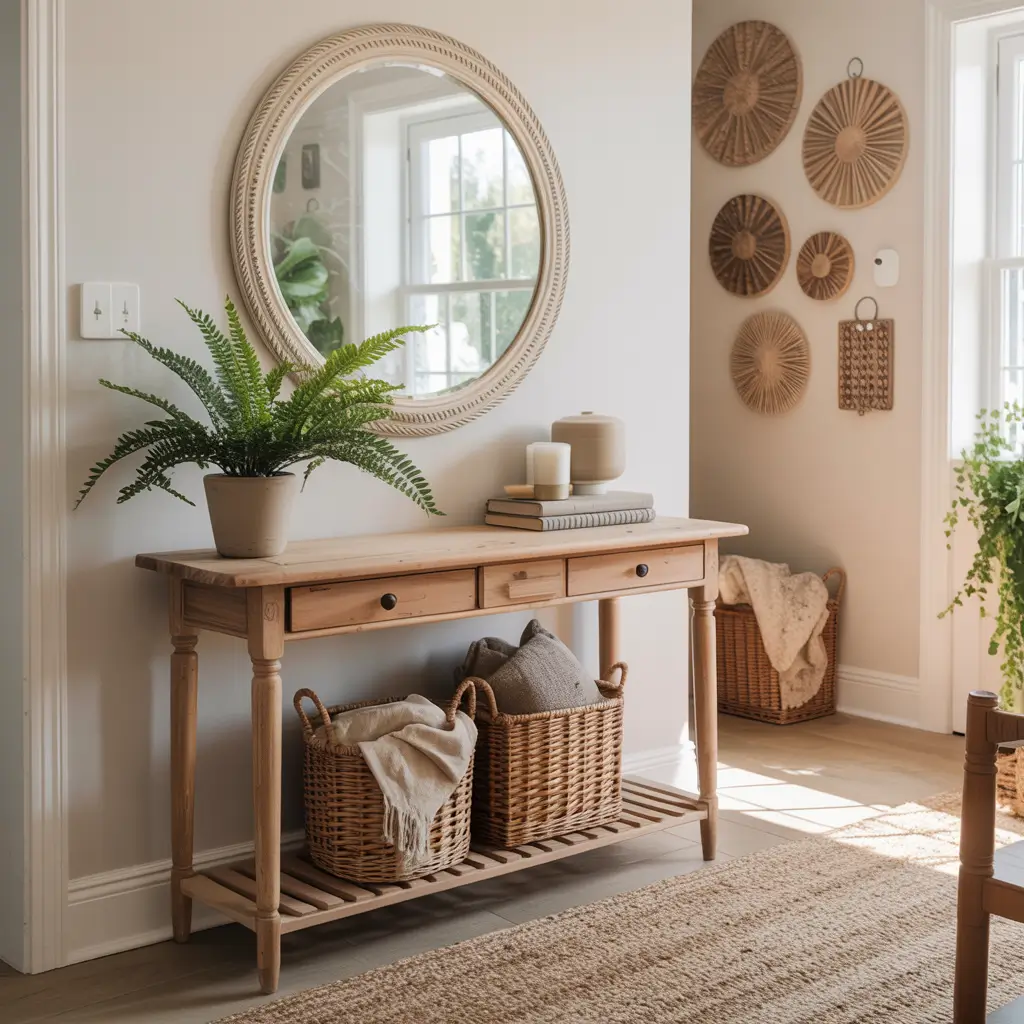
Big transformations don’t require big budgets. Some of the most impressive entryways I’ve seen came together through creative DIY projects and thrift store finds. The key is knowing where to splurge and where to save.
Paint transforms everything and costs practically nothing compared to its impact. A fresh coat on walls, furniture, or even that ugly old mirror frame can completely reinvent your space.
Budget-Friendly Transformation Ideas
- Paint existing furniture instead of buying new
- Thrift store hunt for unique vintage pieces
- DIY floating shelves from reclaimed wood
- Create gallery walls with affordable frames
- Repurpose items from other rooms
- Add peel-and-stick wallpaper for instant pattern
- Update hardware on existing pieces
Here’s what I’ve learned from my own budget renovations: patience pays off. The best thrift store finds don’t appear on demand. Start looking months before you need something, check consistently, and be willing to walk away until the right piece appears. That $20 vintage console table is out there waiting for you.
15. Grand Double Height Front Foyer Design
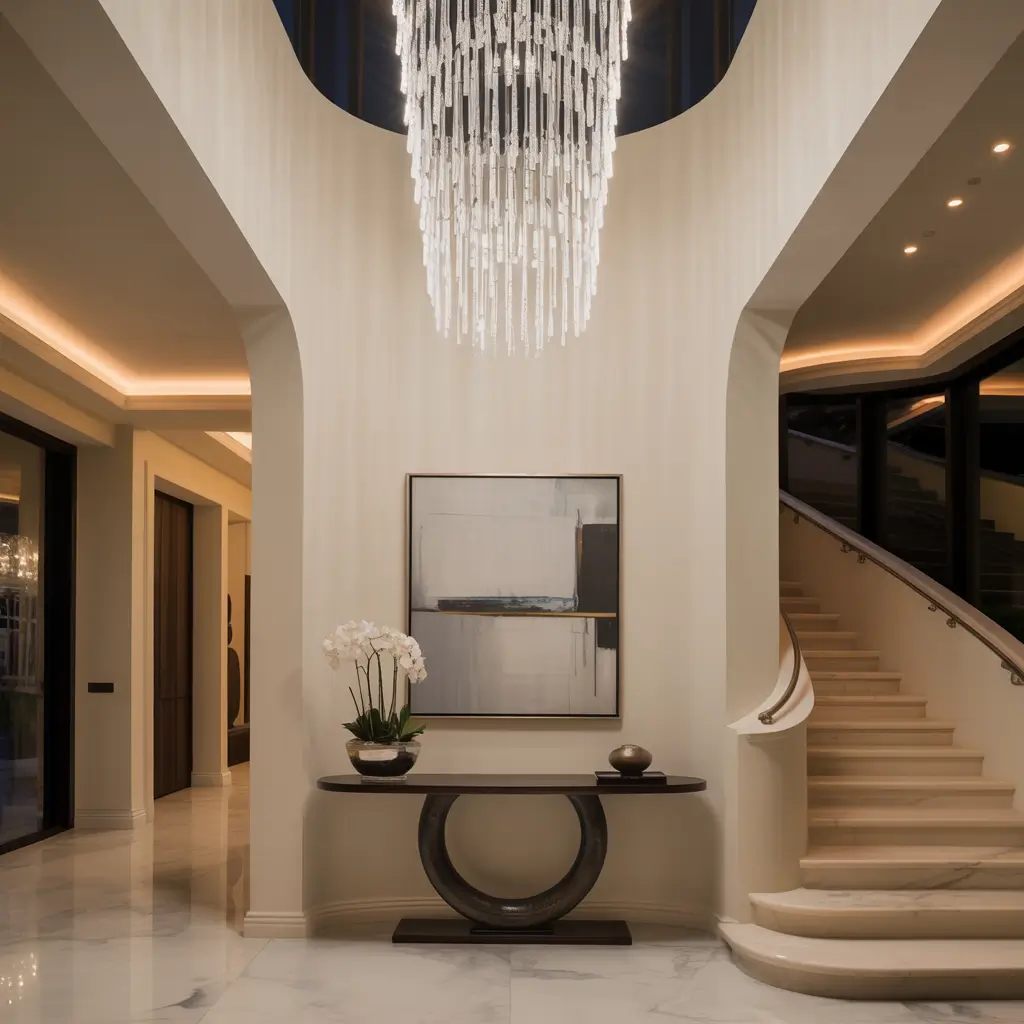
Working with a double-height entryway? Lucky you! This architectural feature presents amazing opportunities—and some unique challenges. The key is scaling everything appropriately so the space doesn’t feel empty or underwhelming.
A two-story foyer demands statement pieces that match its proportions. That chandelier should drop dramatically. That artwork should span vertically. Everything needs to rise to the occasion, literally.
Making the Most of Vertical Space
- Large-scale statement chandelier (don’t be timid!)
- Oversized artwork or gallery wall extending upward
- Dramatic window treatments that draw the eye up
- Tall indoor trees or dramatic plant arrangements
- Statement staircase if applicable
- Upper-level architectural details or railings
- Strategic accent lighting highlighting height
The common mistake in double-height foyers? Placing everything at standard height and leaving the upper space completely empty. Your eye needs visual anchors throughout the vertical space. Even something as simple as strategic hanging planters or artwork placed higher than usual can fill that void effectively.
Bringing It All Together
Your front foyer tells visitors who you are before you’ve said a single word. It sets expectations, creates first impressions, and welcomes everyone—including yourself—home. Whether you gravitate toward sleek minimalism, cozy farmhouse charm, or bold dramatic statements, there’s an entryway style that perfectly captures your personality.
The most important thing? Start with function, then layer in style. Figure out what your entryway actually needs to do—store coats, hide shoes, catch keys, provide seating—and then choose an aesthetic that accomplishes those goals beautifully.
Don’t feel pressured to transform everything at once. The best entryways evolve over time as you find perfect pieces and refine your vision. My own foyer took nearly two years to feel complete, and honestly? I’m still tweaking things here and there.