15 Aesthetic Japandi Bedroom Designs for Soft Comfort

You know that feeling when you walk into a room and it just breathes calm? Like every corner whispers “relax, you’re home”? That’s exactly what Japandi bedrooms do, and honestly, I can’t get enough of this aesthetic. Last year, I redesigned my own bedroom with Japandi principles, and I swear I’ve never slept better—or felt more zen walking into my space after a chaotic day.
Japandi is this gorgeous marriage of Japanese minimalism and Scandinavian coziness. You get the clean lines and mindful simplicity from Japan, mixed with that warm, hygge-filled comfort from Scandinavia. It’s like someone finally figured out how to make minimalism feel inviting instead of cold. And trust me, your bedroom—the one place you retreat to every single day—deserves this kind of thoughtful design.
So let’s talk about 15 stunning Japandi bedroom designs that’ll transform your sleep space into a soft, comfortable sanctuary. I’ve gathered ideas that range from ultra-minimal to slightly more layered (because not everyone wants to live like a monk, right?). Whether you’re working with a tiny apartment bedroom or a spacious master suite, there’s something here that’ll speak to you.
Natural Wood Minimalist Japandi Bedroom
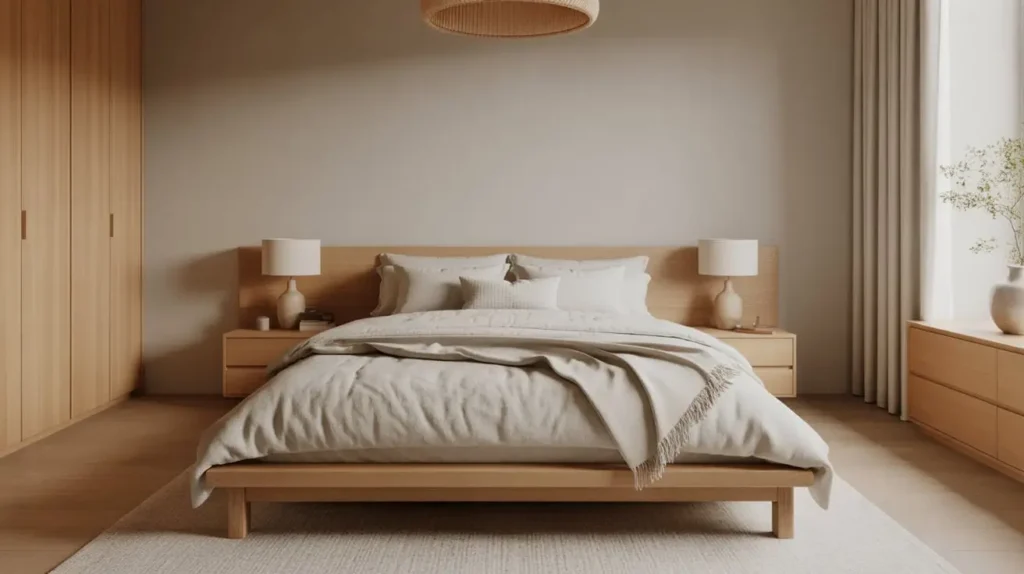
Let’s start with the OG of Japandi aesthetics: natural wood everything. I’m talking warm oak, light ash, or that beautiful pale birch that Scandinavians love so much. This design centers around one key principle—let the wood do the talking.
Picture this: a simple wooden bed frame with clean lines, maybe a low-profile design that sits close to the ground. You pair it with a matching wooden nightstand (just one is fine, actually), and perhaps a minimalist wooden bench at the foot of the bed. The beauty here is in the grain patterns and natural imperfections of the wood itself.
For the walls, keep them white or a soft off-white. The contrast between pale walls and warm wood creates this incredible visual warmth without feeling cluttered. I learned this the hard way after initially painting my walls beige—it totally muddied the whole look. White walls let the wood furniture shine and make the room feel twice as spacious.
Here’s what makes this design work:
- Unfinished or lightly stained wood that shows natural character
- Minimal furniture pieces (bed, one nightstand, maybe a wardrobe)
- Zero ornamentation on the furniture itself
- Plenty of negative space around each piece
- Natural light as the primary light source
The textures come from your bedding—think crisp white linen or soft cotton in cream tones. You don’t need much else. Maybe a simple wool throw in charcoal gray draped casually at the foot of the bed. That’s it. That’s the whole vibe.
Soft Greige Japandi Serenity Space
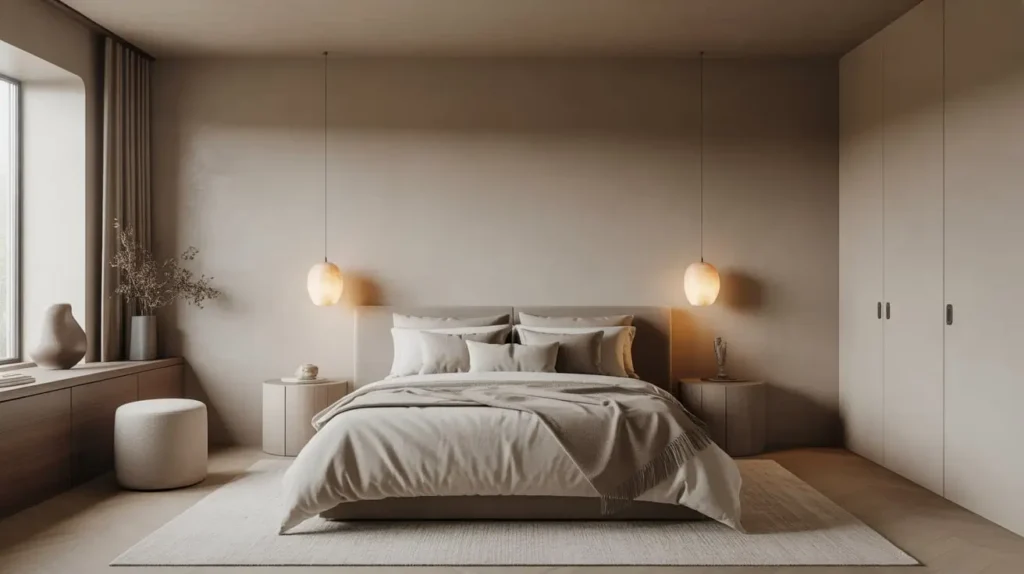
Greige (that perfect gray-beige hybrid) is having a serious moment, and for good reason. This color creates the ultimate serene backdrop for a Japandi bedroom. I personally switched to greige walls last spring, and wow, the difference in how peaceful the room feels is unreal.
Greige walls work because they’re neutral enough to feel calming, but they have more personality than plain white or gray. You want that barely-there warmth—not too pink, not too gray. Get paint samples and live with them for a few days before committing (seriously, lighting changes everything).
Build your furniture palette around light woods—oak or ash work beautifully. The slightly cool undertone in greige pairs gorgeously with warm wood tones. Add a platform bed with a fabric headboard in a slightly deeper greige or soft taupe. Layer your bedding in various shades of cream, beige, and light gray.
Key elements for this design:
- Greige walls (test multiple shades first!)
- Light wood furniture with simple silhouettes
- Monochromatic bedding in creams and taupes
- Texture through linen, cotton, and wool
- One or two pieces in soft charcoal for depth
The magic happens in the layering of similar tones. You create depth without introducing jarring color contrasts. It’s sophisticated without trying too hard—my favorite kind of design, honestly.
Low Platform Bed Zen Retreat
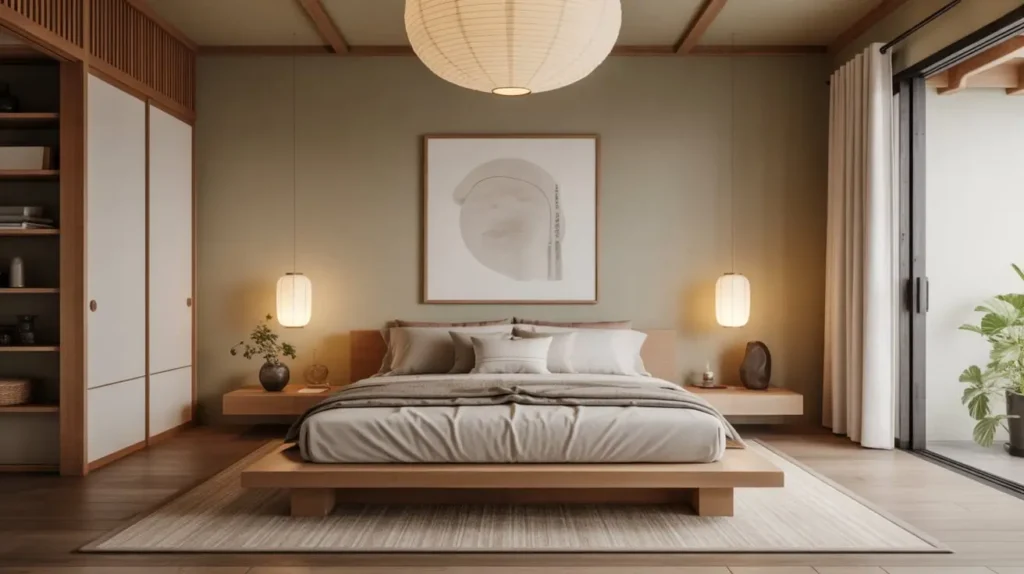
Ever wondered why Japanese-style low beds feel so grounding? There’s actual psychology behind it. Sleeping closer to the floor creates this subconscious sense of stability and connection. Plus, it makes your ceiling feel miles high, which is a nice trick for smaller rooms.
A low platform bed is the cornerstone of this design. You want something that sits maybe 12-18 inches off the ground, max. No bulky bed frames, no unnecessary height. Just a clean, horizontal line that anchors the room without dominating it.
I’ll be honest—getting in and out of a low bed takes some adjustment if you’re used to a standard height mattress. But after about a week, it feels totally natural. And the aesthetic payoff? Completely worth it. Your room instantly looks more intentional and calm.
Pair your platform bed with equally low furniture. A super low nightstand, maybe just a wooden block or a small Japanese-style side table. Keep everything else minimal—a floor cushion for seating, perhaps a low bench or meditation corner.
Design essentials:
- Platform bed 12-18 inches high
- Low-profile nightstands or side tables
- Minimal under-bed storage (keep sightlines clean)
- Floor cushions or poufs for seating
- One statement floor lamp with warm lighting
For bedding, go ultra simple. White or natural linen, maybe a single accent pillow, and a lightweight duvet. The low bed already makes a statement, so you don’t need fussy bedding competing for attention.
Warm Neutral Japandi Textured Haven
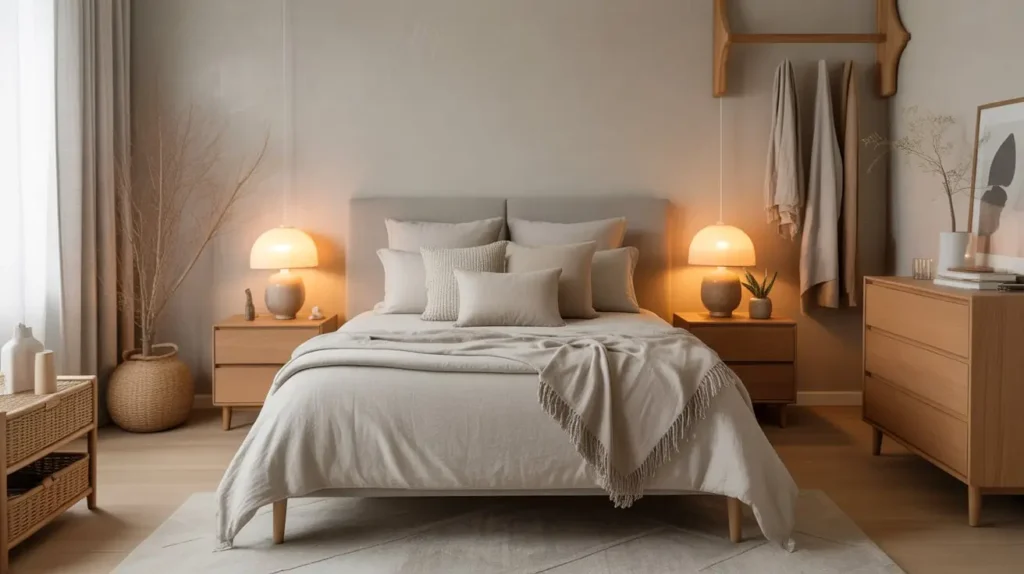
Here’s where Japandi gets cozy. Some people think minimalism means cold and uncomfortable, but they’re doing it wrong. This design proves you can have minimal visual clutter while maximizing tactile comfort.
The secret sauce? Texture, texture, texture. You stick with a warm neutral color palette—think creams, warm beiges, soft browns, and touches of terracotta. But you introduce variety through different materials and weaves.
Start with a chunky knit throw in undyed wool. Add linen sheets with that perfectly imperfect, slightly wrinkled look. Layer a cotton waffle-weave blanket. Include a jute or wool rug with a low pile. Suddenly you’ve got this incredibly inviting space that begs you to touch everything.
I went texture-crazy in my guest bedroom, and every single person who’s stayed over has commented on how cozy it feels. One friend literally texted me asking where I got the throw blanket because she couldn’t stop petting it 🙂
Texture layering tips:
- Mix at least 4-5 different textures in similar colors
- Include nubby, smooth, chunky, and fine-weave materials
- Natural fibers only (cotton, linen, wool, jute)
- Vary the scale of textures from chunky to fine
- Let the texture create visual interest instead of color
Wood furniture in warm oak or walnut tones completes this look. Add one ceramic vase in matte beige or terracotta. Maybe a woven basket for storage. Everything stays neutral, but nothing looks flat or boring.
Also Read: 15 Cozy Moody Bedroom Aesthetic Ideas for Small Spaces
Japandi Bedroom with Organic Curves
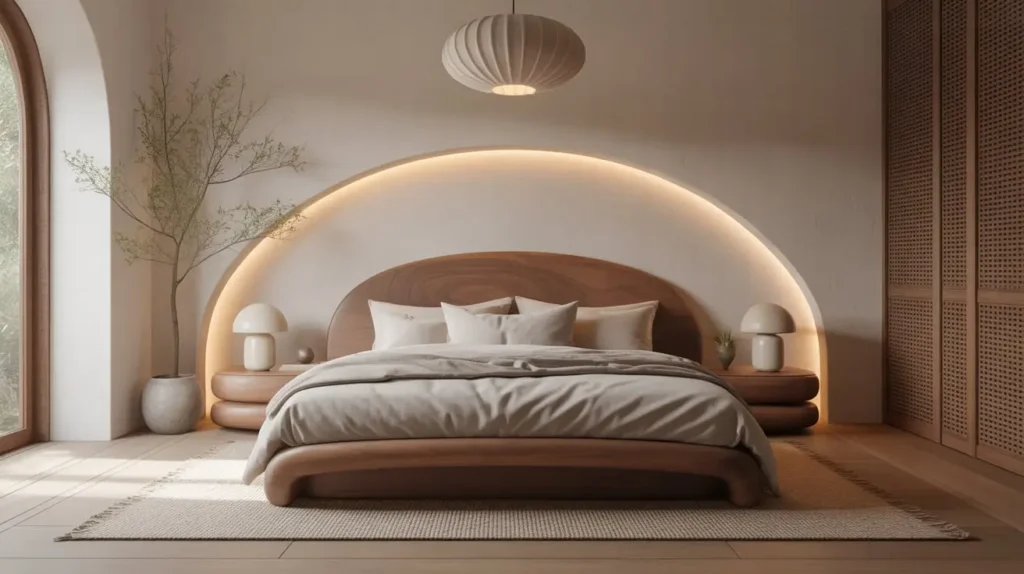
Alright, I’m obsessed with this trend. After years of everything being angular and sharp, organic curves are bringing softness back to minimalist design. And it’s about time, honestly.
This Japandi bedroom swaps some of those straight lines for gentle curves. Think an arched floor mirror leaning against the wall. A curved headboard upholstered in natural linen. Round nightstands instead of rectangular ones. Maybe an oval pendant light instead of a geometric one.
The curves soften the whole space without making it feel feminine or overly decorated. You still maintain that clean Japandi aesthetic, but it feels more welcoming. Less “design museum,” more “actual bedroom where humans live.”
I added a curved rattan mirror to my bedroom last month, and it completely transformed the energy of the space. The reflection plays with the curve in unexpected ways throughout the day as light shifts. It’s like having a functional art piece.
How to incorporate curves:
- Arched or rounded mirrors (these are everywhere right now)
- Curved headboards in upholstered linen or bouclé
- Round pendant lights or dome-shaped floor lamps
- Circular side tables or stools
- Curved ceramic vases or decorative objects
Balance is key here. You don’t want to go full-on blob-core (yes, that’s apparently a thing now). Mix your curves with plenty of straight lines in the bed frame, windows, and architectural elements. The curves should feel intentional, not random.
Cozy Linen-Layered Japandi Sanctuary
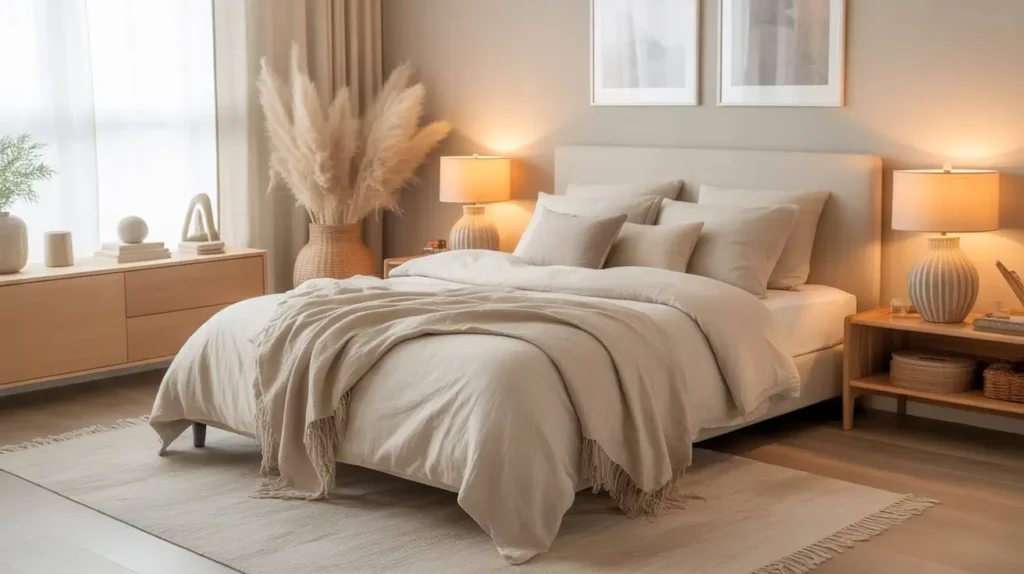
FYI, linen is the unofficial official fabric of Japandi design. And for good reason—it’s natural, it ages beautifully, it’s breathable, and it has that perfectly imperfect texture that makes everything look effortlessly styled.
This bedroom design goes all-in on linen. Linen sheets, linen duvet cover, linen throw pillows, linen curtains, maybe even a linen upholstered headboard. The key is layering different weights and shades of linen to create depth.
Start with your base layer—fitted sheet and flat sheet in natural or white linen. Add a linen duvet in maybe a light oat color. Throw on a couple of linen euro pillows in slightly different shades. Drape a lighter-weight linen throw across the foot of the bed. Hang linen curtains that puddle slightly on the floor.
The beauty of linen is that it’s supposed to look wrinkled. Seriously, don’t iron this stuff. The wrinkles are the whole point. They create these gorgeous shadow lines and make everything look lived-in and comfortable. Anyone who irons their linen bedding is missing the entire aesthetic (sorry, not sorry).
Linen layering essentials:
- Multiple shades of neutral linen (white, natural, oat, light gray)
- Different weights from sheer to heavy
- Both matte and slightly lustrous finishes
- Minimal patterns (solid colors or subtle stripes max)
- Quality over quantity—good linen lasts forever
Pair all this softness with simple wood furniture and maybe one stone element, like a marble lamp base. The contrast between the soft, flowing linen and hard, solid materials creates that signature Japandi balance.
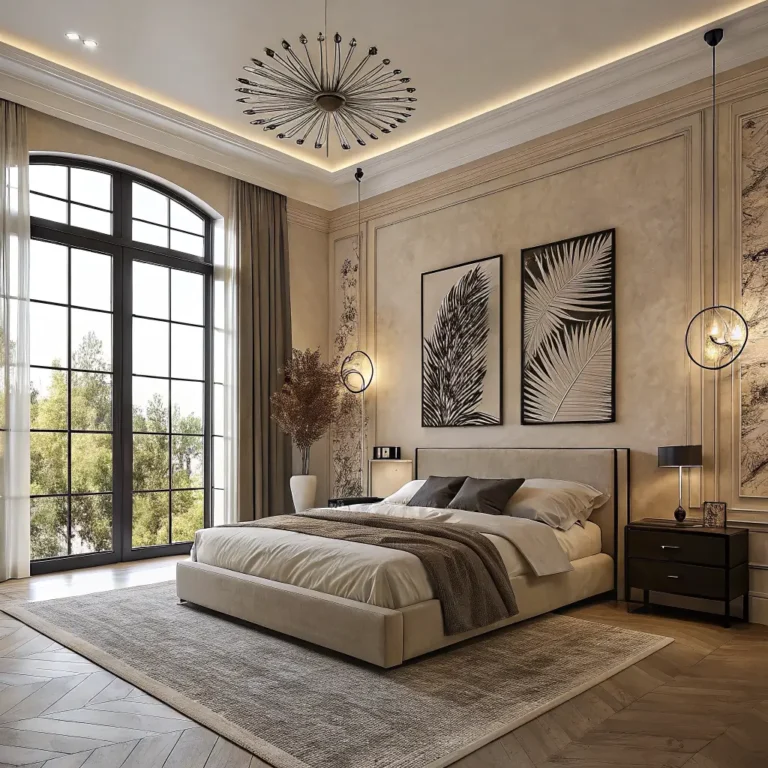
Black Accents Modern Japandi Style

Not everything needs to be beige and white, okay? Black accents can absolutely work in Japandi design when you use them thoughtfully. This creates a more modern, slightly edgier take on the aesthetic.
Picture your base as the usual Japandi palette—white or light greige walls, natural wood furniture, neutral bedding. But then you introduce strategic hits of matte black. A black metal pendant light. Black picture frames. A black ceramic vase. Maybe black hardware on your nightstand drawer.
The key word here is strategic. You’re not going for a black-and-white color scheme. You’re using black as an accent that creates contrast and definition. It makes everything else pop while adding a contemporary edge.
I added black elements to my Japandi bedroom specifically because it was starting to feel a bit too soft and undefined. Three black elements—a light fixture, a picture frame, and a small tray—completely grounded the whole design. It went from “nice” to “oh, someone who knows what they’re doing designed this.”
Using black effectively:
- Stick to matte black finishes (no shine)
- Use it in 3-5 small doses throughout the room
- Black metal, black-stained wood, or matte black ceramic
- Create visual triangles (distribute black accents to create balance)
- Pair black with warm woods, not cool grays
This works especially well if you have black-framed windows or doors. The black accents echo those architectural elements and make everything feel cohesive. Just don’t go overboard—three to five black pieces is the sweet spot.
Small-Space Japandi Calm Bedroom
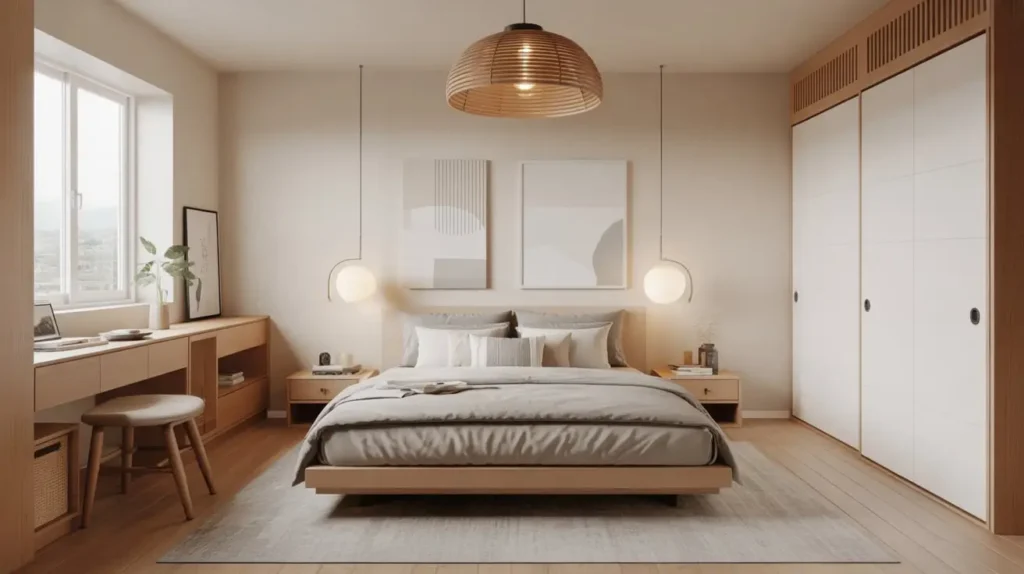
Small bedroom? Perfect. Japandi was literally made for compact spaces. The whole philosophy is about having only what you need and making every element count. Let me tell you how to make a tiny bedroom feel like a spacious sanctuary.
First, embrace the bed as your focal point. In a small room, you can’t hide a bed anyway, so make it the star. Choose a low platform style that doesn’t eat up visual space. Keep the bedding simple and light-colored to reflect light around the room.
Furniture-wise, go minimal. One floating nightstand (saves floor space) or a small wooden stool. That’s it. Maybe a wall-mounted light instead of a table lamp. Use vertical space with a tall, narrow shelf or wall hooks for storage instead of bulky dressers.
Here’s the thing about small spaces—they actually work better with the Japandi aesthetic than large rooms sometimes. You’re forced to edit ruthlessly, which is what this style is all about anyway. No room for extra stuff you don’t actually need.
Small-space Japandi tricks:
- Light colors everywhere (walls, bedding, furniture)
- Floating furniture to expose more floor
- Multi-functional pieces (storage bench, nightstand with shelving)
- Large mirror to bounce light and expand visual space
- Minimal decor (3-5 items max)
Keep your color palette even more restrained than usual. Stick to two or three colors total. The visual continuity makes the space feel larger and more cohesive. I lived in a 10×10 bedroom for two years, and going full Japandi made it feel almost luxurious despite the size.
Japandi Bedroom with Wabi-Sabi Touches
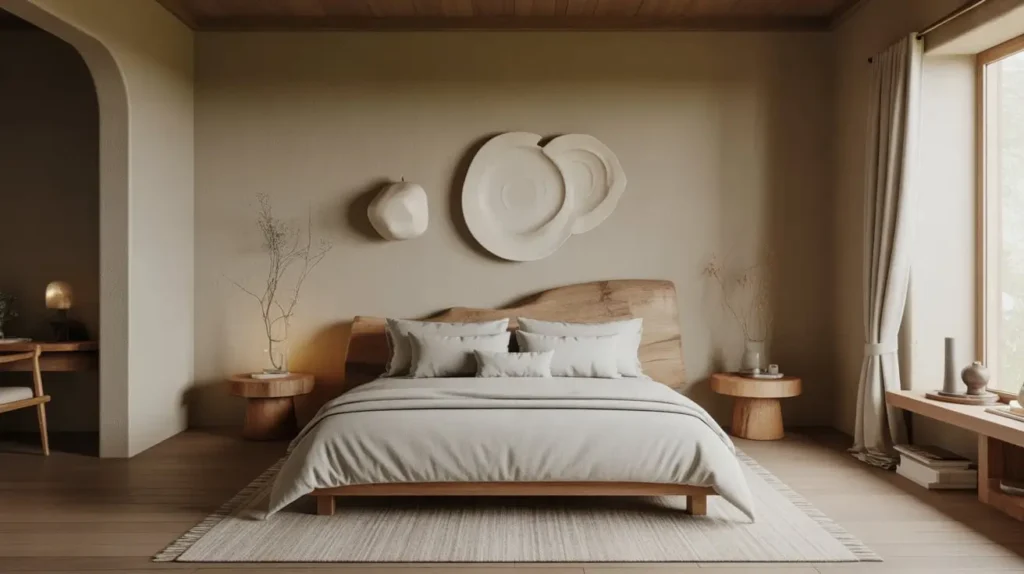
Okay, wabi-sabi is this Japanese philosophy about finding beauty in imperfection and impermanence. It’s the crack in a ceramic bowl, the weathered wood, the asymmetrical arrangement. And it’s absolutely gorgeous when you bring it into Japandi bedroom design.
This design celebrates imperfection intentionally. Your furniture has visible wood grain, maybe some knots or natural variations. Your ceramic pieces are handmade with slight irregularities. Your artwork is organic and imperfect rather than geometric and precise.
I bought a handmade ceramic vase from a local potter that has this slight wobble to it—it’s not perfectly round. My mom asked if I wanted to return it. Return it?! That wobble is literally the best part. It makes me happy every time I look at it because it’s proof a human made it with their hands.
Choose furniture that shows its age and materials honestly. Unfinished wood edges, visible joinery, natural stone with variations. Nothing too perfect, nothing too precious. The goal is lived-in beauty, not showroom perfection.
Wabi-sabi elements:
- Handmade ceramics with visible irregularities
- Weathered or reclaimed wood pieces
- Asymmetrical arrangements and layouts
- Natural materials that show wear beautifully
- Vintage or antique pieces mixed with new
This approach makes your Japandi bedroom feel deeply personal rather than like a Pinterest board come to life. It gives you permission to embrace imperfection, which honestly is pretty freeing in a world of overly curated Instagram bedrooms.
Also Read: 15 Trendy Moody Bedroom Paint Colors and Modern Touches
Light & Airy Scandinavian-Japanese Fusion
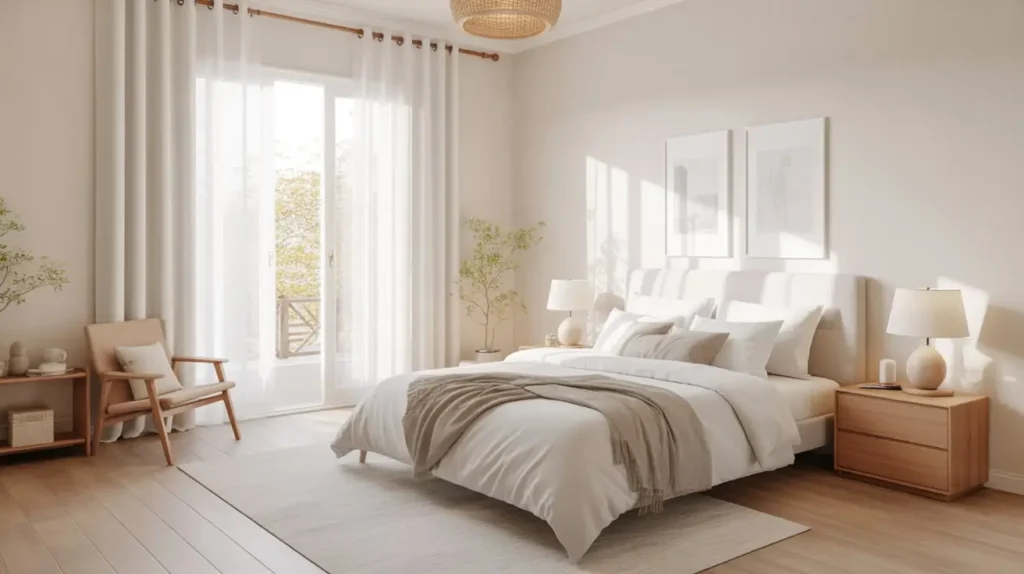
This design leans slightly more Scandinavian than Japanese, but it’s still totally Japandi. You maximize light, embrace white and pale woods, and create that breezy, fresh feeling that Scandinavian design does so well.
White walls, white ceiling, light wood floors—you’re creating the brightest possible canvas. Then add furniture in pale ash or birch woods. Keep everything low and horizontal to maximize the feeling of space and air. Sheer white linen curtains that filter light beautifully without blocking it.
The Japanese influence shows up in the restraint and intentionality. You don’t fill every corner with cozy stuff (like pure Scandinavian design might). You leave breathing room. You choose quality over quantity. You let emptiness be part of the design.
I love this style for bedrooms that get great natural light. Why would you block that gorgeous sunlight with heavy curtains or dark colors? Let it pour in and bounce around your pale surfaces. You’ll wake up naturally with the sunrise, which is genuinely better for your circadian rhythm anyway (yes, I’m that person now).
Light and airy essentials:
- Maximum white (walls, ceiling, bedding)
- Pale woods with minimal grain visibility
- Sheer or light-filtering window treatments
- Mirrors to amplify natural light
- Absolutely minimal decor
Add warmth through texture rather than color—a sheepskin rug, chunky knit throws, linen bedding. The textures keep it from feeling sterile while maintaining that airy, bright quality. IMO, this is the most uplifting of all the Japandi bedroom styles.
Japandi Bedroom with Earthy Stone Elements
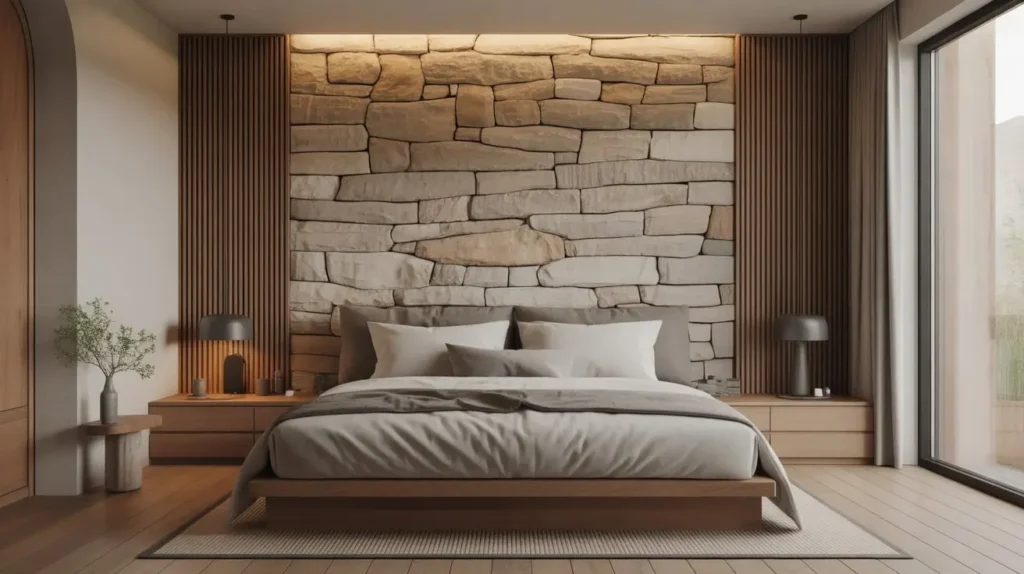
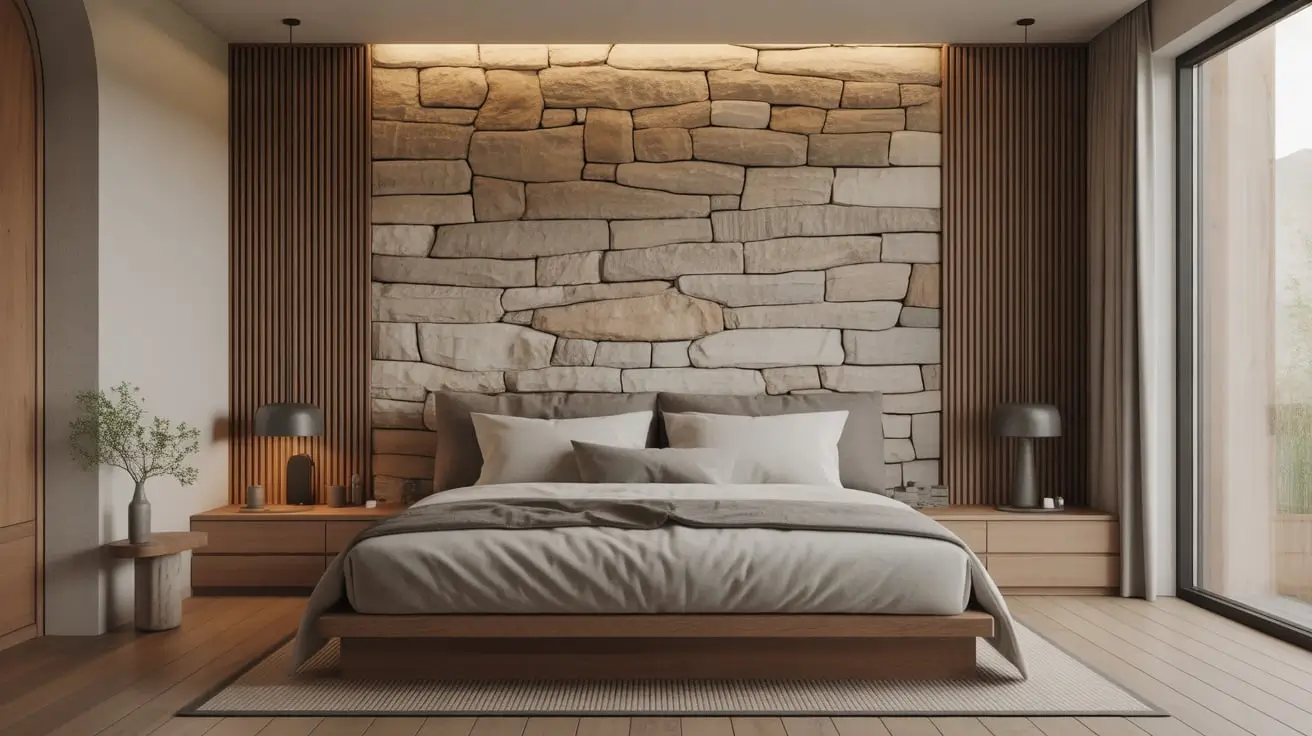
Stone brings this incredible grounding energy to Japandi bedrooms. I’m talking about natural stone in raw or lightly polished finishes—travertine, limestone, marble, slate. Not the shiny, polished stuff you see in fancy hotel lobbies, but stone that looks and feels organic.
A stone accent wall behind the bed creates an instant focal point. Or maybe just a few stone tiles as a bedside surface. A limestone tray on your nightstand. A marble lamp base. These elements add weight (literally and figuratively) to balance all the light wood and soft textiles.
The texture of natural stone is unmatched. It’s cool to the touch, visually interesting with natural variations, and it ages beautifully. A travertine piece will look better in ten years than it does today, which is the opposite of most modern materials.
I added a small slate tray to my nightstand for rings and jewelry, and it’s become my favorite piece in the room. Something about the matte, slightly rough texture next to smooth wood and soft linen just works. The contrast makes each material more noticeable and appreciated.
Incorporating stone:
- Accent wall in natural stone (travertine or limestone)
- Stone surfaces for nightstands or shelving
- Stone lamp bases in organic shapes
- Stone or concrete planters
- Raw or honed finishes (not polished)
Balance stone’s heaviness with plenty of soft elements. You want grounded, not cave-like. The stone should feel like a natural element you brought inside, not a construction material. Stick to neutral stone tones that work with your overall color palette.
Neutral Palette Japandi Symmetry Room
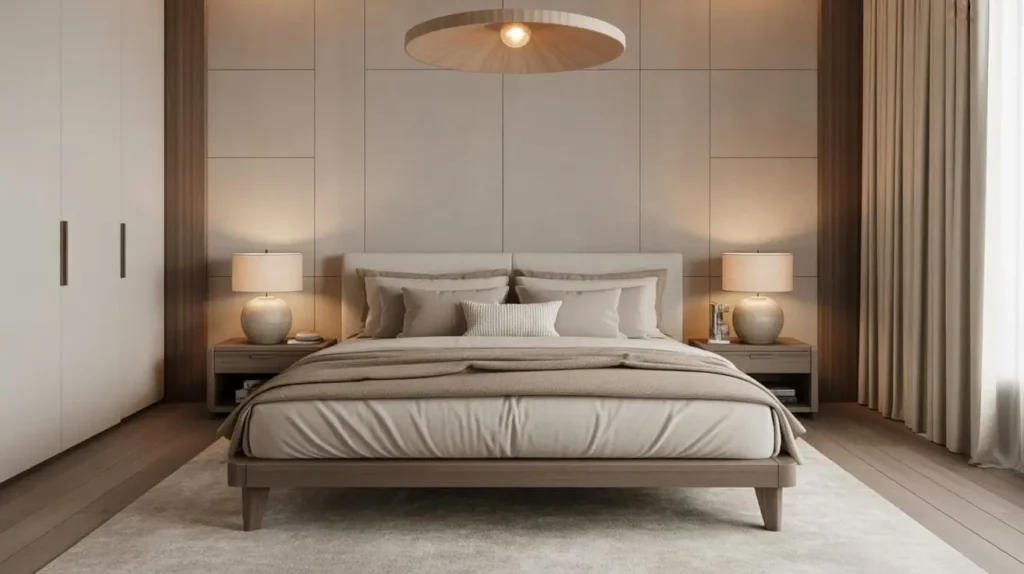
Here’s where we get a bit more formal and intentional with layout. Symmetrical design creates instant calm and order—something our brains naturally respond to. It feels balanced and considered, which is exactly what you want in a bedroom.
Center your bed on the main wall. Flank it with two identical nightstands. Add matching lamps. Hang two identical pieces of art on either side. Create mirror-image styling on each nightstand. The symmetry creates visual harmony that’s deeply soothing.
This doesn’t mean the room has to feel stiff or boring. You maintain interest through texture and subtle color variations within your neutral palette. Vary the heights of objects while keeping the overall balance symmetrical.
Japanese design often uses symmetry in traditional spaces, while Scandinavian design tends more casual. This fusion brings that intentional, almost meditative quality to the clean Scandinavian aesthetic. It’s the most zen-like of all these approaches, honestly.
Symmetry guidelines:
- Center the bed exactly on your main wall
- Use pairs of identical furniture pieces
- Mirror your nightstand styling on both sides
- Create vertical and horizontal balance
- Break symmetry with only one or two elements
That last point is important. Perfect symmetry can feel uptight. Break it intentionally with one asymmetrical element—maybe a plant on just one side, or a throw draped casually. The slight imperfection makes the rest of the symmetry feel deliberate rather than accidental.
Japandi Bedroom with Soft Ambient Lighting
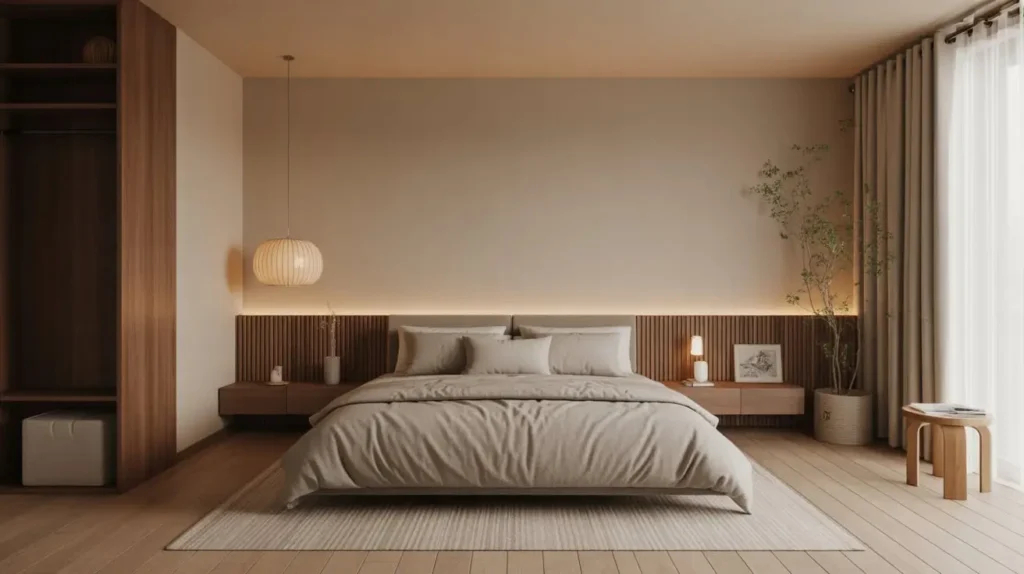
Lighting makes or breaks a bedroom, seriously. You can have perfect furniture and colors, but if your lighting is harsh overhead fluorescents, the whole vibe falls apart. This design focuses on creating layered, warm, soft lighting that you can adjust for different moods.
Start by eliminating or barely using overhead lighting. Instead, create multiple light sources at different heights. A floor lamp with a rice paper or linen shade in one corner. A pair of small table lamps on your nightstands. Maybe LED strip lighting behind a headboard or under floating nightstands.
The key is warm-toned bulbs (2700K-3000K range) that create a soft, golden glow. None of that blue-white LED harshness. You want lighting that makes you feel sleepy and relaxed, not alert and ready to perform surgery.
I swapped all my bulbs to warm LEDs last year, and I genuinely think it improved my sleep quality. The softer evening light helps signal to my brain that it’s time to wind down. Plus everything just looks better—skin tones, wood tones, all of it.
Lighting layer strategy:
- No overhead lighting (or dimmed to 10% max)
- Floor lamp with fabric or paper shade
- Nightstand lamps with warm bulbs
- Possible accent lighting (under-bed, behind headboard)
- Dimmer switches on everything possible
Add candles for the ultimate ambient lighting. A few pillar candles on a stone tray create this incredible living light that no electric source can match. Just don’t fall asleep with them lit (learned that lesson the slightly scary way).
Muted Taupe Japandi Cozy Minimalism
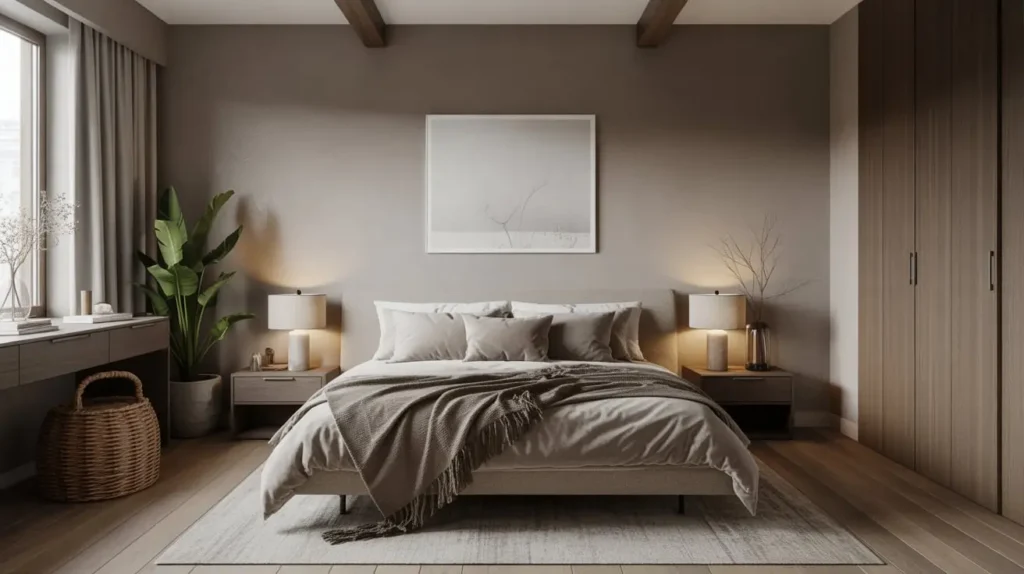
Taupe is criminally underrated. It’s warmer than gray, more sophisticated than beige, and creates the coziest backdrop for a minimalist bedroom that doesn’t feel cold. This design is all about those beautiful muted taupe tones in various shades.
Paint your walls in a medium taupe—not too light, not too dark. Something substantial. Then layer furniture in both lighter and darker taupe tones. A bed frame in warm taupe wood. Bedding in lighter taupe linen. A darker taupe throw or pillow. Taupe curtains. Okay, I know I’m saying taupe a lot, but you get it.
The monochromatic approach creates incredible depth when you layer different shades. Add texture to keep it interesting—a chunky knit in one shade, smooth cotton in another, nubby linen in a third. All taupe, all different.
This works especially well in bedrooms without tons of natural light. Taupe has enough warmth to keep the room from feeling dingy or cave-like, but it’s neutral enough to still feel calm and minimal.
Taupe bedroom essentials:
- Walls in medium taupe (test in your specific lighting)
- 4-5 different shades of taupe layered
- Texture variation to create visual interest
- Warm wood tones (walnut or medium oak)
- One or two elements in cream or ivory for contrast
Add just a touch of black or charcoal for definition—maybe in a picture frame or lamp base. The tiny bit of contrast makes the taupe feel intentional rather than wishy-washy. Trust me, this color scheme is way chicer than it sounds on paper.
Japandi Bedroom with Natural Plant Styling
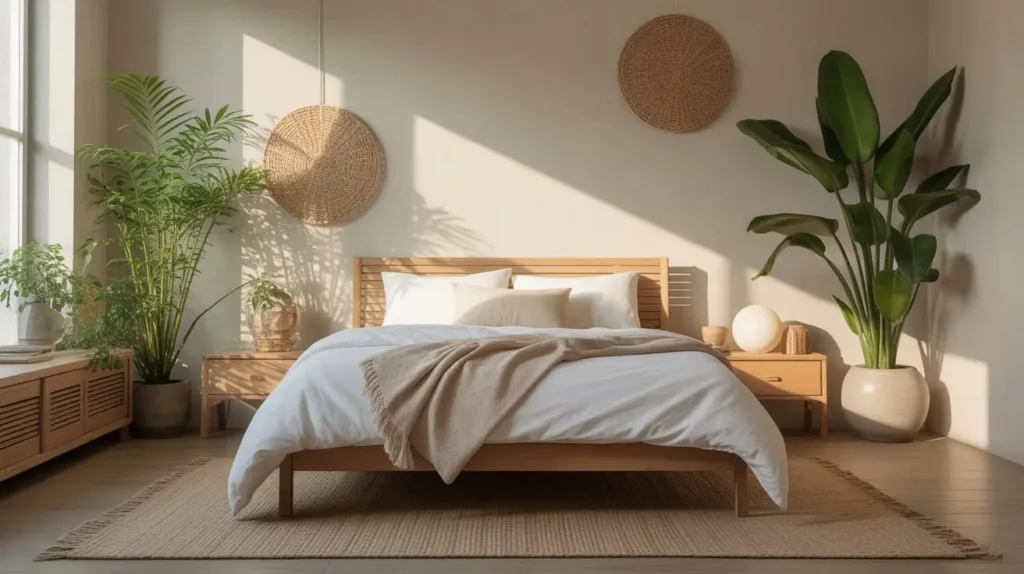
Plants! Finally! I mean, you can add plants to any of these designs, but this one makes natural plant styling a central feature of the bedroom design. And yes, you can absolutely have plants in your bedroom (despite what your grandmother might say about oxygen).
Choose plants that thrive in bedroom conditions—lower light, consistent temperatures. Snake plants, pothos, ZZ plants, peace lilies. Nothing too fussy or demanding. The goal is to add life and air-purifying benefits, not create a maintenance nightmare.
Style them like you mean it. A large floor plant (fiddle leaf fig or monstera) in a natural fiber basket in one corner. A few smaller plants on a floating shelf. Maybe a trailing pothos on top of a wardrobe. Keep the pots simple—terracotta, ceramic in neutral tones, or woven baskets.
I have seven plants in my bedroom right now, and I love the living energy they bring. Yes, I’m that person who talks to them while watering. No, I don’t think it’s weird. They’re thriving, so obviously my pep talks are working.
Plant styling tips:
- Choose low-maintenance varieties (snake plant, pothos, ZZ)
- Use natural planters (terracotta, ceramic, woven baskets)
- Vary plant heights (floor, shelf, hanging)
- Stick to 3-7 plants total (not a jungle)
- Group in odd numbers for visual appeal
The greenery adds the only color you need against all those neutral tones. It’s living, changing, growing—which brings that wabi-sabi impermanence we talked about earlier. Plus, better air quality while you sleep is always a win.
Conclusion
So there you have it—15 ways to bring that soft, comfortable Japandi aesthetic into your bedroom. The beautiful thing about this style is how flexible and forgiving it actually is. You’re not locked into one specific look or formula.
Maybe you start with the natural wood minimalist approach and gradually add more texture. Or you begin with the light and airy Scandinavian fusion and slowly introduce more Japanese elements. There’s no wrong way to do this, honestly. The core principles stay the same: natural materials, neutral colors, intentional minimalism, and ultimate comfort.
Your bedroom should be the most peaceful room in your home. It’s where you start and end each day, where you’re most vulnerable, where you need to feel completely safe and relaxed. Japandi design creates that feeling better than any other aesthetic I’ve tried (and trust me, I’ve tried several).