15 Smart Kids Room Wardrobe Design Solutions for Parents

Look, I get it. You’ve probably stood in your kid’s room at least once this week, staring at the chaos of clothes spilling out everywhere, toys mixed with socks, and you’ve wondered—is there a better way to do this? Spoiler alert: there absolutely is.
As a parent who’s survived the great toy avalanche of 2022 (don’t ask), I’ve learned that smart wardrobe design isn’t just about storage—it’s about survival. Your sanity depends on it, trust me. Kids grow fast, their stuff multiplies overnight (seriously, where do all these stuffed animals come from?), and you need wardrobe solutions that actually work for real life, not just Pinterest fantasies.
I’ve tested, researched, and sometimes accidentally stubbed my toe on enough wardrobe configurations to know what works and what’s just pretty to look at. So grab your coffee, and let’s talk about 15 wardrobe design solutions that’ll transform your kid’s room from disaster zone to organized haven.
1. Space-Saving Sliding Wardrobe for Kids Room
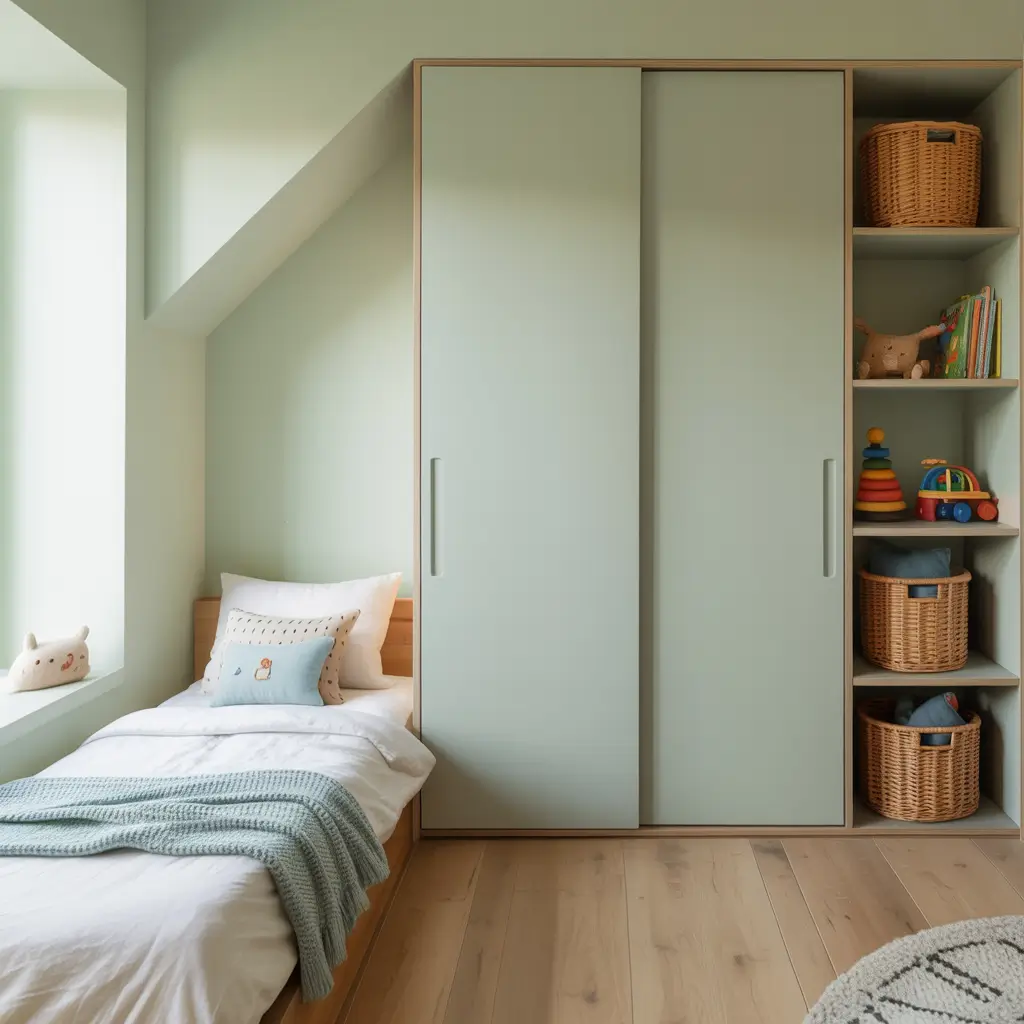
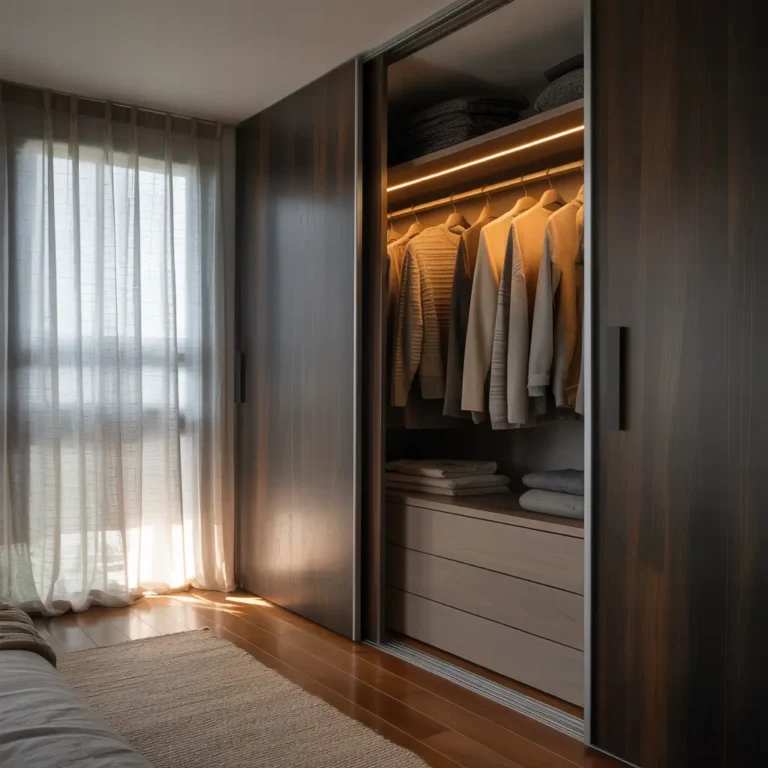
You know what takes up a ridiculous amount of space? Wardrobe doors that swing open. I never realized how much floor space those doors ate up until I installed sliding doors in my daughter’s room.
Sliding wardrobes are game-changers for smaller kids’ rooms. They glide smoothly along tracks, and you don’t need to worry about leaving clearance space for doors to open. This means you can push furniture closer to the wardrobe without creating a furniture Tetris nightmare.
Here’s why I love them:
- No door swing radius needed – saves precious floor space
- Safer for toddlers who love slamming doors (been there)
- Modern, sleek look that grows with your kid
- Easy access without bumping into open doors
The best part? You can customize the interior however you want. I recommend adding a mix of hanging rods at different heights and some pull-out drawers. FYI, soft-close mechanisms are worth every penny when you have kids who think closing doors is an Olympic sport.
2. Built-In Wall Wardrobe with Study Combo
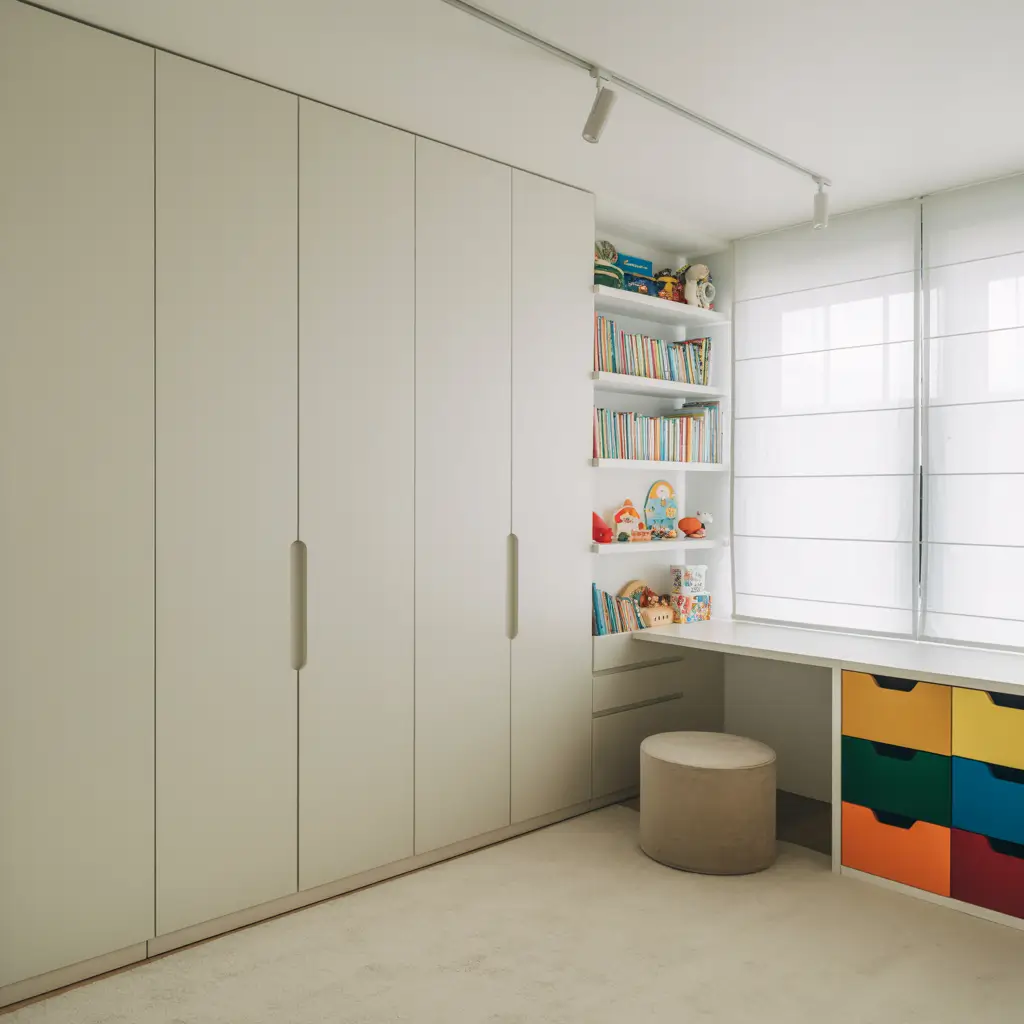
Want to know a secret? Kids don’t actually need that much floor space if you design their room smartly. A built-in wall wardrobe with an integrated study desk is basically the Swiss Army knife of kids’ furniture.
I installed one of these in my son’s room last year, and it completely transformed the space. The wardrobe extends along one wall, and we carved out a section in the middle for a pull-out or fixed desk. Genius, right?
Why This Design Works
This combo solution eliminates the need for separate furniture pieces. Your kid gets dedicated storage AND a proper study area without cramping their room. Plus, everything looks cohesive instead of that mismatched furniture vibe.
Key features to include:
- Desk height between 24-29 inches depending on your child’s age
- Overhead shelving for books and supplies
- Cable management holes for lamps and devices
- Lockable drawers for important stuff
The study section should get natural light if possible. Position it near a window, and you’ll thank yourself during homework time.
3. Bunk Bed with Attached Wardrobe Unit
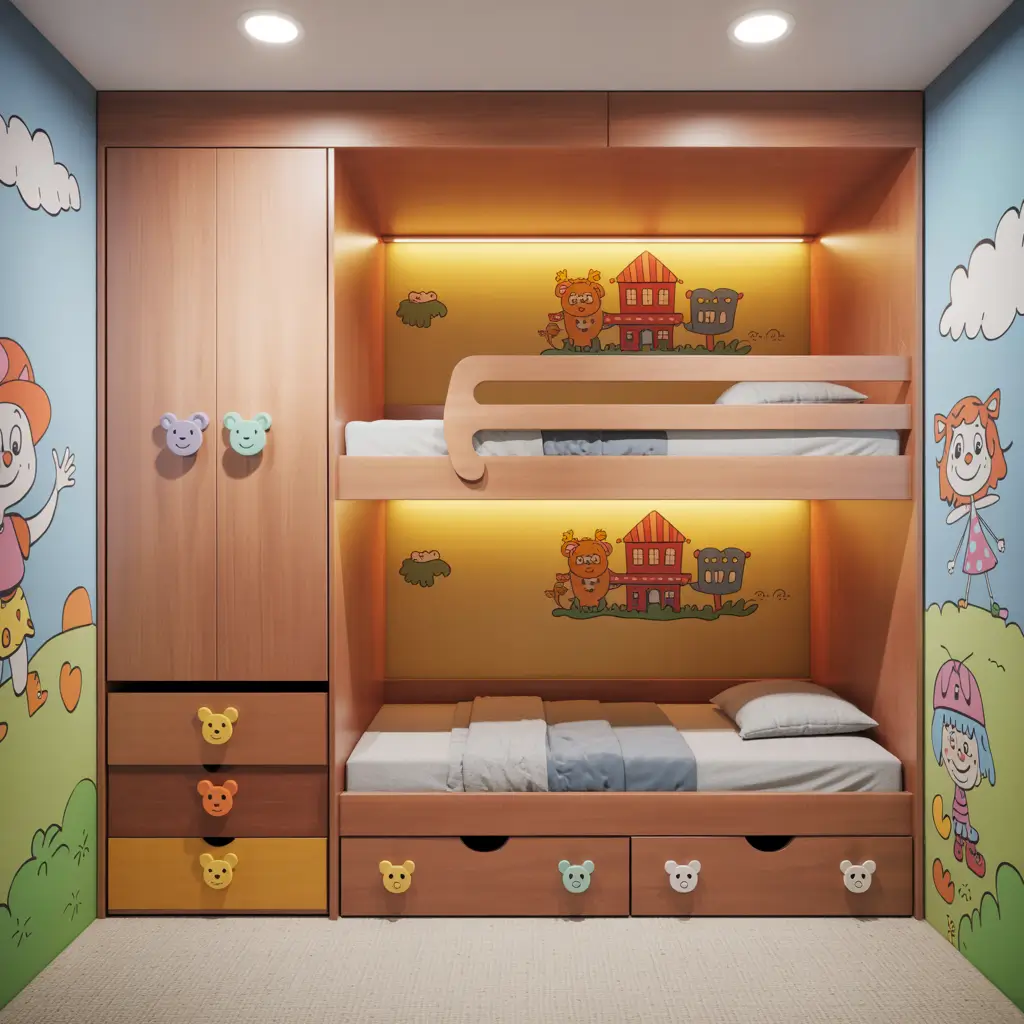
Ever looked at your kid’s room and thought, “I wish I could just stack everything vertically”? Well, you kind of can with a bunk bed-wardrobe combo.
These units are perfect for shared rooms or just maximizing vertical space. I’ve seen designs where the wardrobe is built into the staircase leading to the top bunk (seriously cool), or wardrobes that sit underneath loft beds.
The concept is simple: why waste the space under or around a bunk bed when you can build storage into it? Some designs include full wardrobes with hanging space and drawers built right into the bed frame.
Things to consider:
- Make sure the wardrobe doesn’t block ladder access
- Sturdy construction is non-negotiable – this furniture does double duty
- Choose designs with rounded edges (safety first!)
- Ensure adequate ventilation in enclosed wardrobe sections
IMO, these work best for kids aged 6 and up. Toddlers and complex vertical furniture? Not a combo I’d recommend unless you enjoy heart attacks 🙂
4. Modular Kids Wardrobe with Adjustable Shelves
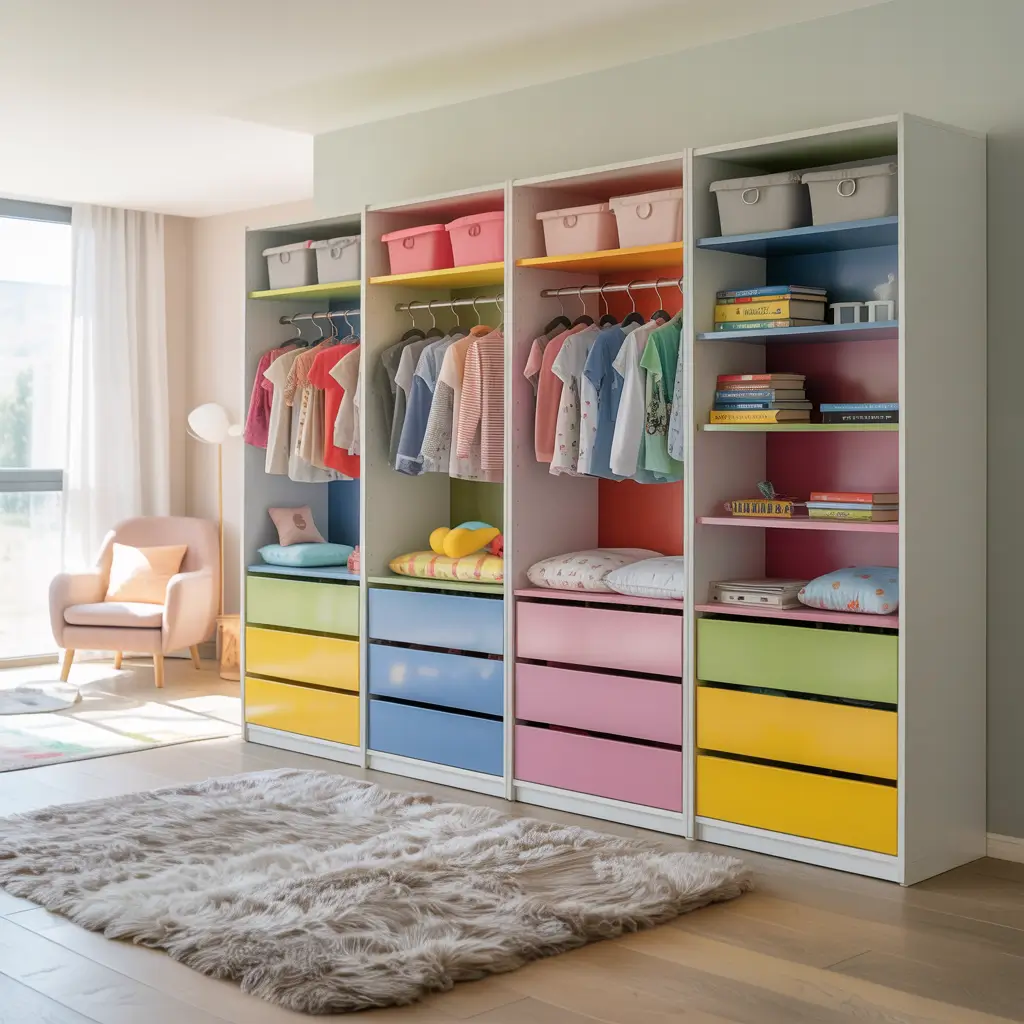
Kids grow. Like, weirdly fast. One day they’re wearing onesies, and suddenly they’re borrowing your shoes. A modular wardrobe with adjustable shelving grows with them.
I love modular systems because you can reconfigure them as your child’s needs change. Baby clothes need lots of shelves? Done. Teenager needs more hanging space for hoodies? Just adjust.
Flexibility is Everything
The beauty of modular wardrobes is the customization. You buy components—shelves, drawers, hanging rods, boxes—and arrange them however you need. When your kid outgrows the current setup, you rearrange instead of buying new furniture.
Smart modular features:
- Tool-free shelf adjustment (because who has time for that?)
- Mix of closed and open storage
- Stackable drawer units
- Removable hanging rods at multiple heights
Most quality modular systems let you add or remove pieces over time. Start with basics when they’re young, and expand as their wardrobe (and toy collection) grows.
5. Floor-to-Ceiling Storage Wardrobe Design
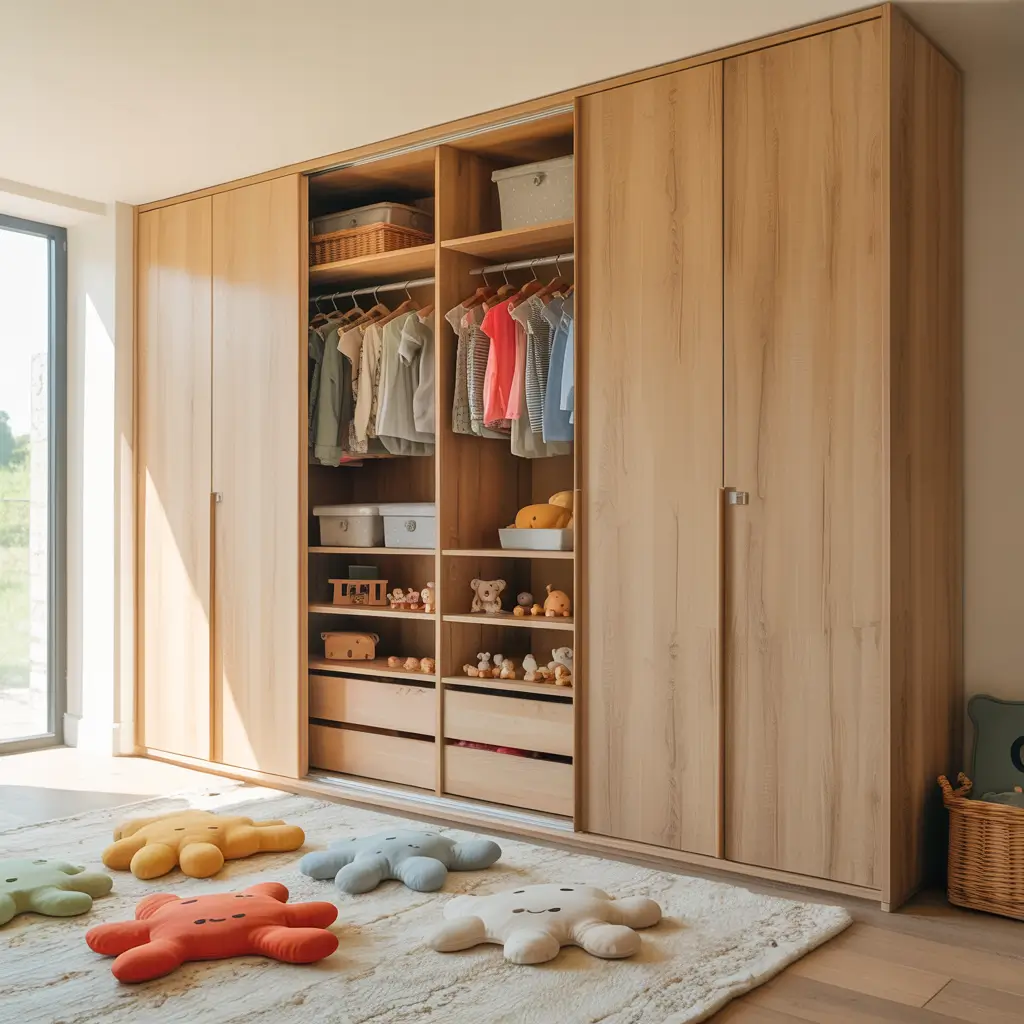
Why do we leave all that vertical space near the ceiling empty? It’s wasted real estate! Floor-to-ceiling wardrobes maximize every inch of wall space.
I installed one of these in my kid’s room, and the storage capacity is honestly insane. You can fit EVERYTHING—seasonal clothes, extra bedding, old toys you’re not ready to donate yet (why is letting go so hard?).
The trick is organization. Put everyday items at kid-friendly heights and store seasonal or rarely-used stuff up top. I keep summer clothes in the top sections during winter and swap them out when seasons change.
Benefits you’ll notice immediately:
- Massive storage capacity without taking extra floor space
- Makes rooms with high ceilings look more proportional
- Creates a built-in, custom look
- Can include lighting inside for functionality
Just make sure you anchor these properly to the wall. We’re talking serious furniture here, and safety matters more than aesthetics.
Also Read: 15 Creative Wardrobe Shutter Design Chic Inspirations
6. Corner Wardrobe for Small Kids Bedroom
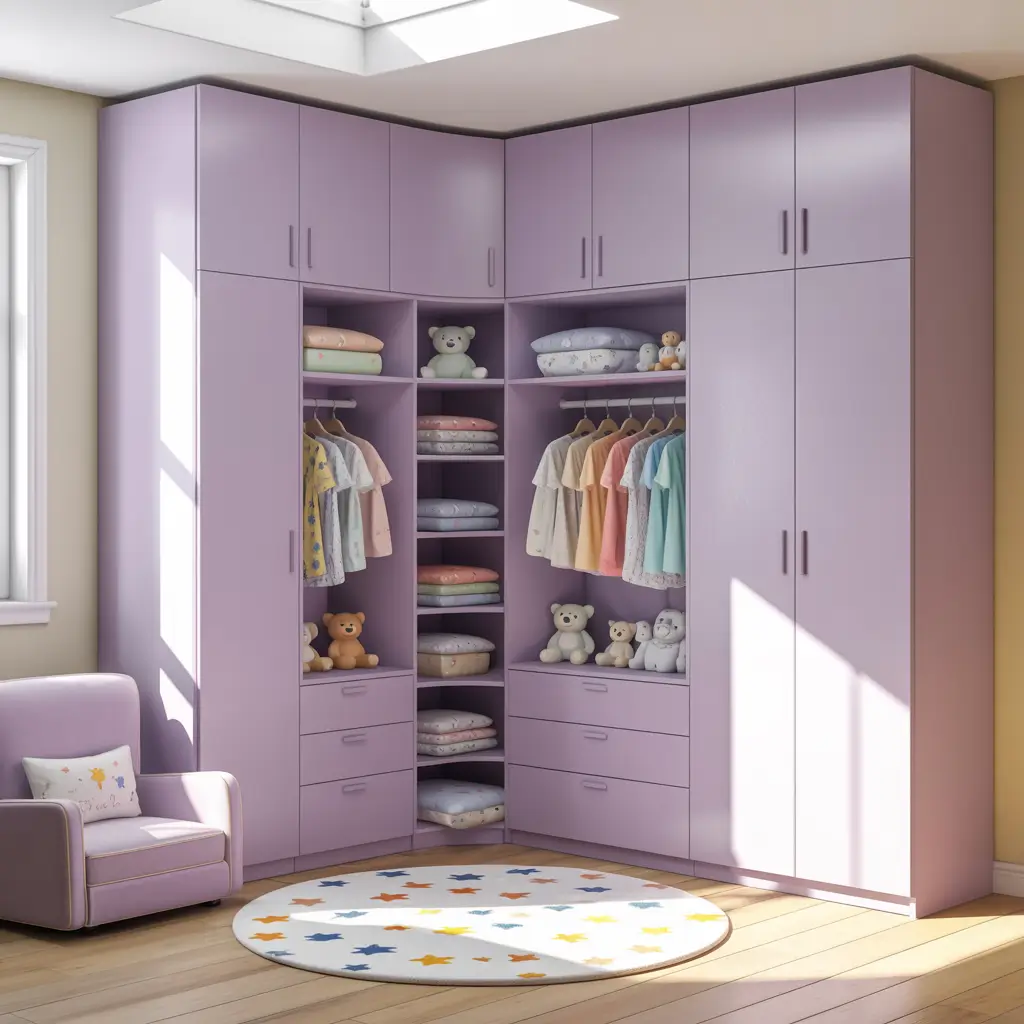
Corners are weird spaces, right? Too awkward for most furniture but too visible to ignore. Enter the corner wardrobe—the perfect solution for those tricky spaces.
I’ll be honest, I was skeptical about corner wardrobes at first. They seemed gimmicky. But after installing one in my daughter’s tiny room, I’m a convert. These units hug the corner and provide surprising storage without jutting into the room.
Making Corners Work for You
Corner wardrobes come in different configurations. Some are L-shaped units that wrap around the corner, while others are diagonal designs that cut across the corner at an angle.
The diagonal ones are my favorite because:
- Easier access to everything inside
- No awkward deep corners where stuff disappears forever
- Softer angles mean fewer bruised shins (speaking from experience)
- They make small rooms feel bigger
Pair corner wardrobes with mirrors on the doors, and you’ll maximize both light and perceived space. Small room magic!
7. Theme-Based Kids Wardrobe with Soft Colors
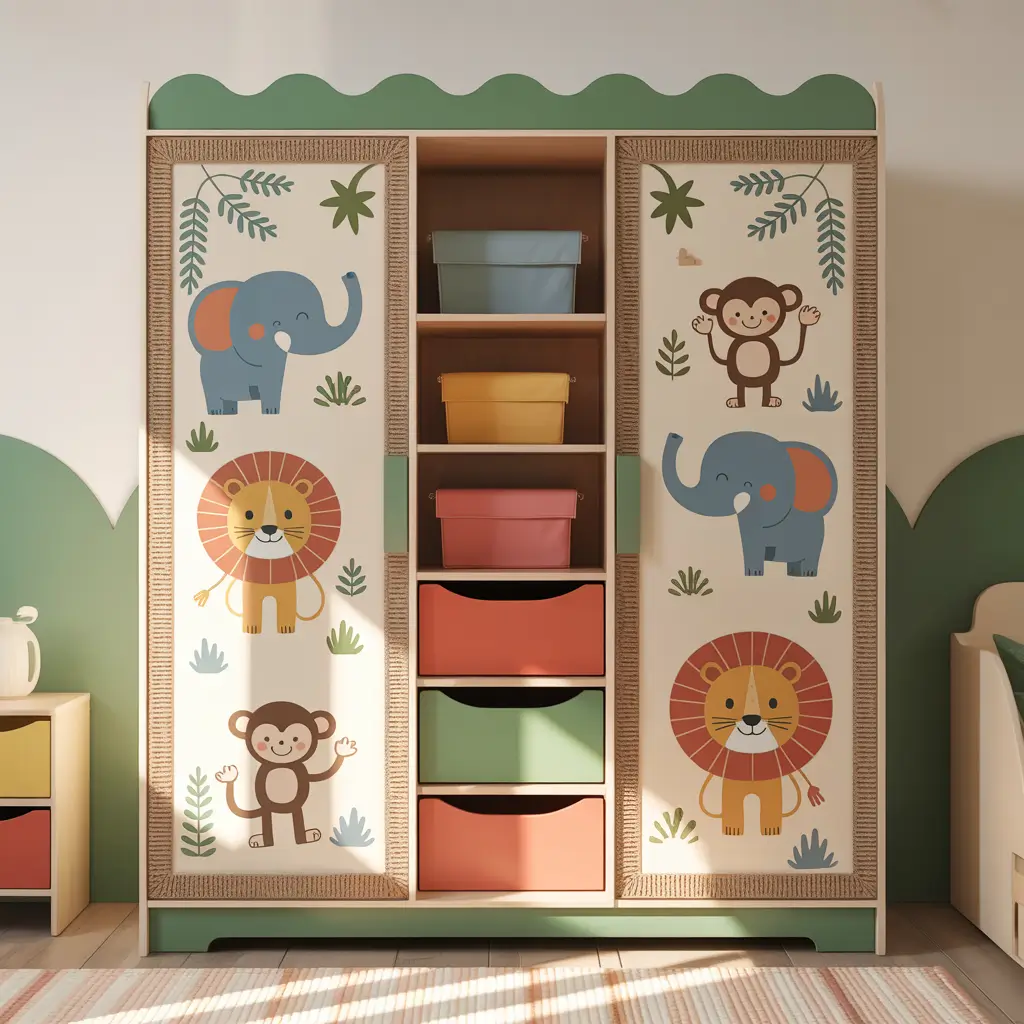
Let’s talk aesthetics for a second. Your kid’s wardrobe doesn’t have to look boring. Theme-based designs with soft, playful colors make organizing clothes feel less like a chore and more like fun.
I’m not suggesting you go crazy with cartoon characters that they’ll outgrow in six months. Think subtle themes—clouds, stars, geometric shapes, or nature elements in soft pastels or muted tones.
My son’s room has a wardrobe in soft sage green with constellation handles. It’s themed but sophisticated enough that he won’t hate it when he’s 14. That’s the sweet spot you’re aiming for.
Color psychology matters too:
- Soft blues and greens – calming, great for sleep
- Warm peachy tones – energizing but not overwhelming
- Neutral grays and beiges – timeless, grows with them
- Accent colors – add personality without commitment
Pro tip: Choose wardrobe colors that complement your wall colors rather than match exactly. This creates depth and visual interest.
8. Minimalist White Kids Room Wardrobe
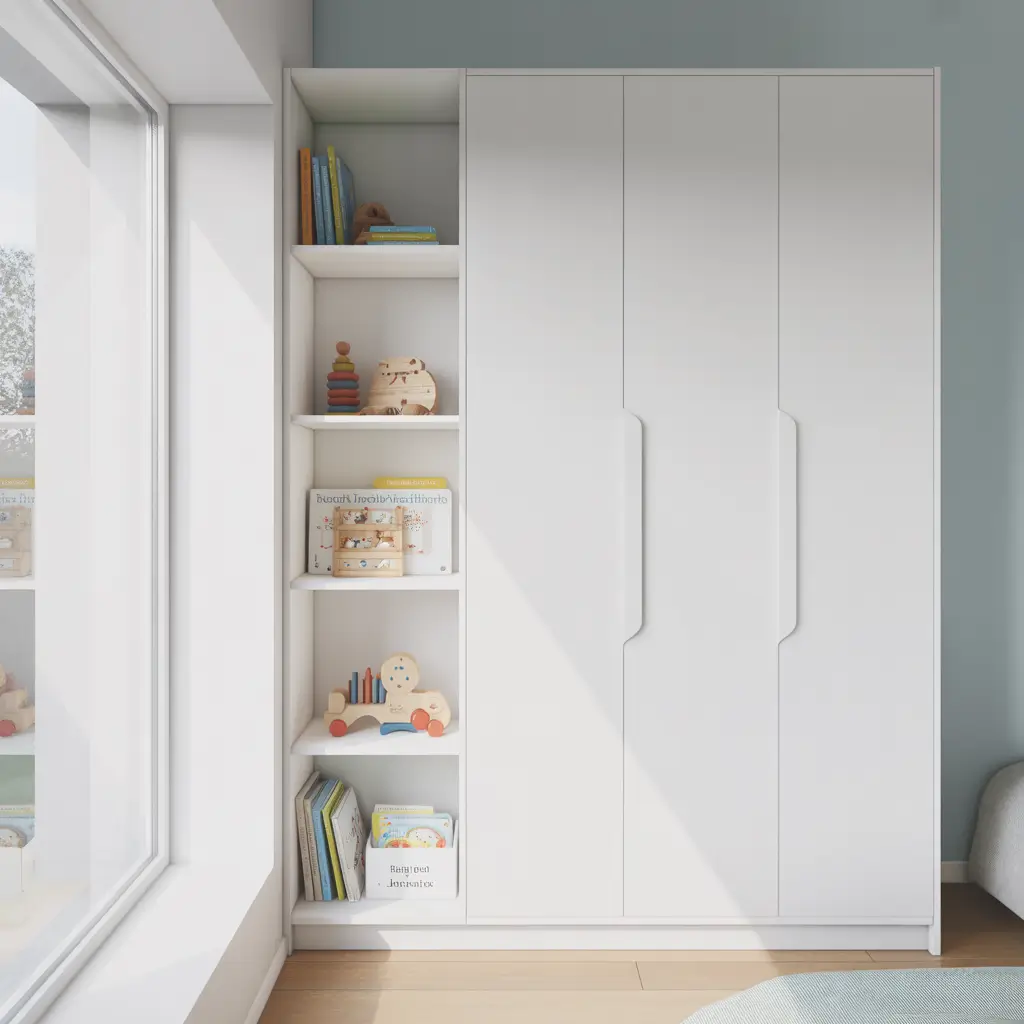
Sometimes simple is best. A clean, minimalist white wardrobe is like the little black dress of kids’ furniture—always works, never goes out of style.
I know what you’re thinking: “White? With kids? Are you insane?” Hear me out. Modern white wardrobes often come with finishes that are surprisingly easy to clean. Fingerprints wipe off with a damp cloth.
The Case for Minimalism
White wardrobes make small rooms feel larger and brighter. They create a neutral backdrop that lets other room elements shine. Plus, they work with literally any décor changes your kid wants as they grow.
The minimalist approach means:
- Clean lines and simple hardware
- No unnecessary decorative elements
- Focus on functionality over fuss
- Easy to style with colorful accessories
I paired a white minimalist wardrobe with colorful storage boxes inside, and it looks amazing. The wardrobe itself stays neutral, but the interior pops with personality.
9. Wardrobe with Open Cubby + Toy Storage
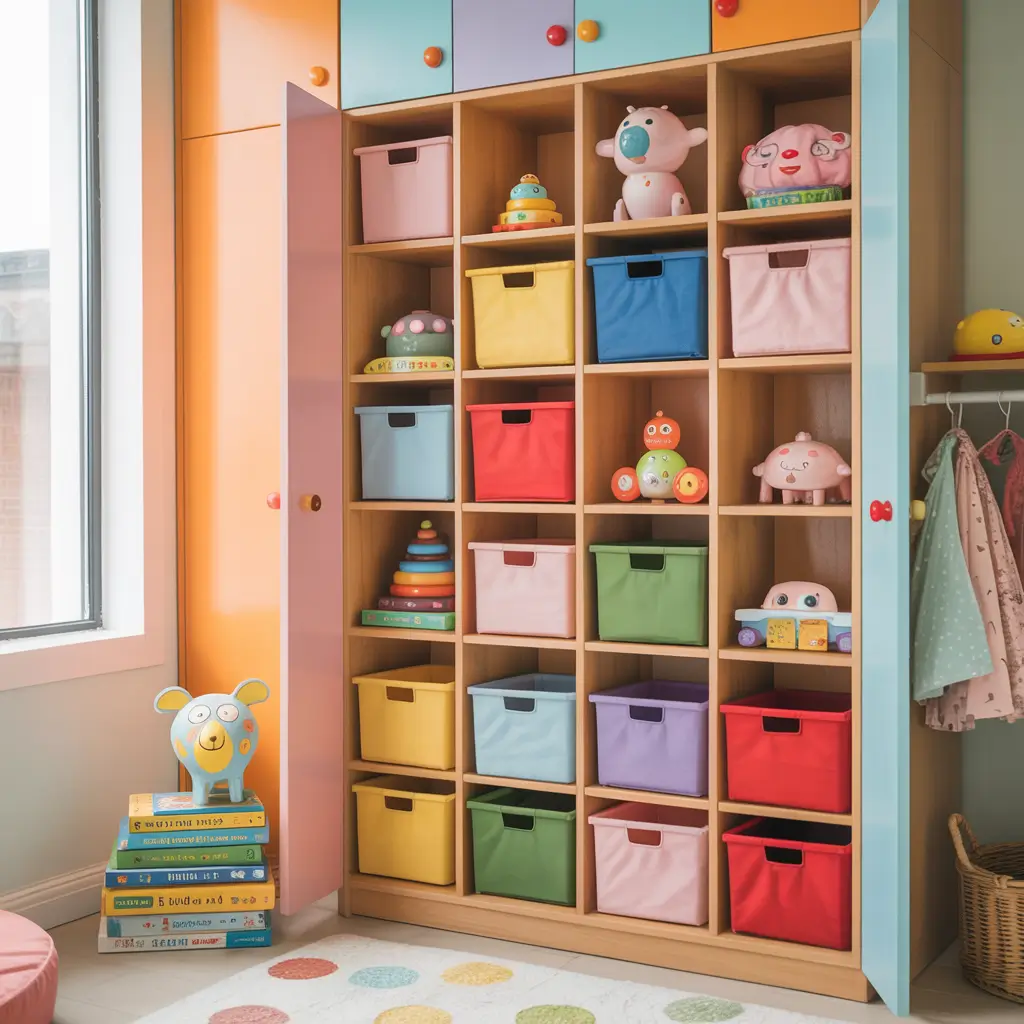
Here’s a controversial opinion: not everything needs to be hidden behind closed doors. Wardrobes with open cubby sections combined with toy storage teach kids organization while keeping favorite items accessible.
I designed my daughter’s wardrobe with closed sections for clothes and open cubbies for books and toys. She can actually see what she has, which means she plays with more of her toys instead of forgetting they exist.
Balance Between Open and Closed
The key is balance. Too much open storage looks cluttered. Too much closed storage and kids can’t find anything (and will ask you 47 times where their favorite stuffed animal is).
Ideal configuration:
- Bottom cubbies for toys and books kids access daily
- Middle hanging section for clothes
- Top closed shelves for less-used items
- Pull-out bins in cubbies for small toy organization
Use fabric bins or baskets in the open sections. They add texture, hide some mess, and come in fun colors. Your kid can toss toys in bins, and it still looks relatively tidy.
Also Read: 10 Refreshing Blue Master Bedrooms Decor Ideas for Cozy Nights
10. Multi-Functional Wardrobe with Pull-Out Desk
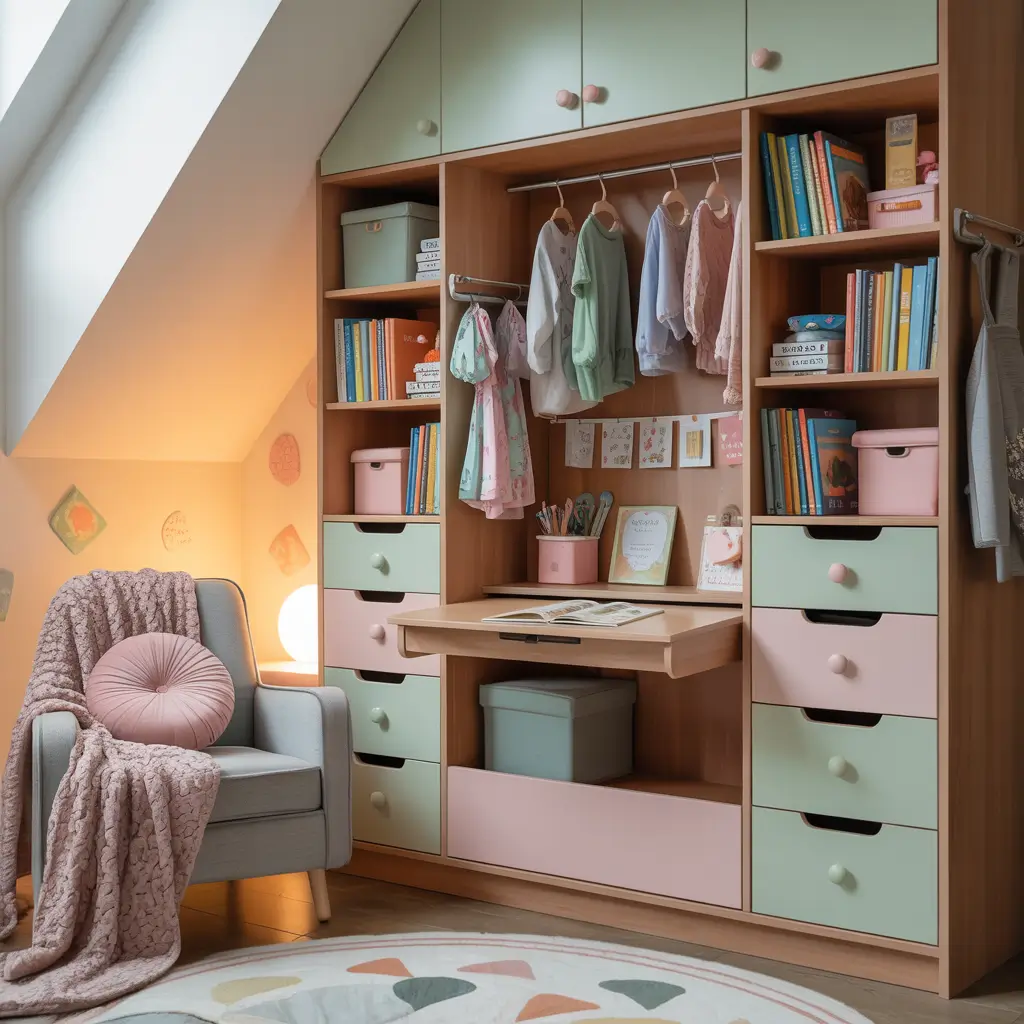
Remember when furniture just did one thing? Yeah, those days are over. Multi-functional wardrobes with hidden pull-out desks are the furniture equivalent of a smartphone—why carry multiple devices when one does everything?
I saw this design at my friend’s house and immediately wanted one. The wardrobe looks normal when closed, but pull a section, and boom—instant workspace. When homework’s done, it disappears back into the wardrobe.
This works brilliantly for:
- Small bedrooms where every inch counts
- Creating dedicated homework zones
- Keeping rooms looking tidy when not in use
- Teaching kids to clean up their workspace (it literally has to be clear to close)
Make sure the pull-out mechanism is smooth and easy for kids to operate independently. You don’t want to be the pull-out desk operator every time they need it.
11. Low-Height Toddler-Friendly Wardrobe Design
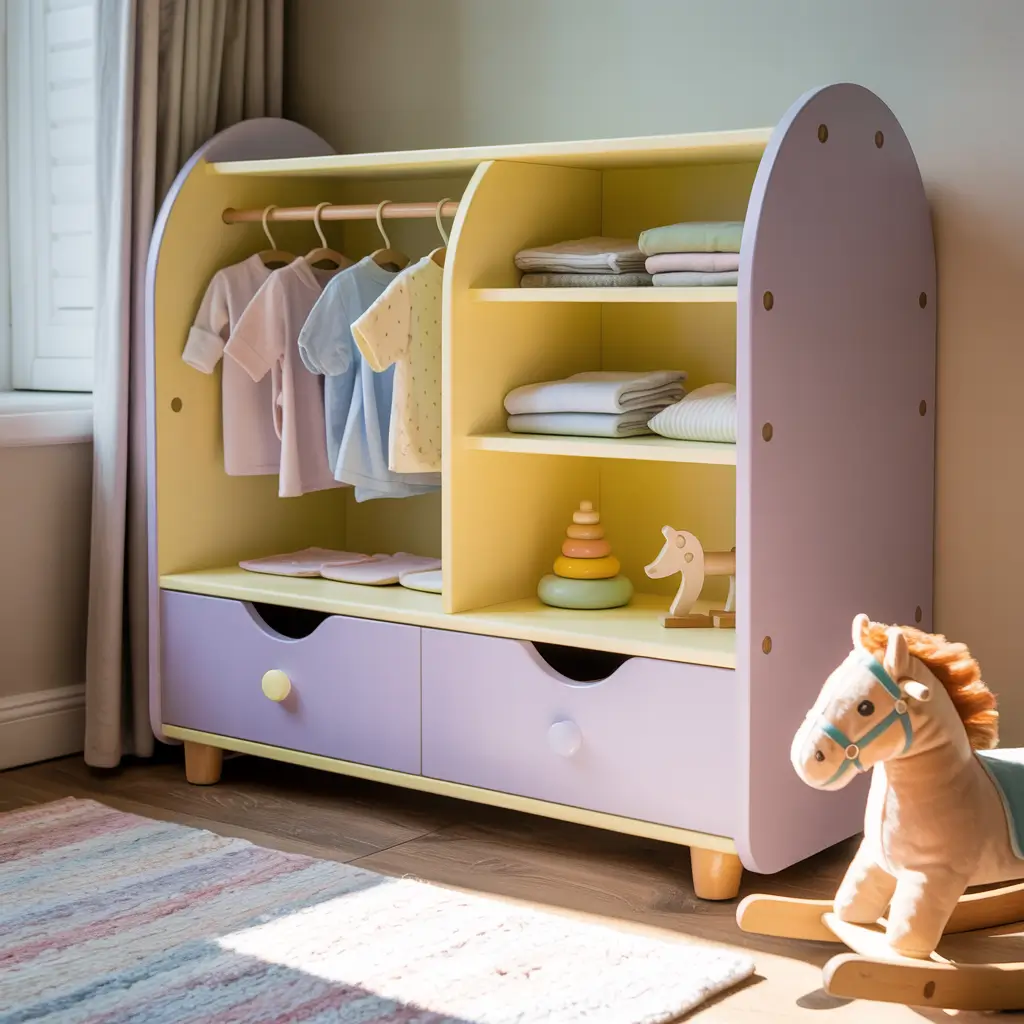
Toddlers and standard wardrobes? That’s a recipe for frustration. Low-height wardrobes designed specifically for little ones encourage independence and make mornings less chaotic.
I learned this the hard way when my son was three and insisted on picking his own clothes but couldn’t reach anything. Cue the meltdown. A toddler-height wardrobe solved that problem instantly.
Designing for Little Humans
Toddler wardrobes should max out around 36-40 inches tall. Everything should be within their reach. Hang rods at 30 inches or lower so they can grab clothes themselves.
Features that work for toddlers:
- Low hanging rods they can actually reach
- Open bins instead of drawers (easier for small hands)
- Lightweight doors or no doors at all
- Rounded corners everywhere
- Tip-over prevention anchors (seriously, anchor everything)
Visual labels help too. Picture labels showing where shirts, pants, and pajamas go make cleanup easier and build organizational skills early.
12. Shared Sibling Wardrobe with Dual Sections
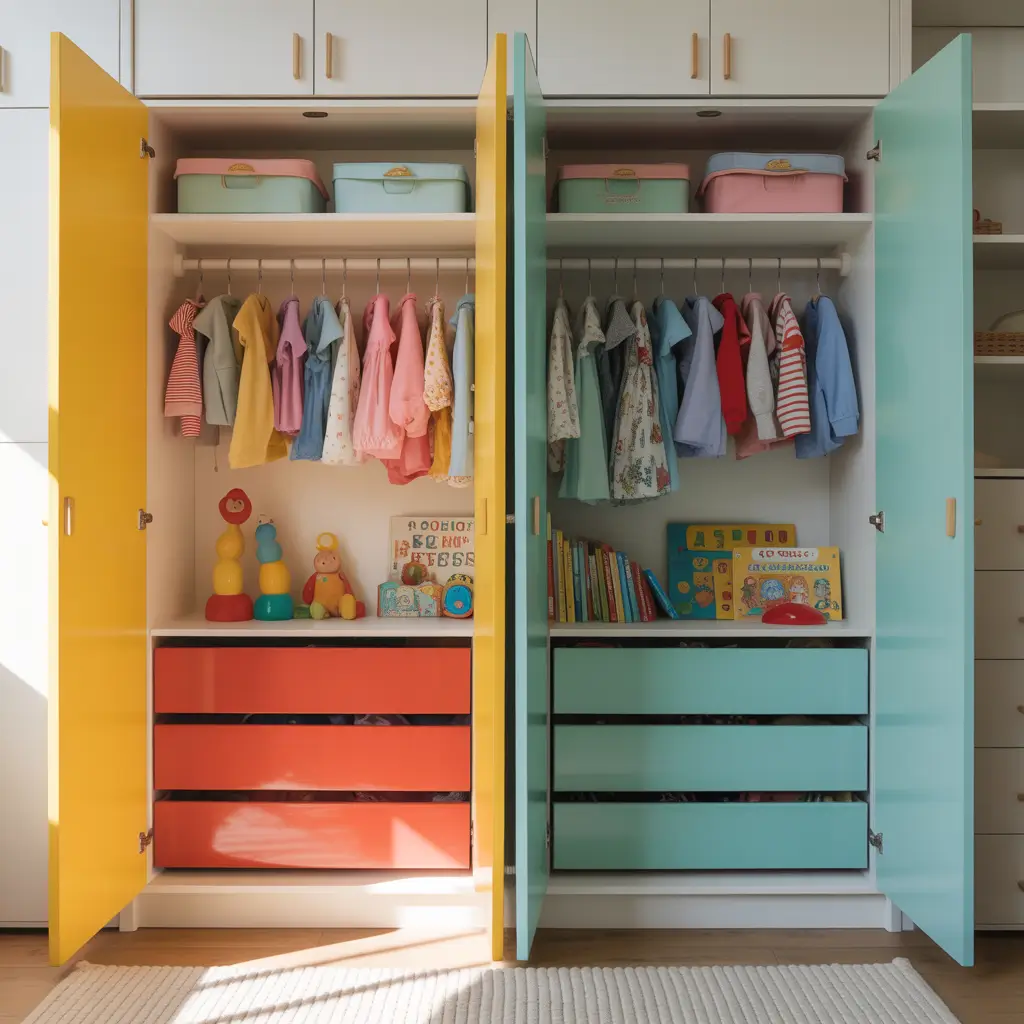
Got two kids sharing a room? The dual-section wardrobe might save your sanity and stop the “they’re touching my stuff” arguments.
I designed one for my kids with clearly divided sections—different colors, different sides, different everything. They each get their own space, and boundary disputes dropped significantly.
Creating Fair Territory
The key is making both sections truly equal. Kids notice if one side has more hanging space or better shelves. Split everything 50/50, or there will be negotiations that rival international peace treaties.
Smart dual-wardrobe features:
- Color-coded sections (each kid picks their color)
- Mirrored layouts so both sides are identical
- Central divider for clear boundaries
- Name labels or personalization
- Shared middle section for common items
Some designs include a shared section in the middle for things like school bags or sports equipment. It works well for items they both use.
13. Wardrobe with Hidden Shoe Drawer System
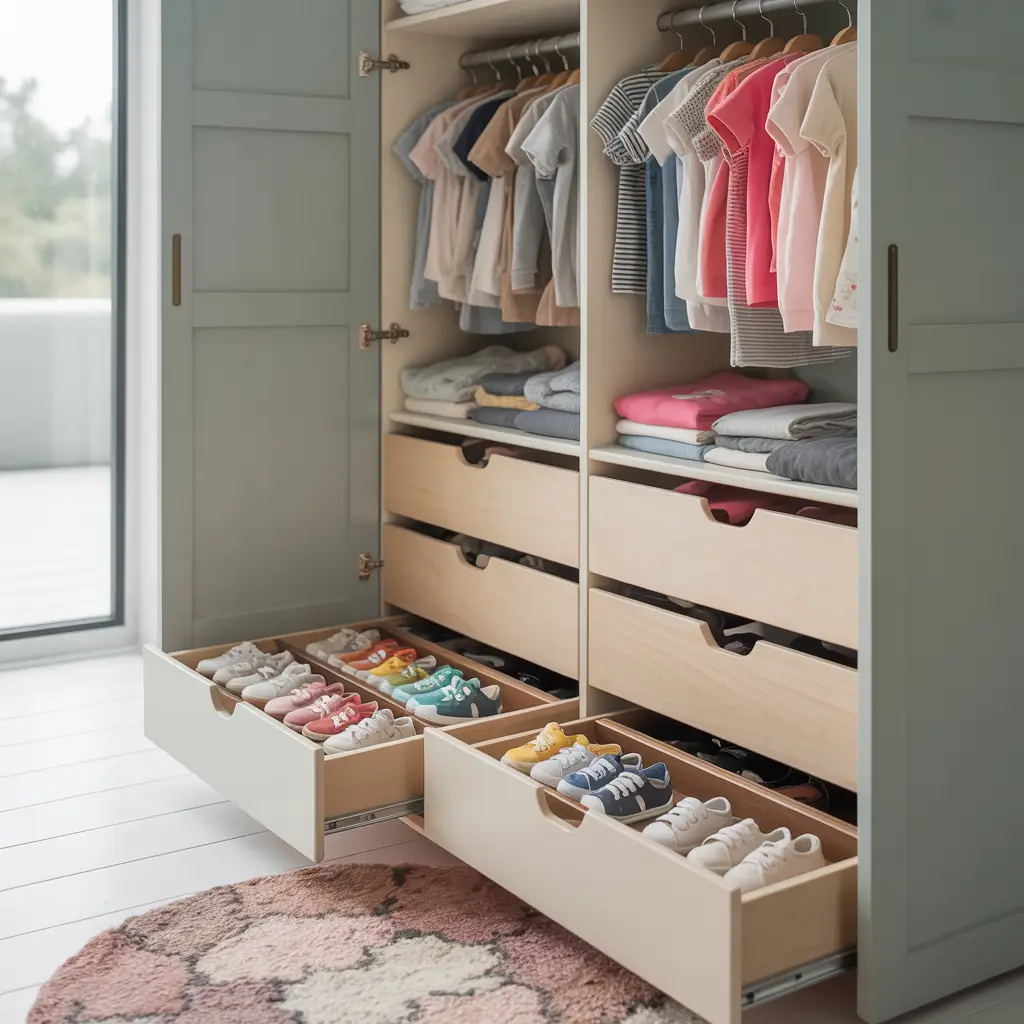
Shoes. They multiply like rabbits and end up everywhere except where they belong. A wardrobe with built-in hidden shoe drawers solves this annoying problem elegantly.
These aren’t your grandmother’s shoe racks. Modern shoe drawer systems slide out smoothly and can hold a surprising number of pairs. They’re hidden at the bottom of the wardrobe, so they don’t mess with the aesthetic.
I installed pull-out shoe drawers in my kids’ wardrobes, and the difference is huge. Shoes actually have a home now. Revolutionary, I know.
Why shoe drawers beat shoe racks:
- No dust accumulation on shoes
- Keeps shoes organized and paired
- Doesn’t take up visible space
- Easy for kids to put shoes away themselves
Go for shallow drawers so shoes don’t pile on top of each other. You want to see all pairs at once, not dig through a shoe mountain.
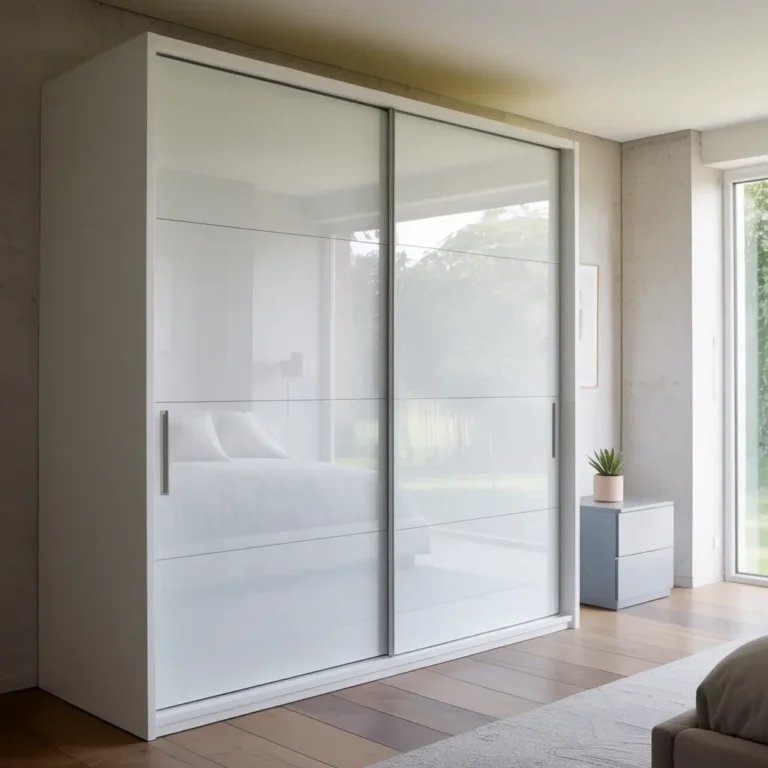
14. Mirror Sliding Door Kids Wardrobe
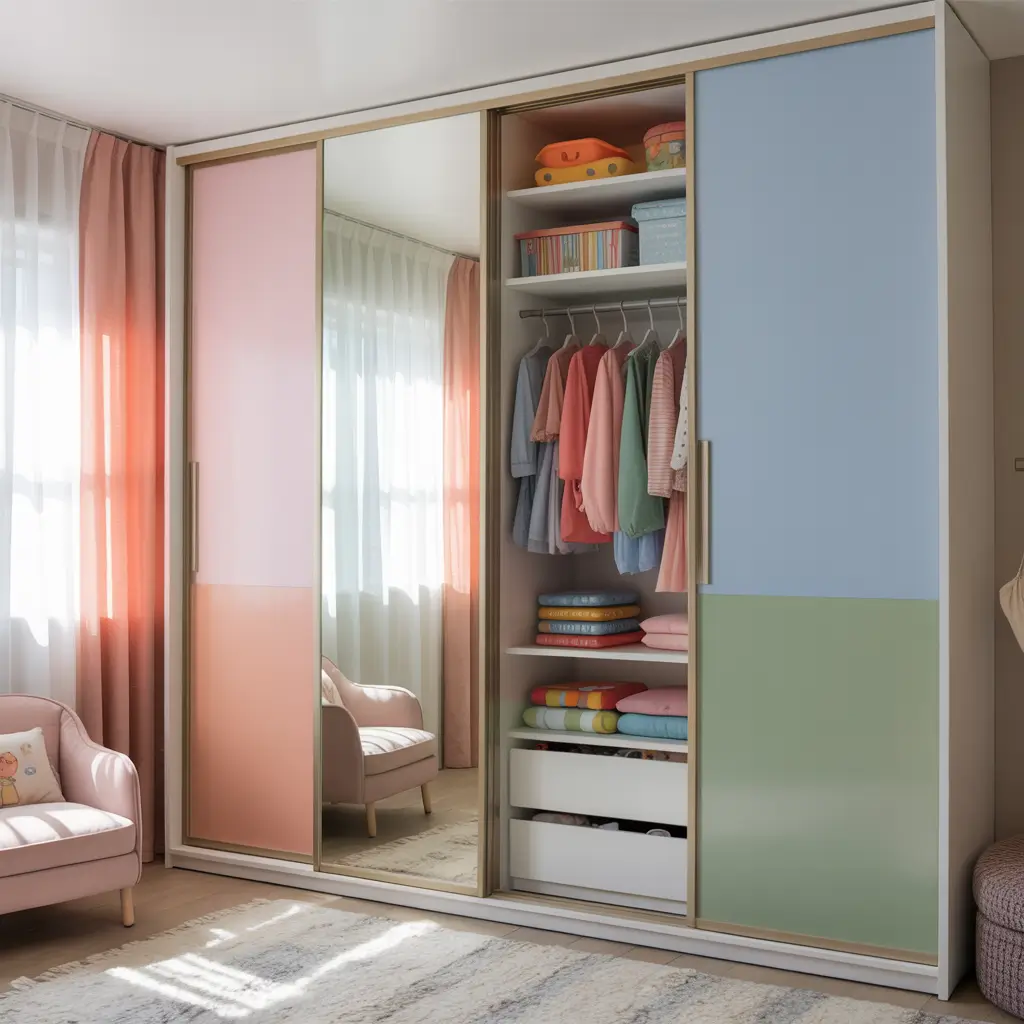
Mirrors make rooms feel bigger and brighter. Sliding mirror doors on wardrobes serve double duty—storage and a full-length mirror without taking additional wall space.
My daughter loves her mirrored wardrobe doors. She uses them for outfit checks before school, and the room feels way more spacious. Plus, I can sneak a look at myself before leaving the house too 😉
Practical Mirror Considerations
Safety matters with mirrors and kids. Make sure you get shatter-resistant or safety film-backed mirrors. Regular glass mirrors and rough-housing kids aren’t a great combo.
Benefits beyond looking good:
- Reflects light, brightening the room
- Creates illusion of more space
- Eliminates need for separate mirror furniture
- Helps kids develop independence (checking their appearance, getting dressed)
Keep cleaning supplies handy. Fingerprints and mirrors are mortal enemies, and kids produce fingerprints at an alarming rate.
15. Smart Interior Layout Wardrobe with Labeled Sections
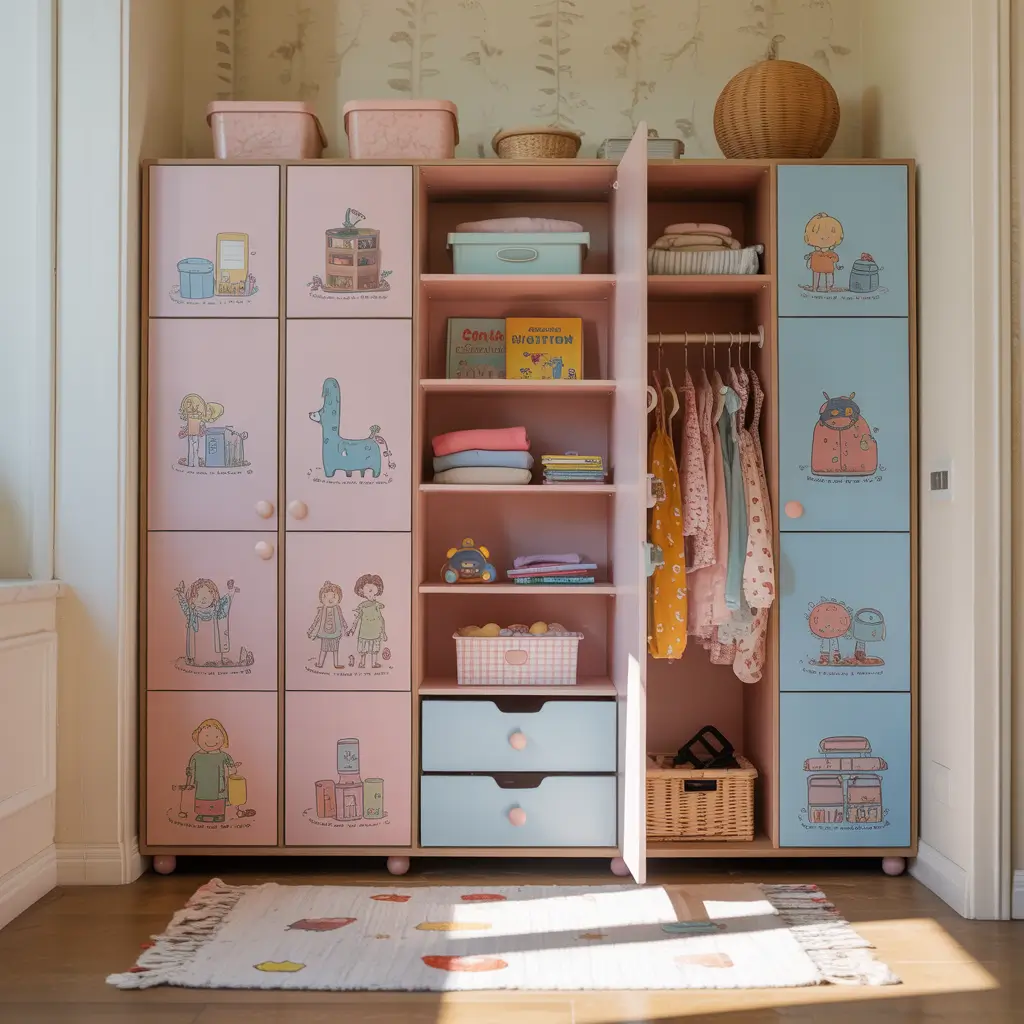
You can have the most beautiful wardrobe in the world, but if the interior is chaos, it doesn’t matter. Smart interior organization with labeled sections turns a wardrobe into an actual functioning system.
I spent way too long organizing wardrobes haphazardly before realizing that strategic interior design makes everything easier. Labels changed my life. Dramatic? Maybe. True? Absolutely.
Interior Organization That Actually Works
Think about how your kid uses their wardrobe. What do they access daily? What’s seasonal? What do they never touch but you can’t bear to throw away yet?
Essential interior elements:
- Labeled bins and baskets for categories (underwear, socks, accessories)
- Multiple hanging rod heights (short clothes bottom, long clothes top)
- Shelf dividers to prevent pile collapse
- Pull-out hamper for dirty clothes
- Separate section for school uniforms or frequently worn items
Labels don’t have to be boring. Use fun fonts, colors, or pictures for younger kids. The goal is making it so easy to put things away that even a tired, cranky kid can manage it.
Color-coding helps too. Blue bins for pajamas, red for socks, yellow for accessories—whatever system makes sense for your child. Some kids respond better to visual cues than written labels.
Bringing It All Together
Look, I won’t pretend that getting the perfect wardrobe will magically transform your kid into an organizational guru overnight. But it makes a huge difference. I’ve watched my kids become more independent, mornings become less chaotic, and their rooms stay (relatively) tidier.
The best wardrobe for your kid’s room depends on your specific situation—room size, kid’s age, number of siblings, and how much stuff you’re dealing with. There’s no one-size-fits-all solution, which is actually good news. It means you can customize something that actually works for YOUR family.
Start by honestly assessing your space and needs. Measure everything twice (seriously, measuring once is how you end up with furniture that doesn’t fit). Think about how your kid actually uses their room, not how you wish they’d use it. Work with their habits, not against them.
Mix and match ideas from this list if that works better. Maybe you want a floor-to-ceiling wardrobe with sliding mirror doors and a smart interior layout. Cool! Combine solutions that make sense for you.
Remember, the goal isn’t Instagram-perfect organization (though wouldn’t that be nice?). The goal is functional storage that makes daily life easier. If your kid can get dressed independently, put their clothes away without major drama, and their room doesn’t look like a tornado hit it—you’ve won.
And hey, if all else fails, there’s always the classic parenting technique of shutting the bedroom door and pretending the mess doesn’t exist. But between you and me, these wardrobe solutions work way better. Trust me on this one.