15 Gorgeous Mudroom Ideas Entryway to Inspire Creativity

You know that moment when you walk into someone’s home and their entryway looks like something straight out of a Pinterest board? Meanwhile, your mudroom resembles a chaotic explosion of shoes, jackets, and random items you promised yourself you’d organize “someday.” Yeah, I’ve been there too.
Here’s the thing—your mudroom doesn’t have to be a disaster zone. It can actually become one of the most functional and beautiful spaces in your entire home. I’ve spent years experimenting with different mudroom setups (some epic wins, some hilarious failures), and I’m genuinely excited to share what I’ve learned.
Whether you’re working with a sprawling entryway or a tiny closet that barely fits a coat rack, these 15 gorgeous mudroom ideas will spark your creativity and help you transform that neglected space into something you’ll actually love coming home to. Let’s get into it.
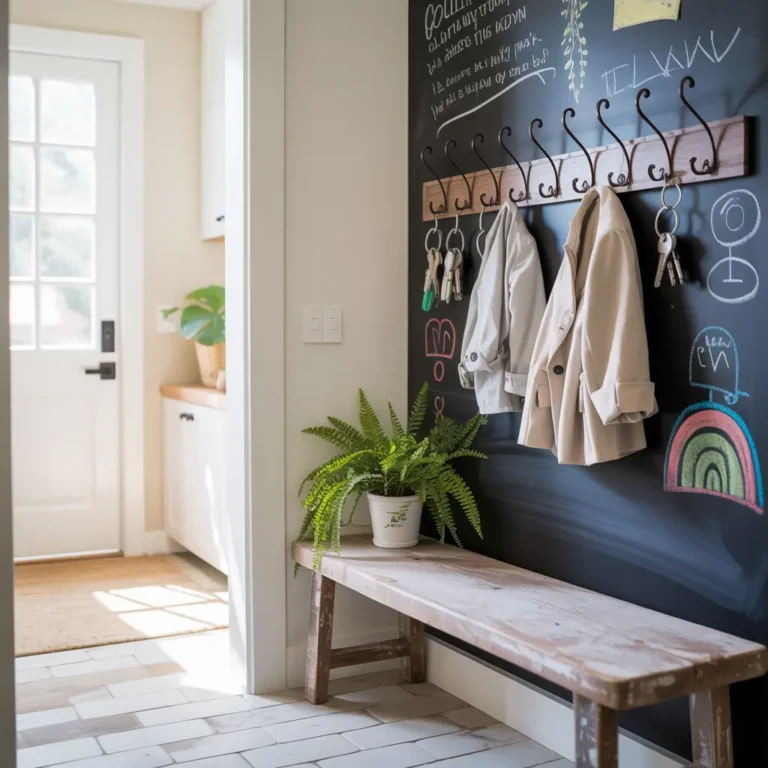
1. Cozy Farmhouse Mudroom Entryway
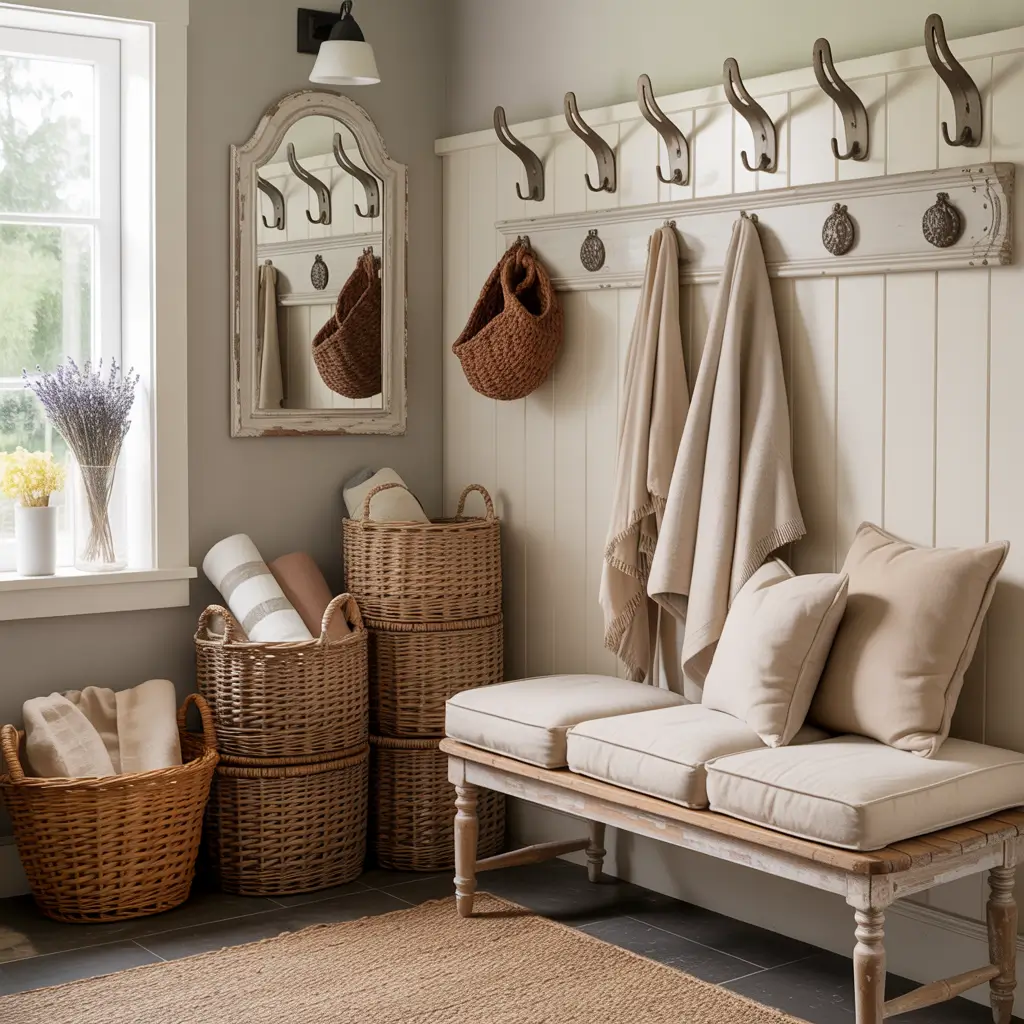
There’s something incredibly warm and inviting about a farmhouse-style mudroom. Maybe it’s the combination of natural textures and vintage charm, or maybe it’s just that these spaces feel like they’re giving you a hug when you walk through the door.
The key to nailing this look is focusing on authentic materials and rustic finishes. Think shiplap walls (yes, Joanna Gaines was onto something), reclaimed wood benches, and wrought iron hooks. The beauty of farmhouse style is that imperfections actually add character—so those scratches on your vintage bench? They’re features, not flaws.
Here’s what makes a farmhouse mudroom work:
- Neutral color palette with creams, whites, and warm grays
- Woven baskets for organizing shoes and accessories
- Vintage or antique hooks mounted on a weathered board
- Natural fiber rugs like jute or sisal to catch dirt
- Mason jar storage for small items like keys and change
I personally added a reclaimed barn door to my mudroom last year, and honestly, it changed the entire vibe. The room went from “generic hallway” to “charming farmhouse escape” in a single weekend. Plus, guests always comment on it—so bonus points for being a conversation starter.
2. Minimalist Small Mudroom Solutions
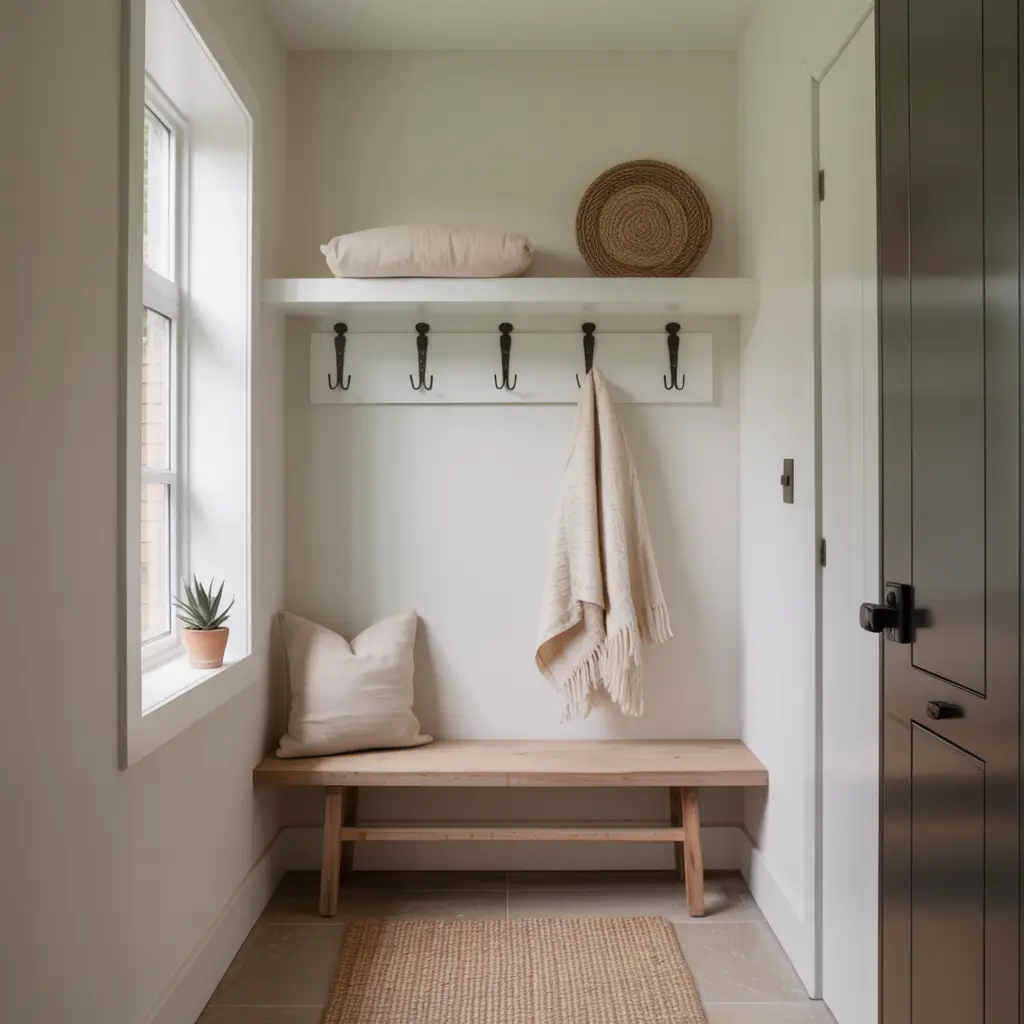
Not everyone has a massive entryway to work with, and that’s perfectly okay. Some of the most stunning mudrooms I’ve seen are barely larger than a closet. The secret? Minimalism.
When you’re working with limited square footage, every single item needs to earn its place. This isn’t the space for decorative clutter or items you “might use someday.” Minimalist mudrooms prioritize function while maintaining a clean, uncluttered aesthetic.
The golden rules for a minimalist small mudroom:
- Choose a monochromatic color scheme to create visual continuity
- Install floating shelves instead of bulky cabinets
- Use slim-profile hooks that don’t protrude too far
- Select a narrow bench with hidden storage underneath
- Keep only essential items in the space
One trick that’s worked wonders for me is using a single statement piece to anchor the space. In my previous apartment, I installed one beautiful wooden shelf with three simple hooks below it. That’s it. No fancy cabinets, no elaborate storage systems—just the essentials. And you know what? It looked incredible and stayed organized without any effort.
3. Rustic Wooden Mudroom Storage Ideas
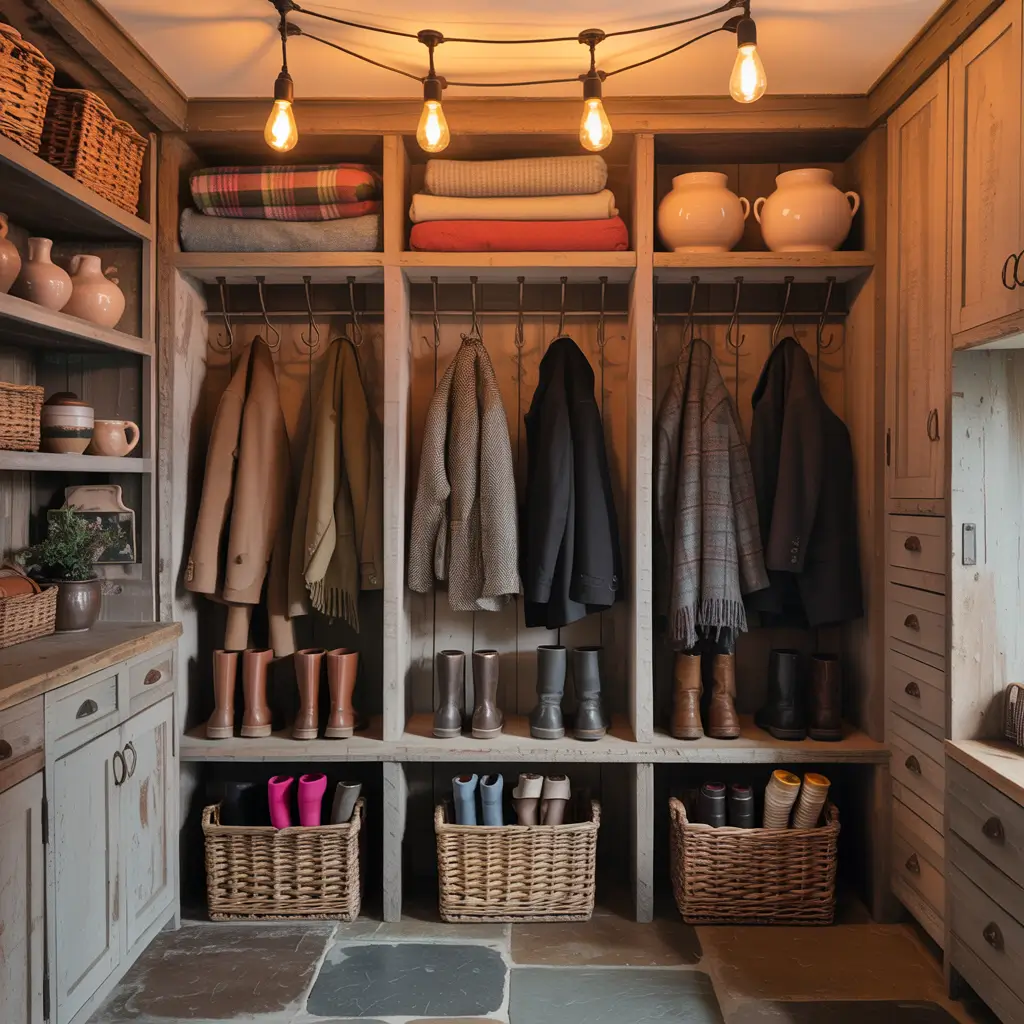
Wood brings warmth to any space, but in a mudroom, it serves double duty by being both beautiful and incredibly durable. Rustic wooden storage solutions can handle the daily abuse that mudrooms typically endure while looking better with age.
The beauty of rustic wood is its versatility. You can go full cabin-in-the-woods with heavy timber pieces, or opt for a more refined approach with lightly distressed finishes. Either way, wood adds a timeless quality that trends can’t touch.
Consider these rustic wooden elements:
- Rough-hewn floating shelves for displaying plants or baskets
- Log slice coat hooks for a truly organic look
- Reclaimed wood bench with visible grain patterns
- Wooden crate storage stacked along the wall
- Tree branch hooks for a nature-inspired touch
FYI, if you’re sourcing reclaimed wood, always check for signs of pests or rot before bringing it into your home. I learned this the hard way when a “charming” piece of barn wood turned out to be home to some uninvited guests. Not fun.
The maintenance is pretty straightforward too. A simple clear sealant will protect the wood from moisture and dirt while preserving its natural character. Reapply once a year, and your rustic mudroom will age gracefully for decades.
4. Modern Mudroom Bench with Hooks
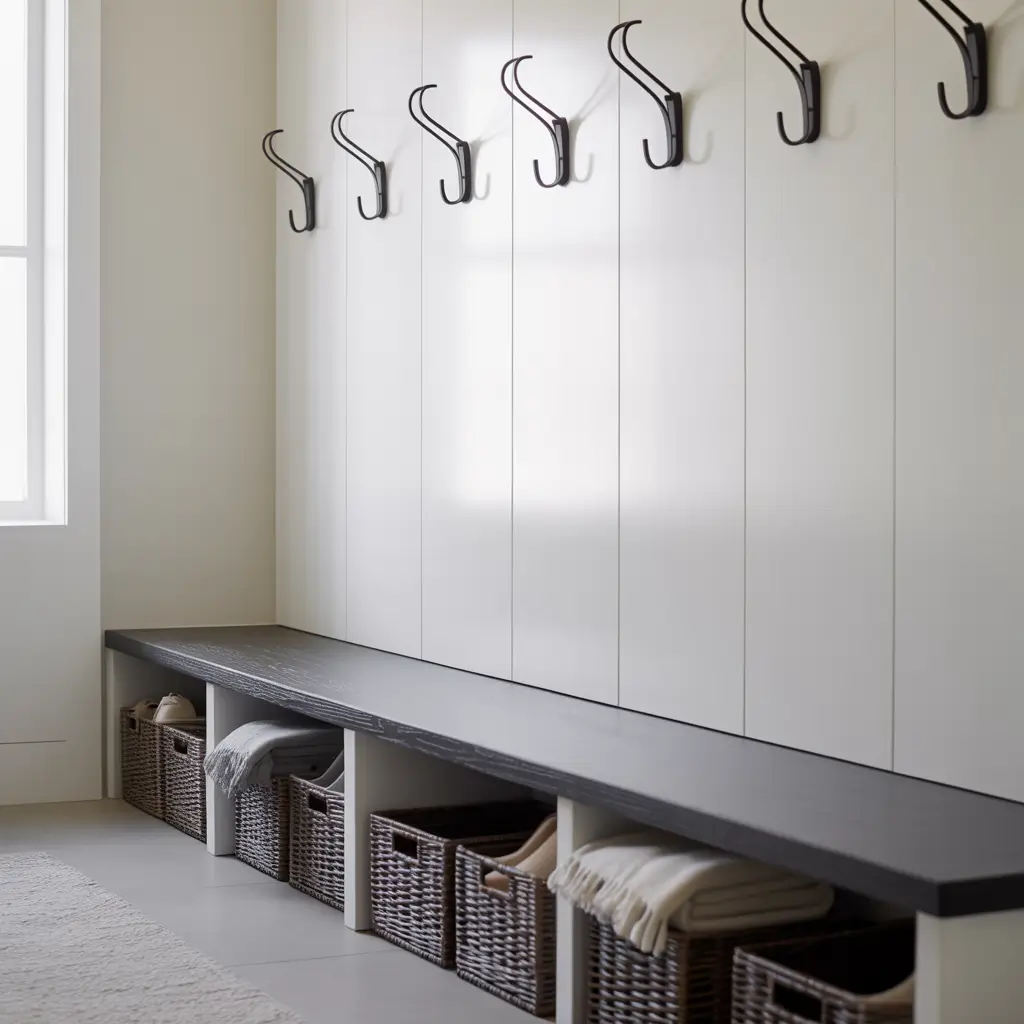
Sometimes you don’t need to reinvent the wheel—you just need to upgrade it. A modern mudroom bench with hooks is the Swiss Army knife of entryway solutions. It provides seating for putting on shoes, storage underneath, and hanging space above. Simple, efficient, and endlessly stylish.
Modern designs tend to favor clean lines, mixed materials, and smart functionality. You’ll often see combinations like metal frames with wooden seats or matte black hooks against white walls. The result is a space that feels current without being trendy.
What to look for in a modern mudroom bench setup:
- Bench height around 18 inches for comfortable seating
- Hooks mounted 5-6 feet from the floor for adult use
- Storage compartments or baskets beneath the bench
- Cushion or pad for added comfort and color
- Coordinating materials between bench and hooks
Ever wondered why some mudrooms feel effortlessly put-together while others seem chaotic? It usually comes down to cohesive design choices. When your bench, hooks, and accessories share similar finishes or colors, the whole space reads as intentional rather than accidental.
5. Compact Mudroom Organization Hacks
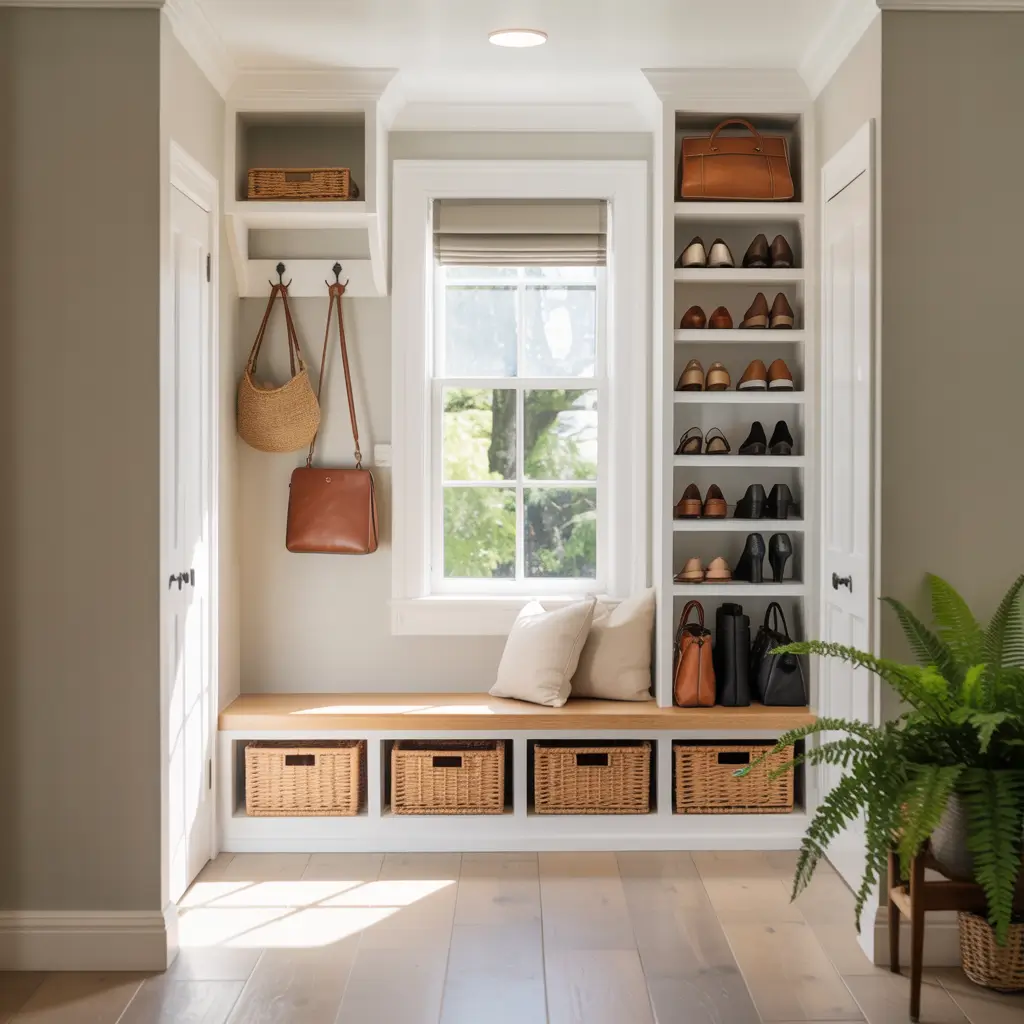
Let’s be real—sometimes your mudroom is less of a room and more of a narrow strip of wall that you’re desperately trying to make functional. I get it. I’ve lived in apartments where the “entryway” was literally two feet of space before you hit the living room.
But small spaces don’t mean small possibilities. With the right organization hacks, you can squeeze impressive functionality out of even the tiniest areas.
Here are my favorite compact mudroom hacks:
- Over-the-door organizers with pockets for shoes, gloves, and accessories
- Magnetic strips mounted inside cabinet doors for keys and small metal items
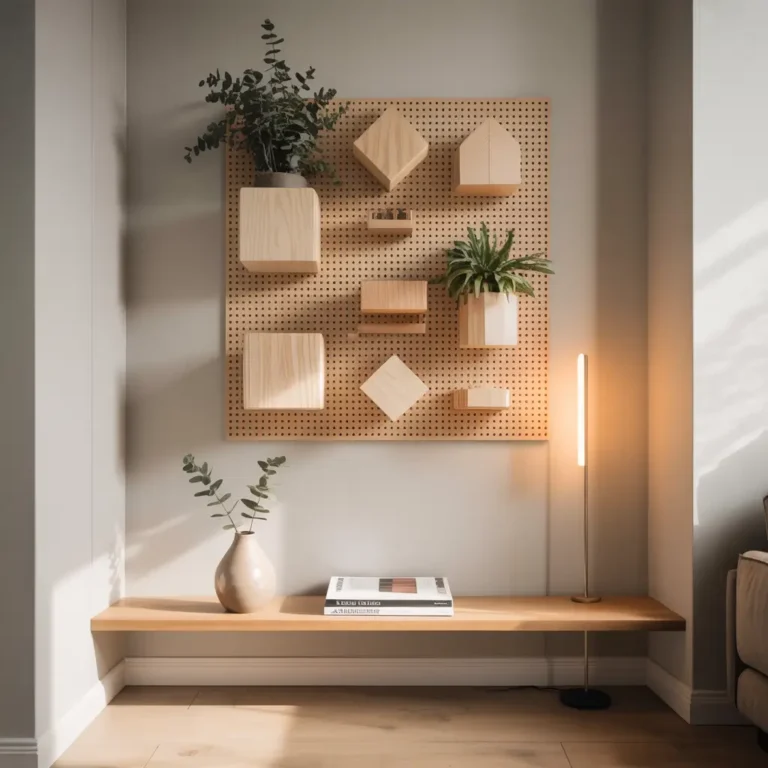
- Pegboard walls that allow infinitely customizable storage
- Shoe cubbies that double as benches—sit on top, store below
- Command hooks at varying heights for bags and jackets
- Slim umbrella stands that tuck into corners
- Fold-down wall benches that disappear when not needed
The pegboard hack is honestly underrated. You can configure it exactly how you need, rearrange it seasonally, and it costs almost nothing to set up. Paint it to match your wall color, and it becomes both functional and nearly invisible.
Also Read: 15 Bold Two Story Foyer Ideas Entryway with Striking Designs
6. Luxury Mudroom with Built-in Cabinets
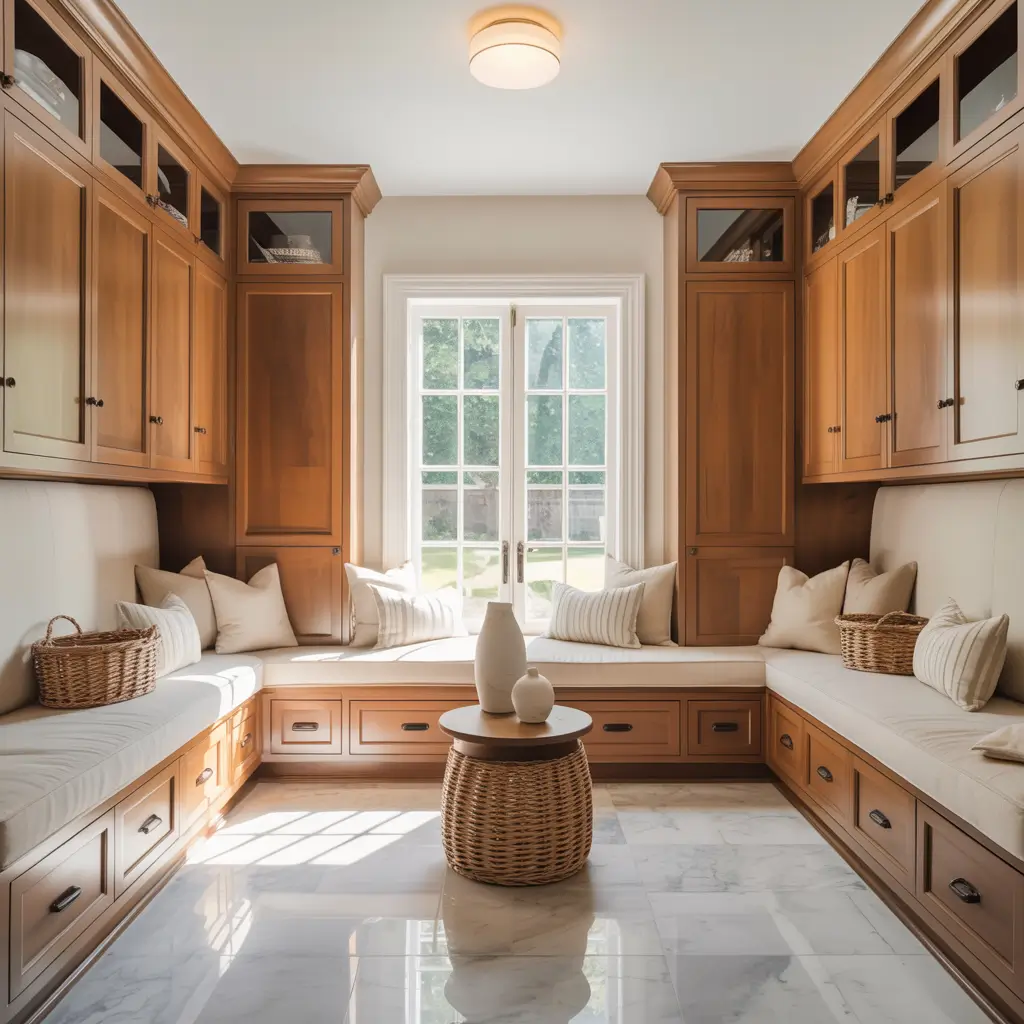
Okay, let’s talk about the mudroom equivalent of driving a luxury car. Built-in cabinets transform a mudroom from a transitional space into a proper room with presence and purpose. Yes, they’re an investment—but if you have the budget, they’re absolutely worth considering.
Built-ins offer storage possibilities that freestanding furniture simply can’t match. Custom cabinets can be designed around your specific needs, hiding away everything from sports equipment to seasonal gear while maintaining a sleek, streamlined appearance.
Features that make luxury mudrooms stand out:
- Floor-to-ceiling cabinetry that maximizes vertical space
- Individual lockers or cubbies for each family member
- Integrated bench seating with cushioned tops
- Hidden charging stations for devices
- Pull-out shoe racks that keep footwear organized and aired out
- Crown molding and trim details that match the rest of your home
IMO, the game-changer in luxury mudrooms is dedicated space for everything. When every item has a designated home, maintaining organization becomes almost effortless. No more piling coats on top of each other or stuffing bags wherever they’ll fit.
The cost varies dramatically depending on materials and complexity, but expect to invest anywhere from $3,000 to $15,000+ for custom built-ins. It’s a significant expense, but it also adds real value to your home if you ever decide to sell.
7. Colorful Mudroom for Kids and Pets
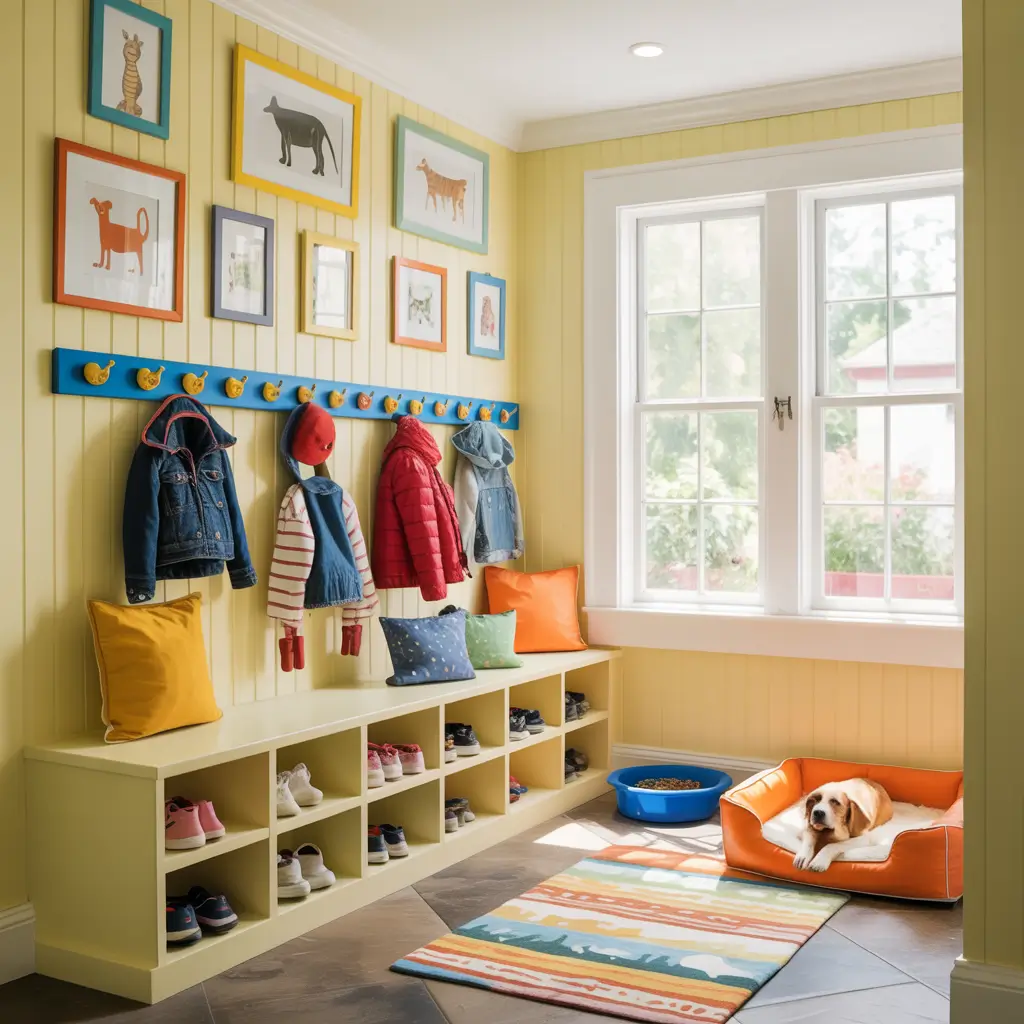
Here’s where things get fun. If you have kids, pets, or both, your mudroom is probably working harder than any other space in your house. So why not make it vibrant and playful instead of trying to maintain some impossible standard of minimalist perfection?
A colorful mudroom acknowledges reality: this space is going to get messy, dirty, and chaotic. Rather than fighting against that, lean into it with bold colors, washable surfaces, and kid-friendly features.
Elements that work in family-friendly mudrooms:
- Color-coded cubbies so each family member knows their zone
- Lower hooks that kids can actually reach
- Bench seating at kid-appropriate heights
- Durable, wipeable paint finishes on walls
- Washable rugs or mats that can handle muddy paws
- Built-in pet feeding stations with food storage
- Chalkboard or whiteboard walls for notes and reminders
Don’t be afraid to go bold with color. Bright yellows, cheerful blues, or playful greens can turn a utilitarian space into something that actually brings a smile to your face. Kids especially respond well to having “their” dedicated color or space.
One tip: install a handwashing station if your layout allows. It’s a game-changer for preventing mud and mess from traveling further into your home.
8. Budget-Friendly DIY Mudroom Makeover
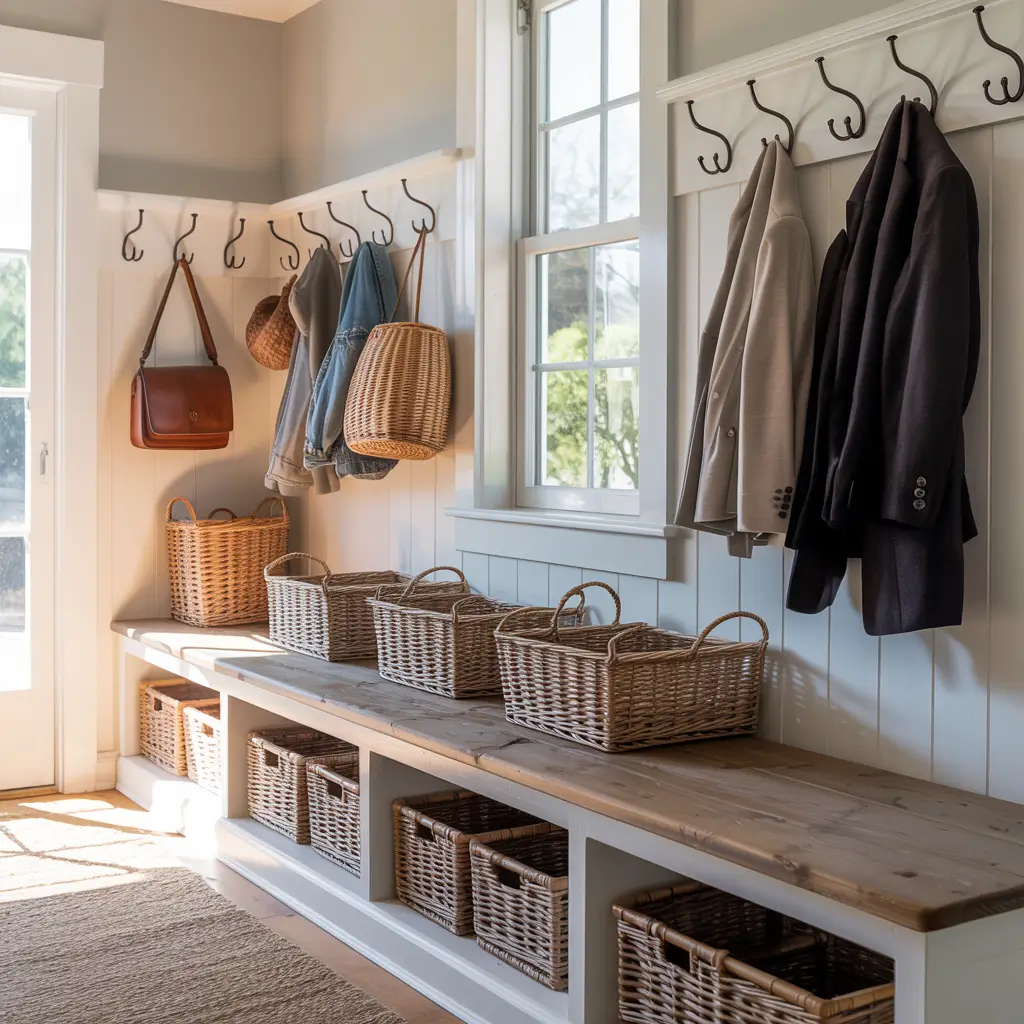
You don’t need a designer budget to create a gorgeous mudroom. Some of my favorite mudroom transformations have cost less than $200 and a weekend of work. The trick is being strategic about where you spend and where you save.
Here’s the honest truth: expensive doesn’t always mean better. A $20 coat rack from a thrift store can look just as good as a $200 one from a designer boutique—sometimes better, because it has actual character.
Budget-friendly DIY ideas that deliver big impact:
- Repaint existing furniture in a fresh, modern color
- Install simple shelf brackets with a wooden board from the hardware store
- Repurpose old lockers from school or gym surplus sales
- Create a “mudroom” with just hooks and a mat in any entryway
- Use dollar store baskets lined with fabric for a custom look
- Build a simple bench from 2x4s and plywood
- Add peel-and-stick wallpaper for instant pattern and color
The real secret to a successful DIY mudroom? Paint. Seriously. A fresh coat of paint ties everything together and makes even mismatched elements look intentional. I once transformed a dark, depressing entryway with $40 of white paint and suddenly it felt twice the size.
9. Mudroom with Shoe Storage and Baskets
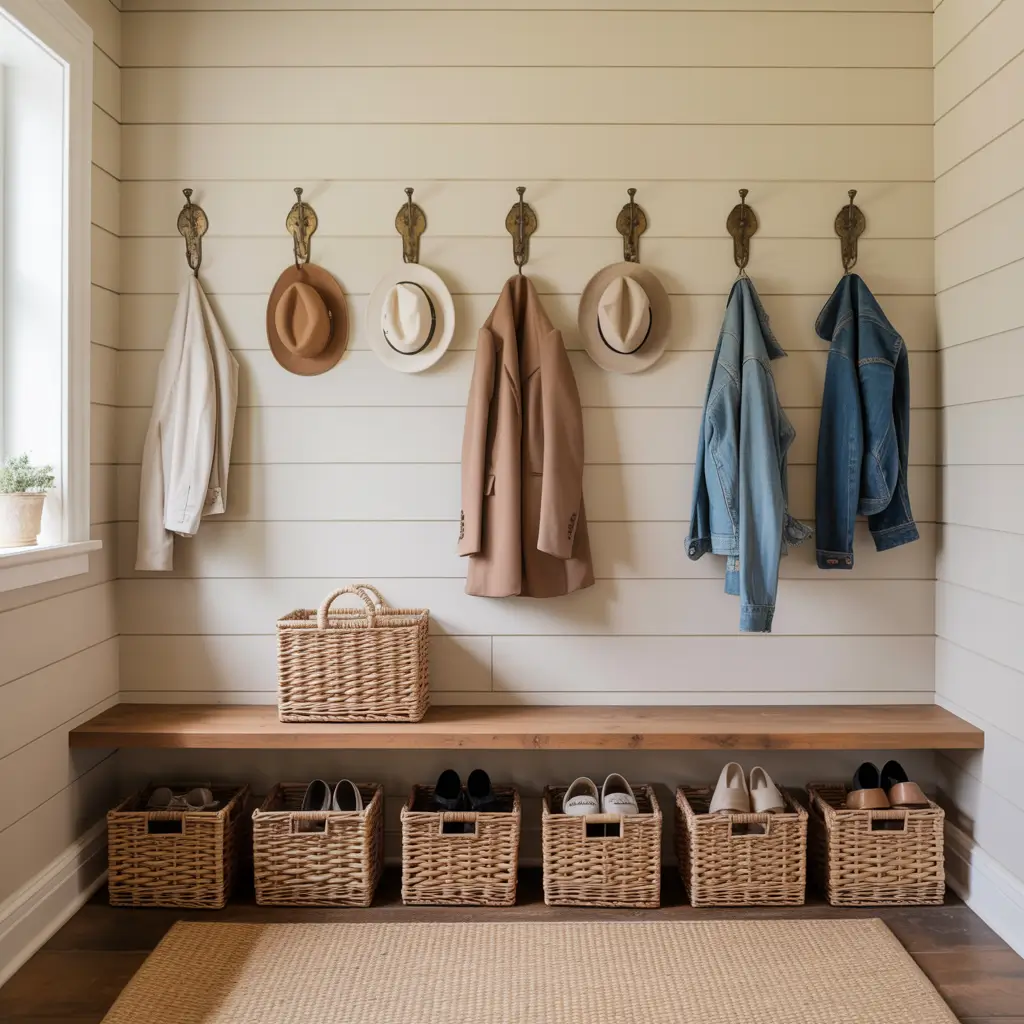
Let’s address the elephant in the room—or rather, the mountain of shoes in the room. Footwear storage is probably the biggest challenge in most mudrooms, and baskets might just be your secret weapon.
Baskets provide structure without rigidity. They’re forgiving, easy to maintain, and infinitely adaptable. Plus, they hide the visual chaos of shoes while still keeping them accessible.
Shoe storage strategies that actually work:
- Large floor baskets for a casual, toss-and-go approach
- Labeled fabric bins for each family member
- Wire baskets on shelves that allow shoes to air out
- Woven baskets under benches for a clean look
- Boot trays to contain wet or muddy footwear
- Individual shoe cubbies for those who prefer separation
The key is matching your storage style to your family’s habits. If everyone in your household meticulously places shoes in their designated spots, individual cubbies work great. But if you’re dealing with kids (or, let’s be honest, some adults) who just want to kick off their shoes and go, large baskets are much more realistic.
Pro tip: keep seasonal shoes in rotation. Store off-season footwear elsewhere and only keep current-season options in the mudroom. This dramatically reduces the shoe situation without requiring any magical organizational superpowers.
10. Stylish Vertical Storage Mudroom Ideas
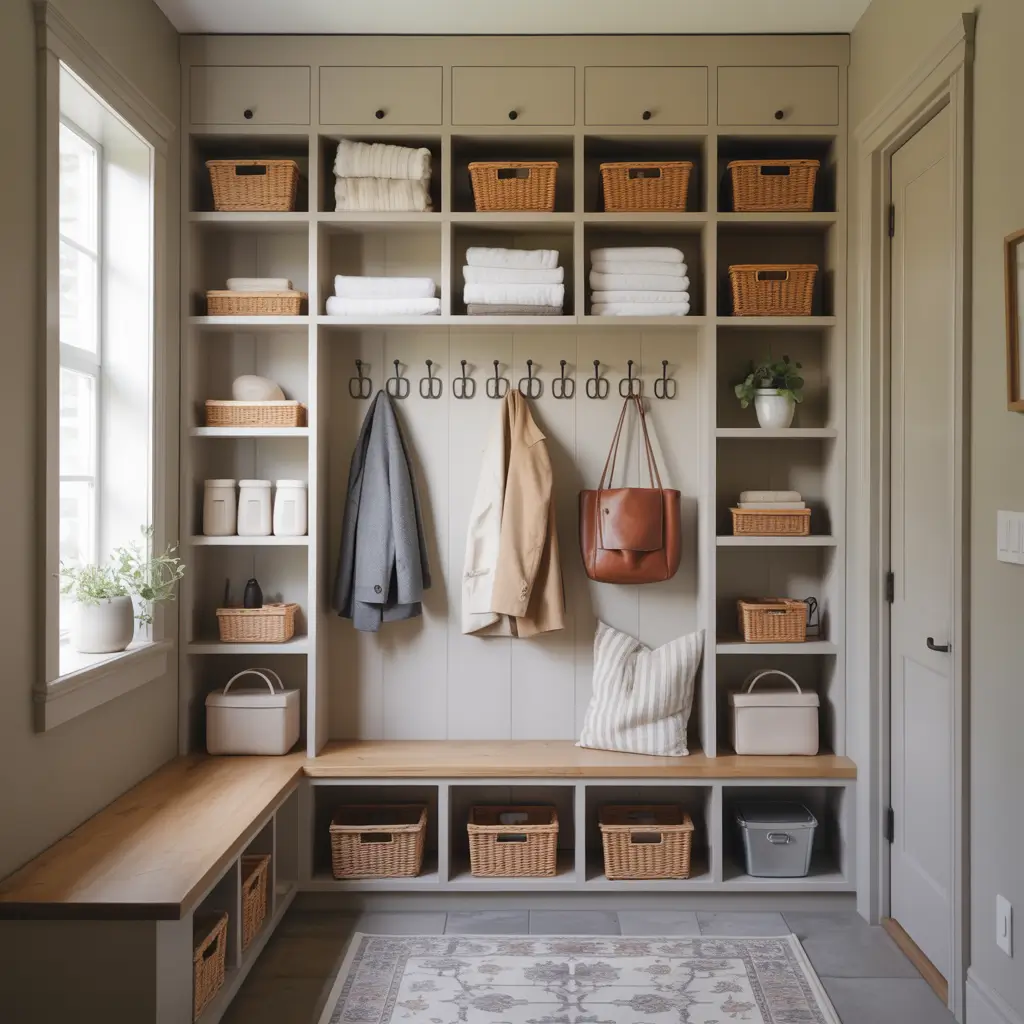
When floor space is limited, look up. Vertical storage is the answer to small mudroom challenges, and when done right, it looks absolutely stunning rather than cluttered.
The walls are your canvas here. By building upward instead of outward, you can store an impressive amount of gear without sacrificing precious floor space. This approach works particularly well in narrow hallways or closets repurposed as mudrooms.
Vertical storage ideas to consider:
- Floor-to-ceiling hook systems at varying heights
- Tall narrow cubbies that stack vertically
- Wall-mounted coat racks with shelving above
- Hanging mesh organizers for accessories
- Over-door storage that uses otherwise wasted space
- Ladder-style leaning shelves for flexible storage
- Suspended baskets from ceiling hooks
One design principle I always follow: graduate your storage. Keep frequently used items at accessible heights and reserve higher or lower spots for seasonal or rarely-used gear. Your everyday jacket should be at arm level, while ski gloves can live on that top shelf until winter arrives.
Also Read: 15 Inspiring Foyer Tile Ideas Entryway and Decor Hacks
11. Small Apartment Entryway Mudroom Hacks
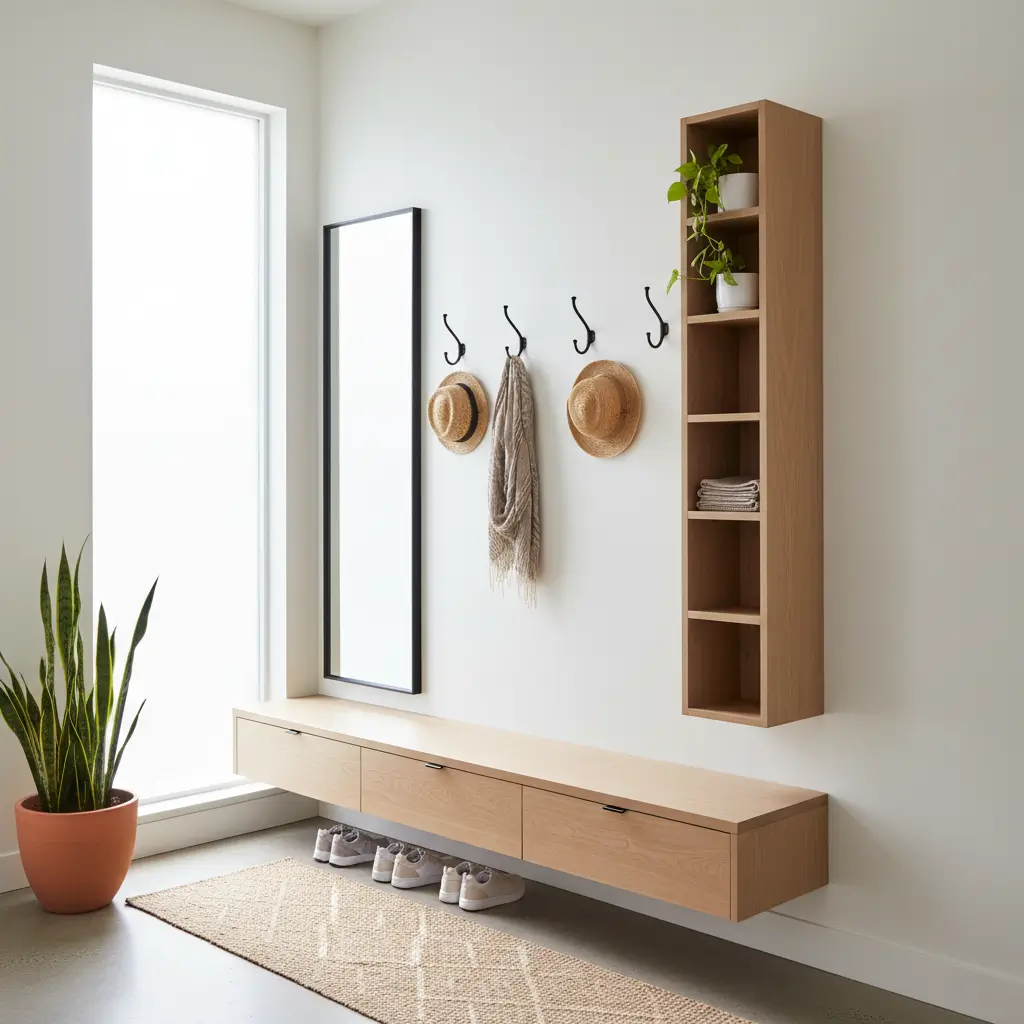
Apartment living often means no dedicated mudroom space whatsoever. But that doesn’t mean you can’t create the functionality of a mudroom in whatever entry space you do have—even if it’s literally the first three feet inside your door.
I lived in a studio apartment for two years where my “entryway” consisted of a tiny corner behind the front door. Through trial, error, and a lot of Pinterest scrolling, I figured out how to make it work 🙂
Apartment-friendly mudroom solutions:
- Freestanding coat racks that don’t require wall mounting
- Narrow console tables with storage baskets underneath
- Over-door hooks that don’t damage surfaces
- Small boot trays to contain outdoor mess
- Wall-mounted mail organizers for keys and correspondence
- Slim shoe cabinets designed for tight spaces
- Multi-purpose furniture like storage ottomans
The rental-friendly aspect is crucial here. Look for damage-free installation options like Command strips, tension rods, or freestanding pieces. You can still create an impressive mudroom setup without losing your security deposit.
12. Seasonal Mudroom Decor and Organization
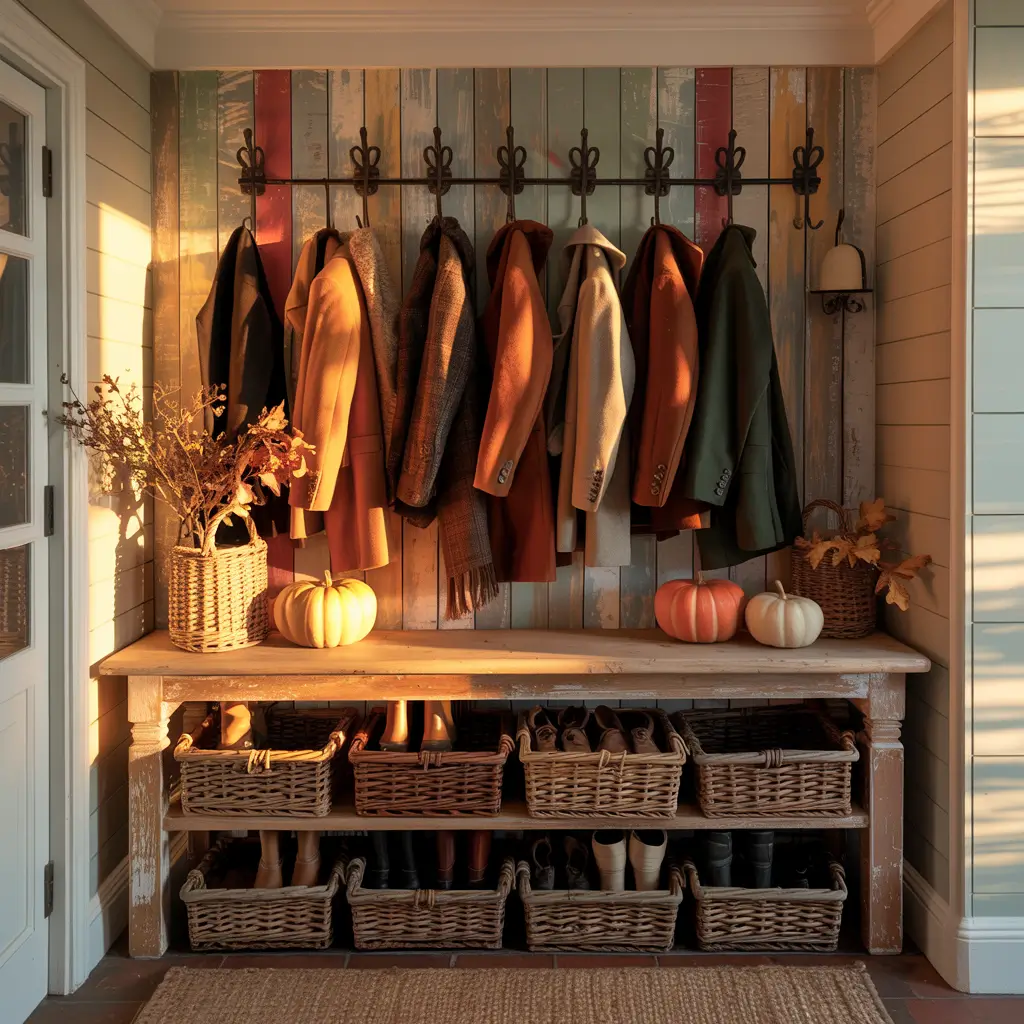
Your mudroom’s needs change throughout the year, so why shouldn’t its setup? Seasonal organization means adapting your mudroom to handle whatever weather and activities each season brings.
This isn’t just about swapping out decorative items (though that’s fun too). It’s about practical adjustments that make your life easier when conditions change.
Seasonal organization strategies:
Spring/Summer:
- Swap heavy coat hooks for lighter options
- Add sunscreen and bug spray storage
- Include a spot for beach bags and pool towels
- Add extra shoe storage for sandals and flip-flops
Fall/Winter:
- Create dedicated drying space for wet items
- Install boot trays with drainage
- Add heated floor mats if your climate demands it
- Include glove and hat bins at accessible heights
- Stock tissues and hand sanitizer
Year-Round Tips:
- Rotate seasonal items in and out of primary storage
- Update welcome mats as they wear out
- Refresh decor for a seasonal mood boost
- Deep clean the space at each season change
The decorative aspect is optional but genuinely enjoyable. Swapping out a wreath, changing pillow covers on your bench, or adding seasonal artwork keeps the space feeling fresh and intentional.
13. Multi-Functional Mudroom Bench Ideas
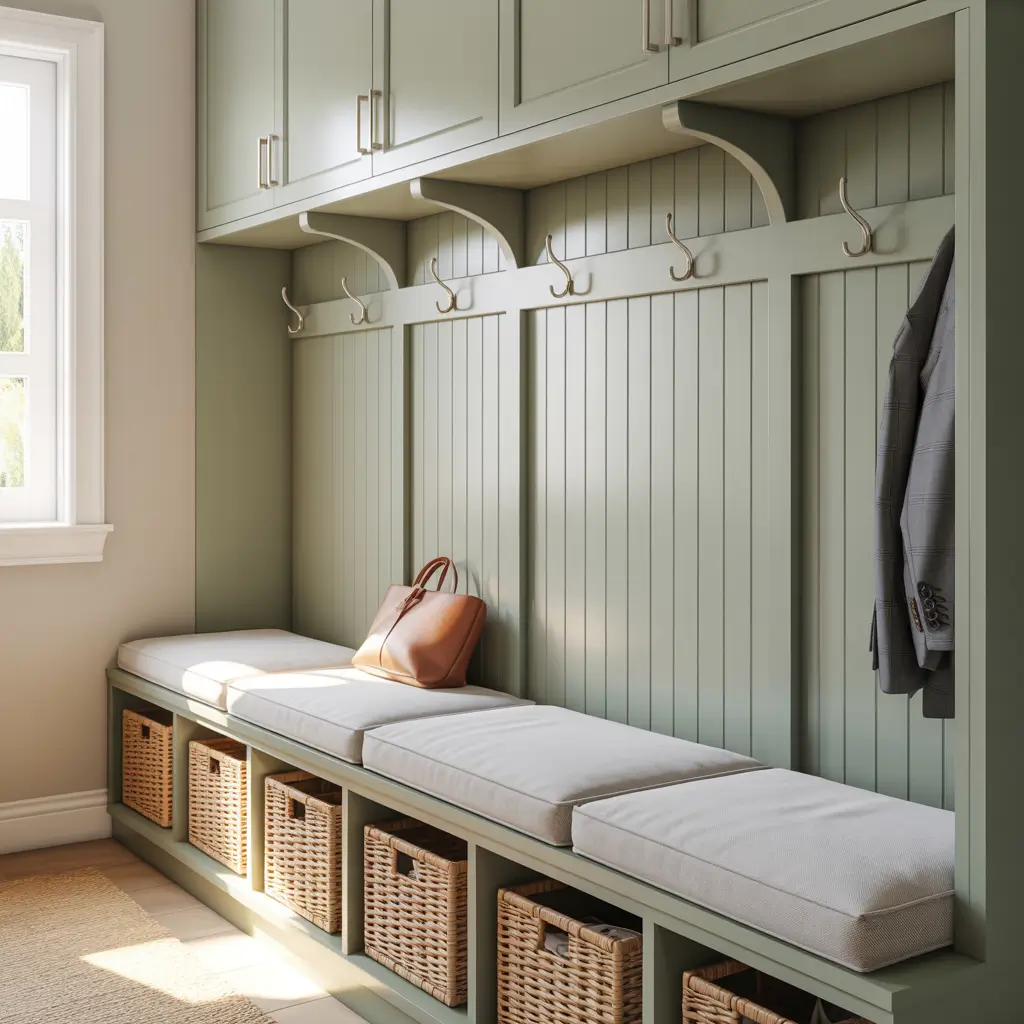
The humble bench might be the hardest-working piece of furniture in your mudroom. Beyond providing a place to sit while you put on shoes, a well-designed bench can offer storage, display space, and even workspace functionality.
Multi-functional benches earn their keep by doing more than one job. The best options combine seating with hidden storage, incorporate charging capabilities, or include features like pull-out drawers or adjustable compartments.
Multi-functional bench features worth considering:
- Lift-top benches with large internal storage
- Benches with pull-out drawers for organized compartments
- Built-in charging ports for device charging
- Removable cushions with washable covers
- Integrated shoe racks below the seat
- Drop-down shelving that creates additional workspace
- Benches with built-in cubbies for individual family members
When shopping for or building a multi-functional bench, prioritize durability above all else. This piece will endure heavy daily use—people sitting down hard, kids jumping on it, wet gear being tossed onto it. Choose materials that can handle abuse without showing wear.
14. Mudroom Gallery Wall with Hooks and Shelves
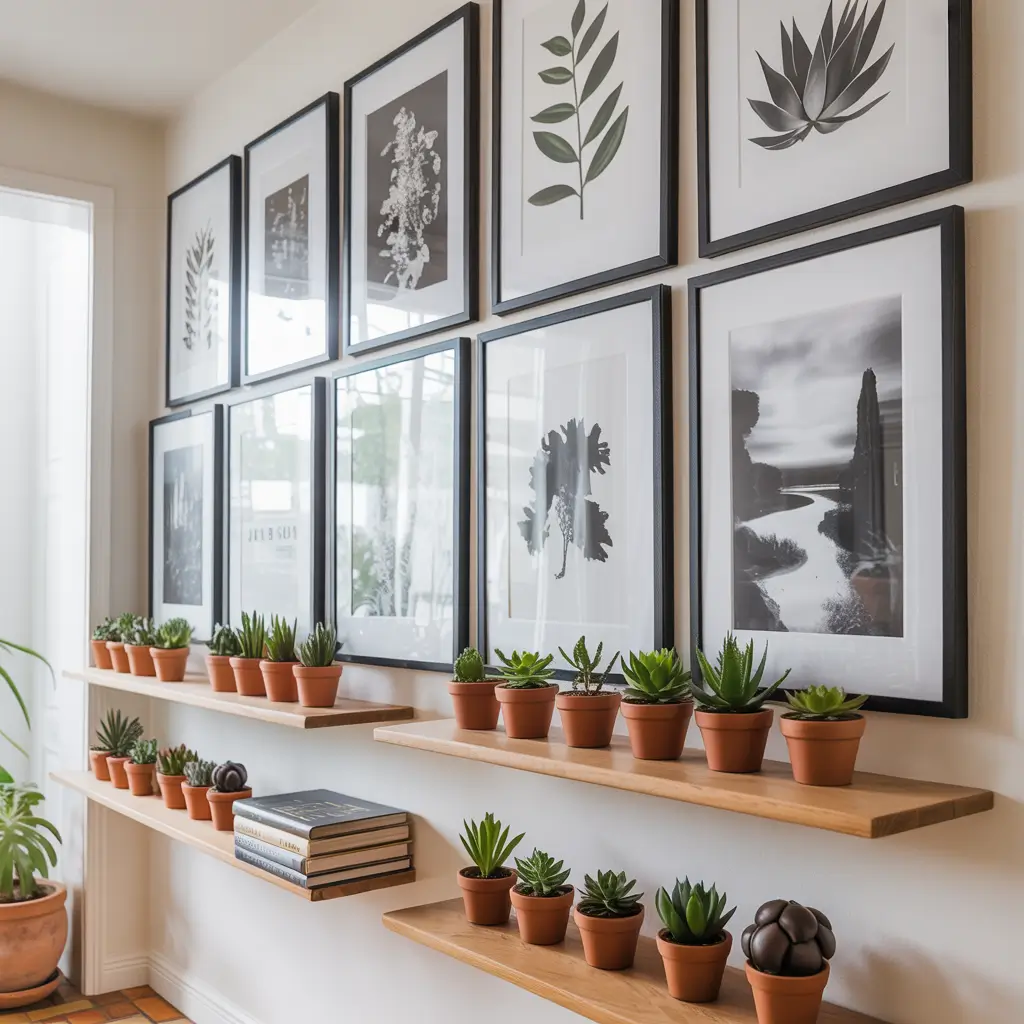
Who says mudrooms can’t be visually stunning? A gallery wall approach combines practical elements like hooks and shelves with decorative items to create an entryway that’s both functional and genuinely beautiful.
The trick is integrating form and function so seamlessly that you can’t tell where the practical ends and the decorative begins. Hooks become part of the visual composition. Shelves display both useful items and pretty objects. The whole wall reads as intentional design.
Creating a mudroom gallery wall:
- Start with your practical elements (hooks, shelves, letter organizers)
- Add frames or mirrors to balance the functional pieces
- Include plants or greenery for life and color
- Layer in decorative baskets that also serve storage purposes
- Mix frame sizes and shapes for visual interest
- Consider a unifying color scheme to tie everything together
- Leave some negative space so it doesn’t feel cluttered
One approach I love: plan your gallery wall on the floor first. Lay out all your elements—hooks, shelves, frames, mirrors—and play with arrangements until you find one that works. Then photograph it and use that as your guide for installation. This prevents unnecessary nail holes and frustration.
15. Eco-Friendly Sustainable Mudroom Designs
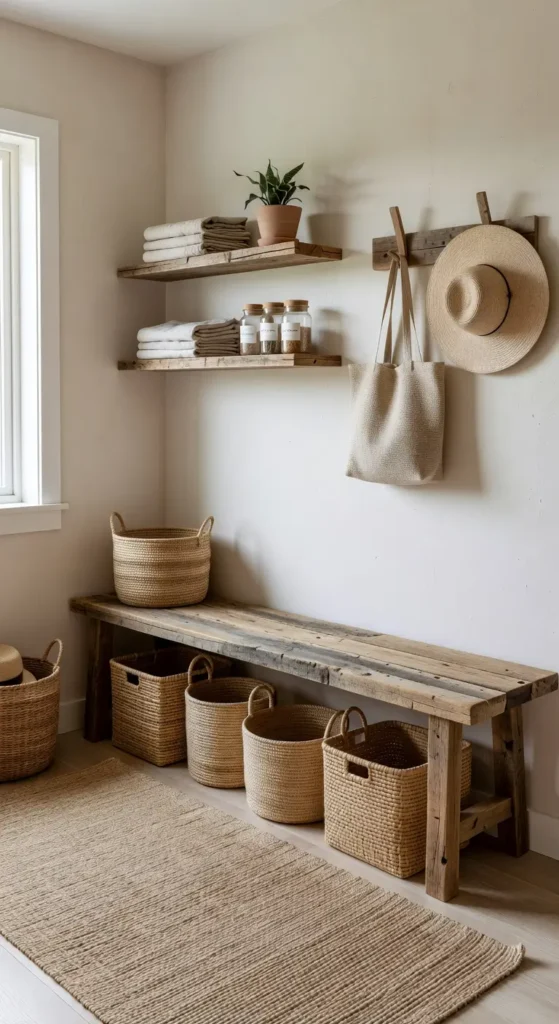
If sustainability matters to you (and honestly, it should matter to all of us), your mudroom is a great place to make environmentally conscious choices. From materials to organization systems, there are countless ways to reduce your environmental footprint while creating a gorgeous space.
Sustainable mudrooms focus on longevity, natural materials, and minimal waste. These choices often align perfectly with beautiful design—natural materials look stunning, quality pieces last longer, and thoughtful consumption leads to cleaner spaces.
Eco-friendly mudroom strategies:
- Choose reclaimed or FSC-certified wood for furniture and shelving
- Select natural fiber baskets made from seagrass, jute, or bamboo
- Install low-VOC paint for healthier indoor air quality
- Use secondhand or vintage furniture to reduce new production
- Select durable materials that won’t need frequent replacement
- Add natural fiber rugs instead of synthetic options
- Incorporate live plants for air purification and beauty
- Choose locally made products to reduce shipping impacts
Beyond materials, consider sustainable habits your mudroom can support. A dedicated spot for reusable shopping bags, a composting bin for organic waste near the door, or a charging station for electric vehicle keys all reinforce eco-friendly behaviors.
The investment in quality pays off here too. A solid wood bench might cost more upfront than a particle board option, but it’ll last decades rather than years—which is ultimately better for your wallet and the planet.
Wrapping It Up: Your Perfect Mudroom Awaits
Transforming your mudroom from a chaotic dumping ground into an organized, beautiful space isn’t just about aesthetics—it’s about making your daily life easier. When everything has a place and that place actually makes sense, you’ll spend less time searching for keys, arguing about whose shoes are whose, and apologizing to guests for the mess.
The best mudroom is the one that works for your specific lifestyle. Whether that’s a cozy farmhouse vibe, a sleek modern setup, or a colorful family-friendly zone depends entirely on you, your family, and your home.
Start small if you need to. Even just adding a few hooks and a basket can dramatically improve a dysfunctional entryway. You don’t need to tackle everything at once—small improvements compound over time into something genuinely impressive.
And hey, if your mudroom still looks a little chaotic after all this? That’s okay too. It means people are living, moving, and doing things. A perfect mudroom that stays pristine probably isn’t getting much use anyway. The goal isn’t perfection—it’s functional beauty that makes your life a little bit easier.