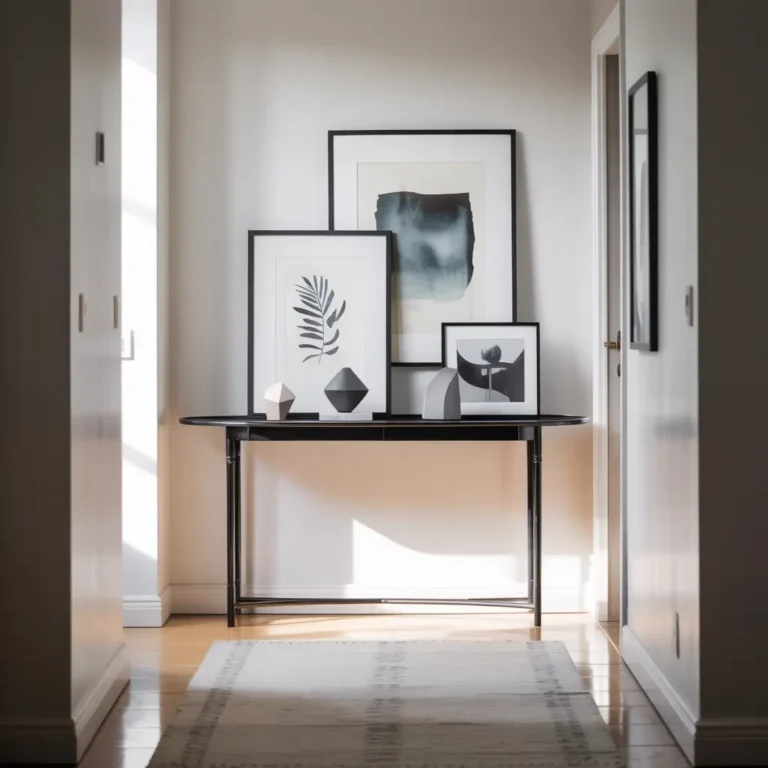
15 Stylish Narrow Entryway Decor Tricks for Small Spaces

You know that awkward strip of space between your front door and the rest of your home? The one that somehow collects random shoes, forgotten mail, and keys that mysteriously vanish? Yeah, that narrow entryway deserves way better treatment than becoming a chaotic dumping ground.
I’ve spent years obsessing over small-space solutions, partly because my first apartment had an entryway roughly the width of my outstretched arms. Honestly, it felt more like a glorified hallway than an actual welcoming space. But here’s the thing—I transformed that cramped corridor into something genuinely impressive, and you absolutely can too.
These 15 stylish narrow entryway decor tricks will revolutionize how you think about that slim stretch of real estate. We’re talking practical solutions that look magazine-worthy without requiring a renovation budget or architectural intervention. Ready to make your guests actually stop and compliment your entryway instead of awkwardly shuffling past it?
1. Floating Shelves with Minimalist Accessories
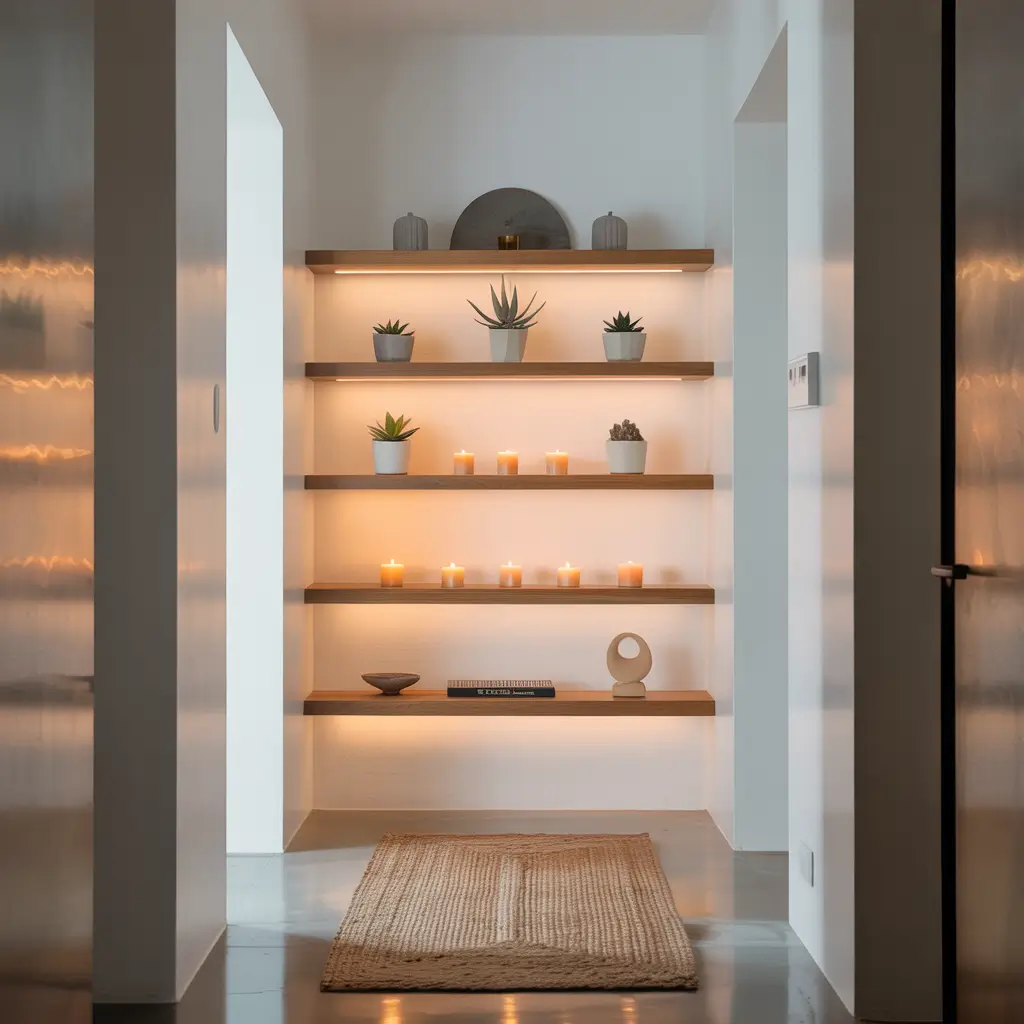
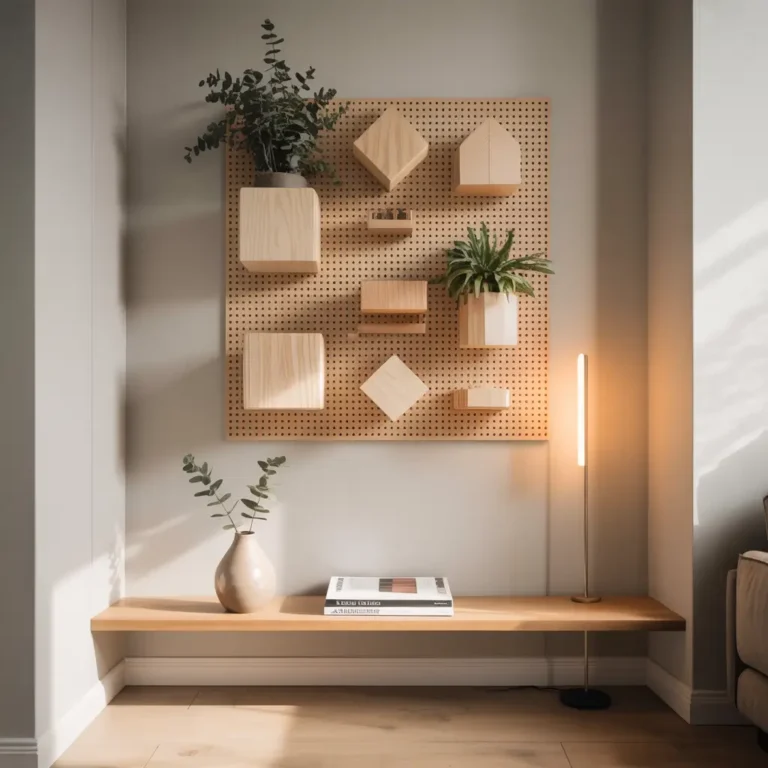
Let’s kick things off with arguably the most versatile trick in the small-space playbook: floating shelves. These wall-mounted beauties keep your floor space completely clear while providing valuable storage and display opportunities.
The magic happens when you pair them with minimalist accessories. I’m talking about a single sculptural vase, a small potted succulent, or maybe a sleek clock. The key lies in restraint—resist the urge to cram every shelf with trinkets.
Why Floating Shelves Work Perfectly
- Zero floor footprint means your narrow passage stays walkable
- Vertical storage draws the eye upward, creating the illusion of height
- Customizable placement lets you work around light switches and outlets
- Easy installation requires just basic tools and about thirty minutes
Position your shelves at staggered heights for visual interest. I personally love placing them about 12 inches apart vertically—enough space to display objects without looking cluttered. Keep accessories in a cohesive color palette, and suddenly your entryway looks intentional rather than accidental.
2. Slim Console Table with Mirror
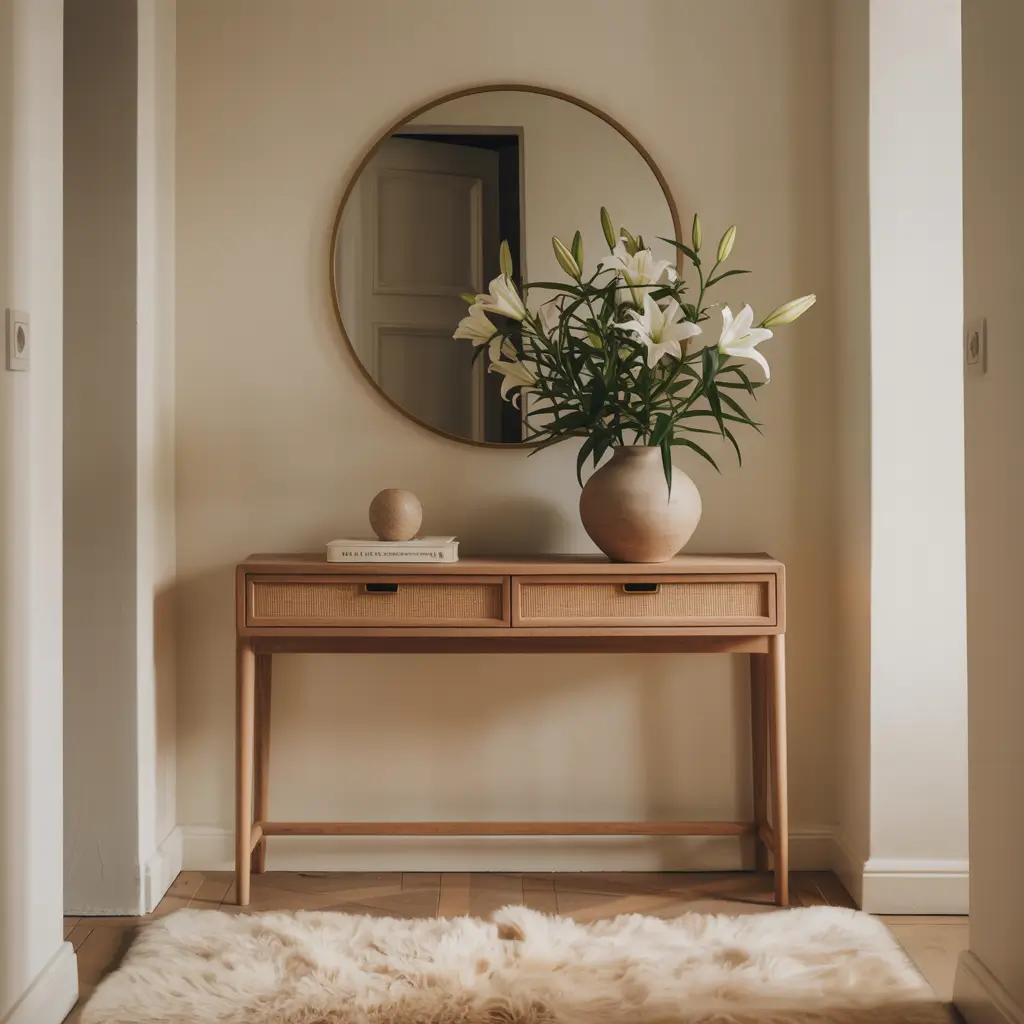
This combination remains a timeless classic for good reason. A slim console table (think 10-12 inches deep) provides that crucial landing zone for keys, sunglasses, and incoming mail without eating into your walking path.
Now pair it with a mirror mounted directly above, and you’ve just doubled your visual space. Mirrors bounce light around and create depth perception tricks that make narrow spaces feel considerably wider.
Choosing the Right Console Table
When shopping for your console table, pay attention to these specifications:
- Depth under 14 inches works best for tight corridors
- Open legs or floating designs maintain visual airflow beneath
- Materials like metal or glass feel lighter than solid wood options
- Built-in drawers provide hidden storage without adding bulk
I once found a gorgeous iron console table at an estate sale for practically nothing. It measured just 10 inches deep with delicate curved legs, and honestly, it changed my entire entryway game. The mirror above it makes my narrow space feel almost palatial. Almost.
3. Vertical Wall Storage Hooks
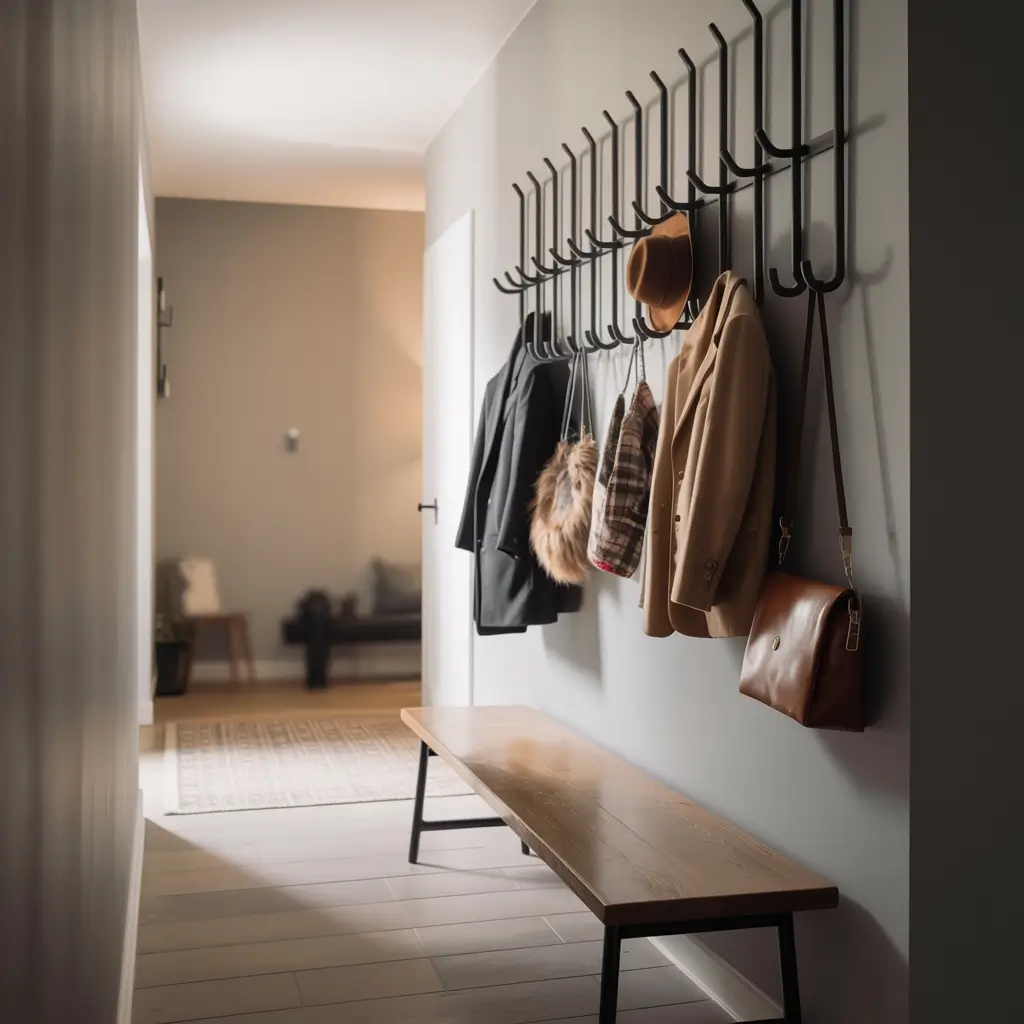
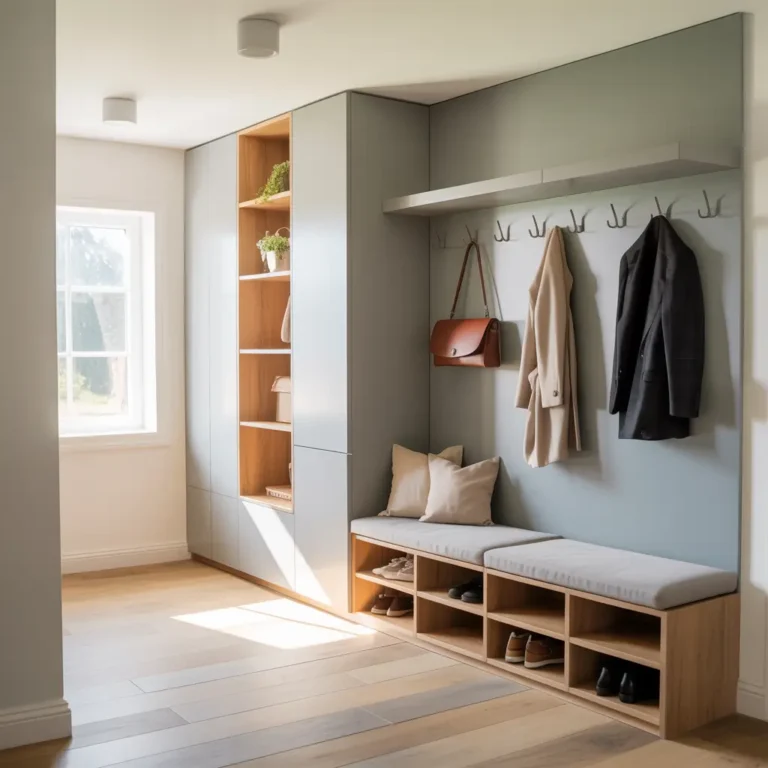
Here’s the thing about narrow entryways—you need to think vertically. Wall-mounted hooks transform blank wall space into functional storage without sacrificing a single inch of floor area.
But forget those boring plastic hook strips from discount stores. Today’s hook options include stunning designs crafted from brass, matte black metal, natural wood, and even artisan ceramics. Your coat hooks can genuinely function as wall art.
Strategic Hook Placement
Install hooks at multiple heights to accommodate different family members. Mount a row higher for adult coats and bags, then add another row lower for kids or frequently grabbed items like dog leashes.
Consider these hook style options:
- Individual statement hooks scattered artfully across the wall
- Horizontal hook rails with multiple pegs on a single bar
- Accordion-style hooks that fold flat when not in use
- Knob-style hooks repurposed from vintage furniture hardware
FYI, I’ve learned the hard way that spacing matters enormously. Leave at least 6-8 inches between hooks so hanging items don’t compete for space or knock each other off.
4. Narrow Bench with Hidden Storage
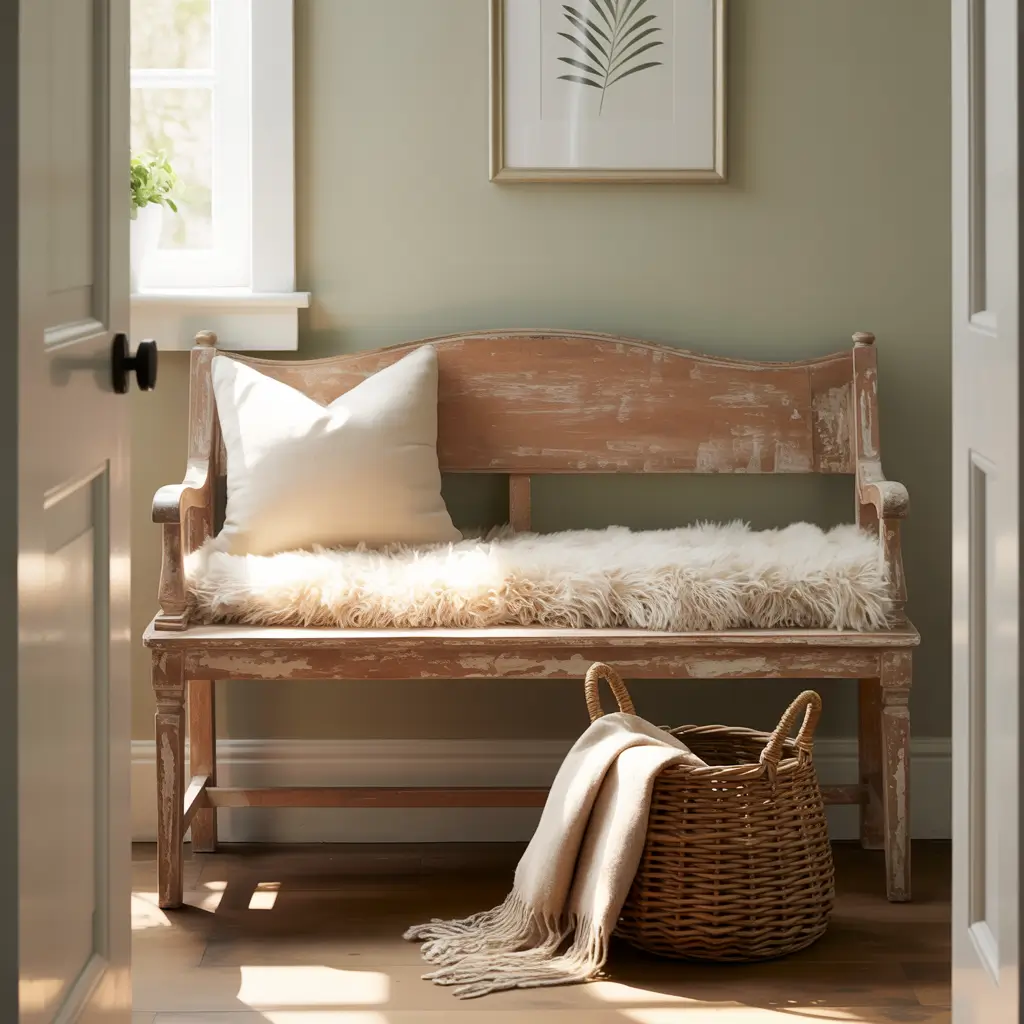
Ever tried putting on shoes while standing on one foot in a cramped space? Not exactly elegant, right? A narrow storage bench solves this problem while secretly stashing away all those items you don’t want visible.
Look for benches specifically designed for hallways—these typically measure 12-15 inches deep and feature lift-top lids or front-opening compartments. Inside, you can hide seasonal accessories, shoe care supplies, or that growing collection of reusable shopping bags.
Bench Selection Criteria
The ideal narrow entryway bench should tick these boxes:
- Seat height around 18 inches for comfortable sitting
- Waterproof interior compartments for damp umbrellas or wet shoes
- Sturdy construction to handle daily use and occasional standing
- Cushioned top option for added comfort and style
Throw a couple of small decorative pillows on top, and suddenly your utilitarian storage piece looks like intentional decor. I added a faux sheepskin throw to mine, and it immediately elevated the entire space from “practical” to “Pinterest-worthy.”
5. Gallery Wall of Small Frames
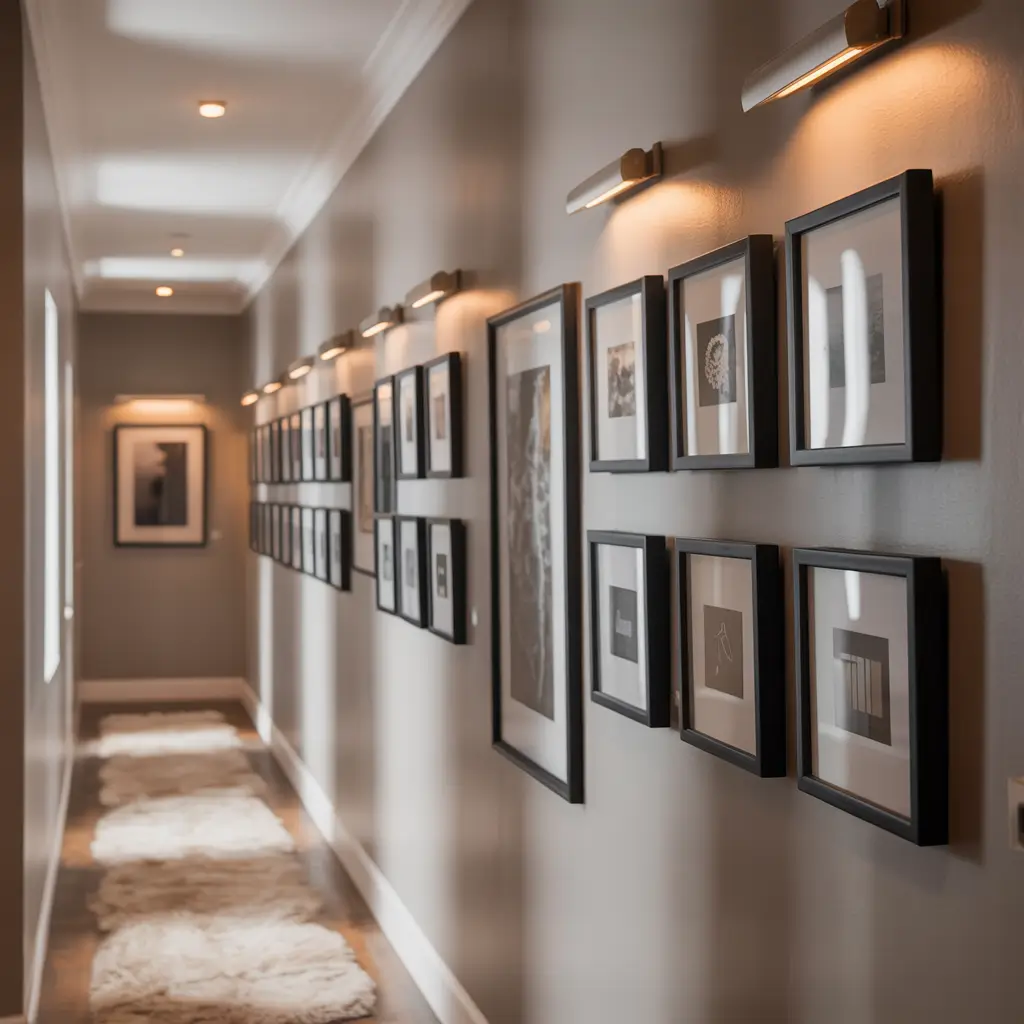
Who says gallery walls only belong in spacious living rooms? A carefully curated gallery wall of small frames adds personality and visual interest to even the skinniest corridor.
The secret involves scale selection. Skip those oversized statement pieces and instead collect frames in the 4×6 to 8×10 range. Mix frame styles, but keep a unifying element—maybe all black frames with various mat colors, or mixed metals with consistent mat widths.
Gallery Wall Planning Tips
Before hammering a single nail, try these professional approaches:
- Trace your frames on kraft paper and tape the templates to the wall first
- Start from the center and work outward for balanced arrangements
- Keep spacing consistent at 2-3 inches between frames
- Mix orientations between horizontal and vertical pieces
Include a variety of content: family photos, small prints, postcards from travels, even framed fabric swatches or pages from favorite books. This layered approach creates conversation-starting visual depth without overwhelming your narrow space.
6. Wall-Mounted Foldable Desk
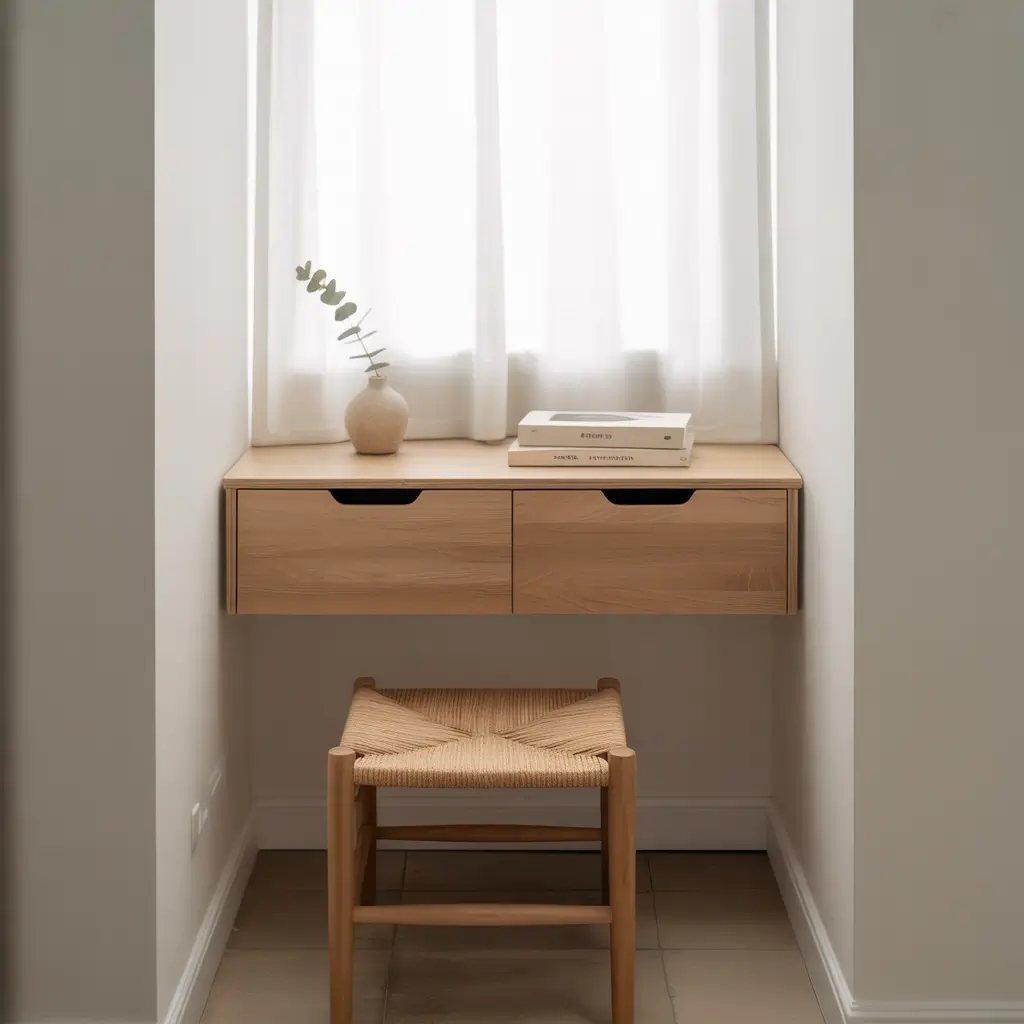
Now this trick might surprise you, but hear me out. A wall-mounted foldable desk transforms your entryway into a multi-functional zone that works harder than any other piece of furniture could.
When closed, these desks sit flush against the wall, taking up virtually no space. Open them up, and suddenly you have a spot for writing quick notes, sorting mail, or even working briefly if you need a change of scenery from your main workspace.
Ideal Foldable Desk Features
Consider these elements when shopping:
- Drop-down design with internal compartments for supplies
- Chalkboard or corkboard interior for reminders and to-do lists
- Sturdy wall mounting hardware to handle daily opening and closing
- Attractive exterior finish since you’ll see it constantly when closed
Mount it at standing height (around 42 inches) for a quick-use station, or at standard desk height (30 inches) with a wall-mounted stool stored beneath. Either configuration maximizes your entryway’s functionality without permanent sacrifice of floor space.
Also Read: 15 Welcoming Church Entryway Decor Designs for Faith Spaces
7. Tall Indoor Plants in Slim Pots
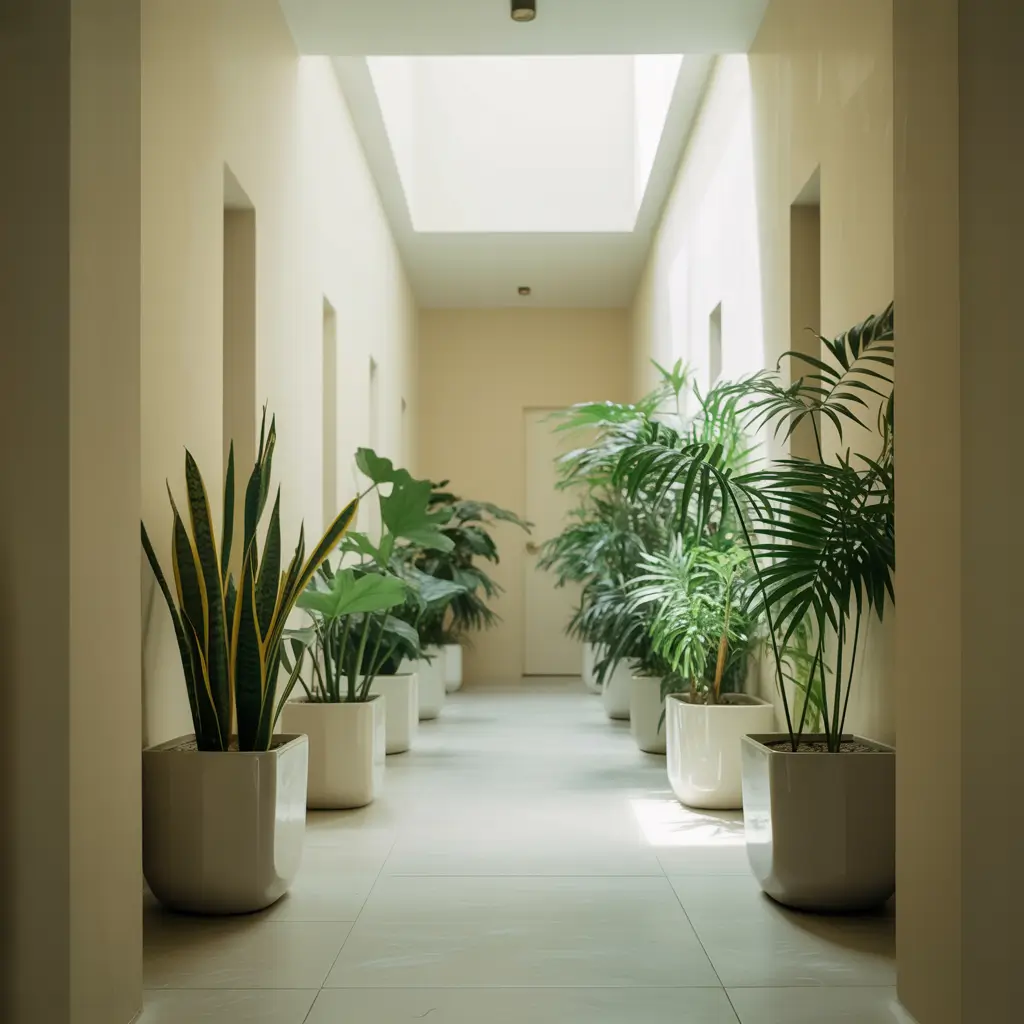
Nothing breathes life into a space quite like tall indoor plants in narrow planters. They add organic texture, improve air quality, and create that welcoming vibe every entryway desperately needs.
The trick involves choosing plants with vertical growth habits paired with pots that don’t sprawl outward. Think snake plants, ZZ plants, fiddle leaf figs, or bamboo palms. These beauties grow upward rather than outward, perfect for tight quarters.
Best Plants for Narrow Spaces
Here’s my personal ranking of narrow-friendly plants:
- Snake plants require minimal light and even less attention
- ZZ plants tolerate neglect like champions
- Dracaenas offer dramatic height with slender profiles
- Parlor palms bring tropical vibes without width issues
Choose cylindrical or square planters in the 8-12 inch diameter range. Elevate smaller plants on tall, narrow plant stands to achieve that coveted floor-to-ceiling greenery effect. Just avoid placing plants directly in the traffic path—I learned this lesson after repeatedly bumping into my fiddle leaf and apologizing to it. Yes, I talk to my plants. Don’t judge 🙂
8. Statement Rug Runner
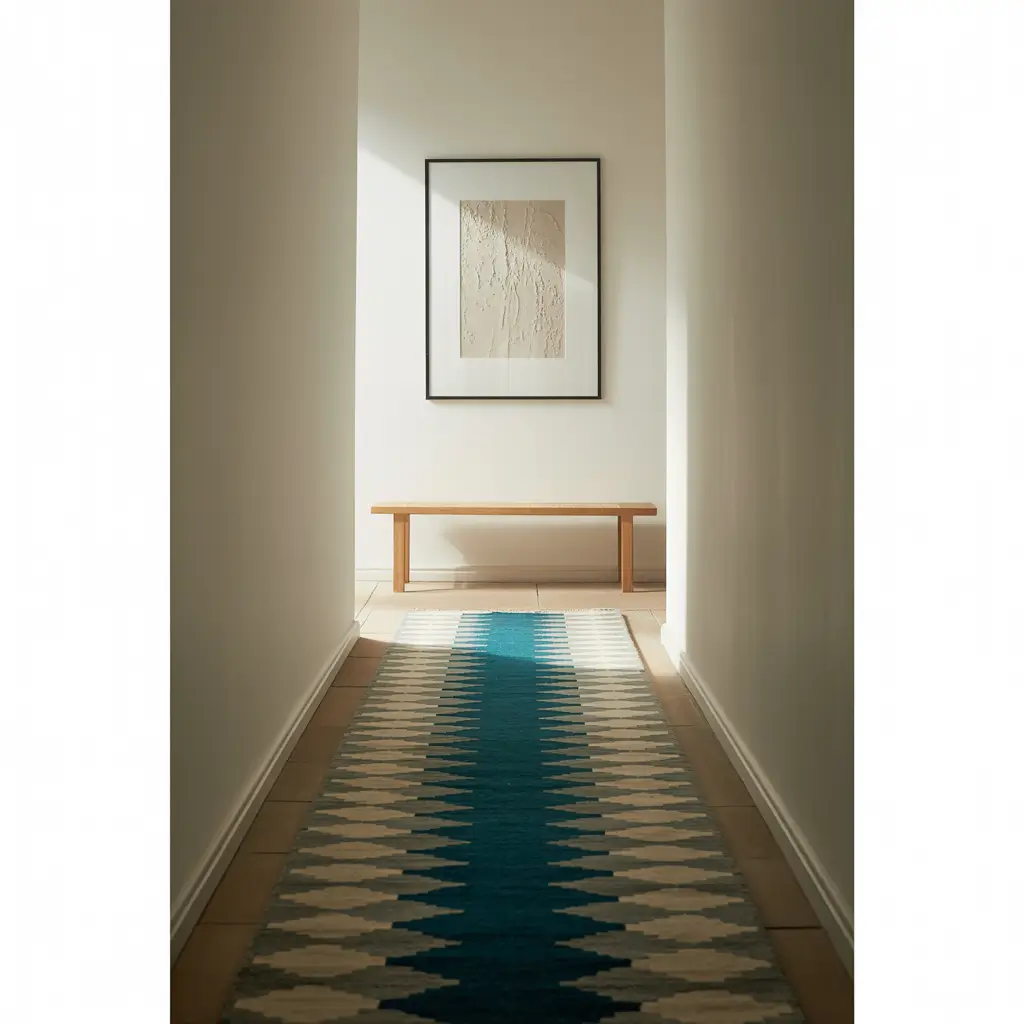
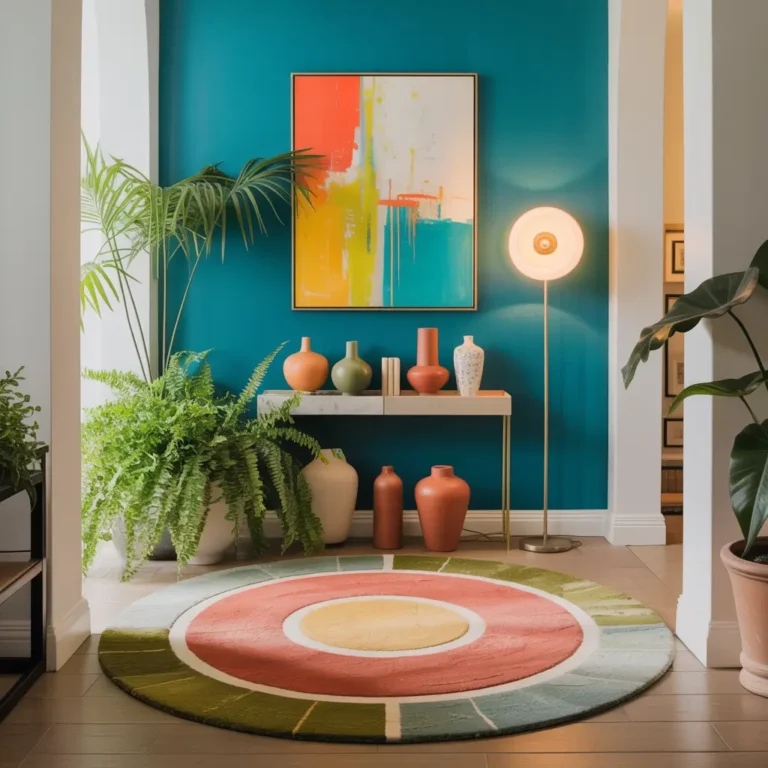
A well-chosen rug runner instantly defines your entryway zone while adding warmth, color, and texture underfoot. This simple addition makes the space feel intentional and designed rather than afterthought-ish.
Runners work beautifully in narrow spaces because their proportions naturally suit long, slim areas. Look for runners measuring 2-3 feet wide and scaled to your entryway length—ideally leaving 4-6 inches of floor visible on each side.
Rug Runner Selection Guide
When choosing your perfect runner, consider:
- Material durability for high-traffic areas (wool, synthetic blends, or indoor-outdoor rugs)
- Pattern direction that leads the eye into your home
- Color scheme that complements adjacent rooms
- Low pile height to prevent tripping and allow door clearance
Bold patterns actually work wonderfully in narrow spaces—they create visual energy and distract from limited square footage. I personally favor vintage-style Persian runners because they hide dirt surprisingly well while adding instant character. Practical and pretty? Yes, please.
9. Floating Shoe Rack with Open Shelves
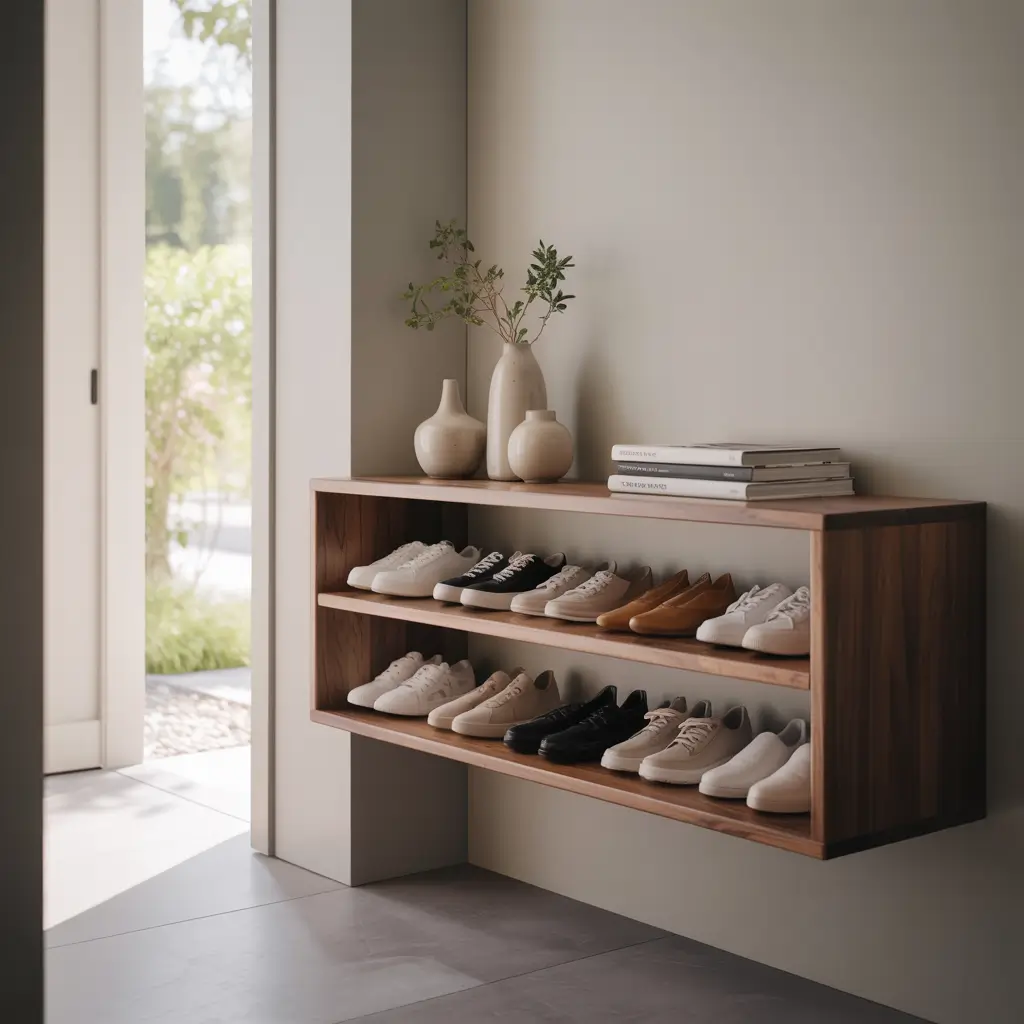
Let’s address the elephant in the room—or rather, the mountain of shoes blocking your entryway. A floating shoe rack keeps footwear organized without cluttering your floor.
Wall-mounted shoe storage comes in various configurations: horizontal slat shelves, angled display racks, or even repurposed floating shelves. The key involves mounting them low enough for easy access but high enough to clear floor cleaning efforts.
Shoe Storage Solutions
Here’s what works best for narrow entryways:
- Slanted shelves display shoes attractively while fitting more pairs
- Metal rod designs allow easy grabbing and natural ventilation
- Tiered floating shelves work for families with varying shoe sizes
- Hanging pocket organizers utilize door backs efficiently
IMO, the angled rack designs win for style and practicality. They showcase your shoes like a store display while keeping pairs organized and accessible. Mount one about 8 inches off the floor, and suddenly that shoe chaos transforms into an organized display.
10. Wall-Mounted Coat Hooks and Baskets
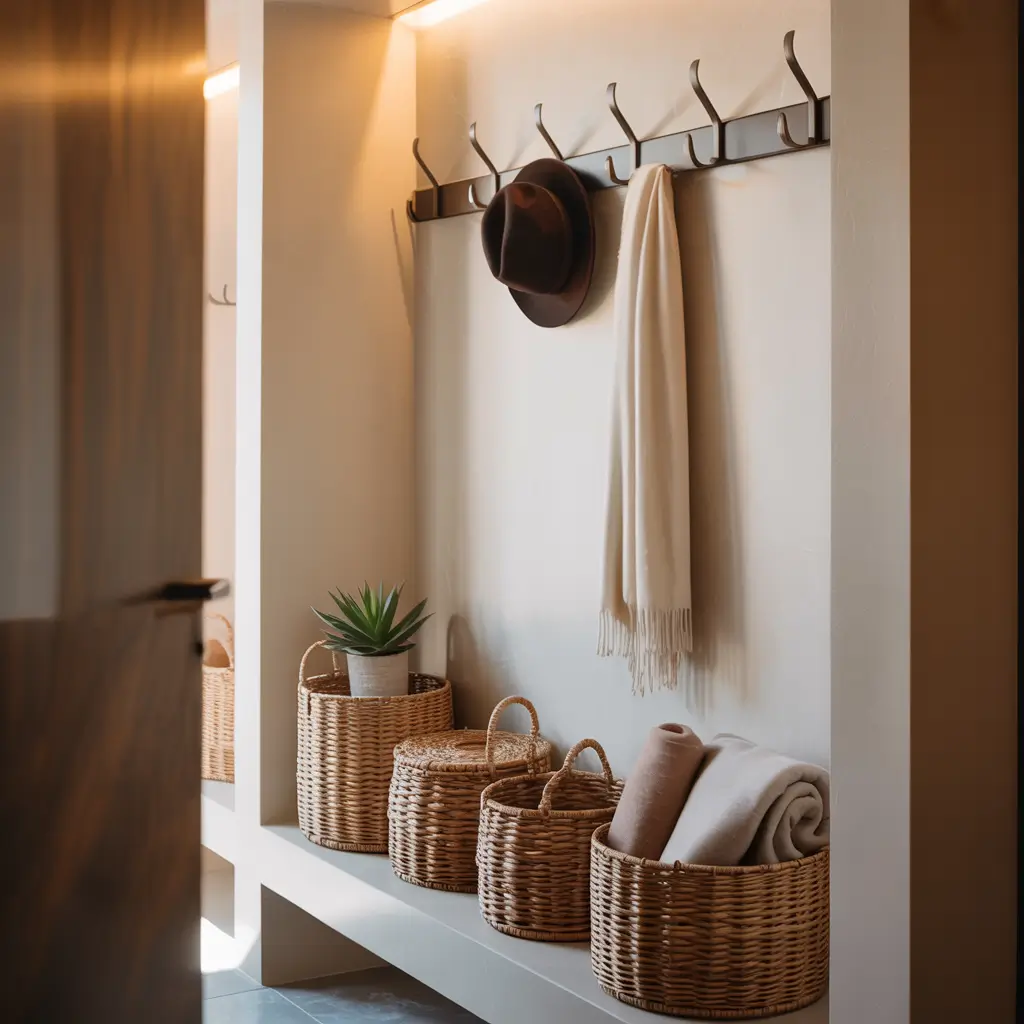
Combining wall-mounted coat hooks with baskets creates a powerhouse organization system that handles everything from jackets to scarves to those random items you need when leaving the house.
Mount hooks at your preferred height, then install small baskets or bins below or beside them. The hooks handle hanging items while the baskets corral smaller accessories like gloves, sunglasses, keys, and transit passes.
Creating Your Hook and Basket System
Design your system around these principles:
- Stagger heights for visual interest and practical layering
- Label baskets if multiple family members share the space
- Include at least one covered basket for less attractive items
- Leave breathing room between components to avoid crowded appearance
I’ve found that woven baskets add textural warmth while wire baskets maintain visual lightness. Mix and match based on your aesthetic preferences. The combination approach works because different storage needs require different solutions—hooks for hanging, baskets for tossing.
11. Mirror Wall Panels for Illusion of Space
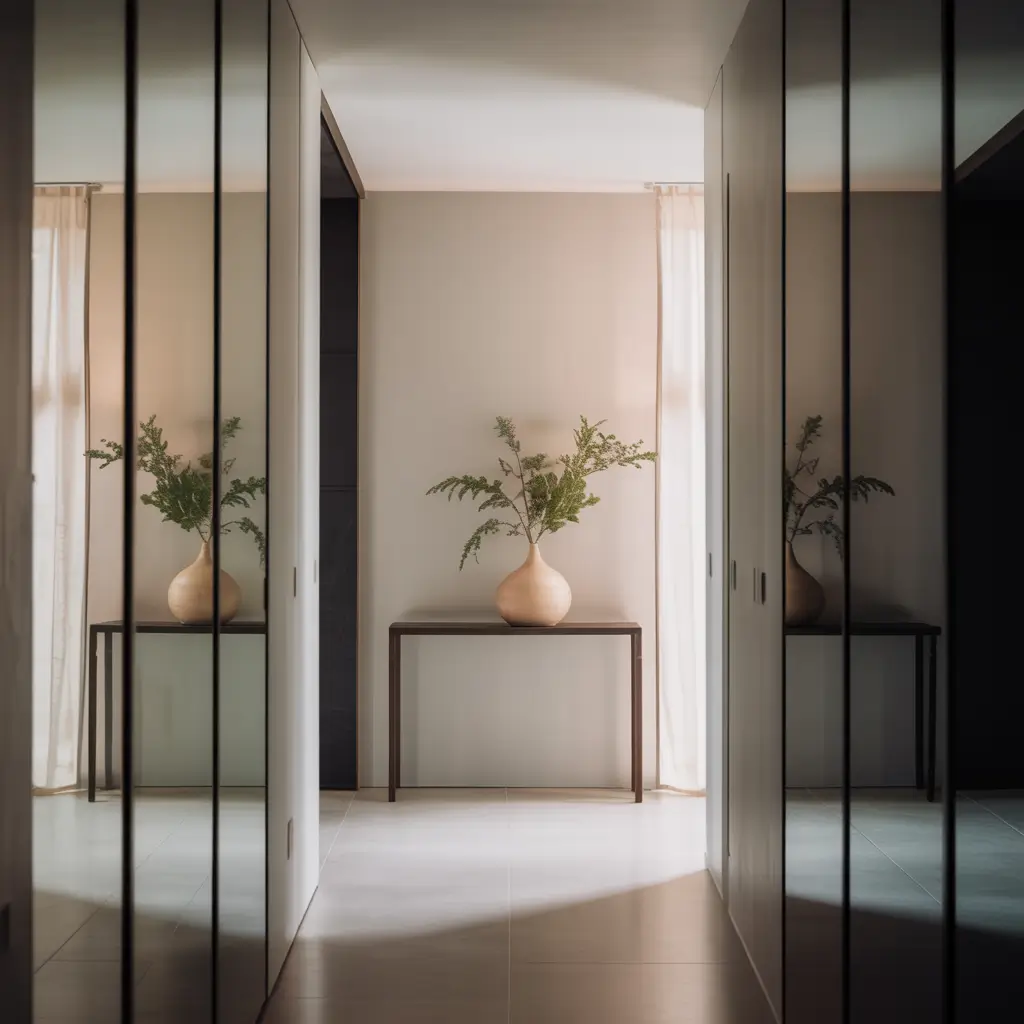
Here’s where we get slightly theatrical. Mirror wall panels create dramatic space illusions that genuinely fool the eye into perceiving a much larger area than actually exists.
We’re not talking about a single mirror here—we’re discussing larger installations, whether that means a full-height mirror panel, a series of mirrored tiles, or even mirrored closet doors if your entryway includes storage.
Mirror Installation Strategies
Consider these approaches for maximum impact:
- Floor-to-ceiling single mirror creates seamless visual expansion
- Horizontal mirror panels installed at eye level widen perceived space
- Antiqued or tinted mirrors add sophistication while reducing fingerprint visibility
- Mirrored furniture pieces multiply the reflection effect subtly
Position mirrors to reflect natural light sources whenever possible. A mirror catching window light essentially doubles your daylight, making narrow corridors feel brighter and more spacious. The reflection also adds perceived depth, which narrow spaces desperately need.
12. Minimalist Wall Sconces Lighting
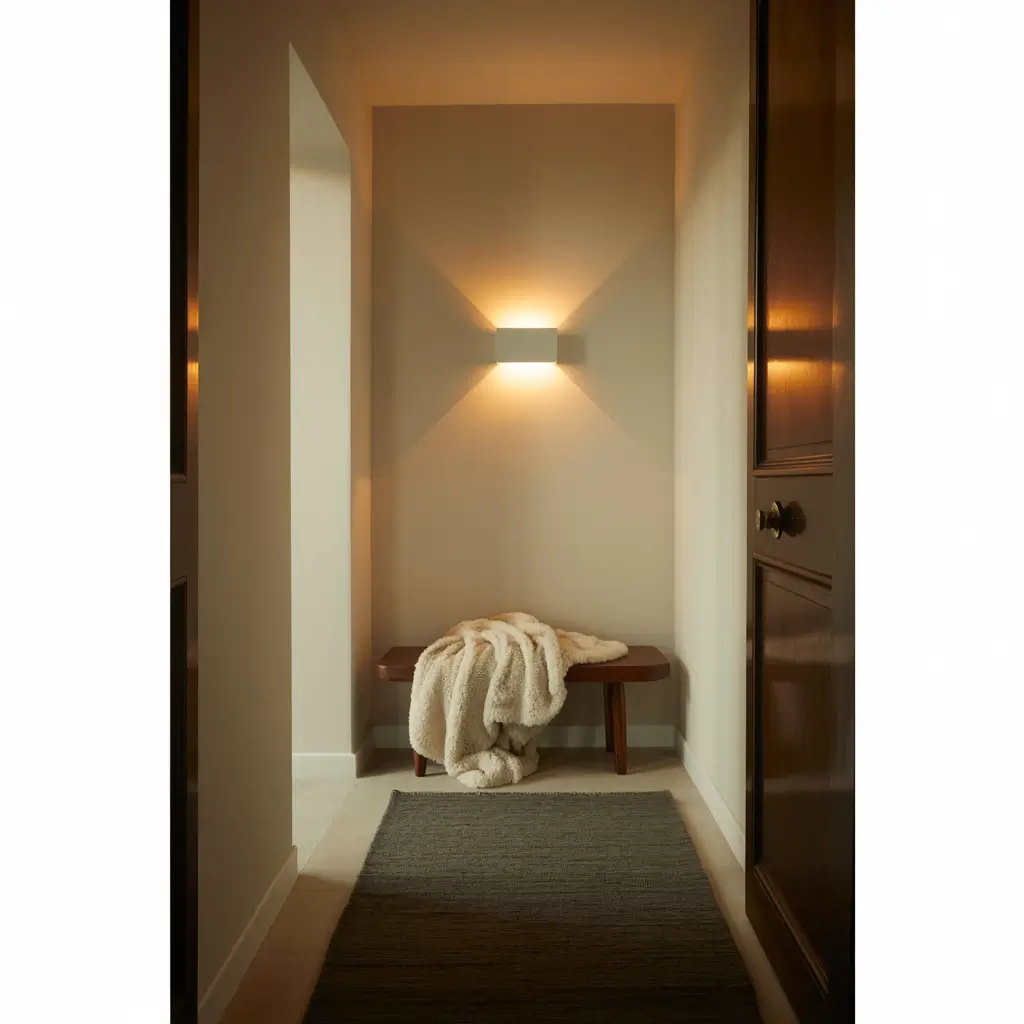
Overhead lighting in narrow spaces often creates unflattering shadows and cramped feelings. Wall sconces provide targeted illumination while adding decorative elements that draw eyes upward.
Choose minimalist designs that don’t project far from the wall—look for sconces with profiles under 6 inches. This prevents accidentally bumping into light fixtures while navigating tight spaces.
Sconce Selection and Placement
Follow these guidelines for perfect sconce integration:
- Mount at 60-66 inches from the floor for optimal light distribution
- Install in pairs flanking mirrors or artwork for symmetry
- Consider hardwired versus plug-in options based on your electrical situation
- Choose warm-toned bulbs (2700-3000K) for welcoming ambiance
Plug-in sconces offer renters flexibility without permanent electrical work. Many beautiful options exist that simply plug into standard outlets with cords that can be hidden or styled along walls. The lighting upgrade transforms entryway atmosphere dramatically.
13. Slim Accent Chair with Compact Side Table
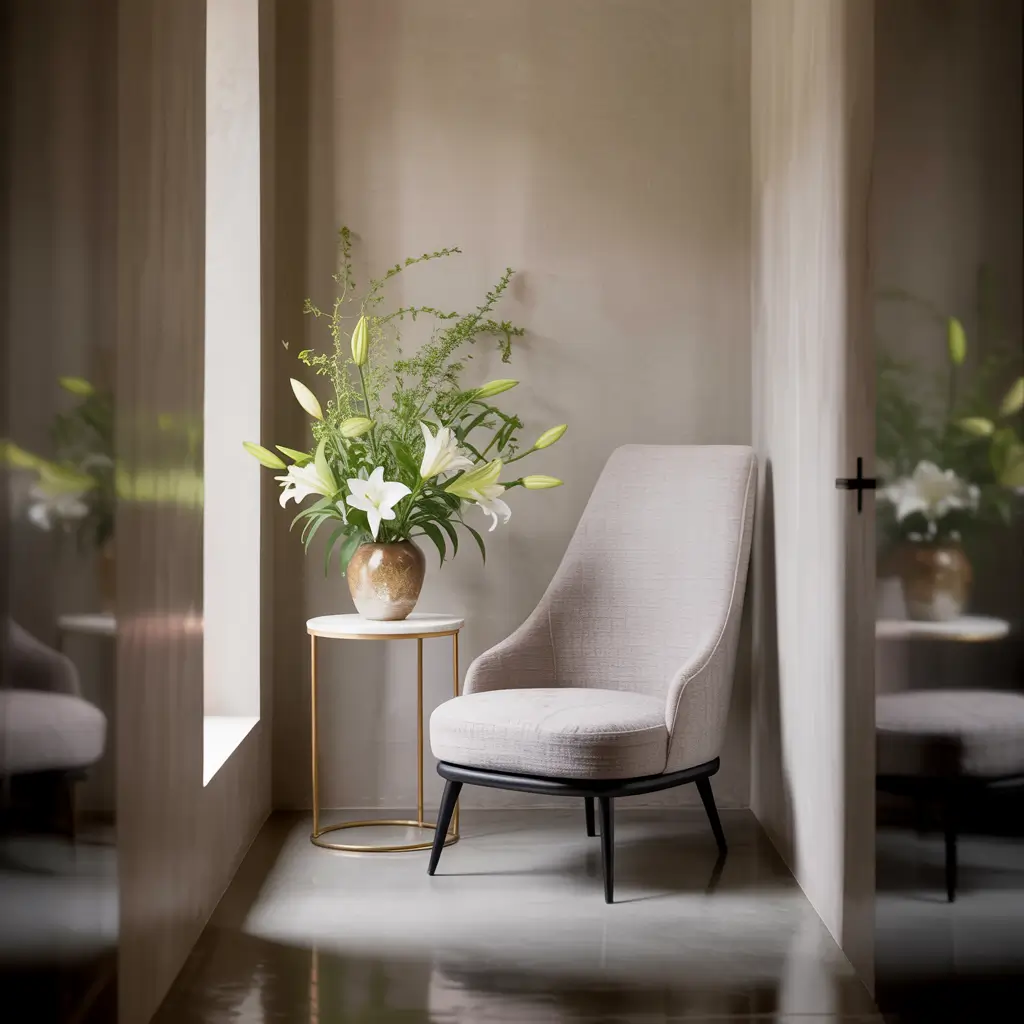
For slightly wider narrow entryways (around 4 feet or more), a slim accent chair paired with a tiny side table creates an actual seating vignette that looks incredibly intentional and designed.
Choose chairs with narrow profiles—armless designs, ladder-back styles, or modern accent chairs specifically marketed for small spaces. Pair with a side table measuring just 10-12 inches in diameter, perfect for holding a small lamp or decorative object.
Narrow Seating Options Worth Considering
Look for these characteristics:
- Armless designs reduce overall width considerably
- Open frames maintain visual lightness
- Upholstered seats in durable, easy-clean fabrics
- Light-colored options that don’t visually weigh down the space
This setup works exceptionally well for entryways that lead into living areas—it creates a transitional moment that feels luxurious and thoughtful. Even if nobody actually sits there regularly, the suggestion of seating elevates the entire space’s perceived quality.
Also Read: 15 Beautiful Outdoor Entryway Decor Ideas Guests Will Love
14. Vertical Hanging Planters
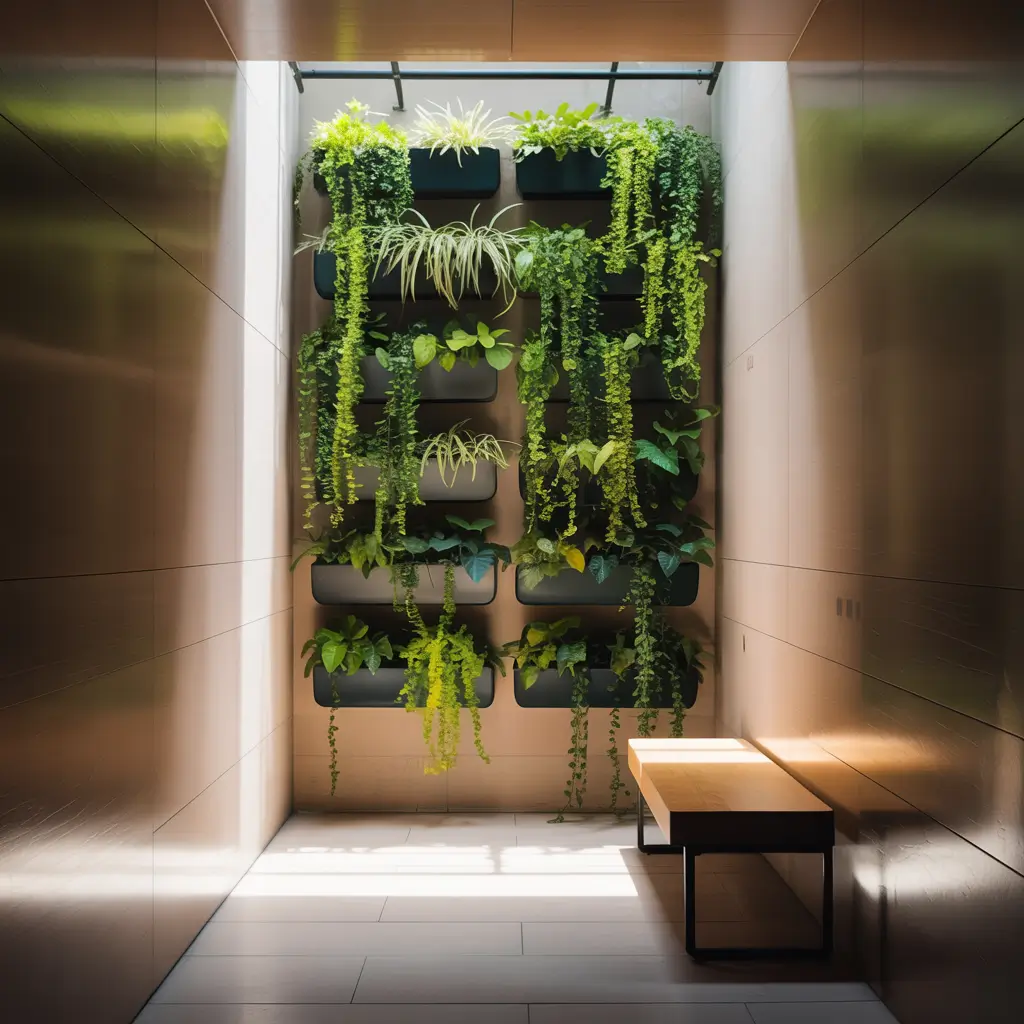
Taking our earlier plant discussion further, vertical hanging planters utilize ceiling and wall space for greenery without consuming any floor area whatsoever.
Options range from macramé plant hangers suspended from ceiling hooks to wall-mounted pocket planters to vertical garden systems designed for indoor use. Each approach brings nature into your entryway while maintaining completely clear floor space.
Hanging Planter Ideas
Explore these vertical gardening solutions:
- Macramé hangers at varying heights create layered greenery
- Wall-mounted pocket planters hold multiple small plants compactly
- Hanging terrariums add visual interest with minimal maintenance plants
- Trailing plants like pothos or string of pearls cascade beautifully downward
Install ceiling hooks sturdy enough to support wet soil weight—plants get significantly heavier after watering. Position hangers away from direct traffic paths to avoid head collisions. Nothing ruins a grand entrance quite like face-planting into a fern.
15. Chalkboard or Whiteboard Wall Organizer
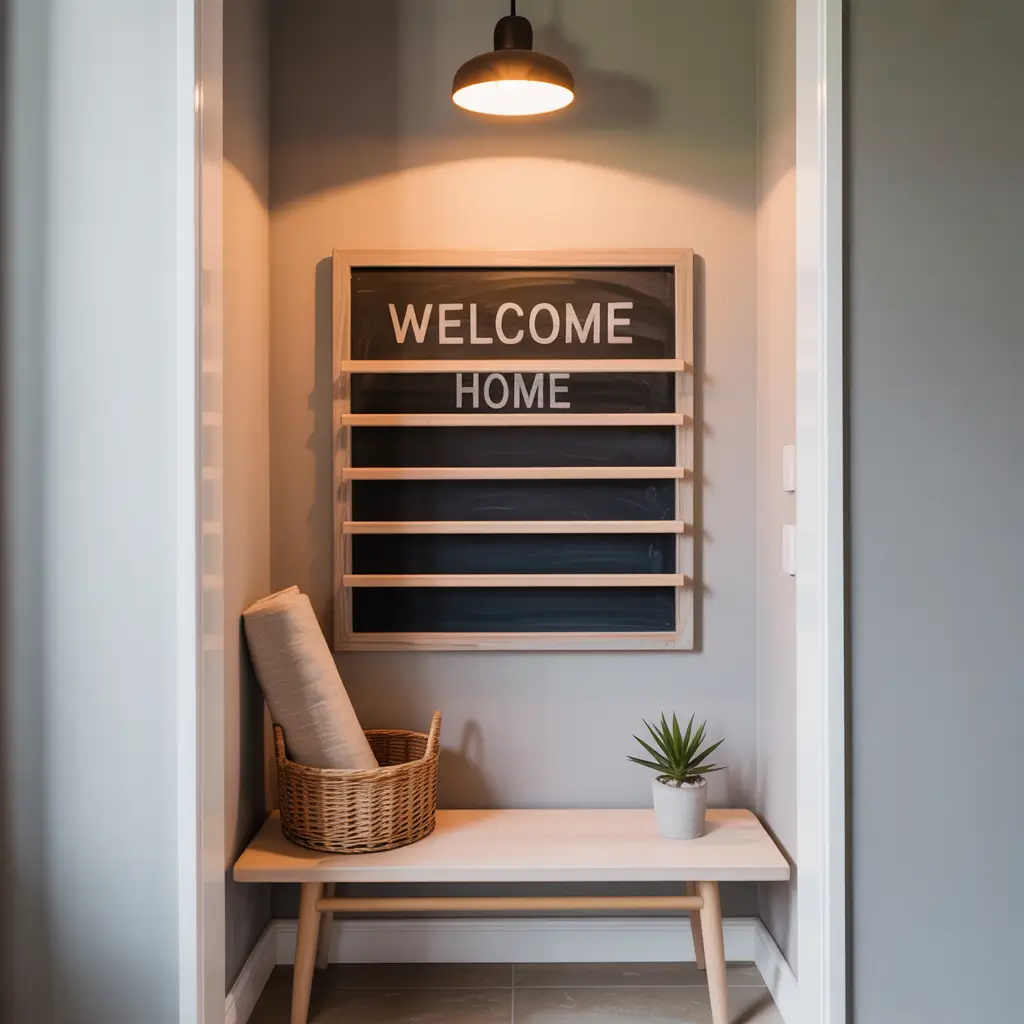
Our final trick combines organization with personalization through a wall-mounted chalkboard or whiteboard system. These surfaces turn blank walls into functional communication centers while adding creative visual elements.
Mount a framed chalkboard for a farmhouse aesthetic or a sleek whiteboard for modern vibes. Use the surface for grocery lists, family reminders, weekly schedules, or inspirational quotes—whatever serves your household best.
Organization Board Setup
Create a comprehensive command center:
- Frame your board for polished, finished appearance
- Add small hooks below for chalk/marker storage and keys
- Include a small cork strip for pinning important papers
- Section the board into zones for different household members or purposes
Chalkboard walls take this concept further—painting an entire wall section creates maximum organizational real estate. Chalkboard paint applies easily to any smooth wall surface, transforming blank walls into endless note-taking possibilities. Just keep a small cloth nearby for easy erasing.
Transforming Your Narrow Entryway: Final Thoughts
There you have it—15 proven tricks for transforming that awkward narrow entryway from neglected transition zone into genuinely stylish, highly functional space. The common thread connecting all these ideas? Thinking vertically, choosing slim profiles, and making every piece work double duty.
You don’t need to implement all fifteen suggestions—pick three or four that resonate with your style and practical needs. Maybe floating shelves combined with a slim console table and statement runner creates your perfect combination. Perhaps vertical planters paired with wall hooks and a narrow storage bench fits your lifestyle better.
The most important takeaway involves recognizing that narrow doesn’t mean compromised. With thoughtful furniture selection, strategic vertical storage, and clever visual tricks like mirrors and good lighting, your entryway can genuinely compete with spaces three times its size.
Start with one element this weekend. Hang those floating shelves you’ve been meaning to install. Order that slim console table you’ve bookmarked. Roll out a beautiful runner that makes you smile every time you walk through your front door.