15 Inspiring Small Mudroom Ideas Entryway with Stylish Storage

You know that awkward little space near your front door that collects shoes, coats, mail, and basically everything your family has ever owned? Yeah, that’s your mudroom waiting to happen. And if you’re working with limited square footage, you’ve probably convinced yourself that organizational bliss belongs only to people with sprawling entryways and unlimited budgets.
Here’s the thing—you’re wrong. I used to think the same way until I transformed my tiny 4×6 foot entryway into something that actually functions and looks pretty darn good. Small spaces don’t mean small possibilities. They just mean you need to get creative, think vertically, and embrace solutions that work double-duty.
I’ve spent countless weekends scrolling through Pinterest, visiting home improvement stores, and honestly, making a few expensive mistakes along the way. But through all that trial and error, I’ve discovered 15 incredible small mudroom ideas that maximize every precious inch while keeping your entryway looking stylish rather than stuffed. Whether you’re dealing with a narrow hallway, a cramped corner, or a barely-there foyer, these solutions will change how you see your space.
Let’s get into it.
1. Floating Bench with Hidden Storage
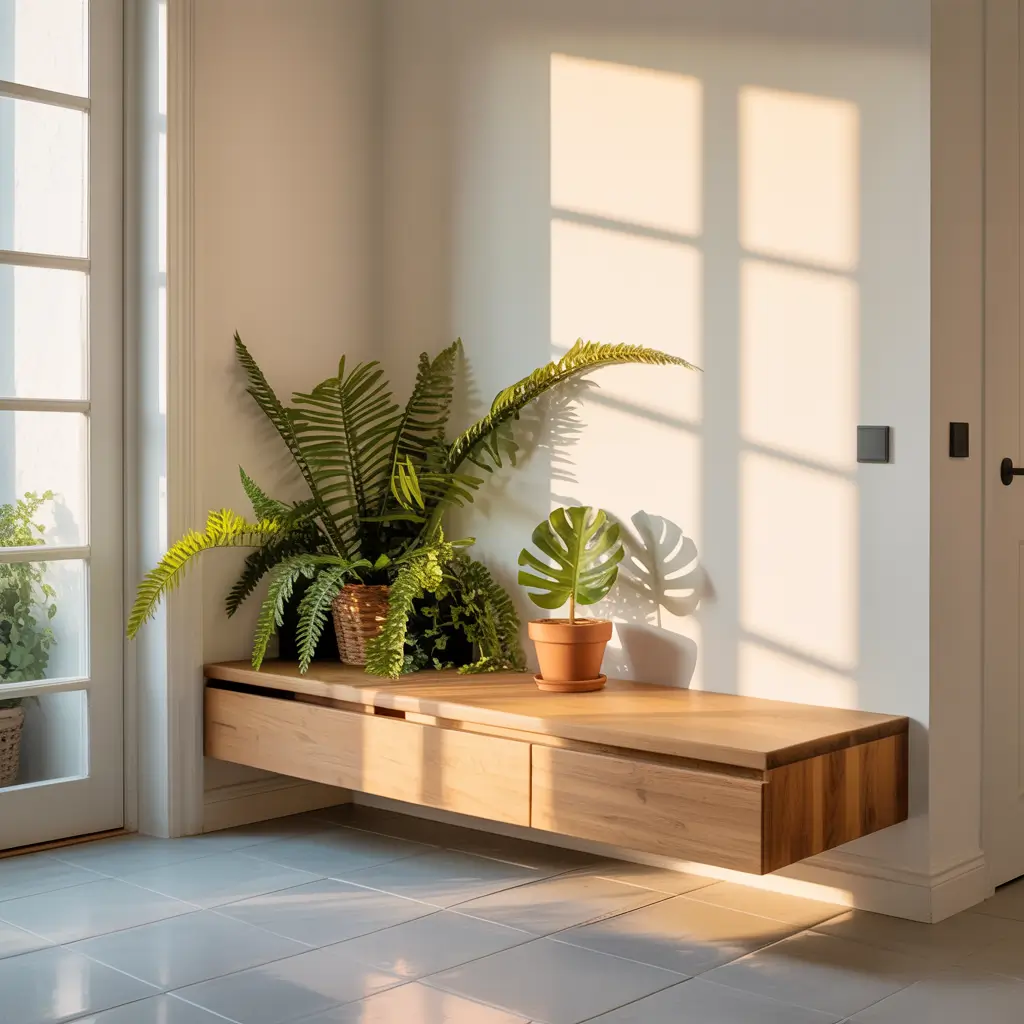
Can we talk about the genius of floating benches? These beauties mount directly to your wall, which immediately makes your small mudroom feel more spacious because you can see the floor beneath them. That visual trick alone makes a massive difference in tight quarters.
But here’s where it gets even better—the hidden storage component. A floating bench with a flip-top lid or pull-out drawers gives you serious real estate for stashing winter gear, sports equipment, or all those reusable shopping bags you keep forgetting to bring to the store. I installed one in my entryway about two years ago, and it holds an embarrassing amount of stuff while looking completely sleek and minimal.
Key benefits of floating benches:
- Creates visual space by exposing floor area beneath
- Provides seating for putting on shoes (game-changer with kids)
- Conceals clutter inside compartments
- Supports up to 300+ pounds when properly anchored to studs
- Comes in various widths to fit your exact space
When shopping for a floating bench, pay close attention to the weight capacity and mounting hardware. You’ll want something anchored into wall studs, not just drywall, especially if adults will be sitting on it. Trust me, learning this lesson the hard way involves drywall repair and wounded pride.
2. Vertical Wall-Mounted Coat Hooks
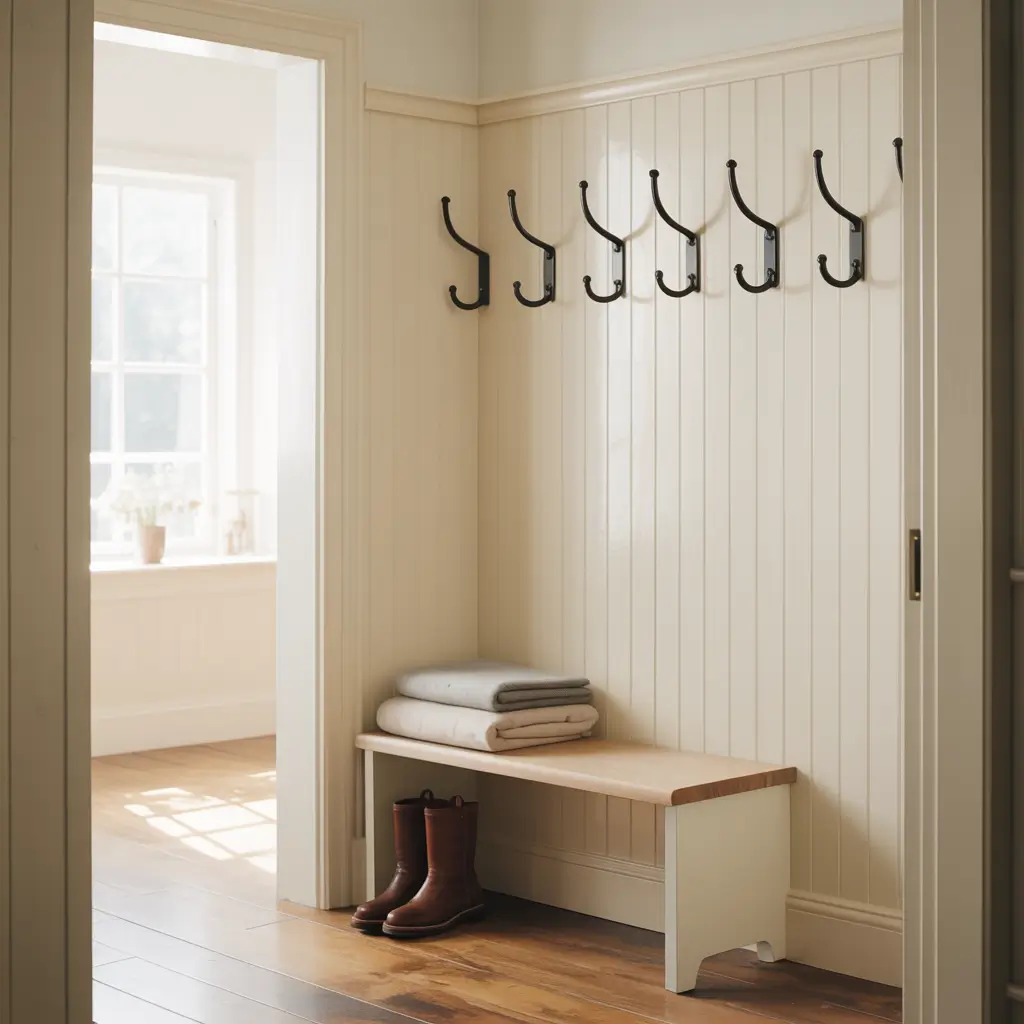
Stop thinking horizontally. When floor space runs scarce, your walls become premium real estate. Vertical wall-mounted coat hooks take advantage of height rather than width, allowing you to stack hanging options from low (for kids) to high (for adults).
I’m a huge fan of hooks over traditional coat racks in small mudrooms because they protrude less into the space. A bulky standing coat rack eats up valuable floor area and creates visual clutter. Wall-mounted hooks? They practically disappear when not in use.
Here’s what to look for:
- Staggered heights for different family members
- Heavy-duty hardware that supports winter coats
- Rounded edges to prevent snagging fabric
- Decorative designs that double as wall art
Consider installing a vertical board or plank first, then attaching multiple hooks to it. This approach protects your wall from multiple drill holes and creates a more cohesive, intentional look. Plus, if you ever want to rearrange or move, you’re only patching one section rather than a dozen random holes.
3. Slim Shoe Rack Organizer
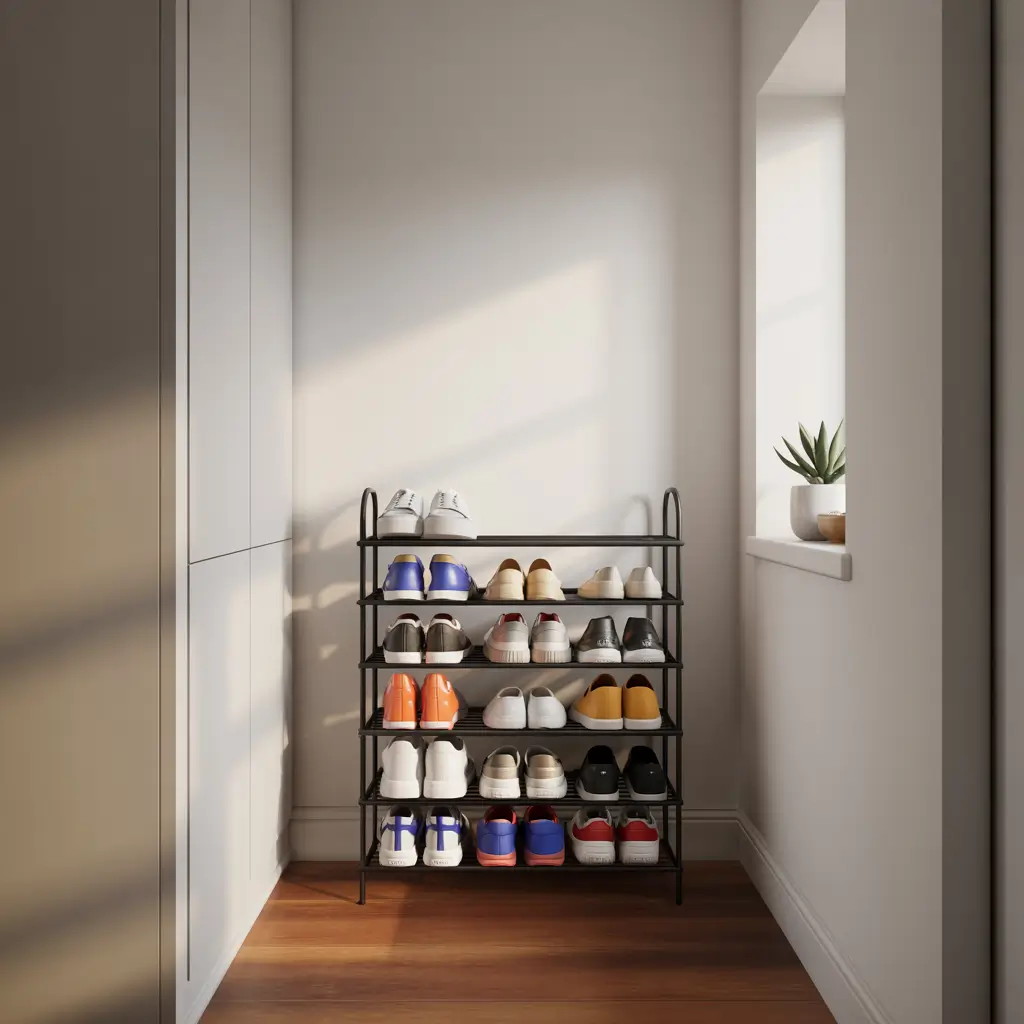
Shoes. They multiply like rabbits, and they’re the number one reason most entryways look chaotic. A slim shoe rack organizer addresses this problem without gobbling up precious floor space.
Look for options that stand no more than 6-8 inches deep. These narrow profiles fit against walls without blocking walkways or making your mudroom feel cramped. Some even angle the shelves downward, which displays shoes attractively while keeping the overall footprint minimal.
Popular slim shoe rack styles:
- Wall-mounted flip-down compartments (my personal favorite)
- Vertical tower designs that stack shoes upward
- Behind-the-door hanging organizers (more on this later)
- Pull-out drawer systems that tuck under benches
- Over-the-door pocket organizers for flats and sandals
I switched to a wall-mounted flip-down shoe cabinet last year, and honestly, why didn’t I do this sooner? It holds 12 pairs of shoes in a space that used to accommodate maybe three pairs scattered on the floor. The doors flip up to hide the shoes completely when closed, so guests never see the chaos inside.
4. Corner Mudroom Nook
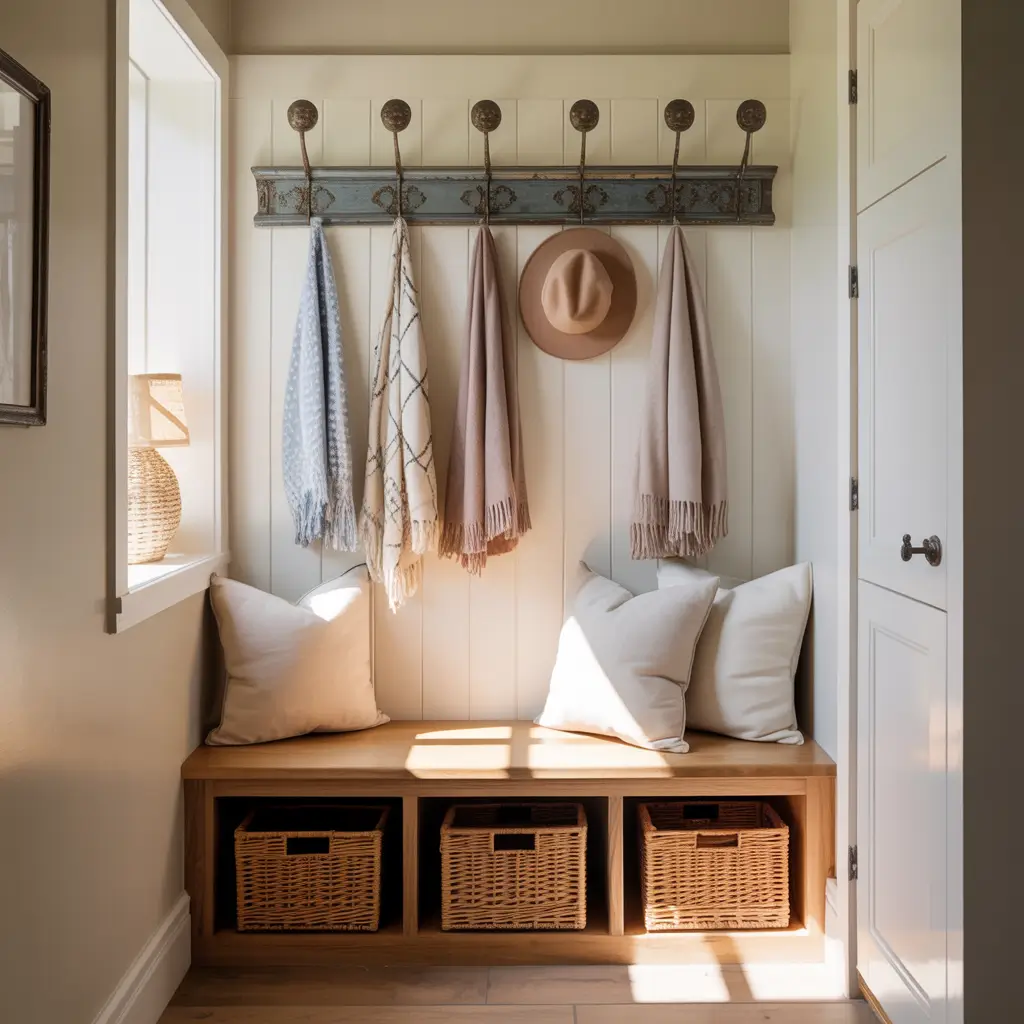
Got an awkward corner that seems impossible to use? Congratulations, you’ve found the perfect spot for a corner mudroom nook. These often-ignored spaces actually offer fantastic potential for creating a complete mudroom station without stealing square footage from main traffic areas.
Corner installations typically feature L-shaped bench seating with storage beneath, plus vertical shelving or hooks on both walls. This configuration maximizes an area that would otherwise collect dust bunnies and forgotten umbrellas.
What makes corner nooks work:
- Utilizes dead space that standard furniture can’t access
- Creates a defined zone for mudroom activities
- Feels intentional rather than cramped
- Often fits under stairs or in entryway alcoves
Custom-built corner nooks deliver the best results because they match your exact dimensions. However, if custom carpentry isn’t in your budget (I feel you), you can achieve similar results by positioning a small bench in the corner and adding wall-mounted elements around it.
5. Multi-Functional Storage Bench
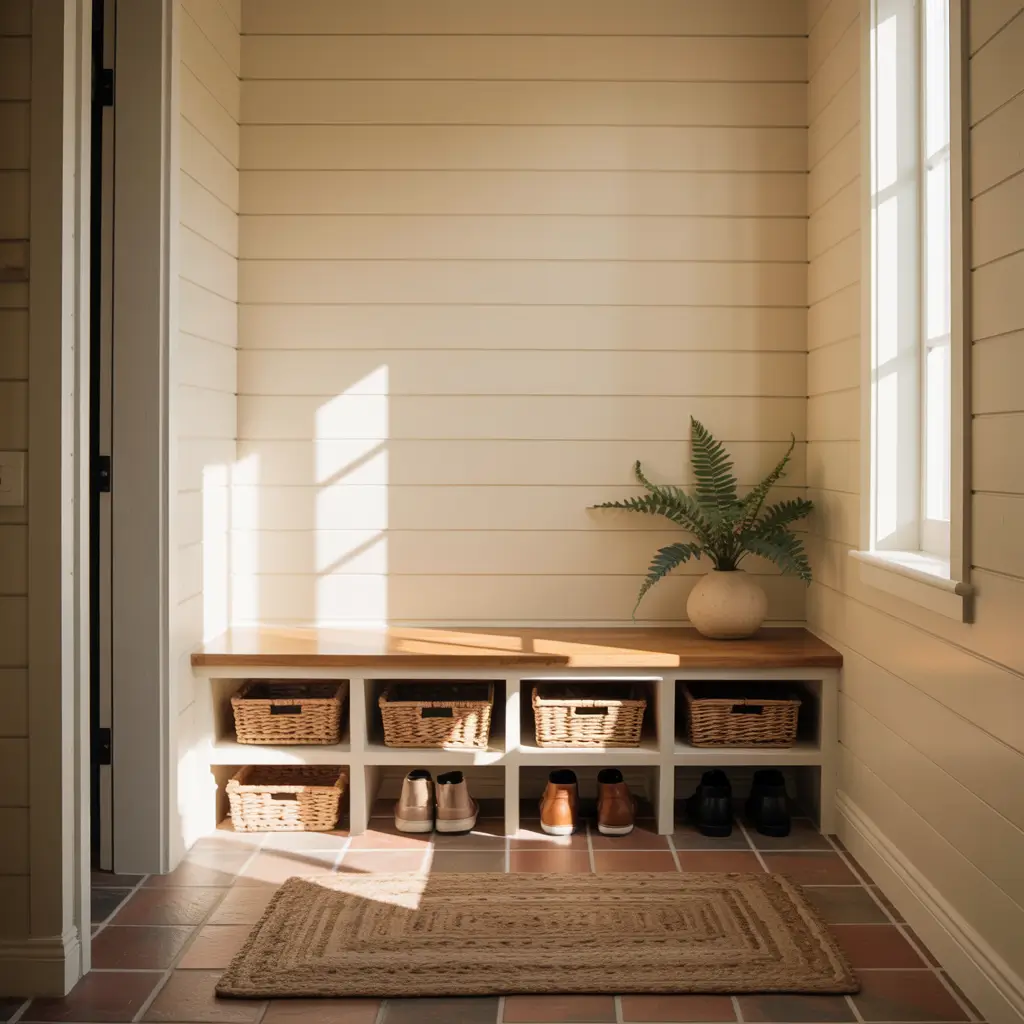
Why have furniture that does one thing when it could do five? A multi-functional storage bench serves as seating, shoe storage, basket holder, and sometimes even a charging station all in one compact unit.
These benches typically feature open cubbies below the seat where you can slide baskets for organized storage. Each family member gets their own basket—brilliant for keeping individual items separated and making sure little Timmy’s soccer cleats don’t end up mixed with your work heels.
Features to prioritize:
- Sturdy construction with reinforced corners
- Appropriately sized cubbies for standard baskets
- Comfortable seat height (typically 18-20 inches)
- Materials that handle moisture from wet shoes and gear
- Clean-up friendly surfaces for muddy paw prints
IMO, the open cubby design beats closed storage for daily-use items because it encourages family members to actually put things away. When storage involves opening doors or lifting lids, stuff mysteriously ends up dumped on top instead. Keep it accessible, keep it used.
Also Read: 15 Gorgeous Mudroom Ideas Entryway to Inspire Creativity
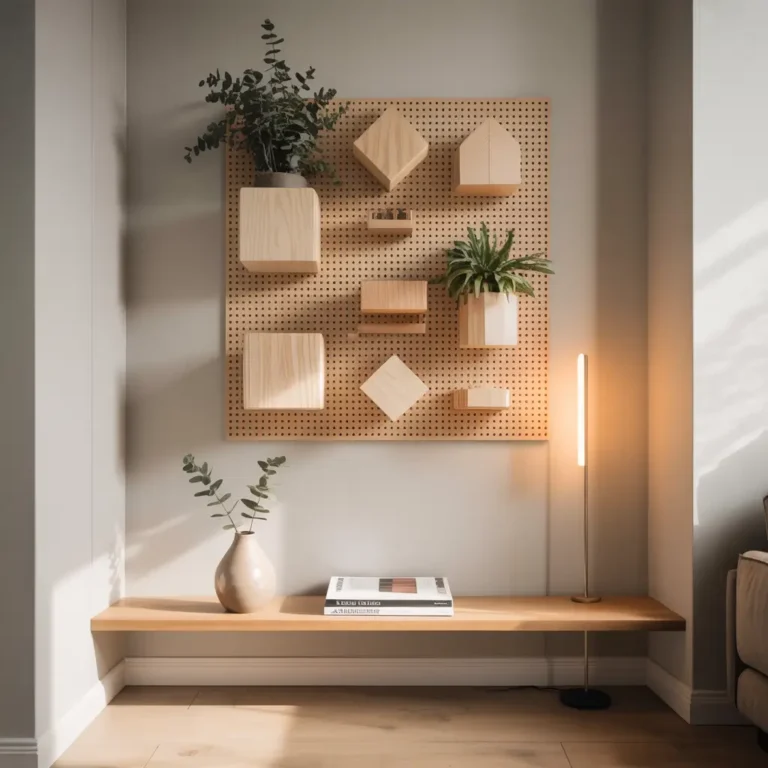
6. Pegboard Wall for Accessories
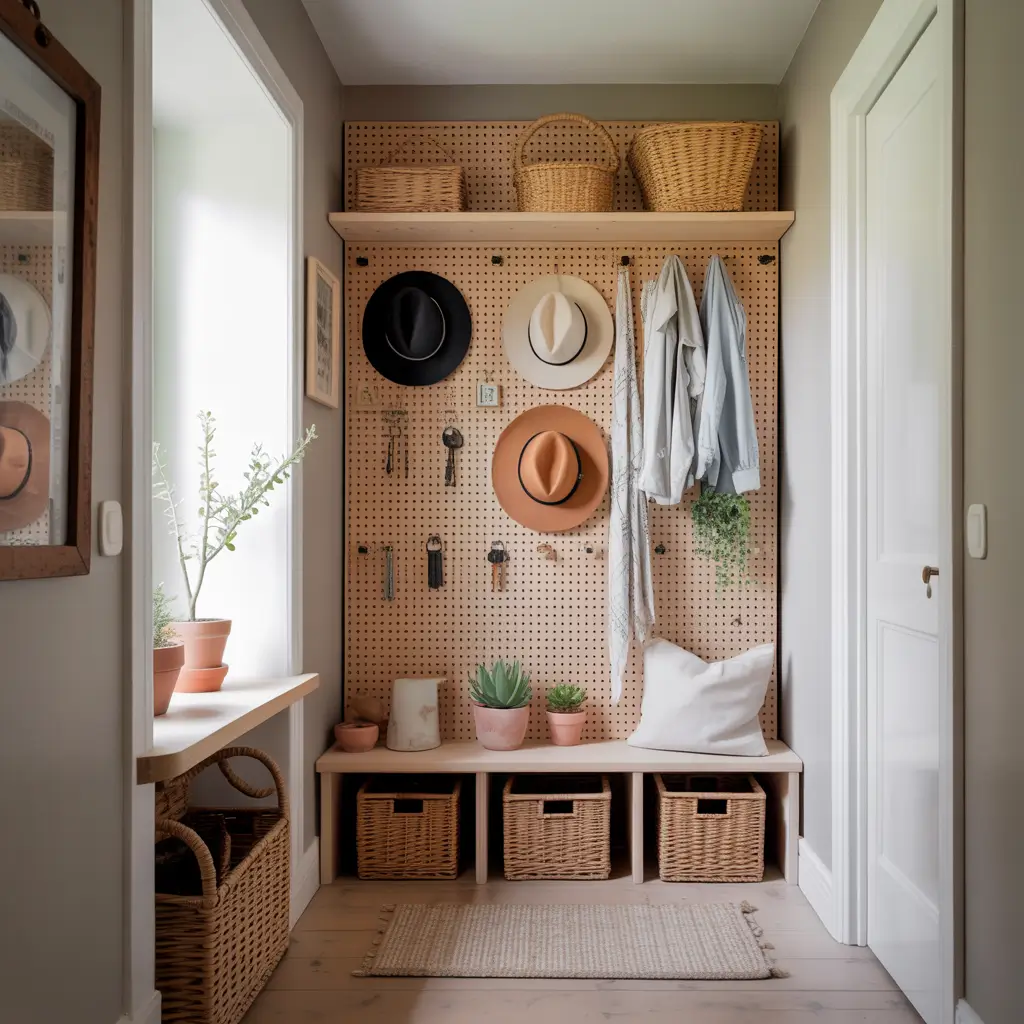
Remember pegboards from your garage? Turns out, they’re not just for tools anymore. A pegboard wall in your mudroom creates infinitely customizable storage that adapts as your needs change—and in a small space, flexibility matters enormously.
Paint your pegboard a fun color, mount it prominently on your wall, and suddenly you have a functional art piece that holds keys, sunglasses, dog leashes, hats, and literally anything with a hook or basket attachment.
Why pegboards excel in small mudrooms:
- Completely customizable layout and configuration
- Inexpensive compared to built-in solutions
- Easy to install with basic tools
- Endlessly adjustable as seasons or needs change
- Visually interesting when styled thoughtfully
I’ve seen people add small shelves, wire baskets, and even tiny plant holders to their mudroom pegboards. The key is maintaining some visual order rather than filling every single hole. Leave breathing room, group similar items together, and you’ll have something that looks designed rather than desperate.
7. Over-the-Door Hanging Organizer
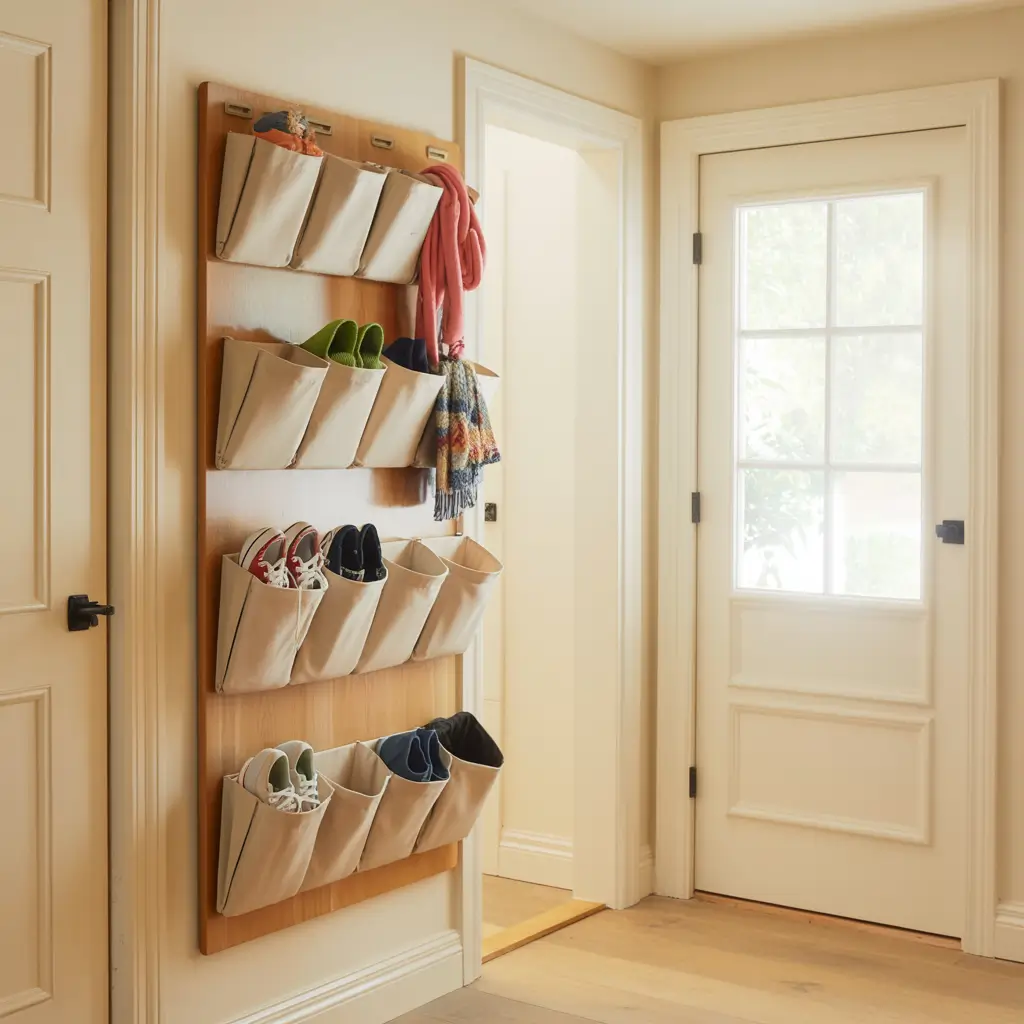
Here’s a solution that requires zero floor space, zero wall drilling, and approximately five minutes to install. Over-the-door hanging organizers slip over any standard door and instantly multiply your storage capacity.
These organizers work particularly well in rental apartments where permanent modifications aren’t allowed. They’re also fantastic for mudroom closets, turning the back of a closet door into a storage powerhouse.
Best uses for over-the-door organizers:
- Clear pocket versions for shoes, accessories, and gloves
- Hook systems for bags, umbrellas, and hats
- Wire baskets for bulkier items like scarves
- Mirror combinations that add function and reflection
- Mail and key organizers for everyday essentials
One tip from experience: make sure your door can still close properly after installation. Some bulkier organizers prevent doors from latching, which creates more problems than solutions. Measure the clearance between your door and frame before purchasing.
8. Built-In Cubby Shelves
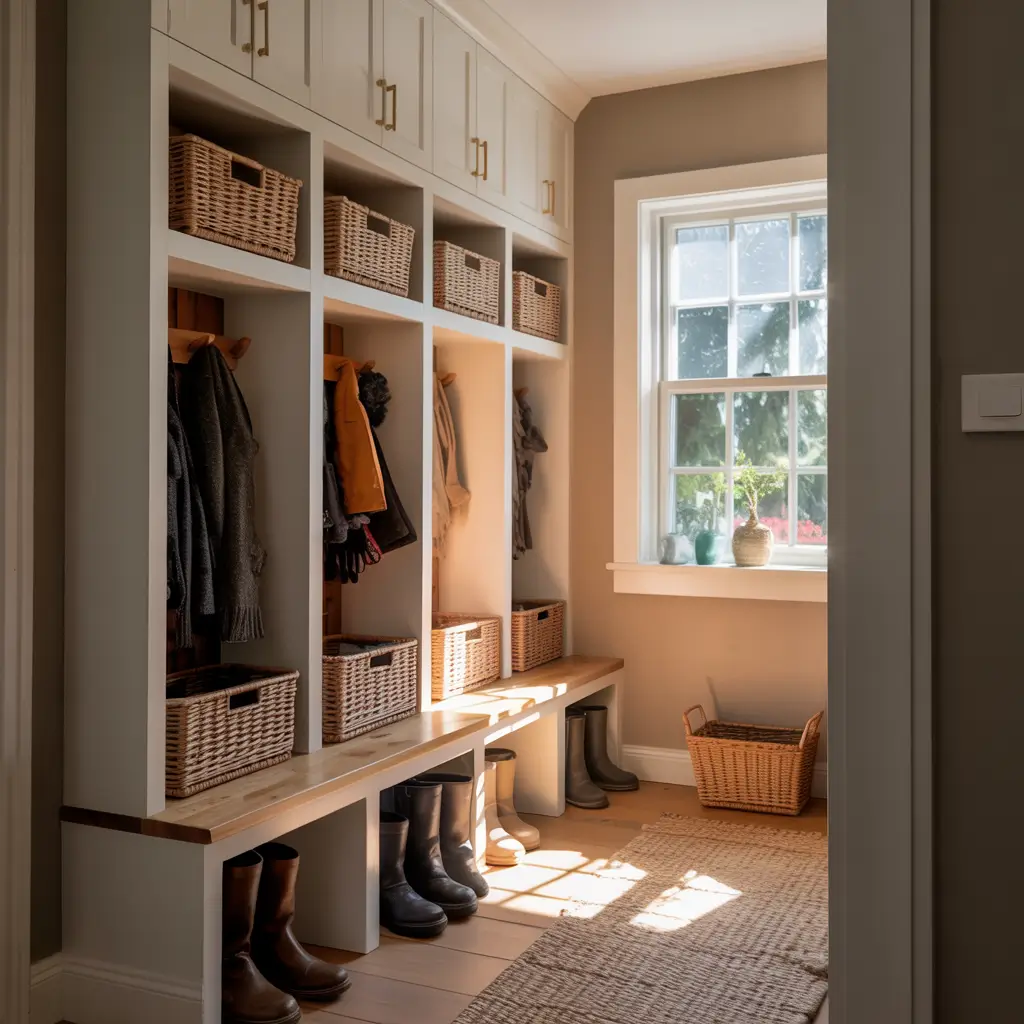
Nothing says “intentional design” quite like built-in cubby shelves. These permanent fixtures create dedicated spaces for each family member’s belongings, establishing order in even the smallest entryways.
Yes, built-ins cost more than freestanding furniture. Yes, they require professional installation or serious DIY skills. But the payoff in both aesthetics and functionality makes them worth every penny if you’re planning to stay in your home long-term.
Standard cubby shelf configurations include:
- Upper cubbies for bags, bins, and less-used items
- Coat hooks at varying heights
- Bench seating with storage below
- Shoe cubbies at floor level
- Small drawers or baskets for accessories
When designing built-in cubbies, measure the items you actually need to store. Nothing frustrates me more than cubbies that look beautiful but can’t actually fit a standard backpack or winter coat. Function first, aesthetics second—though luckily, you can usually achieve both with proper planning.
9. Rolling Cart Mudroom Station
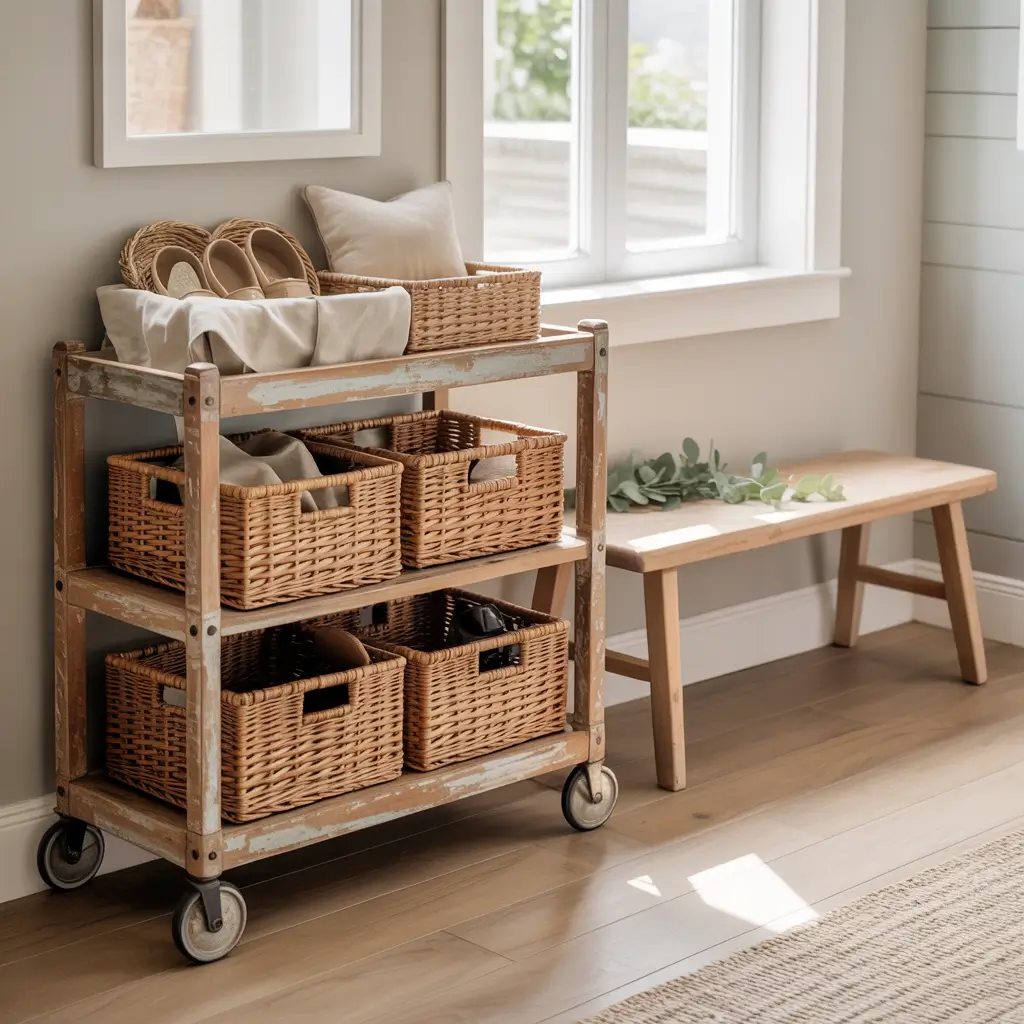
Need flexibility? A rolling cart mudroom station might be your perfect solution. These mobile units can move wherever you need them, tuck away when hosting guests, or rearrange with the seasons.
Rolling carts work especially well in multi-purpose spaces where your mudroom area sometimes needs to disappear. They also make great starter mudroom solutions when you’re not ready to commit to permanent installations.
Rolling cart advantages:
- Portable throughout your home as needed
- Easy to clean underneath (hello, pet hair)
- No installation required
- Budget-friendly compared to built-ins
- Comes in various sizes and styles
Look for carts with locking wheels so they stay put during daily use. Open wire designs work well because they allow visibility and airflow, but they can look cluttered if you’re not careful about what you store. Solid-sided carts hide contents better but may feel heavier visually in a small space.
10. Mirror with Integrated Hooks
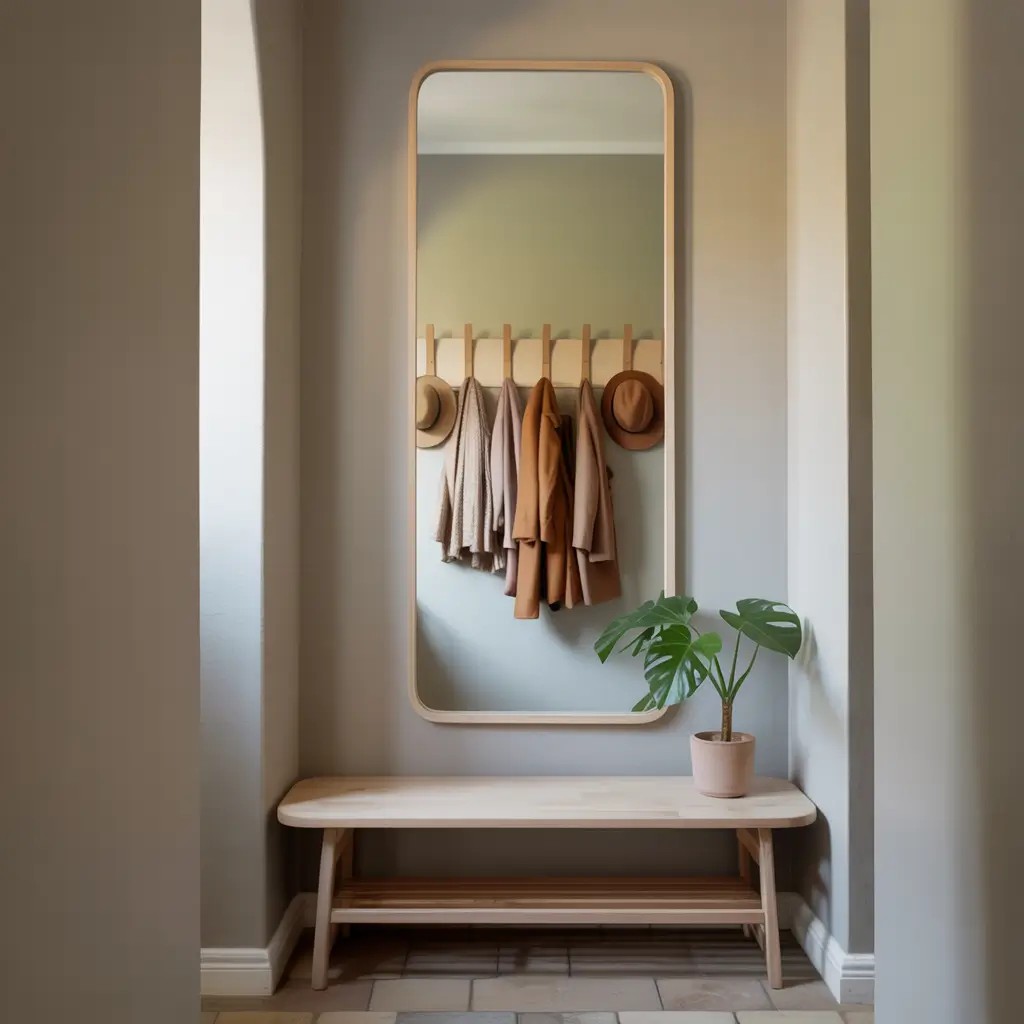
Kill two birds with one stylish stone. A mirror with integrated hooks gives you that final outfit check before leaving while providing storage for keys, bags, and accessories. This two-in-one approach maximizes wall space efficiency in cramped entryways.
Mirrors also reflect light and create the illusion of more space—a classic interior design trick that works wonders in small mudrooms. Position your mirror across from a window or light source for maximum impact.
Shopping considerations:
- Hook placement that doesn’t obstruct the reflection
- Mirror size proportional to your wall space
- Sturdy mounting hardware for safety
- Style that matches your home’s aesthetic
- Quality glass that won’t distort reflections
FYI, you can easily DIY this solution by mounting a mirror and adding separate decorative hooks around it. This approach lets you customize sizes and styles exactly to your preferences rather than settling for whatever the store offers.
11. Foldable Wall-Mounted Desk & Bench
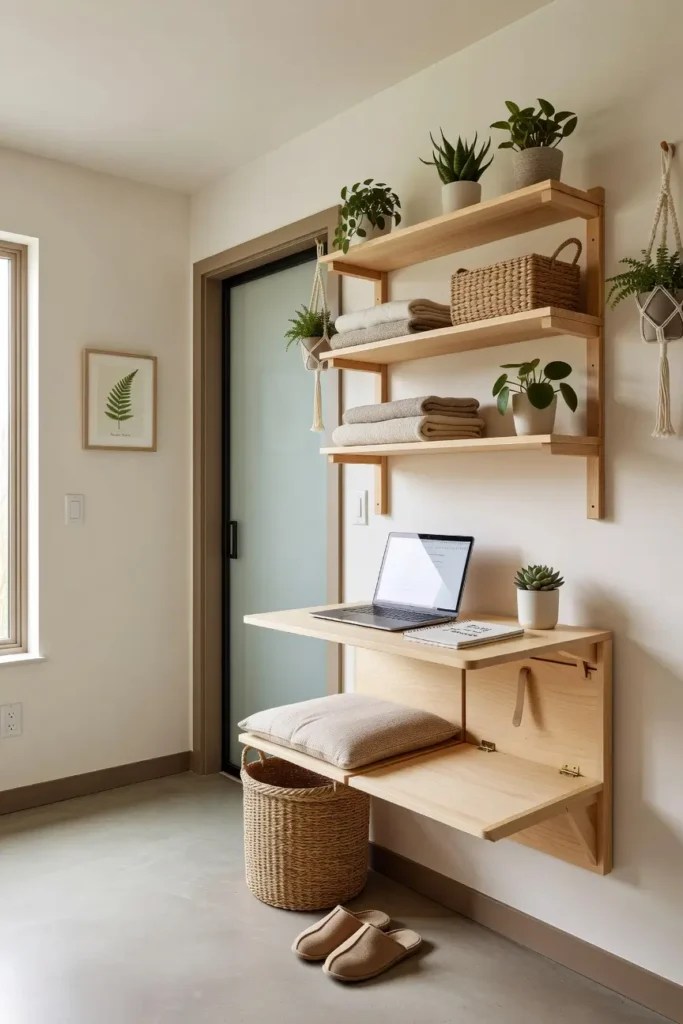
Talk about maximizing every square inch. A foldable wall-mounted desk and bench provides functionality when needed and practically disappears when not in use. These Murphy-style solutions are absolute gold for super tight spaces.
Imagine having a bench for putting on shoes that folds flat against the wall, opening up your entryway completely. Or a small desk surface for sorting mail and signing permission slips that tucks away after use. This is small-space living at its finest.
What to look for:
- Smooth folding mechanisms that won’t pinch fingers
- Sturdy wall anchoring into studs
- Appropriate weight limits for intended use
- Quality hinges that won’t wear out quickly
- Attractive closed appearance since you’ll see it often
These installations require more planning than standard furniture because they need proper wall reinforcement. But the space savings make them worthwhile for truly compact mudrooms where every inch counts.
Also Read: 15 Bold Two Story Foyer Ideas Entryway with Striking Designs
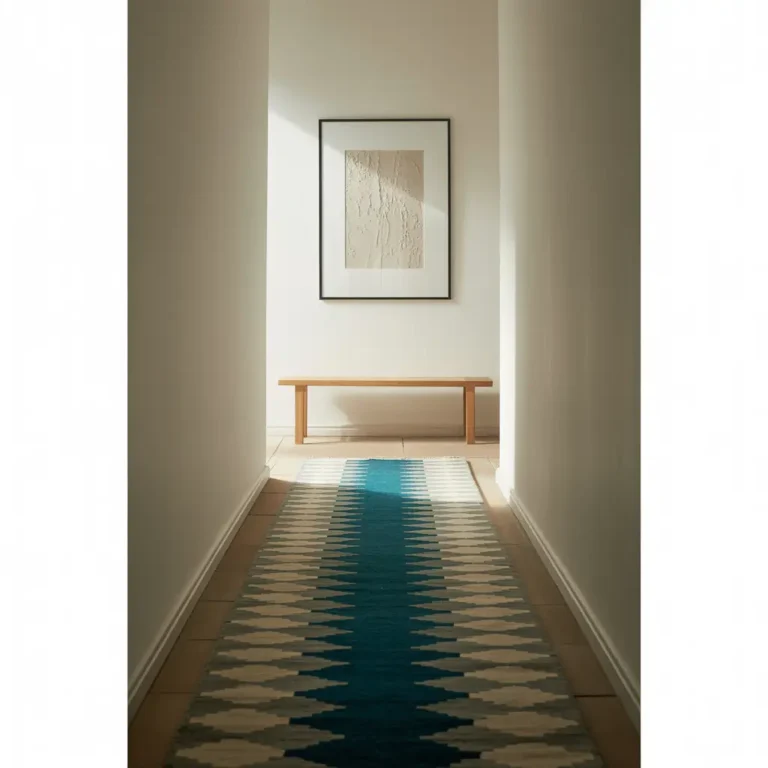
12. Minimalist Scandinavian Mudroom
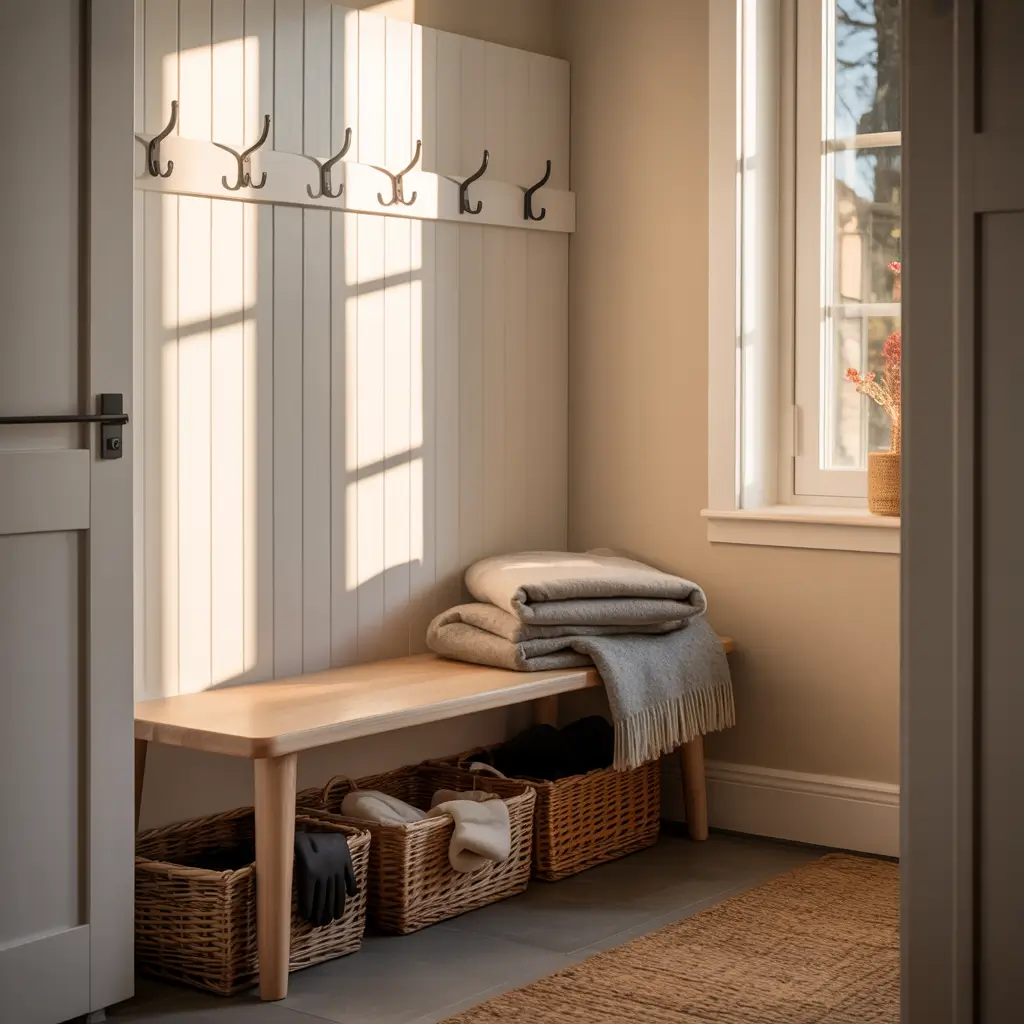
Sometimes less really is more. A minimalist Scandinavian mudroom strips away excess, focusing on clean lines, neutral colors, and only the essential elements. This approach makes small spaces feel calm and open rather than cluttered and chaotic.
Scandinavian design emphasizes functionality wrapped in simplicity. You’ll typically see light wood tones, white walls, simple hook designs, and woven natural textures. Nothing screams for attention; everything works together harmoniously.
Core elements of Scandinavian mudrooms:
- Light color palette (whites, creams, pale grays)
- Natural materials (wood, leather, wool, cotton)
- Clean-lined furniture without ornate details
- Strategic negative space for visual breathing room
- Quality over quantity in every element
This style forces you to edit ruthlessly. You can’t keep every single jacket you own in a minimalist mudroom—and that’s actually liberating. Keep what you use regularly, store seasonal items elsewhere, and let your entryway breathe.
13. Woven Basket Storage System
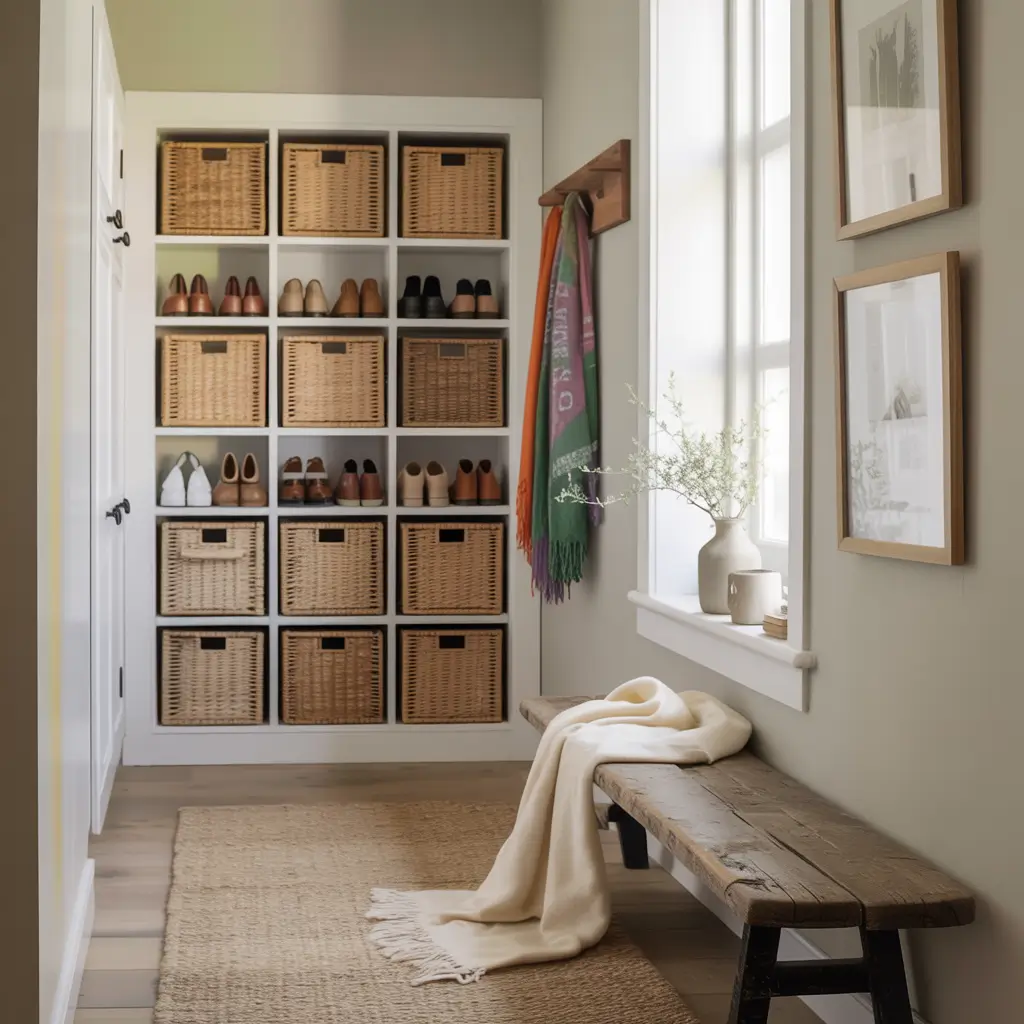
Baskets aren’t just for aesthetics (though they certainly deliver on that front). A woven basket storage system creates organized, attractive containment for all the random items that accumulate near your door.
I use baskets for everything in my mudroom—one for hats and gloves, one for dog supplies, one for reusable bags. Each basket has a purpose, and when things start overflowing, I know it’s time to purge.
Basket storage tips:
- Choose consistent colors or materials for cohesion
- Label baskets if contents aren’t obvious
- Size appropriately for your cubby or shelf dimensions
- Leave some breathing room between baskets
- Mix textures thoughtfully for visual interest
Woven baskets also hide mess beautifully. Your mudroom can look Pinterest-perfect while actually containing a chaotic jumble of items inside each basket. Nobody needs to know. That’s between you and your baskets. 🙂
14. Chalkboard Wall for Notes & Keys
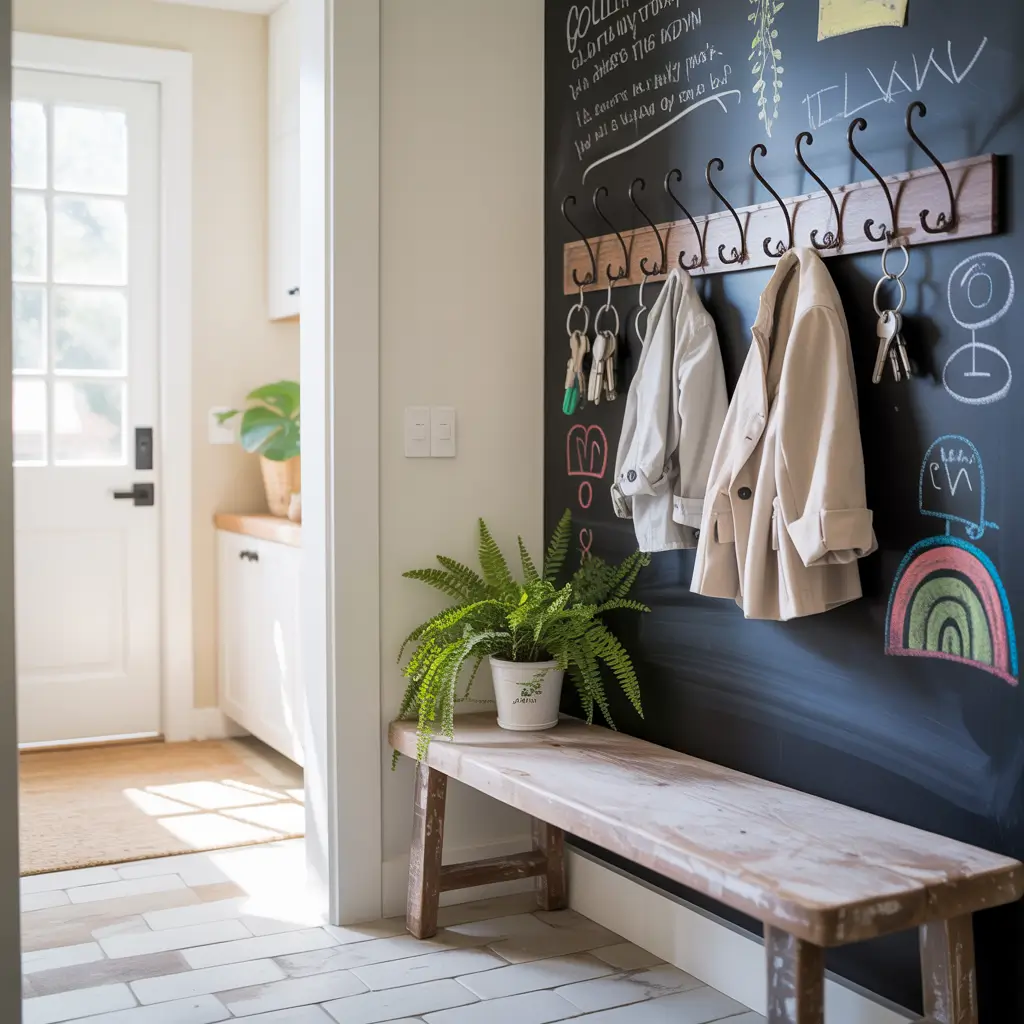
Communication central, right by your door. A chalkboard wall for notes and keys transforms your mudroom into a functional family hub where everyone stays informed and organized.
Paint a section of your wall with chalkboard paint (easy DIY project) or mount a framed chalkboard. Add hooks below for keys and you’ve created a command center that prevents the “where are my keys?!” panic every morning.
Chalkboard wall ideas:
- Weekly schedules and appointment reminders
- Grocery lists that family members can add to
- Welcome messages or inspirational quotes
- Kid artwork zone for younger family members
- Meal planning space visible when leaving for groceries
Some people prefer magnetic chalkboard paint, which allows you to attach notes, photos, and lightweight items with magnets. This adds another layer of functionality without additional wall space.
15. Rustic Farmhouse Entryway Setup
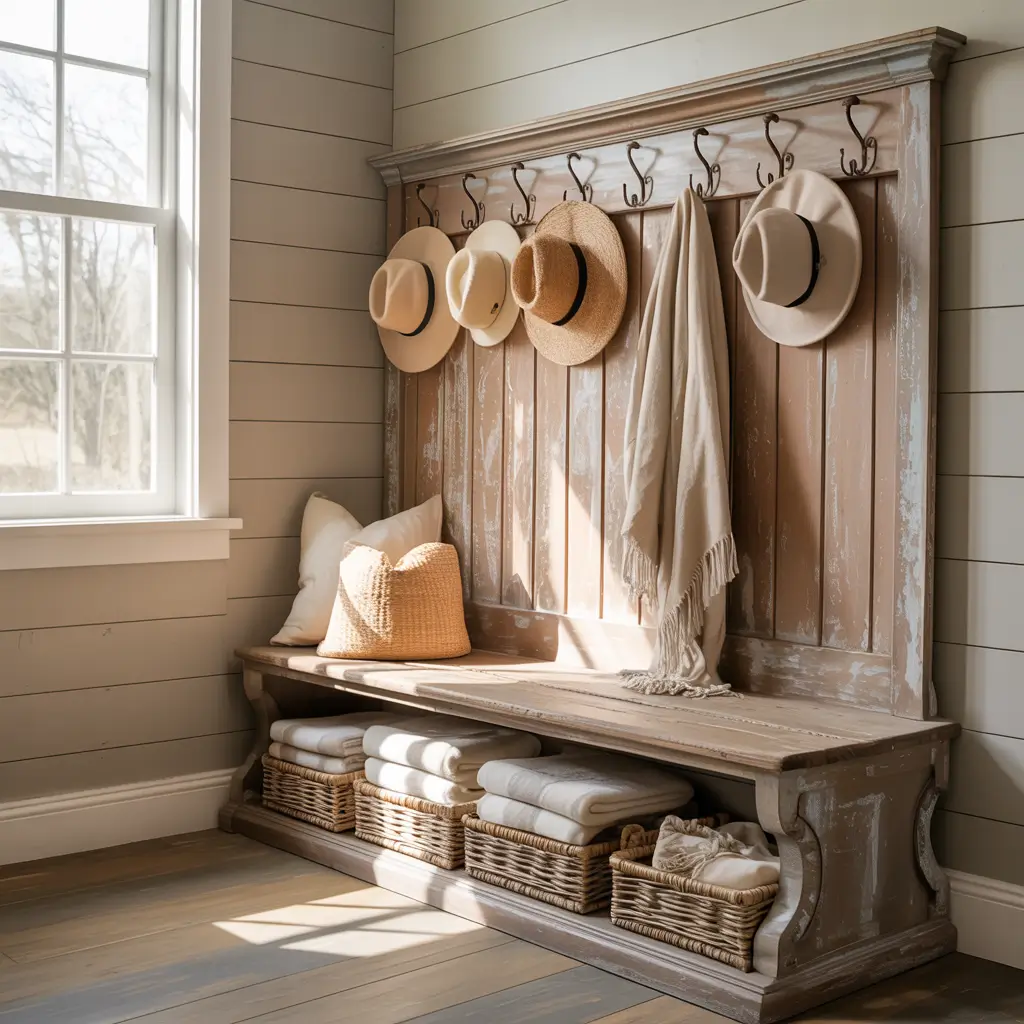
Warm, welcoming, and wonderfully practical. A rustic farmhouse entryway brings cozy charm to your mudroom while still delivering serious organizational power. This style has remained popular for years because it genuinely works in real homes with real families.
Farmhouse mudrooms typically feature reclaimed wood, vintage-inspired hardware, wrought iron hooks, and distressed finishes. They embrace imperfection, which honestly suits an entryway perfectly—this is the space that handles life’s messiest moments.
Farmhouse mudroom essentials:
- Reclaimed wood bench or shelf
- Metal hooks with an aged or matte finish
- Galvanized metal accents (buckets, baskets, signs)
- Shiplap or beadboard walls for texture
- Vintage or vintage-inspired décor pieces
- Warm, neutral color palette with natural textures
This style forgives wear and tear better than sleek modern designs. Muddy boot prints, coat snags, and general daily abuse blend into the aesthetic rather than ruining it. For families with kids, pets, or outdoor enthusiasts, farmhouse style just makes sense.
Bringing Your Small Mudroom Vision to Life
Alright, you’ve got 15 solid options for transforming that cramped, chaotic entryway into something both beautiful and functional. But where do you actually start?
First, measure your space precisely. Know your dimensions inside and out before purchasing anything. Small spaces don’t tolerate “close enough” sizing—every inch matters.
Second, identify your primary pain points. Are shoes your biggest problem? Focus on shoe storage solutions first. Drowning in coats? Prioritize vertical hook systems. Address your specific challenges rather than trying to implement every idea at once.
Third, start small and build. You don’t need to complete your dream mudroom in a weekend. Install hooks this month, add a bench next month, incorporate baskets the month after. Gradual improvements let you adjust your approach based on what actually works for your family.
Quick implementation checklist:
- Measure space thoroughly
- Photograph current setup for reference
- List primary organizational challenges
- Set a realistic budget
- Choose 2-3 ideas to implement initially
- Purchase quality over quantity
- Install with proper hardware
- Evaluate and adjust after using
Your small mudroom can absolutely become a stylish, organized entry point that makes daily life smoother. It won’t happen by accident, and it won’t happen overnight—but with intentional choices and the right solutions, you’ll walk through your door to order instead of chaos.
And honestly? That feeling of walking into an organized home never gets old. Your future self will thank you every single day.