10 Beautiful TV Wall Decor Ideas for a Stylish Home

Your TV wall stares back at you every single day. And let’s be honest—most of the time, it’s kind of boring, right? That big black rectangle just floating there on a plain white wall isn’t exactly winning any interior design awards.
But here’s the thing: your TV wall has massive potential to become the most stunning focal point in your entire home.
I’ve spent countless hours obsessing over my own TV wall setup, going through what I’d call my “Pinterest rabbit hole phase.” Trust me, I’ve made mistakes.
I’ve hung things too high, chosen frames that clashed horribly, and once attempted a DIY project that ended with me surrounded by wood scraps and questioning my life choices.
But through all that trial and error, I’ve discovered some genuinely incredible TV wall decor ideas that actually work.
So whether you’re working with a massive entertainment space or a cozy apartment living room, these ten ideas will help you create something truly special. Let’s get into it.
Gallery Wall Frame Cluster
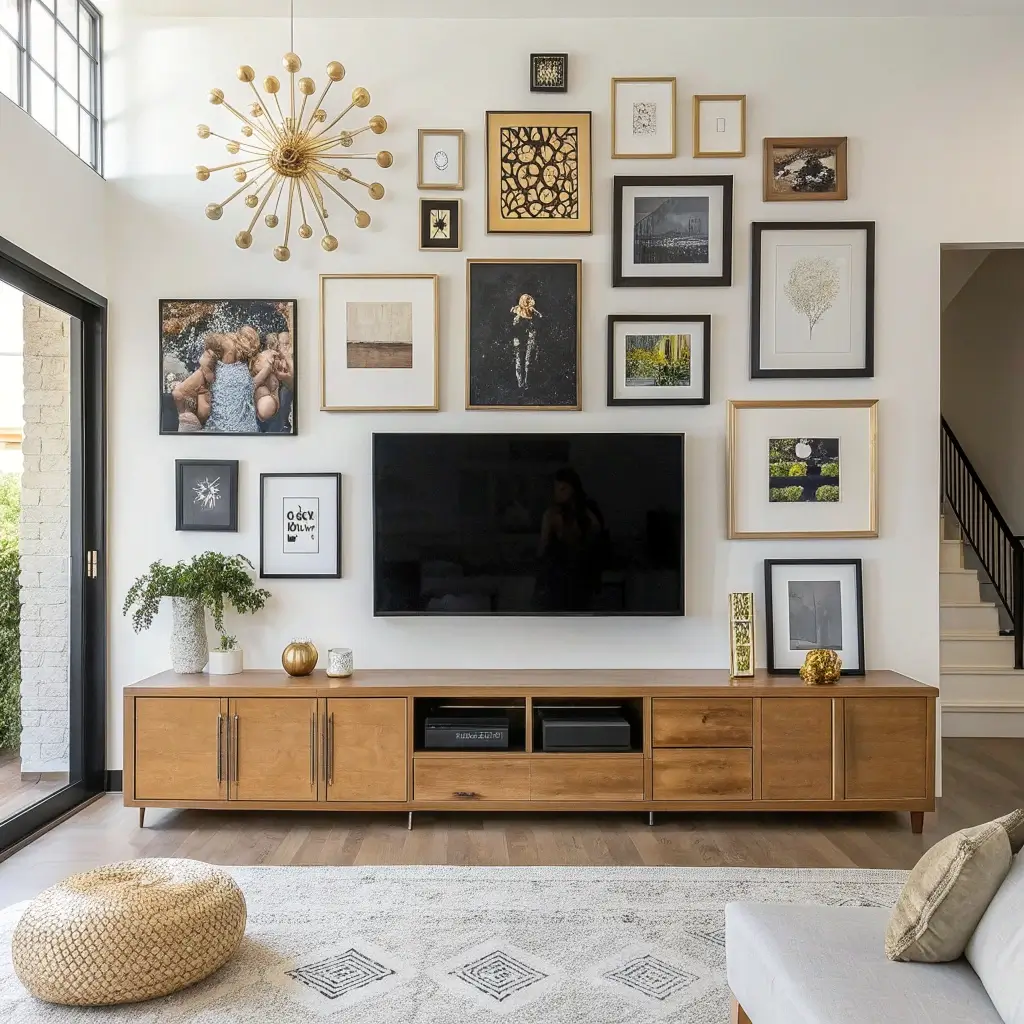
Nothing screams “I’ve got my life together” quite like a beautifully curated gallery wall surrounding your TV. This classic approach transforms your television from an awkward focal point into an integrated piece of a larger art installation.
Why Gallery Walls Work So Well
The beauty of a gallery wall frame cluster lies in its ability to camouflage your TV while adding personality to your space. When you surround your screen with meaningful artwork, family photos, or even quirky prints you picked up at that random market, you create visual interest that draws the eye across the entire wall—not just to the black rectangle.
I remember when I first attempted this approach. My living room felt like a tech showroom—cold and uninviting. Adding a cluster of mixed frames around my TV changed everything. Suddenly, the room felt lived-in, personal, and infinitely more interesting.
Tips for Nailing This Look
Here’s what I’ve learned works best:
- Mix frame sizes and styles for an eclectic, collected-over-time vibe
- Keep a consistent color palette to avoid visual chaos
- Maintain 2-3 inches of spacing between frames for a cohesive look
- Include at least one oversized piece to anchor the arrangement
- Don’t be afraid to include mirrors, small shelves, or dimensional objects
The key mistake most people make? Going too matchy-matchy. Your gallery wall should look curated, not like you bought a pre-packaged set from a big-box store. Mix vintage finds with modern prints, throw in some personal photos, and let your personality shine through.
Floating Shelf Symmetry
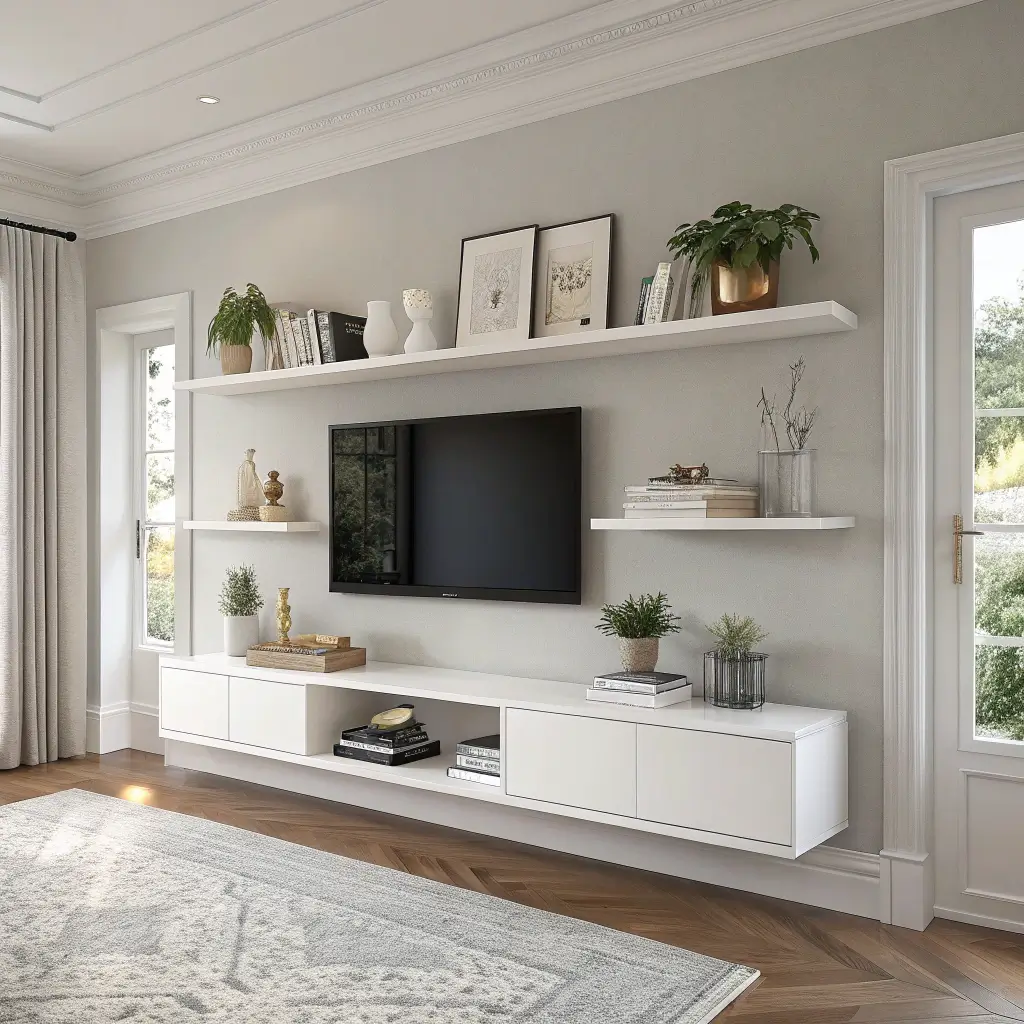
Ever noticed how satisfying symmetry feels? There’s something deeply calming about balanced design, and floating shelves on either side of your TV deliver exactly that kind of visual harmony.
Creating Perfect Balance
Floating shelf symmetry works because it provides structure without feeling rigid. You’re essentially framing your TV with functional storage that doubles as display space. It’s practical meets pretty—my favorite combination.
When I installed floating shelves around my TV, the transformation was immediate. What was once a bare wall became a showcase for my favorite books, some quirky ceramic pieces I’d collected over the years, and a few plants that somehow still survive despite my questionable gardening skills.
What to Display on Your Shelves
The objects you choose matter just as much as the shelves themselves:
- Books arranged both vertically and horizontally create visual interest
- Small plants add life and a pop of color
- Decorative objects with varying heights prevent monotony
- Framed photos in small doses add personal touches
- Candles or small lamps create ambient lighting opportunities
The trick is editing ruthlessly. Less is definitely more here. An overcrowded shelf looks cluttered, not curated. Give your objects room to breathe, and remember—you can always rotate items seasonally to keep things fresh.
Accent Wall Paneling Backdrop
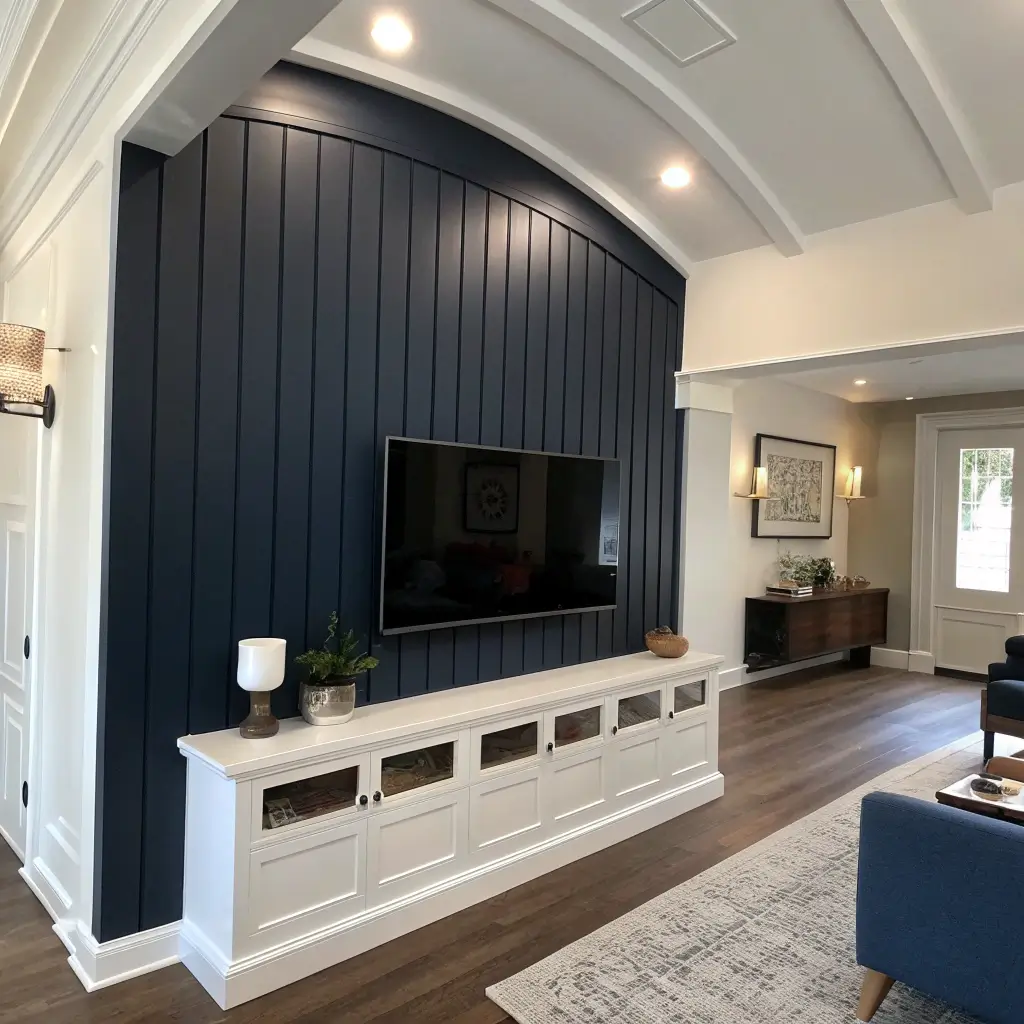
Want to know what instantly elevates a TV wall from “meh” to “magazine-worthy”? Accent wall paneling. This design choice adds texture, dimension, and architectural interest that a flat painted wall simply cannot achieve.
Popular Paneling Options
You’ve got options when it comes to paneling styles, and each creates a different mood:
- Shiplap delivers that cozy farmhouse aesthetic
- Board and batten offers classic, traditional elegance
- Slat panels create a modern, contemporary feel
- Geometric patterns make bold, artistic statements
- Fluted panels add sophisticated texture
I’ll admit—I was skeptical about the slat panel trend at first. It seemed like something that would date quickly. But after seeing it in person at a friend’s place, I was converted. The way the shadows play across the vertical lines throughout the day adds a dynamic element that photographs don’t quite capture.
Installation Considerations
Before you commit to paneling, consider these factors:
Color choice matters enormously. Dark paneling creates drama but can make smaller rooms feel cramped. Light tones expand the space visually. My recommendation? Match your paneling to either your existing trim color for cohesion or go with a contrasting shade for impact.
Also, think about TV mounting logistics. You’ll need to plan your mounting bracket placement before installing paneling, ensuring the hardware hits studs properly. Trust me, you don’t want to discover this issue after you’ve already attached dozens of slats to your wall.
Also Read: 10 Creative Wall Decor Ideas for Stylish Cozy Spaces
Built-In Bookshelf Surround
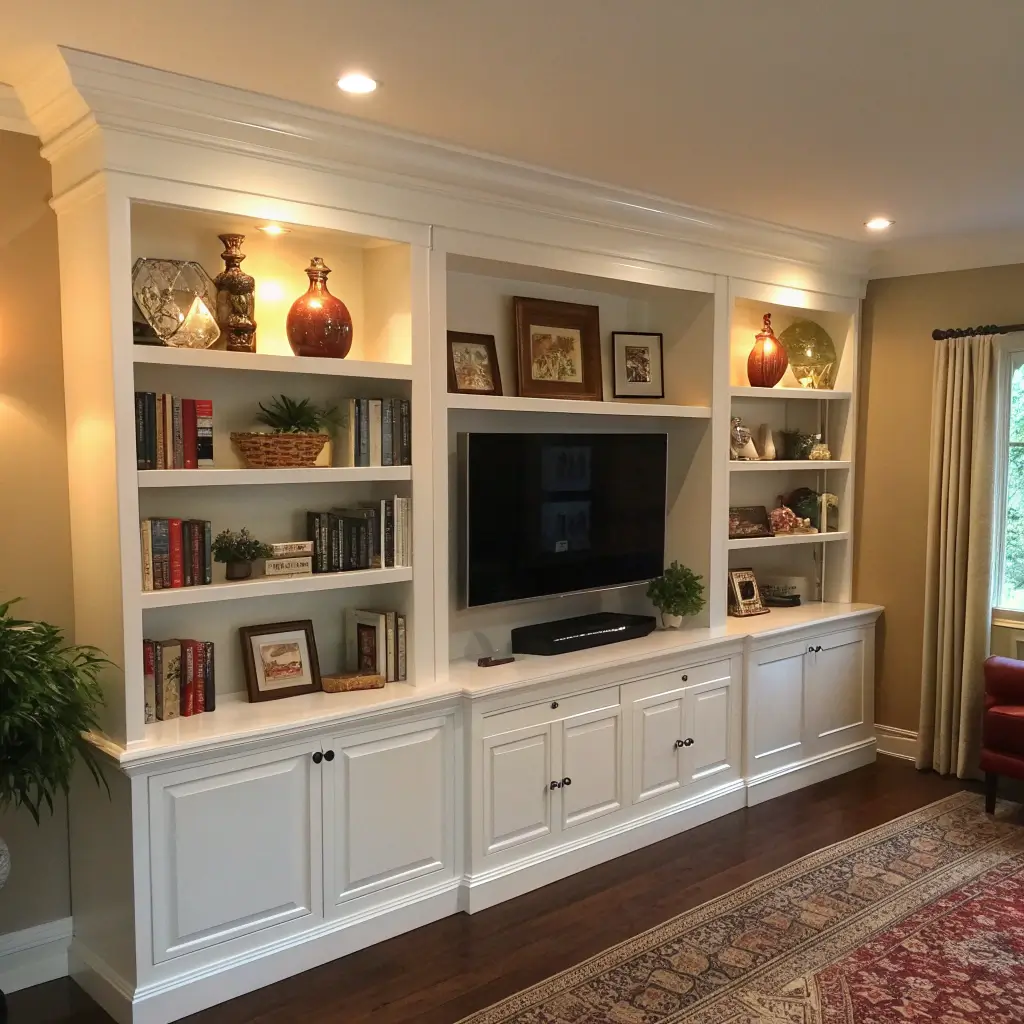
If you’re looking for a truly custom solution, a built-in bookshelf surround might be your answer. This approach integrates your TV into a larger millwork piece, making it feel intentional and architecturally significant.
The Investment Perspective
Let’s be real—built-ins aren’t cheap. They require either professional carpentry or serious DIY skills. But the payoff? A permanent, high-end look that adds actual value to your home. Unlike trendy decor that might date itself in a few years, quality built-ins remain classic indefinitely.
Design Elements That Work
When planning a built-in surround, consider incorporating:
- Closed cabinetry below for hiding gaming consoles, cables, and media components
- Open shelving above and beside the TV for displaying decorative items
- Integrated lighting within shelves to highlight your displayed objects
- A recessed TV niche that makes the screen sit flush with surrounding shelving
- Drawers or doors that match other cabinetry in your home for cohesion
The best built-ins I’ve seen balance form and function perfectly. They hide the ugly stuff (looking at you, tangled mess of cables) while showcasing beautiful objects. If you’re in your forever home, this investment is absolutely worth considering.
Floating Media Console with Vertical Garden
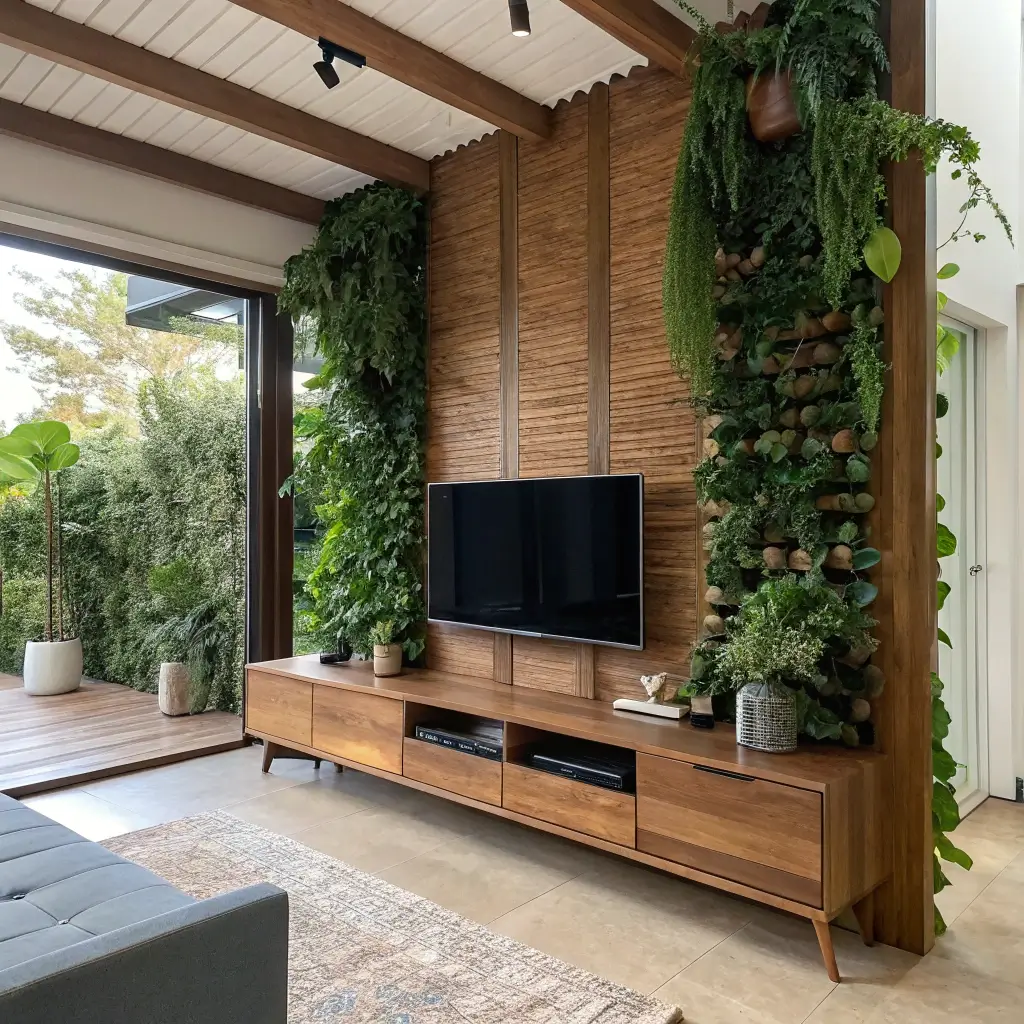
Okay, hear me out on this one—combining a floating media console with a vertical garden creates something truly unexpected and stunning. This idea merges modern minimalism with biophilic design principles, and the result is a living, breathing feature wall.
Why This Combination Works
A floating media console already elevates your setup—literally. It creates visual space beneath it, making your room feel larger and more sophisticated. Now add a vertical garden element, and you’ve introduced nature directly into your entertainment space.
Have you ever walked into a room filled with plants and immediately felt calmer? That’s not coincidence. Research consistently shows that greenery reduces stress and improves mood. Why not bring those benefits to the space where you spend most of your relaxing time?
Making It Practical
Now, before you envision yourself battling mold and watering systems behind your expensive TV, let me offer some practical approaches:
- Preserved moss panels require zero maintenance and stay green indefinitely
- High-quality faux plants have come incredibly far—some are genuinely indistinguishable from real ones
- Hardy pothos or philodendrons thrive with minimal light and attention if you want real plants
- Living wall systems with built-in irrigation exist for those committed to the real thing
I personally went with a combination—preserved moss as the backdrop with a few real trailing plants in strategic spots. It’s been over two years, and the moss looks exactly the same as installation day. The plants? Well, most of them survived. (Sorry, little fern that didn’t make it.)
Textured Stone or Brick Feature Wall
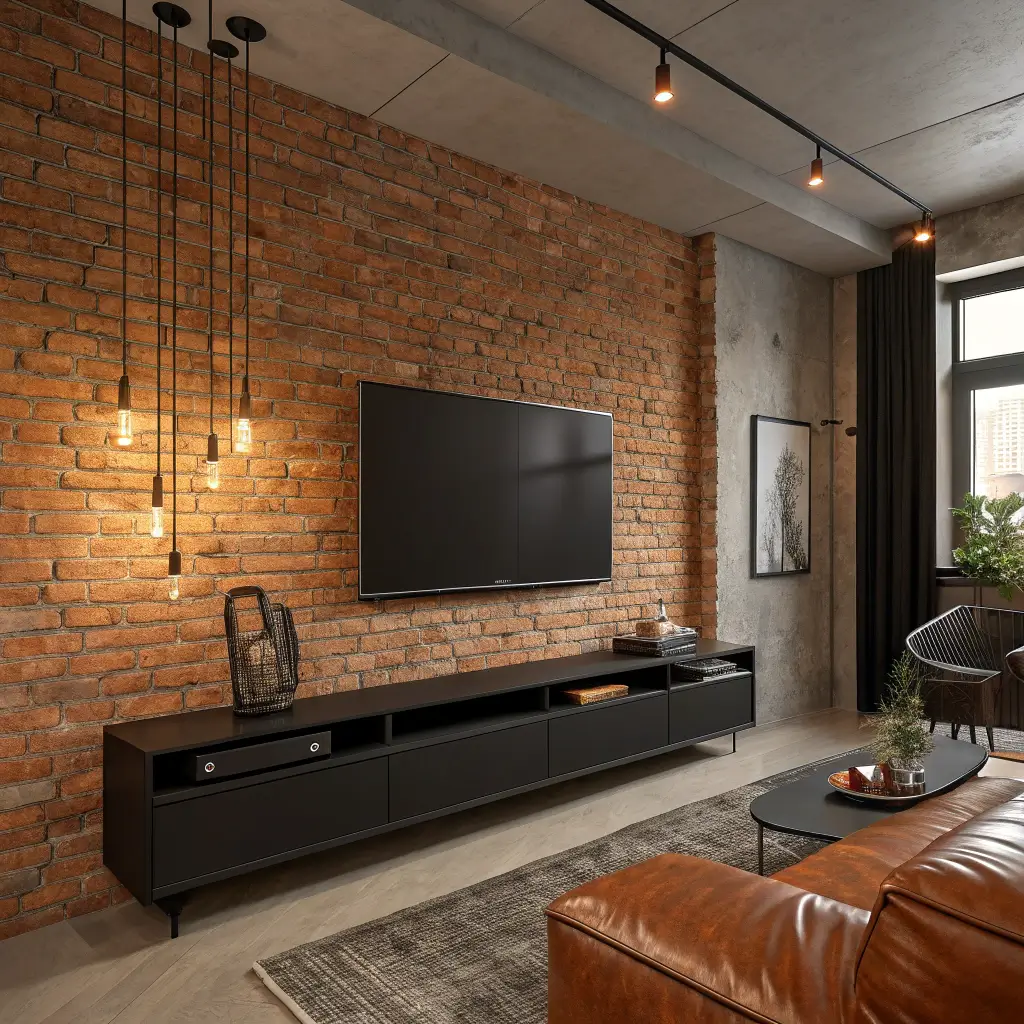
There’s something undeniably luxurious about a textured stone or brick feature wall behind your TV. This approach adds weight, permanence, and a raw organic quality that painted drywall can never replicate.
Material Options to Consider
The variety available might surprise you:
- Stacked ledger stone creates dramatic dimension with natural variation
- Exposed brick delivers industrial or vintage charm depending on the color
- Faux stone panels offer the look without the weight or cost
- Thin brick veneer installs easily over existing walls
- Natural slate tiles add sophisticated texture with subtle color variations
IMO, the most important factor is choosing a material that complements your existing decor rather than competing with it. A rustic brick wall in a hyper-modern minimalist space might feel jarring—though sometimes that intentional contrast works beautifully.
Practical Considerations
Stone and brick walls come with some challenges worth noting:
Mounting your TV on stone requires masonry anchors and sometimes professional installation. Don’t assume you can just grab a regular drill and handle it yourself (speaking from painful experience here).
Weight concerns are real with natural stone. Older homes or walls without proper structural support might need reinforcement. Faux stone panels solve this problem elegantly—they look remarkably authentic while weighing a fraction of the real thing.
Cleaning and maintenance varies by material. Brick can be sealed to prevent dust accumulation, while some natural stones require specific care products. Research your chosen material thoroughly before committing.
Also Read: 15 Creative Album Cover Wall Decor Ideas to Transform Your Space
Minimalist LED Backlight with Art Panels
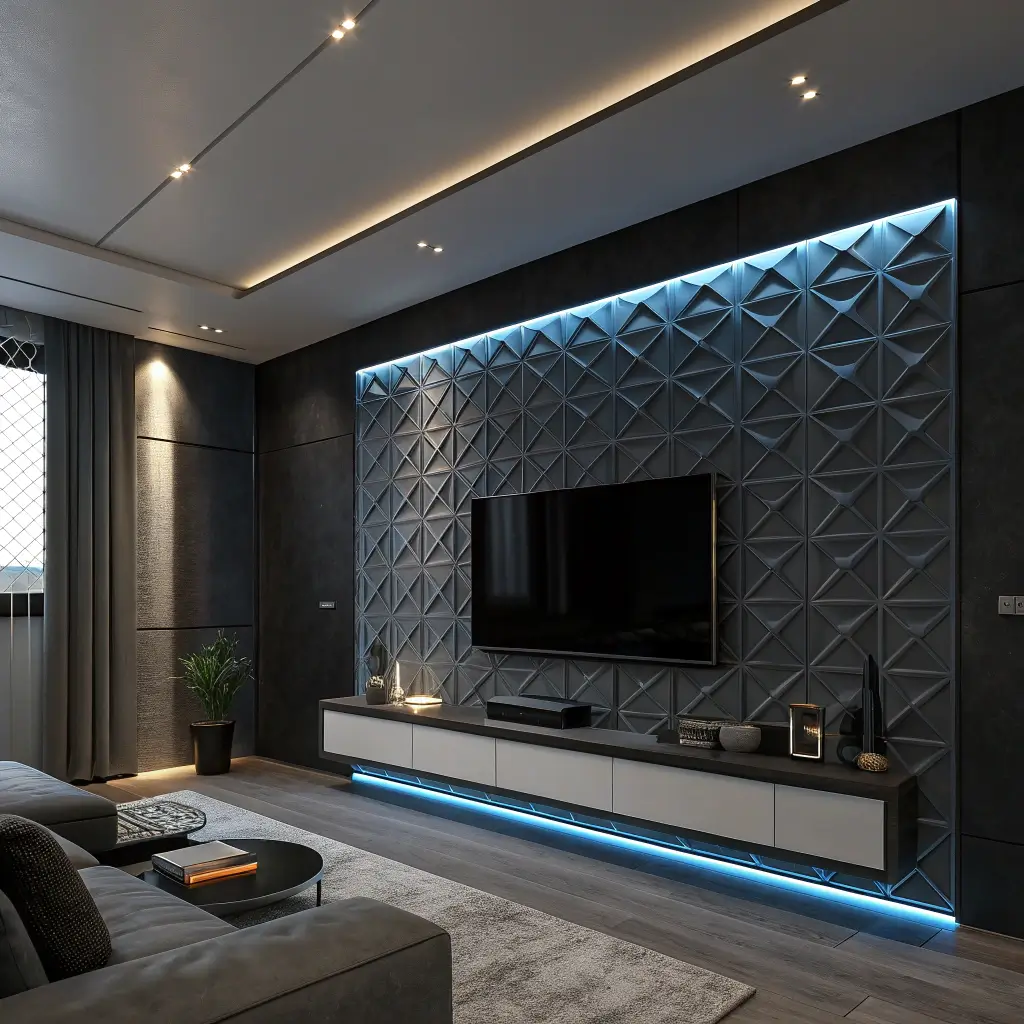
For those who love a clean, contemporary aesthetic, combining LED backlighting with simple art panels creates a striking, gallery-like atmosphere. This approach is all about thoughtful simplicity—every element serves a purpose.
The Power of Ambient Lighting
LED backlighting behind your TV does more than look cool—it actually reduces eye strain during evening viewing sessions. The ambient glow decreases the contrast between your bright screen and the dark surrounding wall, making extended watching sessions more comfortable.
The first time I installed LED strips behind my TV, I couldn’t believe the difference. Beyond the health benefits, it creates this incredible floating effect that makes your TV look like it costs way more than it actually did. 🙂
Combining Lights with Art
Here’s where this concept gets interesting:
- Position minimal abstract art panels on either side of your TV
- Install hidden LED strips behind both the TV and art pieces
- Choose warm or cool lighting based on your color scheme
- Consider smart LED systems that change color based on mood or content
- Keep everything streamlined and cord-free for maximum impact
The key to nailing this look is restraint. Choose one or two statement art pieces rather than crowding the wall. Let the lighting do the heavy lifting in creating atmosphere. The negative space around your elements is just as important as the elements themselves.
Asymmetrical Wall Niche Design
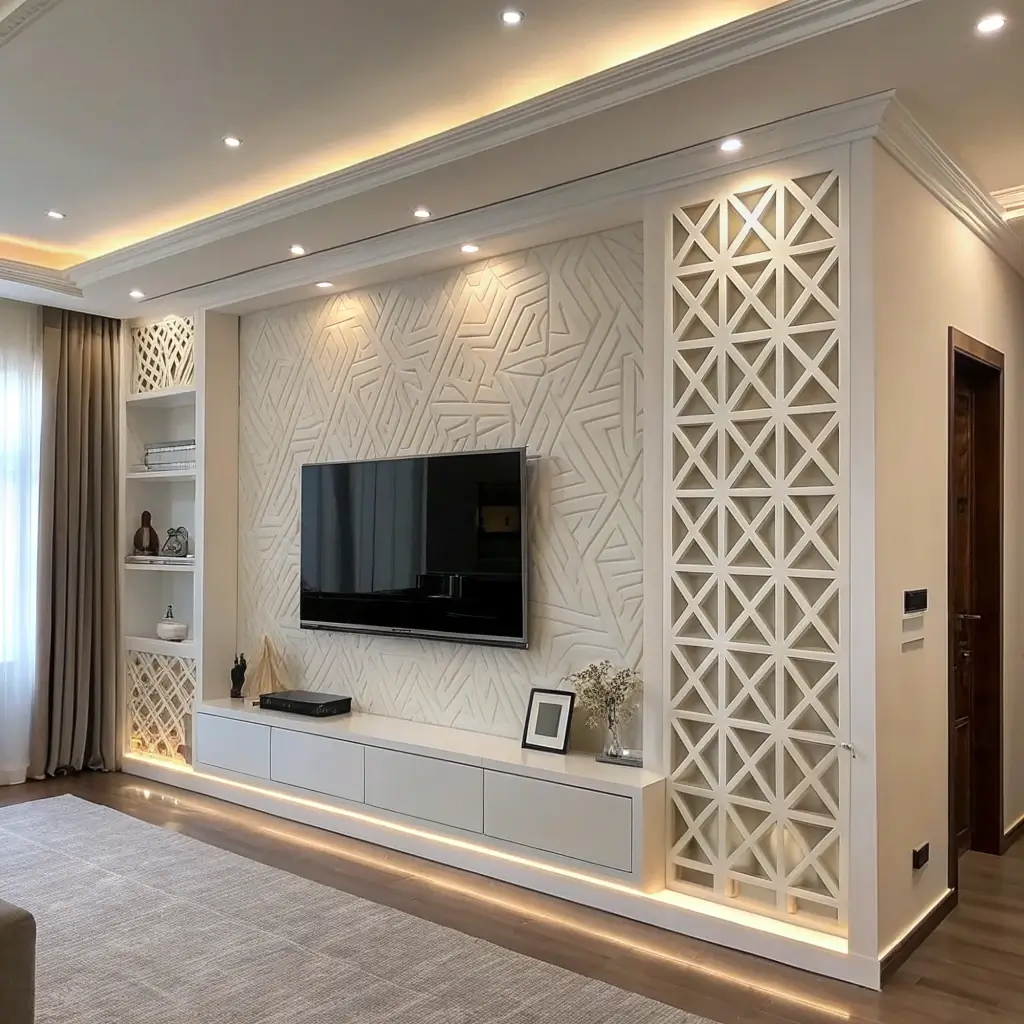
Who says everything needs to be perfectly balanced? Asymmetrical wall niches create dynamic visual interest by intentionally breaking traditional design rules. This approach feels fresh, artistic, and decidedly modern.
Understanding Asymmetry in Design
Asymmetrical design doesn’t mean random or chaotic—it means creating visual balance through different elements rather than mirror-image symmetry. One large niche on the left might be balanced by several smaller niches on the right. The visual weight feels equal even though the layout isn’t identical.
I’ll be honest—asymmetry intimidated me at first. My brain naturally gravitates toward matching things up perfectly. But after seeing some incredible asymmetrical TV wall designs, I realized how limiting my symmetrical mindset had been.
Creating Effective Asymmetry
Consider these approaches for asymmetrical niche designs:
- Vary niche sizes and shapes deliberately but thoughtfully
- Include different materials or finishes in each niche
- Use lighting strategically to emphasize certain areas
- Place your TV off-center and balance with larger design elements
- Incorporate unexpected objects like sculptures or plants within niches
The niches themselves can be recessed into the wall (requiring more construction work) or created using floating box shelves and frames for a less invasive approach. Either way, you’re creating depth and shadow that flat walls simply cannot offer.
Rustic Wooden Beam Frame
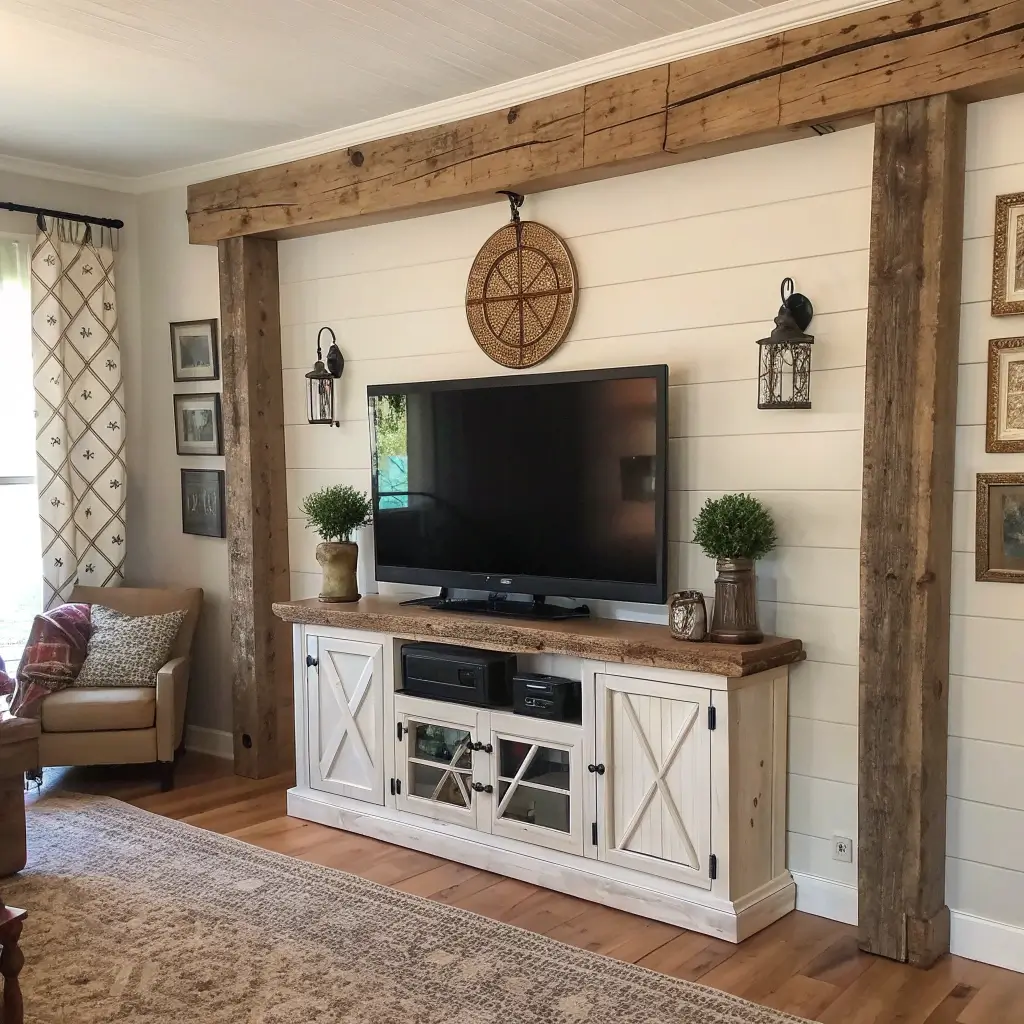
If your style leans toward warm, organic aesthetics, a rustic wooden beam frame surrounding your TV might be exactly what you need. This approach adds character, texture, and a sense of history that newer homes often lack.
Choosing the Right Wood
The wood you select dramatically impacts the final feel:
- Reclaimed barn wood offers authentic weathering and unique character
- Hand-hewn beams provide that heavy, substantial farmhouse look
- Lighter woods like pine or cedar create a more Scandinavian feel
- Dark walnut or mahogany tones deliver sophisticated warmth
- Whitewashed or gray-washed finishes work beautifully in coastal designs
FYI, genuine reclaimed wood varies wildly in quality. Some pieces are truly stunning with natural patina that can’t be replicated. Others are just… old and damaged. Inspect pieces carefully before purchasing, and don’t be afraid to mix pieces from different sources for variation.
Installation Ideas
A wooden beam frame can take several forms:
You might create a simple rectangular frame around the TV, almost like a massive picture frame. Or extend beams from floor to ceiling for a more dramatic architectural statement. Some designs incorporate a beam mantel below the TV with vertical side pieces framing it.
The most beautiful installation I’ve seen combined thick horizontal beams above and below the TV with rustic floating shelves extending outward. The whole arrangement looked like it had existed in that home for decades, even though the homeowners had just completed it months earlier.
Also Read: 15 DIY Wall Decor Ideas to Transform Your Space
Mirror Accent Wall
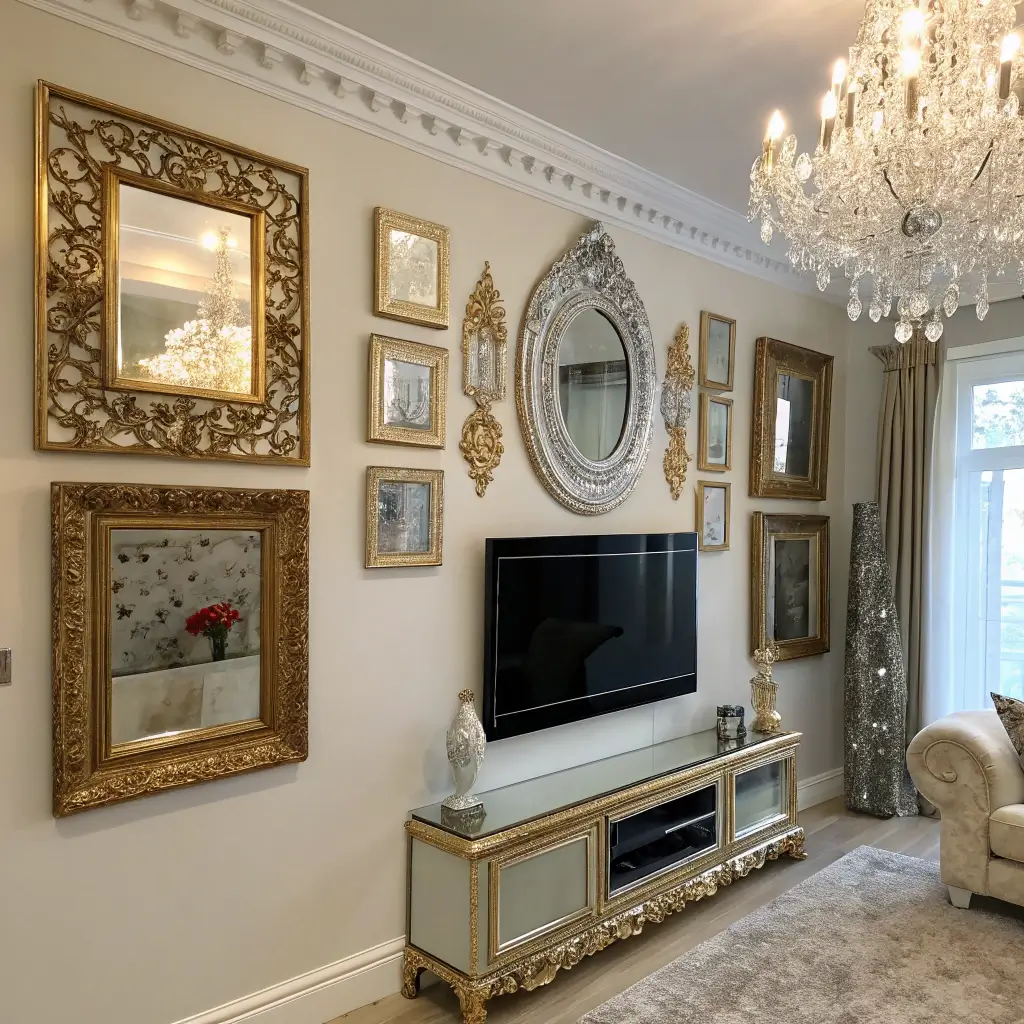
Our final idea might seem counterintuitive—mirrors behind a TV? Hear me out, because when done correctly, this approach achieves some genuinely magical effects.
The Benefits of Mirrors
Mirrors accomplish several things simultaneously:
- Expand visual space dramatically, making rooms feel larger
- Reflect light throughout the room, brightening dark corners
- Add glamour and sophistication instantly
- Create depth that makes walls seem to recede
- Work with any decor style from modern to traditional
The trick is using mirrors thoughtfully. A single massive mirror panel behind your TV creates one effect. Multiple smaller mirrors arranged around the TV create something entirely different. Antiqued or tinted mirrors offer yet another aesthetic.
Making It Work Practically
Some real-talk about mirror TV walls:
Reflection management is crucial. You don’t want to watch your favorite show while simultaneously watching yourself watching it. Position mirrors to avoid reflecting your seating area directly, or choose antiqued/distorted mirrors that don’t create clear reflections.
TV visibility against reflective surfaces can be tricky. Consider a TV with anti-glare technology, or ensure your room’s lighting doesn’t create competing reflections on the mirror surface that make viewing uncomfortable.
Frame styles matter enormously. Ornate gold frames create old-world glamour. Simple black or bronze frames feel contemporary. Frameless mirrors deliver maximum modern minimalism. Match your mirror choices to your broader design vision.
I experimented with a mirror accent wall briefly and loved the light-expanding effect, though I eventually switched to something else because my particular setup created annoying reflections. Your mileage may vary based on room layout and lighting conditions.
Bringing It All Together
There you have it—ten TV wall decor ideas ranging from simple gallery arrangements to dramatic architectural features. The right choice depends entirely on your personal style, budget, DIY comfort level, and how permanent you want the solution to be.
Here’s what I want you to take away from all this: your TV wall doesn’t have to be boring. It doesn’t have to be an afterthought. With some creativity and intentionality, it can become the most talked-about feature in your home.
Start by identifying which aesthetic resonates most with you. Are you drawn to the organic warmth of wooden beams? The clean lines of minimalist LED designs? The personal touch of a gallery wall? Once you know your direction, gather inspiration images, plan your approach carefully, and don’t be afraid to start small.
And remember—if your first attempt doesn’t work out perfectly, you’re in good company. I’ve repainted, remounted, and completely reimagined my own TV wall more times than I’d like to admit. Each iteration taught me something new about what works in my space and what doesn’t.
Now stop reading about TV wall decor ideas and go make one happen. Your boring wall isn’t going to transform itself.