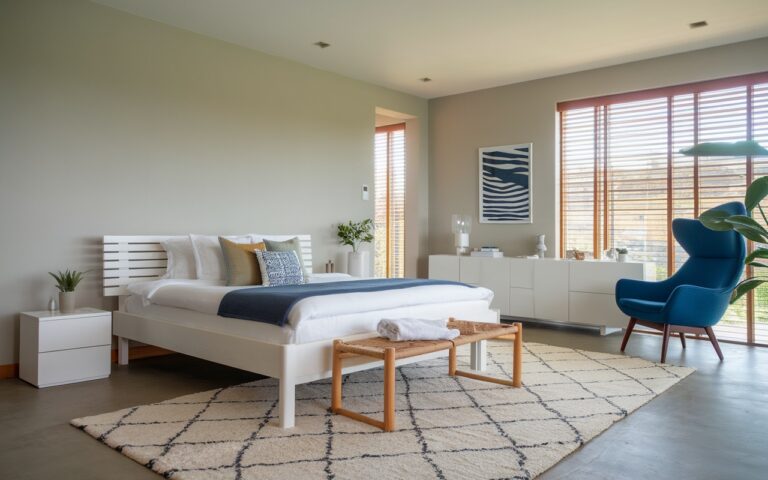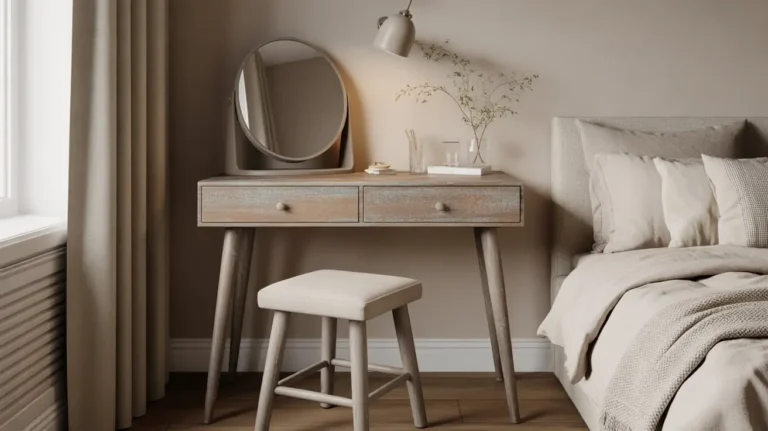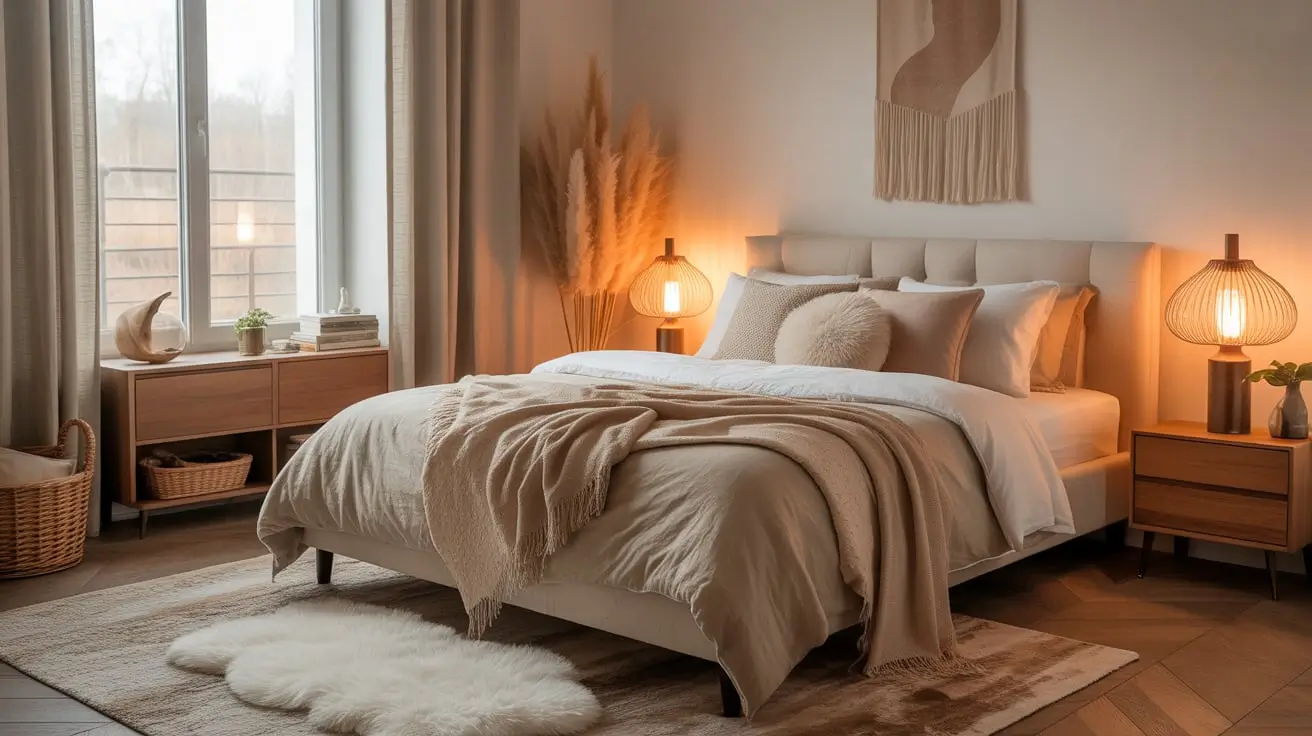
15 Stunning Warm Bedroom Aesthetic Tips for a Relaxing Vibe

You know that feeling when you walk into a room and immediately want to curl up with a good book and never leave? That’s exactly what we’re going for here. I’ve spent way too much time (and money, honestly) experimenting with bedroom aesthetics, and I can tell you right now that creating a warm, relaxing vibe isn’t about throwing money at expensive furniture. It’s about nailing the right elements that make your space feel like a cozy hug after a long day.
Let me walk you through fifteen game-changing tips that’ll transform your bedroom from “meh” to “wow, can I just live here forever?” Trust me, your future relaxed self will thank you.
Cozy Neutral Haven
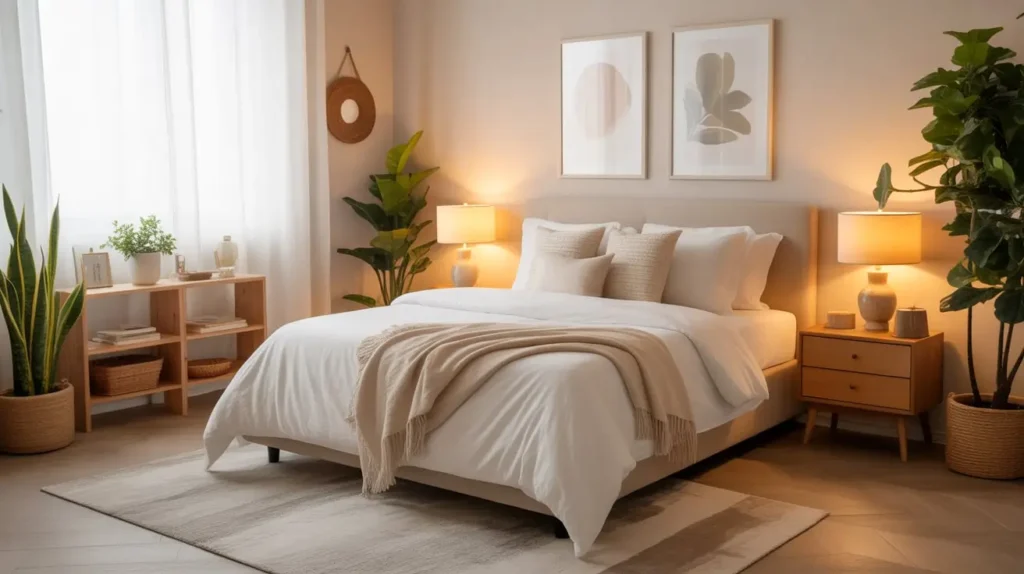
Neutrals get a bad rap for being boring, but hear me out—they’re actually the MVPs of warm bedroom aesthetics. I’m talking about those creamy beiges, soft taupes, and warm grays that make your eyes relax the second you see them.
Here’s the thing about creating a neutral haven: layering is everything. You can’t just slap some beige paint on your walls and call it a day. I learned this the hard way when my first attempt at a neutral bedroom looked more like a sad cardboard box than a cozy retreat :/
Start with your walls in a warm white or cream—think vanilla latte rather than stark white. Then layer in different shades of neutrals through your bedding, curtains, and furniture. The magic happens when you mix textures too. Pair a linen duvet with a chunky knit throw, add some velvet pillows, and boom—you’ve got depth and interest without overwhelming your senses.
Key elements for your neutral haven:
- Warm whites and creams for walls
- Layered bedding in varying neutral shades
- Natural wood furniture pieces
- Textured throws and cushions
- Subtle pattern mixing (stripes with solids, anyone?)
The beauty of this approach? You create a calming backdrop that lets you actually rest instead of visually processing a million different colors when you’re trying to wind down.
Rustic Warm Retreat
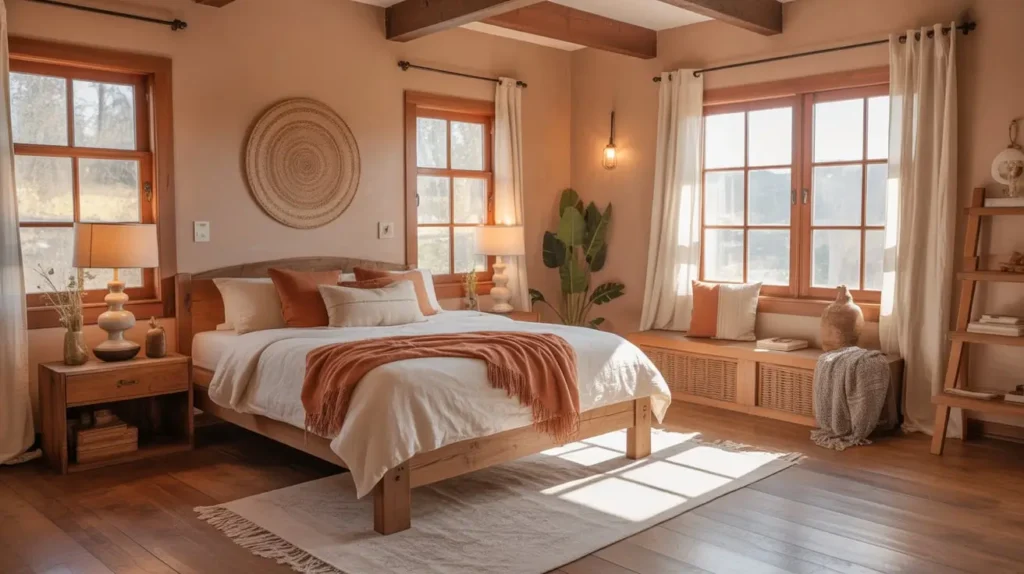
Want to feel like you’re sleeping in a cozy cabin without actually moving to the woods? The rustic warm retreat is your answer. I absolutely love this aesthetic because it brings nature indoors in the most comforting way possible.
The foundation of rustic warmth comes from reclaimed wood and natural materials. I scored an old wooden headboard from a flea market last year, and honestly, it completely changed my bedroom’s vibe. The weathered texture and natural grain patterns add character that new furniture just can’t replicate.
Think exposed beams if you’re lucky enough to have them, rough-hewn wood furniture, and maybe some woven baskets for storage. The goal here is to embrace imperfection—those knots in the wood, the slightly uneven finishes, the organic shapes. They all contribute to that lived-in, welcoming feeling.
Don’t forget about textiles here. Plaid flannel sheets, wool blankets, and faux fur throws scream rustic warmth. I layer mine throughout the colder months, and removing layers as it gets warmer actually makes me appreciate each piece more.
Rustic retreat essentials:
- Reclaimed or distressed wood furniture
- Wrought iron or bronze accents
- Woven storage baskets
- Plaid or buffalo check patterns
- Natural fiber rugs (jute or sisal work great)
Earthy Tones Bedroom
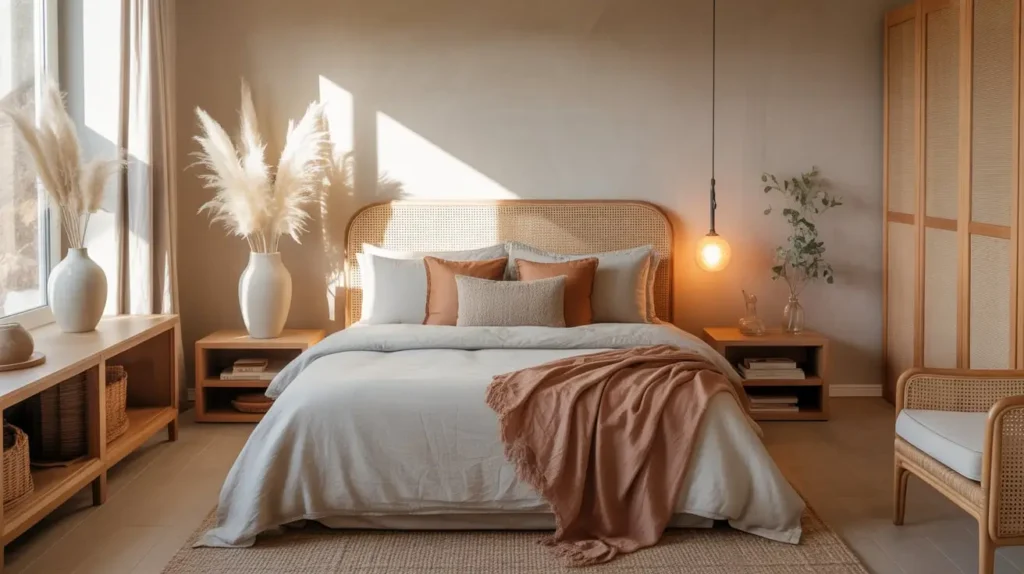
Ever notice how spending time outside instantly makes you feel calmer? That’s exactly what earthy tones bring to your bedroom—that grounded, connected-to-nature vibe that modern life often strips away.
I’m talking rich terra cottas, warm ochres, deep olive greens, and those gorgeous rusty oranges that remind you of desert sunsets. These colors literally wrap your room in warmth. When I painted an accent wall in a burnt sienna shade, I swear the room temperature felt five degrees warmer (though my thermostat disagreed).
The trick with earthy tones is balancing richness with breathability. You don’t want your room feeling like a cave. I pair deeper earth tones with lighter sandy shades and plenty of natural light. One chocolate brown wall? Stunning. Four chocolate brown walls? Basically a dungeon.
Bring in plants too—they’re the perfect complement to earthy color schemes. I’ve got a monstera in the corner that’s practically a roommate at this point, and it ties the whole earthy aesthetic together beautifully.
Earthy tone palette suggestions:
- Terracotta and burnt sienna
- Olive green and sage
- Warm ochre and mustard
- Clay and rust tones
- Sandy beige and cream as neutrals
Boho Warm Escape
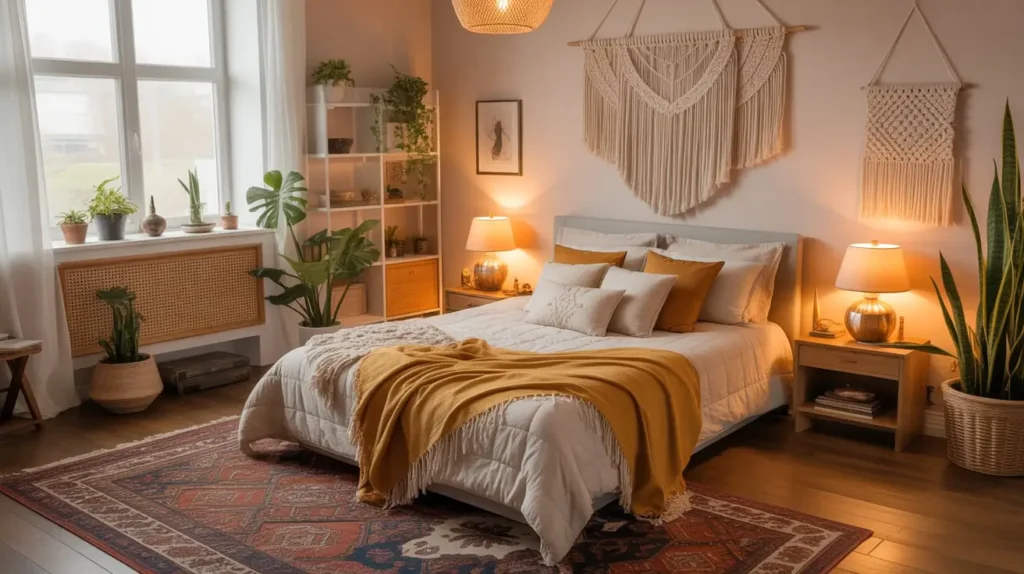
Okay, so boho can sometimes feel chaotic if you’re not careful, but when you nail the warm boho aesthetic? Chef’s kiss. It’s like creating your own little globally-inspired sanctuary that tells a story.
The boho warm escape thrives on mixing patterns, textures, and cultural influences while keeping everything in warm color families. I’ve collected textiles from my travels—a Moroccan wedding blanket here, some Indian block-print pillows there—and they all come together because I stick to warm terracottas, golds, and oranges.
Macramé wall hangings add texture without taking up floor space (crucial in smaller bedrooms). I hung one above my bed, and it instantly softened the space. Rattan furniture, woven pendant lights, and plenty of floor cushions complete the vibe.
Here’s my personal boho rule: embrace maximalism, but make it warm. Every piece should contribute to that cozy, well-traveled feeling. I rotate decorative pieces seasonally to keep things fresh without buying new stuff constantly.
Boho warm essentials:
- Layered textiles in warm patterns
- Macramé and woven wall art
- Rattan or wicker furniture pieces
- Floor cushions and poufs
- Globally-inspired accessories (baskets, pottery, etc.)
- Warm metallics like brass and copper
Also Read: 15 Creative Accent Wall Bedroom Ideas and Modern Vibes
Minimalist Warm Comfort
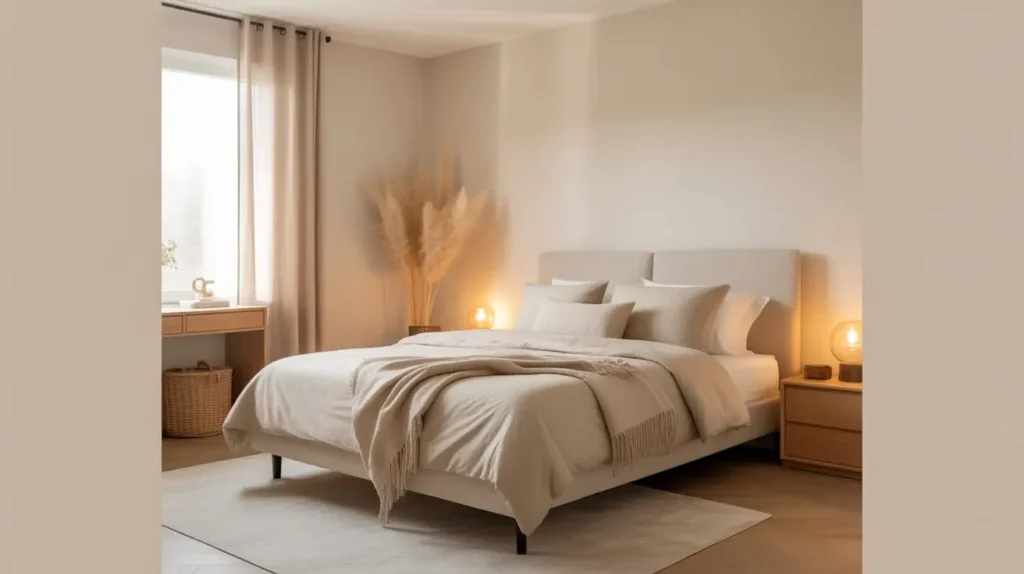
People think minimalism means cold and sterile, but that’s total nonsense. You can absolutely create a minimalist bedroom that radiates warmth—it just requires intentional choices.
I streamlined my bedroom last year because the clutter was genuinely affecting my sleep quality. But I made sure every piece I kept contributed to warmth. Quality over quantity becomes your mantra here. That one incredible cashmere throw? Worth more than five cheap ones.
Keep your color palette simple but warm—maybe just three main colors. I use warm oak wood tones, soft cream, and a muted terracotta. That’s it. But within those colors, I play with textures like crazy. Smooth linen bedding, a chunky knit throw, a soft wool rug—see where I’m going?
The minimalist warm bedroom also relies heavily on natural light and thoughtful lighting design. I removed heavy curtains and replaced them with light-filtering linen ones. The soft, diffused light during the day keeps everything feeling warm and inviting.
Minimalist warmth checklist:
- Limited color palette (3-4 warm tones max)
- High-quality natural materials
- Varied textures within simple color scheme
- Clean lines with organic shapes
- Purposeful negative space
- Hidden storage to maintain clean aesthetic
Sunset-Inspired Bedroom
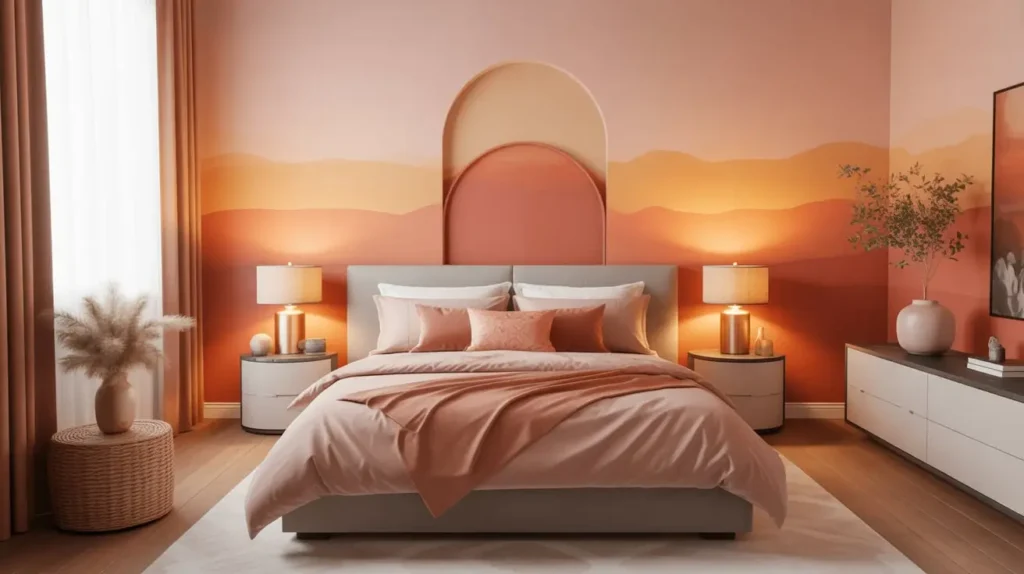
Who doesn’t love a good sunset? That’s why sunset-inspired bedrooms work so well—they capture that magical golden hour feeling and bottle it up in your personal space.
Think about those colors you see when the sun’s going down: peachy pinks, warm oranges, golden yellows, and those deeper purple-reds on the horizon. I created an ombré effect on one wall using sunset colors, and honestly, it’s become my favorite feature in my entire home.
You don’t have to go full gradient though. Even incorporating sunset colors through your bedding, artwork, or accent pieces creates that warm glow. I found some blush pink velvet pillows that catch the light beautifully, and they bring that sunset warmth without overwhelming the space.
Lighting matters enormously here. I use warm-toned bulbs (around 2700K) and some amber glass lamps that cast the most beautiful peachy glow in the evenings. It’s like having permanent golden hour, which sounds cheesy but actually works wonders for relaxation.
Sunset color combinations:
- Peach, coral, and soft pink
- Golden yellow and burnt orange
- Deep rose and burgundy accents
- Warm lavender for depth
- Cream and soft white as base tones
Hygge-Inspired Cozy Room
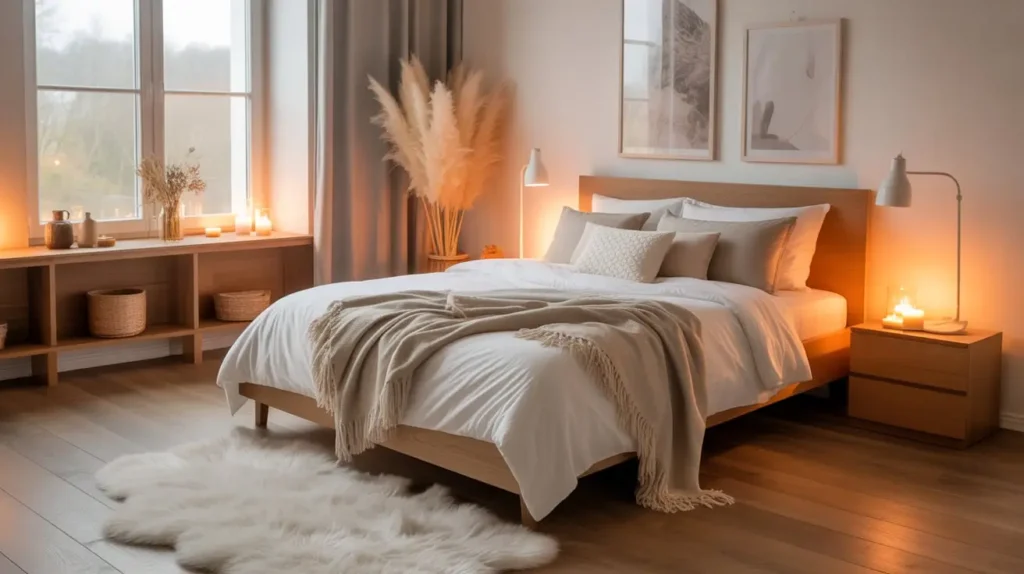
The Danes know what’s up when it comes to coziness. Hygge (pronounced “hoo-gah,” FYI) is all about creating warmth, contentment, and wellbeing through your environment.
A hygge bedroom focuses on comfort, soft lighting, and that snuggled-up feeling. I basically turned my bedroom into a cocoon using this approach. Lots of candles (I’m talking at least a dozen scattered around), super soft bedding that feels like sleeping on a cloud, and warm wood tones everywhere.
The hygge aesthetic loves natural materials—wool, wood, cotton, linen. Nothing synthetic or plastic-y. I replaced all my wire hangers with wooden ones, swapped plastic bins for woven baskets, and the difference in the room’s energy is wild.
Another hygge principle? Creating little cozy nooks. I set up a reading corner with a sheepskin rug, floor cushions, and a small side table for tea. It’s become my pre-sleep ritual spot, and I genuinely look forward to spending time there every evening.
Hygge bedroom elements:
- Multiple candles (unscented for the bedroom)
- Soft, layered textiles
- Natural materials only
- Warm, dim lighting
- Cozy reading nook or seating area
- Personal, meaningful decorations
- Clutter-free surfaces
Terracotta Dream Bedroom
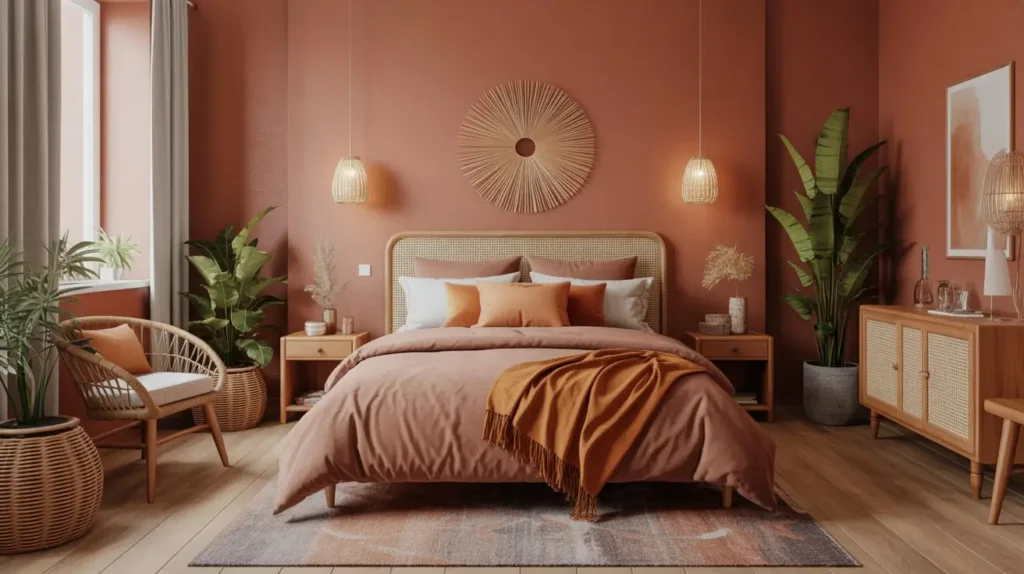
Terracotta has made such a comeback, and I’m here for it. This warm, earthy orange-red brings instant Mediterranean warmth to any bedroom.
I painted my bedroom in a soft terracotta shade about six months ago, and guests always comment on how inviting it feels. Terracotta works because it’s warm without being aggressive—it’s sophisticated and grounding at the same time.
You can incorporate terracotta through paint, but also through pottery, textiles, and even bedding. I’ve got terracotta linen pillowcases that I pair with cream sheets, and the combination is gorgeous. Add some actual terracotta pots with trailing plants, and you’ve created this beautiful, organic warmth.
The trick with terracotta is balancing it with cooler or neutral tones so it doesn’t overwhelm. I use lots of cream, soft whites, and natural wood to let the terracotta shine without taking over completely.
Terracotta pairing ideas:
- Terracotta with cream and white
- Terracotta with sage green
- Terracotta with warm wood tones
- Terracotta with dusty pink
- Terracotta with charcoal for contrast
Soft Textures & Warm Hues
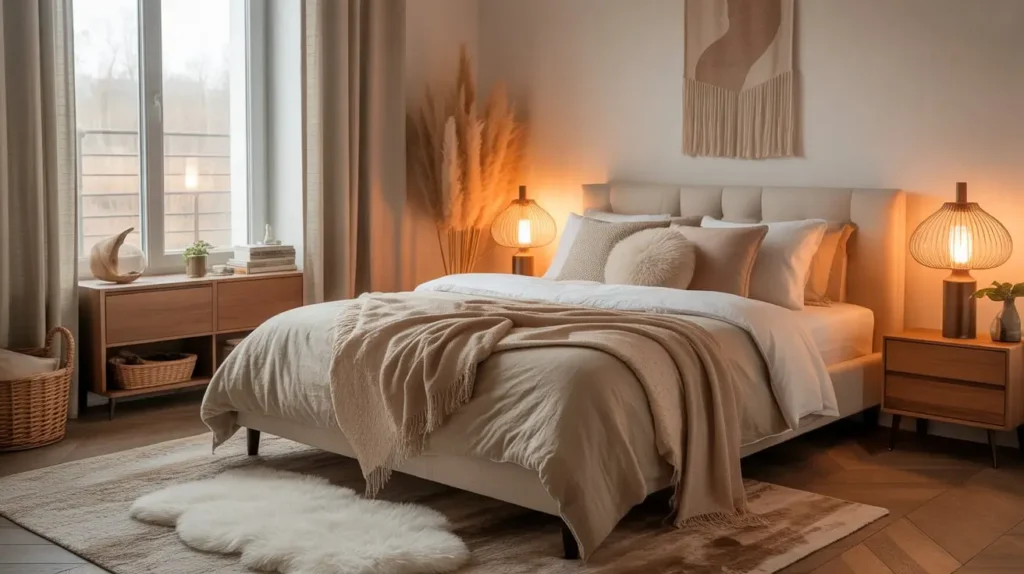
Here’s something I learned the hard way: you can have all the right colors, but if your textures are wrong, the room won’t feel warm. Texture is absolutely crucial for creating that cozy, inviting vibe.
I’m obsessed with mixing textures. My bed alone has linen sheets, a velvet duvet cover, a chunky cable-knit throw, and silk pillowcases (they’re amazing for your hair, by the way). Each texture catches light differently and creates visual interest while maintaining warmth.
Think beyond bedding too. A shaggy rug under your feet when you get out of bed? Game-changer. Velvet curtains that puddle slightly on the floor? Luxurious and warm. Boucle accent chair? Yes, please.
The key is combining tactile softness with visual warmth. Rough textures like jute or sisal can work if you balance them with plenty of soft, touchable materials. I learned this after adding a jute rug that looked great but felt harsh—I layered a sheepskin over part of it, and suddenly it worked.
Texture mixing guide:
- Combine smooth (silk, satin) with rough (linen, cotton)
- Layer knits over flat weaves
- Mix pile heights (low-pile rug with high-pile throw)
- Include both matte and subtle sheen finishes
- Don’t forget wall textures (tapestries, macramé)
Modern Warm Chic
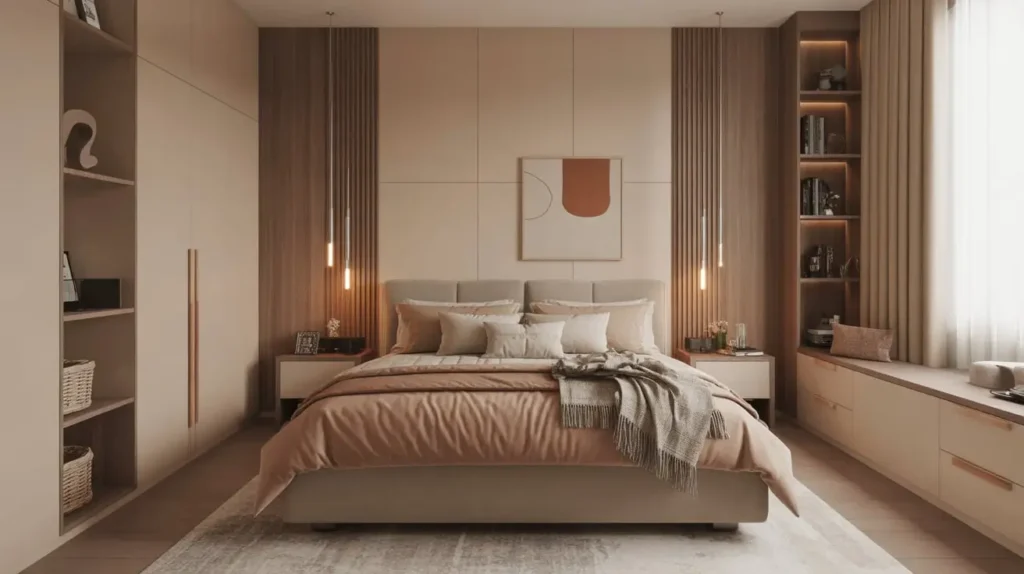
Who says modern has to mean cold? The modern warm chic aesthetic proves you can have clean lines and contemporary design while maintaining serious coziness.
This look relies on sleek furniture in warm materials. I’m talking mid-century modern pieces in walnut or teak, contemporary lighting in brass or bronze, and geometric patterns in warm color palettes. It’s sophisticated without being stuffy.
I furnished my guest bedroom in this style, and it’s become everyone’s favorite room. The platform bed has clean lines but it’s made from warm oak. The artwork is abstract and modern, but in terracotta and gold tones. The pendant lights are contemporary, but they cast a warm, amber glow.
The modern warm chic bedroom also embraces strategic pops of warmth against neutral backgrounds. Maybe your walls are a warm gray, but you’ve got a burnt orange accent chair and gold-framed mirrors. The contrast creates visual interest while maintaining warmth.
Modern warm chic features:
- Clean-lined furniture in warm woods
- Geometric patterns in warm colors
- Warm metallics (brass, copper, bronze)
- Abstract art in warm palettes
- Mix of matte and polished finishes
- Minimal clutter with warm accents
Vintage Warm Vibes
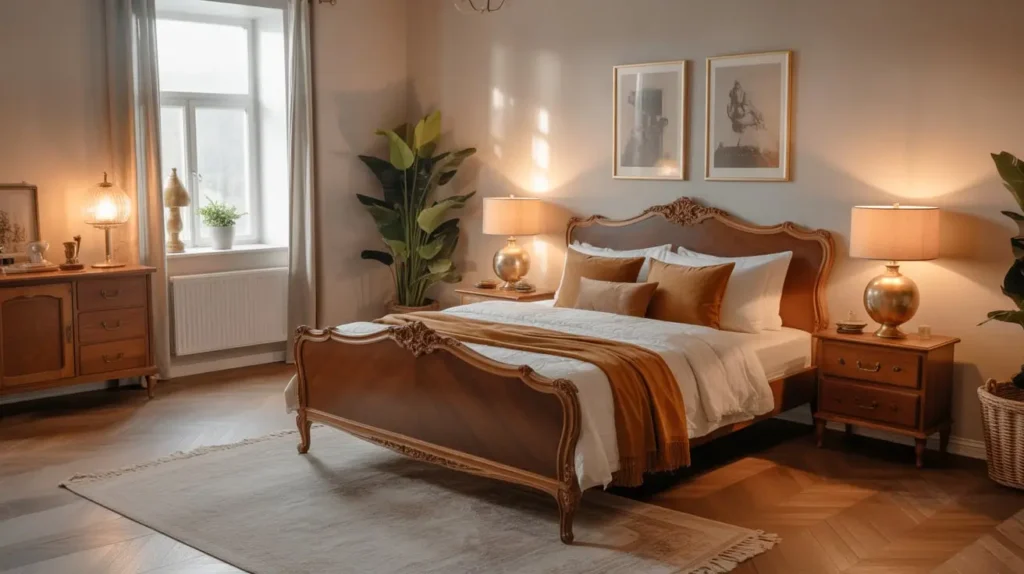
There’s something about vintage pieces that radiates warmth—maybe it’s the history, maybe it’s the craftsmanship, but vintage bedrooms just hit differently.
I’ve slowly collected vintage furniture over the years (estate sales are my weakness), and each piece brings such character. That worn patina on old wood, the slightly faded fabrics, the brass hardware—these elements tell stories and create instant coziness.
You don’t need a room full of antiques though. Even a few key vintage pieces mixed with modern elements create warmth. My vintage dresser with its original brass pulls anchors my bedroom and provides a warm focal point against more contemporary pieces.
IMO, the best vintage pieces for warmth are wooden furniture with rich tones—think mahogany, cherry, or walnut. Pair these with vintage textiles like quilts, embroidered pillowcases, or old wool blankets. I found a vintage patchwork quilt that I use as a wall hanging, and it’s both beautiful and insulating.
Vintage warmth additions:
- Wooden furniture with original finishes
- Vintage brass or bronze lighting
- Antique mirrors with aged glass
- Heritage quilts and textiles
- Old wooden boxes for storage
- Vintage rugs in warm tones
Warm Lighting Ambiance
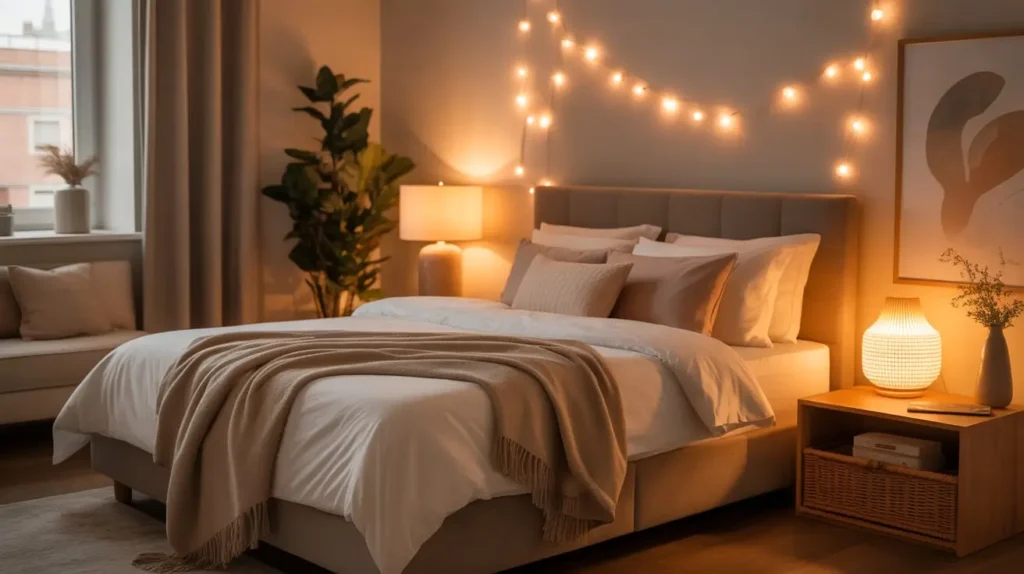
Listen, I cannot stress this enough: lighting makes or breaks the warm bedroom aesthetic. You could have all the right colors and textures, but harsh overhead lighting will destroy the entire vibe.
I removed the ceiling light fixture in my bedroom entirely (there’s still a switch for safety, but I never use it). Instead, I rely on layered lighting—bedside lamps, a floor lamp in the corner, some string lights, and yes, lots of candles.
The color temperature of your bulbs matters enormously. Anything above 3000K will feel too cool and clinical. I use 2700K bulbs in warm white or soft white, which create that cozy, golden glow. Some of my lamps have amber or pink-tinted bulbs for extra warmth.
Dimmer switches are your best friend here. I installed them on all my bedroom lights, and being able to adjust brightness throughout the evening helps with sleep hygiene too. Bright light suppresses melatonin; warm, dim light supports your natural sleep cycle.
Warm lighting strategy:
- Layer multiple light sources
- Use 2700K bulbs (warm white)
- Install dimmer switches
- Choose lampshades in warm colors
- Include ambient lighting (string lights, candles)
- Avoid overhead lighting when possible
- Use salt lamps for extra warm glow
Autumn-Inspired Bedroom
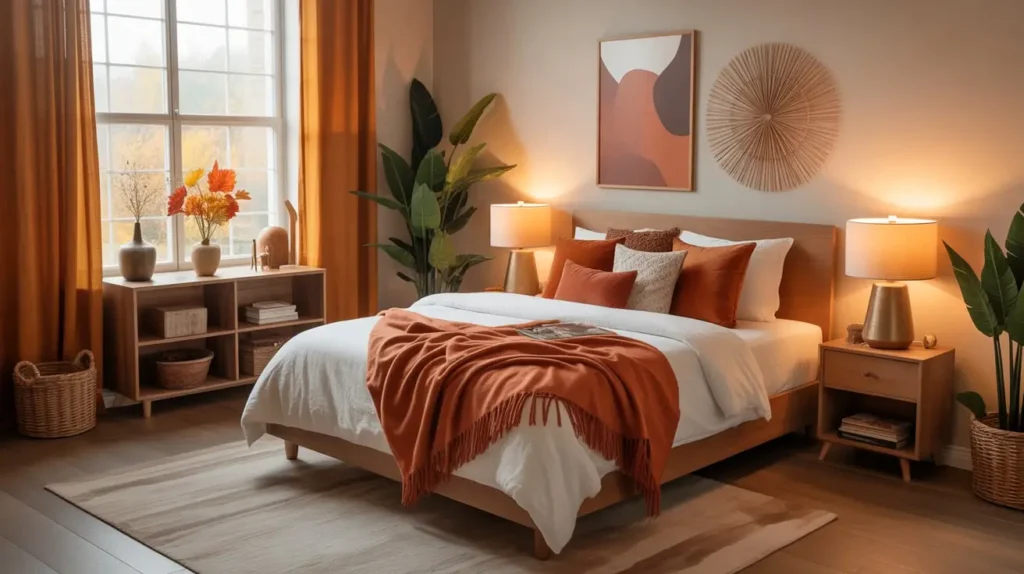
Why should autumn vibes be seasonal? Creating an autumn-inspired bedroom means you get to enjoy those cozy fall feelings year-round, and honestly, I’m not mad about it.
Think about what makes autumn feel warm and cozy: rich oranges, deep reds, golden yellows, and warm browns. I decorated my bedroom with this palette, and even in summer, it feels welcoming rather than seasonally confused.
Plaid makes a big appearance in autumn-inspired rooms. I’ve got a rust and cream plaid throw that I keep on my bed all year because it’s just that good. Add some cable-knit pillows, maybe some faux fur accents, and you’ve captured that crisp-autumn-evening feeling.
Don’t forget natural elements too. Dried flowers (pampas grass is having a moment), pinecones in a decorative bowl, branches in a vase—these organic touches reinforce the autumn warmth without going full Halloween decoration 🙂
Autumn bedroom elements:
- Rust, burgundy, and gold color scheme
- Plaid and check patterns
- Cable knit and chunky textures
- Faux fur accents
- Natural dried elements
- Warm wood furniture
- Cozy layered bedding
Also Read: 15 Aesthetic Japandi Bedroom Designs for Soft Comfort
Layered Cozy Bedding
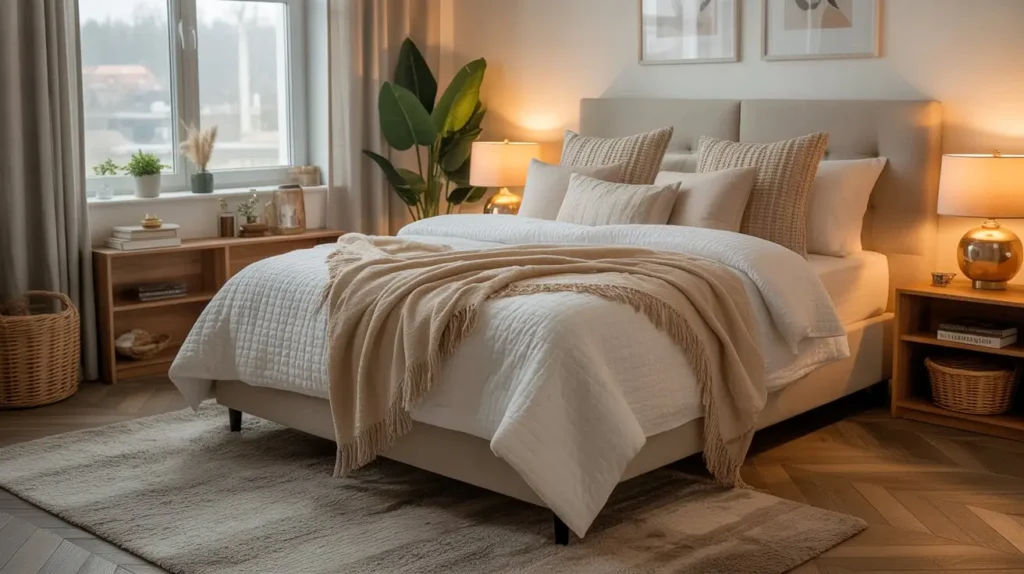
Your bed should look like something from a luxury hotel—you know, those beds that make you want to swan-dive into them? Layering is the secret to achieving that look and feel.
I used to just throw a comforter on my bed and call it done. But once I started properly layering, my sleep quality actually improved because I could adjust my warmth level throughout the night. Plus, it looks infinitely better.
Start with quality sheets in a warm color or neutral. Then add a lightweight blanket or coverlet. Next comes your main duvet or comforter. Top that with a throw at the foot of the bed. Finally, pile on the pillows—sleeping pillows plus decorative ones.
The magic happens when you mix textures and complementary warm tones in your layers. Maybe your sheets are crisp white linen, your blanket is soft cotton in cream, your duvet is velvet in terracotta, and your throw is chunky knit in rust. Each layer adds visual and physical warmth.
Bedding layer formula:
- Base: Quality fitted and flat sheets
- Layer 2: Lightweight blanket or coverlet
- Layer 3: Main duvet or comforter
- Layer 4: Throw blanket at foot of bed
- Finishing touch: Mix of pillow sizes and textures
- Pro tip: Keep extra blankets nearby for adjustable warmth
Warm Natural Materials
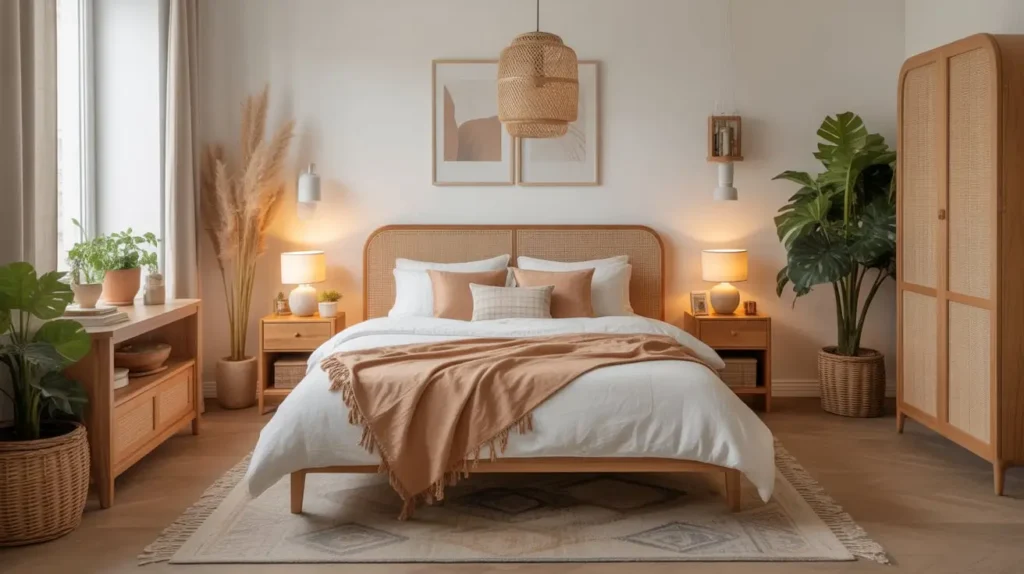
Synthetic materials just don’t create the same warmth as natural ones—it’s a fact I wish someone had told me earlier. When I switched to primarily natural materials in my bedroom, the difference was immediate and noticeable.
Wood, wool, cotton, linen, jute, rattan, stone—these materials have inherent warmth that plastic and polyester simply cannot replicate. They also age beautifully rather than looking worn out. My linen bedding actually gets softer and more beautiful with every wash.
Natural materials also regulate temperature better. Wool keeps you warm when it’s cold but breathes when it’s warm. Cotton and linen wick moisture. Wood adds insulation. These materials work with your body rather than against it.
I started replacing items gradually—synthetic curtains with linen ones, polyester rugs with wool, plastic storage bins with woven baskets. Each swap made the room feel warmer and more cohesive. Plus, natural materials just feel better to touch, which matters in a space designed for comfort.
Natural materials to prioritize:
- Wood furniture and floors
- Wool rugs and blankets
- Linen bedding and curtains
- Cotton throws and pillows
- Jute or seagrass rugs
- Rattan or wicker accents
- Stone or ceramic accessories
- Leather (ethically sourced) for seating
Final Thoughts
Creating a warm bedroom aesthetic isn’t about following rules rigidly—it’s about understanding what makes a space feel cozy and relaxing to you. I’ve given you fifteen different approaches, but the best bedrooms mix elements from several of these tips.
Start with what resonates most with you. Maybe you’re drawn to the rustic retreat vibe but want some modern warm chic elements too? Go for it. The beauty of designing your personal space is that it should reflect your personal taste and needs.
The common threads running through all these tips? Warm colors, natural materials, layered textures, and thoughtful lighting. Get those fundamentals right, and you can experiment with different aesthetics until you find your perfect combination.
I’ve spent years (and honestly, probably too much money) figuring out what creates that perfect relaxing vibe in a bedroom. But now? Walking into my room at the end of a long day feels like a warm hug. And that’s exactly what I want for your space too.