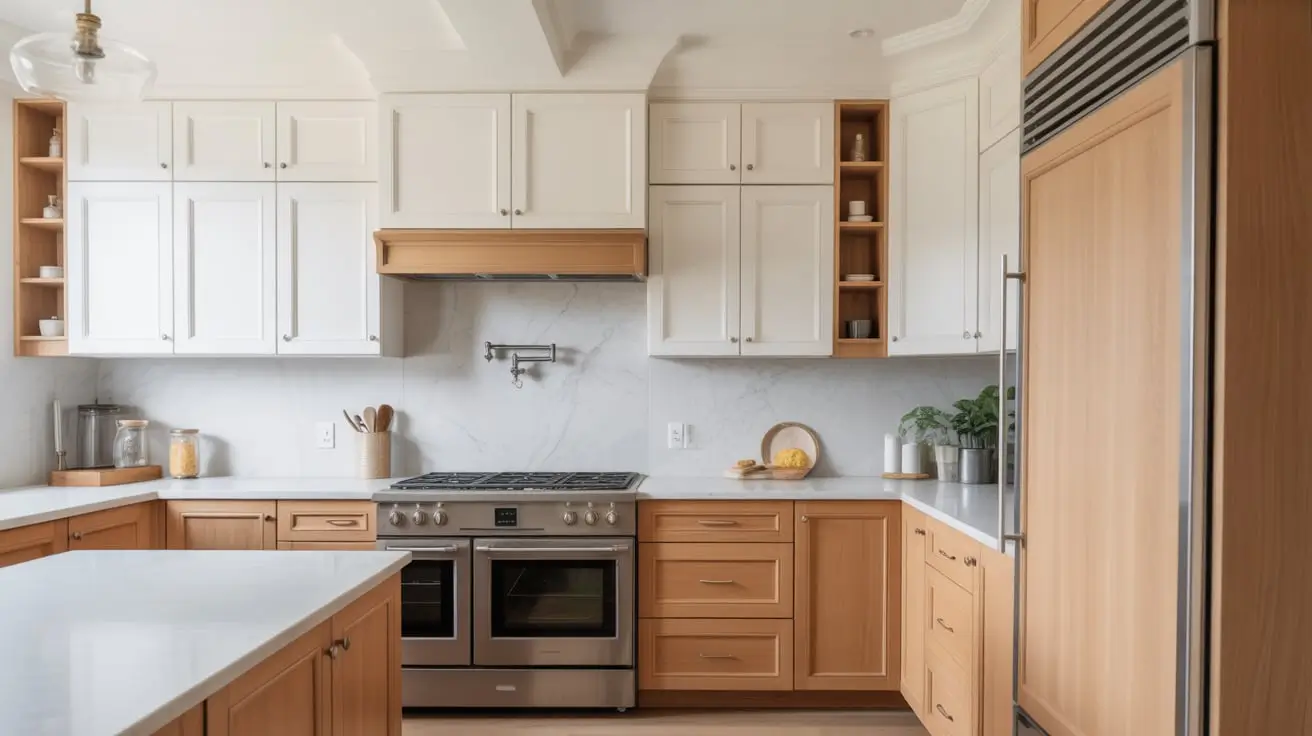
15 Amazing White Oak Kitchen Cabinets and Dream Kitchens

Listen, I get it. You’re scrolling through Pinterest at 2 AM again, obsessing over kitchen designs that look like they belong in a Scandinavian design magazine. And somewhere between the fifteenth espresso shot and your partner asking “are we really redoing the kitchen AGAIN?”, you stumbled upon white oak cabinets. Smart move, honestly.
White oak has this ridiculous ability to look simultaneously timeless and trendy—kind of like that friend who can wear both vintage jeans and designer sneakers without looking like they’re trying too hard. I’ve been down this rabbit hole myself, and after renovating my own kitchen (twice, don’t judge), I’ve collected some seriously drool-worthy white oak cabinet designs that’ll make you want to grab your contractor’s number immediately.
Let me walk you through 15 amazing white oak kitchen cabinet ideas that actually work in real life, not just in those impossibly perfect Instagram photos where there’s never a dish in the sink.
Modern White Oak Kitchen Cabinet Designs
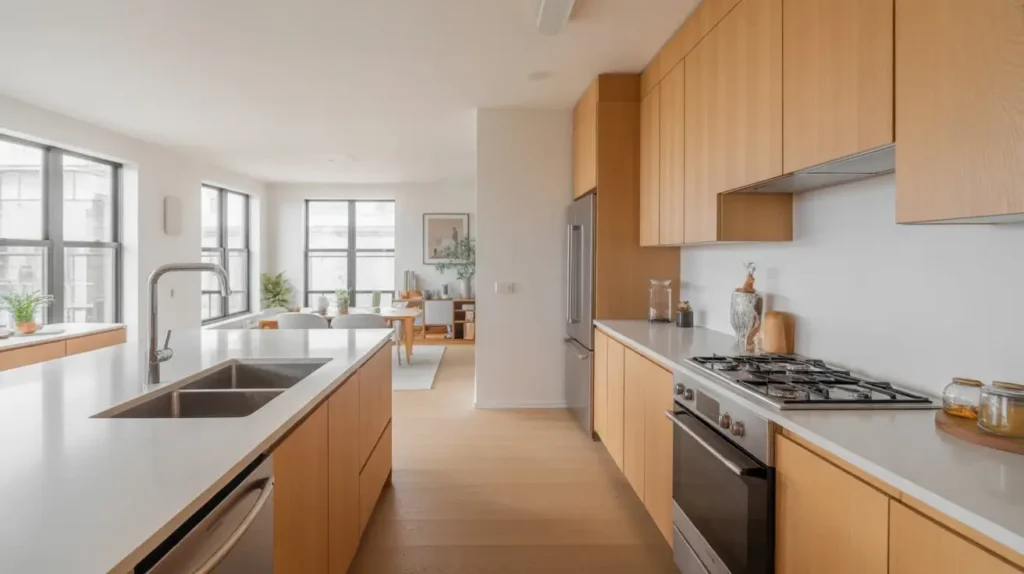
You know what modern design gets right? It refuses to apologize for being sleek. Modern white oak cabinets combine clean lines with the natural warmth of wood grain, creating spaces that feel both sophisticated and inviting.
I recently visited a friend’s newly renovated kitchen, and her modern white oak cabinets literally stopped me mid-sentence. She went with flat-panel doors in a light white oak finish, paired with integrated handles that disappear into the cabinet face. The grain pattern runs horizontally across the doors, creating this subtle visual movement that keeps things interesting without being loud about it.
Here’s what makes modern white oak cabinets work:
- Handleless designs or minimalist pulls: Think sleek aluminum channels or simple bar handles
- Horizontal grain orientation: Creates a contemporary vibe that traditional vertical grains can’t match
- Light staining or natural finish: Lets the wood speak for itself without heavy color manipulation
- Integration with other materials: Pair them with glass, metal, or stone for textural contrast
The beauty of modern white oak? It doesn’t scream “look at me!” but you absolutely can’t look away. The grain pattern provides just enough visual interest to prevent that sterile, cold feeling some modern kitchens suffer from.
Ever noticed how some modern kitchens feel like you should eat standing up because sitting seems too casual? White oak fixes that. The natural warmth of the wood grain softens all those hard edges and makes the space actually livable.
Rustic White Oak Cabinets for Cozy Kitchens
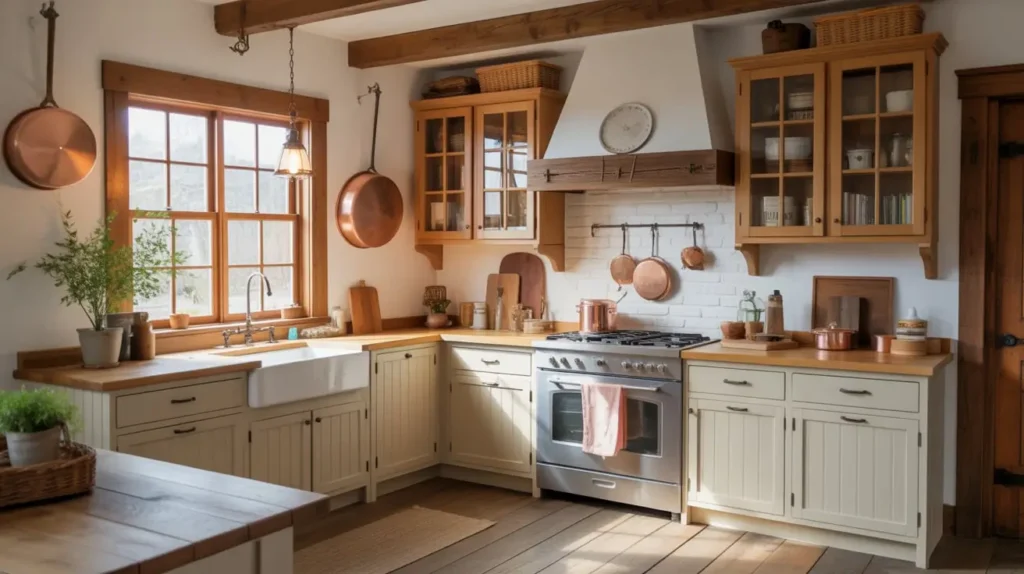
Now we’re talking about the cabinets that make you want to bake bread from scratch while wearing a chunky knit sweater. Rustic white oak cabinets bring serious comfort vibes to any kitchen.
I’m talking about visible knots, rough-sawn textures, and finishes that celebrate imperfection rather than hide it. My aunt renovated her farmhouse kitchen last year with rustic white oak cabinets, and honestly? I considered moving in. The cabinets have this lived-in quality that makes the kitchen feel like it’s been there for generations, even though everything’s brand new.
What defines rustic white oak cabinets:
- Distressed finishes: Wire-brushed textures that highlight the wood grain
- Natural edge details: Keeping some of the wood’s organic character visible
- Darker stains or weathered looks: Think honey tones or even grayish washes
- Traditional hardware: Oil-rubbed bronze, wrought iron, or vintage-inspired pulls
The trick with rustic cabinets? You want character, not chaos. I’ve seen kitchens where someone went overboard with the distressing, and it looks like they attacked their cabinets with a chain. Subtlety wins here.
Pair these cabinets with open shelving displaying vintage dishes or butcher block countertops, and you’ve got yourself a kitchen where people actually want to hang out. You know, instead of those kitchens that look nice but feel like museums where touching things might set off an alarm.
Minimalist White Oak Cabinets Inspiration
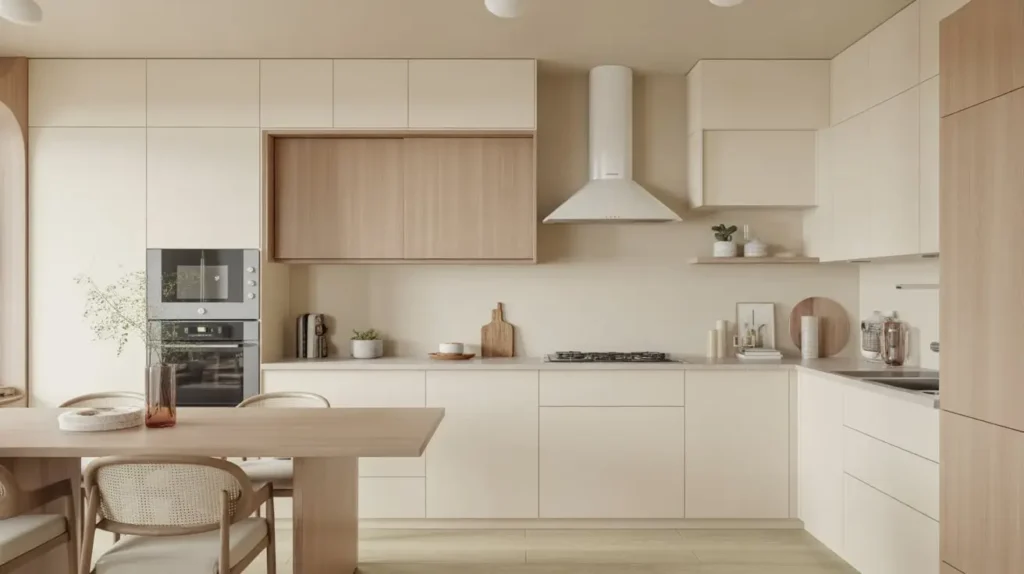
Minimalism doesn’t mean boring—it means intentional. And white oak cabinets might be the most perfect canvas for minimalist kitchen design because they provide warmth without visual clutter.
I worked with a designer friend on a minimalist kitchen project, and we used white oak cabinets with the simplest possible profile. No decorative molding, no fussy details, just clean rectangles of beautiful wood. The result? A kitchen that feels calm enough to meditate in but still functional enough to cook a chaotic Thanksgiving dinner.
Minimalist white oak essentials:
- Slab door fronts: Completely flat panels with no raised details
- Concealed hinges: Hardware disappears completely
- Push-to-open mechanisms: Eliminates the need for visible handles entirely
- Continuous grain matching: The wood grain flows seamlessly across doors
The magic happens in what you don’t add. Every element serves a purpose, and nothing’s there just for decoration. FYI, this is harder than it sounds—I removed and reinstalled my cabinet pulls three times before accepting that no pulls looked better than any pulls I could find.
Match these cabinets with white quartz countertops and integrated appliances, and you’ll create one of those kitchens that photographs in black and white look incredible. You know the ones I mean—where you can’t tell if it’s a kitchen or an art installation.
White Oak Cabinets with Contrasting Countertops
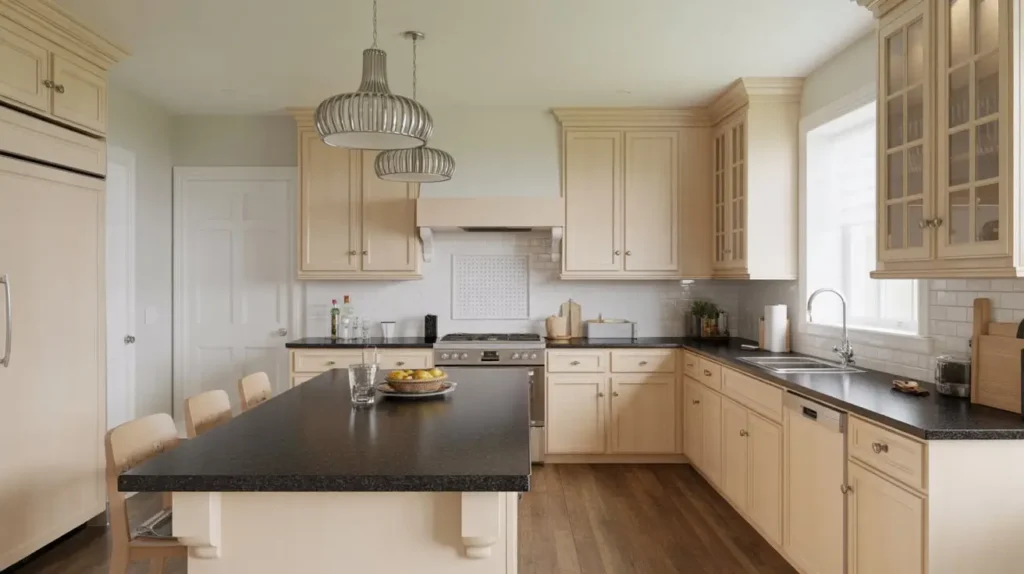
Want to make your white oak cabinets pop? Give them a countertop that plays up the contrast rather than blending in. This is where things get visually exciting.
I’ve experimented with different countertop pairings in various projects, and the contrast between light white oak and darker countertops creates this satisfying visual balance. Think of it like pairing a white t-shirt with dark jeans—classic, effective, and somehow always works.
Killer countertop combinations for white oak:
- Black granite or soapstone: Creates dramatic contrast while maintaining a natural vibe
- Dark concrete: Industrial edge meets organic warmth
- Charcoal quartz: All the drama of black stone with better durability
- Deep green marble: Unexpected but absolutely stunning
On the flip side, light marble or white quartz creates a softer, more cohesive look. I personally lean toward contrast because I’m apparently incapable of doing anything subtle, but both approaches work depending on your overall design vision.
Here’s a pro tip nobody tells you: order samples and live with them in your kitchen for at least a week. Look at them in morning light, evening light, and under your kitchen’s artificial lighting. That gorgeous black granite might look completely different at 7 PM on a Tuesday than it did in the showroom at noon on Saturday.
The countertop you choose completely transforms how your white oak cabinets read in the space. Go light for serene and airy; go dark for grounded and bold. There’s no wrong answer, just different vibes.
Also Read: 15 Stylish Black and White Kitchen Ideas for Every Space
Farmhouse Style White Oak Kitchen Ideas
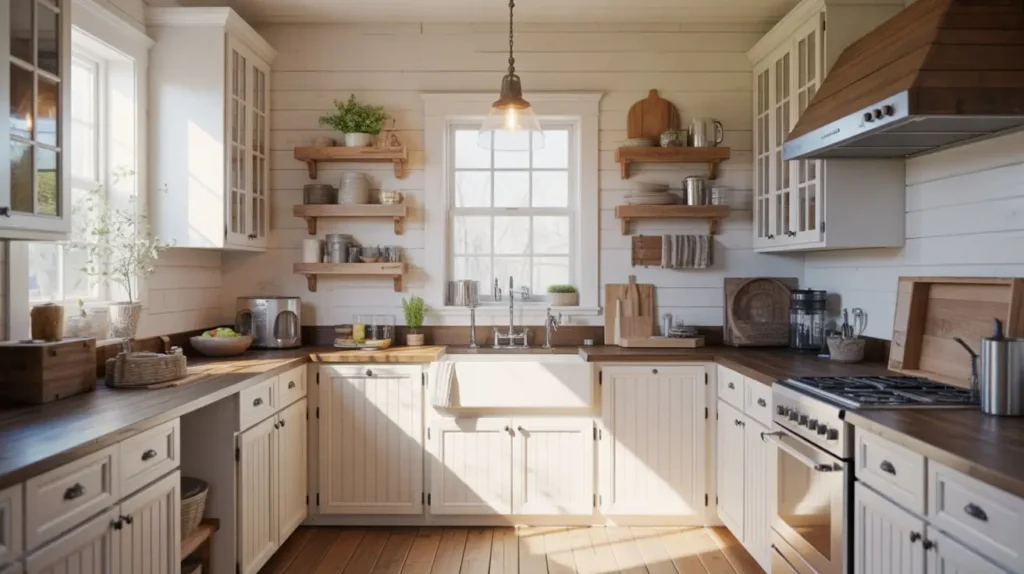
Farmhouse style refuses to die, and honestly? I’m not mad about it. White oak cabinets are basically made for farmhouse kitchens—they’ve got that authentic, down-to-earth quality that fake farmhouse design always lacks.
Real farmhouse style (not the mass-produced version you see in every suburb) combines functionality with warmth. I visited a renovated 1920s farmhouse last fall, and the owner installed white oak shaker-style cabinets that looked like they’d always been there. She mixed original architectural details with new cabinetry so seamlessly that I couldn’t tell what was historic and what was installed last month.
Farmhouse white oak must-haves:
- Shaker-style doors: The classic five-piece door with a recessed center panel
- Apron-front sink: Usually white ceramic, sitting pretty against those oak cabinets
- Glass-front upper cabinets: Show off your grandma’s dishes or your Target finds (no judgment)
- Bin pulls and cup pulls: Aged brass or matte black hardware adds authentic farmhouse character
You can go full traditional with cream or white walls, or mix in some contemporary elements like matte black faucets and modern light fixtures. The white oak grounds everything, preventing the space from feeling too precious or theme-park-ish.
One thing I love about farmhouse-style white oak kitchens? They’re forgiving. A little mess, some everyday clutter, fresh flowers in a mason jar—it all adds to the charm rather than detracting from it. Unlike those ultra-modern kitchens where one coffee mug on the counter ruins the whole aesthetic.
Two-Tone White Oak Cabinet Designs
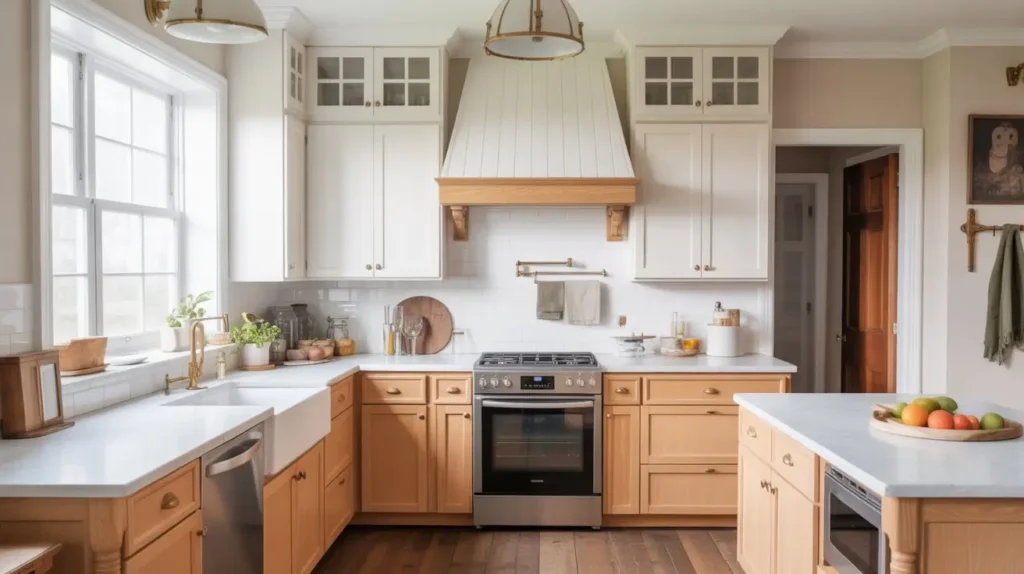
Why commit to one look when you can have two? Two-tone kitchens have exploded in popularity, and white oak plays beautifully in these designs.
The most common approach pairs white oak on the lower cabinets with painted uppers (usually white, cream, or sage green). I’ve also seen the reverse—painted lowers with white oak uppers—though this is less common and, IMO, not as visually grounded.
My favorite two-tone combo involves white oak base cabinets with deep navy blue uppers. The contrast is chef’s kiss, and the white oak keeps all that dark color from feeling heavy. The warm undertones in the oak soften the coolness of the blue, creating balance that feels intentional rather than matchy-matchy.
Two-tone design strategies that actually work:
- Island as the star: White oak perimeter cabinets with a painted island (or vice versa)
- Upper vs. lower distinction: Traditional two-tone approach that visually grounds the kitchen
- Wall-specific coloring: All cabinets on one wall in white oak, the rest painted
- Open shelving transition: Use open white oak shelving to bridge painted and natural wood sections
Here’s what nobody mentions about two-tone kitchens: you need to commit hard. Wishy-washy color choices or tentative contrast makes the whole thing look accidental. Pick your colors with confidence, or the design falls flat.
I tried doing a subtle two-tone in my first kitchen—white oak with cabinets painted in a barely-there greige. You know what it looked like? A mistake. Like I ran out of paint or couldn’t make up my mind. When I went bold with a real contrast, suddenly the design made sense.
White Oak Cabinets with Sleek Hardware Trends
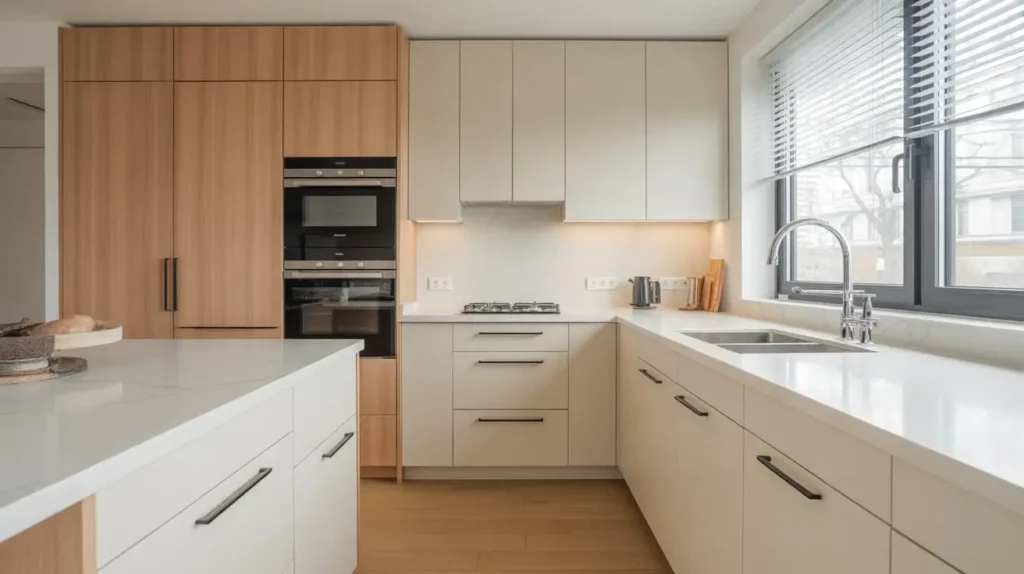
Let’s talk hardware, because even the most gorgeous white oak cabinets need the right jewelry. And yes, I just compared cabinet pulls to jewelry—hardware matters that much.
The current trend leans toward minimalist, elongated pulls and simple knobs that complement rather than compete with the wood grain. Think of your hardware as the supporting actor, not the star trying to steal every scene.
Trending hardware finishes for white oak:
- Matte black: Still going strong and probably will forever because it’s that good
- Brushed brass or gold: Warm metals that echo the golden undertones in white oak
- Polished nickel: Clean and contemporary without being cold
- Leather pulls: Unexpected and gorgeous, especially in modern or Scandinavian designs
I recently switched out basic chrome pulls for elongated matte black handles on my white oak cabinets, and the difference was ridiculous. Suddenly the cabinets looked intentional and designed rather than builder-grade. Cost me about $200 and an afternoon of work, but the visual impact? Easily worth ten times that.
Here’s a hardware truth: you’ll touch these pulls every single day, multiple times. Cheap hardware feels cheap every. single. time. You don’t need to mortgage your house for cabinet pulls, but spend enough to get solid, well-made pieces that feel good in your hand.
Also, consider no hardware at all. Push-to-open mechanisms on white oak cabinets create incredibly clean lines. Just make sure you’re okay with occasional fingerprints on the cabinet faces, because physics hasn’t figured out how to prevent those yet.
Affordable White Oak Kitchen Cabinet Options
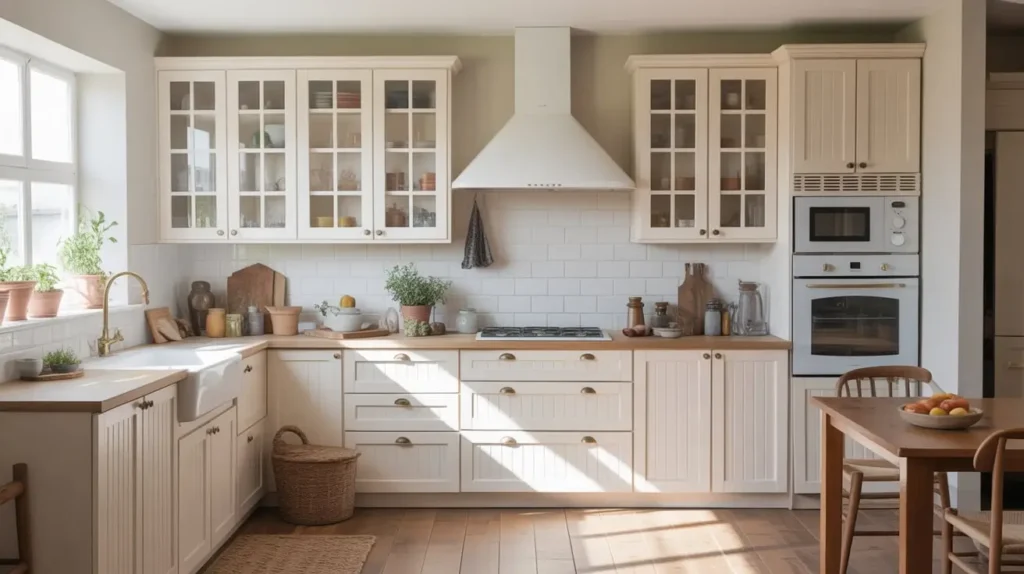
Right, so now you’re sold on white oak cabinets but remembering that your budget isn’t infinite. I feel you—custom white oak cabinets can cost more than a decent used car.
But here’s the thing: you’ve got options that won’t require selling a kidney. White oak veneer cabinets offer the look at a fraction of solid wood costs. Quality veneer (not the cheap stuff that peels after two years) provides a real wood surface over engineered cores, giving you durability and beauty without the full solid-wood price tag.
Budget-friendly white oak strategies:
- Semi-custom cabinets: Companies like IKEA now offer white oak options at reasonable prices
- White oak fronts only: Use oak for visible door fronts and drawer faces, less expensive material for cabinet boxes
- Mix and match: White oak where it counts (eye-level cabinets, island), painted or different wood species where it doesn’t
- Ready-to-assemble (RTA) options: Several online retailers offer quality white oak RTA cabinets
I helped my sister do her kitchen last year on a tight budget. We used semi-custom white oak cabinets for the perimeter and painted cabinets for the island. Total savings? About 40% compared to all-white oak custom cabinets. And honestly, the painted island added visual interest we wouldn’t have gotten with all-oak anyway.
Shop around, get multiple quotes, and don’t assume the first number is the final number. Cabinet suppliers expect negotiation—it’s built into their pricing structure. Also, timing matters. I’ve heard from multiple contractors that ordering cabinets during slower seasons (usually winter) can save you 10-15% just because companies want to keep their production lines running.
DIY White Oak Cabinet Refinishing Tips
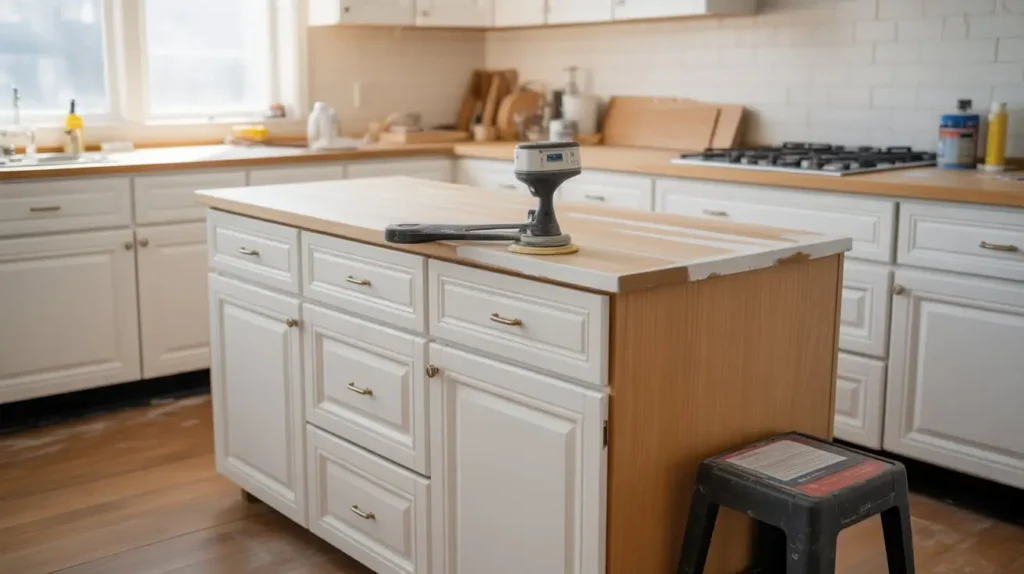
Already have oak cabinets but they’re looking dated? You might not need to replace them—just refinish them. I refinished my oak cabinets from honey oak (very 1990s) to a modern white oak look, and it completely transformed my kitchen.
Fair warning: this is a real project. Not a weekend warrior situation unless you have a tiny kitchen and impressive stamina. But it’s doable, and you’ll save thousands compared to replacement.
The refinishing process step-by-step:
- Remove everything: Doors, drawers, hardware. Label everything so you remember what goes where
- Clean thoroughly: Years of grease and grime need to go before you start sanding
- Sand strategically: Start with 120-grit, move to 220-grit for smooth finish
- Choose your finish: Water-based polyurethane for lighter, modern looks; oil-based for richer tones
- Apply stain (if using): Test on inconspicuous areas first—white oak takes stain differently than red oak
- Seal properly: Multiple thin coats beat one thick coat every time
My biggest DIY mistake? Rushing the drying time between coats because I wanted my kitchen functional again. Resulted in sticky cabinet doors that picked up every piece of dust and lint in a five-mile radius. :/ Learn from my impatience.
The key to achieving that modern white oak look on older cabinets is keeping the finish light and the grain visible. Strip back any orange-toned stains completely, sand until you’re down to raw wood, then apply a very light stain or just seal with clear poly.
Also, rent or buy a paint sprayer if you’re finishing the cabinets rather than staining them. Brush marks on cabinet doors look homemade in the bad way. Sprayed finishes look professional even when you’re figuring it out as you go.
Also Read: 15 Bright White Kitchen Cabinets and Small Space Solutions
White Oak Cabinets Paired with Marble Backsplash
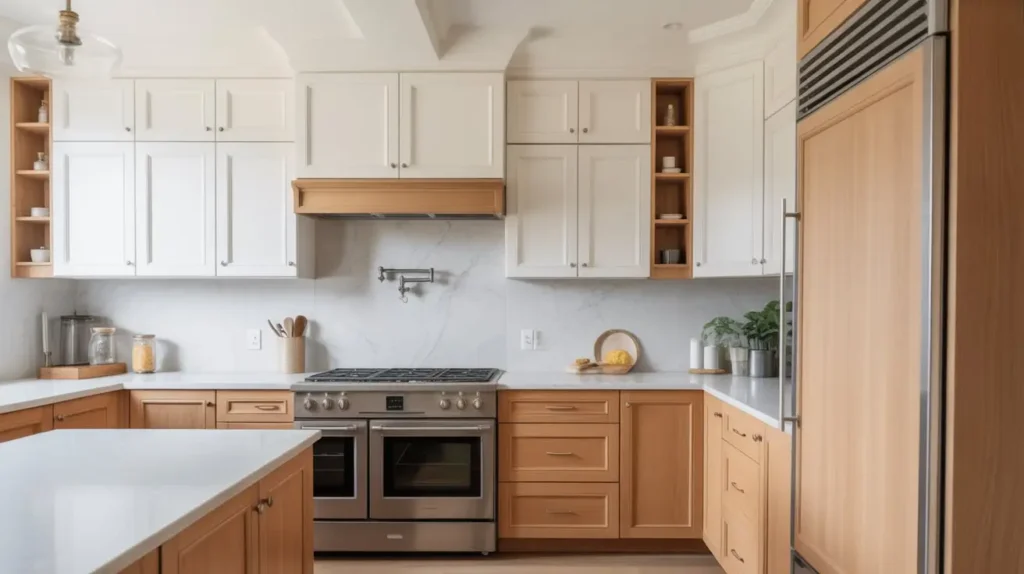
Marble and white oak together? It’s like the kitchen design equivalent of champagne and strawberries—classic, elegant, and somehow always feels special.
The cool tones in marble (especially white or gray varieties) balance the warmth in white oak beautifully. I designed a kitchen last year that paired natural white oak cabinets with Carrara marble subway tile backsplash, and the combination made the whole space feel both luxurious and approachable.
Marble backsplash options that work with white oak:
- Classic white Carrara: Timeless and complements any white oak tone
- Calacatta with dramatic veining: Adds visual interest and luxury vibes
- Gray or greige marble: Modern and sophisticated, especially with lighter oak finishes
- Marble slab backsplash: Skip the tile entirely for seamless elegance
Here’s what they don’t tell you about marble: it requires maintenance. Marble is porous, stains easier than quartz, and needs sealing. I’m generally a low-maintenance person (my skincare routine is basically water and hope), but I think marble in kitchens is worth the extra effort.
If you cook a lot—like actually cook, not just heat up takeout—consider quartz that looks like marble for your backsplash. Modern quartz mimics marble so convincingly that most people can’t tell the difference, but it won’t etch from lemon juice or stain from red wine.
The texture contrast between smooth marble and grainy white oak creates visual interest without pattern overload. Keep your countertops simple, let the backsplash and cabinets do the talking, and you’ll have a kitchen that photographs like a design magazine spread.
Scandinavian White Oak Kitchen Concepts
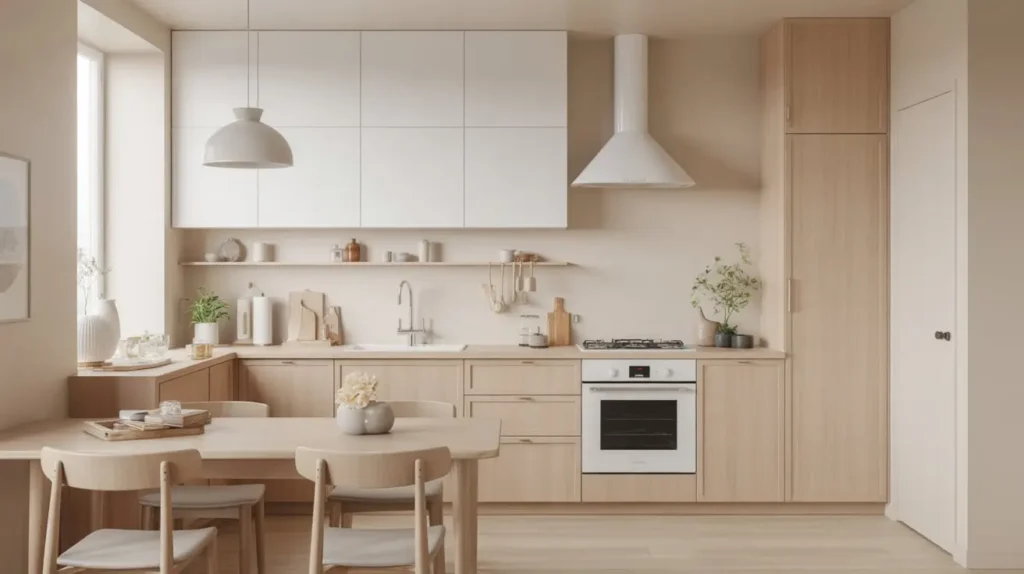
Scandinavian design gets white oak. Like, really gets it. The Nordic approach to kitchens emphasizes natural materials, functionality, and that specific kind of minimalism that still feels warm.
Scandinavian white oak kitchens strip everything down to essentials while maximizing coziness—they call it “hygge,” and it’s basically the opposite of cold minimalism. I’ve studied these designs obsessively (totally normal behavior), and they consistently use white oak in ways that feel both simple and sophisticated.
Scandinavian white oak essentials:
- Light, almost blonde wood tones: Embrace the natural lightness of white oak
- White or light gray walls: Creates that bright, airy Nordic feeling
- Open shelving mixed with closed cabinets: Displays beautiful, functional items
- Natural light maximization: Large windows, minimal window treatments
- Matte finishes: On cabinets, walls, and countertops—no high-gloss anything
My favorite Scandinavian trick? Leaving a gap between upper cabinets and ceiling. Instead of boxing everything in, this creates visual breathing room and makes ceilings feel higher. Use that space to display plants, baskets, or just leave it empty for that minimalist vibe.
Pair white oak cabinets with simple white subway tile, pale countertops, and integrated appliances for authentic Scandinavian style. Add warmth through textiles—a sheepskin rug, linen dish towels, maybe some candles because Scandinavians apparently burn through candles like it’s their job.
This style works especially well in smaller kitchens because the light colors and simple lines prevent the space from feeling cramped. Everything serves a purpose, nothing’s there just for show, and somehow it all feels incredibly welcoming.
Small Kitchen White Oak Cabinet Layout Ideas
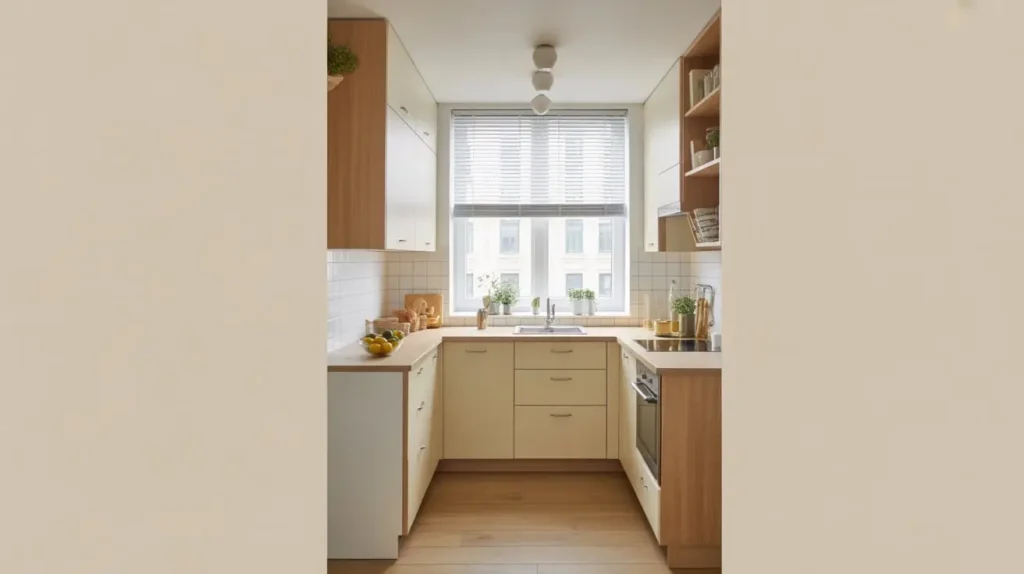
Small kitchens need smart solutions, not just pretty cabinets. But here’s the good news: white oak cabinets can actually make small spaces feel larger and more open.
I live in a city apartment with a kitchen that’s generously described as “cozy” (realistically, it’s tiny). When I installed light white oak cabinets, the space immediately felt less claustrophobic. The light wood reflects more light than dark cabinets would, and the visible grain adds interest without visual weight.
Small kitchen white oak strategies:
- Light finish is crucial: Dark oak will shrink your space visually
- Go up, not out: Floor-to-ceiling cabinets maximize storage without eating floor space
- Glass-front uppers: Create depth and prevent upper cabinets from feeling heavy
- Open shelving on at least one wall: Breaks up the cabinet mass and adds breathing room
- Minimal hardware: Keeps things streamlined and prevents a cluttered look
Ever noticed how some small kitchens feel efficient while others just feel cramped? Layout makes all the difference. In tight spaces, galley layouts or L-shaped configurations with white oak cabinets work better than trying to cram in an island that no one can actually walk around.
I removed my upper cabinets on one wall entirely and installed white oak floating shelves instead. Lost some storage but gained so much visual space that it was worth it. Small kitchens require sacrifice—you’ve got to decide what matters more, every possible cubic inch of storage or a space that doesn’t feel like a cave.
Another trick: match your white oak cabinets to your flooring or keep flooring very light. Creating one continuous color plane makes the room feel larger because your eye doesn’t stop at visual boundaries.
White Oak Cabinets with Open Shelving
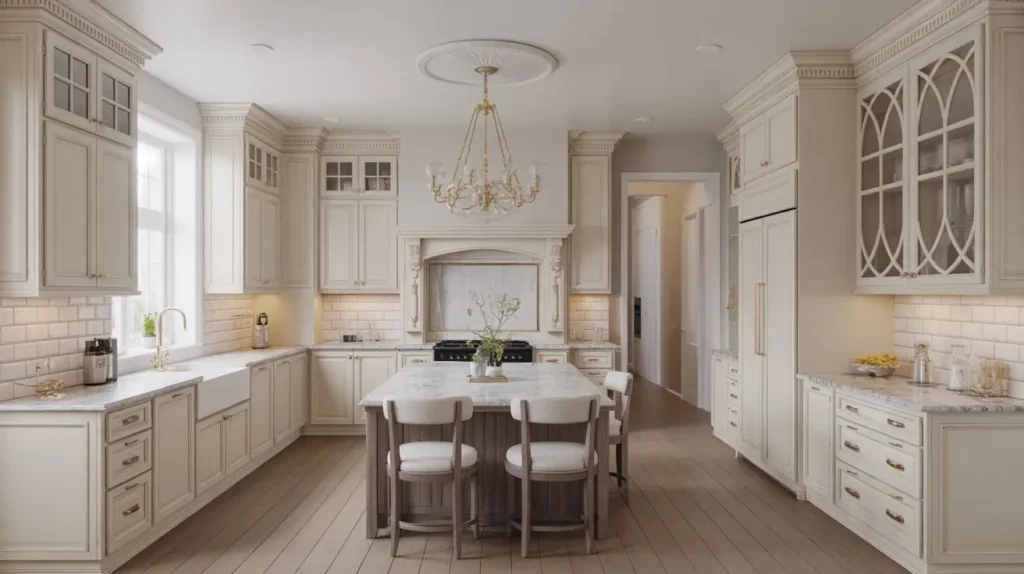
Open shelving isn’t for everyone—I’ll say that upfront. You need to actually like how your dishes look and stay somewhat organized. But when you pair white oak cabinets with open shelving strategically? Absolute perfection.
The key word is “strategically.” Don’t rip out all your upper cabinets for open shelves unless you’re cool with dust on your coffee mugs and everything on display all the time. I learned this the hard way when I went full open-shelving in my first apartment. Turns out I’m not nearly organized enough for that lifestyle.
Smart open shelving approaches:
- Flanking a window or range: Open shelves on either side of a focal point
- One wall only: Mix of open shelving and closed cabinets for balance
- Lower cabinets in white oak, upper open shelves: Keeps dust off dishes while maintaining openness
- White oak floating shelves: Match cabinet material for cohesion
The beauty of white oak shelving against white oak cabinets creates this cohesive look that feels intentional. I built custom white oak floating shelves for my kitchen (basic brackets and stained boards—easier than it sounds), and they tie into the base cabinets perfectly.
Style your open shelves thoughtfully. Mix heights, add some greenery, include things you actually use rather than just decorative objects. Nothing screams “trying too hard” like open shelving that’s clearly styled for Instagram rather than function.
Also, embrace some negative space. You don’t need to fill every inch of shelf—leaving gaps actually makes the display more visually interesting and prevents that cluttered, chaotic look.
Luxurious White Oak Kitchen Makeovers
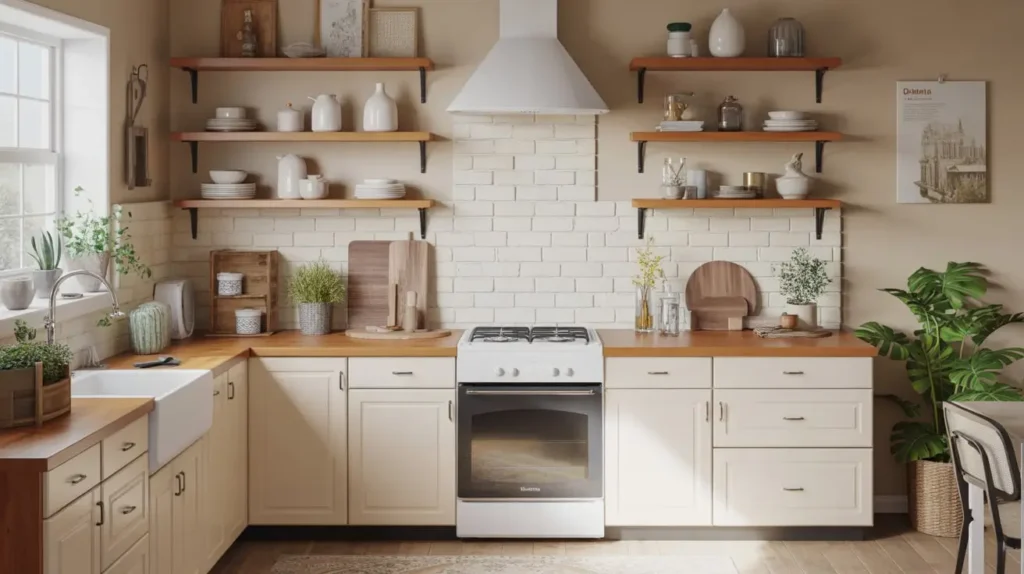
Ready to go all-in? Luxury white oak kitchens combine premium materials, expert craftsmanship, and those little details that separate nice kitchens from jaw-dropping ones.
I consulted on a luxury kitchen renovation last year where the budget was essentially “make it perfect.” We used book-matched white oak cabinet fronts where the grain patterns mirror each other symmetrically. The effect is subtle but unmistakably high-end—you can’t fake that level of intentionality.
Luxury white oak details worth the investment:
- Book-matched or sequence-matched wood grain: Continuous grain flow across doors and drawers
- Custom sizing: Cabinets built to exact specifications, no filler strips or awkward gaps
- Premium hardware: Think hand-forged pulls or semi-precious stone knobs
- Integrated appliances: Panel-ready fridge, dishwasher, everything disappears into the cabinetry
- Specialty storage: Pull-out spice racks, custom knife drawers, charging stations
Luxury doesn’t mean flashy. The most expensive white oak kitchens I’ve seen are often the most understated—the luxury is in the quality of materials and perfection of execution, not gold-plated faucets or crystal chandeliers.
Pair luxury white oak cabinets with premium countertops (marble, quartzite, or high-end quartz), professional-grade appliances, and custom lighting design. Every element should feel intentional and perfectly executed.
Here’s the thing about luxury kitchens: you’ll use them every day. Unlike luxury cars that sit in garages or designer handbags that come out for special occasions, your kitchen works constantly. Investing in quality materials and craftsmanship means you’ll enjoy that investment thousands of times over the years.
Eco-Friendly White Oak Cabinet Choices
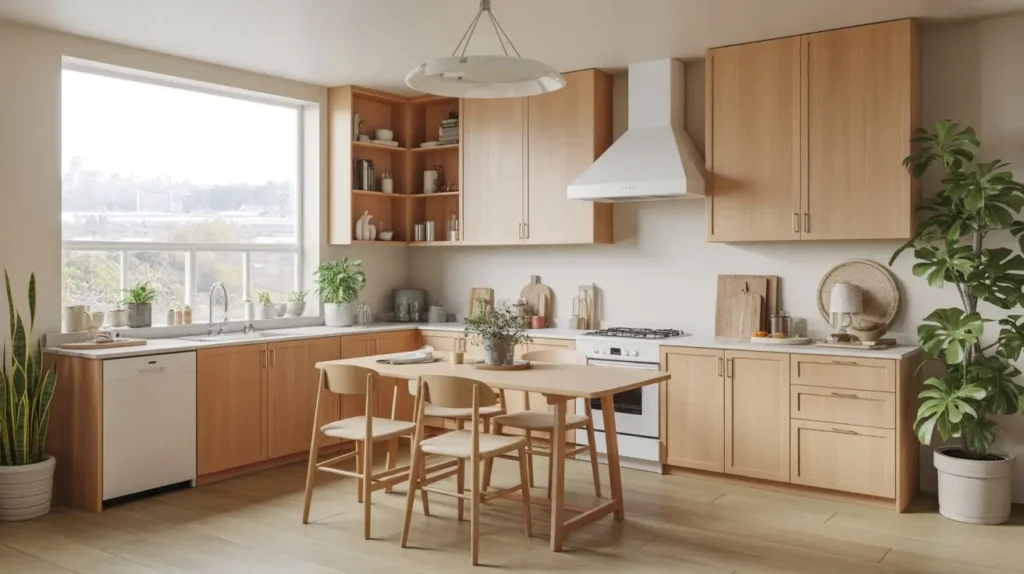
Want beautiful cabinets and a clear conscience? Eco-friendly white oak options have gotten significantly better in recent years. You don’t have to sacrifice style for sustainability anymore.
FSC-certified white oak (Forest Stewardship Council) comes from responsibly managed forests where trees are replanted and ecosystems are protected. I specified FSC-certified oak for a recent project, and honestly? You can’t tell the difference from non-certified wood except for the paperwork and the good feeling.
Sustainable white oak cabinet choices:
- FSC-certified wood: Verified sustainable forestry practices
- Reclaimed white oak: Salvaged from old buildings, barns, or furniture
- Locally sourced oak: Reduced transportation emissions, supports local economies
- Low-VOC finishes: Water-based stains and sealers that don’t off-gas harmful chemicals
- Formaldehyde-free construction: Especially important for plywood and engineered cores
Reclaimed white oak has this incredible character that new wood takes decades to develop. Nail holes, saw marks, weathered patina—these “imperfections” make each cabinet unique. My friend used reclaimed oak for her kitchen island, and it’s literally the conversation starter of every dinner party.
The eco-friendly approach extends beyond just the wood. Look for cabinet makers who minimize waste, use renewable energy in production, and design for longevity rather than trends. The most sustainable cabinet is one that lasts 30 years instead of needing replacement in 10.
FYI, some manufacturers now offer “carbon-neutral” cabinet production, offsetting their emissions through verified programs. It adds minimal cost but makes a real environmental difference when you’re already investing thousands in a kitchen.
Bringing It All Together
So there you have it—15 different ways to make white oak cabinets work in your dream kitchen. From sleek modern designs to cozy farmhouse vibes, from budget-friendly options to full luxury makeovers, white oak adapts to pretty much any style you throw at it.
What makes white oak so versatile? That perfect balance of warm tones, beautiful grain patterns, durability, and timeless appeal. It doesn’t scream “2023!” or “1997!”—it just quietly makes your kitchen better. Whether you’re doing a complete renovation, a simple cabinet refinish, or just gathering ideas for someday, white oak deserves serious consideration.
Here’s my final take: trust your gut, ignore trends that don’t speak to you, and remember that you’ll live with these cabinets every single day. Pick what makes you happy when you walk into your kitchen at 6 AM before coffee, not what looks good in a magazine.
Your dream kitchen is totally achievable—sometimes it just takes the right inspiration, a solid plan, and maybe accepting that you’ll be eating takeout for a few weeks during renovation. Worth it? Absolutely. 🙂
Now go forth and create something beautiful. And hey, if you end up with white oak cabinets you absolutely love, I’d say that’s a win worth celebrating.