15 Stunning Small Living Room Ideas Apartment to Maximize Space

Look, I get it. You’re staring at your tiny apartment living room, wondering how on earth you’re supposed to fit a couch, coffee table, AND have space to actually walk without doing some weird sideways shuffle. Been there, done that, got the bruised shin to prove it.
Here’s the thing though—small living rooms aren’t a curse. They’re actually a challenge that, once you crack the code, can turn into your favorite space in the whole apartment. I’ve lived in more shoebox-sized apartments than I’d like to admit, and I’ve learned that maximizing space isn’t about cramming less stuff in—it’s about being ridiculously smart with what you choose and where you put it.
So grab your coffee (or wine, no judgment), and let’s talk about 15 game-changing ideas that’ll make your small living room feel like it doubled in size overnight.
1. Cozy Minimalist Apartment Living Room
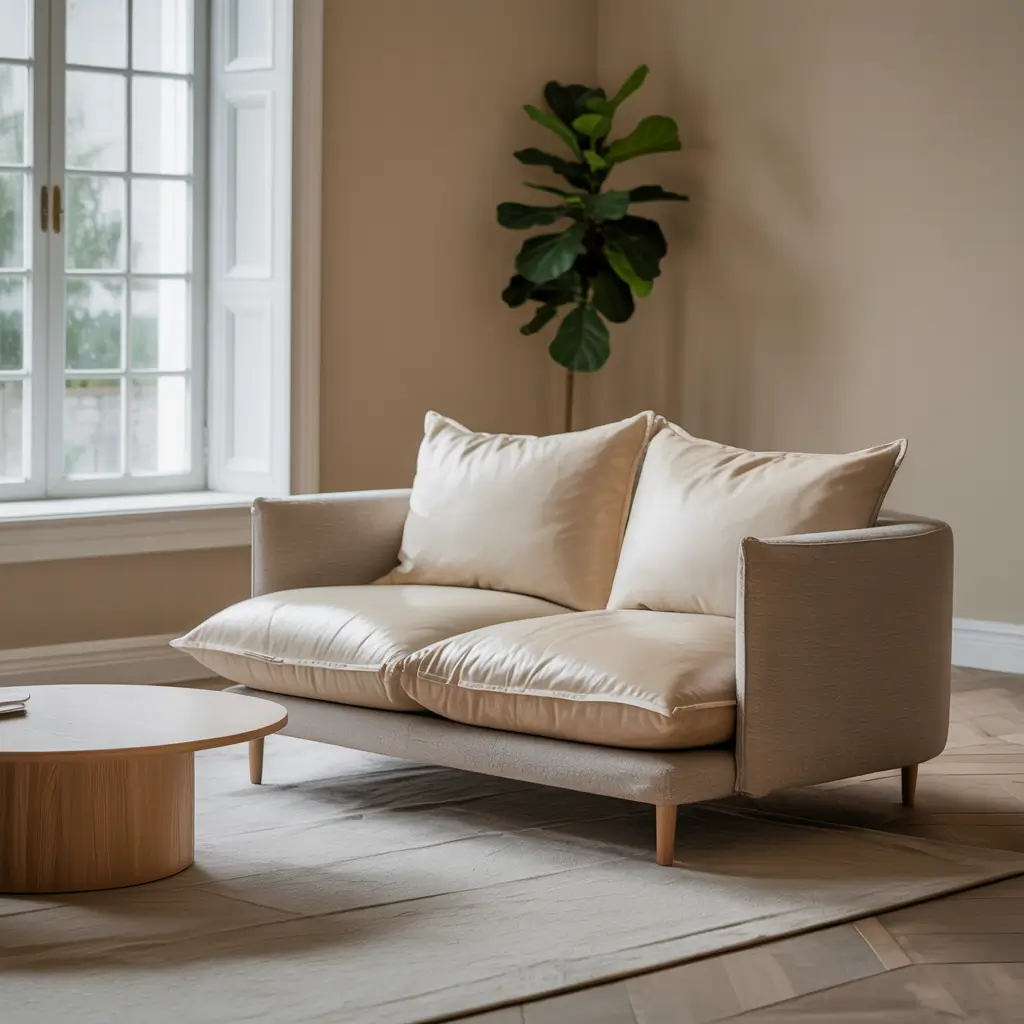
You know what’s ironic? Minimalism gets a bad rap for being cold and sterile, but when you apply it to a small living room, it’s actually the coziest thing ever.
I’m talking about keeping only what you genuinely use and love. That decorative bowl you got three Christmases ago that just collects dust? Yeah, it can go. The minimalist approach forces you to be intentional with every single piece in your space, and honestly, it’s kind of liberating.
Here’s what works:
- A simple, clean-lined sofa in a neutral color (think beige, gray, or soft white)
- One statement piece like a unique coffee table or a killer floor lamp
- Texture instead of clutter – think chunky knit throws, linen cushions, or a soft rug
- Hidden storage so everything has its place
The secret sauce? Negative space is your friend. I learned this the hard way after my maximalist phase left my living room looking like a flea market explosion. When you leave some breathing room between furniture pieces, your eyes can actually rest, and the whole space feels bigger.
Ever walked into a room and immediately felt relaxed? That’s what cozy minimalism does. It’s not about having nothing—it’s about having just enough of the right things.
2. Multi-Functional Furniture for Tiny Spaces
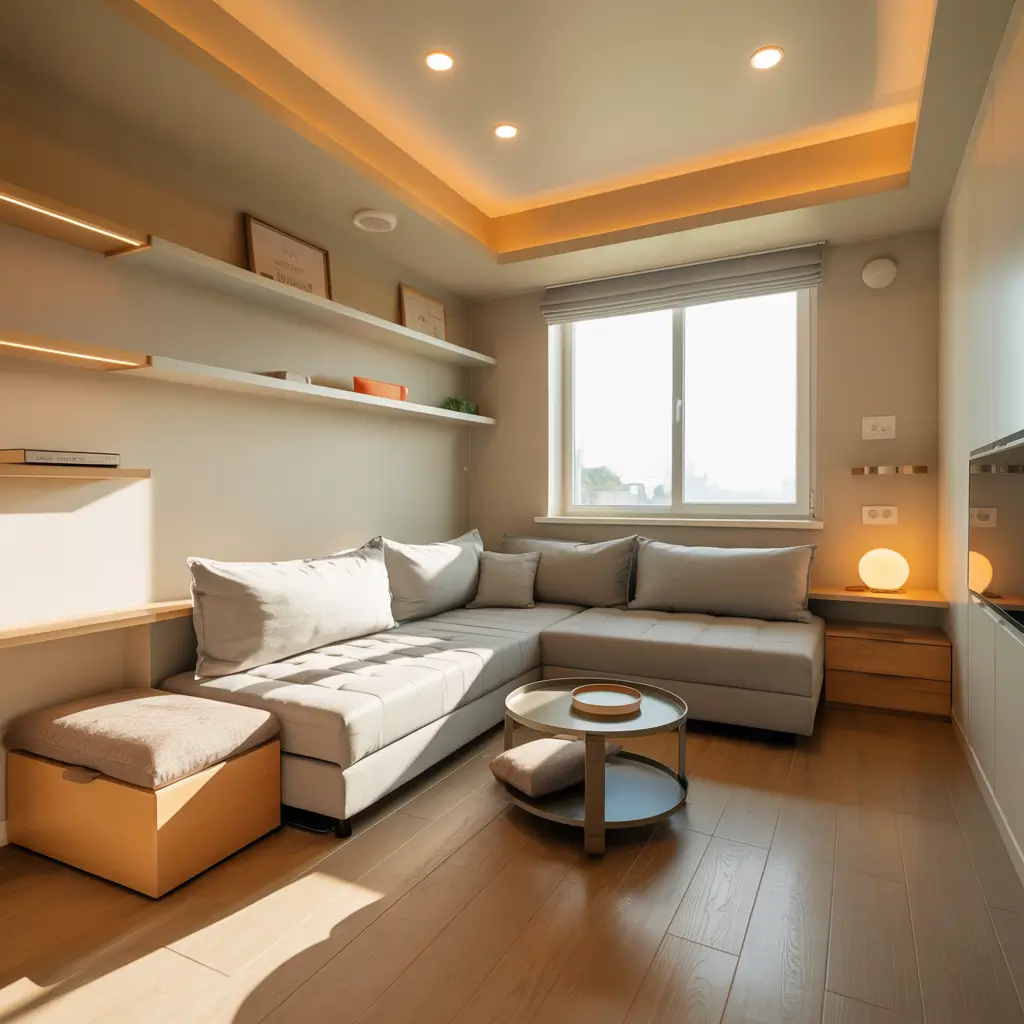
Okay, this is where we get tactical. Multi-functional furniture is literally the MVP of small apartment living, and I will die on this hill.
Think about it—why would you buy a coffee table that only serves coffee when you could get one with hidden storage compartments? Or better yet, one that lifts up so you can actually work or eat comfortably while binge-watching your show? (No shame, we all do it.)
My personal favorites:
- Storage ottomans – they’re seats, footrests, AND secret hiding spots for blankets, remotes, and all that random stuff
- Sofa beds or futons – because sometimes you need a couch, sometimes your friend crashes over
- Nesting tables – stack ’em when you don’t need them, spread ’em out when you’re hosting
- Wall-mounted drop-leaf tables – fold them up when not in use, boom, instant floor space
- Bookshelves that double as room dividers – storage AND spatial definition? Yes, please
I once had this incredible ottoman that had storage inside AND a flip-top tray. Honestly, it was doing more work than I was most days. 🙂
The trick here is to ask yourself if each piece of furniture can serve at least two purposes. If it can’t, it might not deserve the precious square footage it’s taking up.
3. Bright and Airy Small Living Room Layouts
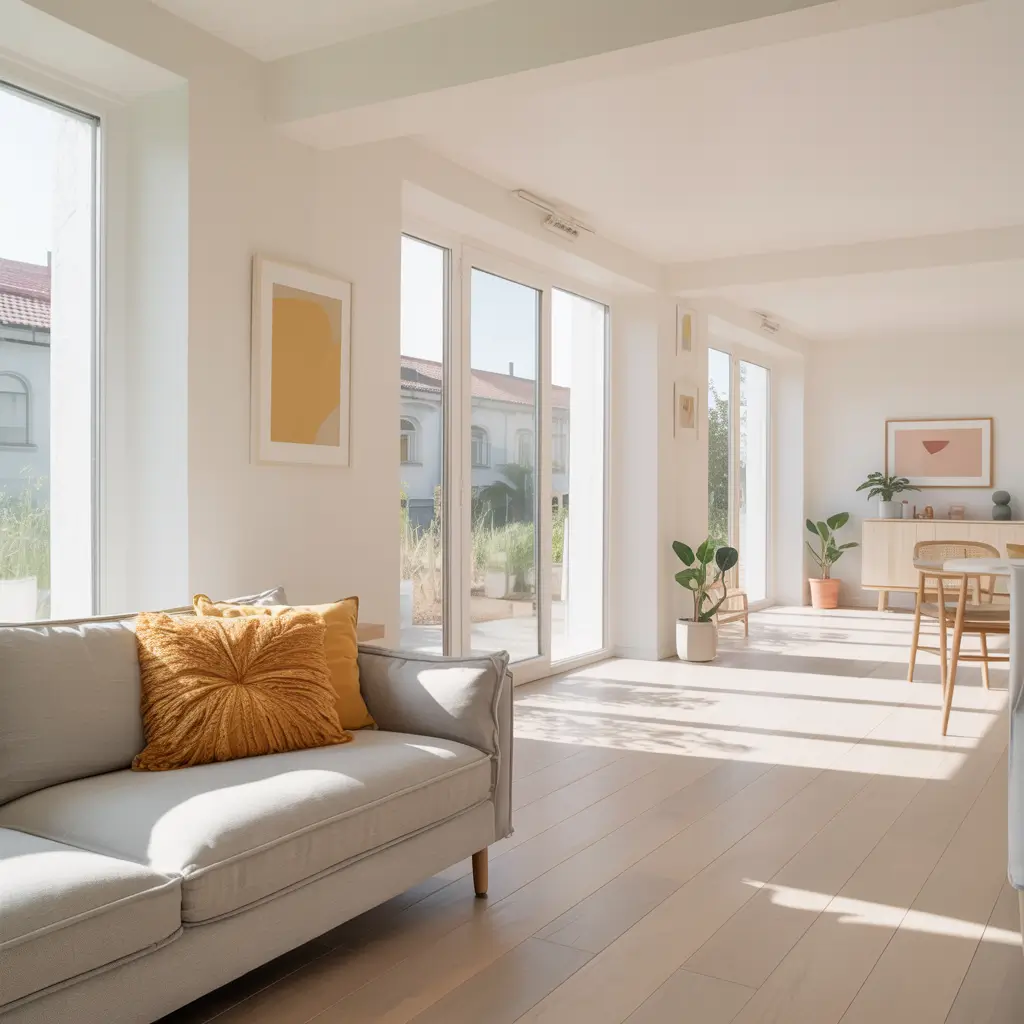
Natural light is basically magic for small spaces. I’m convinced that proper lighting can make a 200-square-foot room feel twice as big—and I’ve tested this theory extensively.
First rule: Don’t block your windows. I know that massive entertainment center would fit perfectly right there, but if it’s blocking your only natural light source, you’re shooting yourself in the foot. Keep windows as clear as possible and let that sunshine pour in.
Layout tips for maximum brightness:
- Position your sofa perpendicular or parallel to windows, not blocking them
- Use sheer curtains or light-filtering blinds instead of heavy drapes
- Paint walls in light, reflective colors – whites, creams, pale grays
- Add mirrors strategically across from windows to bounce light around
- Keep furniture low-profile so light can flow over and around pieces
I once painted a tiny living room in this beautiful warm white, and I swear it was like someone installed extra windows. The whole vibe shifted from “cozy cave” to “bright retreat,” and I actually wanted to hang out there instead of hibernating in my bedroom.
Want to know a sneaky trick? Glass furniture pieces (like acrylic coffee tables or glass side tables) let light pass through them, creating less visual weight. They’re there, but they’re not THERE, you know?
4. Space-Saving Storage Solutions
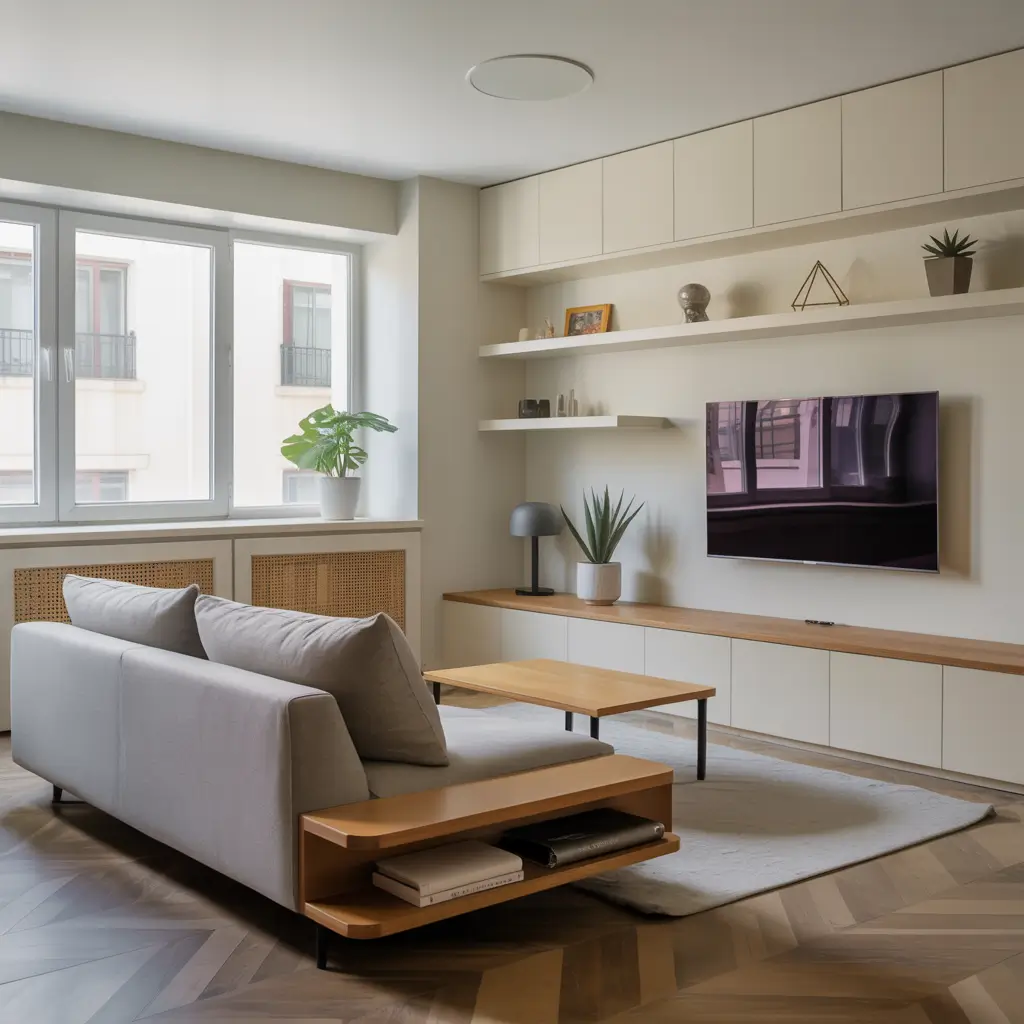
Let’s be real—clutter is the enemy of small spaces. But where the heck are you supposed to put all your stuff when your apartment has approximately zero closets?
Vertical storage is your new best friend. Seriously, walls are criminally underutilized in most small apartments. I started mounting shelves about two years ago, and it changed my entire living situation.
Storage solutions that actually work:
- Floating shelves – put them high, display books, plants, and decorative items
- Behind-the-door organizers – utilize every surface, including door backs
- Under-furniture storage bins – slide them under your sofa or TV stand
- Built-in bench seating with storage – if you’re handy or can hire someone
- Ladder shelves – they lean against the wall and take up minimal floor space
- Storage cubes – stackable, versatile, and come in every style imaginable
FYI, those cute woven baskets everyone puts on shelves? They’re not just for looks—they hide all the random junk that doesn’t have a home but that you still need. TV remotes, phone chargers, that one screwdriver you can never find when you need it… you get the idea.
The goal is to make storage invisible or decorative (or both). When your storage solutions look intentional and stylish, they add to the space instead of making it feel cluttered.
5. Modern Compact Living Room Design
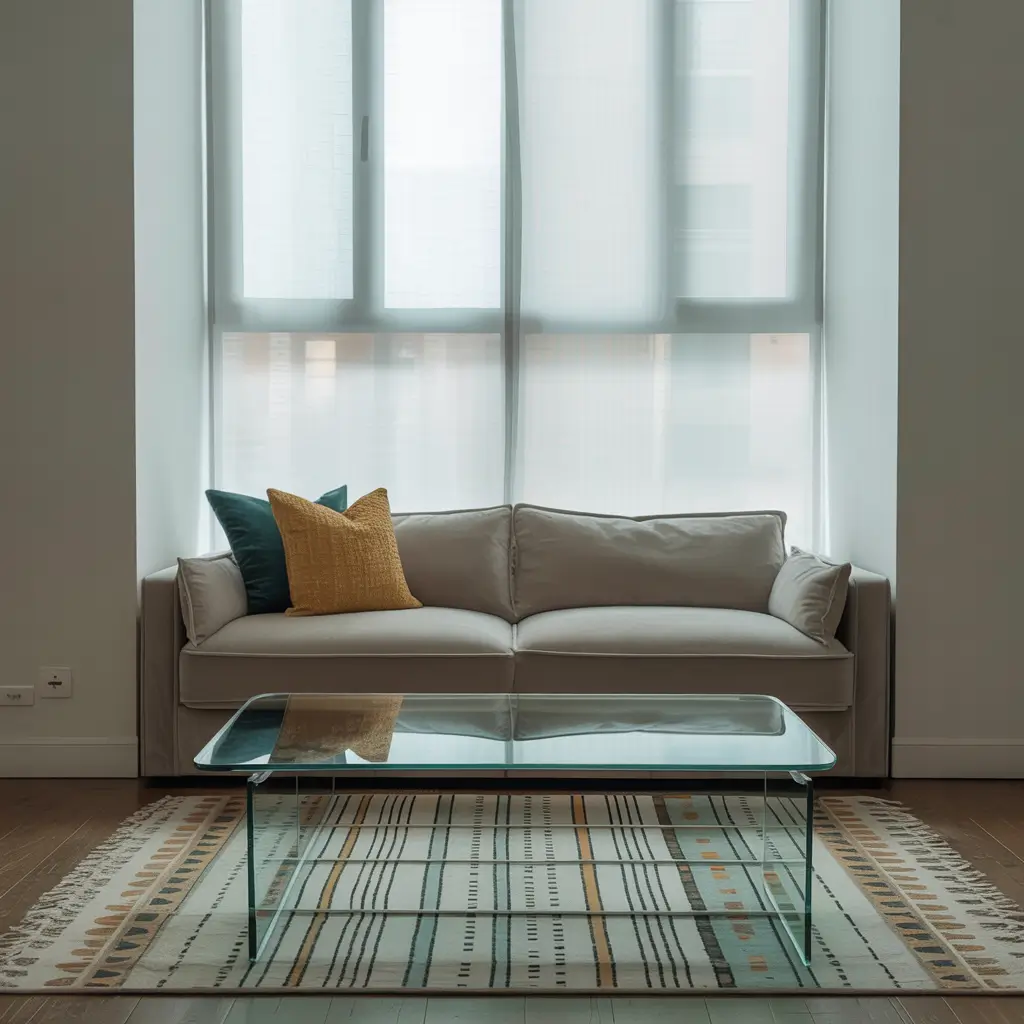
Modern design and small spaces are like peanut butter and jelly—they just work together beautifully. The clean lines, simple color palettes, and focus on functionality? Chef’s kiss for apartment living.
Modern compact design is all about editing. Every element serves a purpose, and nothing is there just because. It’s minimalism’s cooler, slightly more decorated cousin.
Key elements of modern compact design:
- Sleek, low-profile furniture with exposed legs (creates a sense of more floor space)
- Monochromatic or limited color schemes – usually 2-3 main colors max
- Geometric patterns and shapes used sparingly for visual interest
- Metal and glass accents that add sophistication without bulk
- Built-in or modular furniture that can be customized to your exact space
I’m a huge fan of furniture with exposed legs because it creates this visual trick where you can see the floor continuing underneath. Compare that to a sofa that sits directly on the ground, and you’ll see what I mean—the lifted version makes the room feel more open.
Also, modern design embraces technology integration. Hidden cable management, wall-mounted TVs, and smart home features keep things looking crisp and uncluttered. Because nothing ruins a sleek modern vibe like a tangle of cords, am I right? :/
Also Read: 15 Modern Small Apartment Living Room Tips for Open Feel
6. Small Apartment Living Room Color Hacks
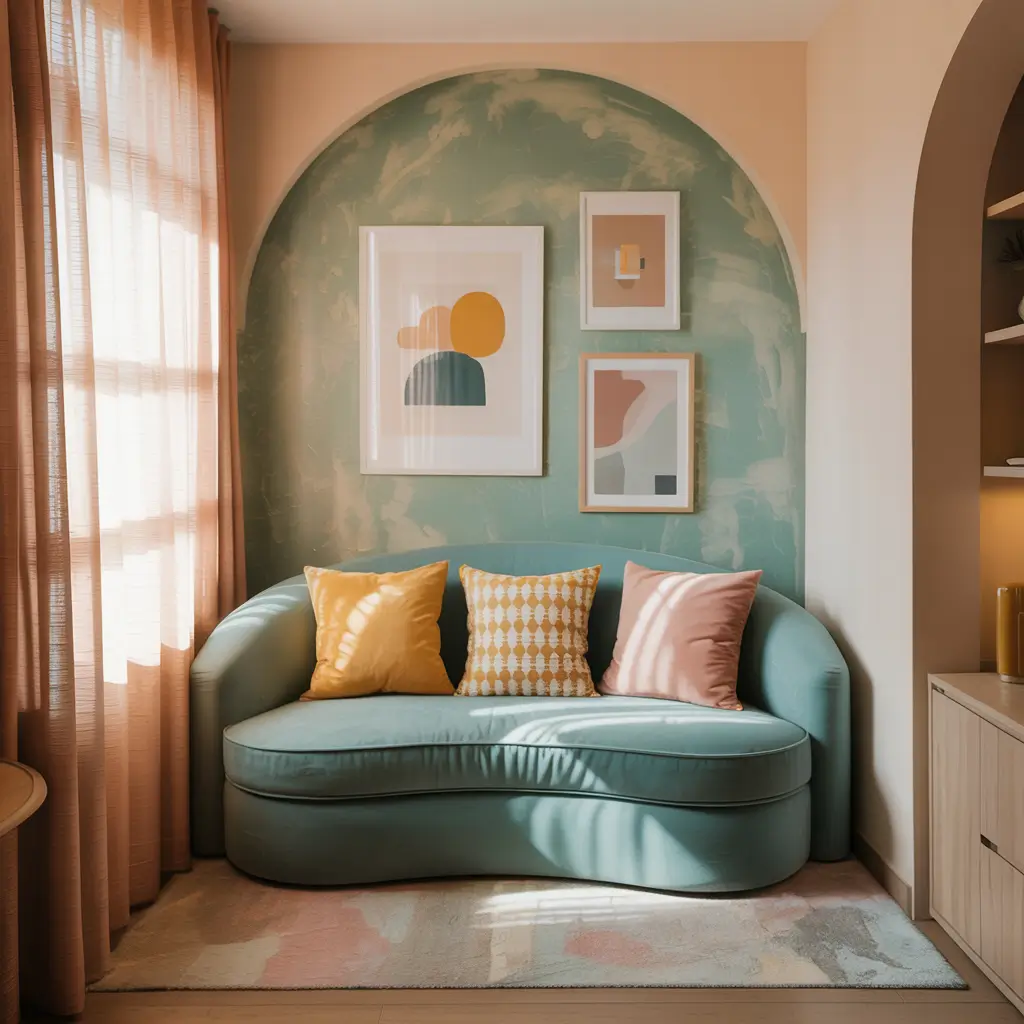
Color psychology is real, friends, and you can absolutely use it to manipulate how big your living room feels. It’s like visual trickery, but make it interior design.
Light colors reflect light and make spaces feel larger—this isn’t groundbreaking news, but people still get it wrong by going TOO neutral and ending up with a boring beige box.
Here’s what actually works:
- Soft whites with warm or cool undertones (test samples in your actual lighting!)
- Pale blues and greens – they recede visually, making walls seem farther away
- Monochromatic color schemes – varying shades of one color create depth without chaos
- One accent wall in a darker shade – adds dimension without overwhelming
- Bold pops of color in accessories – pillows, art, plants bring personality
My controversial take? Dark colors can work in small spaces if you commit fully. I’ve seen tiny living rooms painted in deep navy or charcoal that feel incredibly cozy and surprisingly spacious because the walls seem to disappear. But this is advanced-level stuff—you gotta fully commit and balance it with lots of light.
Another hack: Paint your ceiling the same color as your walls (or even slightly lighter). This eliminates visual breaks and makes the eye travel smoothly, creating an illusion of more height and space.
7. Scandinavian Style Small Living Rooms
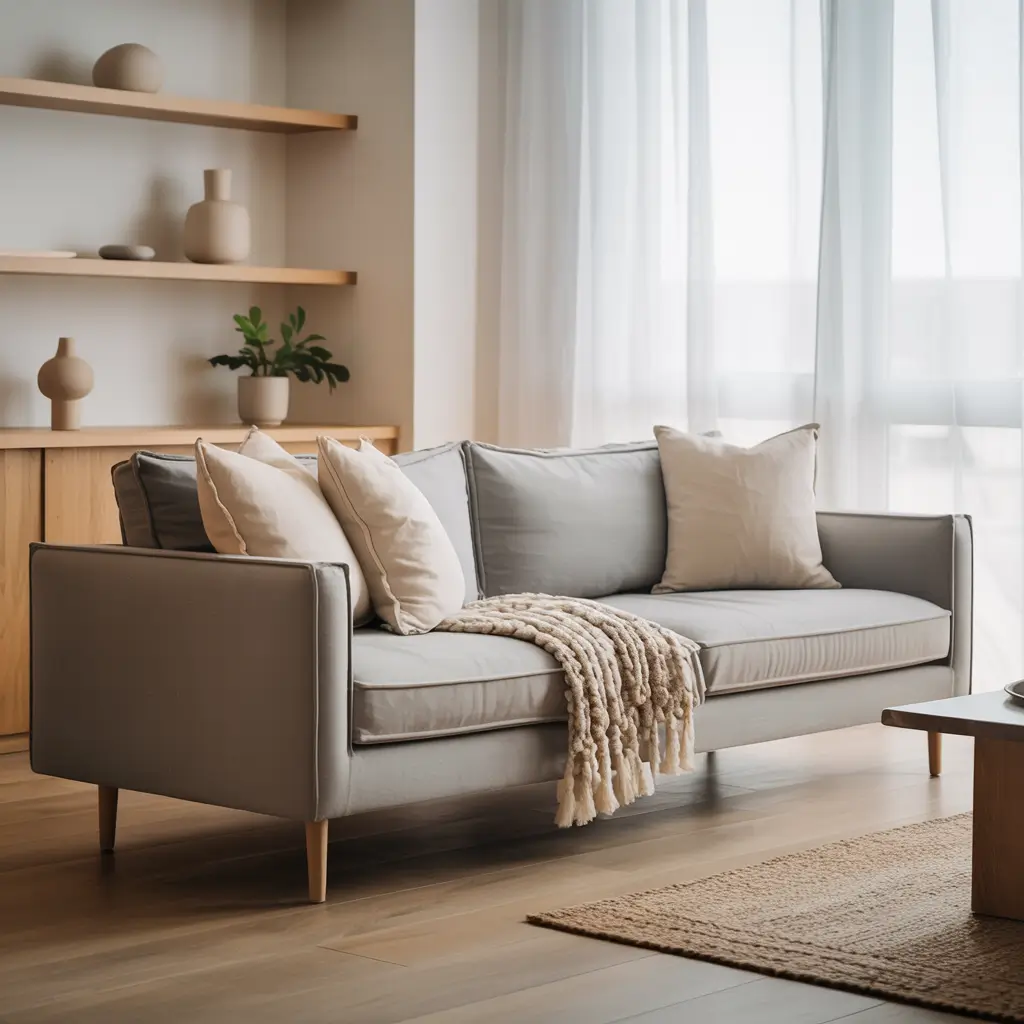
Can we just appreciate how Scandinavians basically invented small-space living? They live with long, dark winters in often compact apartments, and they’ve mastered making those spaces feel warm, inviting, and totally Instagram-worthy.
Scandinavian style combines minimalism with coziness—they call it “hygge,” and honestly, we should all be taking notes.
Essential Scandi elements:
- Light wood tones (think birch, ash, pine) that add warmth without darkness
- Whites and off-whites as base colors with gray and black accents
- Natural textures – linen, wool, sheepskin, jute
- Simple, functional furniture with clean lines
- Lots of candles and soft lighting for that cozy factor
- Minimal but intentional decor – every piece has meaning
I fell in love with Scandinavian design when I realized it prioritizes comfort without sacrificing style. You can have a beautiful space that’s also actually livable—what a concept!
The Scandi approach to small living rooms focuses on quality over quantity. Instead of five okay pillows, invest in two really beautiful ones. Instead of cheap furniture that’ll fall apart, save up for solid pieces that’ll last. It’s about being selective and intentional.
Plus, the light color palette naturally makes small spaces feel bigger and brighter. It’s basically designed for compact living, which makes it perfect for apartments.
8. Stylish Small Living Room Makeover on a Budget
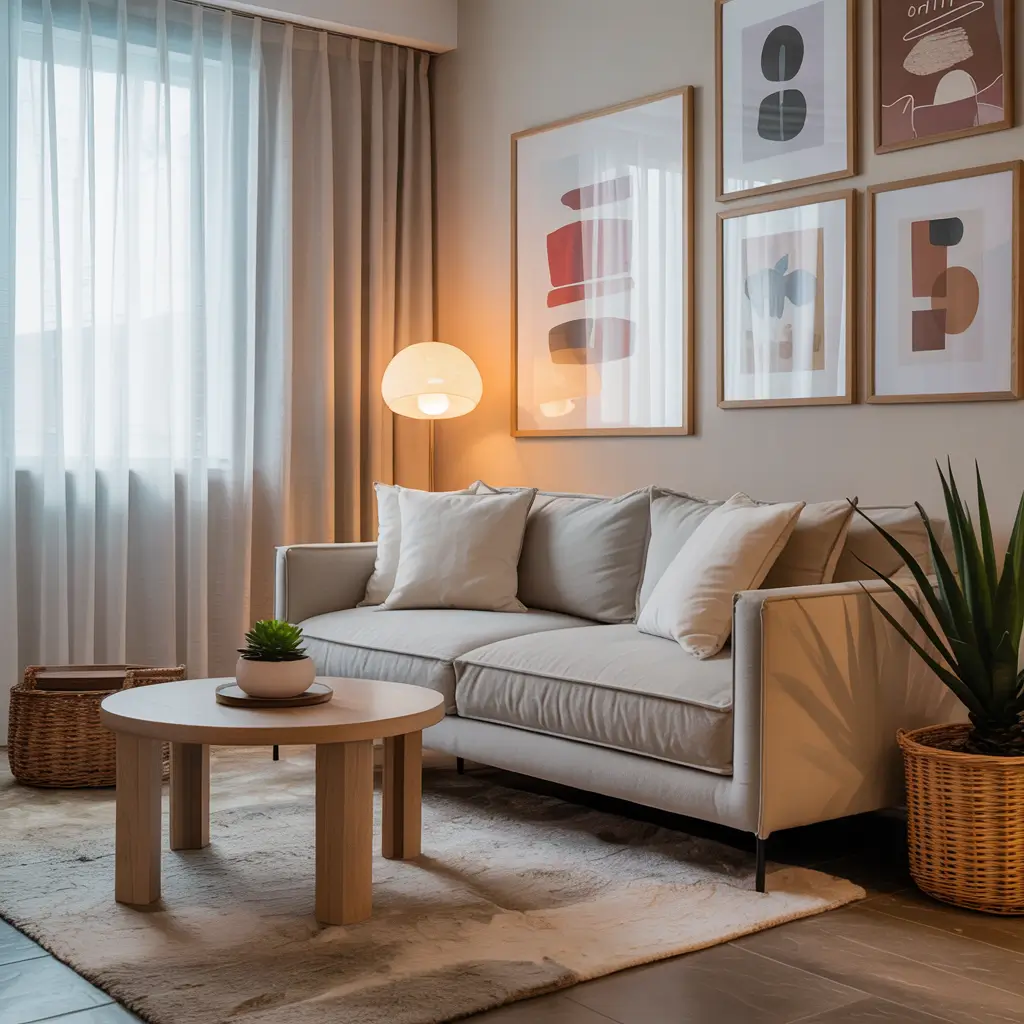
Look, not all of us have unlimited funds to throw at our living rooms. Sometimes you’re working with a budget that’s more “ramen noodles” than “champagne brunch,” and that’s totally fine.
You can absolutely transform a small living room without emptying your bank account. I’ve done it multiple times, and some of my favorite spaces were the ones I did on a shoestring budget.
Budget-friendly makeover ideas:
- Paint – literally the most cost-effective transformation (one gallon can change everything)
- Rearrange your furniture – costs exactly zero dollars and can completely change the flow
- DIY artwork – print high-res images online or frame fabric, wallpaper samples, or pages from old books
- Thrift and vintage shop – some of my best furniture pieces cost under $50
- Slipcovers – transform an ugly hand-me-down sofa for a fraction of buying new
- Peel-and-stick wallpaper – add an accent wall without the commitment or cost of real wallpaper
- Swap accessories – new pillows, throws, and curtains can totally change a room’s vibe
IMO, the best budget trick is focusing on one or two impact pieces and keeping everything else simple. Maybe splurge on a really great rug or invest in one piece of statement art, then fill in around it with budget finds.
I once completely redid a living room for under $300 by painting the walls, making my own curtains, finding a vintage coffee table at a yard sale, and swapping out throw pillows. It looked like a completely different space, and friends kept asking if I’d moved.
9. Tiny Living Room with Statement Wall Art
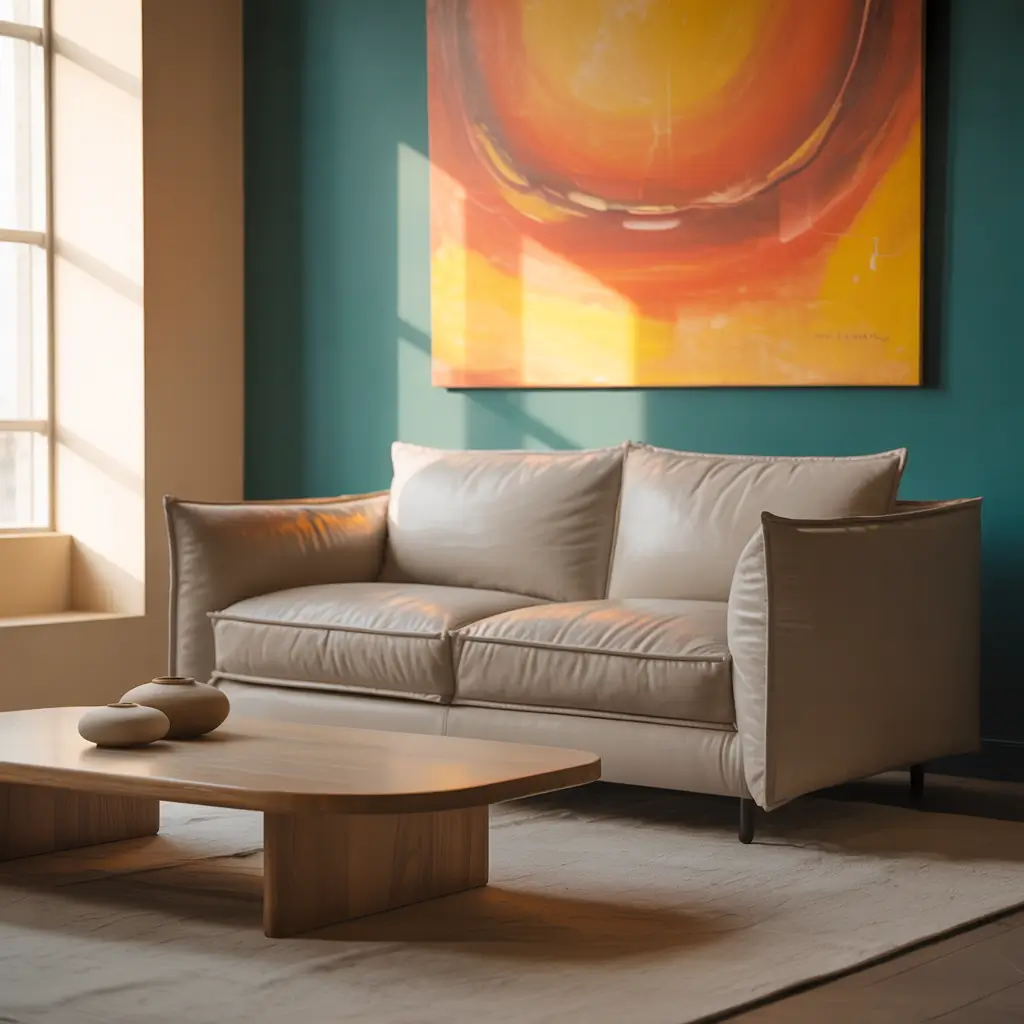
Here’s something people get wrong about small spaces: they think small rooms need small decor. Nope. One large piece of art often works better than a gallery wall of tiny pieces.
Statement wall art draws the eye to a focal point and adds personality without taking up any floor space. It’s basically the perfect small-space decor element.
How to use statement art effectively:
- Go big or go home – one large piece above the sofa makes more impact than multiple small ones
- Choose art that reflects your personality – this is what makes your space feel like YOU
- Consider the color palette – pick art that either complements or intentionally contrasts with your room
- Don’t be afraid of bold – in a neutral space, colorful art adds that pop you need
- Mix mediums – photography, paintings, textiles, or even 3D pieces
I learned this lesson when I kept trying to create the perfect gallery wall in my tiny living room. After the fourth rearrangement, I gave up, took everything down, and hung one large abstract piece instead. The difference was incredible—the room suddenly felt more cohesive and sophisticated.
Your statement art becomes the room’s personality. Everything else can be relatively neutral, but that one piece tells visitors something about who you are and what you love. Plus, it’s a conversation starter that doesn’t require any square footage.
Also Read: 15 Bright Apartment Living Room Inspirations for Every Style
10. Compact Lounge Areas with Smart Furniture
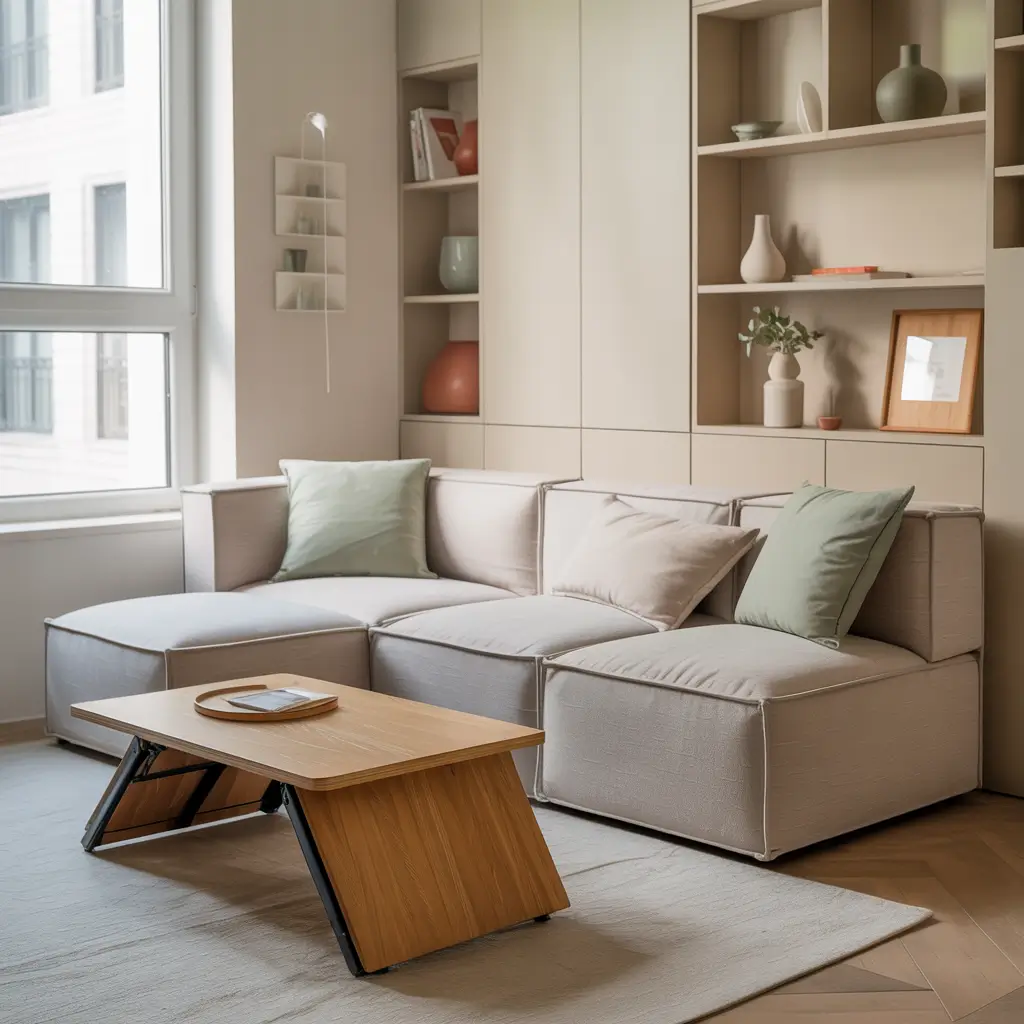
Creating a legit lounge area in a tiny apartment seems impossible until you discover smart furniture. And no, I don’t mean furniture with Bluetooth capabilities (though that exists too, apparently).
Smart furniture is just exceptionally well-designed pieces that earn their space through functionality, versatility, or space-saving design.
Smart furniture options for compact lounging:
- Armless chairs or loveseats – save several inches of width while still providing seating
- Sectionals designed for small spaces – they maximize corner space efficiently
- Poufs and floor cushions – extra seating that stores easily when not needed
- Swivel chairs – one chair serves multiple conversation areas
- Modular seating – rearrange based on whether you’re solo or hosting
- Wall-mounted desks that fold down – create a workspace when needed, disappear when not
The coolest piece I ever owned was this modular seating system where individual pieces could be ottomans, chairs, or combined into a small sectional depending on what I needed that day. It was like furniture Tetris, and I loved it.
When choosing lounge furniture for small spaces, measure everything twice and consider the visual weight, not just physical size. A bulky, overstuffed chair might physically fit, but it can make the space feel cramped. A sleeker design with the same seating capacity might work better visually.
11. Small Living Room Lighting Ideas
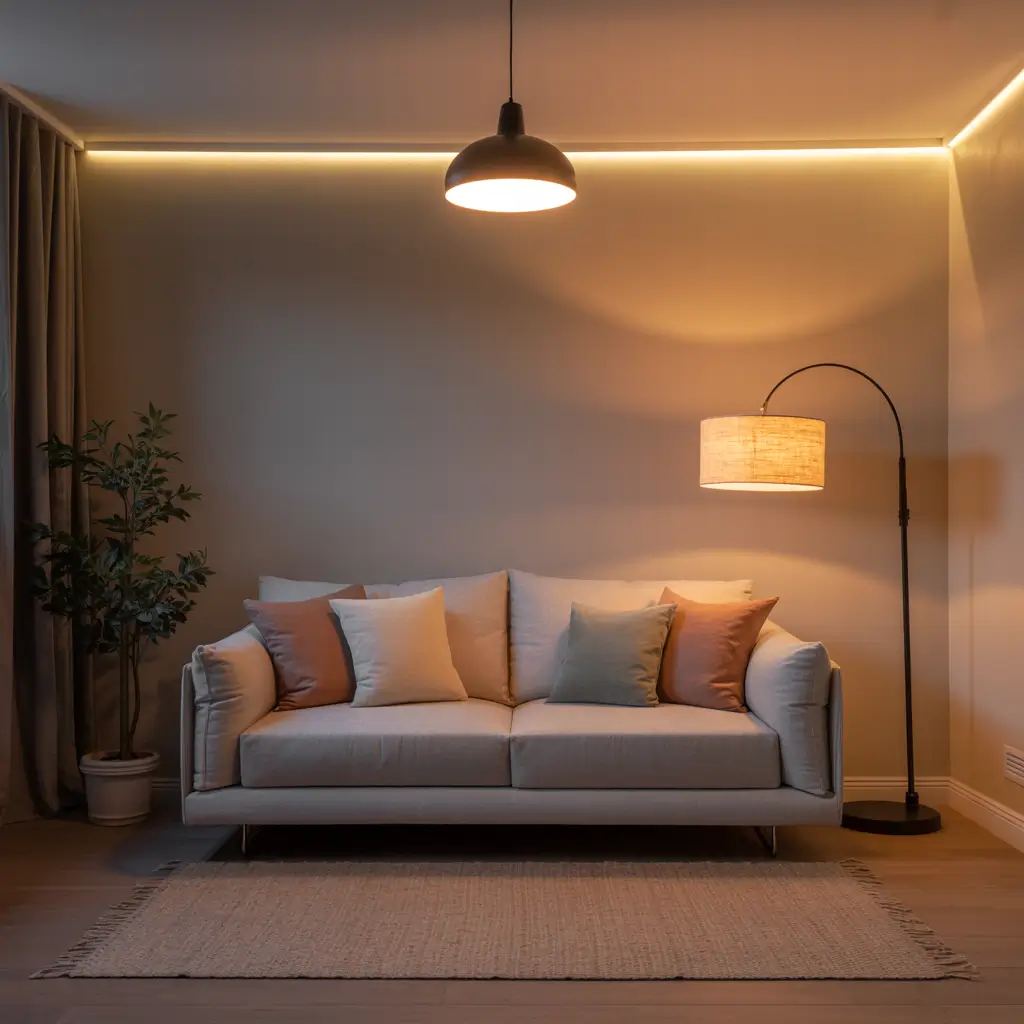
Lighting is honestly one of the most overlooked elements in small apartment living rooms, and it makes me want to shake people. Good lighting can make or break a space, especially a small one.
Layered lighting is the secret. You need ambient lighting (overall illumination), task lighting (for specific activities), and accent lighting (for mood and dimension).
Lighting strategies for small living rooms:
- Multiple light sources at different heights – floor lamps, table lamps, wall sconces, overhead
- Dimmers on everything possible – control the mood and brightness
- Wall-mounted lights – save table space while providing illumination
- LED strip lights – hidden under shelves or behind furniture for ambient glow
- Light-colored lampshades – they diffuse light better than dark shades
- Mirrors to amplify light – strategically placed to reflect and multiply light sources
Here’s what I wish someone had told me earlier: overhead lighting alone makes small rooms feel harsh and flat. You need those multiple sources to create depth and dimension. When you walk into a well-lit small living room with several light sources, it feels cozy and layered instead of cramped.
I’m also a huge fan of warm-toned bulbs (around 2700-3000K) for living rooms. Cool white bulbs might save energy, but they make small spaces feel clinical and uninviting. The warm glow creates that lived-in, comfortable vibe you actually want in a living room.
12. Open Concept Small Apartment Living Rooms
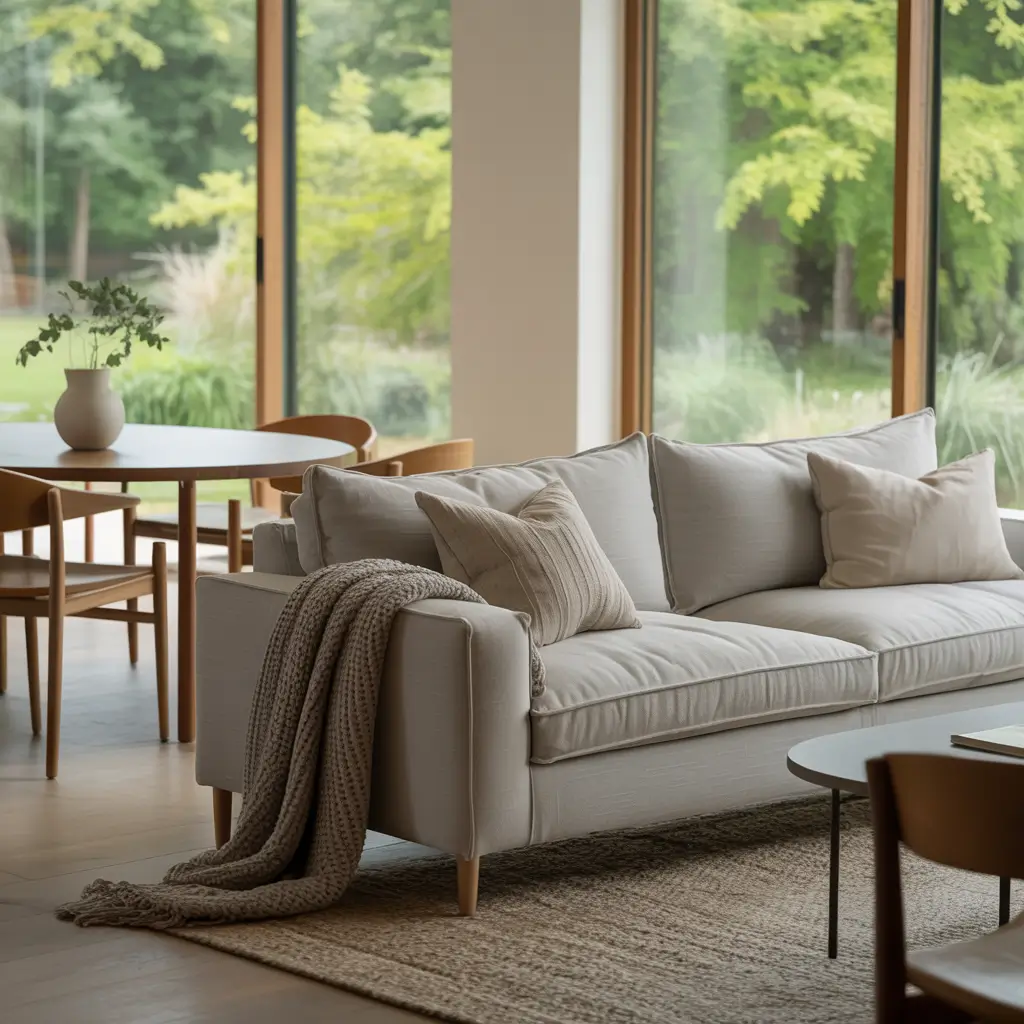
If your apartment has an open concept layout, congratulations—you’ve already got a head start on making your small living room feel bigger. But it also presents its own challenges because you need to define the space without walls.
The key is creating visual boundaries without blocking sightlines. You want distinction between areas without chopping up the open flow that makes it feel spacious.
Ways to define your living room in open concept:
- Rugs – a well-placed area rug instantly defines the living room zone
- Furniture arrangement – angle your sofa to create a natural boundary
- Open shelving units – provide separation without blocking light or views
- Different lighting for each zone – helps distinguish spaces functionally
- Consistent color palette – ties everything together while allowing subtle shifts between areas
- Sofa placement – using the back of a sofa as a “wall” between living and dining areas
I lived in a studio with zero walls for two years, and I got really creative with space definition. My bookshelf served as a room divider between my living area and bedroom area, and honestly, it worked perfectly. I could see through it enough to maintain the open feeling, but it provided enough visual separation to feel like distinct spaces.
Avoid blocking pathways in open concept layouts. The beauty of open space is the flow, so make sure you can move easily between zones without doing parkour over furniture.
13. Vertical Storage Ideas for Small Spaces
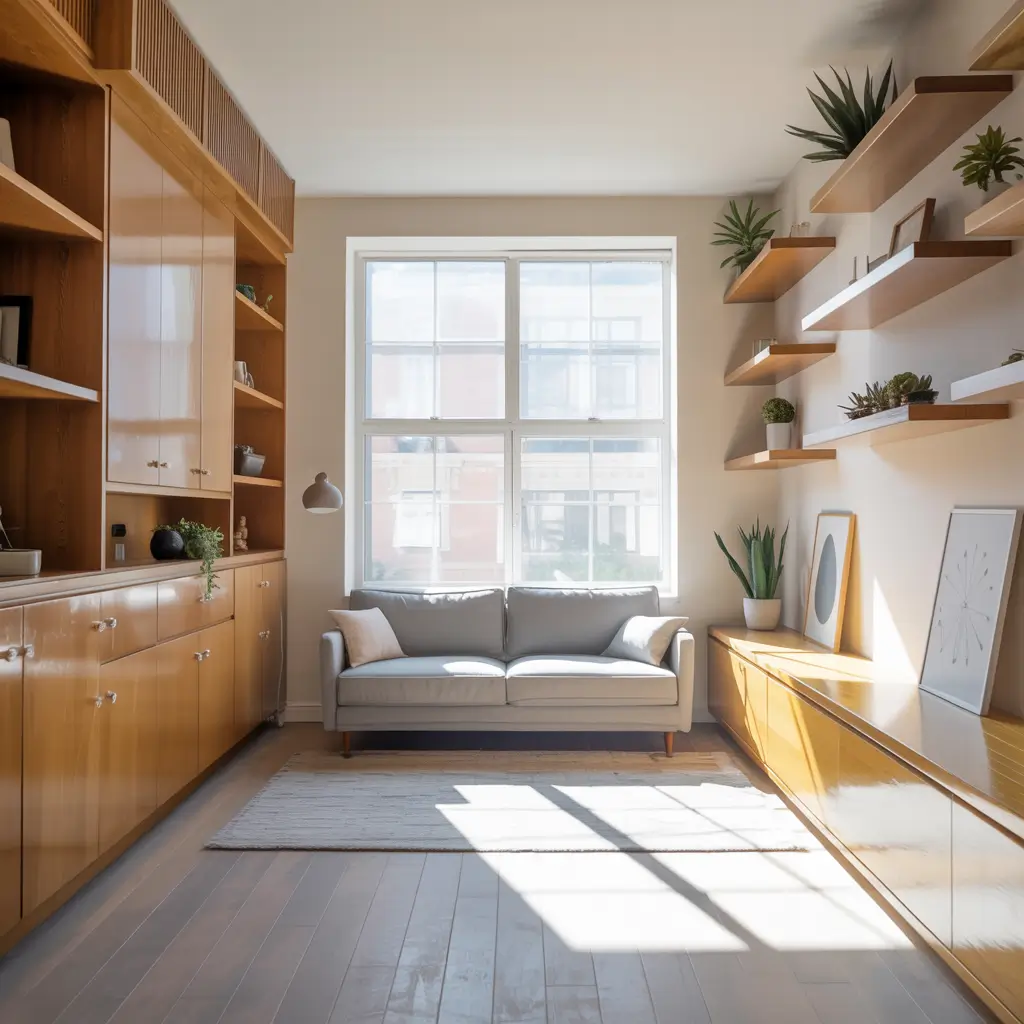
I’m going to sound like a broken record here, but vertical storage is SO important for small living rooms that it deserves its own section.
When you can’t expand outward, expand upward. Your walls are prime real estate that probably aren’t being used to their full potential.
Vertical storage solutions:
- Floor-to-ceiling shelving – emphasizes height and provides tons of storage
- Tall, narrow bookcases – take up minimal floor space while maximizing storage
- Wall-mounted cabinets – keep the floor clear while hiding clutter
- Pegboards – not just for garages, they’re trendy and functional for living rooms
- Hanging planters – add greenery without using surface space
- Vertical magazine racks or file holders – wall-mounted organization that looks intentional
The psychological effect of vertical storage is real. When you draw the eye upward with tall storage solutions, you make the ceiling feel higher and the room feel larger. It’s the same reason vertical stripes are slimming—the principle works in rooms too.
I installed floor-to-ceiling shelving in one apartment, and beyond the obvious storage benefits, it completely changed the room’s proportions. The ceiling suddenly felt a foot higher, even though nothing actually changed except adding vertical lines.
Just remember: anchor everything properly. The last thing you need is a bookshelf face-planting in the middle of the night because you didn’t mount it correctly. Safety first, style second.
14. Small Living Room Plants and Greenery Decor
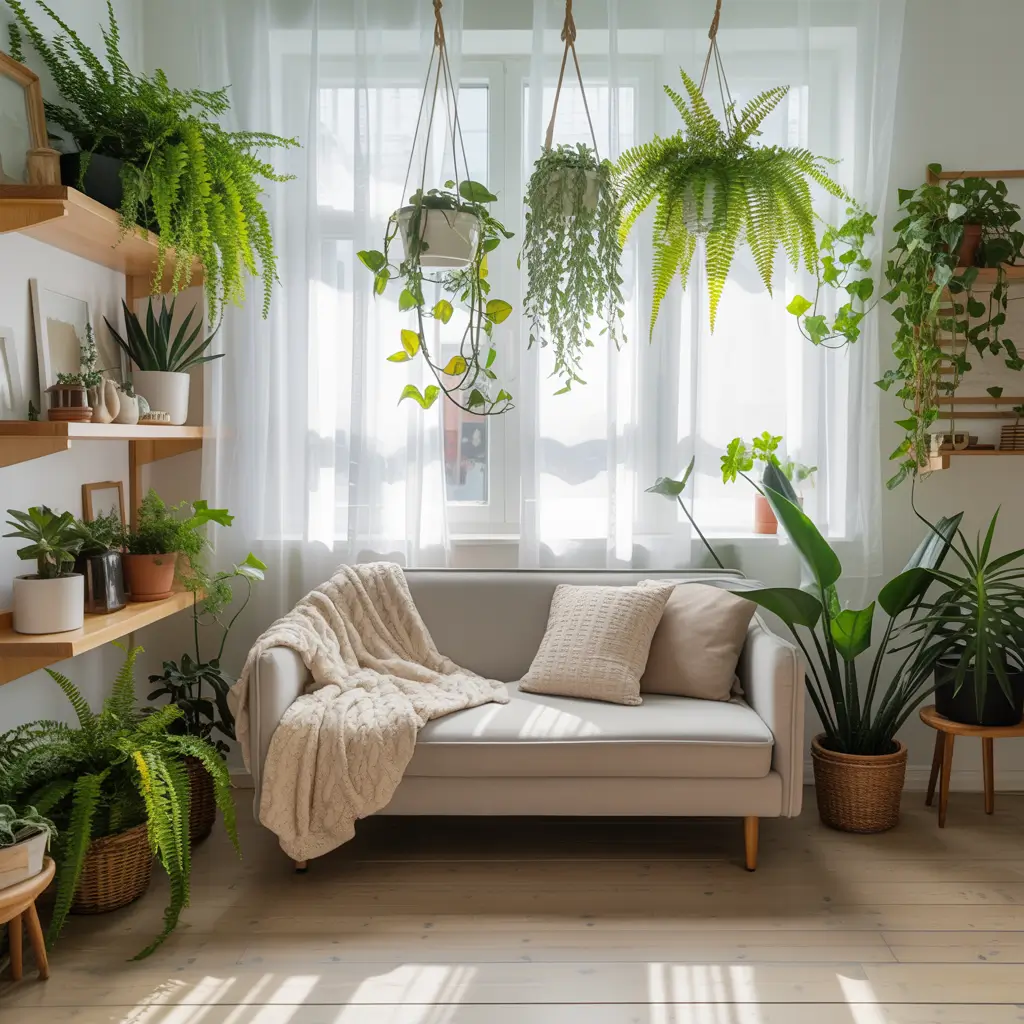
Plants are genuinely my favorite decor element for small living rooms. They add life, color, texture, and even improve air quality—all without taking up much space if you choose wisely.
The right plants can make a small room feel fresh and vibrant without contributing to clutter. The wrong plants (looking at you, giant fiddle leaf fig in a 100-square-foot room) can overwhelm the space.
Best plants for small living rooms:
- Pothos or philodendrons – trailing plants on high shelves add vertical interest
- Snake plants – vertical growth, low maintenance, air-purifying
- Small succulents – clustered on a tray or shelf for impact
- Hanging plants – utilize ceiling space creatively
- Herbs in the windowsill – functional AND decorative if you have window space near the living area
Group small plants together for more impact rather than scattering individual plants around. Three small pots grouped on a side table make more of a statement than three single plants in different corners.
I’m personally obsessed with hanging plants because they add greenery without using any surface space. I’ve got a pothos hanging in my living room that has vines trailing down about four feet, and it adds this amazing organic element without cluttering surfaces.
Pro tip: Choose pots that complement your decor style. The containers matter almost as much as the plants themselves. Mismatched random pots can look cluttered, while coordinated planters (even in different sizes) look intentional and pulled-together.
15. Small Living Room Decor for Maximum Impact
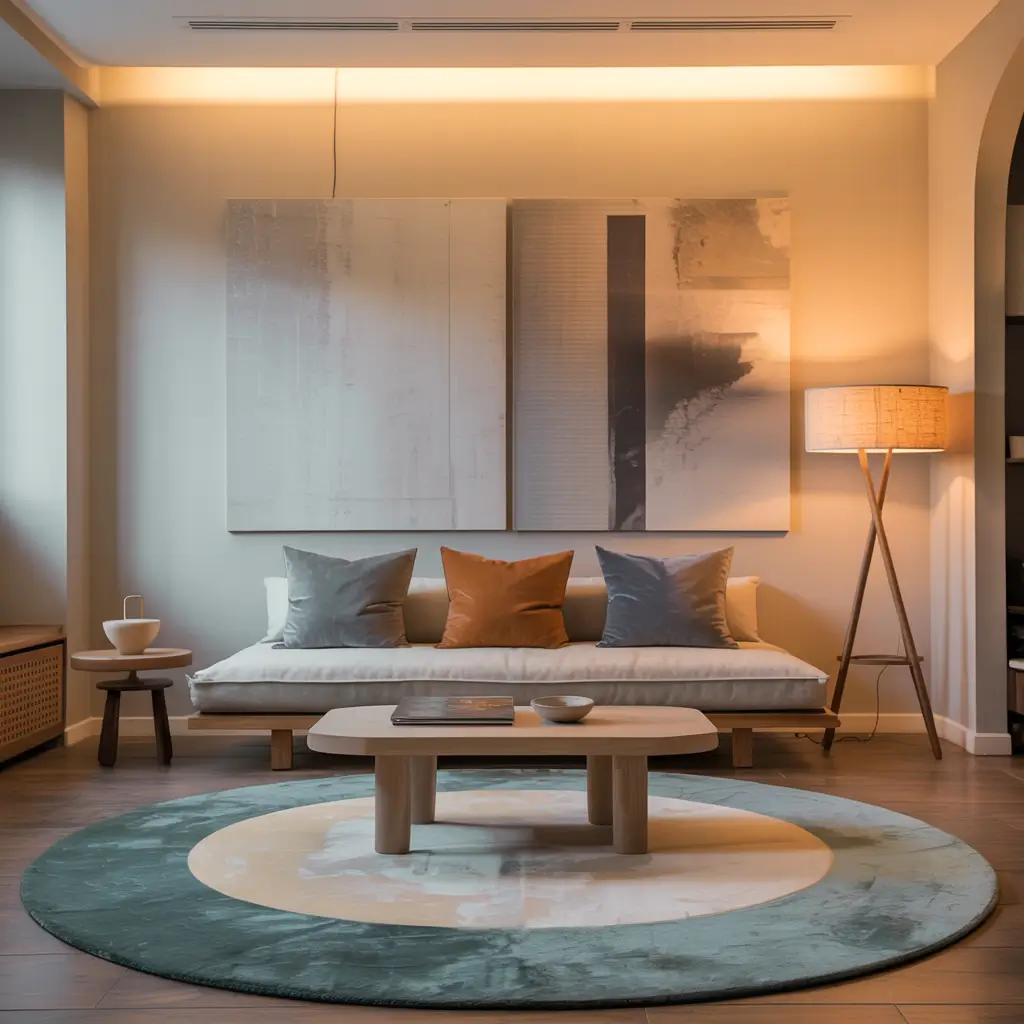
Alright, we’ve covered the big stuff—furniture, storage, lighting, all that practical jazz. Now let’s talk about the finishing touches that take a small living room from “functional” to “actually stunning.”
Strategic decor makes small spaces feel curated and intentional instead of just stuffed with furniture. The key word here is “strategic”—every decorative element should earn its place.
High-impact decor choices:
- Textured throws and pillows – add depth and coziness without space
- One statement piece – whether it’s a unique vase, sculpture, or decorative object
- Books styled on coffee tables or shelves – add personality and color
- Candles – create ambiance and can be functional too
- Personal photos in cohesive frames – make it feel like YOUR space
- Metallics – mirrors, brass accents, or chrome reflects light and adds sophistication
The biggest mistake I see in small living rooms is over-decorating. Just because you have a surface doesn’t mean you need to fill it. Negative space (that whole minimalist thing we talked about earlier) lets your decor choices shine instead of competing with each other.
I follow this rule: If I bring something new in, something old has to go. It keeps me from accumulating clutter and forces me to be selective about what deserves space in my living room. Is this new decorative bowl really cooler than the one I already have? If not, it doesn’t make the cut.
Also, rotate your decor seasonally. You don’t need everything out all the time. Store some items and swap them out every few months for a fresh look without spending money or taking up permanent space.
Final Thoughts
Here’s what I’ve learned from years of living in small apartments: size constraints force creativity, and creativity leads to really cool, unique spaces.
Sure, a massive living room with endless square footage sounds nice in theory. But there’s something special about a small living room that you’ve thoughtfully designed to maximize every inch. It feels cozier, more personal, and honestly, easier to maintain than those huge spaces that echo when you walk through them.
The 15 ideas we just covered aren’t meant to be implemented all at once (please don’t do that—it’ll look chaotic). Pick the ones that resonate with your style and address your specific space challenges. Maybe you desperately need better lighting, or perhaps storage is your main issue. Start there.
Your small living room has potential—it just needs someone (that’s you) to see it and bring it out. And once you nail it? Every time you walk into that perfectly optimized, beautifully styled space, you’ll get that little hit of satisfaction that makes apartment living totally worth it.