15 Creative Small Living Room Ideas Apartment Cozy and Modern

Look, I get it. You’re staring at your tiny apartment living room wondering how on earth you’re supposed to make this shoe-box feel like a Pinterest-worthy sanctuary. Been there, done that, got the cramped floor plan to prove it. But here’s the thing—small spaces have serious potential when you know the right tricks.
I’ve spent years transforming compact living rooms (including my own claustrophobic first apartment), and honestly? Some of my favorite spaces have been the smallest ones. There’s something magical about making every square inch count and creating a cozy retreat that doesn’t feel like you’re living in a storage unit. So let’s talk about 15 creative ideas that’ll transform your small living room into something actually livable—and dare I say, Instagram-worthy.
1. Minimalist Cozy Apartment Living Room
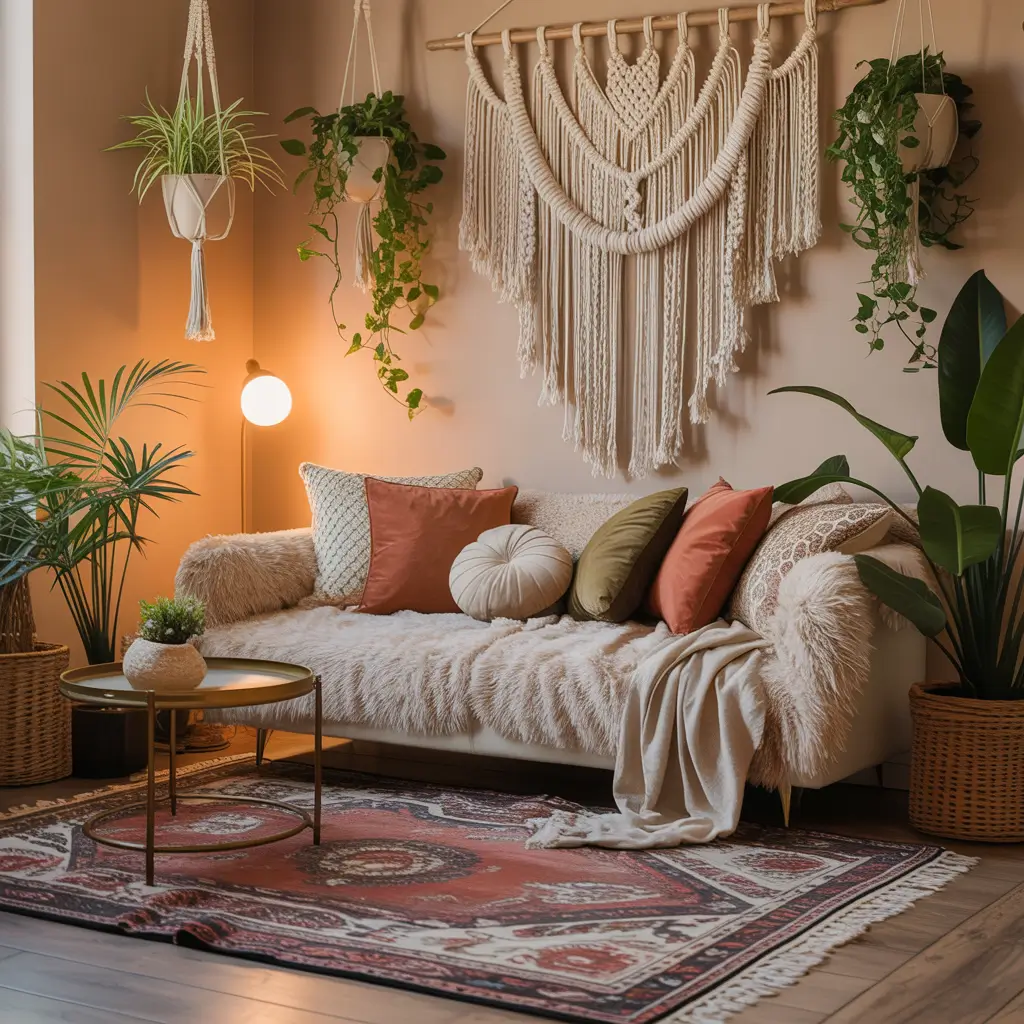
You know what’s weird? People think minimalism means cold and sterile. Wrong. I’ve created some of the coziest spaces by embracing the “less is more” philosophy, and your small living room will thank you for it.
Start by decluttering ruthlessly. I’m talking Marie Kondo levels of editing. Keep only what you genuinely use or love. Your small space can’t afford to house that random IKEA vase you bought three years ago “just because.”
Here’s what actually works in a minimalist cozy setup:
- A streamlined sofa in a neutral color (think beige, gray, or soft white)
- One statement piece like a beautiful floor lamp or a single piece of art
- Hidden storage solutions that don’t scream “I’m desperate for space”
- Quality over quantity with throw pillows—two or three really nice ones beat a mountain of cheap cushions
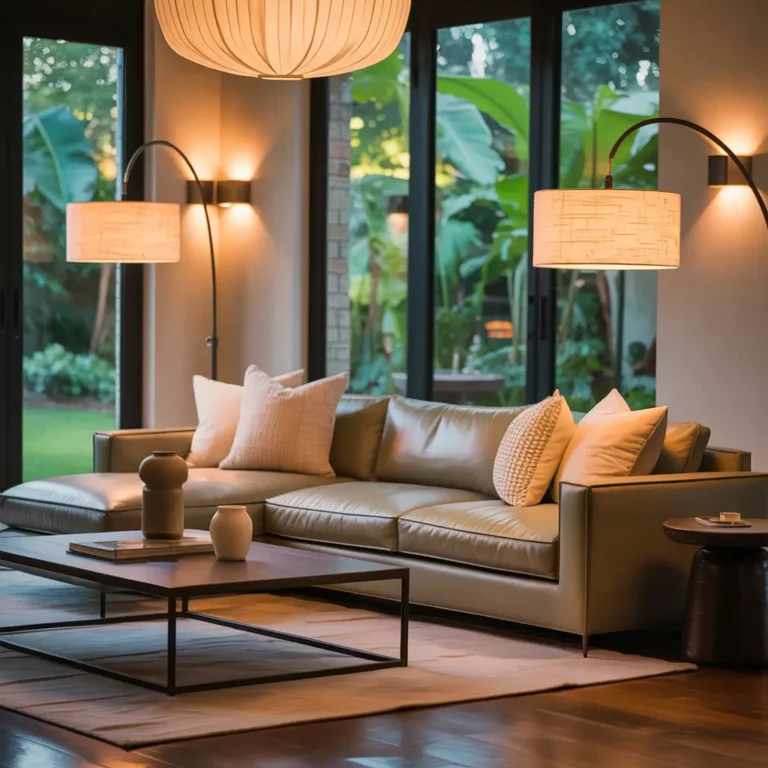
The secret sauce? Texture. You can keep things minimal while adding warmth through materials. I love mixing a linen sofa with a chunky knit throw and maybe a smooth ceramic vase. Your eye gets the visual rest from the clean lines, but your brain still registers “cozy.”
Ever noticed how luxury hotels feel spacious even in compact rooms? They master this minimalist-meets-cozy balance. Copy their homework.
2. Boho Chic Small Living Room Inspiration
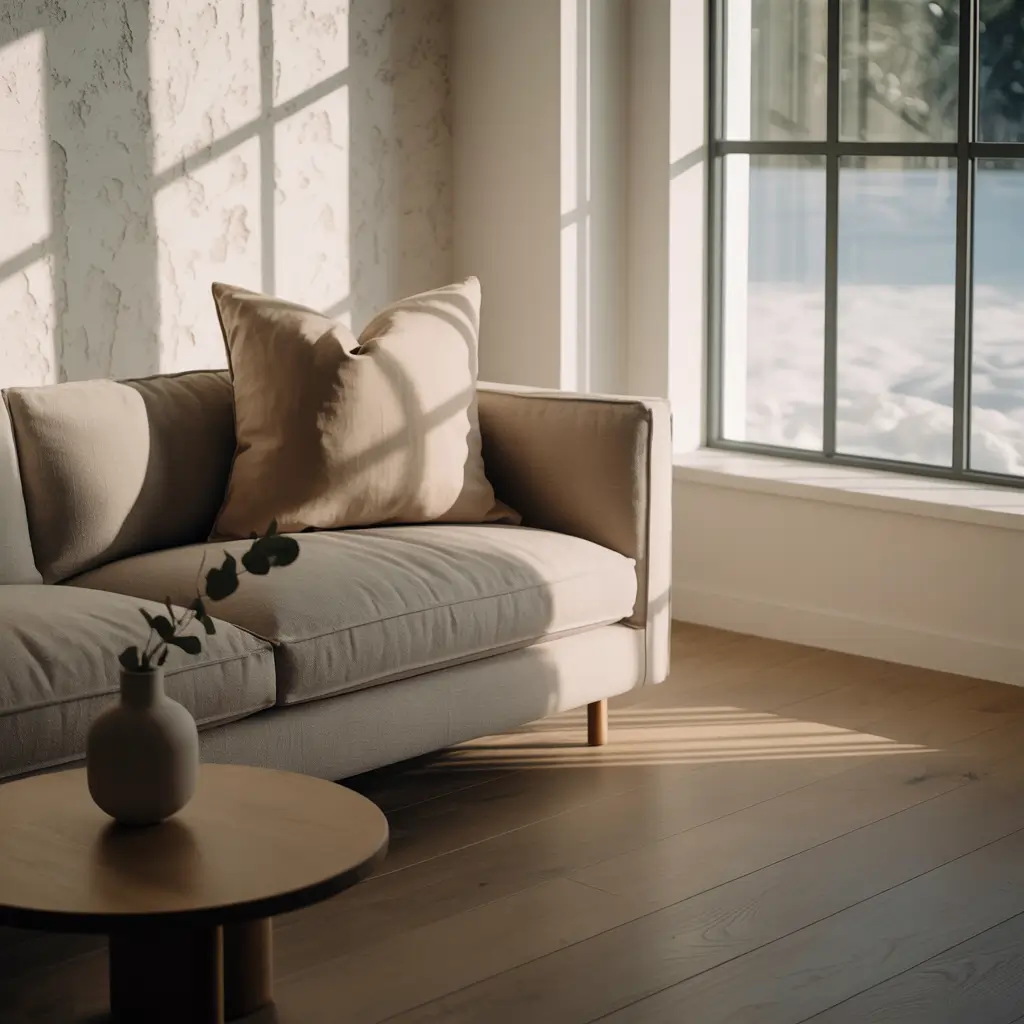
Okay, confession time: I used to think boho style was just an excuse to hoard stuff. But when you do it right in a small space? Chef’s kiss. It’s all about controlled chaos and making your living room feel like a cozy, well-traveled retreat.
The boho approach works brilliantly in small apartments because it celebrates eclectic pieces and natural materials. You don’t need everything to match, which takes the pressure off when you’re shopping on a budget.
Key elements for nailing boho in tight quarters:
- Macramé wall hangings instead of bulky art (they add texture without eating floor space)
- Floor cushions and poufs that double as seating and ottomans
- Rattan or wicker furniture that feels airy and light
- Vintage textiles like Turkish rugs or embroidered pillows
- Hanging plants to bring in greenery without sacrificing surface area
Here’s my hot take: boho only works if you edit thoughtfully. Don’t fall into the trap of “more is more.” Choose your statement pieces—maybe that incredible vintage rug and some killer pillows—then build around them. IMO, three or four well-chosen boho pieces beat cramming every surface with knick-knacks.
I transformed my friend’s tiny 200-square-foot living room last year using boho principles. We hung plants from ceiling hooks, layered one amazing rug over neutral flooring, and added floor cushions she could tuck away when needed. The space felt both cozy and surprisingly open.
3. Scandinavian Style Compact Living Room
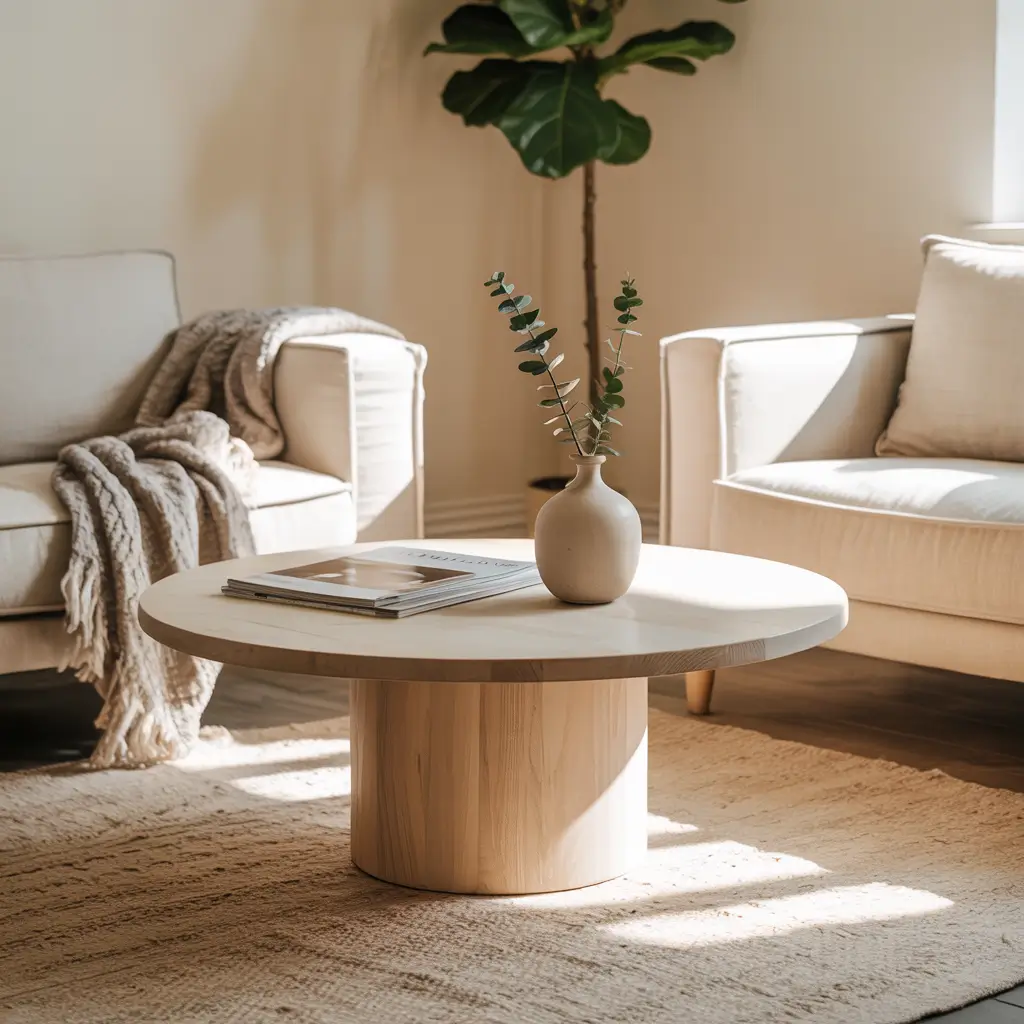
Listen, the Scandinavians know cold, dark winters, and they’ve absolutely mastered making small spaces feel warm and inviting. Scandinavian design isn’t just trendy—it’s actually built for compact living.
The Scandi approach combines minimalism with warmth through natural materials, smart lighting, and a carefully curated color palette. Think hygge on a budget (or not, your wallet, your choice).
What you need for that Scandinavian vibe:
- Light wood furniture (birch, ash, or oak work beautifully)
- White or light gray walls to maximize natural light
- Black accents for contrast—maybe black frames or candleholders
- Tons of candles (seriously, Scandinavians go through candles like nobody’s business)
- Cozy textiles in natural materials like wool, cotton, and linen
- Functional furniture that looks good and serves multiple purposes
The genius of Scandi style? Everything has a purpose, but nothing feels cold. You get the visual spaciousness of minimalism with the warmth of carefully chosen textures and that signature Nordic coziness.
I love how Scandinavian design handles lighting. They layer it masterfully—ambient lighting from floor lamps, task lighting from table lamps, and mood lighting from candles. In a small living room, this creates depth and makes the space feel larger and more dynamic.
4. Tiny Living Room with Multifunctional Furniture
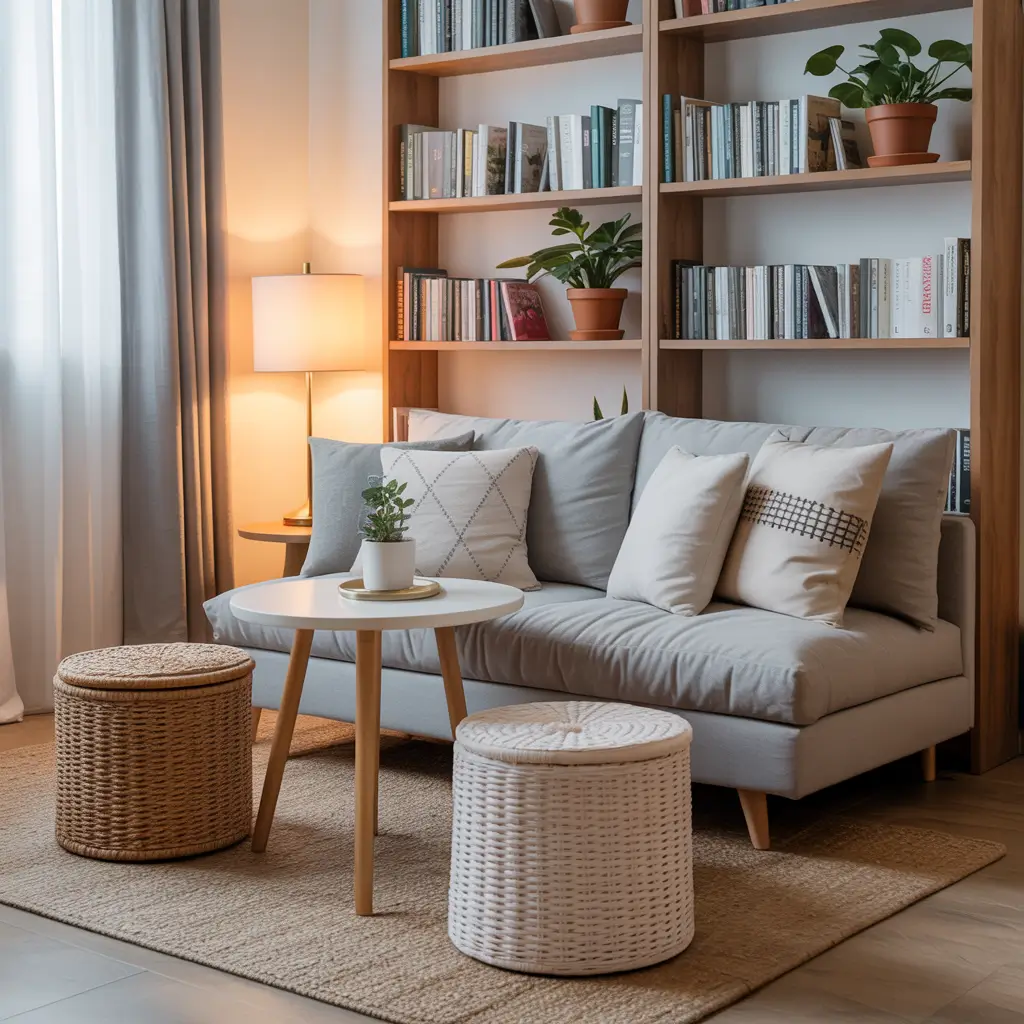
Real talk: if you’re not using multifunctional furniture in a small apartment, you’re making life harder than it needs to be. This is where you get to be seriously clever.
Multifunctional pieces are your secret weapon for maintaining both style and sanity in a compact living room. I’m genuinely obsessed with furniture that works overtime.
Game-changing multifunctional pieces:
- Storage ottomans that hide blankets, books, or random stuff while providing seating
- Sofa beds or daybeds for when guests visit (no air mattress on the floor!)
- Nesting tables you can spread out when needed and tuck away when you don’t
- Console tables that extend to dining tables (absolute genius)
- Wall-mounted fold-down desks that disappear when not in use
- Coffee tables with lift-tops revealing hidden storage and workspace
Here’s what I learned the hard way: invest in quality multifunctional pieces. That cheap storage ottoman from a big-box store might save you $50 now, but it’ll fall apart in a year. I bought a solid wood storage bench three years ago, and it’s still going strong as extra seating, coffee table, and blanket storage.
The trick is making these pieces look intentional, not desperate. Choose multifunctional furniture that matches your aesthetic—whether that’s modern, traditional, or somewhere in between.
Also Read: 15 Cozy Apartment Living Room Inspiration Tips for Style
5. Warm Neutral Color Palette Living Room
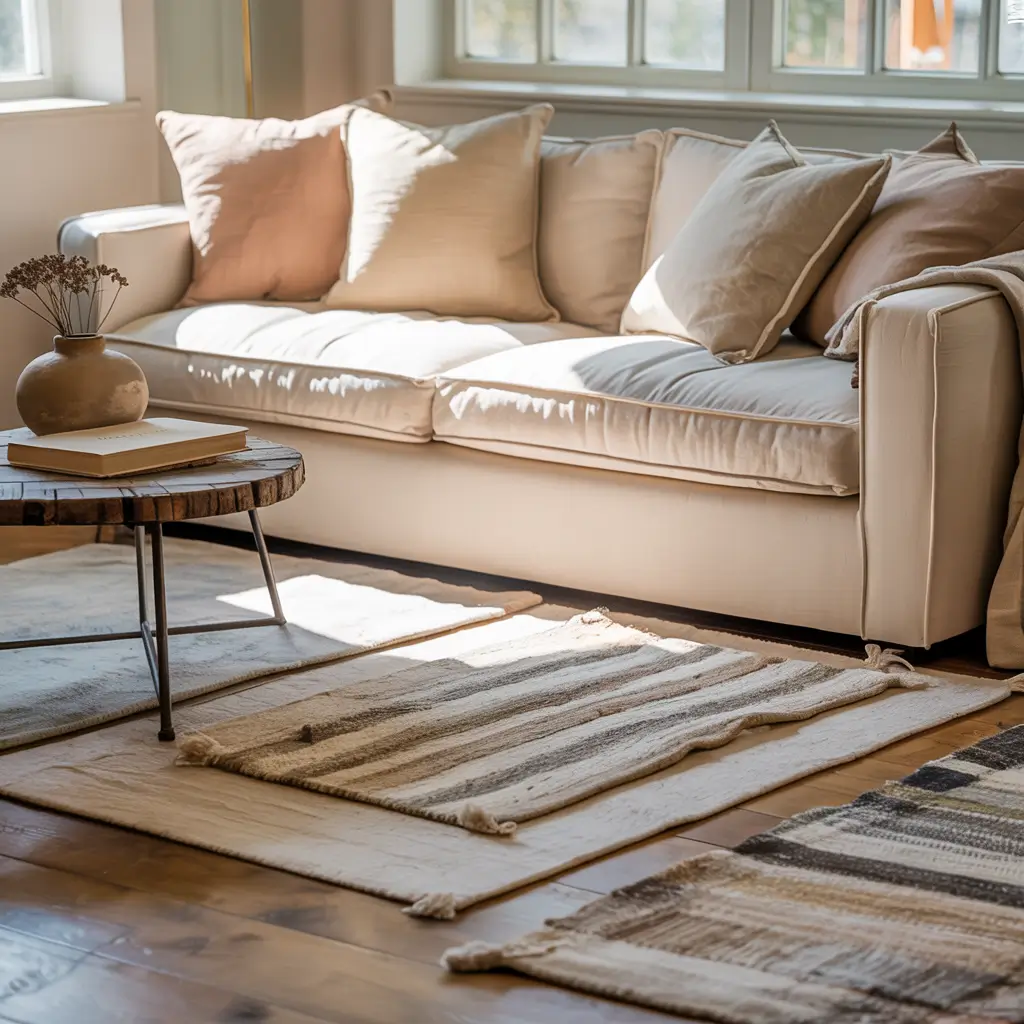
Can we talk about color for a second? People get obsessed with white walls in small spaces, thinking it’s the only way to make rooms feel bigger. But you know what actually makes a small living room feel cozy AND spacious? Warm neutrals.
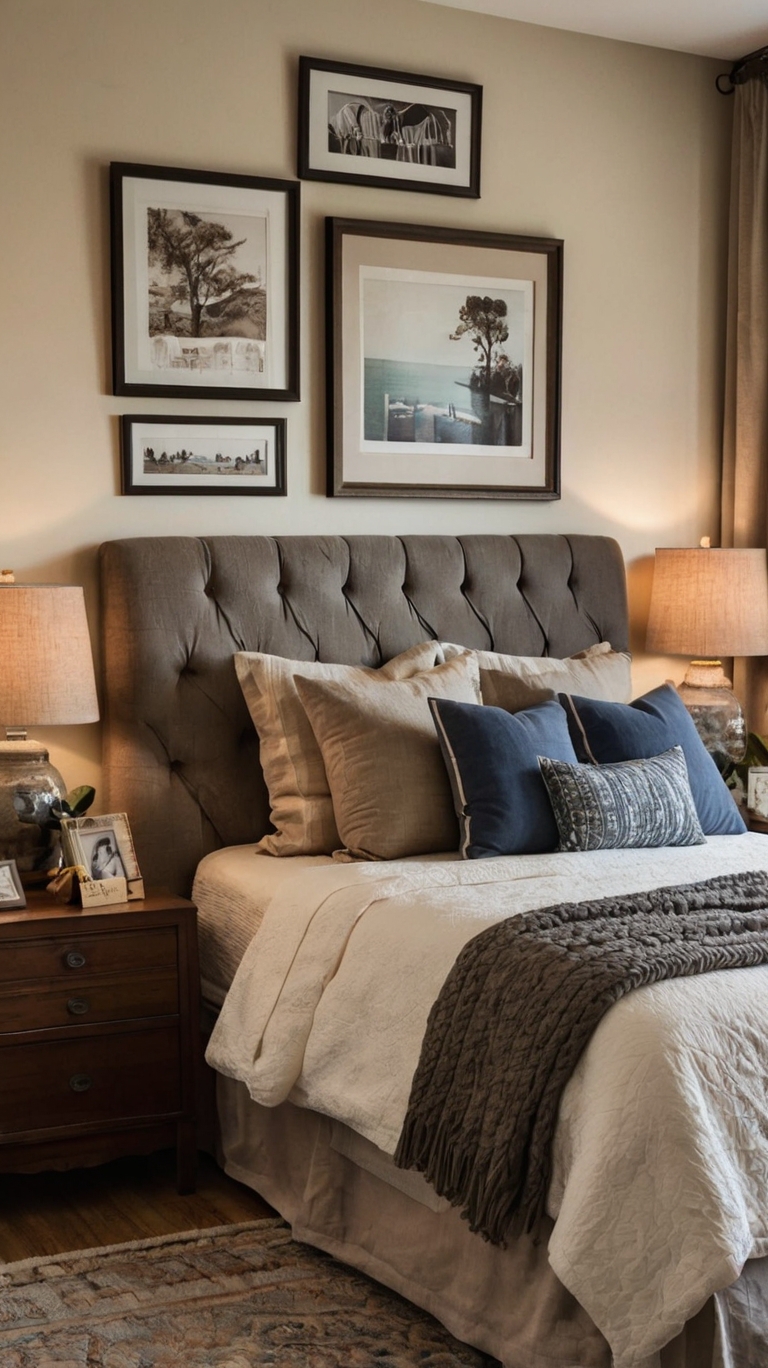
I’m talking about those gorgeous earthy tones—warm beiges, soft taupes, creamy whites, gentle grays with warm undertones. These colors create a cocoon-like feeling without closing in the space.
How to build your warm neutral palette:
- Base layer: Warm white or beige walls (think cream, not stark white)
- Midtones: Taupe or warm gray for larger furniture pieces
- Accents: Terracotta, rust, warm browns, or muted gold
- Texture: Layer different materials in similar tones for visual interest
The beauty of warm neutrals? They’re incredibly forgiving and versatile. You can easily swap out accent pieces seasonally without everything clashing. Plus, they photograph beautifully (yes, I’m thinking about those Instagram shots).
I painted my own small living room in a warm greige (gray-beige, for the uninitiated), and the difference was shocking. The space felt simultaneously cozier and more open than when it was plain white. The warm undertones made the room feel welcoming instead of clinical.
Pro tip: Test paint samples at different times of day. That gorgeous warm beige might look perfect at noon but turn weird and yellow under evening lighting. Ask me how I know :/
6. Cozy Reading Nook in Small Living Room
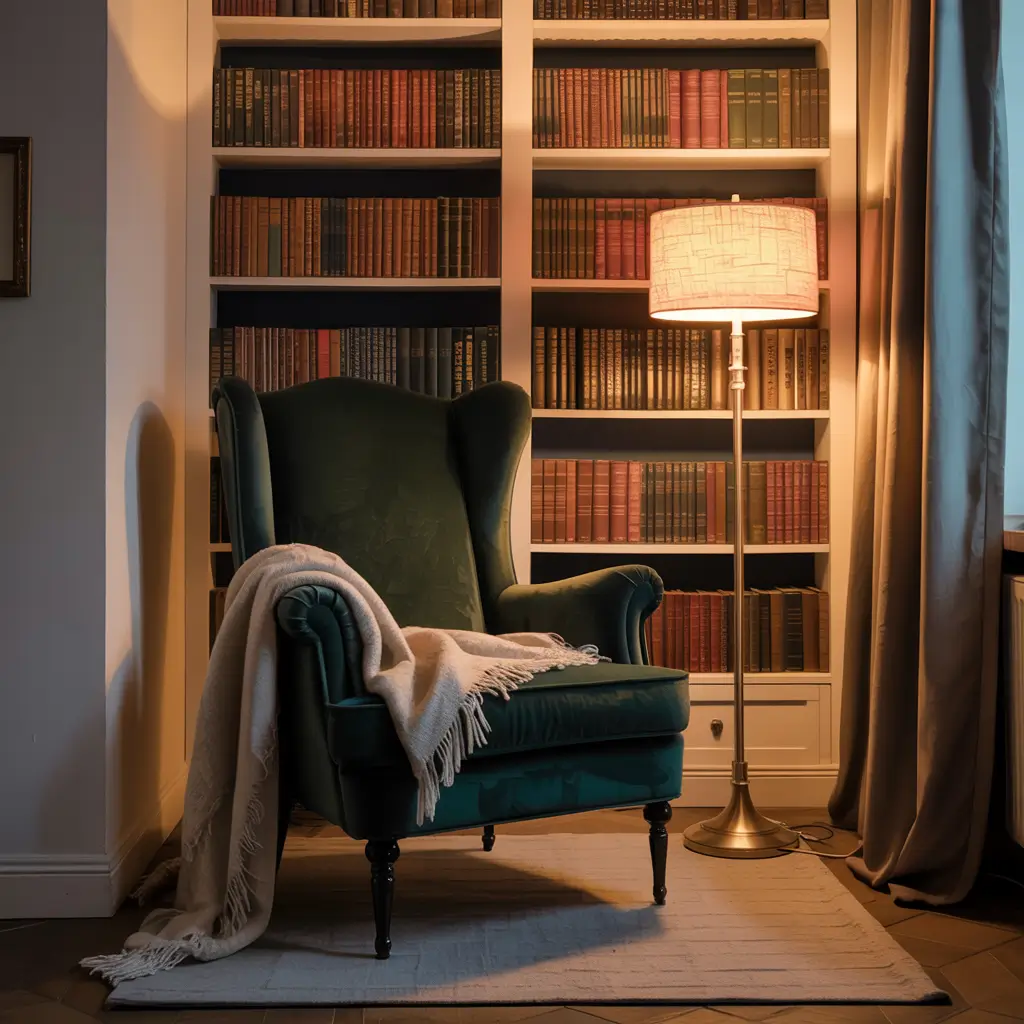
Who says you need a massive house to have a dedicated reading spot? Creating a cozy reading nook in your small living room is totally doable and honestly kind of therapeutic.
A reading nook gives your living room purpose and personality. It’s not just a couch facing a TV—it’s a space that invites you to slow down and actually enjoy your home.
Elements for the perfect small-space reading nook:
- A comfortable chair (doesn’t need to be huge—a small armchair or even a floor chair works)
- Great lighting (this is non-negotiable—get a quality reading lamp)
- A small side table for your coffee/tea/wine (no judgment on the reading beverage)
- Easy access to books (floating shelves above or a small bookshelf nearby)
- Cozy textiles (throw blanket and pillow for maximum comfort)
Here’s where you get creative with corners. That awkward corner that’s too small for regular furniture? Perfect reading nook territory. I’ve squeezed reading nooks into spaces I previously thought were useless.
My current reading corner uses a small vintage armchair I found at a thrift store (cost me $40), a slim floor lamp from IKEA, and floating shelves I installed above the chair. Total space used? Maybe 3 feet by 3 feet. Total coziness achieved? Off the charts.
FYI, good lighting makes or breaks a reading nook. Don’t try to read by ambient ceiling light—you’ll give yourself a headache and abandon the whole setup.
7. Space-Saving Sofa & Storage Ideas
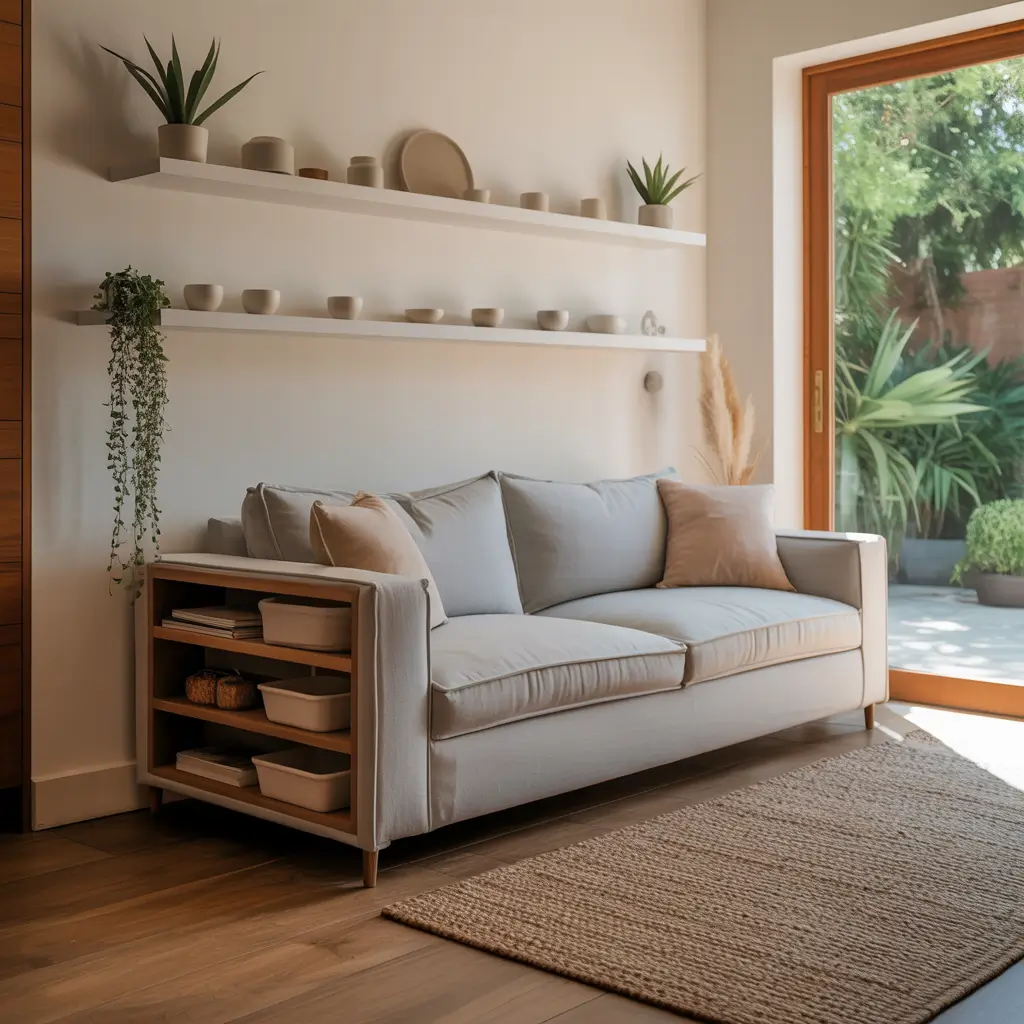
Let’s address the elephant in the room—or rather, the sofa that’s taking up half your living room. Choosing the right sofa for a small space is crucial, and most people get it wrong.
You don’t necessarily need a tiny loveseat that fits two people uncomfortably. You need a smart sofa solution.
Sofa options that actually work in small spaces:
- Apartment-sized sofas (yes, that’s a real category—usually 72-80 inches instead of 90+)
- Sectionals with storage underneath the chaise
- Sofa beds that don’t look like sofa beds (they exist, I promise)
- Armless sofas that create visual lightness
- Sofas with legs (they look less heavy than skirted sofas sitting on the floor)
And then there’s storage, because let’s be real—you need places to put your stuff. The best small living rooms incorporate storage so seamlessly you barely notice it’s there.
Sneaky storage solutions:
- Behind-the-sofa console tables with baskets underneath
- Ottoman coffee tables with hidden storage
- Floating shelves going vertical instead of eating floor space
- Media consoles that maximize every inch with smart compartments
- Storage benches along walls or under windows
I learned this trick from a designer friend: choose furniture that sits on visible legs rather than solid bases. When you can see under and through furniture, the room automatically feels less crowded. My sofa sits on 6-inch wooden legs, and I can see straight under it to the wall behind. Creates way more visual space than my old solid-base couch did.
8. Small Apartment Living Room with Plants
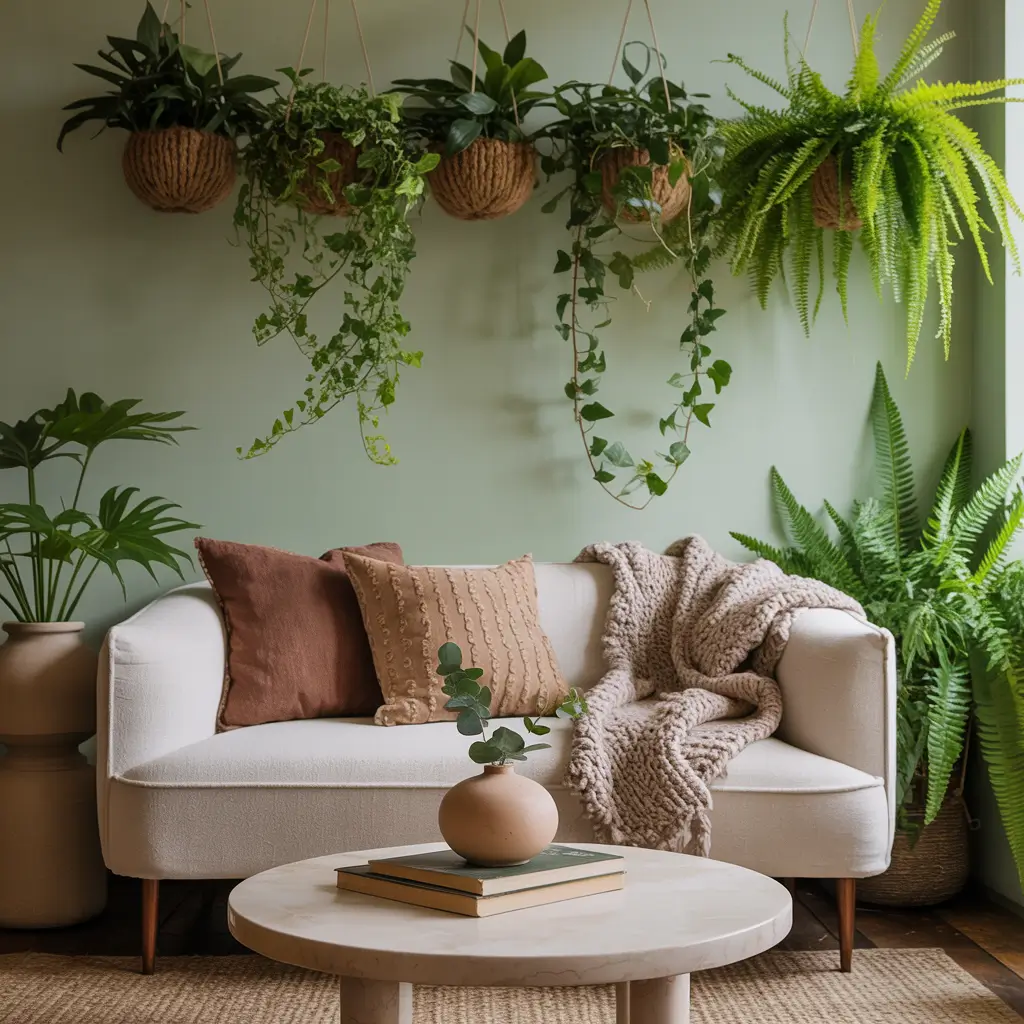
Plants are having a moment, and thank goodness because they’re perfect for small living rooms. But here’s the thing—you need to be strategic about how you incorporate greenery without turning your space into a jungle.
Plants add life, color, and literal fresh air to compact spaces. They also soften hard edges and make apartments feel less cookie-cutter. But randomly scattering plants everywhere? That’s a recipe for visual chaos.
Smart ways to include plants in small living rooms:
- Hanging planters from ceiling hooks or mounted brackets
- Tall floor plants in corners (fiddle leaf figs, snake plants, or palms)
- Window sill herbs or succulents that don’t take up precious surface space
- Plant stands that group plants vertically instead of spreading them horizontally
- Wall-mounted planters creating living art
Ever wondered why plant-filled rooms always look so good on Instagram? It’s because plants add varying heights and create visual interest without clutter. They’re the perfect accent that never looks like “too much.”
My small living room has five plants, which sounds like a lot but works because I went vertical. Two hanging pothos plants, one tall snake plant in the corner, one small succulent arrangement on the coffee table, and herbs on the window sill. None of them crowd the space, and honestly? The room feels alive now.
Just don’t be that person who kills every plant and ends up with a collection of sad brown sticks. Start with low-maintenance plants like pothos, snake plants, or ZZ plants. Work your way up to the dramatic fiddle leaf fig 🙂
9. Budget-Friendly Cozy Living Room Makeover
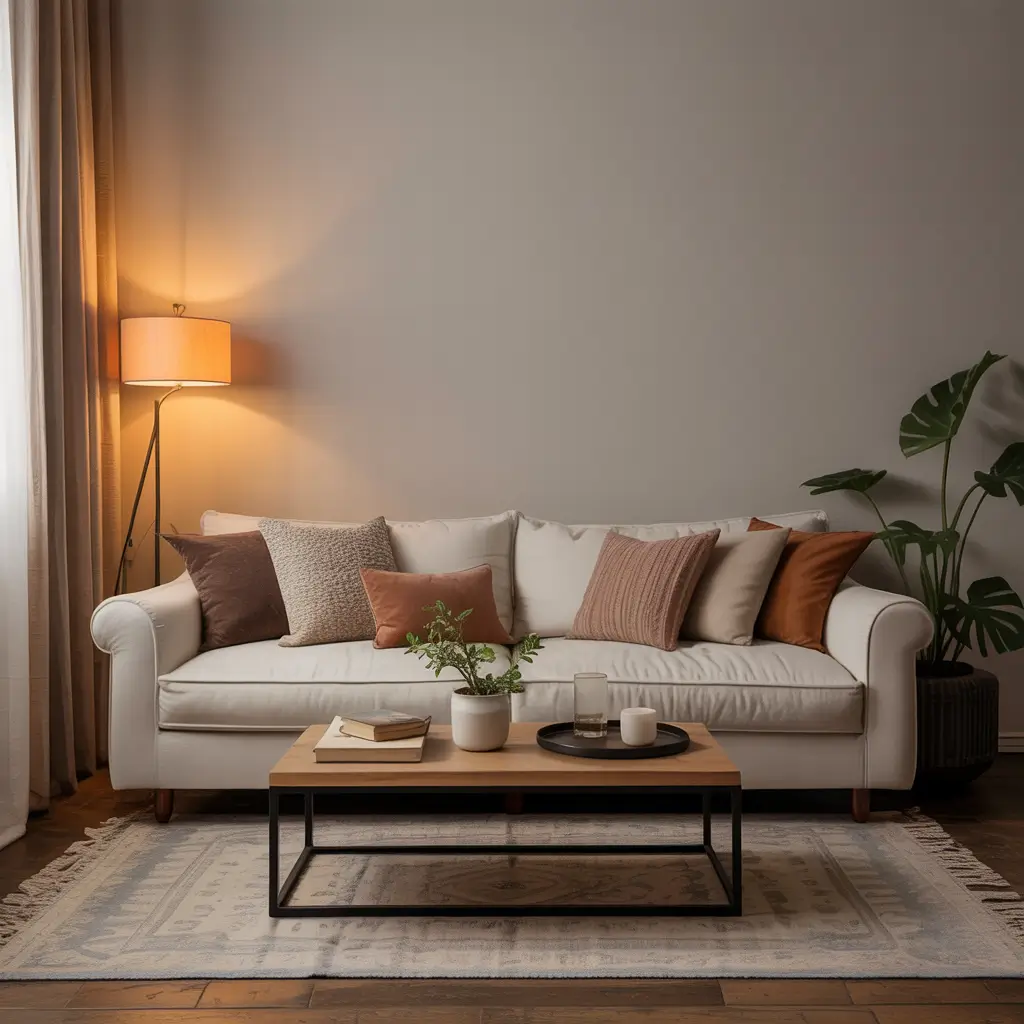
Okay, let’s get real about money. Not everyone can drop thousands on a living room makeover, and you know what? You absolutely don’t need to.
I’ve transformed living rooms on shoestring budgets that rival magazine-worthy spaces that cost 10 times more. The secret is knowing where to invest and where to save.
Budget-friendly makeover priorities:
- Paint (biggest impact for the money—DIY it for even more savings)
- Textiles (new throw pillows, blankets, and maybe a rug can completely change the vibe)
- Lighting (swap outdated fixtures or add floor/table lamps)
- Rearranging what you already have (free and often transformative)
- DIY art or thrifted/discount frames with free printables
- Second-hand furniture (vintage pieces have more character anyway)
Here’s my budget breakdown from my last small living room makeover:
- Paint: $80 (did it myself over a weekend)
- New throw pillows: $60 (found amazing sales)
- Vintage armchair: $40 (thrift store gold)
- Floor lamp: $45 (IKEA classic)
- Floating shelves: $30 (DIY with brackets and boards)
- Plants: $50 (started small and propagated)
- Total: $305
The room looked completely different, and people asked if I’d bought all new furniture. Nope, just strategic updates and rearranging.
The biggest mistake people make is thinking they need to replace everything at once. Start with what bothers you most—maybe it’s bad lighting or a boring wall color—and address that first. Small changes compound into big transformations.
Also Read: 15 Creative Living Room Decor Apartment Layouts Made Simple
10. Apartment Living Room with Layered Textures
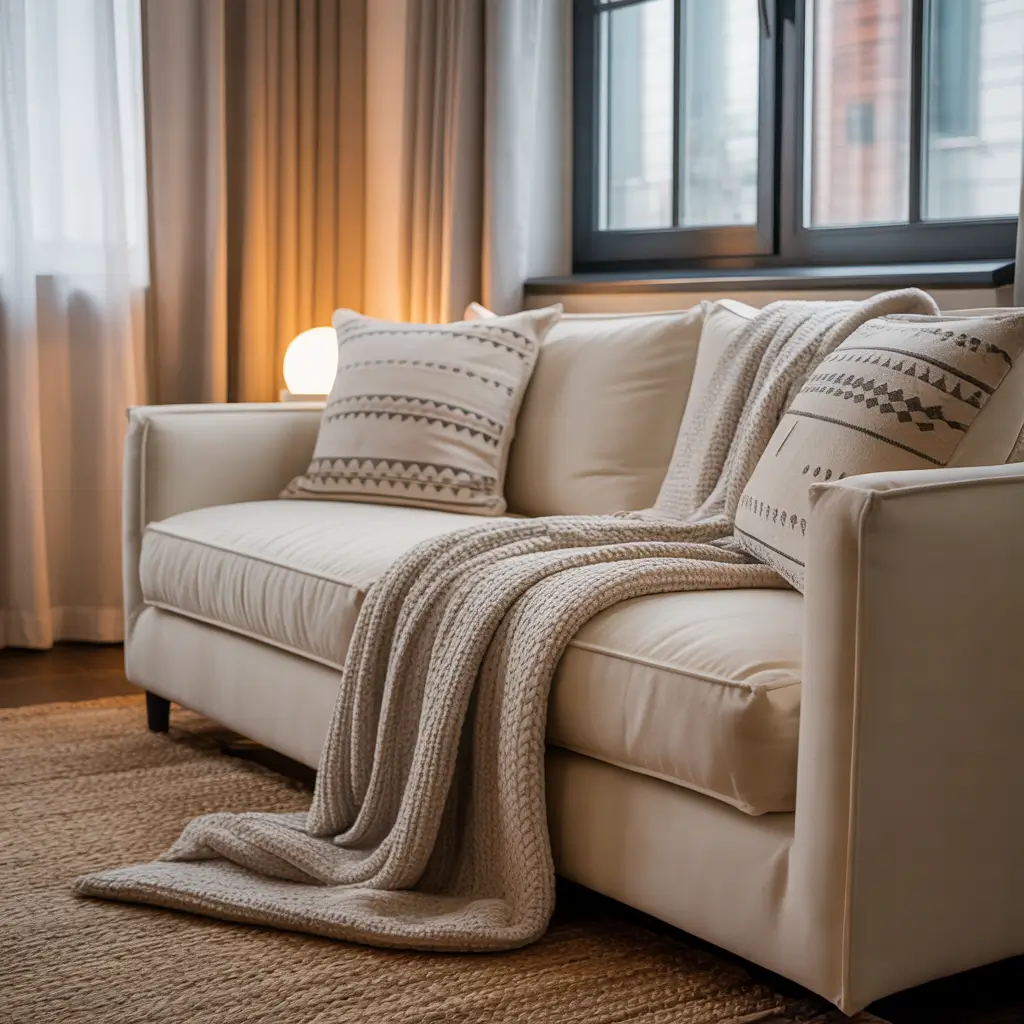
Want to know the difference between a living room that looks “done” versus one that feels cozy and collected? Texture.
Seriously, you can have the most beautiful furniture and perfect color palette, but without varied textures, the space falls flat. Layering textures is what makes designers’ rooms look so good—and it’s completely doable in small spaces.
Textures to layer in your living room:
- Soft: Velvet pillows, faux fur throws, knit blankets
- Rough: Jute rugs, woven baskets, raw wood
- Smooth: Leather accents, ceramic vases, metal fixtures
- Nubby: Linen curtains, bouclé fabric, textured wallpaper
- Shiny: Glass surfaces, metallic accents, mirrors
The magic happens when you mix unexpected textures together. Pair that smooth leather sofa with a chunky knit throw. Put rough woven baskets on sleek floating shelves. Layer a soft shag rug over sisal.
I used to think matching everything created a cohesive look. Wrong. My living room looked like a showroom—pretty but soulless. When I started mixing textures intentionally (smooth velvet pillows on my linen sofa, rough jute rug underneath, smooth ceramic lamp on a rustic wood side table), the space finally felt like a home.
In small spaces, texture creates visual interest without adding physical clutter. It gives your eye something to explore without cramming more stuff into the room. Pretty genius, actually.
11. Modern Small Living Room with Accent Lighting
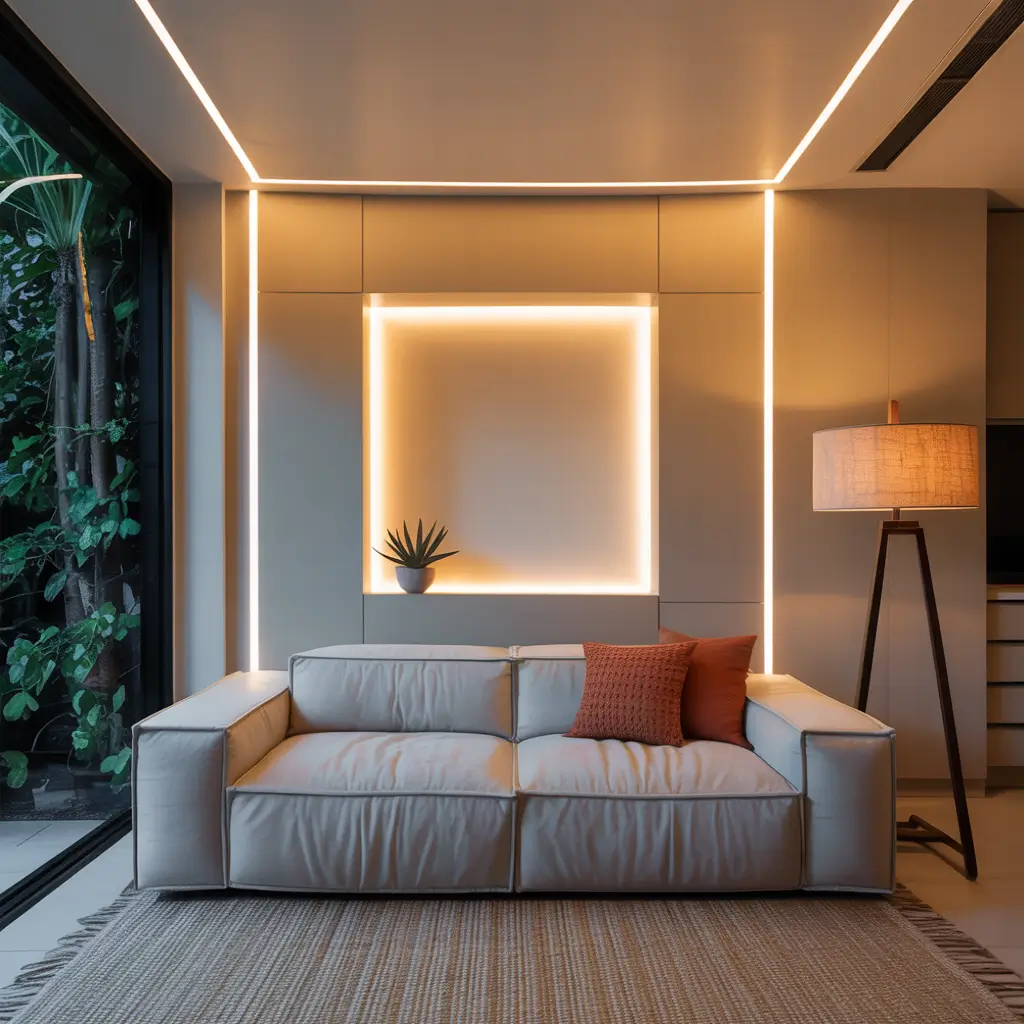
Can we talk about how most people completely mess up lighting in small spaces? They rely on one harsh overhead light and wonder why their living room feels like a dentist’s office.
Lighting is the most underrated element in small living room design, and getting it right transforms everything. I’m talking about creating layers and moods, not just illuminating the space.
The three-layer lighting approach:
- Ambient lighting (your base layer—overhead fixtures or recessed lights on dimmers)
- Task lighting (reading lamps, desk lamps, focused light where you need it)
- Accent lighting (the magic—highlights architectural features or creates atmosphere)
For small modern living rooms, accent lighting is where you get to have fun:
- LED strip lights behind floating shelves or under furniture
- Picture lights highlighting artwork
- Floor lamps with uplighting bouncing light off ceilings to create height
- Table lamps with interesting sculptural bases that double as decor
- Smart bulbs that let you adjust color temperature and brightness
- Candles (okay, technically fire, but mood lighting nonetheless)
Here’s what changed my life: installing dimmer switches on everything possible. Suddenly I could adjust lighting for different moods—bright for cleaning, medium for hanging out, low for movie nights. Cost me maybe $50 in dimmers and an hour of installation time.
Modern accent lighting also makes small spaces feel larger. When you light vertical elements (like tall plants or artwork going up the wall), you draw the eye upward and create the illusion of height. Smart, right?
12. Compact Living Room with Creative Wall Art
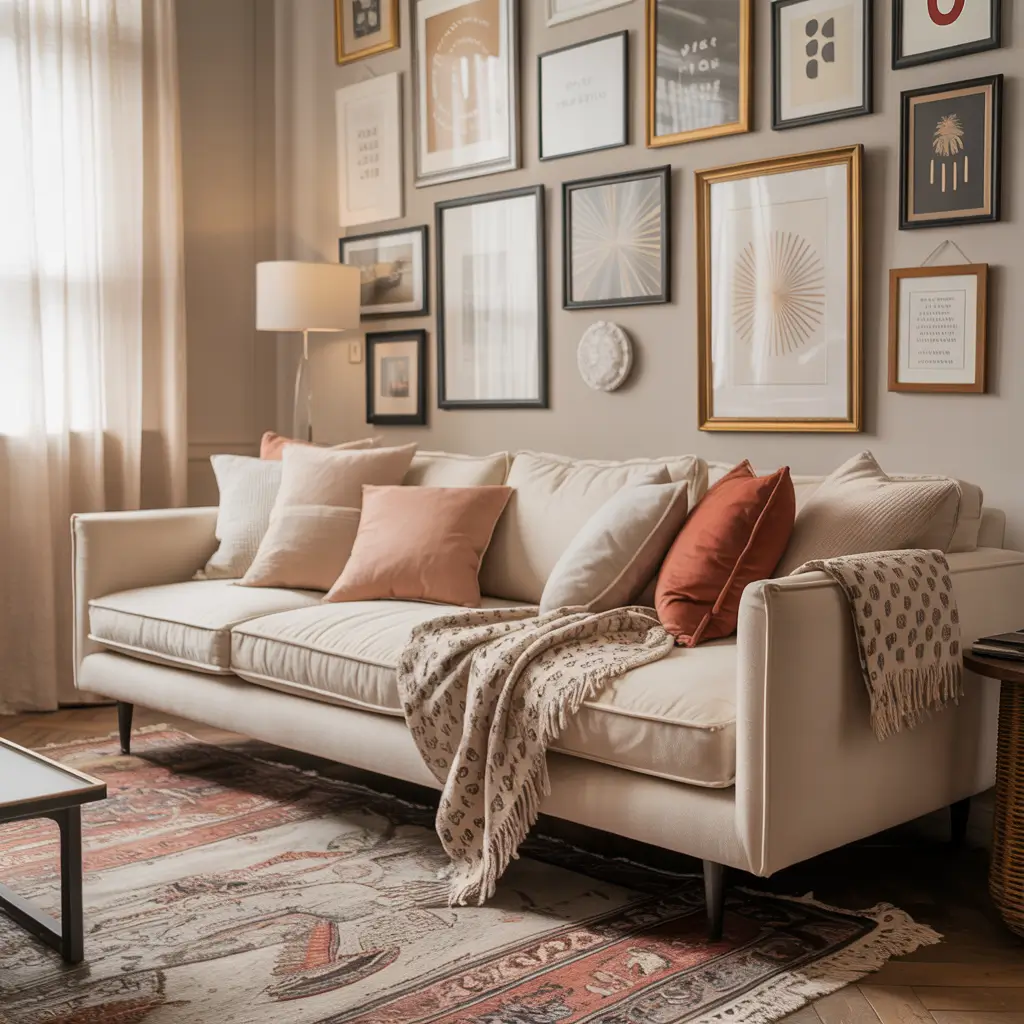
Blank walls in a small living room are missed opportunities. But here’s the thing—you don’t want to crowd your walls any more than you’d crowd your floor space.
Strategic wall art makes small living rooms feel curated and personal without eating into your precious square footage. The key word? Strategic.
Creative wall art approaches for small spaces:
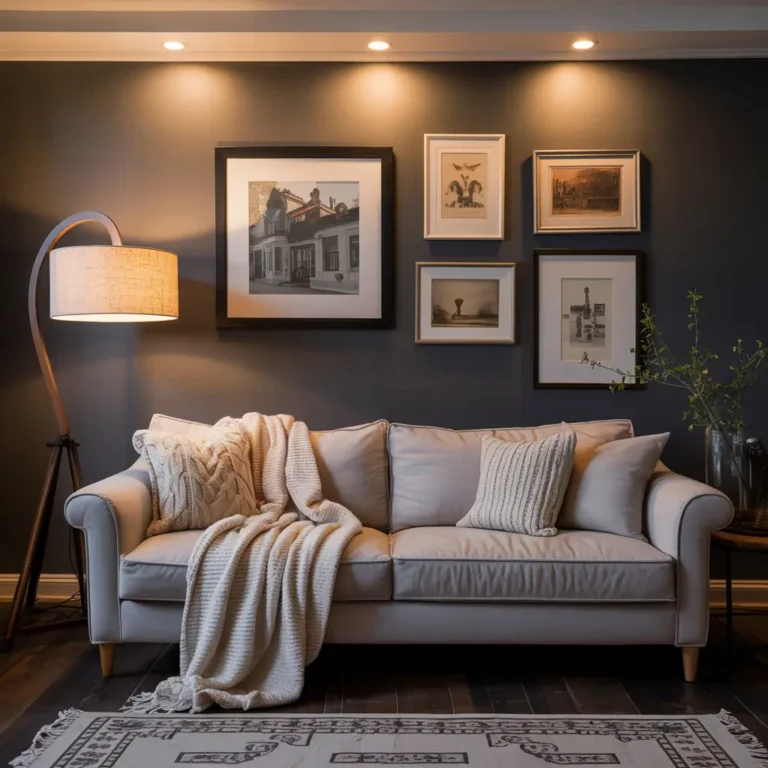
- Gallery walls with varied frame sizes (creates visual interest and personality)
- One large statement piece (sometimes one big piece beats multiple small ones)
- Floating shelves with rotating decor (more versatile than permanent art)
- Wall-mounted planters (functional and beautiful)
- Mirrors (reflect light and create depth—basically magic)
- Removable wallpaper on one accent wall (commitment-free drama)
I’m obsessed with gallery walls in small spaces, but you need to plan them carefully. Don’t just randomly hammer nails and hope for the best. I learned this the hard way and had a wall full of holes to spackle.
My method: Lay out the arrangement on the floor first, measure the outer dimensions, and mark the center point on the wall. Work outward from there. Takes an extra 20 minutes but saves you from that “why doesn’t this look like Pinterest?” frustration.
Pro tip for renters: Command strips are your best friend. They’ve come a long way, and I’ve hung some legitimately heavy frames without damage. Just follow the weight limits, or you’ll find your art on the floor at 3 AM (again, personal experience talking).
13. Cozy Corner Setup for Tiny Spaces
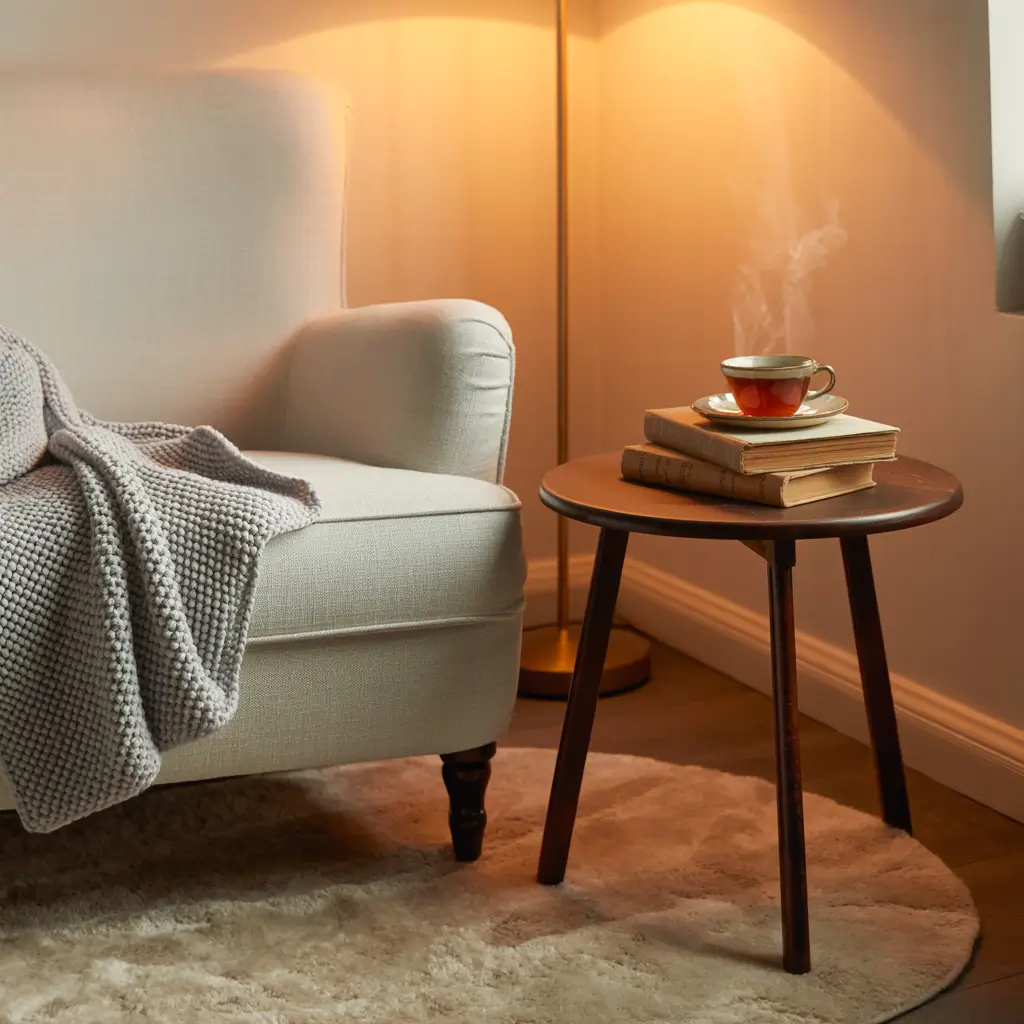
Every small living room has them—those awkward corners that seem useless. But what if I told you those corners are actually prime real estate for creating cozy moments?
Corner setups maximize otherwise wasted space and add functional zones to compact living rooms. You’re not just creating a corner—you’re creating a purpose.
Genius corner ideas:
- Reading nook (we covered this, but it deserves another mention)
- Bar cart station for entertaining
- Plant corner with multiple plants at varying heights
- Music corner with a record player and vinyl storage
- Meditation spot with a cushion and small shelf for candles
- Coffee/tea station (especially great if your kitchen is tiny too)
The trick to making corners feel intentional rather than cramped? Go vertical. Use the corner walls with floating shelves, tall plants, or vertical storage solutions. Draw the eye up instead of out.
I turned my most awkward corner into a coffee station, and it’s become my favorite part of my living room. Small rolling cart (can move it if needed), wall-mounted mug hooks, floating shelf above with coffee supplies. Takes up maybe two square feet of floor space but adds tons of personality and function.
Think of corners as opportunities, not obstacles. What’s missing from your living room? What would make it more functional or enjoyable? There’s probably a corner solution for it.
14. Apartment Living Room with Rug & Throw Ideas
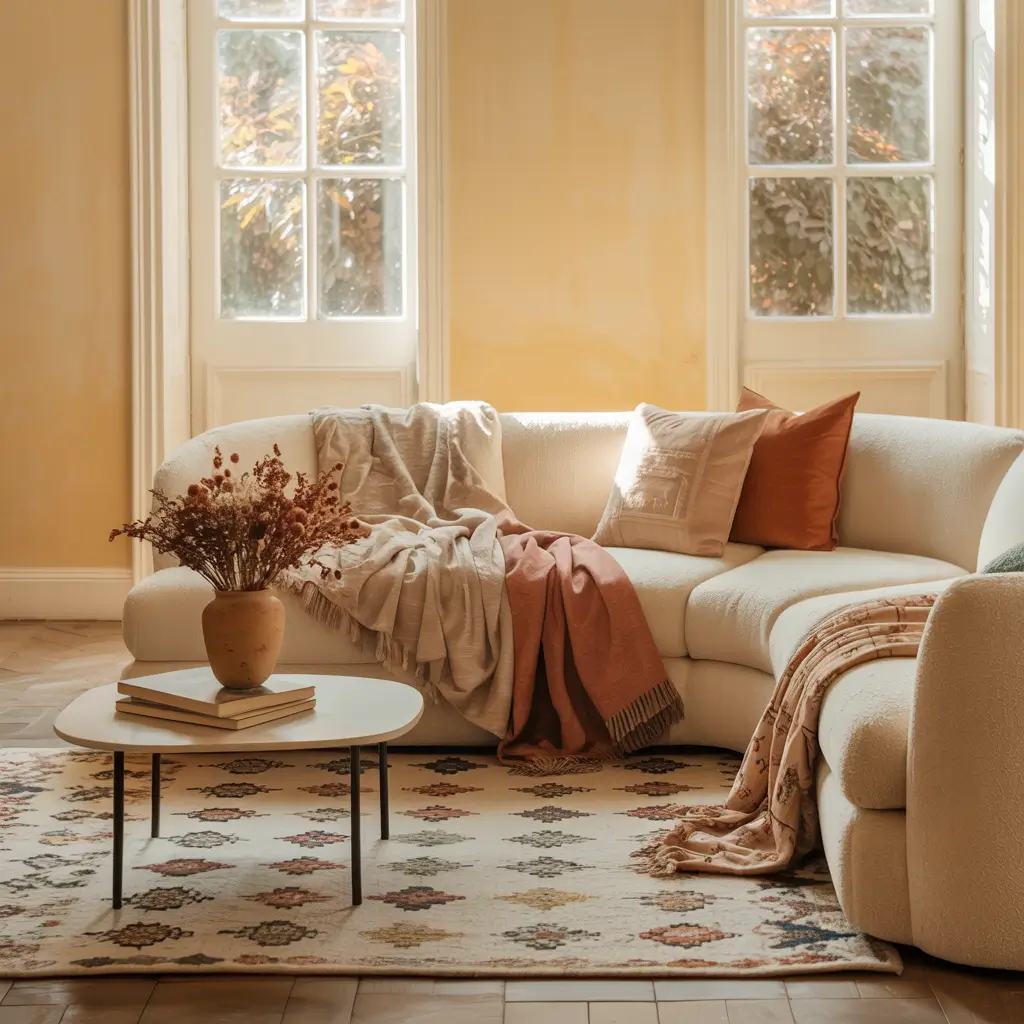
Alright, let’s talk about the easiest way to make a small living room feel cozy and pulled-together: rugs and throws. These are the accessories that tie everything together (literally).
But here’s where people get confused—should your rug be large or small in a compact space? Light or dark? Pattern or solid?
Rug rules for small living rooms:
- Go bigger than you think (too-small rugs make spaces feel choppy and smaller)
- All furniture on or all furniture off (front legs on the rug is the sweet spot)
- Light colors expand, dark colors cozy up (choose based on your goal)
- Patterns can work if the rest of your space is relatively calm
- Layering rugs adds depth and interest (a smaller rug over a larger neutral one)
I fought this advice for years and bought small rugs for my small living room. Made the space feel disjointed and even smaller. When I finally committed to a properly sized rug that fit under my main seating area, the room suddenly looked intentional and actually felt larger.
Now, throws—these are your secret weapon for instant coziness. Draped over a sofa arm or folded in a basket, they add texture, warmth, and that “come sit and relax” vibe.
Throw styling tips:
- Mix materials (chunky knit, faux fur, woven cotton—variety is good)
- Coordinate but don’t match your color scheme
- Actually use them (a perfectly folded throw that never moves looks staged)
- Have multiples so you can switch them seasonally
I keep three throws in my living room year-round—a lightweight cotton one, a medium-weight knit, and a heavier faux fur for winter. They live draped on furniture or in a basket, and I rotate which ones are out depending on the season and my mood.
15. Small Living Room Decor for Winter Warmth
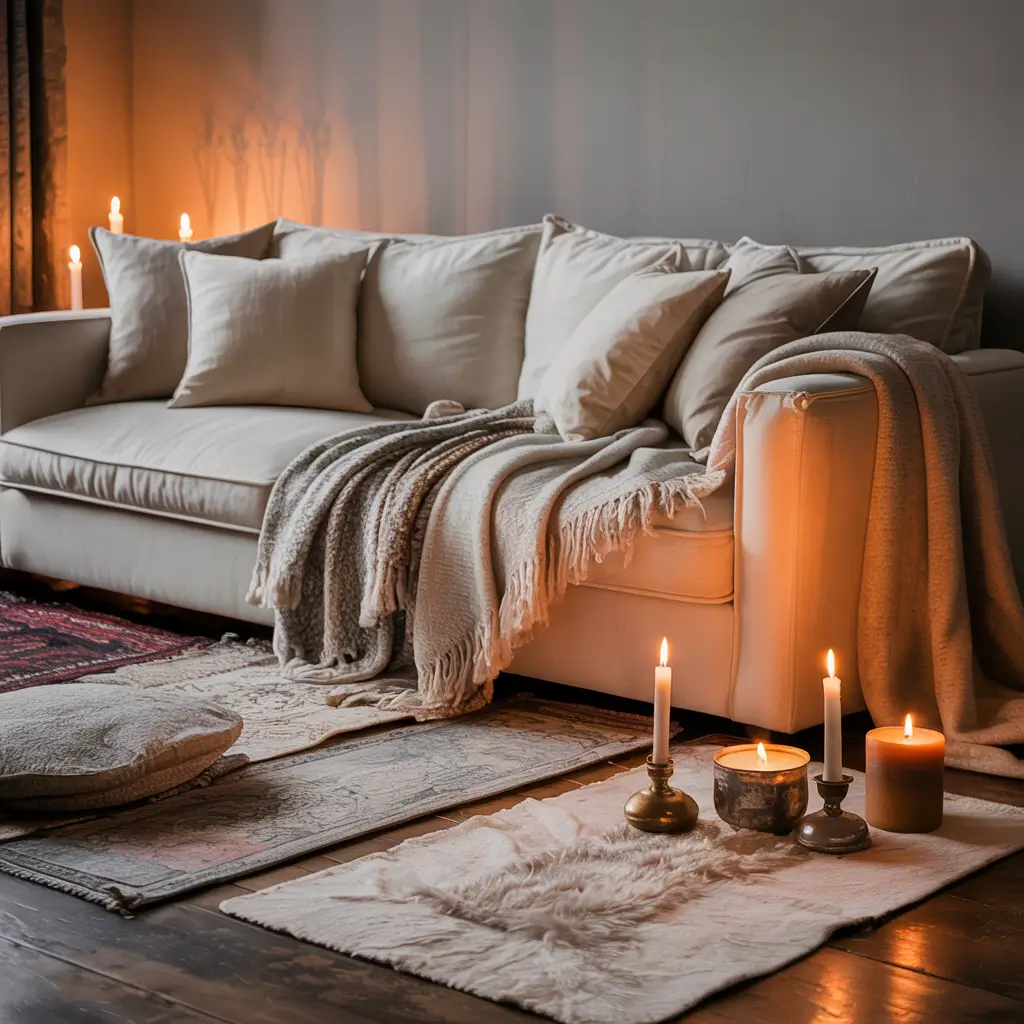
Last but definitely not least, let’s talk about making small living rooms extra cozy during cold months. Winter hits different when you live in a small space—you can either feel snug and hygge or cramped and gloomy.
Seasonal winter updates that create warmth:
- Heavier textiles (swap light cotton for velvet, wool, and faux fur)
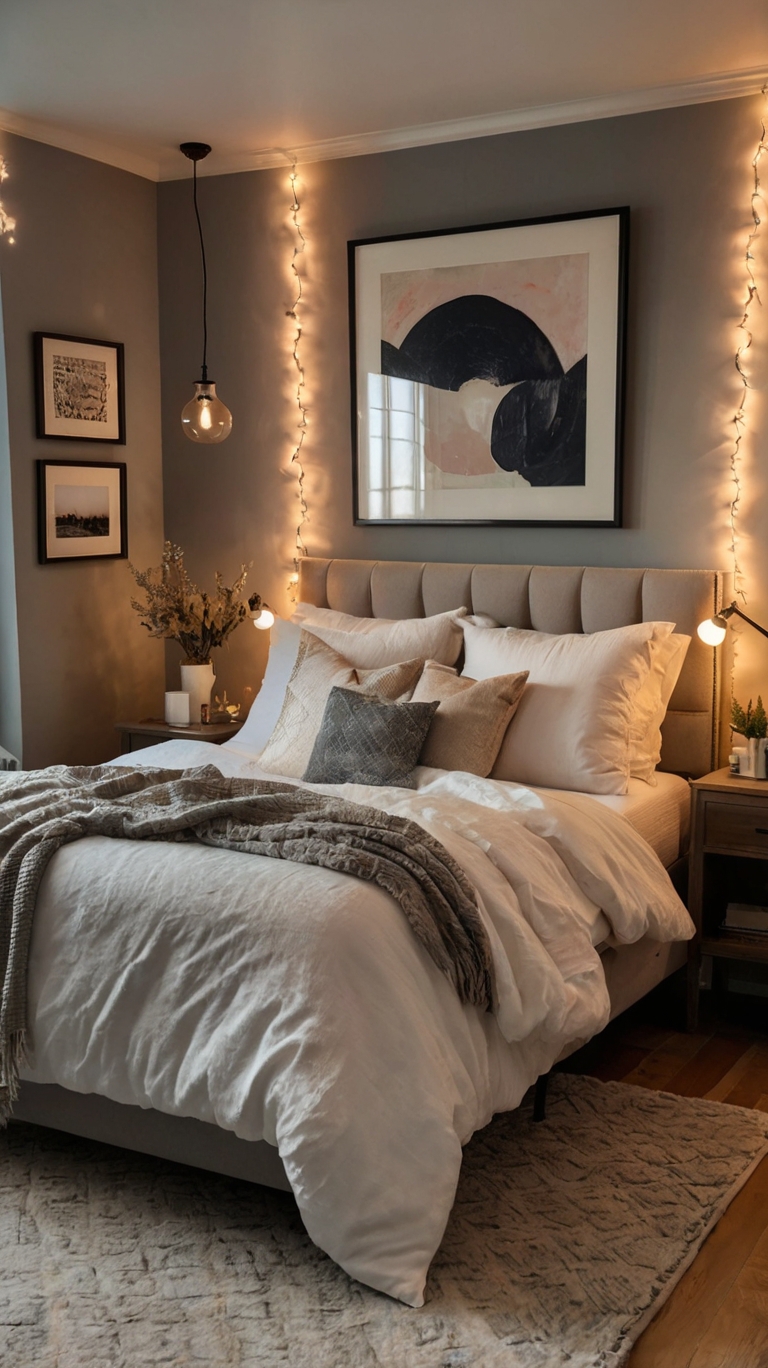
- Warm lighting (switch to warmer color temperature bulbs, add more lamps)
- Rich colors (bring in burgundy, forest green, navy, or warm browns)
- Layered rugs (add a sheepskin or faux fur rug over your regular rug)
- Candles everywhere (warm scents like cinnamon, vanilla, pine)
- Hot beverage station (that corner setup paying off now!)
The beautiful thing about winter decorating in small spaces? You want that cocoon feeling anyway. Leaning into coziness is the whole point.
I go kind of crazy with throws and pillows in winter—probably have twice as many as in summer. But they make my small living room feel like a warm hug when it’s freezing outside. Plus, they’re easy to rotate out when spring arrives.
Here’s a sneaky trick for renters or people who can’t paint: change your curtains seasonally. Heavier, darker curtains in winter make the space feel warmer and more insulated. Lighter, sheerer curtains in summer keep things bright and airy. Same room, completely different energy.
And please, don’t underestimate the power of warm lighting in winter. I switch all my bulbs to 2700K (warm white) in November, and the difference in ambiance is shocking. The space feels instantly cozier without changing a single piece of furniture.
Wrapping This Up
Look, transforming a small apartment living room isn’t about having unlimited space or an unlimited budget. It’s about being intentional with every choice and making your compact space work hard for you.
The best small living rooms embrace their size instead of fighting it. They maximize vertical space, choose multifunctional furniture, layer textures for interest, and create distinct zones that serve real purposes. They feel cozy without feeling cramped, modern without feeling cold.
You’ve got 15 solid ideas to work with now—and honestly, you don’t need to implement all of them at once. Start with what resonates most with your style and needs. Maybe it’s finally creating that reading nook you’ve been dreaming about, or perhaps it’s just adding more plants and better lighting.
The small living room you’re looking at right now has potential. I promise. I’ve transformed enough tiny spaces (including my own) to know that small doesn’t mean sacrificing style or comfort. It just means getting creative and intentional.