15 Smart Black Countertops Kitchen Color Schemes That Work

Introduction
So you’ve fallen head over heels for black countertops? Welcome to the club! I get it—there’s something about that sleek, dramatic surface that just screams sophistication. But here’s the thing: black countertops can either make your kitchen look like a million bucks or turn it into a dark cave where joy goes to die. The difference? Getting the color scheme right.
I’ve spent way too many hours scrolling through kitchen designs (blame Pinterest addiction), and I’ve learned that pairing black countertops with the right cabinet colors and accents isn’t rocket science—but it does require some strategy. You can’t just slap any color with black and hope for the best. Trust me, I’ve seen some disasters that would make interior designers weep.
Let me walk you through 15 color schemes that actually work with black countertops. These aren’t just pretty pictures I found online—these are tried-and-true combinations that balance drama with livability, and they won’t make your kitchen feel like you’re cooking in a dungeon.
Crisp White Cabinets with Black Countertops
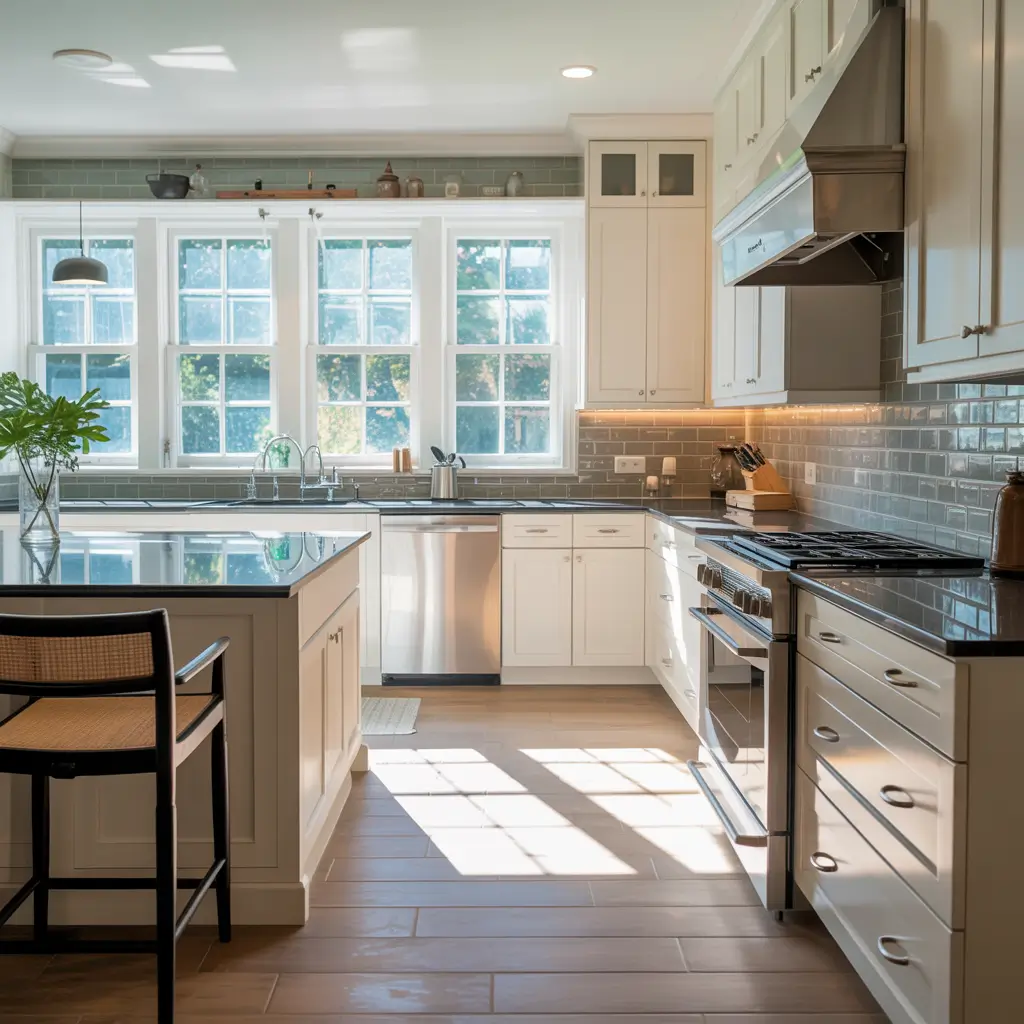
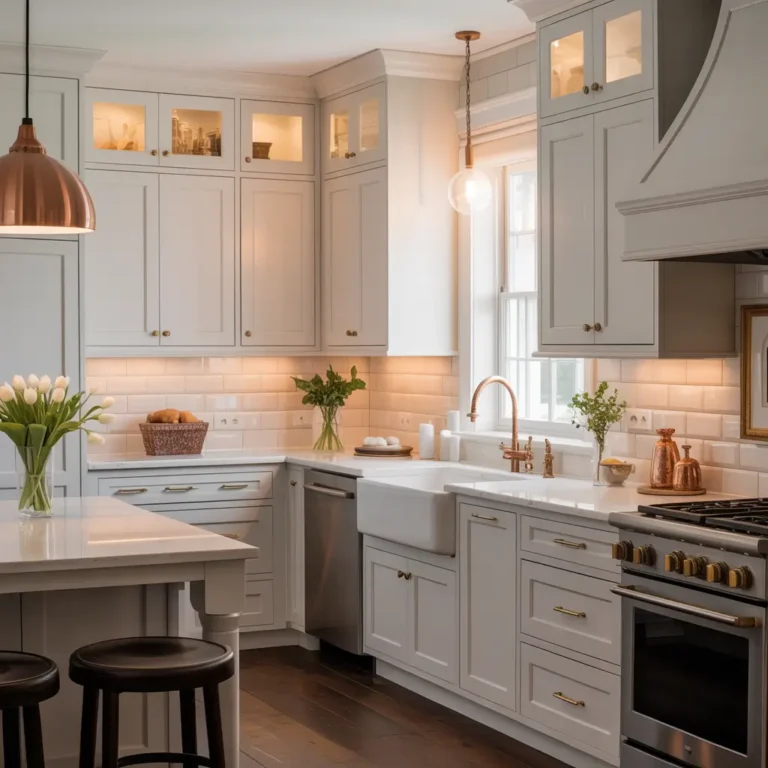
Let’s start with the classic that never fails. White cabinets paired with black countertops create that timeless contrast that interior designers have been obsessing over since forever. Why does this work so well? Because it’s the visual equivalent of a perfectly balanced meal—neither too heavy nor too light.
I renovated my friend’s kitchen using this exact combo, and the transformation was insane. The white cabinets bounced light around the room while the black countertops grounded the space and added instant elegance. The best part? This scheme works whether you’re going for modern, traditional, or farmhouse vibes.
Here’s what makes this combination unbeatable:
- High contrast creates visual interest without overwhelming the space
- White cabinets reflect light, preventing the black from feeling oppressive
- Works with virtually any hardware finish (chrome, brass, matte black—take your pick)
- Easy to accessorize with pops of color when you get bored
Pro tip: Go for pure white rather than cream if you want maximum impact. Creamy whites can look dingy next to jet-black counters, and you don’t want that weird off-white thing happening.
Warm Wood Tones Paired with Black Countertops
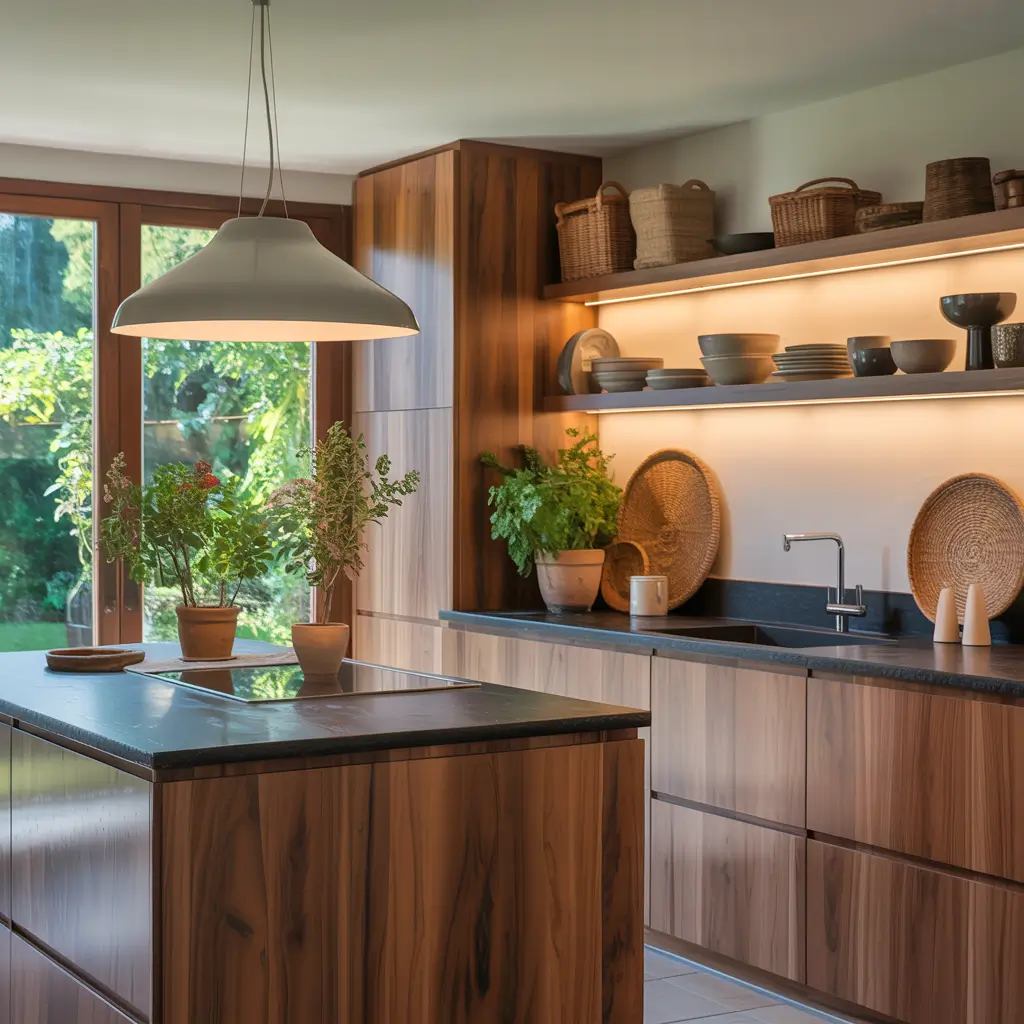
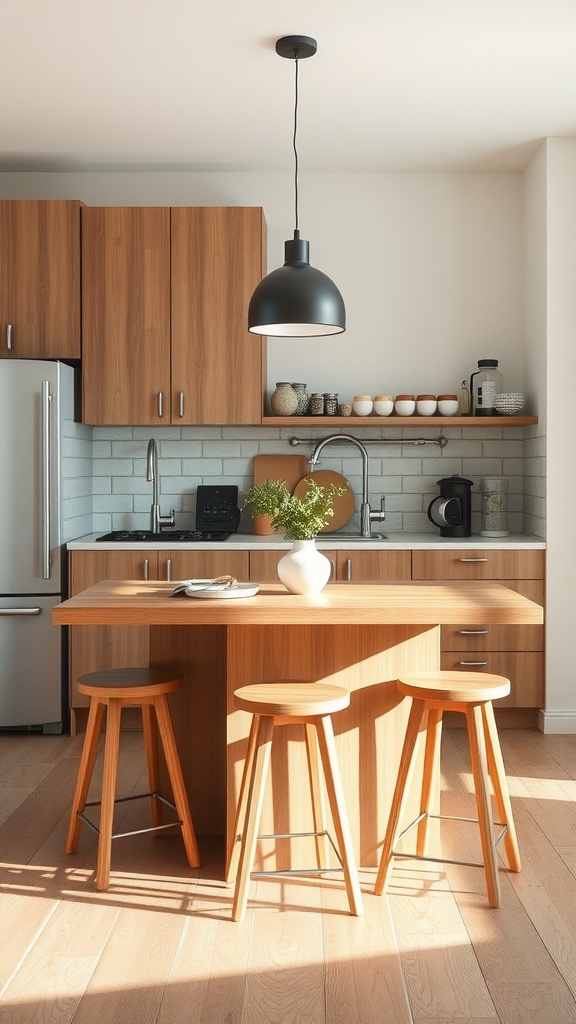
Ever wondered why some kitchens feel cozy while others feel cold? Wood tones are usually the answer. When you pair natural wood cabinets with black countertops, you create this incredible balance between organic warmth and modern sophistication.
I’m talking about honey oak, walnut, or even rich cherry wood here. The wood grain adds texture and visual warmth that softens the potentially harsh edge of black surfaces. It’s like pairing a leather jacket with jeans—edgy meets approachable.
This combo works especially well if your kitchen gets decent natural light. The sunlight plays off the wood grain during the day, creating these gorgeous shadows and highlights. Meanwhile, the black countertops anchor everything and prevent the space from looking too rustic or cabin-like.
Key considerations for this scheme:
- Medium to dark wood tones work best (light pine can look too yellow against black)
- Natural or semi-gloss finishes on wood enhance the organic feel
- Incorporate plants or greenery to bridge the gap between wood and black
- Stainless steel appliances complement this pairing beautifully
Soft Greige Kitchen with Black Countertops

Greige—that magical gray-beige hybrid—has taken over the design world, and for good reason. This neutral chameleon pairs with black countertops like they were made for each other. The result? A sophisticated, modern kitchen that doesn’t scream for attention but definitely gets it.
What I love about greige is its versatility. It reads warm in natural light and cool in artificial light, which means your kitchen adapts to different times of day. The black countertops add definition and prevent the greige from looking wishy-washy or bland.
This scheme works exceptionally well in open-concept spaces because greige flows seamlessly into adjacent rooms without creating harsh visual boundaries. Your kitchen doesn’t look disconnected from your living area, which is a huge win if you’re working with limited square footage.
Why this combination succeeds:
- Creates a calming, spa-like atmosphere
- Black countertops prevent greige from feeling too safe or boring
- Works with both warm and cool-toned accessories
- Incredibly forgiving when it comes to showing dirt and wear
FYI, not all greiges are created equal 🙂 Some lean more gray, others more beige—test samples in your actual kitchen lighting before committing.
Matte Black Countertops with Cream Cabinets

Here’s where things get interesting. Switching from glossy to matte black countertops completely changes the vibe of your kitchen. Pair that with cream cabinets, and you’ve got yourself a soft, elegant look that feels contemporary without being cold.
The matte finish on black countertops reduces glare and fingerprints (hallelujah!), making them way more practical for everyday use. Cream cabinets add warmth without the starkness of pure white, creating this inviting, lived-in feel that I’m absolutely here for.
I recently installed matte black quartz in my own kitchen with cream shaker cabinets, and I can’t tell you how many compliments I get. The softness of the cream against the matte black creates this luxurious, understated elegance that feels expensive even if it wasn’t (and let’s be real, it kinda was).
This pairing works particularly well with:
- Brass or gold hardware for extra warmth
- Subway tile backsplashes in white or cream
- Marble-look accents for added texture
- Warm wood flooring to complete the cozy feel
Also Read: 15 Trendy Black Appliances Kitchen Ideas to Transform Yours
Sage Green Cabinets and Black Countertops
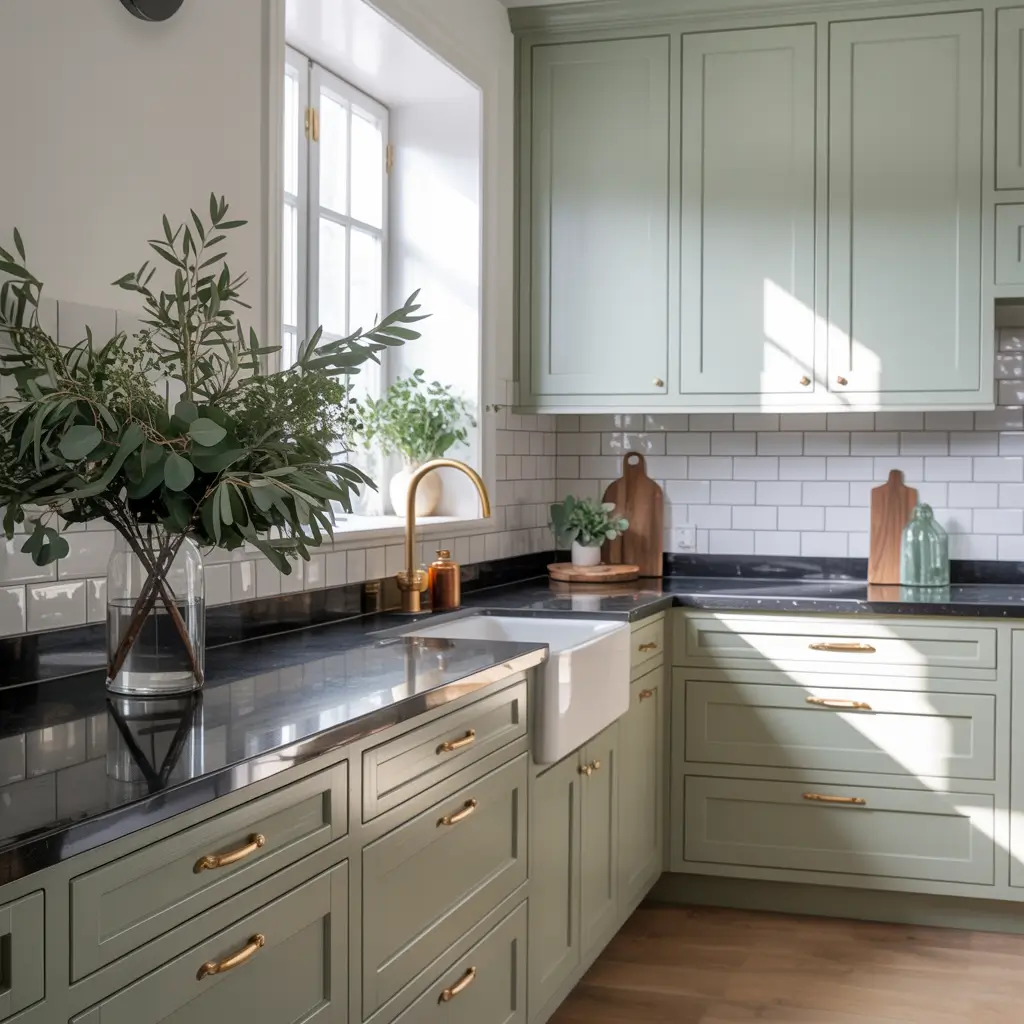
Okay, hear me out—sage green is having a serious moment, and pairing it with black countertops creates this unexpected, fresh combination that feels both modern and natural. It’s like bringing the outdoors in without going full-on forest cabin.
Sage green cabinets have this calming, earthy quality that black countertops enhance rather than overwhelm. The black provides structure and sophistication while the sage keeps things light and interesting. This is the color scheme for people who want something different but not weird.
I’ll be honest—I was skeptical about this combo until I saw it in person. A colleague did her kitchen in soft sage lowers with white uppers and black countertops throughout. The result? Absolutely stunning. The space felt fresh, current, and surprisingly timeless.
Making this scheme work:
- Stick to muted, dusty sage rather than bright kelly green
- Balance with white or cream walls to prevent color overload
- Natural materials (wood, rattan, stone) enhance the organic vibe
- Gold or brass fixtures add warmth that ties everything together
Navy Blue Kitchen with Black Countertops
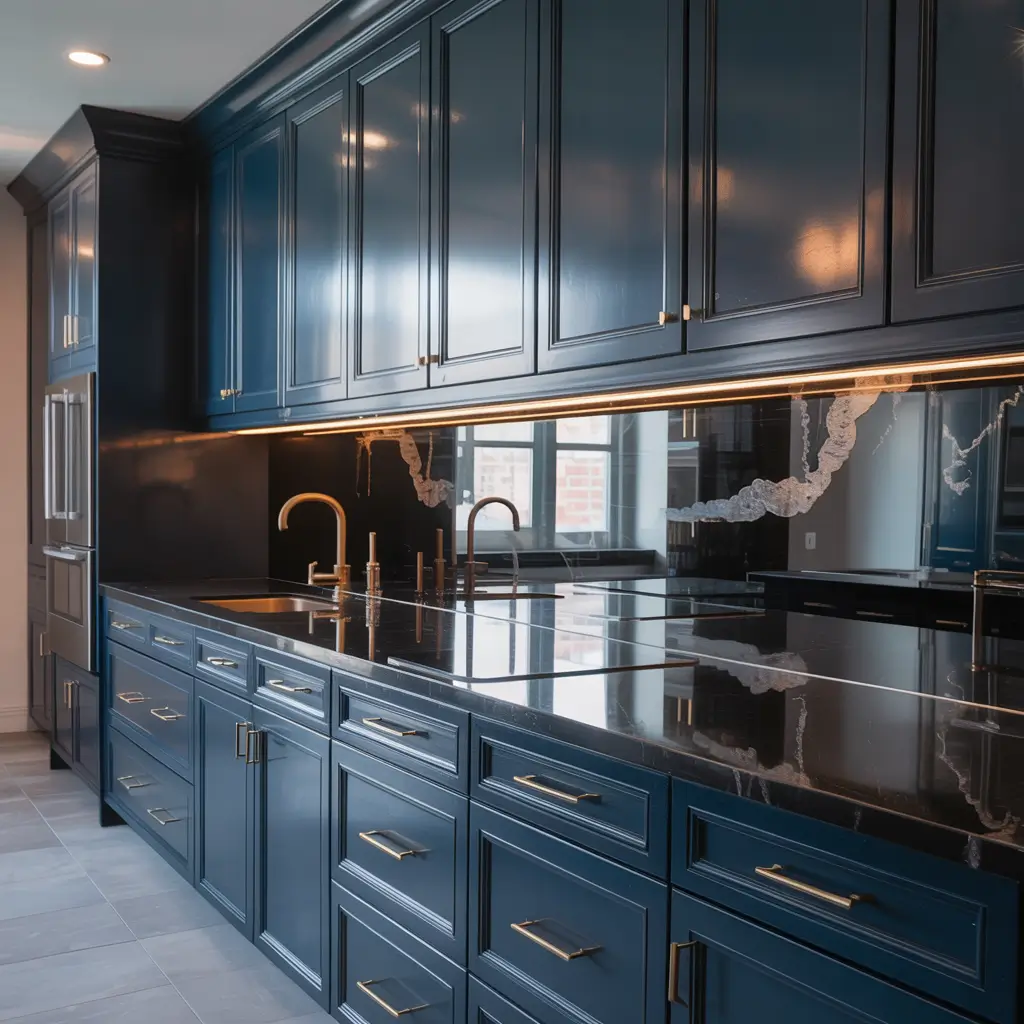
Want drama? Navy blue cabinets with black countertops deliver it in spades. This is the power couple of kitchen design—bold, confident, and unapologetically striking. If done right, it creates a jewel-box effect that feels luxurious and intimate.
The key here is balance. Navy blue is already a strong color, and black countertops are equally commanding. You need to introduce enough light and brightness to prevent your kitchen from feeling like a cave. White subway tiles, brass hardware, and pendant lighting become your best friends in this scenario.
I toured a show home last year with this exact color scheme, and the kitchen was the star of the house. They’d paired navy blue shaker cabinets with honed black granite countertops and brass fixtures—chef’s kiss. The space felt moody and sophisticated without being oppressive.
Critical elements for success:
- Adequate lighting is non-negotiable (recessed lights, pendants, under-cabinet lighting)
- White or light-colored backsplash to break up the darkness
- Open shelving or glass-front cabinets to create visual breathing room
- Reflective surfaces (mirrors, glass, metallics) to bounce light around
Two-Tone Cabinets with Black Countertops
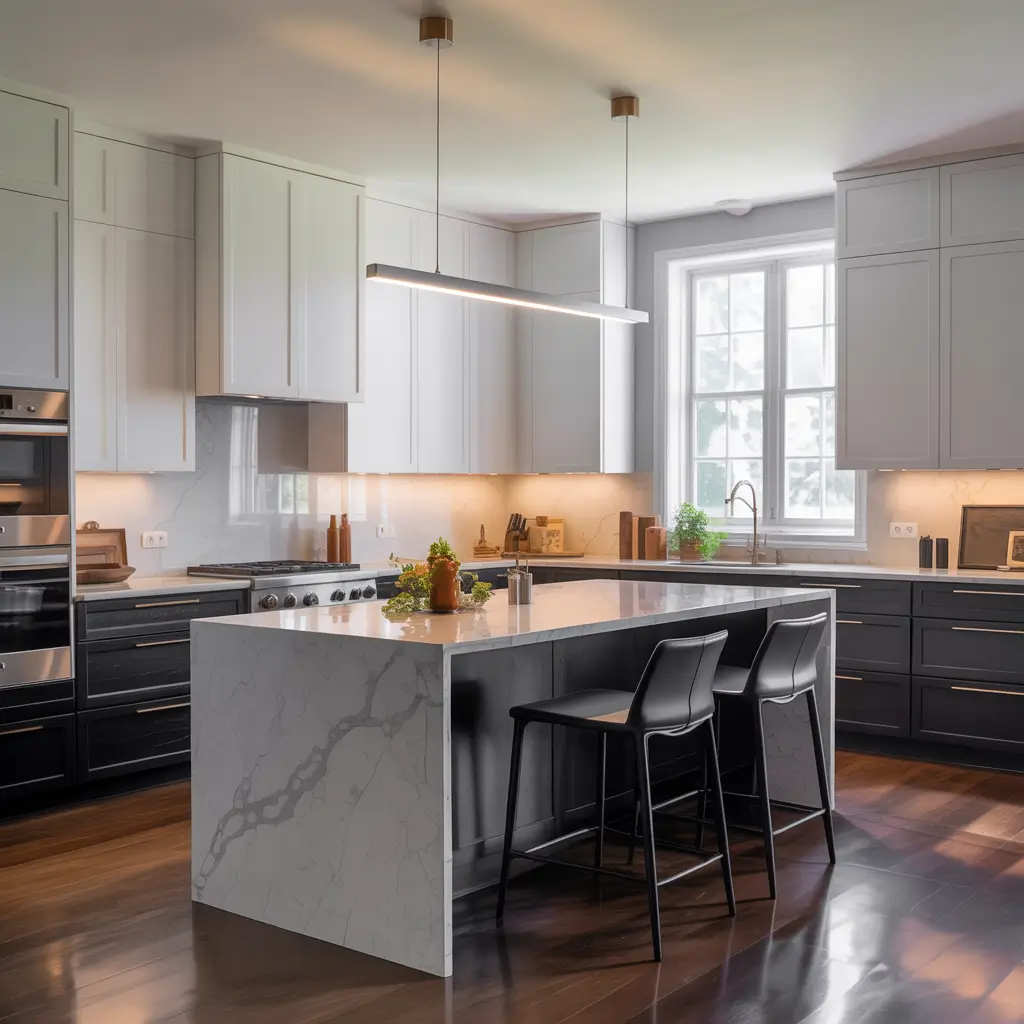
Can’t decide on just one cabinet color? Two-tone kitchens solve that problem beautifully. Pairing darker lower cabinets with lighter uppers (or vice versa) and adding black countertops creates incredible depth and visual interest.
My favorite version? Navy or dark gray lowers with white uppers, all grounded by black countertops. This approach gives you the drama you want without overwhelming the entire space. It’s like having your cake and eating it too (which you’ll definitely do in this gorgeous kitchen).
The beauty of two-tone schemes is the flexibility. You can go bold on the bottom and light on top, or flip it for a more unconventional look. The black countertops tie both colors together, creating cohesion despite the contrast.
Popular two-tone combinations with black countertops:
- Navy lowers + white uppers = classic coastal elegance
- Dark gray lowers + cream uppers = soft modern sophistication
- Green lowers + white uppers = fresh farmhouse charm
- Natural wood lowers + white uppers = Scandinavian warmth
Light Gray Cabinets and Black Countertops
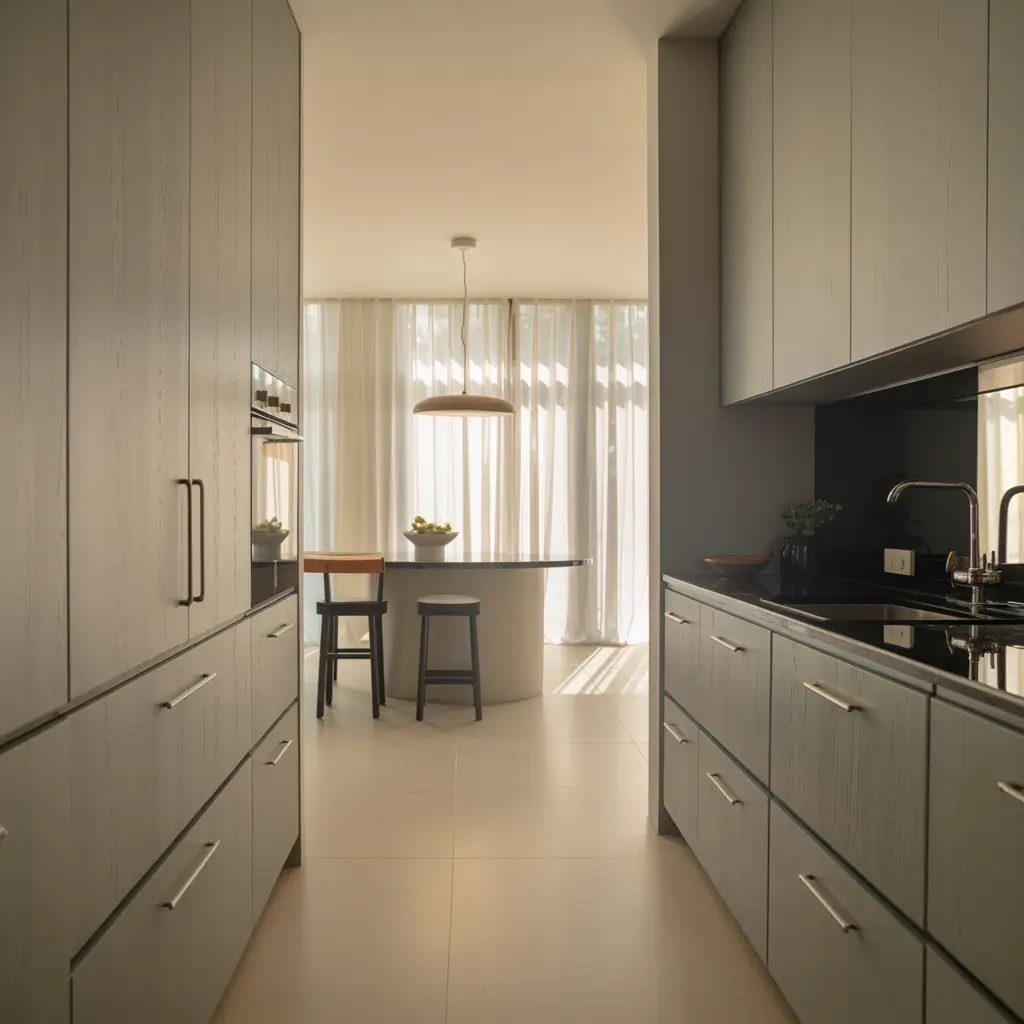
Light gray hits that sweet spot between white and darker neutrals, offering just enough color to be interesting while remaining versatile. Pair light gray cabinets with black countertops, and you’ve got a contemporary scheme that won’t feel dated in five years.
This combination creates a sleek, modern aesthetic without feeling cold or sterile. The light gray softens the intensity of the black while maintaining that sophisticated, pulled-together vibe. It’s perfect for people who want a modern kitchen but aren’t ready to commit to stark white.
I love this scheme because it photographs beautifully (important if you ever sell) but also lives beautifully day-to-day. The gray hides minor imperfections better than white, and the black countertops are surprisingly forgiving with crumbs and spills.
Why this pairing works:
- Creates a neutral foundation that works with any accent color
- Modern and timeless simultaneously (impressive feat, honestly)
- Works equally well with chrome, brushed nickel, or matte black hardware
- Easy to update with accessories when you want a fresh look
Black Countertops with Natural Beige Palette
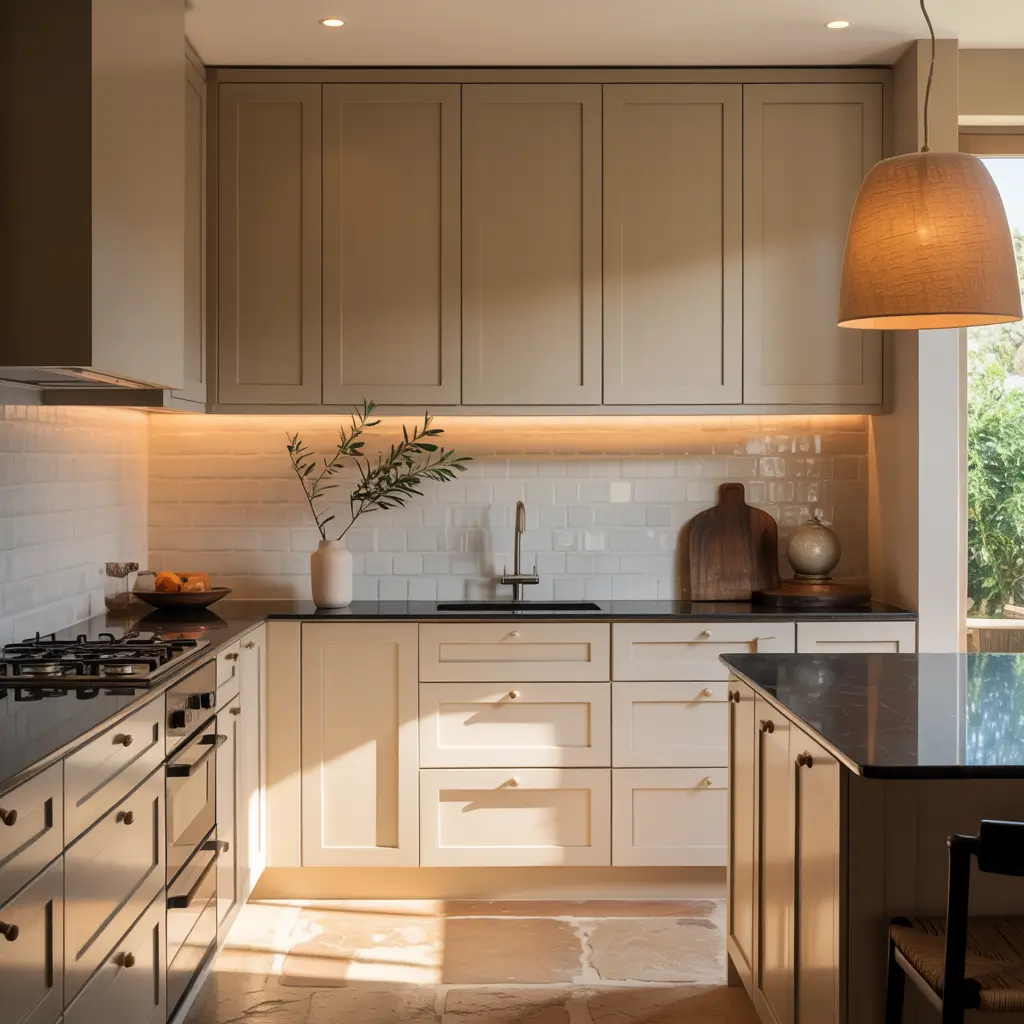
Sometimes you want your kitchen to feel like a warm hug, and a natural beige palette delivers exactly that. Beige cabinets, warm neutral walls, and black countertops create this comforting, grounded space that never goes out of style.
I know what you’re thinking—beige sounds boring, right? Wrong. When you pair quality beige tones with black countertops, you get depth and sophistication that’s anything but bland. The black provides the edge that prevents beige from sliding into forgettable territory.
This scheme works particularly well if you love a neutral aesthetic but want something cozier than gray. It’s the color equivalent of a cashmere sweater—luxurious, comfortable, and effortlessly elegant.
Elements that enhance this palette:
- Natural stone or marble backsplash in cream or beige
- Warm wood accents (cutting boards, bar stools, open shelving)
- Bronze or antique brass hardware for vintage appeal
- Textural elements like woven baskets or linen window treatments
Also Read: 15 Creative Black and Gold Kitchen Designs for Modern Homes
Charcoal Cabinets and Black Countertops
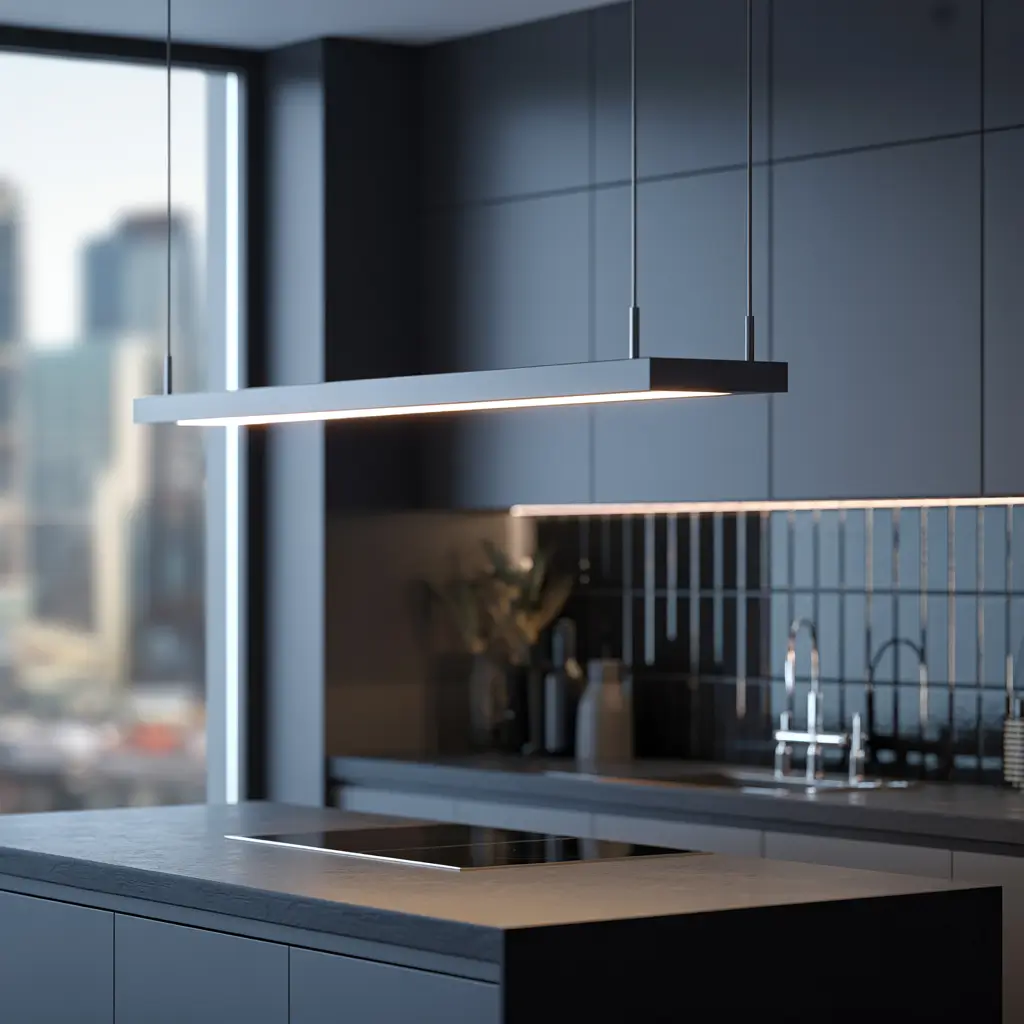
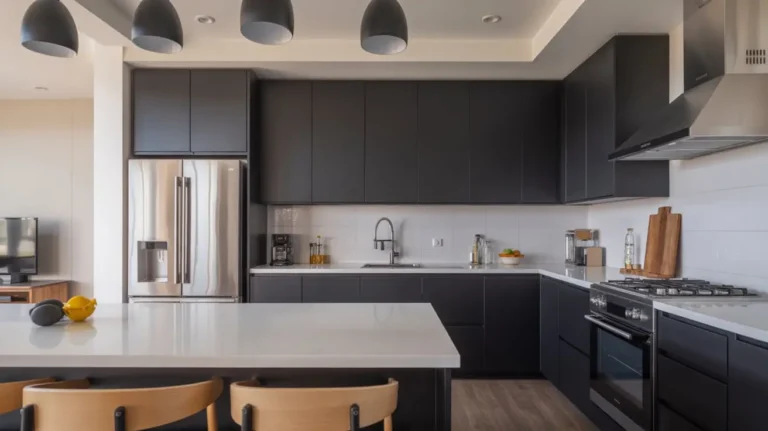
Ready to go full moody? Charcoal gray cabinets with black countertops create this sophisticated, dramatic look that’s perfect for creating a statement kitchen. Yes, it’s dark, but when you balance it correctly, it’s absolutely gorgeous.
The secret to making this work is layering different shades of dark rather than using flat, uniform black. Charcoal cabinets offer subtle warmth and dimension that pure black doesn’t, creating visual interest through tonal variation. The black countertops anchor the scheme without blending in completely.
I won’t lie—this combo isn’t for everyone. You need confidence to pull off a dark kitchen, plus excellent lighting and probably white or light walls. But if you commit to it? The payoff is incredible. Your kitchen will look like it belongs in a design magazine (the good kind, not the weird avant-garde ones).
Making dark-on-dark work:
- Layer in multiple light sources at different heights
- Use glossy or semi-gloss finishes to reflect light
- Incorporate white, cream, or metallic accents generously
- Keep walls and ceilings light to prevent claustrophobia
- Add texture through backsplash, hardware, and accessories
Black Countertops with Brass Accent Scheme
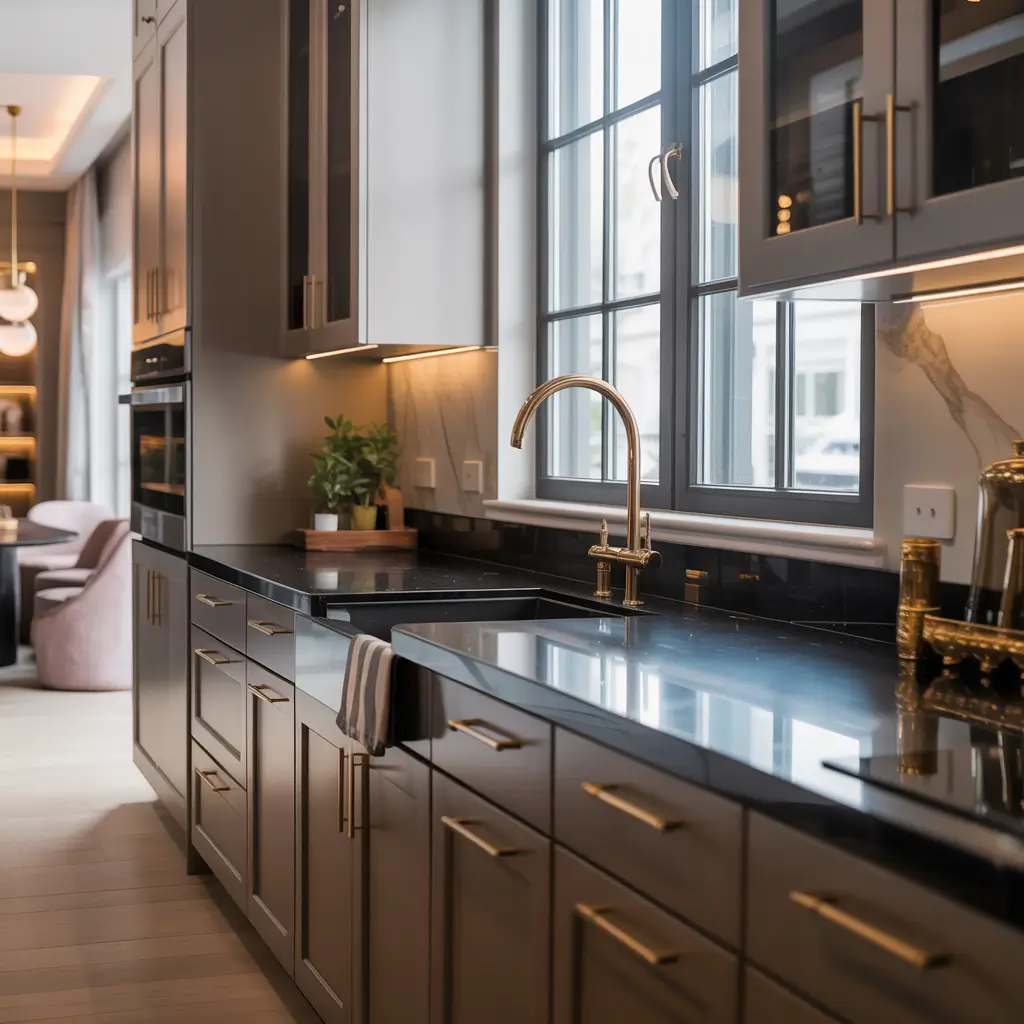
Let’s talk about hardware and fixtures for a minute. Brass accents with black countertops create this warm, luxurious vibe that elevates whatever cabinet color you choose. Whether you go with white, navy, green, or wood cabinets, brass ties everything together beautifully.
The warm gold tones of brass provide the perfect counterpoint to the coolness of black surfaces. This combination feels both vintage and contemporary—like you raided your cool grandmother’s kitchen and updated it for modern life.
I recently replaced my chrome hardware with unlacquered brass, and the transformation was wild. Suddenly my black countertops looked more expensive, and the whole kitchen felt warmer and more inviting. IMO, it’s the easiest upgrade you can make for maximum impact.
Best brass applications:
- Cabinet pulls and knobs (obviously)
- Faucet and sink fixtures
- Pendant lighting over islands or peninsulas
- Open shelving brackets
- Range hood details
Choose unlacquered brass if you like patina and character, or lacquered brass if you prefer that shiny, unchanging look.
Scandinavian White and Black Countertop Kitchen
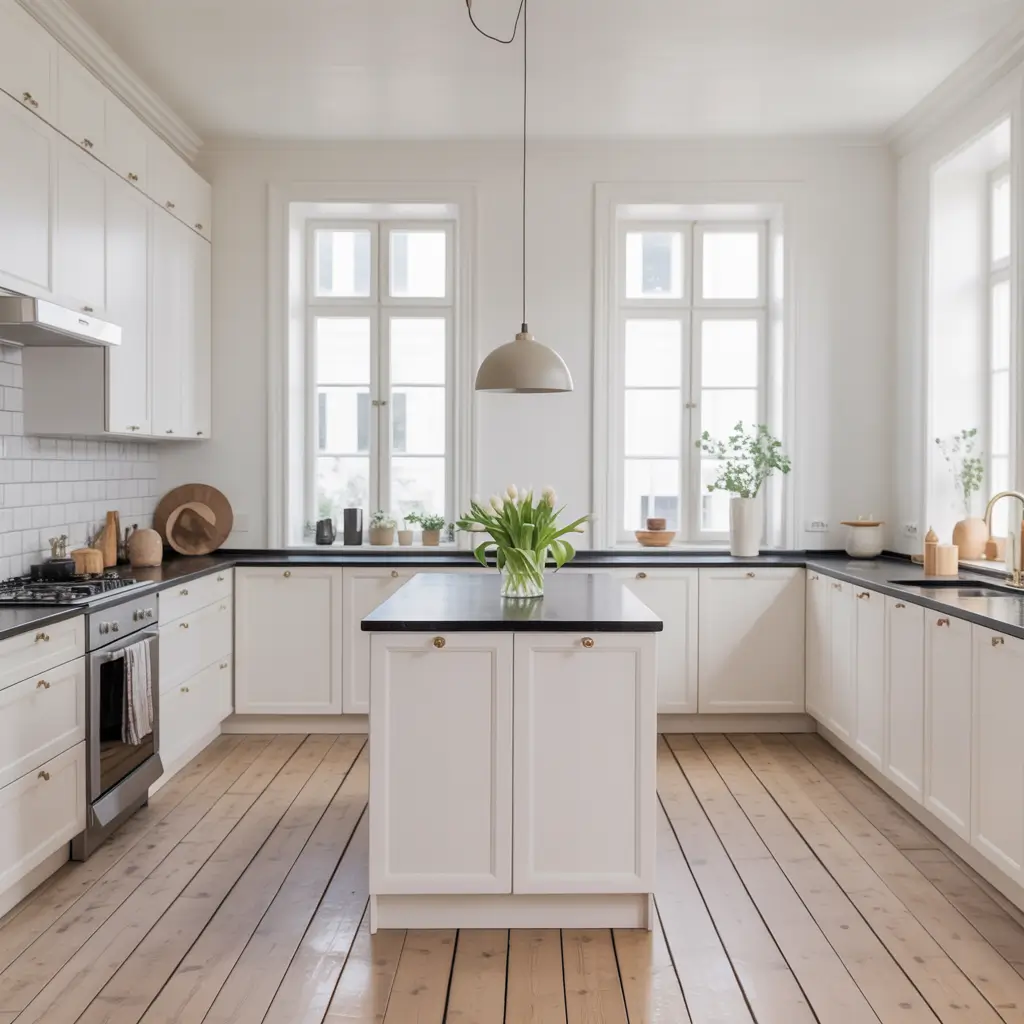
Scandinavian design prioritizes simplicity, functionality, and light—so how do you incorporate black countertops without violating those principles? You lean hard into crisp whites and natural materials while keeping everything else minimal.
This scheme features predominantly white cabinets and walls, black countertops as the grounding element, and strategic pops of natural wood and greenery. The result feels clean, airy, and effortlessly chic. It’s minimalism that actually feels livable rather than sterile.
What separates Scandi style from basic white-and-black kitchens is the attention to texture and natural elements. You’re not just throwing white and black together—you’re carefully balancing warm and cool tones with organic materials.
Essential Scandinavian elements:
- Matte white cabinets (no ornate details or fussy hardware)
- Light wood flooring (birch, ash, or light oak)
- Simple black countertops (matte or honed finish preferred)
- Minimal hardware or integrated pulls
- Lots of natural light and simple window treatments
- Functional items displayed as decor (wooden spoons, ceramic bowls)
Earthy Taupe Kitchen with Black Countertops

Taupe gets overlooked, which is a shame because it’s incredibly versatile. Earthy taupe cabinets paired with black countertops create this warm, sophisticated scheme that feels current without trying too hard. It’s the introvert of kitchen color schemes—quietly stunning.
Taupe bridges the gap between gray and beige, offering warmth without feeling dated. When you anchor it with black countertops, you add definition and modern edge. This combination works beautifully in traditional and transitional kitchens that want to feel updated but not trendy.
I helped my sister pick taupe cabinets for her kitchen remodel, and she was nervous they’d look too brown or outdated. With black quartz countertops and brushed gold hardware, the space looks sophisticated and current. She gets compliments every time someone walks in.
Complementary elements:
- Warm gray or cream walls
- Natural stone or ceramic backsplash
- Brushed gold or bronze hardware
- Natural fiber textures (jute rugs, woven pendants)
- Green plants to add life and freshness
Black Countertops with Warm Oak Cabinets
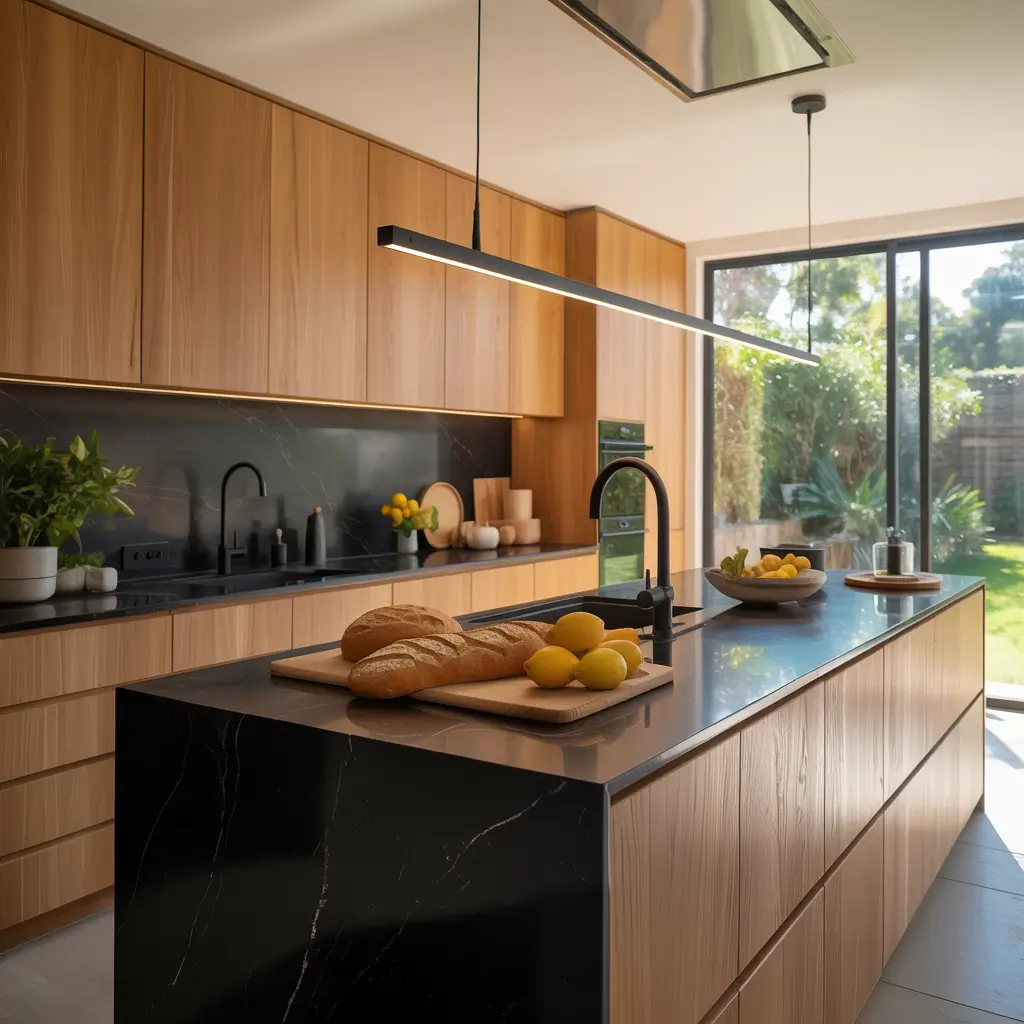
Warm oak cabinets bring us back to wood tones, but with a specific focus on lighter, honey-toned oak that’s making a comeback. Paired with black countertops, you get this perfect balance of Scandinavian minimalism and mid-century warmth.
Light oak has visible grain patterns that add character and movement to your kitchen. The black countertops provide contrast that highlights the wood’s beauty while keeping things grounded and modern. It’s like pairing a classic white tee with vintage jeans—simple but undeniably cool.
This combination works especially well if you’re renovating a kitchen with existing oak cabinets that you can’t (or don’t want to) replace. Instead of painting over that beautiful wood, embrace it and update with black countertops for an instant refresh.
Styling tips for oak and black:
- Keep walls neutral (white, cream, or soft gray)
- Use matte black or oil-rubbed bronze hardware
- Incorporate black-framed windows or doors if possible
- Add leather, linen, or wool textiles for warmth
- Keep the space uncluttered to let materials shine
Modern Black Countertops and Soft Pastel Accents

Want something unexpected? Pair black countertops with soft pastel accent colors for a modern, playful kitchen that still feels sophisticated. I’m talking dusty pink, powder blue, mint green, or lavender—muted pastels that whisper rather than shout.
The trick here is using pastels as accent colors, not the main event. Your cabinets might be white, cream, or light gray, with pastels appearing in backsplash tiles, bar stools, small appliances, or decorative accessories. The black countertops prevent the pastels from feeling too sweet or juvenile.
I recently saw a kitchen with white cabinets, black countertops, and a dusty pink subway tile backsplash, and it completely changed my mind about pastels in kitchens. The space felt fresh, modern, and surprisingly sophisticated. The black countertops grounded everything and prevented it from looking like a cupcake exploded.
Making pastels work with black countertops:
- Choose muted, sophisticated pastels (think dusty rose, not hot pink)
- Use pastel as accent only—15-20% of your color scheme max
- Keep cabinets and walls neutral for balance
- Matte finishes on pastels feel more mature than glossy
- Mix in natural materials to prevent an overly synthetic look
Final Thoughts
Black countertops offer incredible versatility when you pair them with the right colors and materials. Whether you’re drawn to classic white cabinets, moody navy blues, warm wood tones, or unexpected pastels, there’s a black countertop scheme that’ll work for your style and space.
The key is understanding your kitchen’s natural light, your personal style preferences, and how much contrast you can handle. Some people thrive in dramatic, dark kitchens while others need brightness and airiness. Neither approach is wrong—it’s about knowing yourself and your space.
Start by identifying which of these 15 schemes resonates most with you. Pin some inspiration photos, grab some paint samples, and don’t be afraid to test combinations in your actual space. Lighting makes a huge difference, and what looks amazing online might not work in your north-facing kitchen with limited windows (ask me how I know :/).
Remember, your kitchen should make you happy every time you walk into it. Black countertops are gorgeous, dramatic, and surprisingly versatile—but only if you pair them with colors and materials that support your vision.