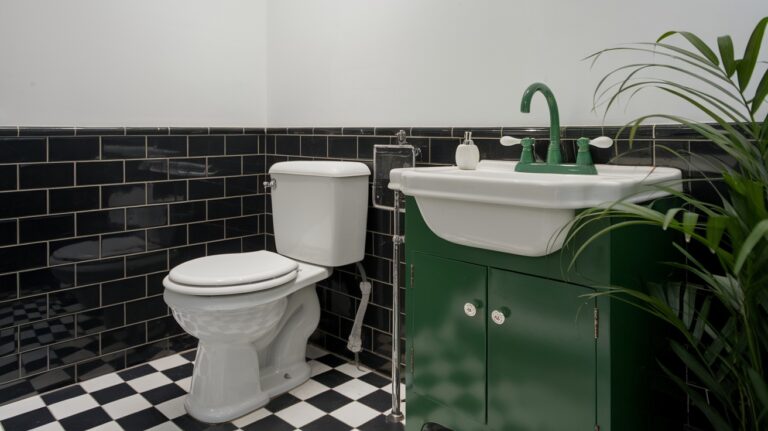
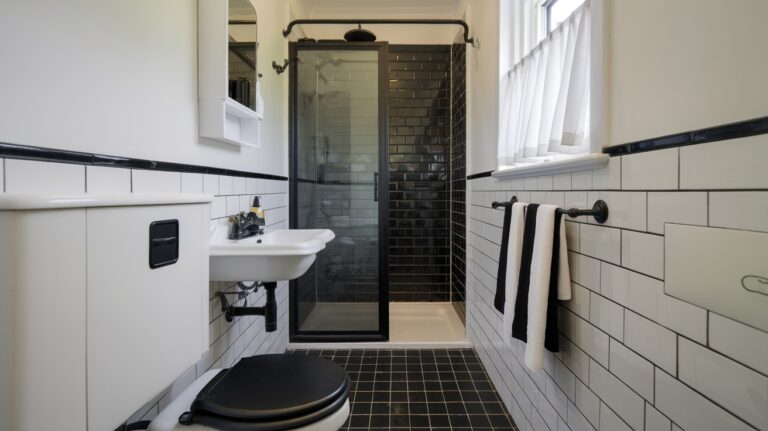
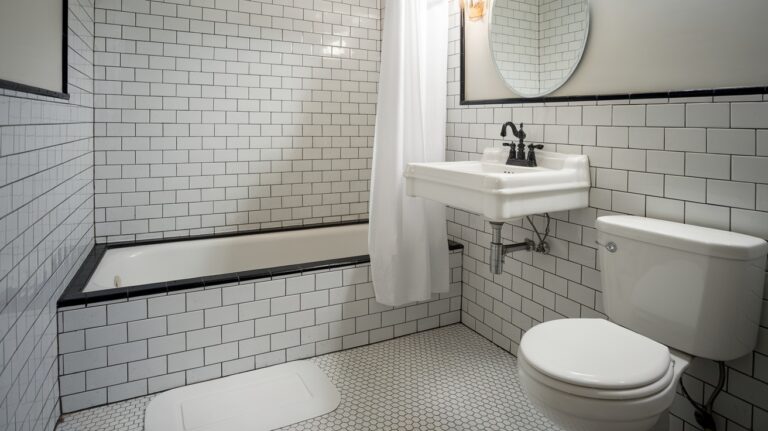
10 Gorgeous Black Bathroom Ideas and Elegant Small Spaces

Look, I’ll be straight with you—black bathrooms used to terrify me. The idea of making an already-small room darker seemed like interior design suicide, right?
But then I saw my friend’s matte black powder room, and I literally stopped mid-conversation to stare at the walls. That space was moody, dramatic, and somehow felt bigger than it actually was.
Black bathrooms are having a serious moment, and honestly, it’s about time. We’ve been playing it safe with all-white bathrooms for way too long.
Don’t get me wrong—white bathrooms are classic and clean, but they’re also everywhere and kind of boring. Black bathrooms bring drama, sophistication, and personality that safe neutrals just can’t touch.
Whether you’re renovating a tiny powder room or designing your dream master bath, black might be exactly what your space needs.
I’m going to walk you through ten different approaches to black bathrooms—from sleek minimalism to luxe marble vibes—so you can find the style that speaks to you without ending up with a cave-like disaster.
Modern Black and White Contrast Bathroom
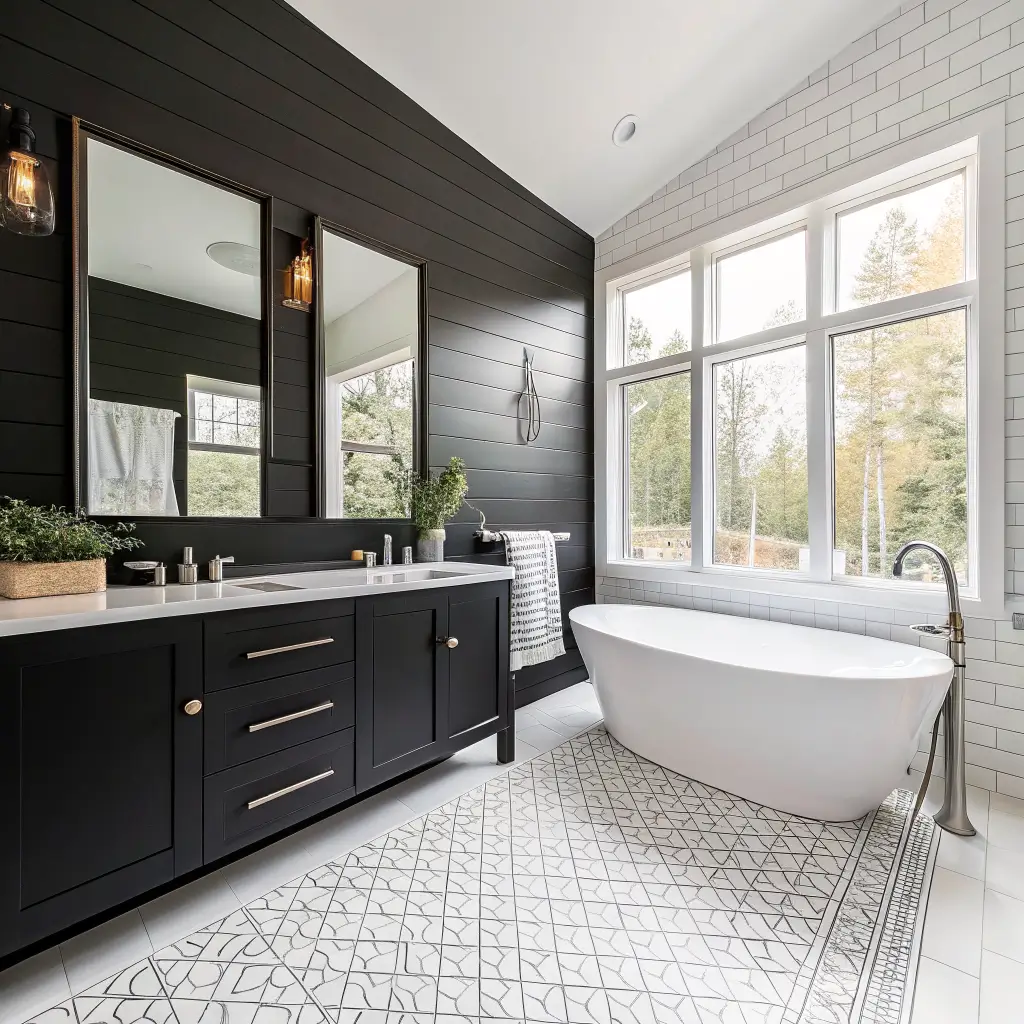
Let’s start with the most classic approach—black and white contrast. This combination has been killing it in design for literally forever, and bathrooms are no exception. I renovated my guest bathroom using this scheme last year, and the crisp contrast makes the space feel both timeless and contemporary.
Why black and white works so well: The high contrast creates visual drama and definition. Your eye travels easily around the space because the elements stand out clearly against each other. Plus, this color scheme never goes out of style, which matters when you’re investing serious money in a bathroom reno.
Balancing the proportions: This is where people often mess up. You need to decide which color dominates and which provides accent. I went with black as the dominant color (black tiles, black fixtures) with white accents (white sink, white towels, white ceiling). The reverse works too—white walls with black fixtures and accessories.
Pattern mixing opportunities:
- Black and white checkered floors (classic but can feel retro)
- White subway tiles with black grout (my personal favorite)
- Black hexagon tiles with white grout
- Geometric black and white wallpaper on one accent wall
- Mixed tile sizes in both colors for visual interest
Fixture choices matter: Chrome fixtures feel cold in black and white bathrooms. I switched to matte black fixtures, and the difference was night and day. The black faucets, showerhead, and towel bars tie into the dark elements while the matte finish keeps everything modern rather than shiny and dated.
Adding warmth: Straight black and white can feel a bit sterile (like you’re in a chessboard), so I added warm elements—wooden bath mat, brass mirror frame, and plants. These additions soften the starkness without diluting the impact of the black and white contrast.
Lighting strategy: You need excellent lighting in high-contrast bathrooms. I installed bright LED overhead lights, sconces flanking the mirror, and even some under-cabinet lighting. The layered lighting prevents the black elements from feeling oppressive and ensures you can actually see yourself in the mirror.
Maintenance reality: Black shows water spots and soap scum like nobody’s business. White shows dirt and mildew. Basically, you’re signing up for regular cleaning with this scheme :/ But honestly, the look is worth the extra wipe-downs.
Matte Black Minimalist Bathroom Design
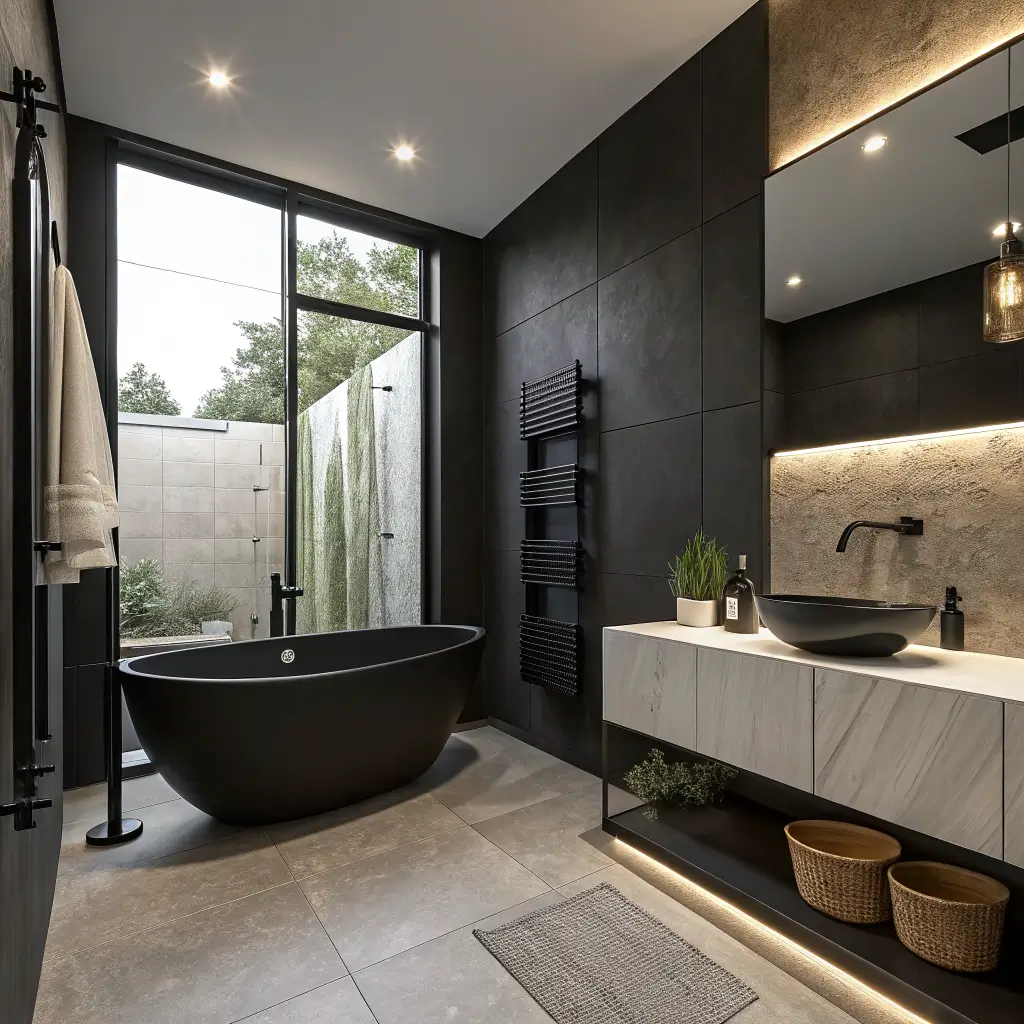
Minimalism and black might seem like an odd pairing, but hear me out—matte black minimalist bathrooms are possibly the most sophisticated bathroom style I’ve ever encountered. I visited a boutique hotel with one of these bathrooms, and I took approximately fifty photos for inspiration.
The minimalist approach: Less is more, but what you include needs to be intentional and high-quality. Every element serves a purpose, and there’s zero clutter or unnecessary decoration. The black creates the drama, while the minimal aesthetic keeps it from feeling overwhelming.
Essential elements:
- Wall-mounted everything – Floating vanity, wall-hung toilet, mounted faucets
- Hidden storage – Nothing visible on counters or shelves
- Clean lines – No ornate details or fussy hardware
- Matte finishes – Shiny black feels fancy; matte black feels modern
- Restrained color palette – Black, maybe one other neutral, and that’s it
Why matte finish is crucial: Glossy black shows every fingerprint, water spot, and speck of dust. Matte black is far more forgiving and maintains that sleek, sophisticated look with less maintenance. I’ve used both, and matte wins every single time for livability.
Texture becomes important: When you strip away color and pattern, texture provides the visual interest. I love combining matte black tile with concrete elements, adding a black wood-look tile, or incorporating natural stone in black tones. The variation in texture prevents the space from reading as flat or one-dimensional.
Strategic lighting: Minimalist bathrooms need thoughtful lighting to highlight the architecture and create ambiance. I prefer recessed lighting for overall illumination, paired with a statement light fixture (something sculptural in black metal) for visual interest. Under-lighting the floating vanity creates a modern floating effect that’s genuinely cool.
The vanity situation: A floating black vanity is the centerpiece of minimalist black bathrooms. Go for handleless drawers with push-to-open mechanisms—it maintains the clean lines and eliminates visual clutter. I’d choose a vanity with integrated sinks rather than vessel sinks for a truly streamlined look.
What to skip: Decorative accessories, patterned anything, multiple colors, open shelving with visible products, and ornate hardware. These elements work against minimalism and dilute the impact of your intentional design choices.
Black Tiles with Gold Accents Bathroom
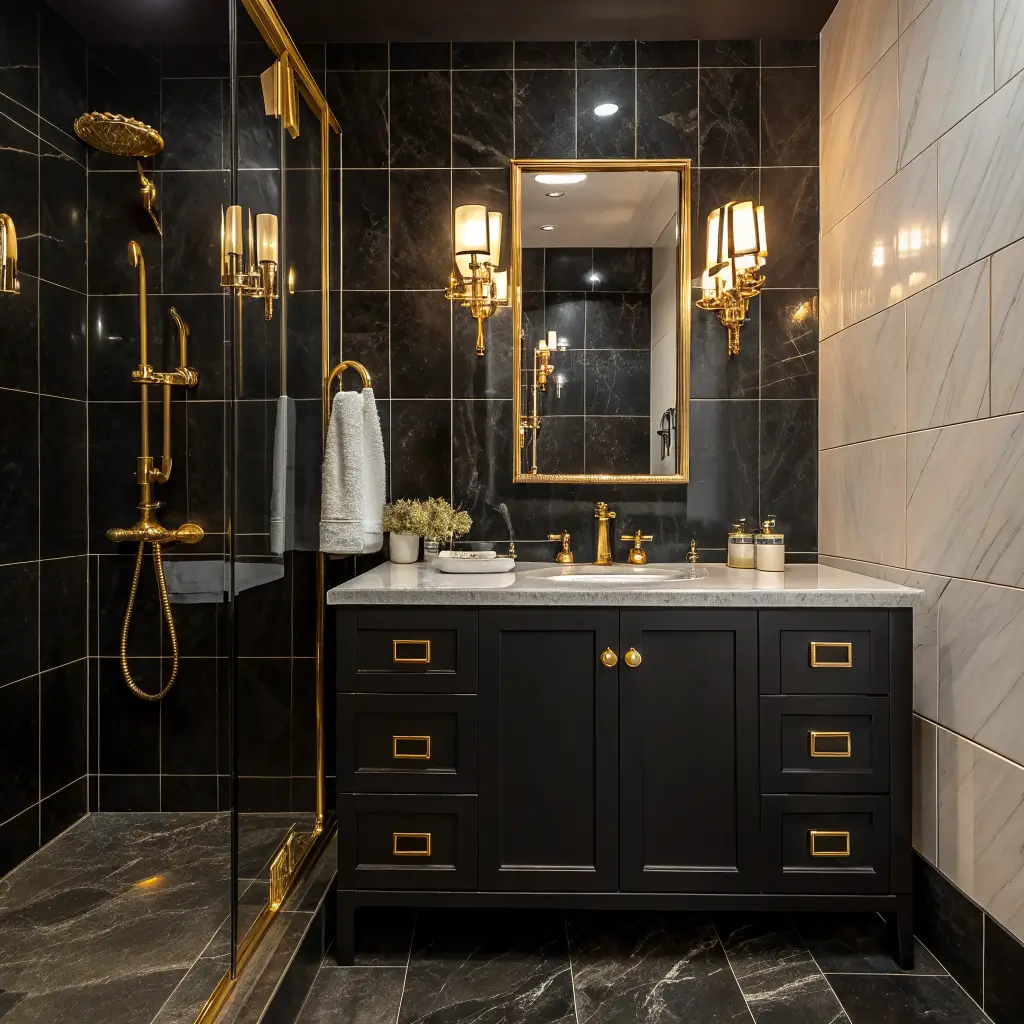
Okay, now we’re getting into serious luxury territory. Black tiles paired with gold accents creates this Art Deco-inspired glamour that makes you feel fancy every time you brush your teeth. I saw this combination in a designer showroom, and I’ve been plotting my master bath renovation ever since.
Why this combination works: Black provides the dramatic backdrop, while gold adds warmth and luxury. The contrast between the dark tiles and metallic gold catches light beautifully and creates visual interest without requiring pattern or additional colors.
Gold tone options: You’ve got choices here, and they create different vibes:
- Bright polished gold – Maximum glamour, very traditional luxury
- Brushed gold – Softer, more livable, still luxe
- Antique brass – Vintage-inspired, less shiny, more sophisticated
- Rose gold – Trendy and feminine, pairs beautifully with black
I’m personally team brushed gold because it feels elevated without being too “look at me.” Polished gold can veer into gaudy territory if you’re not careful with the proportions.
Where to incorporate gold:
- Faucets and showerheads (obviously)
- Mirror frames (go oversized for impact)
- Light fixtures (chandeliers or sconces)
- Cabinet hardware (knobs and pulls)
- Towel bars and hooks
- Decorative accessories (soap dispensers, trays)
Tile selection: Glossy black subway tiles reflect light beautifully and create dimension. Matte black tiles provide more subtle sophistication. I’ve also seen stunning black marble-look tiles that bring in natural veining and additional visual interest. Mix tile sizes—large format tiles on walls with smaller mosaic tiles as accents.
Balance is everything: Too much gold feels like you’re trying too hard. I follow the rule of using gold as an accent (about 20-30% of the visual weight) with black as the dominant element. This proportion feels intentional rather than excessive.
Lighting considerations: Gold catches and reflects light, so your lighting choices affect how the gold reads in the space. Warm-toned bulbs make gold glow beautifully. Cool-toned lights can make gold look brassy or cheap. Invest in quality warm LED bulbs—your gold accents will thank you.
Also Read: 20 Stunning Blue and Black Bathroom Designs for a Bold Makeover
Industrial Black Bathroom with Concrete Elements
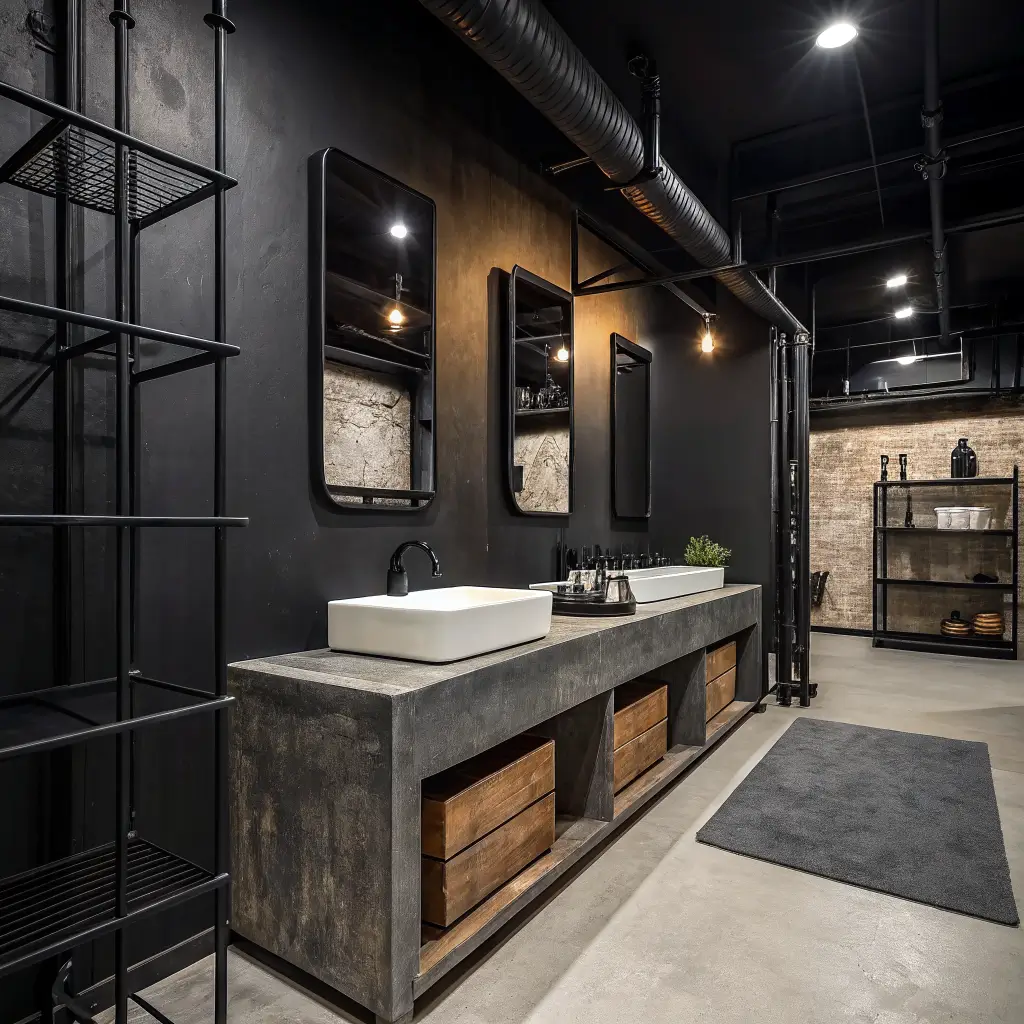
Industrial design and black bathrooms are basically best friends. The raw, unfinished aesthetic of industrial style pairs perfectly with black’s edgy sophistication. I helped my brother design his loft bathroom in this style, and it’s hands-down the coolest bathroom I’ve been involved with.
Industrial design hallmarks:
- Exposed elements – Pipes, ductwork, brick, or concrete
- Raw materials – Concrete, metal, reclaimed wood
- Utilitarian fixtures – Simple, functional, no frills
- Metal accents – Black iron, steel, or aged metal
- Minimal polish – Embracing imperfection and rough textures
Concrete applications: Concrete brings that raw, industrial feel while providing interesting texture. We used polished concrete floors (sealed properly for water resistance), a concrete vanity top, and concrete-look tiles on the shower walls. The gray tones of concrete soften the starkness of pure black.
Black metal fixtures: Skip the chrome and go for black iron or matte black metal fixtures. We installed exposed black pipe shelving, black metal-framed mirrors, and black industrial-style lighting. The metal elements tie the industrial theme together while maintaining the black color scheme.
Incorporating reclaimed wood: Raw or reclaimed wood elements warm up industrial black bathrooms and prevent them from feeling cold or sterile. We added a reclaimed wood accent wall behind the toilet and open shelving made from thick reclaimed planks. The natural wood grain provides organic contrast to the hard industrial materials.
Brick or faux brick: Exposed brick (or realistic faux brick panels) adds industrial character and textural interest. We did a black-painted brick wall in the shower area—it looks incredible and ties into the industrial aesthetic while maintaining the black theme.
Lighting choices: Industrial-style Edison bulb fixtures, black metal cage lights, or factory-inspired pendant lights complete the look. We hung two large pendant lights over the vanity with visible Edison bulbs—functional and absolutely perfect for the industrial vibe.
Hardware and accessories: Go for simple, utilitarian hardware. We used basic black iron towel bars, simple black hooks, and minimal accessories. Industrial style doesn’t do fussy or decorative—everything should look functional and purposeful.
Small Black Bathroom Ideas to Maximize Space
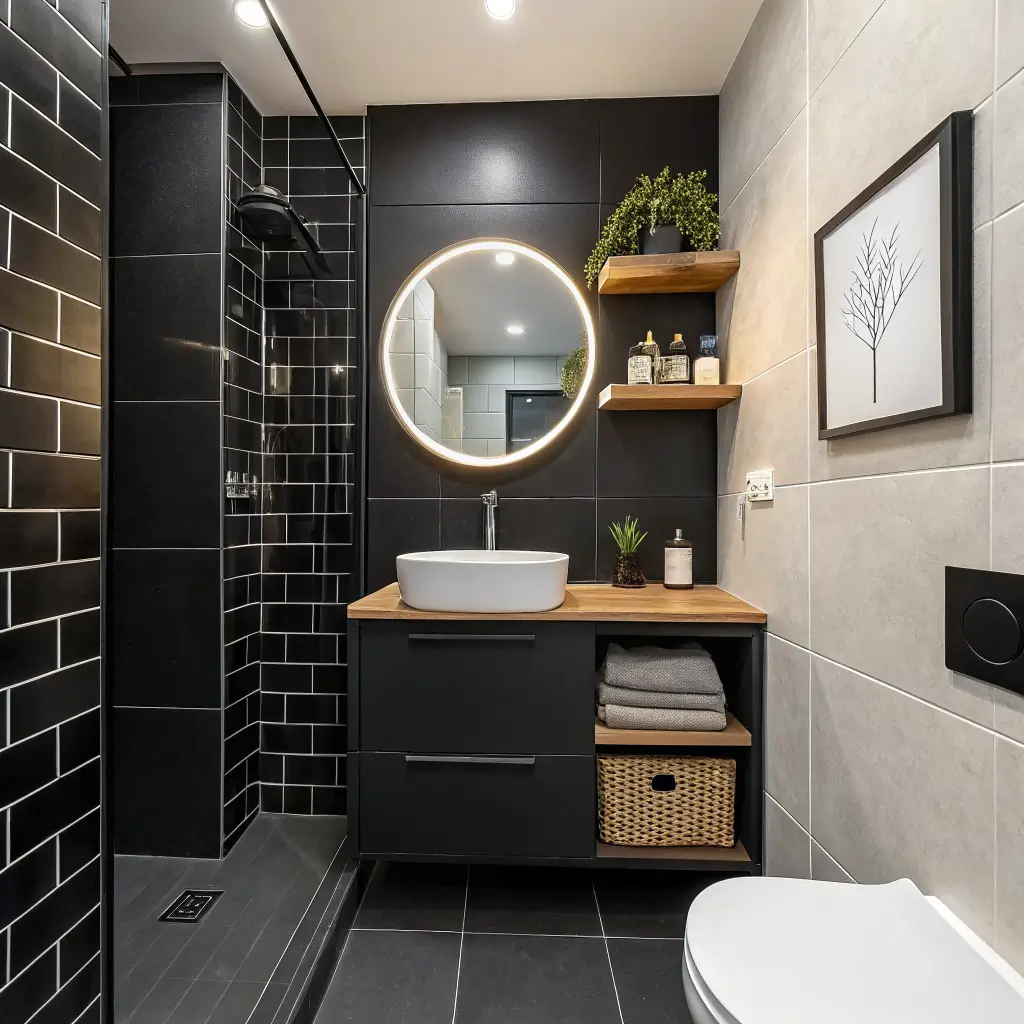
Here’s where I drop some truth—black can absolutely work in small bathrooms if you approach it strategically. I know, everyone says dark colors make spaces feel smaller, but I’ve designed two small black bathrooms that feel surprisingly spacious. The trick is knowing which design strategies to employ.
Why black can work in small spaces: Dark colors recede visually, which can actually make walls feel farther away. When you execute it properly with good lighting and smart design choices, black creates a jewel-box effect rather than a claustrophobic cave.
Strategic black placement:
- Not everything needs to be black – Choose focal points for black elements
- Use matte finishes – They absorb light rather than reflecting it harshly
- Incorporate mirrors generously – They bounce light and expand visual space
- Keep the ceiling light – A white ceiling maintains height perception
My small bathroom formula: Black lower cabinets and fixtures, white upper walls and ceiling, huge mirror, and excellent lighting. This approach grounds the space with black while keeping the upper portion light and airy. The eye reads the space as taller and more open.
Tile tricks for small black bathrooms:
- Large-format tiles (fewer grout lines make space feel bigger)
- Vertical tile patterns (draws the eye upward)
- Glossy black tiles in shower (reflects light and feels more spacious)
- Black and white geometric patterns (creates visual interest without overwhelming)
Lighting is non-negotiable: Small black bathrooms absolutely require layered, bright lighting. I install recessed ceiling lights, sconces on both sides of the mirror, and under-cabinet lighting. You cannot skimp here—inadequate lighting will make a small black bathroom feel like a dungeon.
Mirror strategy: Go bigger than you think you need. I installed a full-wall mirror above the vanity in my small black powder room, and it genuinely doubled the perceived space. The mirror reflects light and creates depth that small dark spaces desperately need.
Storage solutions: Wall-mounted cabinets keep floor space open, which makes the room feel larger. I prefer black cabinets with clean lines and handleless designs. Floating vanities create visual breathing room by exposing the floor beneath, which tricks the eye into perceiving more space.
Luxury Black Marble Bathroom Inspiration
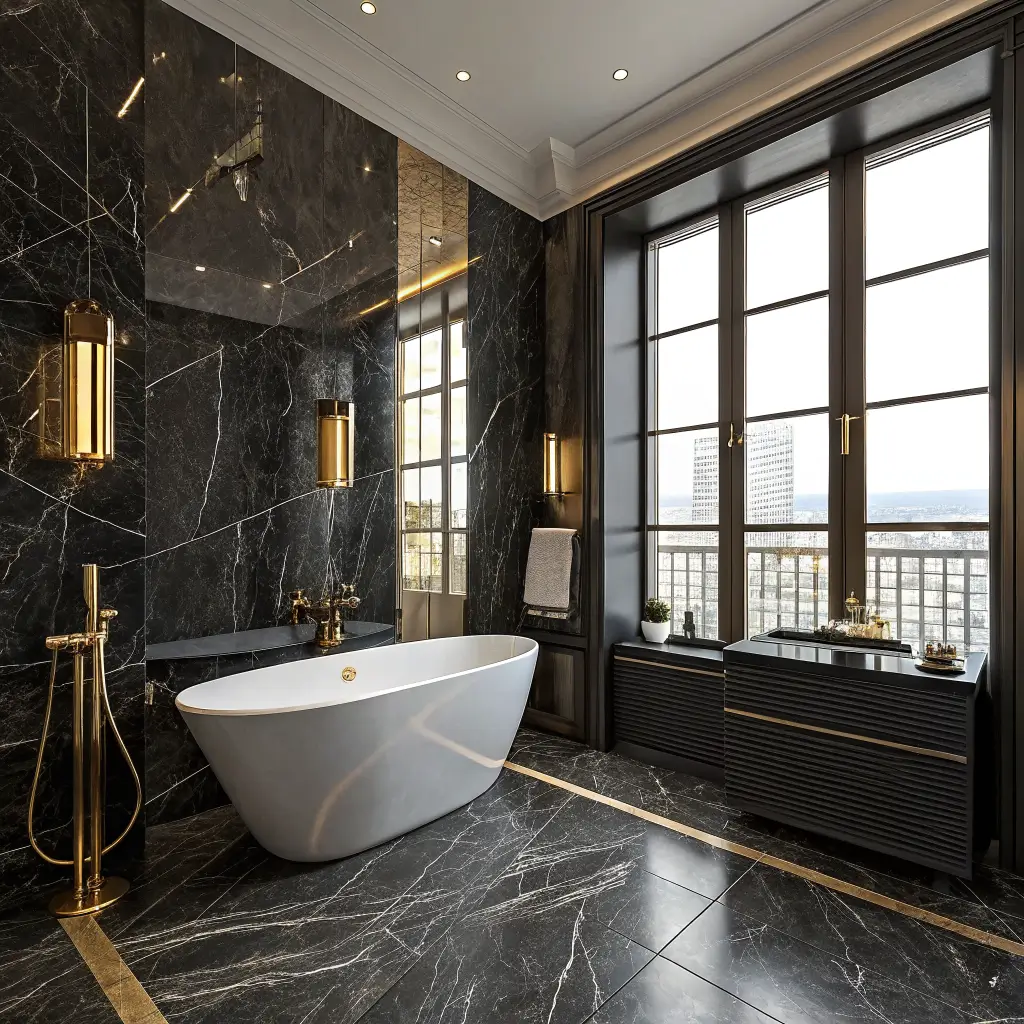
Let’s talk about peak bathroom luxury—black marble. This material screams sophistication and wealth in a way that few other bathroom finishes can match. I toured a luxury home with a black marble bathroom, and I literally gasped when I walked in. It was that stunning.
Types of black marble to consider:
- Nero Marquina – Deep black with dramatic white veining (the most popular)
- Black Portoro – Black with gold veining (insanely luxurious)
- Pietra Grey – Gray-black with subtle veining (more understated)
- Absolute Black – Solid black with minimal veining (modern and bold)
Real marble vs. alternatives: Real marble is gorgeous but requires maintenance—it’s porous, can stain, and needs regular sealing. Marble-look porcelain tiles give you the aesthetic with far less maintenance and lower cost. I’ve used both, and honestly, quality porcelain can fool even design professionals.
Application strategies:
- Full marble walls – Maximum impact but serious budget
- Marble accent wall – Gorgeous focal point, more budget-friendly
- Marble flooring – Classic and beautiful, requires proper sealing
- Marble vanity top – Introduces luxury without going overboard
- Marble shower surround – Creates spa-like atmosphere
Veining considerations: The white or gold veining in black marble provides natural pattern and visual movement. I prefer dramatic veining because it creates more interest, but subtle veining works better for minimalist aesthetics. Book-match the marble slabs for a symmetrical, high-end look.
Mixing marble types: You don’t need to use one marble everywhere. I’ve combined black marble floors with white marble walls, or used black marble in the shower with complementary stone elsewhere. Mixing marbles adds sophistication if you choose stones with compatible color undertones.
Fixtures and hardware: Polished chrome or brushed nickel fixtures provide classic elegance. Brushed gold or brass adds warmth and luxury. Matte black fixtures create a modern, cohesive look. FYI, avoid cheap-looking fixtures with marble—they’ll cheapen the overall effect.
Lighting for marble: Marble looks best with warm lighting that highlights the veining and gives the stone a soft glow. I prefer warm LED bulbs (2700-3000K) and layered lighting that illuminates the marble from multiple angles.
Also Read: 20 Stunning Matte Black Bathroom Ideas for a Modern Look
Black Bathroom Vanity and Floating Shelves Combo
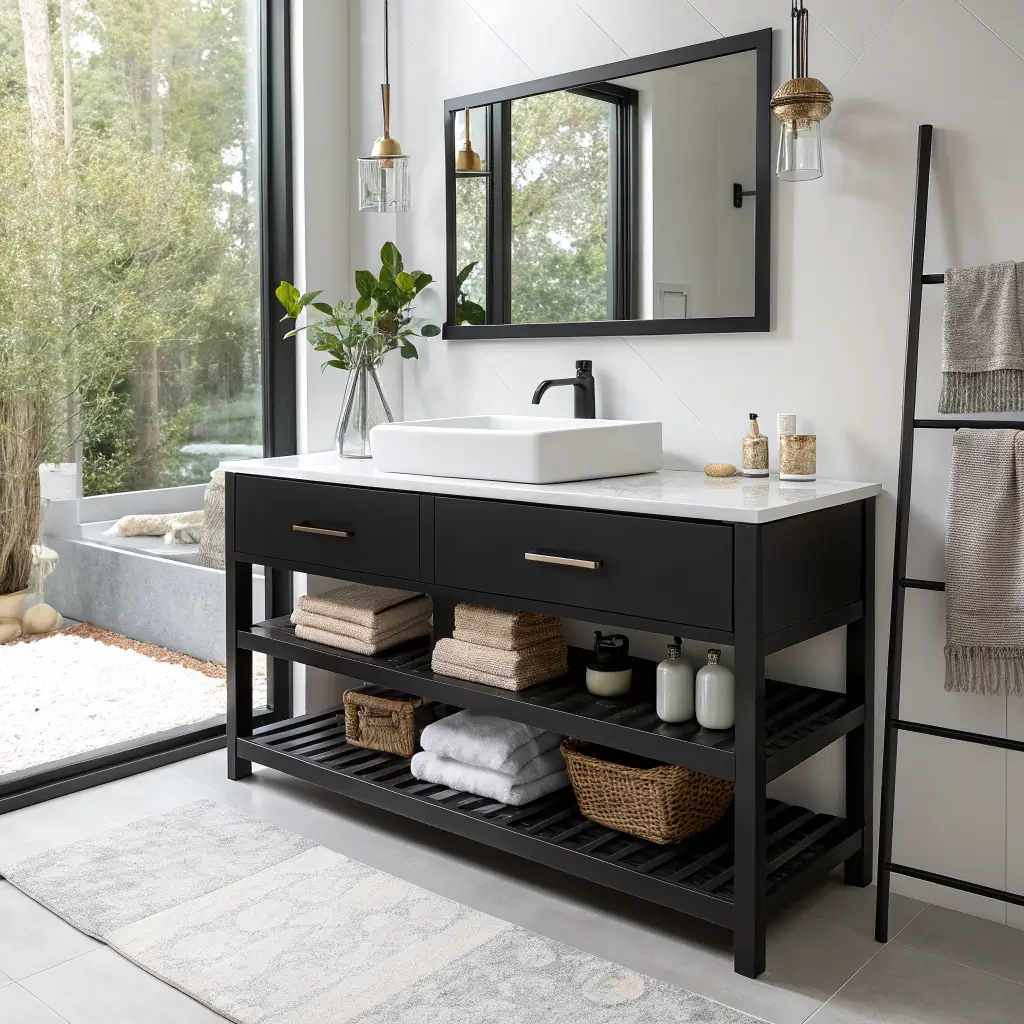
Vanity design makes or breaks bathroom functionality, and the combination of a black vanity with floating shelves creates serious style while solving storage challenges. I installed this setup in my master bath, and it’s probably the most practical design decision I’ve ever made.
Why floating shelves work with black vanities: The open shelving balances the visual weight of a dark vanity. Floating shelves provide accessible storage for everyday items while creating vertical visual interest. The combination feels less heavy than floor-to-ceiling cabinets would.
Vanity style options:
- Single sink floating vanity – Sleek and modern, perfect for small spaces
- Double sink floating vanity – Luxury and function for shared bathrooms
- Vanity with integrated sink – Streamlined and easy to clean
- Vanity with vessel sink – Adds visual interest and height variation
Floating shelf placement: I installed three floating shelves staggered vertically on the wall adjacent to the vanity. This creates accessible storage without requiring cabinet doors or drawers. You can grab towels, toiletries, or decorative items easily while maintaining the open, airy feeling.
Material choices for shelves:
- Black shelves matching the vanity – Cohesive and monochromatic
- Natural wood shelves – Warm contrast to black vanity
- White shelves – Crisp contrast for modern aesthetic
- Glass shelves – Minimal visual weight, feels light
I went with natural wood floating shelves to warm up the black vanity and add organic texture. The wood grain provides visual interest and makes the space feel less stark.
Styling floating shelves: Keep it intentional and not too cluttered. I use matching black or white containers for toiletries, add a few small plants, include some rolled towels, and maybe one or two decorative objects. The key is curated, not crowded.
Vanity hardware: Handleless push-to-open drawers maintain clean lines. If you prefer handles, choose styles that complement your overall bathroom aesthetic—brass for warmth, matte black for cohesion, or chrome for classic appeal.
Storage solutions within the vanity: Internal organization matters. I added drawer dividers, small containers for organizing makeup and toiletries, and pull-out organizers for cleaning supplies. A beautiful black vanity with chaotic internal storage defeats the purpose.
Moody Black Bathroom with Warm Lighting
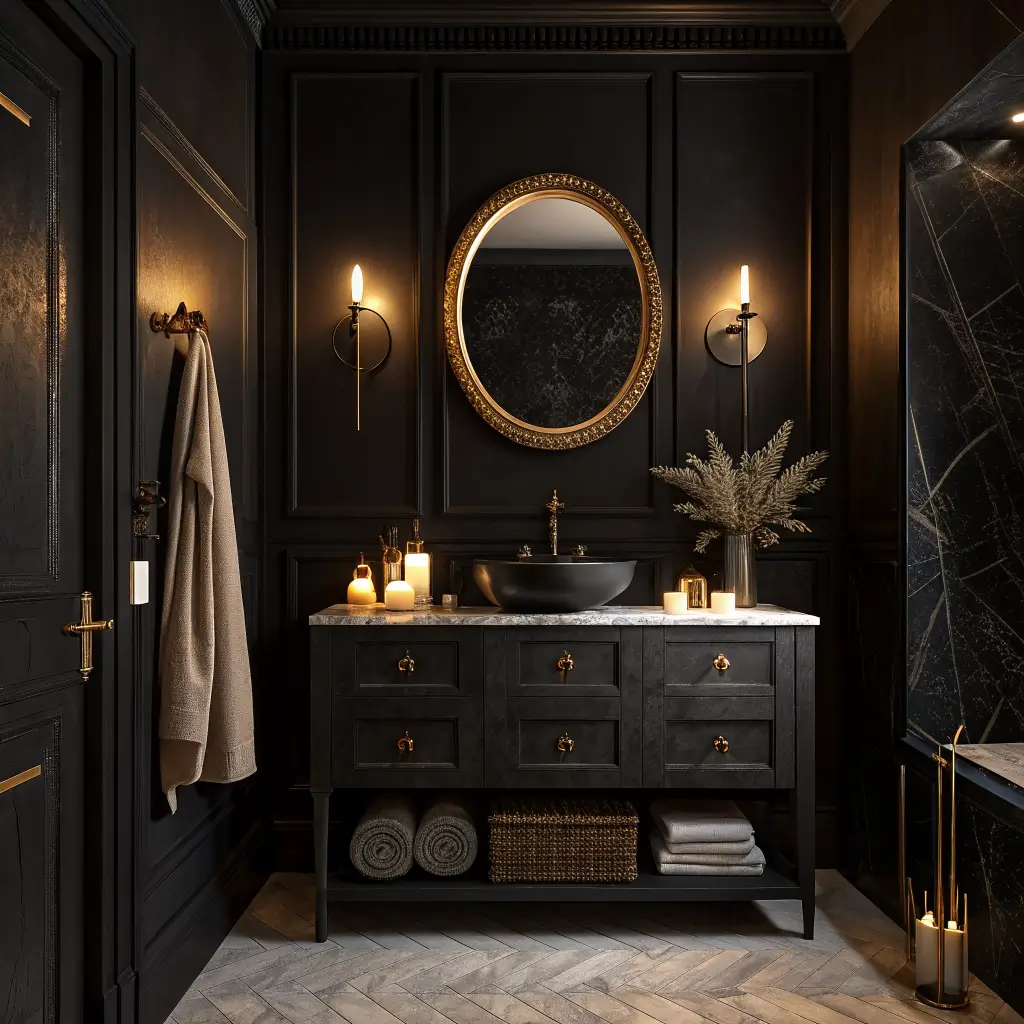
Moody bathrooms are trending hard right now, and black is the perfect foundation for creating that atmospheric, cozy vibe. I created a moody powder room for a client, and every single person who uses it comments on how unexpectedly comfortable and relaxing it feels.
What creates “moody”: It’s all about atmosphere—dim, warm lighting, dark colors, rich textures, and elements that create a sense of intimacy and calm. You’re designing for ambiance and emotion rather than bright, functional cleanliness.
Lighting strategy for moody bathrooms:
- Dimmable lights – Absolute must-have for controlling mood
- Warm bulb temperature – 2700K or warmer creates cozy glow
- Layered lighting – Combine ambient, task, and accent lighting
- Candles – Real or LED, they add instant atmosphere
- Sconces or pendant lights – Create pools of light rather than bright overall illumination
Wall color and finish: Matte black walls absorb light and create depth. I’ve also used deep charcoal or very dark navy that reads as black in dim lighting but has more dimension. Avoid glossy finishes in moody bathrooms—the reflections disrupt the atmosphere you’re creating.
Texture is crucial: Moody doesn’t mean flat or boring. I layer textures—black stone tiles, matte black paint, black wood accents, and soft textiles. The textural variation creates visual interest even in limited lighting and prevents the space from feeling one-dimensional.
Warming elements:
- Wood tones (vanity, shelving, or accents)
- Brass or gold fixtures and hardware
- Warm-toned towels and bath mats
- Plants (yes, even in low light—choose appropriate species)
- Natural materials like stone or concrete
Creating intimacy: Moody bathrooms should feel like retreats. I lower the lighting, add comfortable seating if space allows (a small stool or ottoman), include luxury bath products in beautiful containers, and add elements like a small speaker for music. You want this space to invite lingering, not rushing.
Scent and atmosphere: This might sound extra, but scent contributes significantly to mood. I add a subtle diffuser or scented candles (in black vessels, naturally) to complete the sensory experience. The combination of dim warm lighting, dark colors, and pleasant scent creates an genuinely relaxing atmosphere.
Black and Natural Wood Bathroom Decor
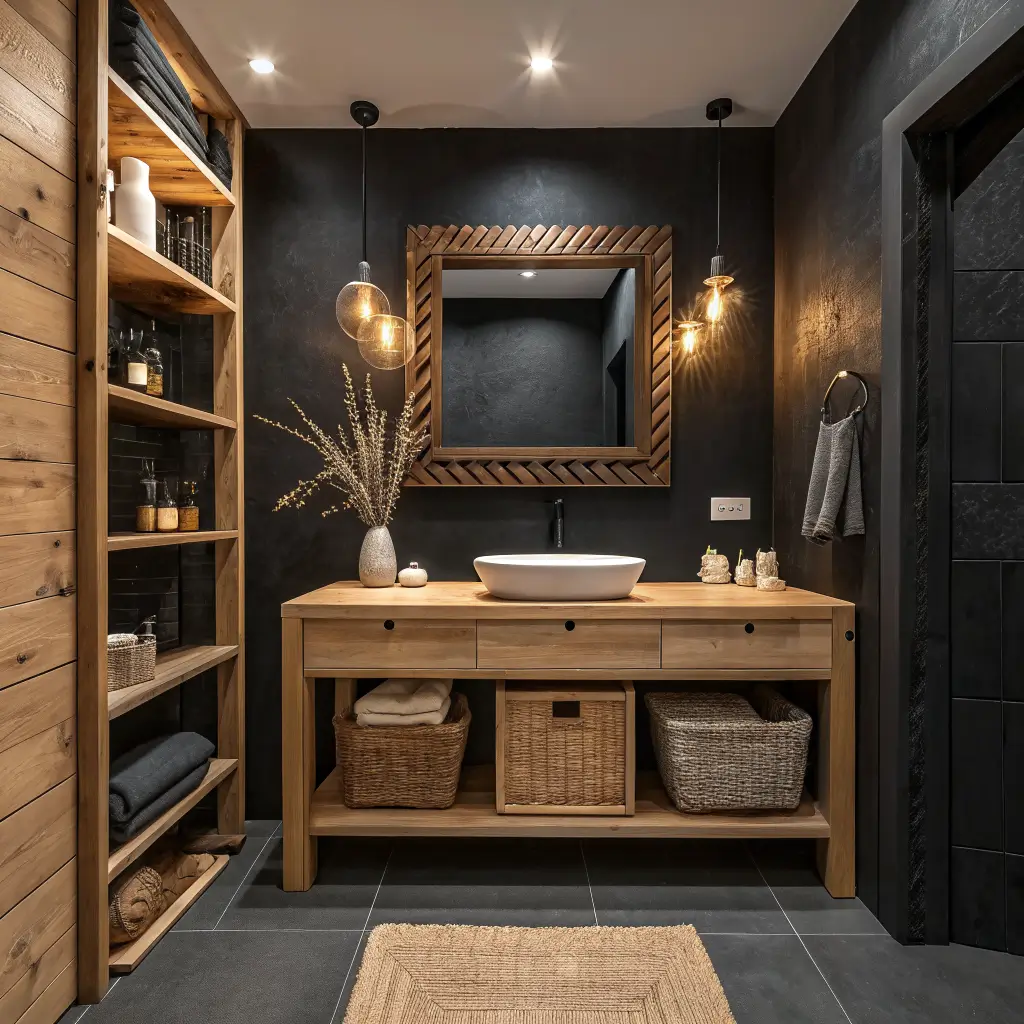
The combination of black and natural wood might be my all-time favorite bathroom aesthetic. The contrast between sleek black elements and warm, organic wood creates balance that’s both modern and inviting. I used this pairing in my own bathroom renovation, and two years later, I’m still obsessed with it.
Why this combination works: Black provides the modern, sophisticated foundation. Natural wood adds warmth, texture, and organic beauty that prevents black from feeling cold or harsh. Together, they create a balanced, livable space that photographs beautifully but also functions wonderfully in daily life.
Wood application options:
- Wood vanity with black countertop – Classic and accessible
- Wood accent wall – Creates a natural focal point
- Wood shelving – Functional and decorative
- Wood-look tile flooring – Durability of tile with warmth of wood
- Wood ceiling – Unexpected and gorgeous
Wood tone selections: This matters more than you might think. Light woods (oak, maple, ash) create high contrast with black and feel Scandinavian-modern. Medium woods (walnut, teak) provide warmth without overwhelming. Dark woods (ebony, dark walnut) create a more monochromatic, sophisticated vibe.
I chose medium walnut for my vanity and shelving—it provides enough contrast to distinguish from the black elements while maintaining that warm, cohesive feeling.
Balancing proportions: You need enough of both elements to create impact. I went with about 60% black (tiles, fixtures, hardware) and 40% wood (vanity, shelving, mirror frame, accessories). This proportion feels balanced without either element overwhelming the other.
Finish selections: Matte black finishes pair beautifully with natural wood grain. Glossy black can feel too formal. For the wood, I prefer natural oils or matte sealers that let the grain show through rather than high-gloss finishes that look plastic-y.
Adding third elements: While black and wood are the stars, small amounts of other materials enhance the combination. I added white countertop surfaces, green plants, and brass hardware. These additional elements add dimension without diluting the black-and-wood foundation.
Maintenance considerations: Wood in bathrooms requires proper sealing to handle moisture. I sealed my wood vanity and shelving with water-resistant products and wipe up water promptly. The combination requires regular cleaning—black shows water spots, wood needs occasional conditioning—but the beauty justifies the maintenance, IMO.
Also Read: 20 Stunning Dark Green and Black Bathroom Ideas
Black Bathroom with Greenery and Plants
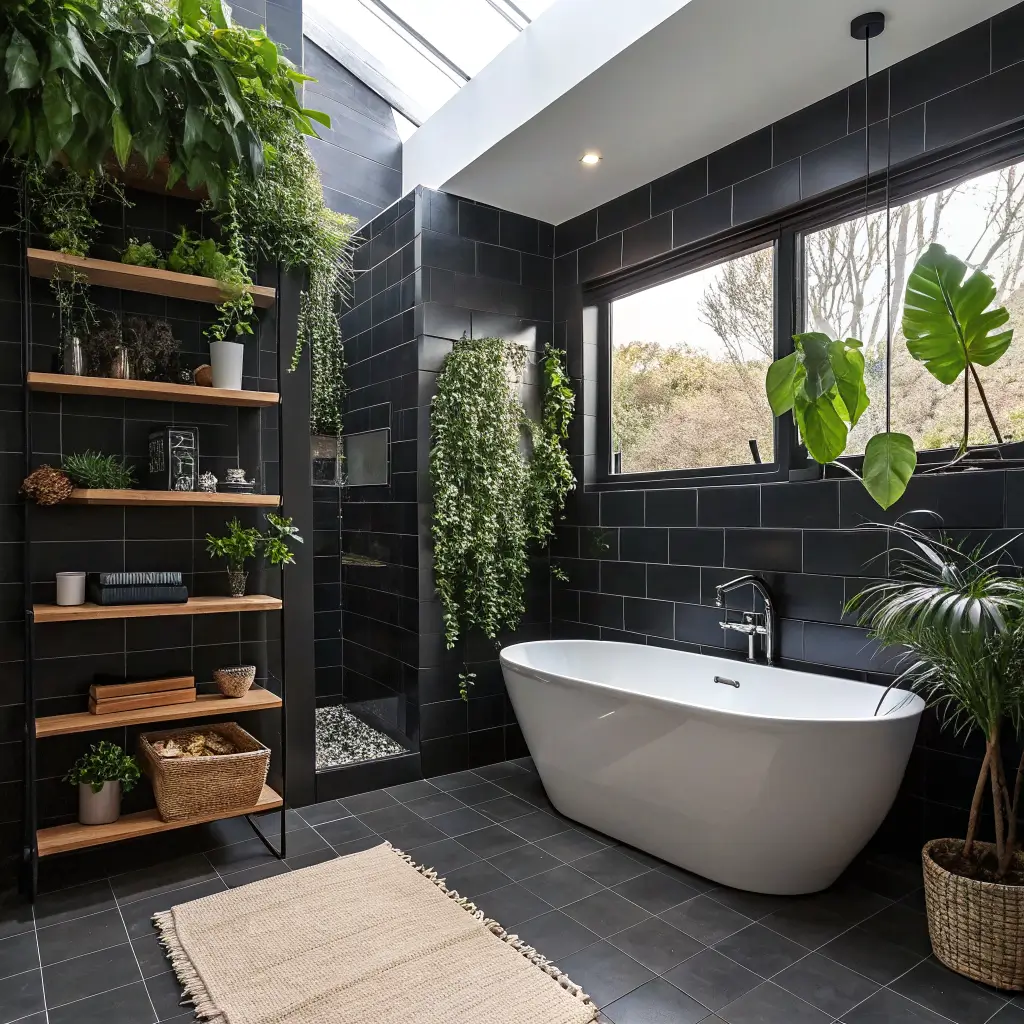
Plants and black bathrooms are literally made for each other. The contrast between living greenery and dark backgrounds creates drama and freshness that transforms the space from potentially austere to genuinely vibrant. I have plants in every bathroom in my house, but they look most spectacular in my black powder room.
Why plants work in black bathrooms: The green pops dramatically against black backgrounds. Plants soften hard surfaces and add organic, living elements that balance the manufactured materials. They also improve air quality and create a spa-like atmosphere that makes your bathroom feel like a retreat.
Best plants for bathroom environments:
- Pothos – Thrives in low light and humidity (basically indestructible)
- Snake plants – Handles low light and irregular watering like a champ
- Ferns – Loves humidity, adds delicate texture
- Peace lily – Tolerates low light, blooms occasionally
- Philodendron – Easy care, beautiful trailing vines
Placement strategies:
- Floating shelves create perfect plant display areas
- Hanging plants from the ceiling adds vertical interest
- Countertop plants in decorative pots add life to vanity areas
- Tall floor plants in corners utilize often-wasted space
- Small plants on windowsills capture natural light
I have a large pothos trailing from a floating shelf, a snake plant on the counter, and a small fern near the window. The varied heights and plant types create visual interest while providing maximum greenery impact.
Pot and planter choices: This is where you can reinforce your design aesthetic. I use a mix of matte black pots (for cohesion), natural terracotta pots (for warmth), and white ceramic pots (for contrast). The variety keeps it interesting while the limited color palette maintains cohesion.
Lighting for plants: Even low-light plants need some light. If your black bathroom lacks natural light, consider adding a small grow light. I installed LED grow light strips under my floating shelves—they provide what the plants need while adding a subtle modern lighting element.
Maintenance reality: Plants need watering, occasional trimming, and monitoring for health. I check my bathroom plants weekly, water as needed (the humidity means they need less than plants elsewhere), and trim dead leaves. The maintenance is minimal but necessary.
Beyond living plants: If you genuinely can’t keep plants alive (no judgment), high-quality faux plants work too. Choose realistic-looking options and “plant” them properly in real pots with moss or soil on top. From a distance, good faux plants provide the visual impact without the care requirements 🙂
Final Thoughts on Black Bathrooms
There you have it—ten completely different approaches to black bathrooms, from high-contrast modern to moody and atmospheric to natural and organic. The versatility of black as a bathroom color genuinely amazes me, and these examples just scratch the surface of what’s possible.
The key to successful black bathrooms is understanding that you’re not just painting everything black and hoping for the best. You’re making intentional design choices about finishes, lighting, complementary materials, and proportions. Black is the foundation, but how you build on that foundation determines whether you end up with a sophisticated sanctuary or a dark cave.
Start by identifying which of these styles speaks to you most. Are you drawn to the luxury of black marble? The warmth of black and wood? The drama of black and gold? The freshness of black and greenery? Your personal aesthetic should guide your choices.
Don’t let fear of dark colors hold you back from creating something genuinely special. Yes, black bathrooms require thoughtful planning and excellent lighting. Yes, they might need more frequent cleaning to maintain their dramatic good looks. But the impact and sophistication they deliver make those considerations completely worthwhile.
Your bathroom deserves to be more than just functional white tile and builder-grade fixtures. Black bathrooms bring personality, drama, and style that transform a purely utilitarian space into something you actually look forward to spending time in. And honestly, isn’t that the whole point of good design?
Now go forth and embrace the dark side—your bathroom will thank you for it.