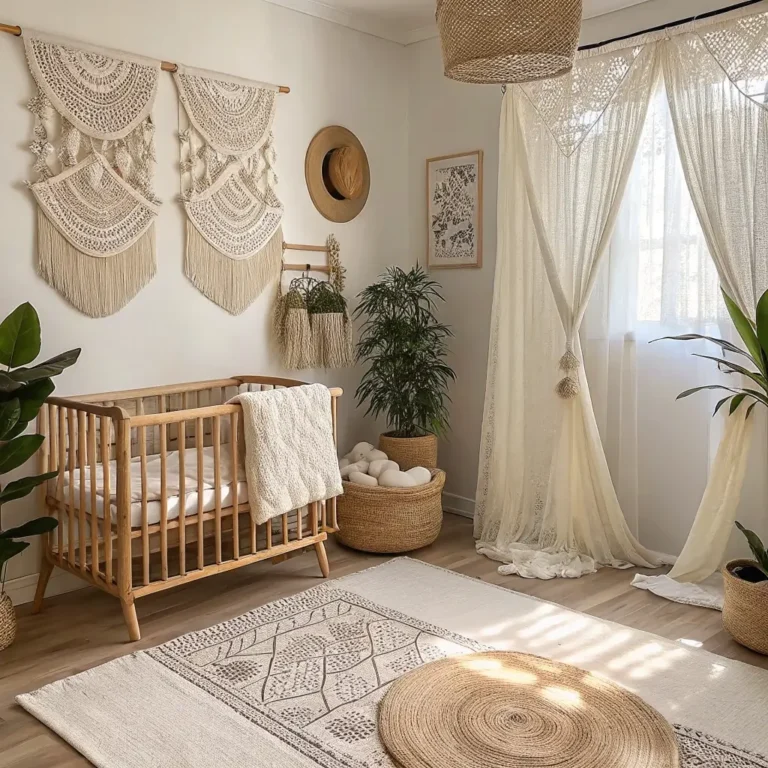
10 Amazing Fabric Wall Decor Ideas for Stylish Interiors

Bare walls are boring. There, I said it. But here’s the thing — not every wall needs a framed print or a gallery arrangement to come alive. Sometimes, the best thing you can put on a wall isn’t hard, flat, or rigid at all. Sometimes, it’s fabric.
Fabric wall decor brings something to a room that no other material quite manages. It softens harsh lines. It absorbs sound. It introduces texture, movement, and a handmade quality that makes spaces feel genuinely lived-in rather than staged for an Instagram photo. And the range of options? Way wider than most people realize.
I stumbled into the world of fabric wall decor almost by accident. I had a massive, echoey bedroom wall that swallowed every framed print I tried to hang there. Nothing looked right. Nothing felt proportional. Then I hung a large tapestry on a whim, and the entire room shifted — visually, acoustically, even emotionally. That wall finally felt complete, and I’ve been hooked on textile-based decor ever since.
So whether you’re a committed bohemian, a minimalist looking for warmth, or someone who just wants their walls to feel less sterile, here are 10 fabric wall decor ideas that genuinely deliver. Let’s get into it.
1. Boho Macramé Wall Hanging
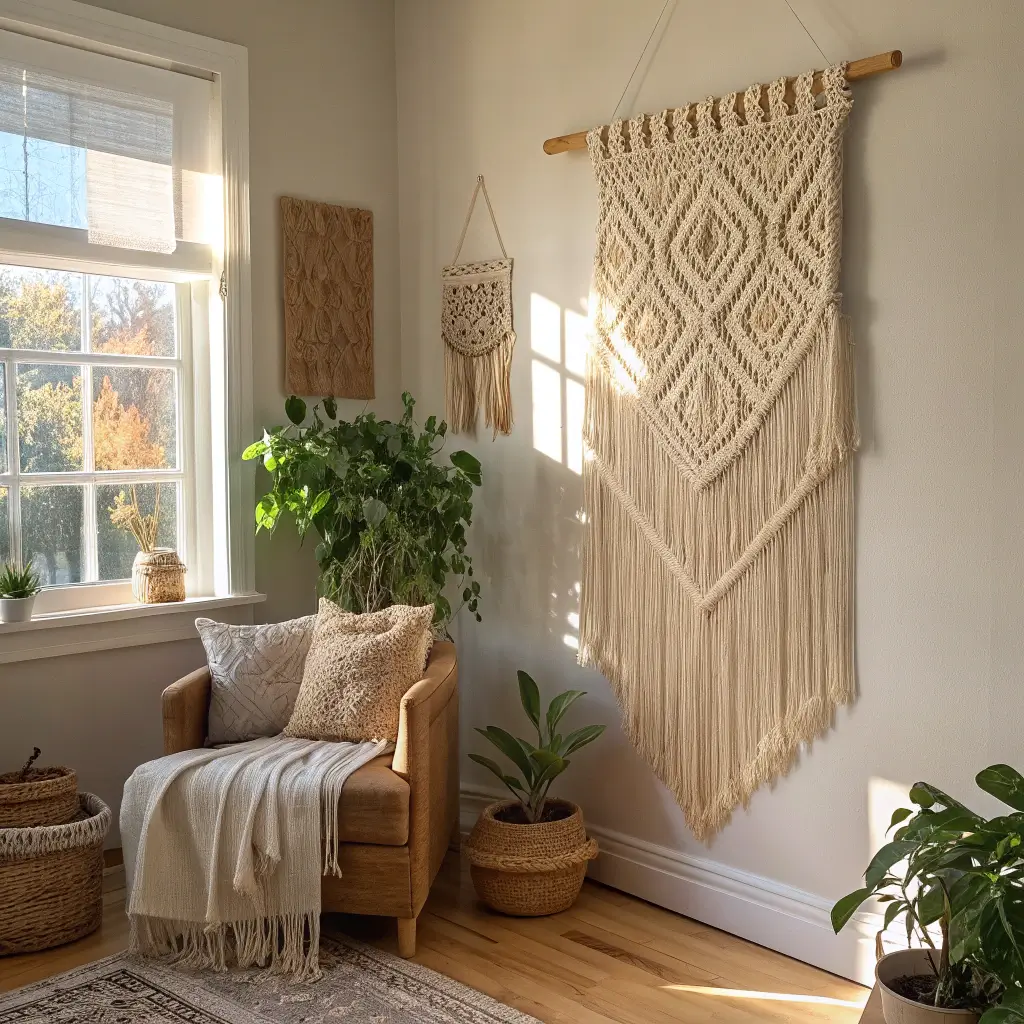
We’re kicking things off with the undisputed heavyweight champion of fabric wall decor — the boho macramé wall hanging. You’ve seen them everywhere, and there’s a reason they refuse to go away. They work. They really, really work.
Why Macramé Still Dominates
Macramé has survived multiple trend cycles because it does something no other wall decor can. It introduces organic, flowing lines into spaces dominated by straight edges and flat surfaces. The knots, fringe, and cascading tassels create visual movement that draws the eye without demanding attention. It’s decor that breathes.
Choosing the Right Macramé Piece
Not all macramé hangings hit the same way. Here’s what separates a stunning piece from a forgettable one:
- Scale matters enormously. A tiny macramé piece on a large wall looks like a decorative afterthought. Go bigger than you think you need. A piece that’s at least 24 inches wide typically makes the right impact.
- Cotton vs. jute vs. wool cord — Cotton gives you that clean, creamy white look. Jute adds a rougher, earthier texture. Wool feels softer and more luxurious. Each creates a distinctly different mood.
- Pattern complexity — Simple designs with clean knots feel modern and minimalist. Intricate patterns with multiple knot types feel more bohemian and artisanal.
- Handmade vs. mass-produced — You can absolutely tell the difference. Handmade pieces from independent artists carry subtle imperfections that add character. Factory-made versions tend to look flat and lifeless by comparison.
I have a large cotton macramé hanging above my bed — about 36 inches wide with long trailing fringe — and it completely anchors the room. Every guest comments on it. The funny part? It cost less than the framed print it replaced. Sometimes the best upgrades are also the most affordable ones.
Hanging Tips
- Use a sturdy branch or dowel as the top bar for a more organic look.
- Mount it with a single heavy-duty hook centered on the wall. Make sure you hit a stud or use a solid drywall anchor — macramé pieces can weigh more than you’d expect.
- Give it room to breathe. Don’t squeeze it between other decor. Let it hang freely so the fringe can move and catch light naturally.
2. Fabric-Covered Geometric Panels
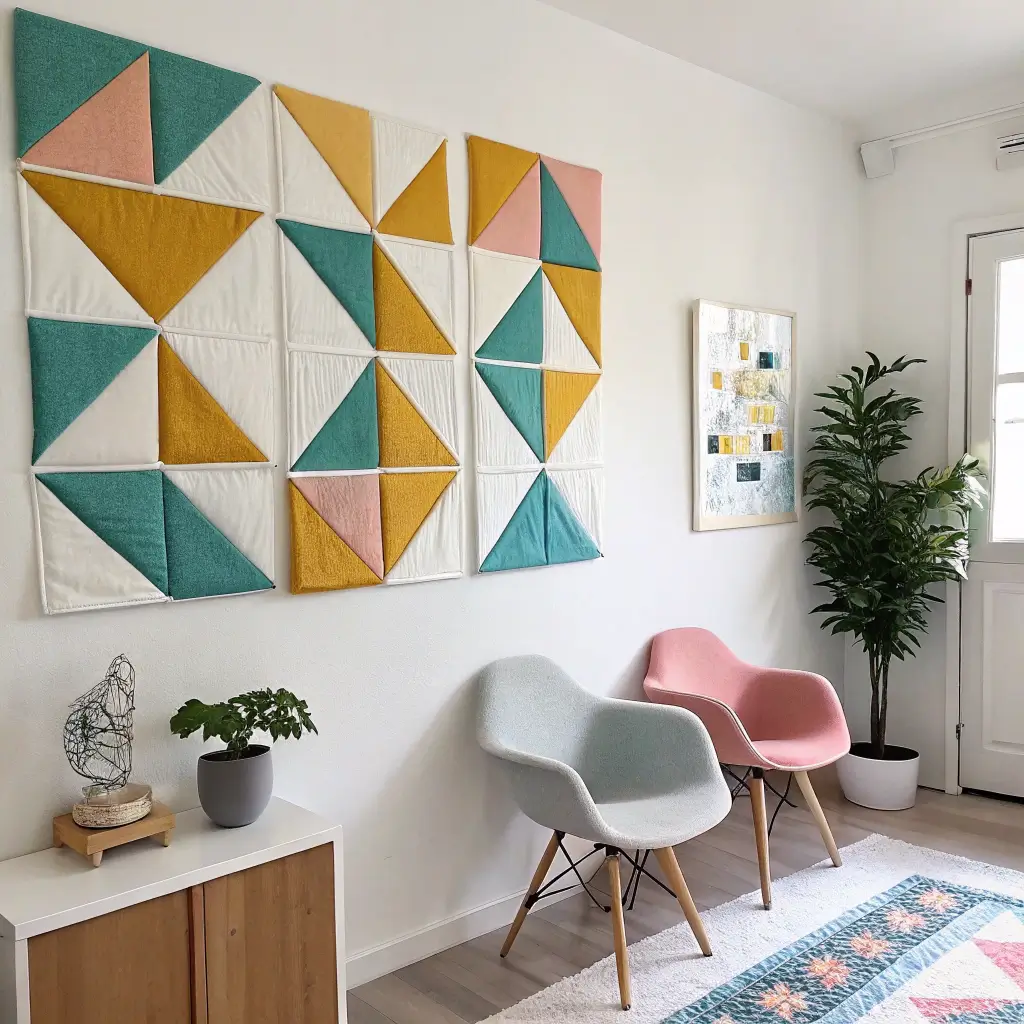
Want something structured and modern but still soft? Fabric-covered geometric panels split the difference between traditional wall art and textile decor beautifully. These panels stretch fabric over shaped frames — hexagons, triangles, circles, or abstract forms — and mount directly to the wall.
The Visual Appeal
These panels bring color, pattern, and texture to your walls in a way that feels intentional and design-forward. Unlike a flat canvas print, the fabric surface catches light differently. It has depth and tactile quality. And because you can choose literally any fabric, the customization potential is basically unlimited.
DIY vs. Buying Pre-Made
Here’s an honest comparison:
- DIY approach — Buy wooden embroidery hoops, canvas stretcher frames, or custom-cut foam shapes. Stretch your chosen fabric over them, secure with staples or glue, and hang. Total cost per panel: roughly $5–$15 depending on fabric choice. Time investment: maybe 30 minutes per panel.
- Pre-made panels — Available from home decor retailers and Etsy shops. Higher quality framing, professional finishing, more consistent results. Cost: $25–$80 per panel depending on size and materials.
- My recommendation — Start DIY. Seriously. This ranks among the easiest fabric wall decor projects you can attempt. If you can wrap a gift, you can make these panels.
Fabric Choices That Pop
- Velvet — Rich, luxurious, and it plays with light beautifully. Deep jewel tones like emerald, sapphire, and burgundy look especially stunning.
- Linen — Clean, minimal, textured. Perfect for neutral palettes and Scandinavian-inspired spaces.
- Bold printed cotton — Florals, geometrics, abstract patterns. This lets you bring graphic interest without framed artwork.
- Textured weaves — Boucle, tweed, or chunky knits add a cozy, dimensional quality that smooth fabrics can’t replicate.
I made a set of five hexagonal fabric panels using leftover upholstery fabric samples — different textures, same color family — and arranged them in a honeycomb cluster on my dining room wall. The whole project cost about twenty dollars and took an afternoon. It looks like something from a design showroom. Not bad for a Sunday project, right?
3. DIY Quilted Wall Art
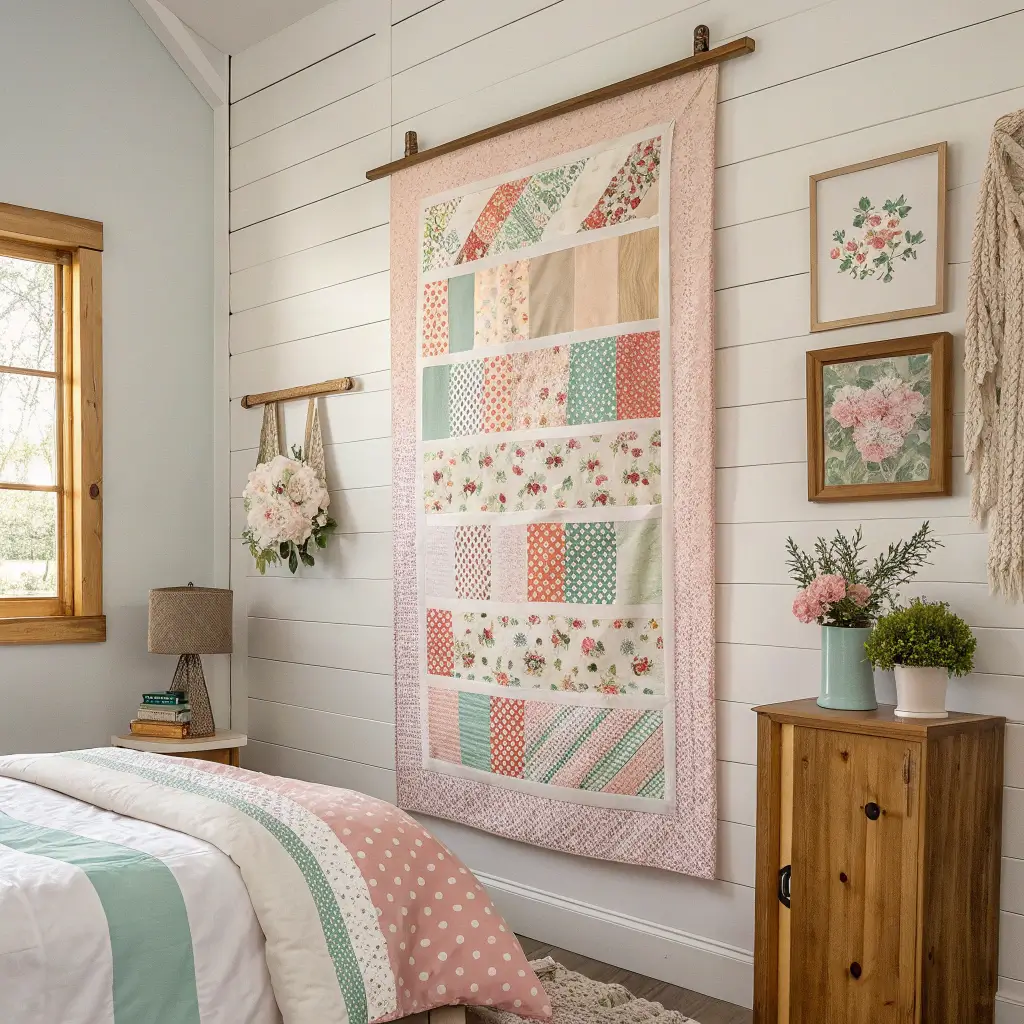
Quilting isn’t just for blankets anymore. Quilted wall art takes this centuries-old craft and repositions it as a legitimate art form for your walls. And before you picture your grandmother’s patchwork bedspread, hold on — modern quilted wall art looks nothing like what you’re imagining.
Modern Quilted Wall Art vs. Traditional Quilts
The new wave of quilted wall art embraces minimalist designs, bold color blocking, and abstract compositions. Think large geometric shapes in contrasting fabrics, negative space as a design element, and intentional stitching patterns that create texture and shadow. This isn’t country cottage decor — it’s contemporary textile art.
Why Quilted Art Works on Walls
- Texture and dimension — The layered construction (fabric top, batting middle, backing) creates a subtle 3D quality that flat art can’t achieve. The quilting stitches add linear patterns that catch light and shadow.
- Sound absorption — Quilted panels absorb sound surprisingly well. If you have a room with echo issues, quilted wall art pulls double duty.
- Warmth — Both visual and literal. A quilted piece on the wall makes a room feel cozier instantly.
- Uniqueness — Every quilted piece, especially handmade ones, carries the maker’s touch. No two are exactly alike.
Getting Started
You don’t need to be an expert quilter to make quilted wall art. Simple designs — a single large circle on a solid background, two-tone color blocking, or basic strip piecing — look sophisticated without requiring advanced skills. All you need is:
- Fabric (two or three complementary choices)
- Quilt batting (cotton or bamboo for a natural feel)
- Basic sewing skills (straight lines, honestly, that’s most of it)
- A hanging sleeve or wooden dowel for mounting
IMO, quilted wall art represents one of the most underrated categories of fabric wall decor. It deserves way more attention than it gets. The combination of craft, texture, and visual impact puts it in a league of its own.
Also Read: 10 Modern Wooden Wall Decor Ideas for Stylish Interiors
4. Tapestry Gallery Wall
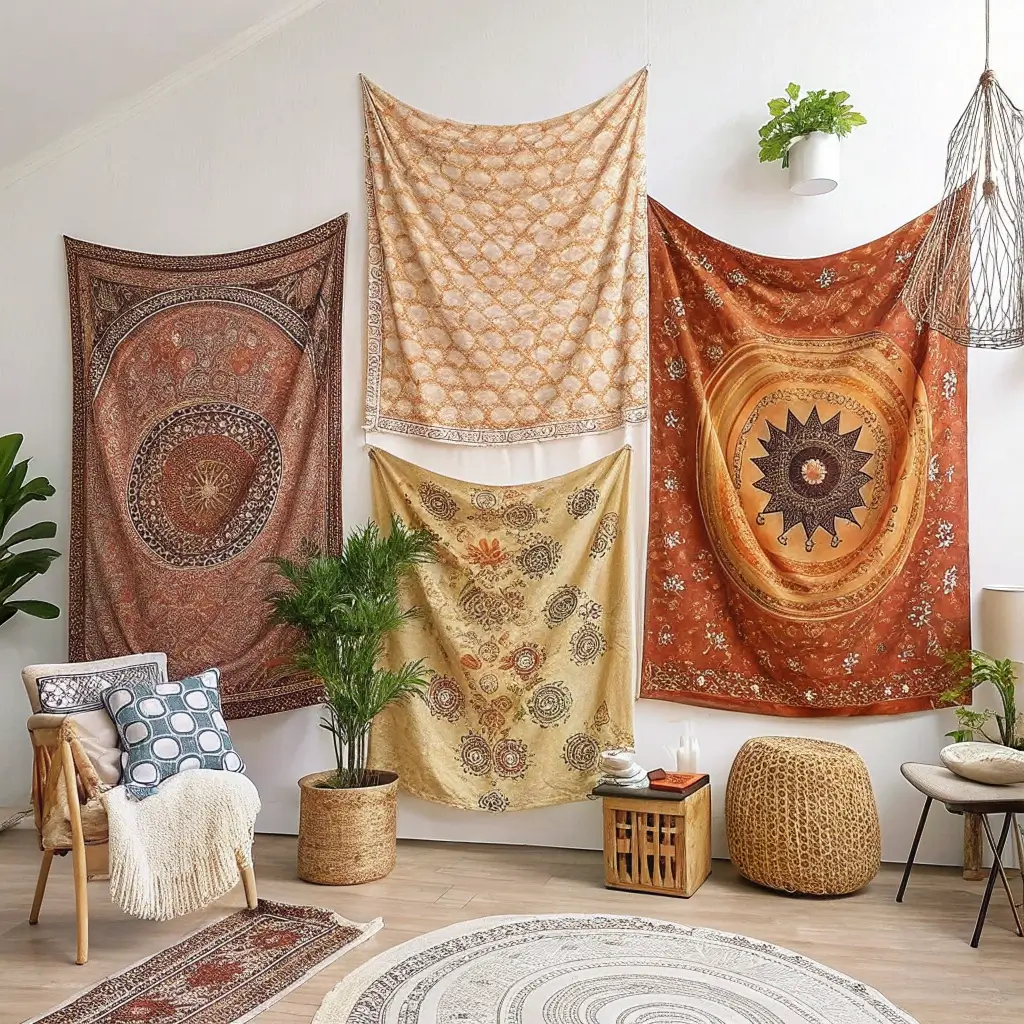
A single tapestry can transform a wall. But a tapestry gallery wall? That transforms an entire room. This approach treats woven tapestries like you’d treat framed art — curating a collection and arranging multiple pieces together for maximum visual impact.
Building Your Tapestry Collection
The key to a great tapestry gallery wall is variety within cohesion. You want pieces that differ in size, pattern, and texture but share some unifying element — a color palette, a theme, a cultural origin, or a mood.
Sources for amazing tapestries include:
- Vintage shops and estate sales — Older tapestries often have richer colors and more interesting weaving techniques than modern reproductions.
- Artisan markets and craft fairs — Support independent weavers and get something truly one-of-a-kind.
- Online textile shops — Etsy, specialty importers, and fair-trade retailers offer tapestries from around the world.
- Travel souvenirs — Some of the best tapestries come from your own adventures. A piece you bought in Morocco, Guatemala, or India carries personal memories that make your wall decor meaningful.
Arrangement Strategies
- Salon-style hang — Multiple tapestries of varying sizes arranged in a dense, overlapping cluster. Think European art salon — dramatic, eclectic, and full of personality.
- Linear arrangement — Tapestries hung in a neat horizontal or vertical line. More structured and orderly.
- Staggered cascade — Tapestries placed at different heights, stepping down or across the wall. Creates visual movement and flow.
Hanging Methods
Unlike framed art, tapestries offer flexible hanging options:
- Wooden dowels or branches through a rod pocket at the top
- Decorative clips attached to a wire or rail
- Direct mounting with upholstery tacks for a taut, flush look
- Curtain rings on a mounted rod for easy swapping
I started collecting tapestries about four years ago, mostly from flea markets and a couple of trips abroad. My living room now has five pieces arranged salon-style, and the wall looks like a curated textile museum. Each piece has a story, which makes the whole display feel deeply personal rather than purely decorative.
5. Floating Fabric Shelves Backdrop
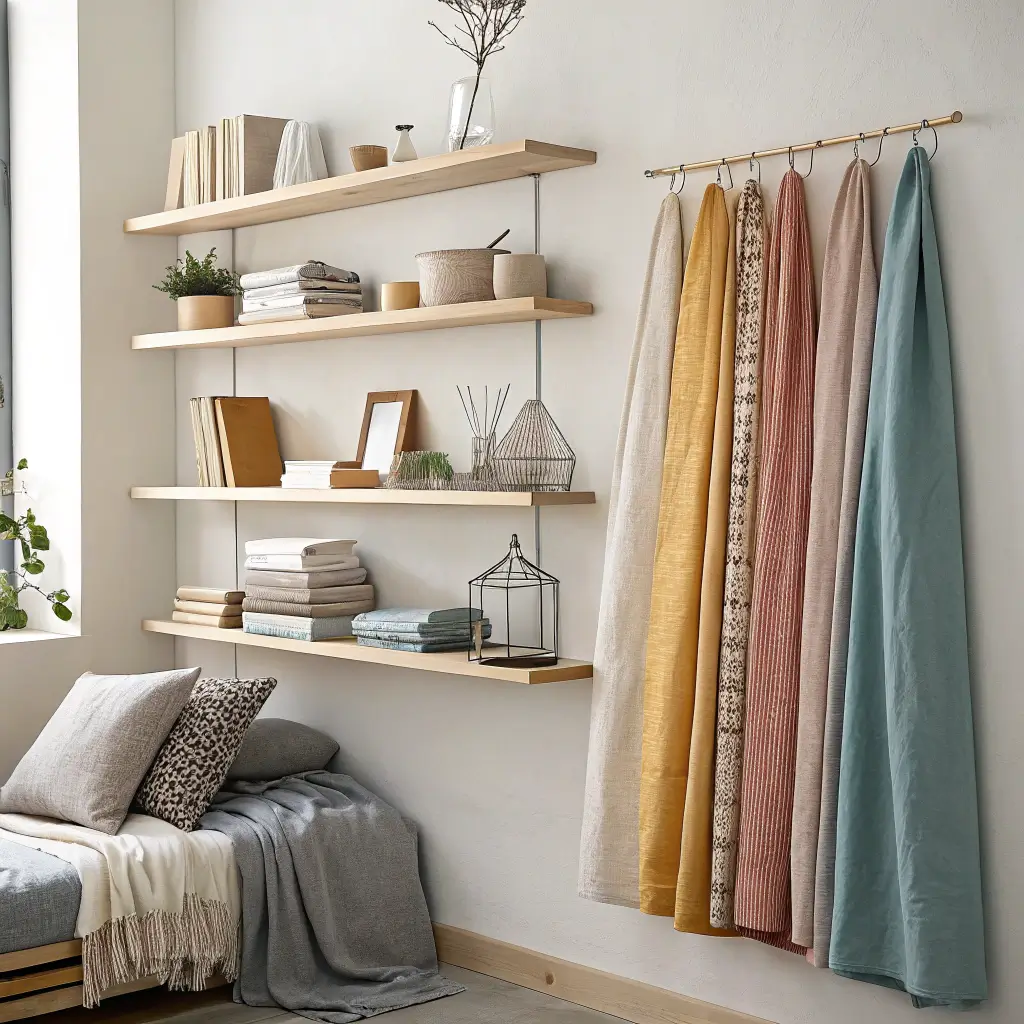
This one’s a clever hybrid idea: floating shelves mounted over a fabric backdrop. The fabric panel covers a section of wall behind your shelves, creating a framed, layered effect that adds depth and visual interest to what might otherwise look like plain shelving.
How It Works
You mount a large fabric panel — stretched over a frame or directly attached to the wall — and then install floating shelves over it. The fabric serves as a backdrop that contrasts with your shelf items, making everything on the shelves pop. It’s like giving your display wall a built-in accent without painting or wallpapering.
Best Fabric Choices for Backdrops
- Solid-color linen or canvas — Clean, understated, and it lets your shelf items take center stage.
- Subtle textured fabric — Something with a weave pattern or slight variation adds interest without competing with displayed objects.
- Bold patterned fabric — If your shelf items are minimal and neutral, a bold fabric backdrop creates exciting contrast.
- Felt or wool — These thicker fabrics create a bulletin-board-like surface where you can also pin photos, notes, or small items between the shelves.
Styling the Shelves
Keep shelf displays intentional. A fabric backdrop elevates the whole arrangement, so match that elevated energy with thoughtful curation:
- Mix heights and shapes — tall vases next to short candles, round objects beside rectangular frames
- Stick to a limited color palette that complements the fabric
- Leave some breathing room — don’t overcrowd the shelves
- Include at least one organic element like a small plant or dried flowers
This approach works especially well in home offices, nurseries, and bedrooms where you want warmth and personality without visual clutter. The fabric softens the wall, the shelves provide function, and together they create something greater than the sum of their parts.
6. Fabric Wall Pocket Organizer
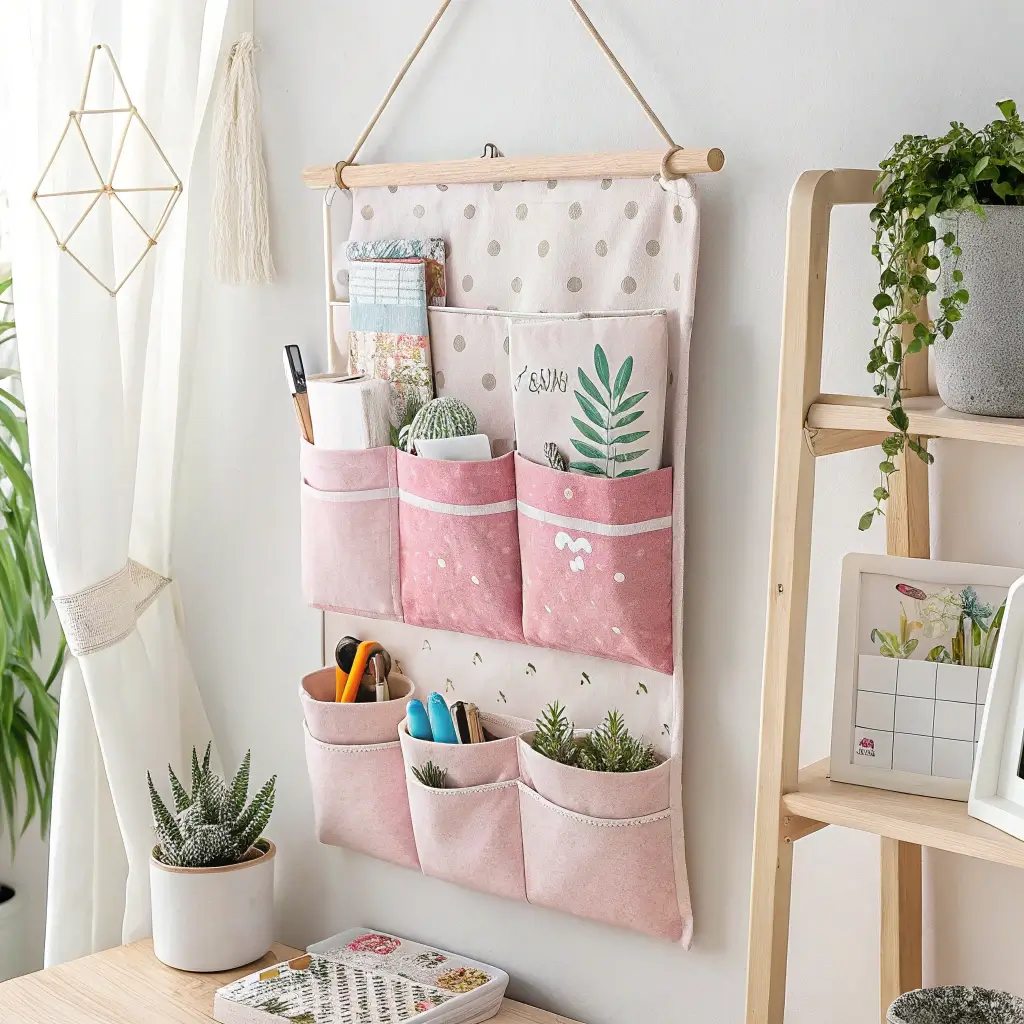
Functional fabric wall decor at its finest — a fabric wall pocket organizer gives you storage and style in one piece. These organizers feature fabric pockets sewn onto a backing panel that hangs flat against the wall, keeping small items accessible and organized while looking intentionally decorative.
Where They Shine
- Entryways — Pockets for keys, mail, sunglasses, dog leashes. Everything you need on your way out the door.
- Kids’ rooms — Small toys, books, art supplies, hair accessories. Keeps things off the floor and within kid-height reach.
- Bathrooms — Toiletries, brushes, small towels. Especially useful in bathrooms with limited counter space.
- Craft rooms and studios — Scissors, tape, markers, fabric swatches. Everything visible and accessible.
- Behind doors — An often-forgotten wall space that’s perfect for pocket organizers.
DIY Potential
Fabric wall pocket organizers rank among the simplest sewing projects you can tackle. You need a rectangular backing piece, pocket pieces, basic sewing ability, and a dowel or hanging rod for the top. The whole project takes an afternoon, and you can customize every detail — fabric pattern, pocket size, number of pockets, trim details.
Ever noticed how the most useful things in your home often look the least attractive? Fabric wall pocket organizers break that pattern. They prove that practical and beautiful can absolutely coexist on the same wall. FYI, once you install one, you’ll wonder how you ever lived without it.
Also Read: 10 Inspiring Over the Bed Wall Decor Ideas and Modern Touch
7. Patchwork Fabric Collage
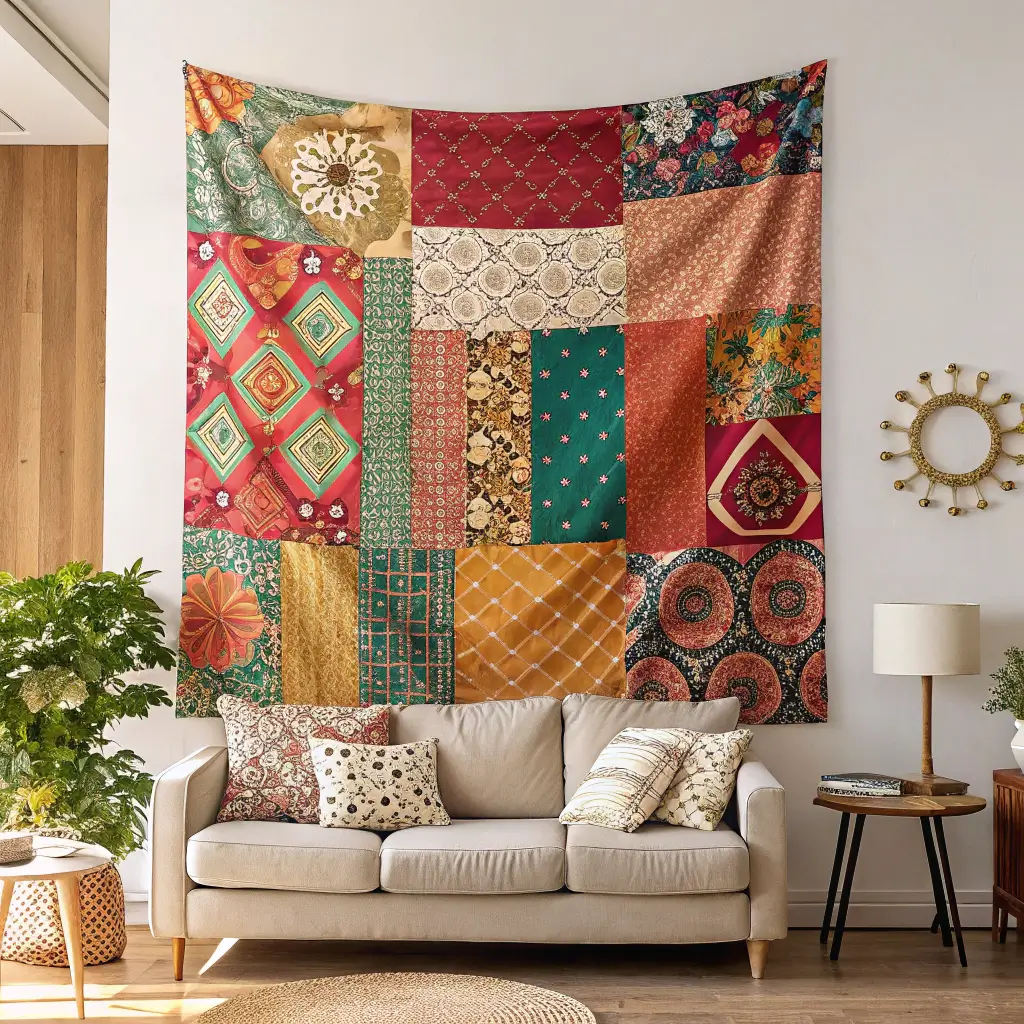
A patchwork fabric collage on your wall celebrates imperfection, individuality, and the beauty of mixing patterns that technically shouldn’t work together but somehow absolutely do. Think of it as a mood board made entirely of fabric scraps — chaotic, colorful, and completely charming.
The Art of Controlled Chaos
The magic of patchwork collage lies in the tension between randomness and intentionality. You’re combining different fabrics — different patterns, textures, weights, colors — into a single composition. The result should feel spontaneous but balanced. Not matchy-matchy. Not uniform. Just harmonious in its own eclectic way.
How to Create One
- Gather your fabrics. Raid your scrap bin, cut up old clothing, hit the remnant bin at your local fabric store, or ask crafty friends for leftovers. The more variety, the better.
- Choose a base. Stretch canvas, a wooden panel, or a large fabric backing all work well.
- Arrange before committing. Lay your fabric pieces out on the base, overlapping edges, rotating orientations, and shuffling positions until the composition feels right.
- Attach with fabric glue, staples, or stitching. Each method gives a slightly different finish. Glue creates clean edges. Staples add a raw, industrial touch. Stitching looks the most refined and allows for decorative thread choices.
Color Strategy
Even though patchwork embraces eclecticism, having a loose color strategy prevents the final piece from looking like a fabric explosion. A few approaches that work:
- Analogous colors — Stick to fabrics within the same color family (all blues, all warm tones, all earth tones) but vary the patterns wildly.
- Complementary contrast — Combine opposite colors (blue and orange, purple and yellow) for high energy and visual drama.
- Neutral base with accent pops — Mostly neutral fabrics (cream, beige, gray) with occasional hits of a bold color. Sophisticated and balanced.
I made a patchwork collage for my guest bedroom using fabric scraps from projects I’d completed over the previous year. Each piece holds a memory — the curtains I sewed for the kitchen, the cushion covers I made for the patio, the tote bag project that went sideways. It’s a textile diary, basically. And guests always ask about it.
8. Framed Vintage Scarves Display
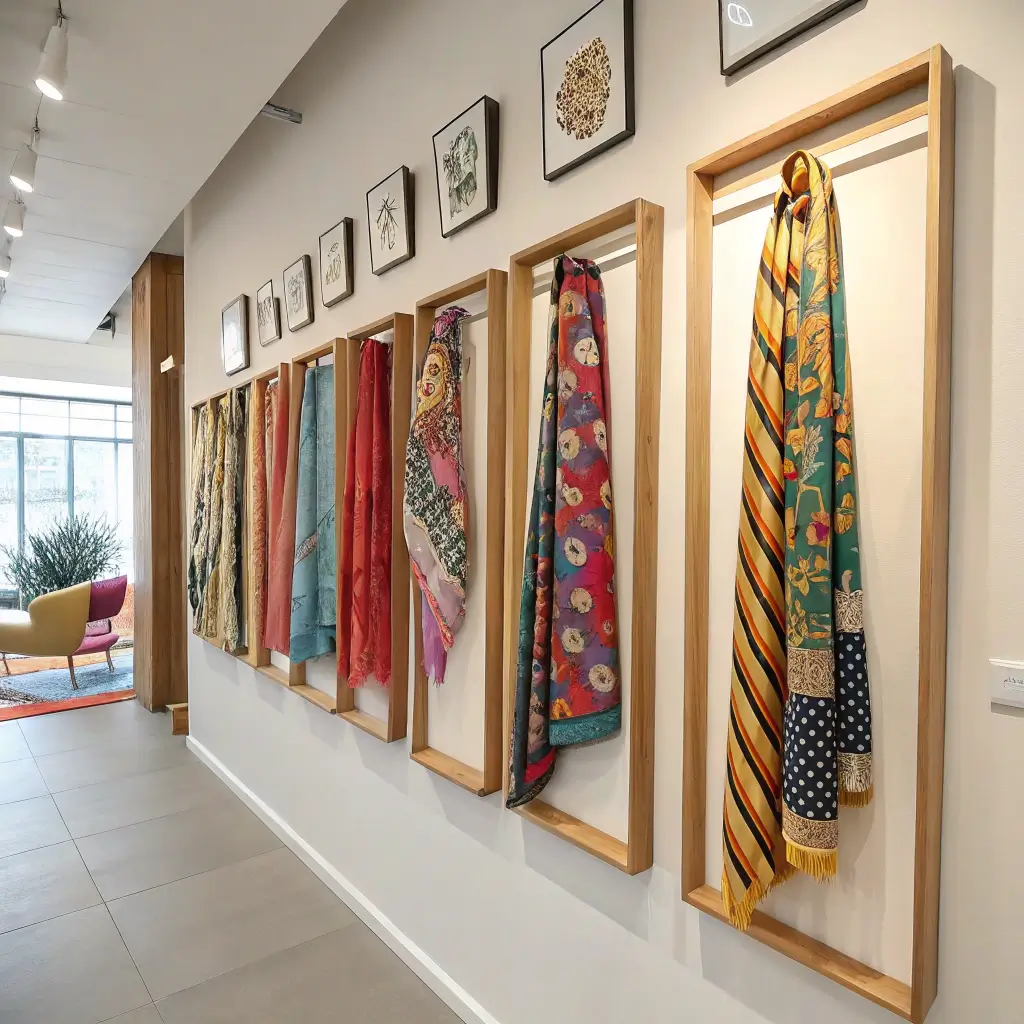
Got beautiful vintage scarves sitting in a drawer somewhere? Here’s your sign to frame them and put them on display. A framed vintage scarf turns a forgotten accessory into stunning fabric wall decor that looks like museum-quality art — because, honestly, the best vintage scarves are art.
Why Vintage Scarves Make Incredible Wall Art
Think about what a high-quality vintage scarf actually is: a piece of fabric printed or woven with an original design by a skilled artist, often produced in limited quantities by prestigious fashion houses. Hermès, Pucci, Liberty of London, Gucci — these brands commissioned actual artists to create scarf designs. Framing one puts genuine artistry on your wall at a fraction of what a comparable original painting would cost.
How to Frame Them Properly
- Use a deep shadow box frame to prevent the glass from pressing directly against the fabric.
- Mount the scarf on acid-free backing board using pins or fabric-safe adhesive. Never use regular tape or staples — they’ll damage the fabric over time.
- Consider UV-protective glass if the scarf hangs in direct sunlight. Vintage silk fades quickly without protection.
- Choose a frame that complements the scarf’s colors without competing. Simple black, white, or natural wood frames usually work best.
- Iron or steam the scarf carefully before framing. Wrinkles behind glass look sloppy and distract from the design.
Sourcing Vintage Scarves
- Thrift stores and consignment shops — The holy grail. You can find designer scarves for a few dollars if you’re patient and lucky.
- Estate sales — Older collections often include beautiful vintage pieces.
- Online vintage retailers — eBay, Etsy, and specialty vintage fashion sites carry enormous inventories.
- Family heirlooms — Check with relatives. Grandmothers and great-aunts often have stunning scarves tucked away that they’d love to see displayed rather than forgotten.
A single framed Hermès scarf can anchor an entire room. A trio of coordinated vintage scarves creates a gallery wall that looks absolutely world-class. And the beauty of this approach is its accessibility — you don’t need a massive budget to source gorgeous scarves if you know where to look.
9. 3D Fabric Flower Wall
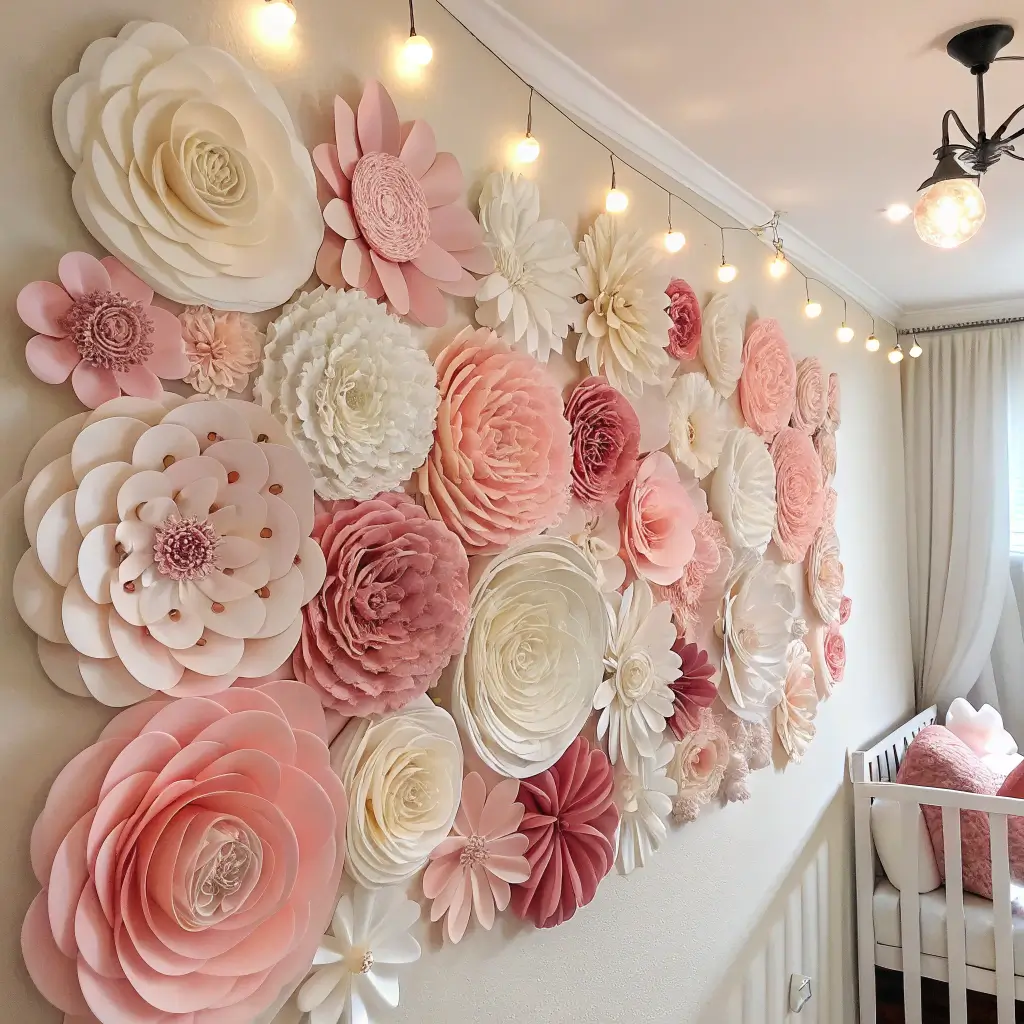
If you want fabric wall decor that literally jumps off the wall, a 3D fabric flower installation delivers drama, texture, and whimsy in equal measure. These dimensional fabric flowers — handmade from various textiles — mount to the wall in clusters, creating a lush, garden-inspired feature that feels both artistic and playful.
Types of Fabric Flowers
- Rolled rosettes — Simple spirals of fabric that form rose-like shapes. Easy to make, elegant, and scalable.
- Layered petal flowers — Individual fabric petals stacked and stitched to create realistic, multi-dimensional blooms. More time-intensive but visually spectacular.
- Pom-pom style flowers — Gathered circles of tulle or organza that create puffy, cloud-like blooms. Soft, dreamy, and fantastic for nurseries or bedrooms.
- Origami-inspired fabric folds — Structured, geometric flower shapes that feel modern and architectural rather than traditional.
Creating a Stunning Arrangement
The arrangement matters just as much as the individual flowers. Here’s how to nail the layout:
- Vary the flower sizes dramatically. Mix blooms from 3 inches to 12+ inches in diameter. This size variation creates depth and visual rhythm.
- Cluster densely in the center and spread outward. This creates a focal point with organic edges that fade into the wall.
- Mix fabric types within the arrangement. Combine satin, linen, cotton, tulle, and velvet for textural richness.
- Consider a limited color palette. All-white arrangements look stunning and sophisticated. Ombre gradients (light to dark) create beautiful flow. Monochromatic clusters with texture variation keep things interesting without color chaos.
I helped my sister create a 3D fabric flower wall for her daughter’s nursery using soft pinks, creams, and touches of gold. We made about 30 flowers of varying sizes and arranged them in a cascading cluster above the crib. The effect was absolutely magical — like a fabric garden growing right out of the wall. Total material cost: around thirty-five dollars. Time spent: two evenings with wine and good conversation. Worth every minute 🙂
Also Read: 10 Stunning Aesthetic Wall Decor Ideas and Cozy Room Vibes
10. Hanging Fabric Canopy Accent
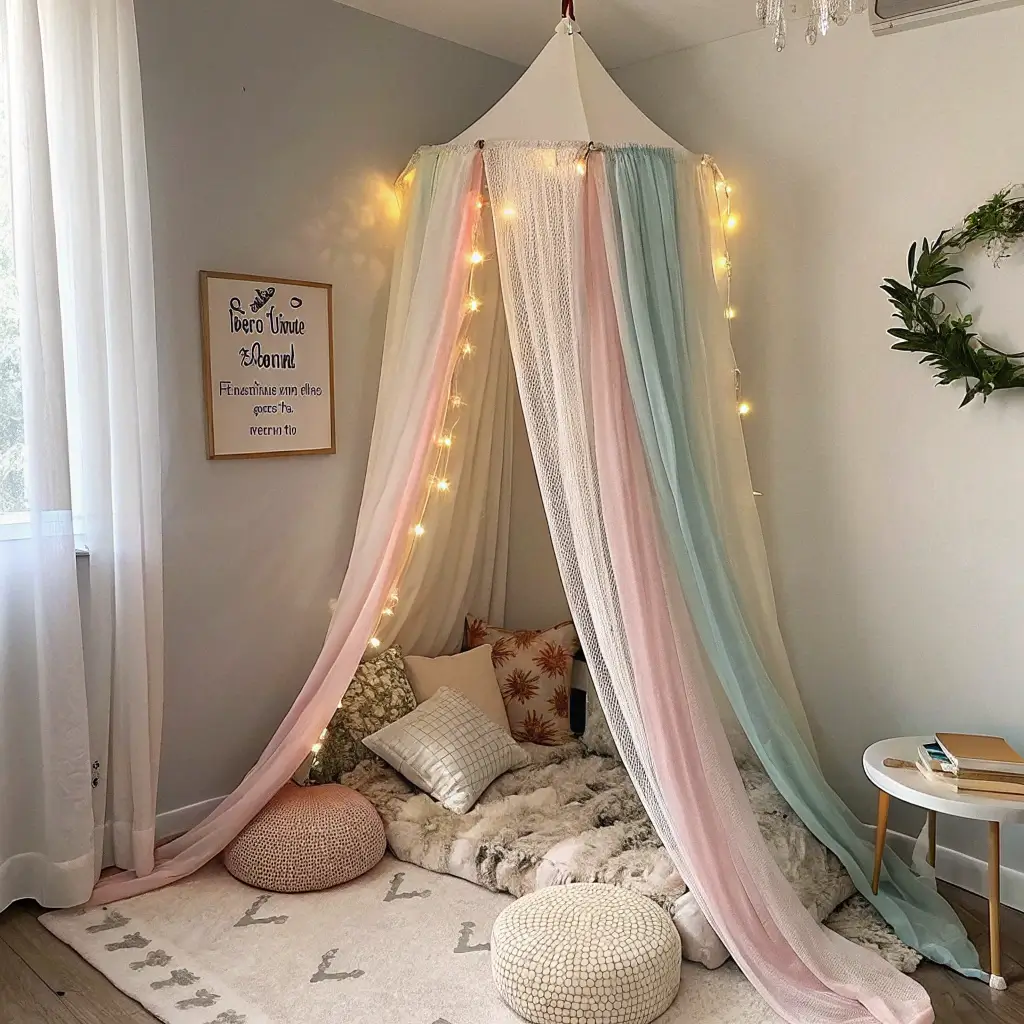
The final idea wraps things up — quite literally — with a hanging fabric canopy accent. This approach drapes fabric from a central ceiling point or wall-mounted bracket, creating a soft, flowing canopy effect that frames a section of wall (and often the furniture beneath it) in elegant textile.
More Than Just a Bedroom Thing
Most people associate fabric canopies with beds, but they work beautifully as pure wall decor in multiple contexts:
- Reading nooks — Drape fabric from a corner ceiling point to create a cozy, enclosed reading space.
- Behind sofas — A canopy draped behind a living room sofa adds unexpected softness and drama.
- Dining areas — Fabric cascading behind a dining table creates an intimate, almost tent-like atmosphere for meals.
- Home offices — A canopy behind your desk adds visual interest to video call backgrounds. Yes, that’s a legitimate reason, and no, I’m not ashamed of it.
Fabric Selection for Canopies
The fabric you choose defines the entire mood:
- Sheer fabrics (chiffon, organza, voile) — Light, airy, ethereal. They filter light beautifully and create a dreamy, romantic atmosphere.
- Linen — Relaxed, casual, and textured. Perfect for bohemian or coastal spaces.
- Velvet — Luxurious, dramatic, and rich. Creates a more formal, opulent feel.
- Cotton muslin — Simple, affordable, and versatile. Works in nearly any aesthetic.
- Silk — The ultimate luxury choice. It drapes beautifully and catches light like nothing else. Also the most expensive option, obviously.
Installation Methods
- Ceiling hook with gathered drape — Mount a hook in the ceiling and gather the fabric through it, letting it cascade outward and down the wall on either side. Simple, elegant, and remarkably easy.
- Curtain rod mounted high on the wall — Thread fabric through a decorative rod mounted near the ceiling. The fabric drapes down the wall like a waterfall.
- Crown or ring mount — A circular frame (like a large embroidery hoop or a repurposed crown canopy frame) mounted to the ceiling. Fabric hangs from the ring in a circular cascade.
- Multi-point swag — Multiple hooks across the ceiling or wall, with fabric looped between them in swooping swags.
Practical note: Keep fabric canopies away from heat sources, and make sure they don’t block smoke detectors or light fixtures. Safety first, aesthetics second — no matter how gorgeous the drape looks.
Pulling It All Together
Fabric wall decor occupies a special place in interior design because it does something that metal, wood, and canvas simply cannot. It softens. It warms. It absorbs sound. It introduces movement and texture that rigid materials can’t replicate. And it carries an inherently human quality — the evidence of hands weaving, knotting, stitching, and creating.
Here’s your complete lineup:
- Boho Macramé Wall Hanging — The timeless textural classic.
- Fabric-Covered Geometric Panels — Modern, customizable, and surprisingly easy to DIY.
- DIY Quilted Wall Art — Contemporary craft meets sophisticated design.
- Tapestry Gallery Wall — Curated textile storytelling at its best.
- Floating Fabric Shelves Backdrop — Layered function and beauty.
- Fabric Wall Pocket Organizer — Practical meets decorative in the best way.
- Patchwork Fabric Collage — Eclectic, personal, and endlessly creative.
- Framed Vintage Scarves Display — Fashion-as-art for your walls.
- 3D Fabric Flower Wall — Dimensional, whimsical, and utterly stunning.
- Hanging Fabric Canopy Accent — Dramatic draping that transforms any space.
The best part about fabric wall decor? Almost every idea on this list accommodates DIY execution. You don’t need expensive tools, professional installation, or an art degree. You need fabric, some basic supplies, a free afternoon, and the willingness to experiment.
So the next time you stare at a bare wall and reach for yet another framed print, pause. Ask yourself whether fabric might do the job better. Nine times out of ten, it absolutely will — and your room will feel warmer, softer, and infinitely more interesting for it. Now go raid your fabric stash and make something beautiful. Those walls aren’t going to decorate themselves.