15 Stylish Kids Wardrobe Designs and Organization Hacks

Picture this: You walk into your kid’s room, and instead of clothes scattered everywhere like a tornado hit Target’s children’s section, you see an organized, stylish wardrobe that actually makes sense. Sounds like a fantasy? I thought so too until I discovered these game-changing kids wardrobe designs and organization hacks that turned my chaotic mornings into smooth sailing.
Trust me, after years of battling the eternal mess of tiny clothes, shoes that somehow multiply overnight, and toys that seem to have a life of their own, I’ve learned a thing or two about creating wardrobes that work for both kids and parents. Whether you’re dealing with a shoe-box sized room or trying to accommodate multiple children, these 15 stylish solutions will transform your approach to kids’ wardrobe organization.
Minimalist Kids Wardrobe Ideas
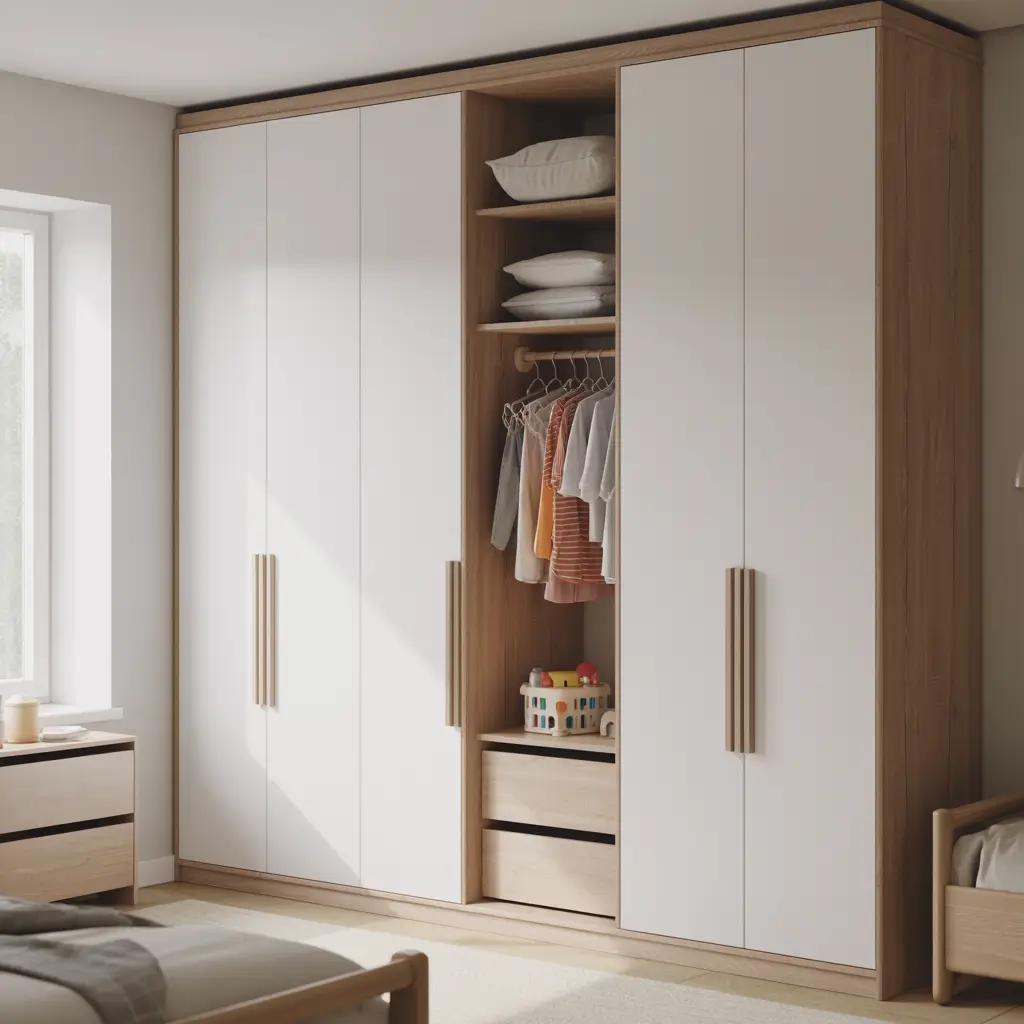
Remember when you thought minimalism was just for those Instagram-perfect homes with no kids? Well, surprise! Minimalist kids wardrobes actually work better than cluttered ones, and your sanity will thank you for it.
The secret lies in choosing quality over quantity. Instead of cramming 20 barely-worn shirts into a tiny space, opt for 8-10 versatile pieces that your child actually loves wearing. I learned this the hard way when my daughter owned 15 different princess dresses but only wore the same pink one for three months straight.
Key elements of minimalist kids wardrobes include:
• Open shelving for easy visibility and access
• Neutral color schemes with pops of your child’s favorite colors
• Multi-functional pieces like storage benches that double as seating
• Limited but high-quality hangers in matching styles
The beauty of minimalist design? Your kids can actually see what they have, making morning routines faster and reducing the “I have nothing to wear” drama. Plus, fewer clothes mean less laundry – and honestly, isn’t that worth celebrating? 🙂
Space-Saving Wardrobe Designs for Small Rooms
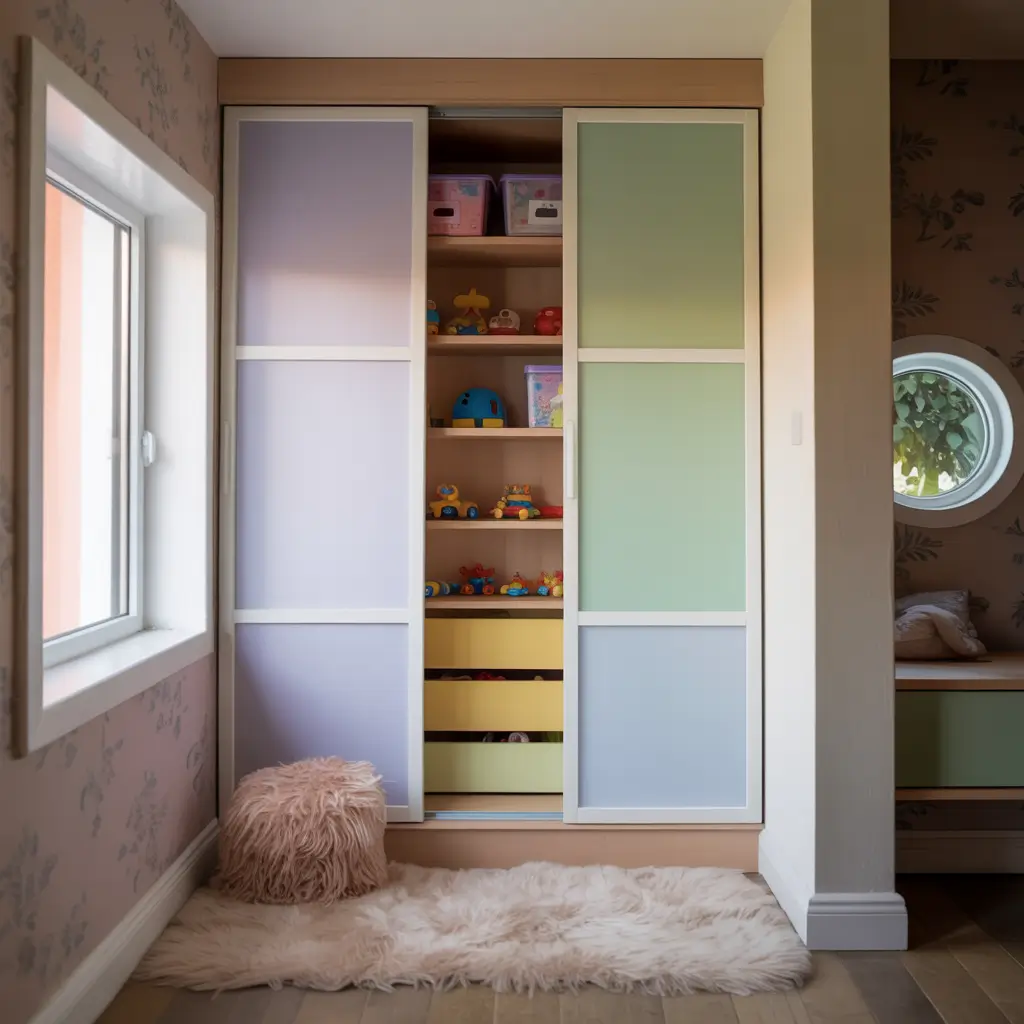
Small rooms don’t mean you have to sacrifice style or functionality. Some of the most creative wardrobe solutions I’ve seen come from parents who’ve mastered the art of vertical thinking and clever space utilization.
Vertical storage becomes your best friend when square footage is limited. Think floor-to-ceiling wardrobes with adjustable shelving that grows with your child’s needs. I installed one of these in my son’s tiny room, and suddenly we had storage space I never knew existed.
Smart space-saving features include:
• Double-hanging rods for shirts and pants
• Drawer dividers for small items like socks and underwear
• Over-the-door organizers for accessories and shoes
• Under-bed storage for seasonal clothes
Ever tried those vacuum storage bags for out-of-season clothes? They’re absolute lifesavers! Winter coats take up so much space, but compress them down and you’ve got room for summer clothes without playing wardrobe Tetris every six months.
Themed Wardrobes for Boys and Girls
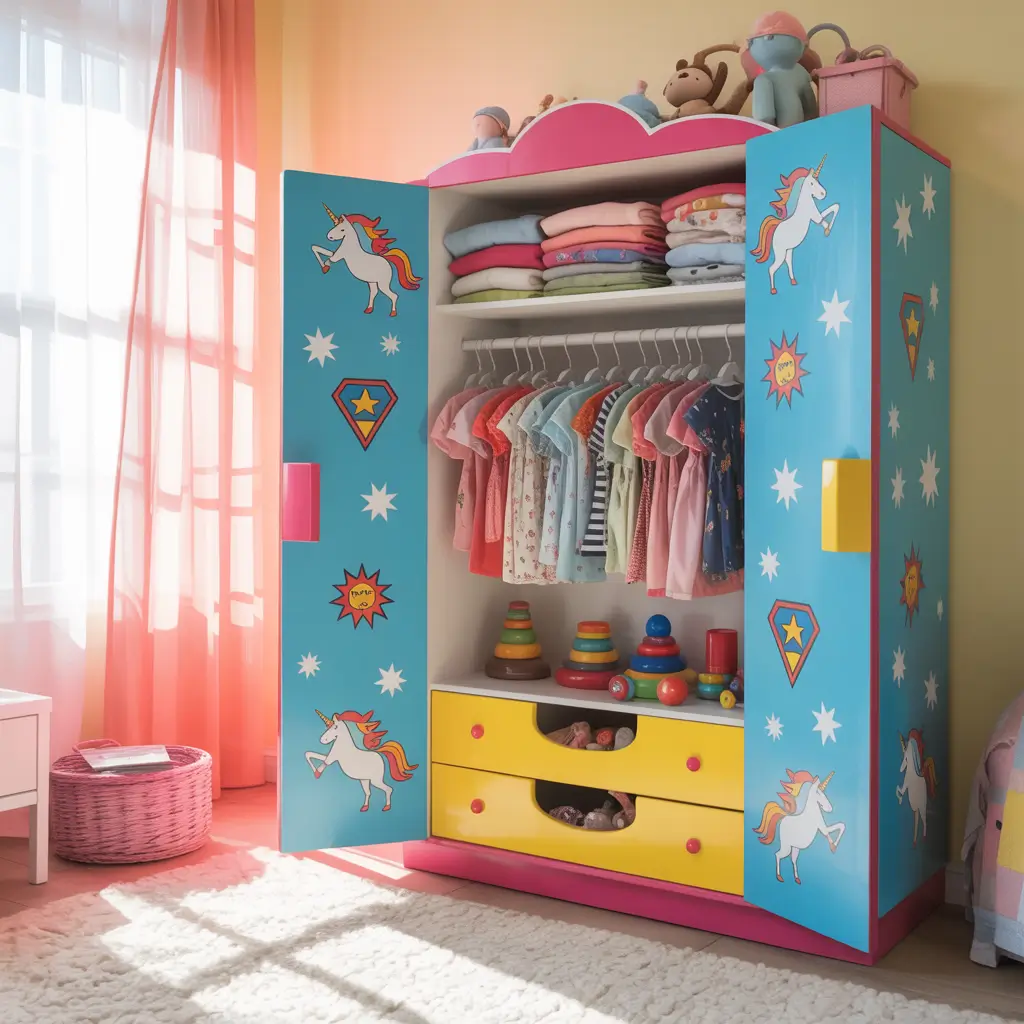
Who says functional can’t be fun? Themed wardrobes let your child’s personality shine while keeping everything organized. From superhero sanctuaries to princess palaces, themed storage solutions make getting dressed feel like playtime.
For my nephew’s dinosaur obsession phase (which lasted two years, FYI), we created a prehistoric wardrobe complete with fossil-inspired drawer pulls and a growth chart shaped like a brontosaurus neck. The kid was so excited about his closet that he actually kept it organized – miracle achieved!
Popular themed wardrobe ideas:
• Sports themes with jersey displays and equipment storage
• Space exploration featuring rocket ship hangers and planet decals
• Garden themes with flower-shaped hooks and nature colors
• Adventure themes incorporating maps and travel-inspired elements
The trick with themed wardrobes? Choose elements that can evolve. Those dinosaur drawer pulls? They became “dragon treasures” when his interests shifted to fantasy adventures. Smart theming saves you from complete makeovers every time your child discovers a new passion.
DIY Kids Wardrobe Organization Hacks
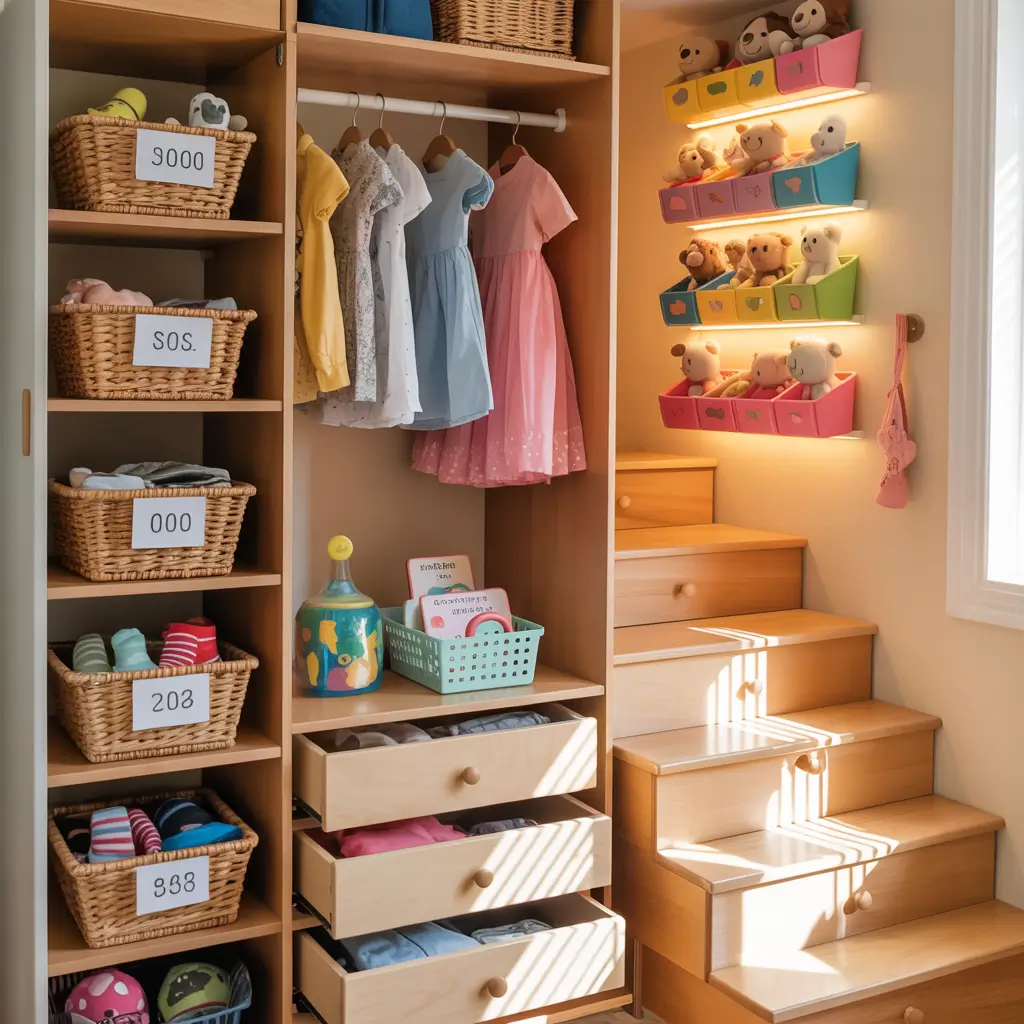
Ready to get your hands dirty? DIY wardrobe organization doesn’t require a engineering degree or a massive budget – just some creativity and weekend motivation.
Simple DIY projects that make huge differences:
• Tension rods for creating instant double-hanging space
• Repurposed shoe organizers for storing art supplies, toys, and accessories
• Painted wooden crates as stackable storage cubes
• Magnetic strips inside doors for small metal toys and hair accessories
My favorite hack? Pool noodles cut in half and placed in boots to keep them upright. Sounds ridiculous, but it works perfectly and costs basically nothing. Sometimes the silliest solutions are the most effective!
Label makers become your secret weapon for DIY organization. When kids can read what goes where (or see pictures for non-readers), they’re more likely to put things back in the right spots. I learned this after finding my daughter’s socks in the toy box for the third time that week.
Also Read: 15 Smart Wall Wardrobe Ideas for Organized Living
Colorful Wardrobe Designs That Kids Love
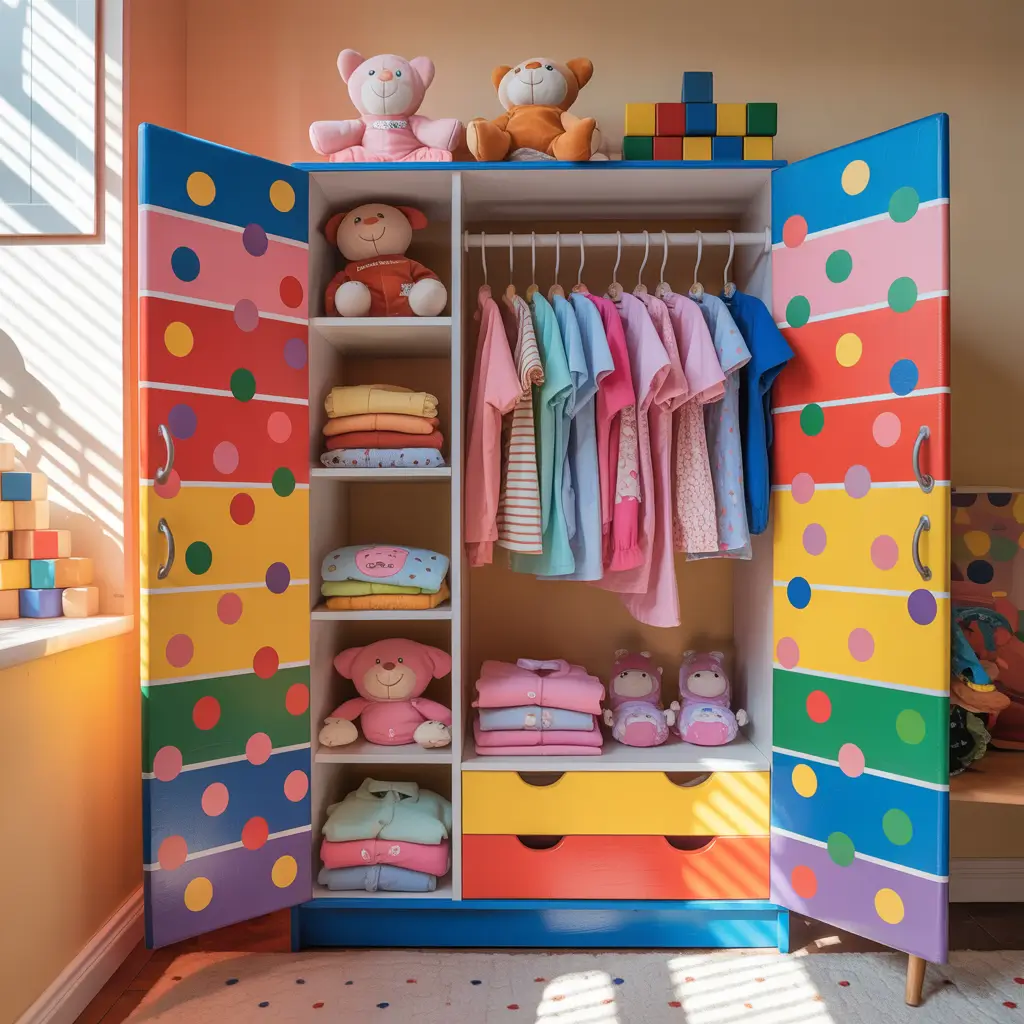
Let’s be honest – kids aren’t exactly known for their appreciation of beige and taupe. Colorful wardrobe designs don’t have to mean rainbow explosion; they can be thoughtfully designed spaces that celebrate your child’s favorite hues while maintaining visual harmony.
Color strategies that work:
• Monochromatic schemes using different shades of your child’s favorite color
• Complementary color pairings like blue and orange or purple and yellow
• Neutral base with colorful accents through bins, hangers, and drawer pulls
• Color-coded organization where different colors represent different clothing types
I once painted each drawer of my daughter’s dresser a different pastel shade – pink for underwear, lavender for pajamas, mint for play clothes. She loved the rainbow effect, and I loved that she always knew where everything belonged. Win-win!
Colorful organization bins serve double duty as storage and decoration. Those bright fabric cubes from various stores? They’re perfect for storing everything from seasonal clothes to stuffed animals, and they add personality to any space.
Convertible Wardrobes That Grow With Your Child
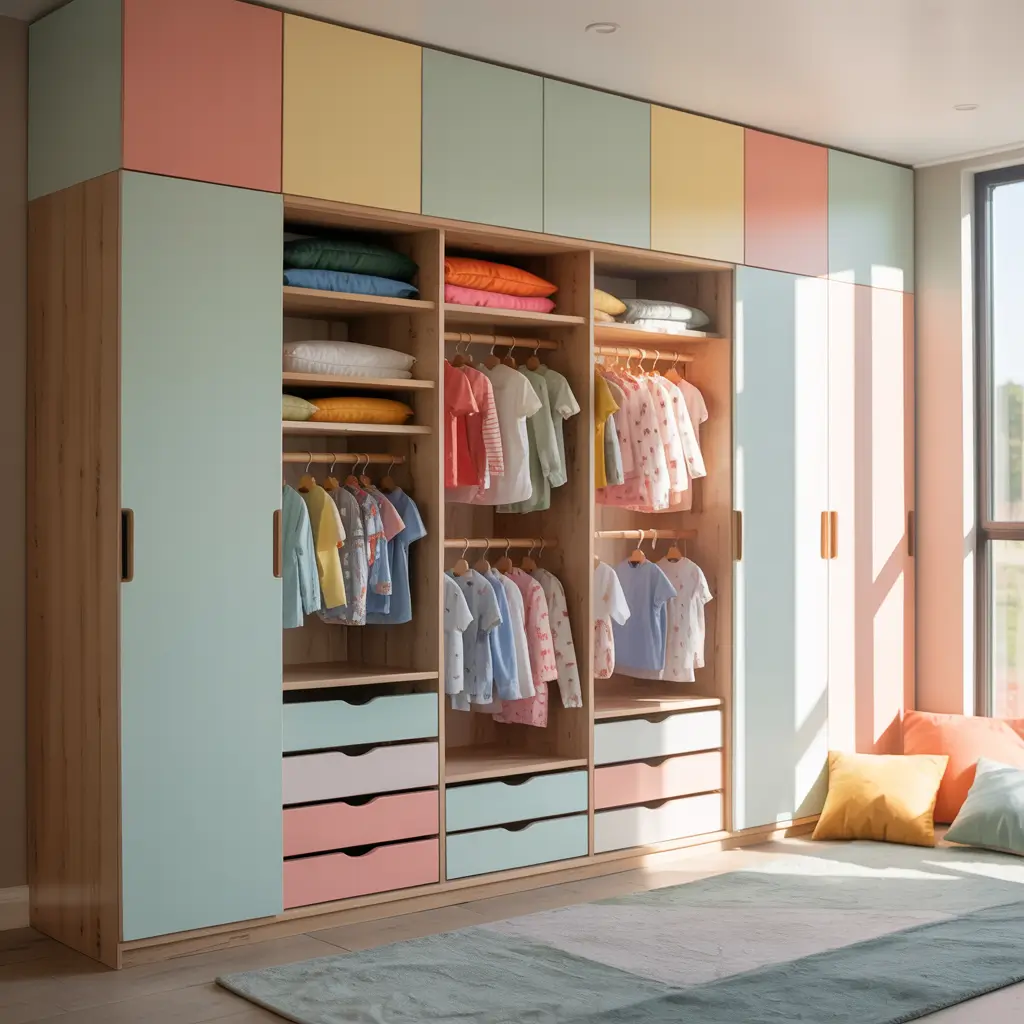
Buying furniture that lasts through multiple childhood phases? That’s what I call smart parenting. Convertible wardrobes adapt to changing needs, saving money and reducing furniture turnover.
Adjustable features to look for:
• Modular shelving systems that can be reconfigured as needs change
• Removable drawer dividers for different sized items
• Adjustable hanging rods that can be lowered or raised
• Expandable units that can be added to over time
My sister bought a convertible wardrobe when her son was two. Seven years later, it’s been a toddler clothes storage, a school supply station, a sports equipment organizer, and now it’s transitioning into teen territory. The initial investment seemed steep, but compared to buying new furniture every few years? Absolute bargain.
Growth-friendly design elements include choosing neutral finishes that won’t look babyish as kids age, and investing in quality hardware that can handle years of enthusiastic use. Because let’s face it – kids aren’t gentle with their belongings!
Wardrobe Storage Solutions for Toys and Clothes
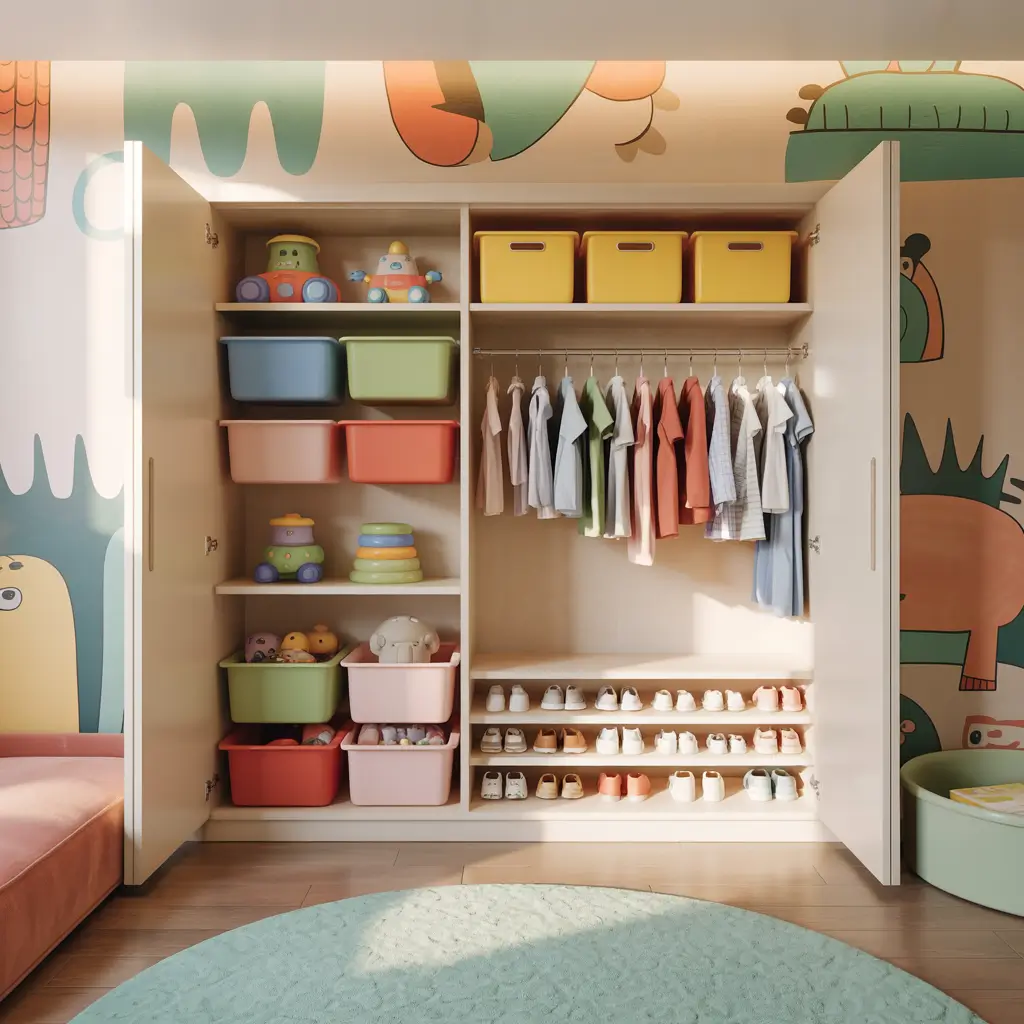
The eternal struggle: where do toys end and clothes begin? Combined storage solutions for toys and clothes create streamlined systems that make sense for how kids actually live and play.
Hybrid storage ideas:
• Ottoman storage benches for clothes and stuffed animals
• Cubbies with mixed purposes – clothes on top, toys below
• Hanging organizers with pockets for both small clothes and toy collections
• Rolling carts that can move between play areas and bedrooms
I discovered that clear storage containers work magic for both toys and clothes. Kids can see exactly what’s inside, making it easier for them to find what they want and put things back where they belong. No more excavating through opaque bins to find that one specific toy or shirt!
Seasonal rotation becomes easier when toys and clothes share organized spaces. Summer clothes go up high while beach toys come down to kid level. Winter means cozy sweaters become accessible while summer shorts get stored away with pool toys.
Modern Wardrobe Designs for Stylish Kids’ Rooms
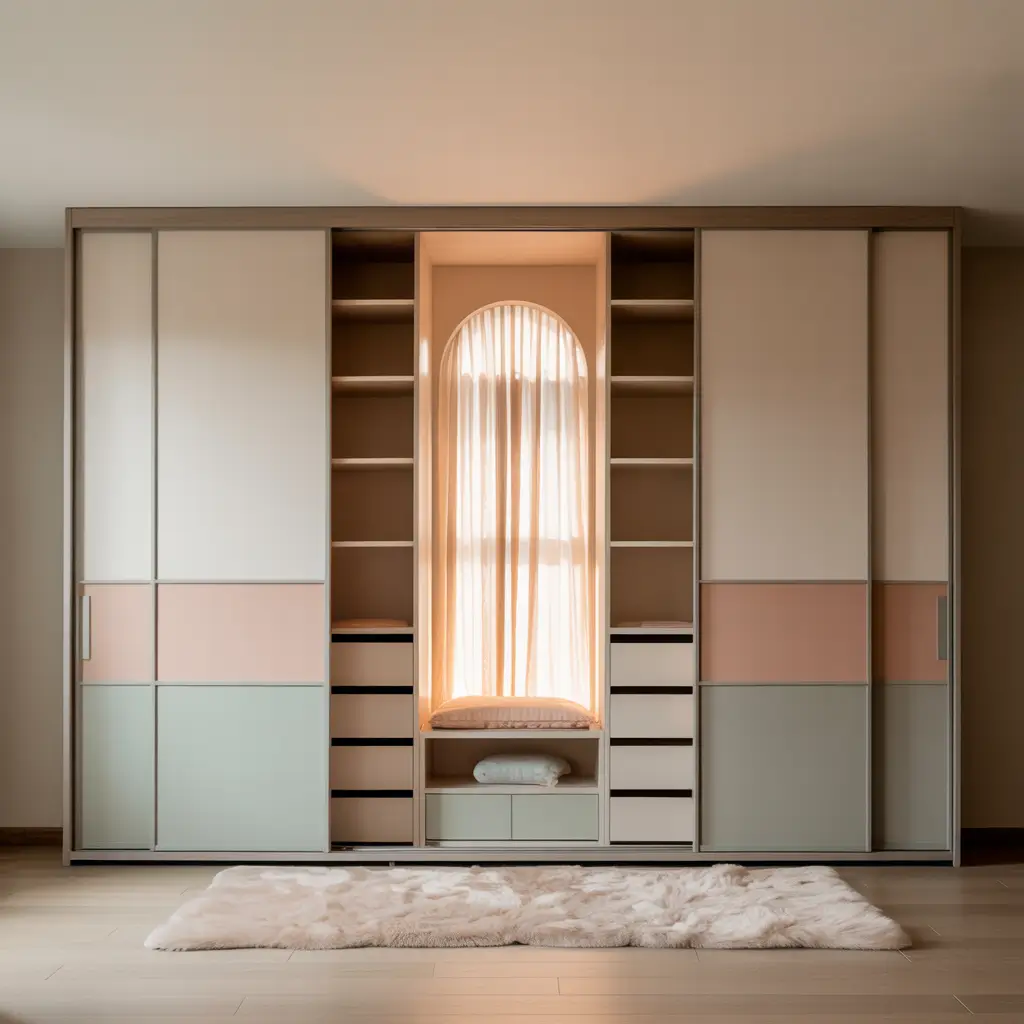
Who decided kids’ furniture had to look like it came from a cartoon? Modern wardrobe designs prove that children’s spaces can be sophisticated while remaining completely functional and age-appropriate.
Modern design elements that work for kids:
• Clean lines and simple silhouettes
• Natural materials like wood and bamboo
• Geometric patterns in subtle applications
• Minimalist hardware that’s easy for small hands to operate
The key to modern kids’ wardrobes? Function drives form. Every design element should serve a purpose beyond looking good. Those sleek handleless drawers might look amazing, but if your five-year-old can’t open them easily, they’re not practical for daily use.
Sustainable materials appeal to style-conscious parents who want wardrobes that look good and feel good environmentally. Bamboo wardrobes, recycled plastic storage bins, and organic cotton organizers prove that modern design can be eco-friendly too.
Wardrobe Ideas for Shared Bedrooms
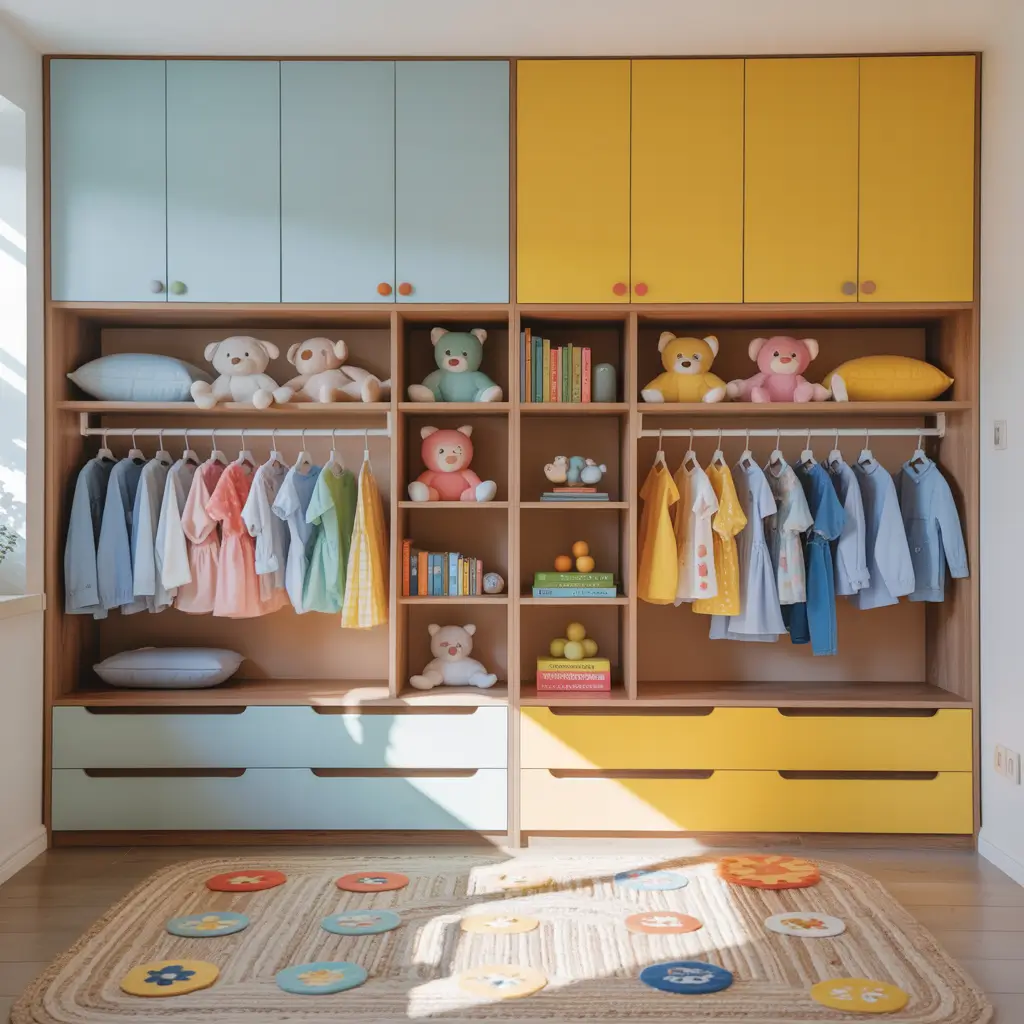
Shared bedrooms require diplomatic storage solutions. How do you create individual wardrobe spaces while maintaining harmony between siblings with different personalities, ages, and clothing needs?
Strategies for shared wardrobe success:
• Color-coded systems where each child has their designated color
• Clearly defined sections with physical dividers
• Individual storage bins labeled with names or photos
• Separate hanging areas at different heights for different ages
The biggest challenge? Preventing wardrobe territory wars. I watched my friends’ kids argue over closet space until they installed a floor-to-ceiling divider that created two distinct but connected wardrobe areas. Suddenly, the fighting stopped and organization improved dramatically.
Compromise solutions work well for items that can be shared, like seasonal coats or special occasion clothes. Create a neutral zone for these items while maintaining individual spaces for personal clothing and treasures.
Fun and Functional Wardrobe Layouts
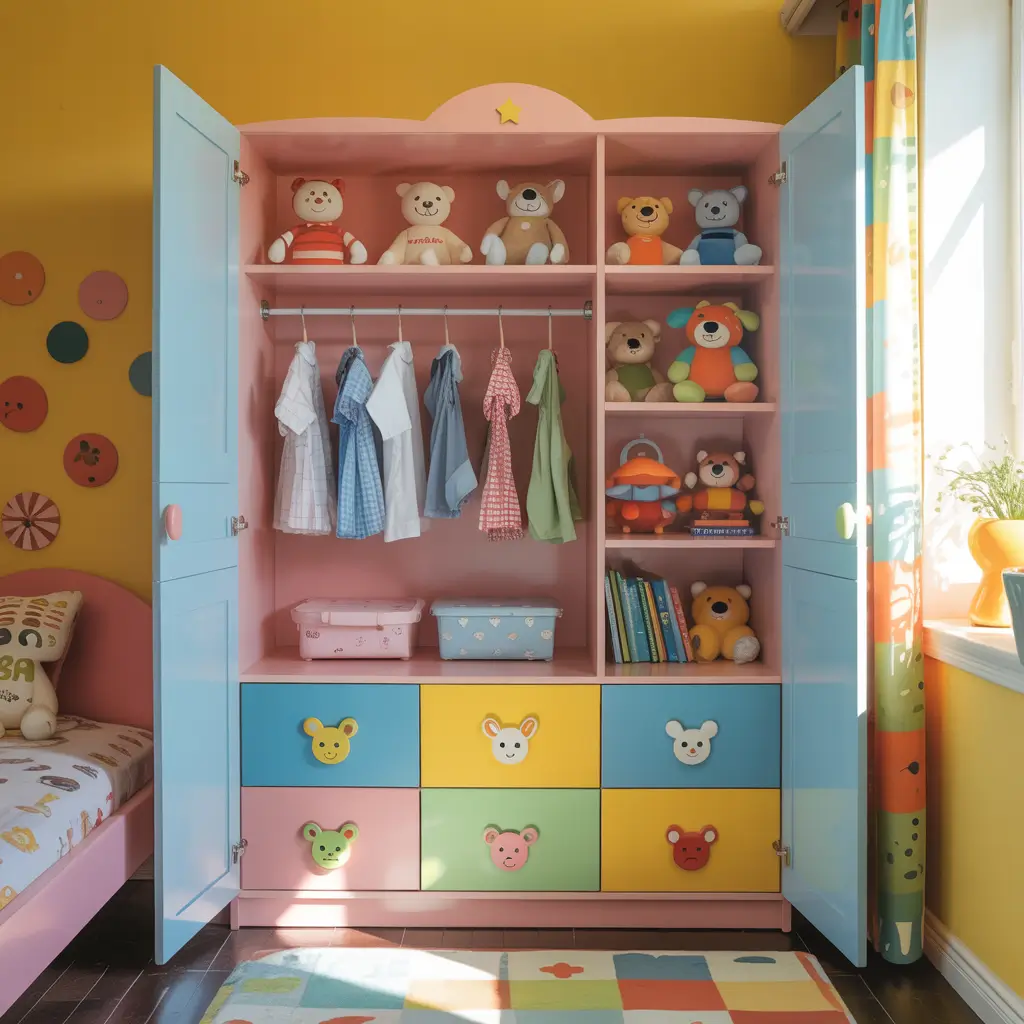
Why settle for boring when you can have wardrobes that spark joy every time kids open them? Fun layouts don’t sacrifice functionality – they enhance it by making organization feel like play rather than chore.
Creative layout ideas:
• Zigzag hanging rods that create visual interest
• Circular clothing displays for favorite outfits
• Tiered systems that create natural viewing angles
• Mix of open and closed storage for varied textures and accessibility
I love wardrobes that include display areas for special items. My daughter has a small shelf for her favorite hair accessories and a hook for her beloved denim jacket. These personal touches make the wardrobe feel like her own special space rather than just another storage area.
Interactive elements like chalkboard labels that kids can update, or magnetic boards for displaying artwork, turn wardrobes into personal expression stations. When kids feel ownership over their space, they’re more likely to maintain it.
Also Read: 15 Space-Saving Wooden Wardrobe Ideas for Tiny Rooms
Budget-Friendly Kids Wardrobe Designs
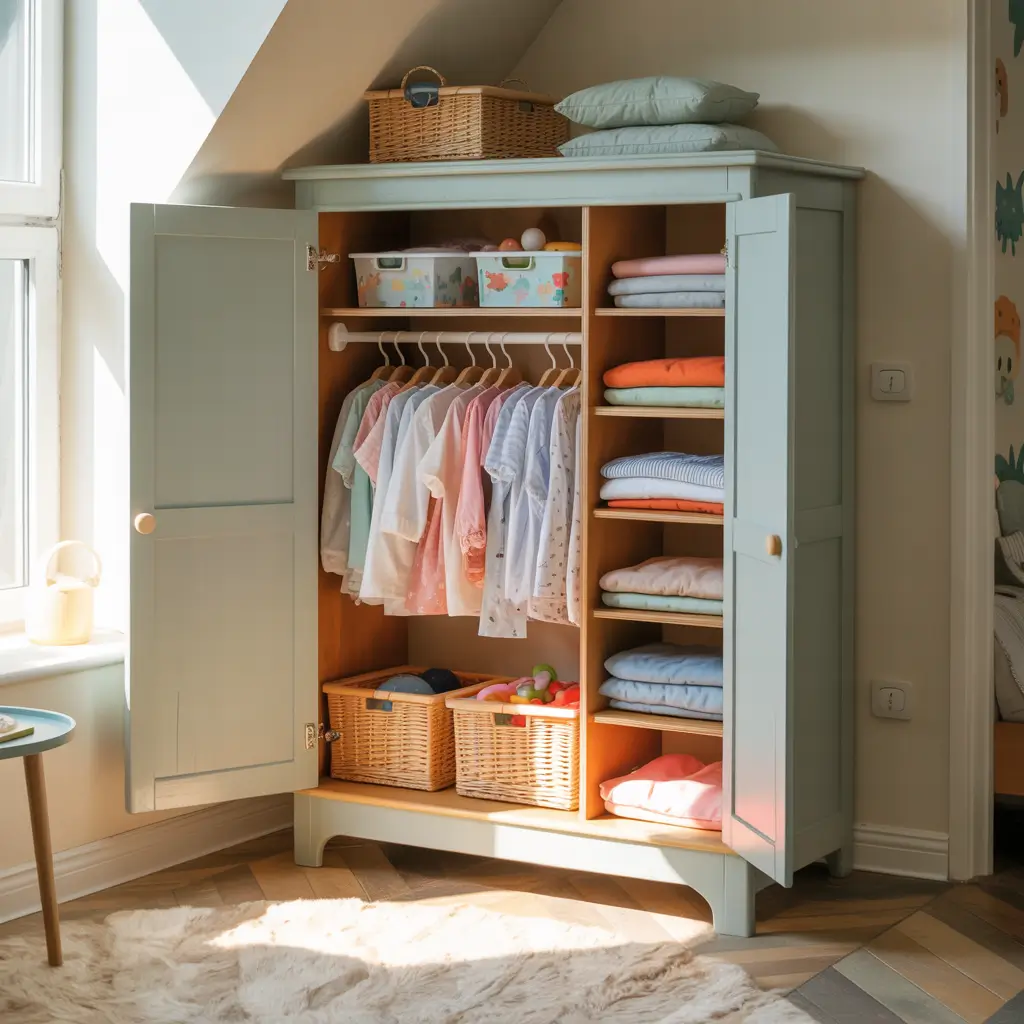
Great wardrobe organization doesn’t require designer price tags. Some of the most effective storage solutions come from creative thinking and strategic shopping rather than unlimited budgets.
Money-saving strategies:
• Repurpose existing furniture with fresh paint and new hardware
• Shop secondhand for quality pieces that can be customized
• Use household items creatively as organizers
• DIY solutions using inexpensive materials
Dollar store finds can be surprisingly effective for wardrobe organization. Plastic bins, drawer dividers, and small baskets work just as well as expensive versions for many applications. I’ve organized entire wardrobes using primarily dollar store supplies and the results looked professionally done.
Thrift store transformations offer incredible value for creative parents. That solid wood dresser with ugly hardware? A weekend project with sandpaper, paint, and new knobs can create a custom piece that rivals expensive retail options. Plus, kids love being involved in creating their own furniture!
Wardrobe Inspiration for Tiny Bedrooms
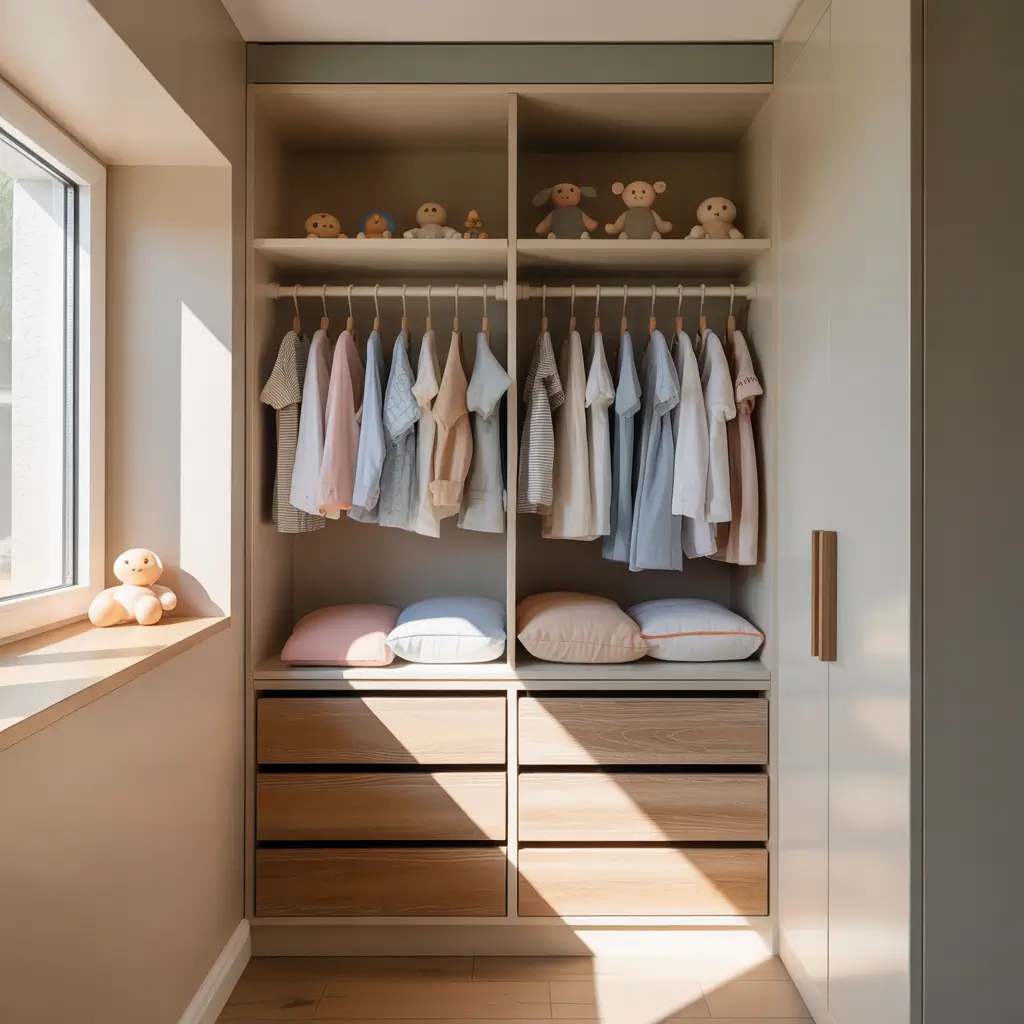
Tiny bedrooms demand maximum efficiency from every square inch. The wardrobes that work best in small spaces think beyond traditional boundaries and embrace creative solutions.
Tiny bedroom wardrobe tricks:
• Wall-mounted everything to maximize floor space
• Corner utilization with triangular or curved units
• Ceiling-height storage with step stools for access
• Multi-level organization that uses vertical space effectively
Space illusions matter in tiny rooms. Light colors, mirrors, and open shelving create the feeling of more space even when square footage remains the same. I painted the inside of my son’s small wardrobe white, and suddenly it felt twice as large and much more inviting.
Fold-out features work wonderfully in cramped quarters. Wardrobes with fold-down ironing boards, pull-out laundry hampers, or extending hanging rods provide functionality when needed without permanently occupying precious space.
Multi-Purpose Wardrobes With Built-in Desks
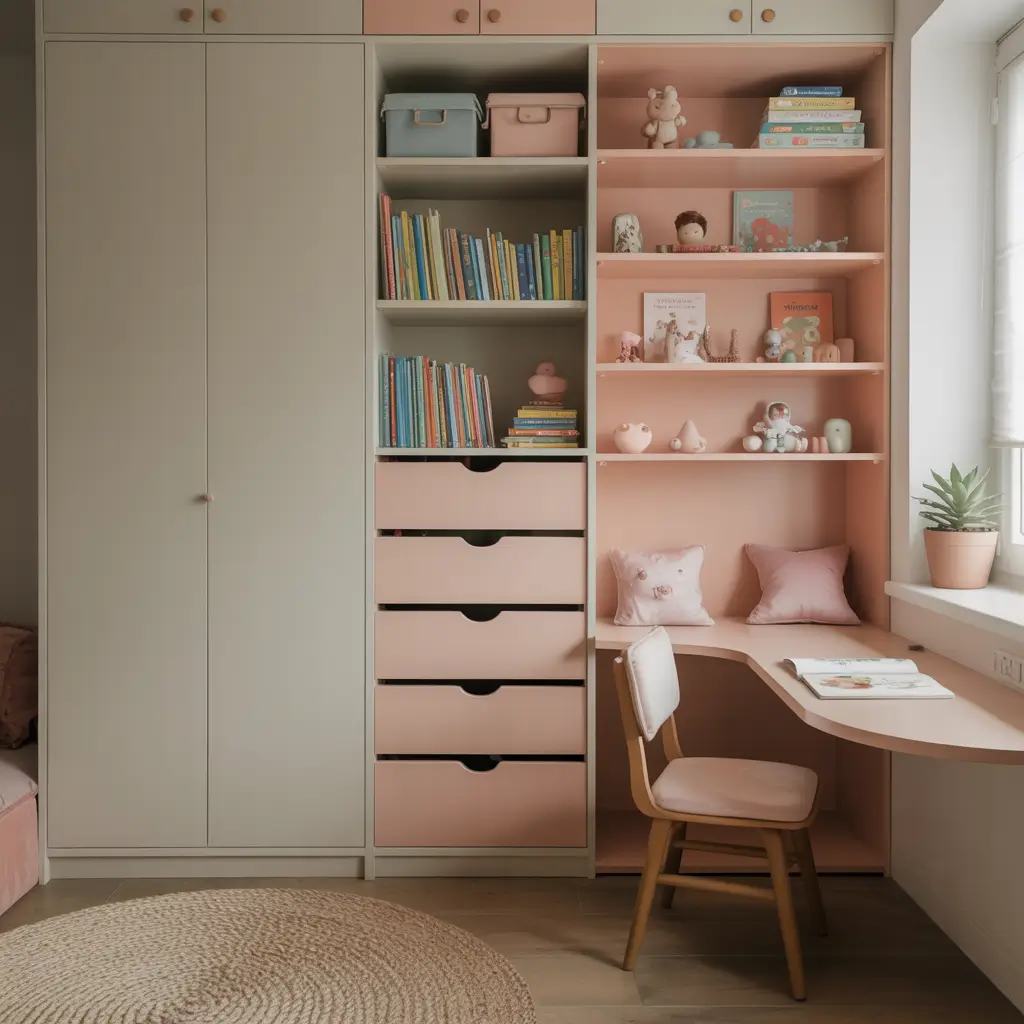
Study-wardrobe combinations address the reality of modern kids’ rooms where space must accommodate sleeping, studying, and storage. These integrated solutions create dedicated zones without requiring separate furniture pieces.
Effective desk-wardrobe combinations feature:
• Adequate lighting for both clothing selection and homework
• Proper ergonomics for comfortable studying
• Cable management for electronic devices
• Separate storage for school supplies and clothing
I was skeptical about wardrobe-desk combinations until I saw my neighbor’s setup. The desk pulls out when needed for homework time, then slides back to create a clean wardrobe area. Brilliant engineering that maximizes limited space without compromising functionality.
Technology integration becomes important when wardrobes include study areas. Built-in charging stations, cord organizers, and adequate electrical outlets ensure that modern kids’ devices have proper homes without creating cable chaos.
Creative Closet Makeovers for Kids
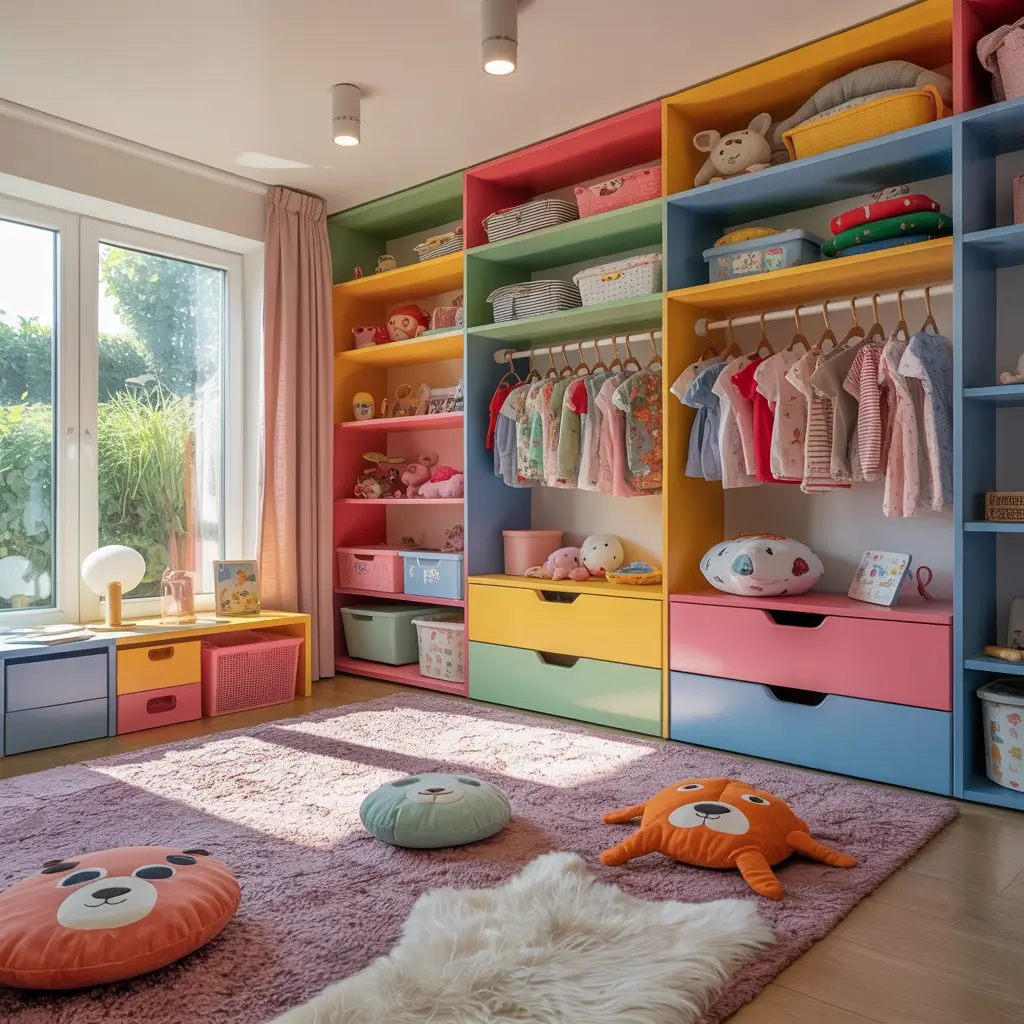
Closet transformations don’t always require complete reconstruction. Sometimes the most dramatic changes come from reimagining existing spaces with fresh eyes and creative solutions.
Makeover strategies that work:
• Lighting upgrades that make everything visible and inviting
• Paint treatments that completely change the feel of the space
• Hardware updates for improved functionality and style
• Organizational system overhauls that match current needs
The most successful closet makeover I witnessed involved simply removing the doors and creating an open wardrobe system. The space felt larger, clothes were more accessible, and the entire room’s energy changed. Sometimes less really is more!
Before and after planning ensures makeover success. Document current problems, measure carefully, and plan new systems based on actual usage patterns rather than idealistic Pinterest dreams. Real life trumps perfection every time.
Wardrobe Designs That Encourage Kids’ Independence
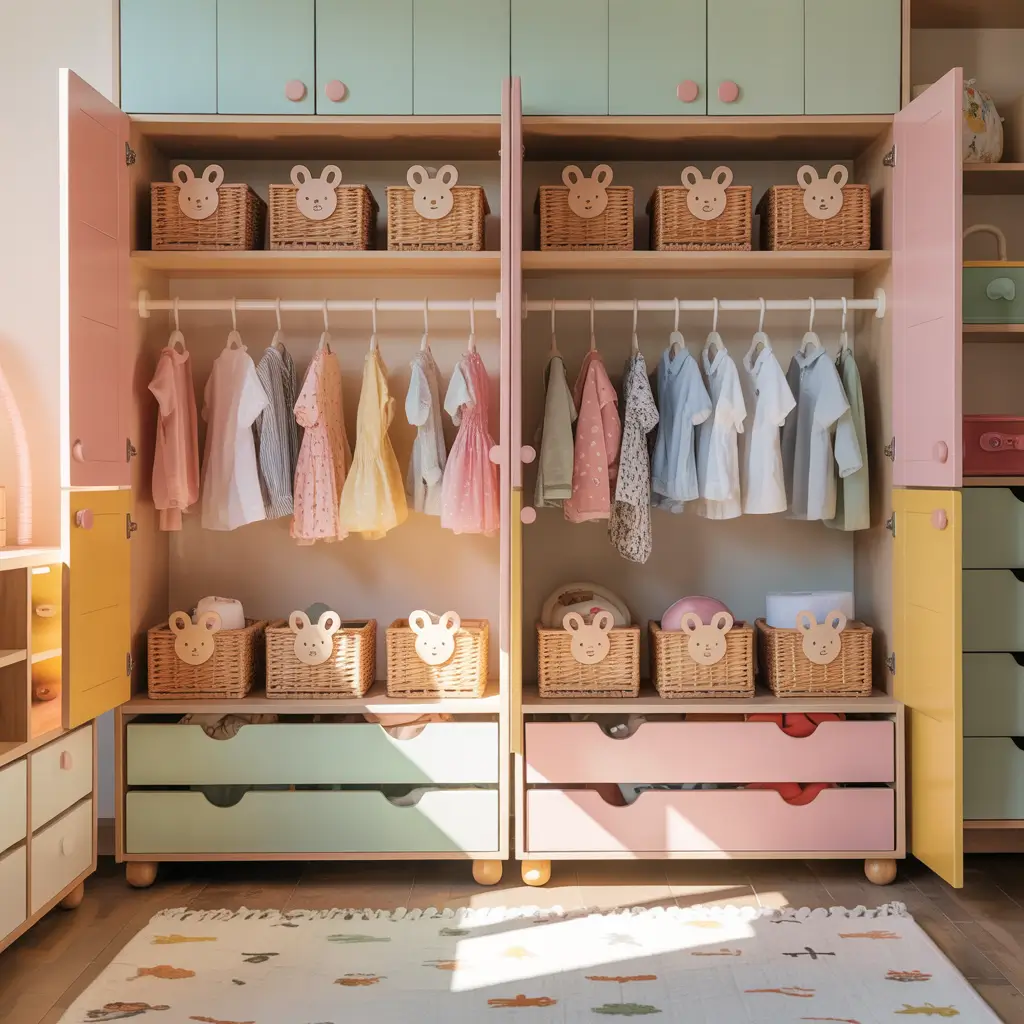
The ultimate goal of any kids’ wardrobe? Creating systems that children can manage independently. When kids can easily find, select, and put away their own clothes, everyone wins.
Independence-building features:
• Lower hanging rods for easy access
• Picture labels for non-reading children
• Simple organization systems that make sense to young minds
• Child-friendly hardware that operates easily with small hands
Age-appropriate expectations guide successful independent wardrobes. Three-year-olds need different solutions than eight-year-olds. What matters is creating systems that match developmental abilities while encouraging growing responsibility.
The proudest parenting moment? Watching your child get completely dressed without help, put pajamas in the proper place, and select tomorrow’s outfit independently. These well-designed wardrobes make that milestone achievable and sustainable.
Teaching moments built into wardrobe design help children understand organization principles rather than just following rules. When systems make logical sense, kids naturally maintain them better and feel confident in their abilities.
Creating the perfect kids’ wardrobe isn’t about achieving Pinterest perfection – it’s about finding solutions that work for your family’s real life. Whether you choose minimalist elegance, colorful chaos, or somewhere in between, the best wardrobe designs grow with your children while making daily routines smoother and more enjoyable.
Remember, the goal isn’t to create spaces that look good for photographs; it’s to design wardrobes that function beautifully for busy families. When your kids can independently manage their clothing and personal items, you’ve achieved something far more valuable than any design award. You’ve given them confidence, responsibility, and the life skills they’ll carry forward into their futures.