15 Creative Living Room Ideas Apartment for Small Spaces

Look, I get it. You’re staring at your shoebox-sized living room right now, wondering how on earth you’re supposed to make it look like those gorgeous Pinterest boards you’ve been hoarding. Spoiler alert: you absolutely can, and you don’t need to sell a kidney to do it.
I’ve lived in my fair share of cramped apartments where my couch practically kissed my TV stand, and I’ve learned that small spaces aren’t your enemy—they’re just really good at testing your creativity. The truth is, limited square footage forces you to think smarter, edit ruthlessly, and make every single piece count.
So grab your coffee (or wine, no judgment here), and let’s talk about 15 ridiculously creative ways to transform your tiny living room into a space that actually feels like home. These aren’t your average “just add a plant” suggestions—I’m giving you the real deal, complete with honest takes on what works and what’s just Instagram nonsense.
Minimalist Scandinavian Style
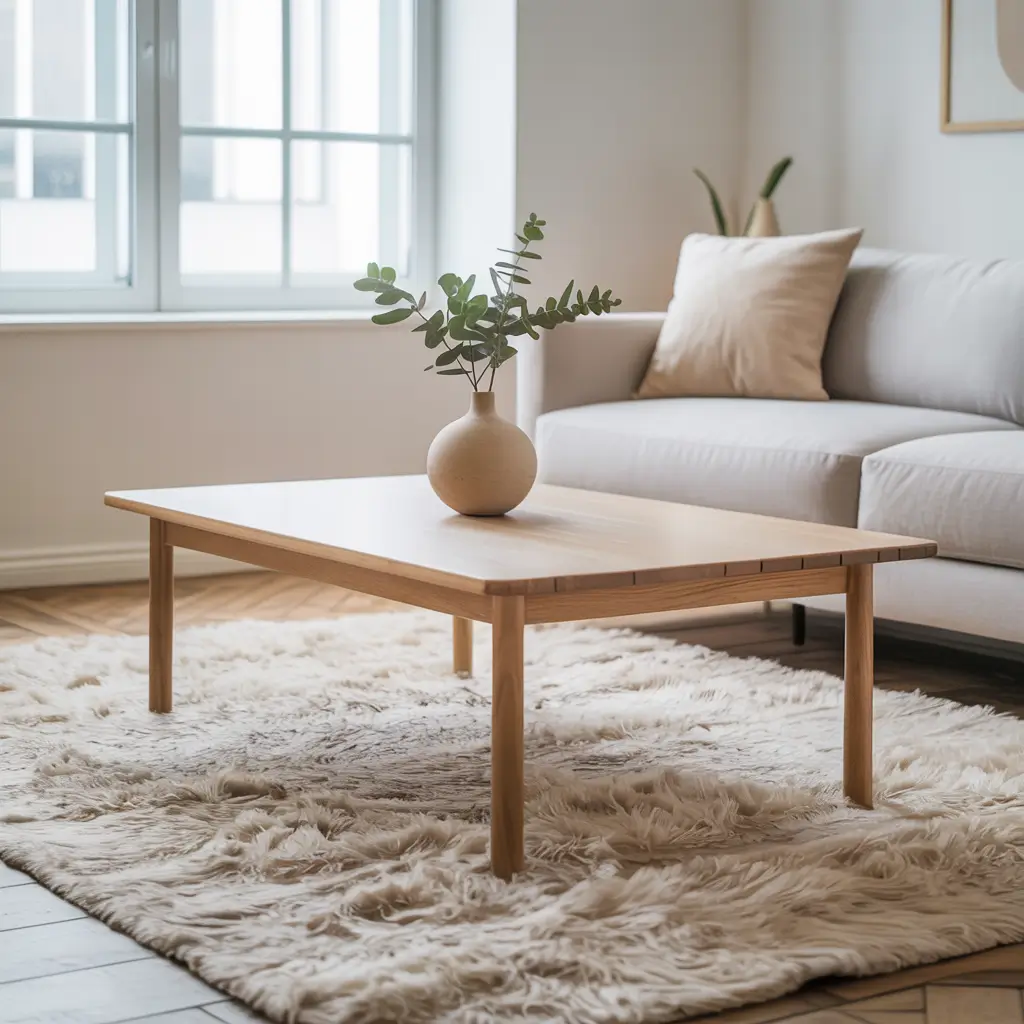
Scandinavian design is basically the cool, collected friend who always looks effortlessly put together. You know, the one who shows up in a simple white tee and jeans but somehow looks like a fashion model? Yeah, that’s Scandi style in a nutshell.
The magic here lies in clean lines, neutral colors, and functional furniture that doesn’t scream “Look at me!” Instead, everything whispers elegance. I’m talking white walls, light wood furniture (think birch or ash), and textiles in soft grays, whites, and the occasional muted blue.
Here’s what you need to nail this look:
- A low-profile sofa in light gray or beige
- Simple wooden coffee table with clean edges
- Minimal decorative items (less is genuinely more)
- Natural light maximized through sheer curtains
- One or two statement plants in simple ceramic pots
- Textured throws in neutral tones for warmth
The beauty of Scandinavian style in small apartments? It makes your space feel larger and more breathable. Nothing clutters your visual field, which tricks your brain into thinking you’ve got more room than you actually do. Pretty clever, right?
One thing I learned the hard way: don’t go so minimal that your place looks like a sterile doctor’s office. You still need personality. Add warmth through textures—a chunky knit throw, a sheepskin rug, or wooden accessories keep things cozy without adding visual chaos.
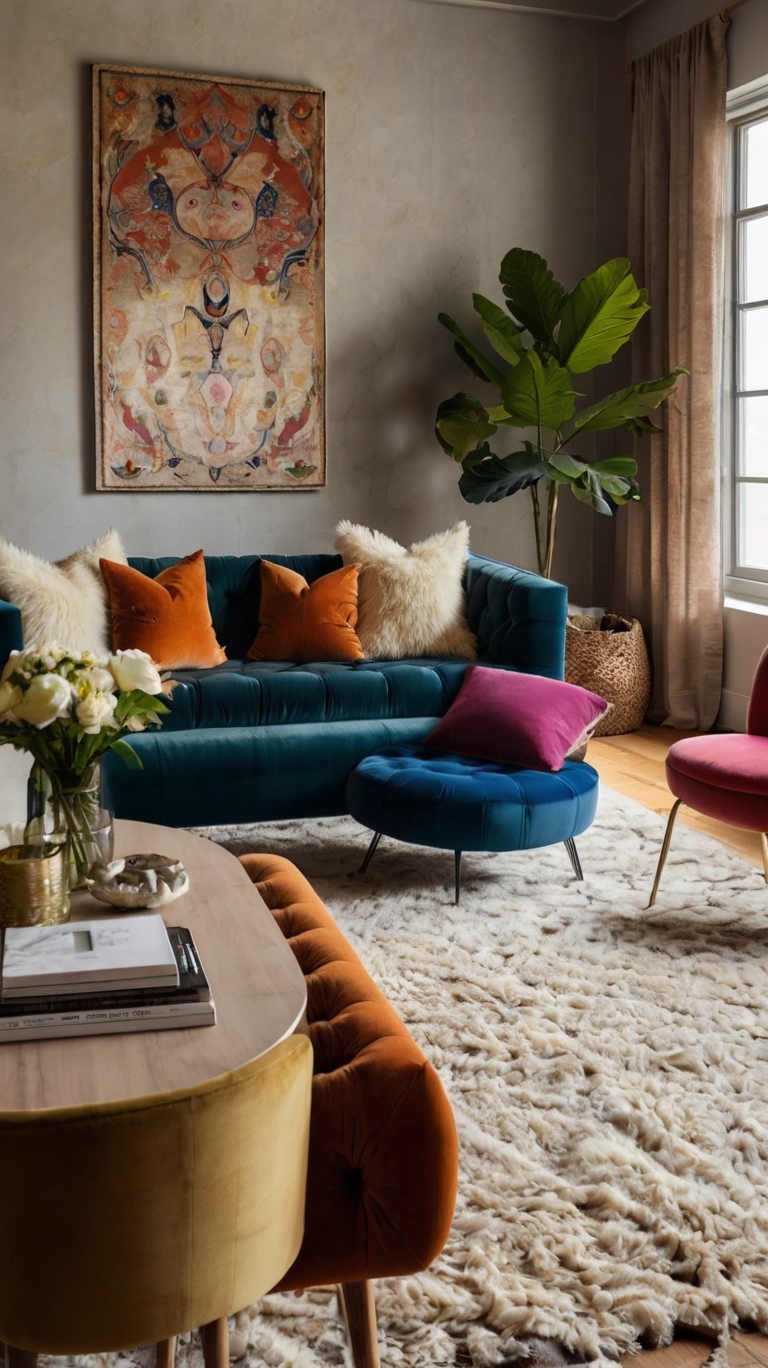
Cozy Boho Chic
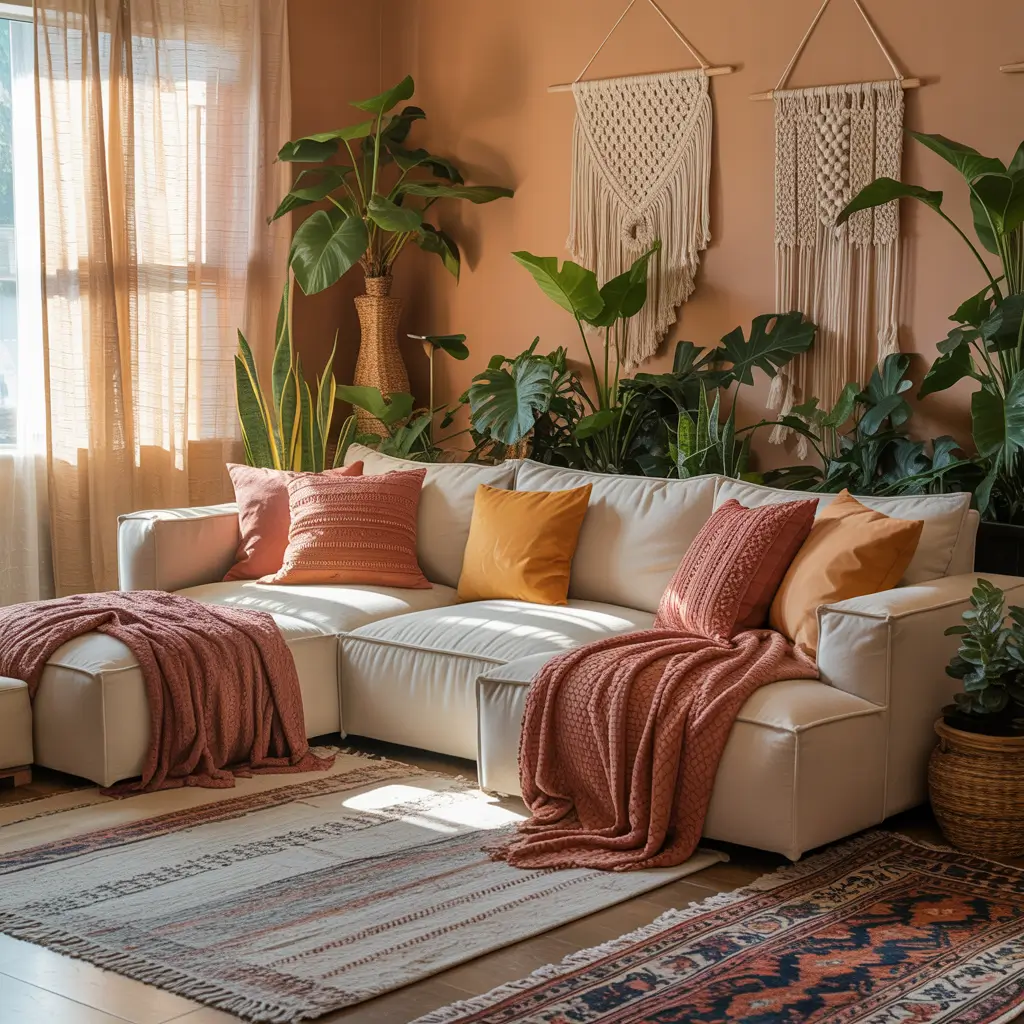
If Scandinavian is the minimalist friend, boho is the free-spirited artist who collects treasures from flea markets and somehow makes it all work together. This style is perfect for those who can’t commit to “less is more” because, frankly, more is more fun 🙂
Boho chic thrives on layering, mixing patterns, and bringing in global influences without looking like you robbed a souvenir shop. I’m talking Moroccan poufs, macramé wall hangings, vintage rugs with intricate patterns, and enough throw pillows to build a fort (and honestly, why not?).
Your boho small living room starter pack:
- Low seating options like floor cushions or a daybed-style sofa
- Rattan or wicker furniture pieces
- Mixed textiles—don’t be scared to combine patterns
- Warm, earthy color palette (terracotta, mustard, sage green)
- Layered rugs (yes, you can stack them)
- Plenty of plants in varied heights
- Vintage or handmade decorative pieces
The secret to pulling off boho in a small space? Stick to a cohesive color palette. You can mix patterns like nobody’s business, but keep your colors within the same family. Otherwise, you’ll create visual chaos that makes your room feel even smaller.
I once went overboard with boho and ended up with a space that looked like a textile explosion. Trust me, edit your treasures. Rotate them seasonally if you must, but don’t display everything at once.
Modern Industrial Loft
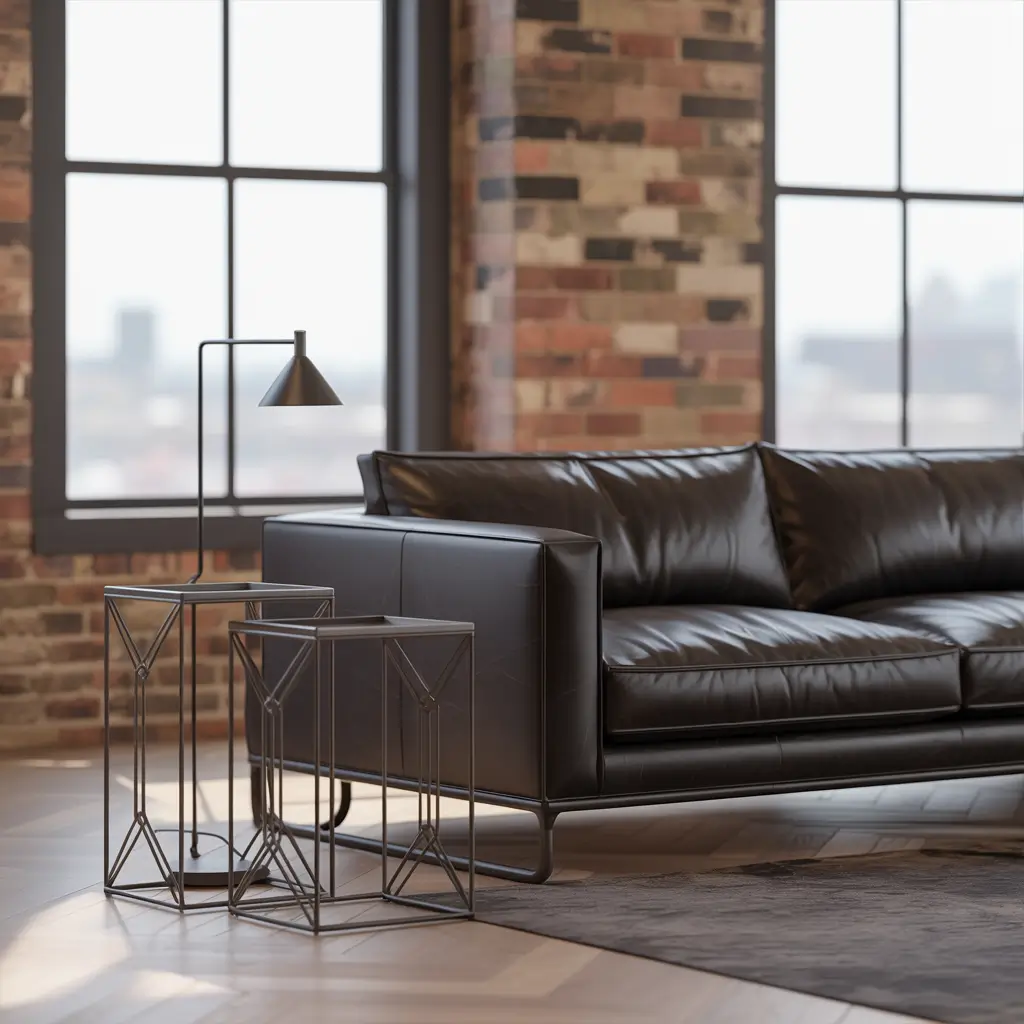
Ever walked into a converted warehouse and thought, “Wow, this is cool”? That’s industrial style, and you can totally fake that loft vibe even in your regular apartment.
This look embraces raw materials, exposed elements, and a slightly unfinished aesthetic that somehow feels incredibly sophisticated. Think exposed brick (or faux brick wallpaper, we won’t tell), metal accents, concrete textures, and reclaimed wood.
Key elements for industrial style:
- Metal-framed furniture with wood or leather
- Open shelving units in black metal
- Edison bulb lighting fixtures
- Concrete or dark-colored accent walls
- Leather seating (or convincing faux leather)
- Minimal window treatments
- Functional pieces that look utilitarian
The industrial look works brilliantly in small apartments because it celebrates simplicity and functionality. You’re not trying to hide your space’s quirks—you’re highlighting them.
Here’s a pro tip: balance the hard, masculine elements with softer textures. An industrial living room can quickly feel cold and unwelcoming if you don’t add warmth through textiles. I learned this after spending three months in a space that felt like a chic prison cell. Add a plush rug, some cozy throw blankets, and maybe a vintage leather chair to keep things inviting.
Small Space Multi-Functional Layout
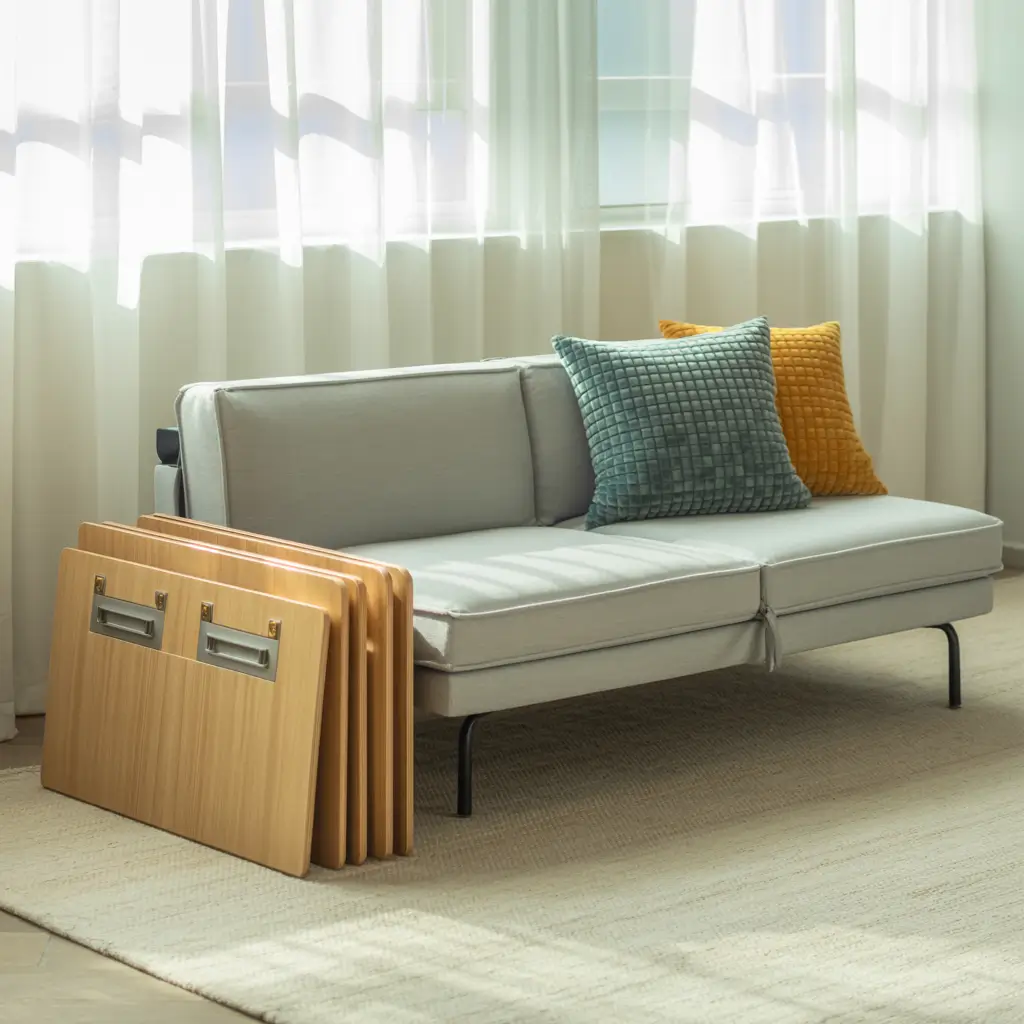
Okay, this is where we get tactical. When every square foot counts, your furniture needs to earn its place by doing multiple jobs.
Multi-functional layouts are all about smart furniture choices and flexible arrangements. We’re talking Murphy beds that fold into the wall, coffee tables that lift to become desks, ottomans with hidden storage, and sofas that transform into guest beds.
Multi-functional must-haves:
- Nesting tables you can separate when needed
- Storage ottoman that serves as coffee table and seating
- Console table behind the sofa for work/dining
- Wall-mounted fold-down desk
- Sofa bed or convertible sectional
- Stackable or foldable seating for guests
- TV stand with ample storage
I’ll be real with you—not all multi-functional furniture is created equal. I’ve owned a futon that was terrible as both a couch AND a bed (impressive in the worst way). Do your research and actually test things in-store if possible.
The layout strategy here is crucial: create zones within your living room. Use your sofa to divide the seating area from a small workspace. Position a bookshelf perpendicular to the wall to separate your living space from your dining nook. You’re essentially building invisible walls with your furniture placement.
Monochrome Elegance
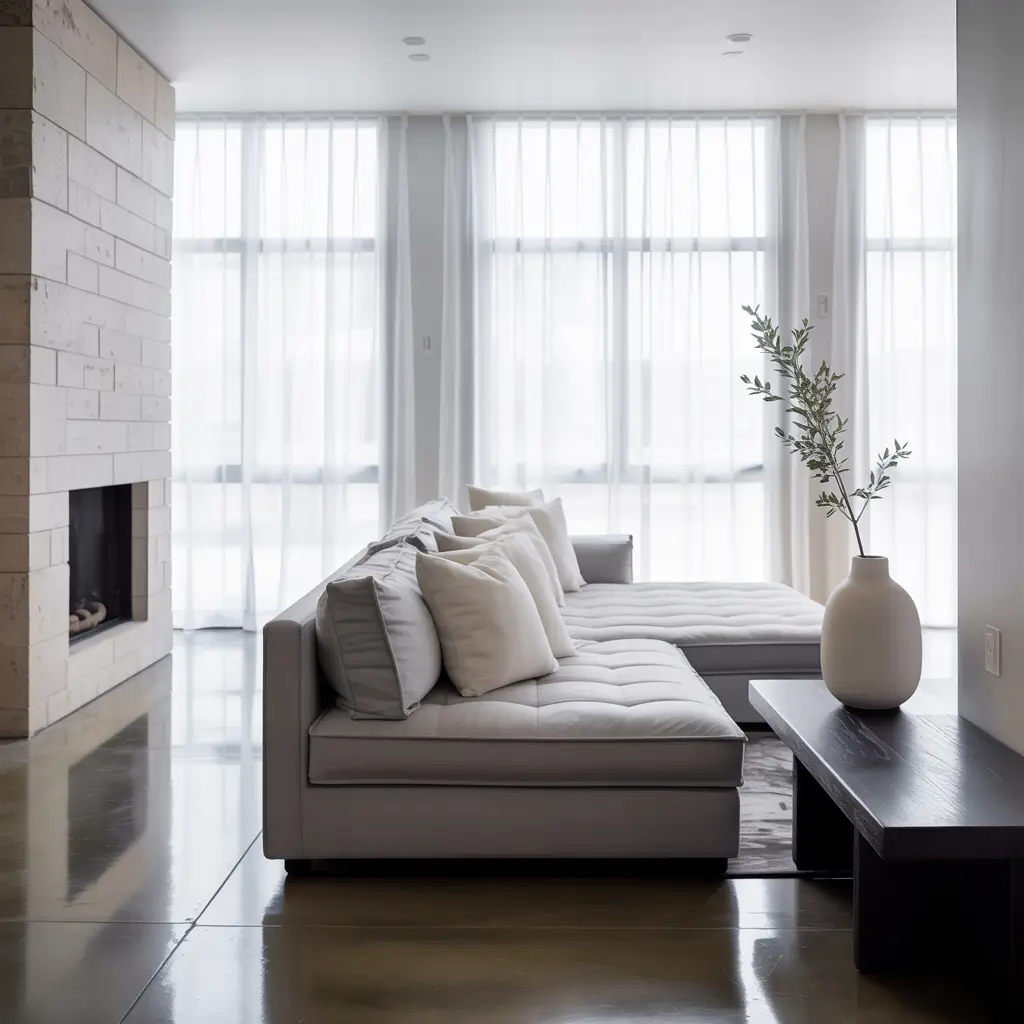
There’s something undeniably sophisticated about a monochromatic color scheme. Whether you go full black-and-white or choose varying shades of gray, this approach creates visual continuity that makes small spaces feel cohesive and larger.
Monochrome doesn’t mean boring—it means disciplined. You’re playing with textures, patterns, and different shades within your chosen color family to create depth and interest.
How to nail monochrome:
- Choose your base color (black, white, gray, navy, even beige)
- Incorporate at least 5 different shades of that color
- Mix textures extensively (smooth, rough, shiny, matte)
- Use patterns within your color scheme
- Add metallic accents for sophistication
- Play with contrast (light furniture against dark walls)
- Include varied materials (wood, metal, fabric, glass)
The magic trick? Texture becomes your best friend when you limit your color palette. A velvet sofa, linen curtains, a wool rug, and glossy ceramic vases all in shades of gray create incredible visual interest without introducing color chaos.
FYI, monochrome can feel stark if you’re not careful. I tried an all-white living room once and felt like I was living inside a cloud—not in a good way. Add warmth through wood tones, varied lighting, and enough texture to keep things interesting.
Also Read: 15 Creative Small Living Room Ideas Apartment Cozy and Modern
Vibrant Accent Wall Focus
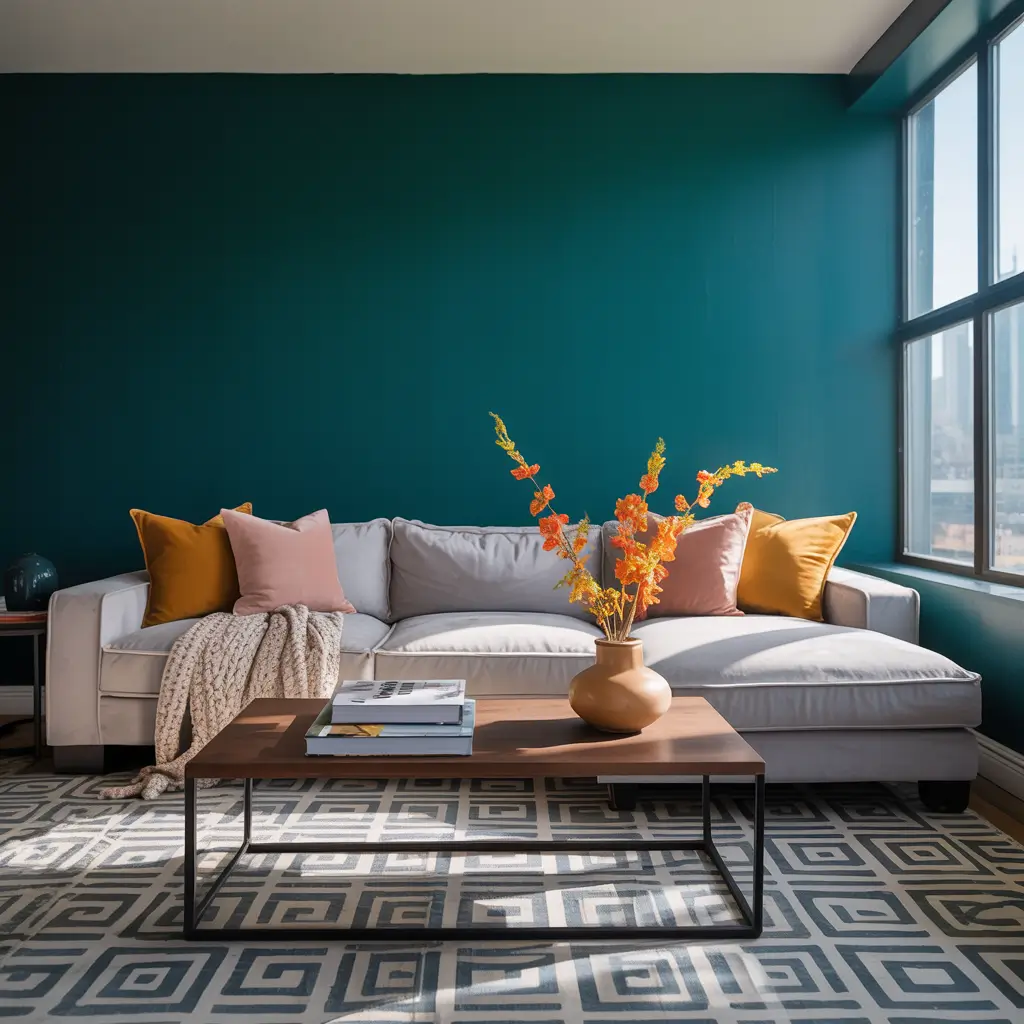
Can’t commit to a full room makeover? An accent wall is your secret weapon for adding personality without overwhelming a small space.
This approach lets you go bold with color or pattern on one wall while keeping the rest neutral. It creates a focal point that draws the eye and adds depth, which actually helps your room feel more dimensional.
Accent wall options:
- Bold paint color (navy, emerald, terracotta, charcoal)
- Removable wallpaper with striking patterns
- Wood paneling or shiplap
- Textured wall treatments
- Gallery wall arrangement
- Floor-to-ceiling shelving painted in contrast color
- Mural or large-scale artwork
The psychology behind this is pretty cool: by giving your eye somewhere specific to land, you create visual interest that makes the space feel intentional rather than “I couldn’t afford to decorate.”
Pick the wall behind your sofa or the one opposite your entrance—basically, the wall you see most often. And please, for the love of design, don’t paint just one random wall for no reason. Your accent wall should make architectural sense.
I painted my accent wall a deep teal once, and it completely transformed my beige-box apartment into something that felt like me. Just make sure your furniture and decor complement rather than compete with it.
Indoor Plant Paradise
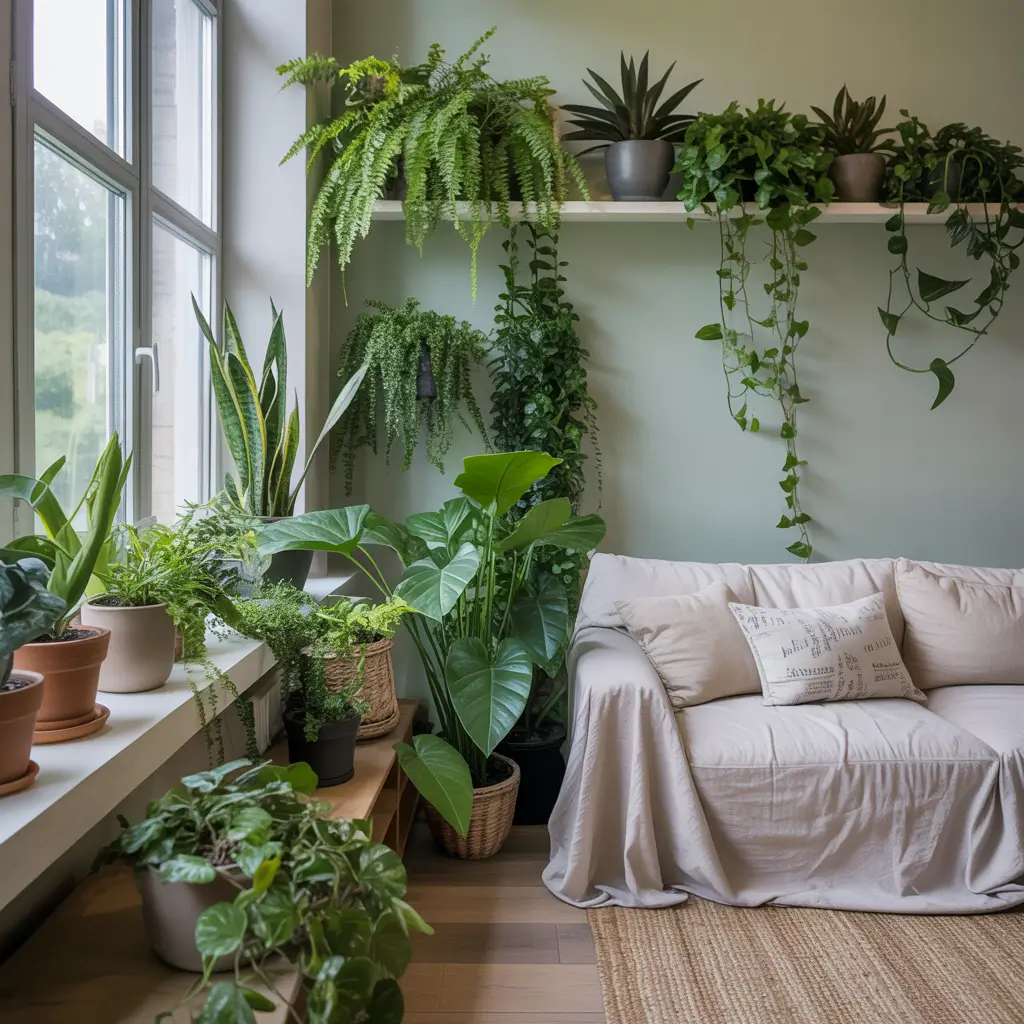
Listen, I’m not saying plants will solve all your small apartment problems, but they’re basically magic for making cramped spaces feel alive and fresh.
Plants add vertical interest, purify your air, and bring nature indoors—all without taking up much floor space if you’re strategic about it. Plus, caring for them gives you something to do besides doomscrolling.
How to plant paradise your living room:
- Tall floor plants in corners (fiddle leaf fig, snake plant)
- Hanging plants from ceiling hooks
- Wall-mounted planters
- Plant stands at varying heights
- Trailing plants on high shelves
- Window sill herb garden
- Large statement plant as focal point
Here’s the thing: not all plants are small-space friendly. Skip the ones that spread aggressively. Instead, go vertical with your greenery. Hanging pothos, wall-mounted staghorn ferns, and tall, slender plants like snake plants give you maximum impact with minimal footprint.
Real talk? I’ve killed approximately 847 plants (okay, maybe not that many, but close). Start with low-maintenance options like pothos, snake plants, or ZZ plants. They forgive your neglect and still look gorgeous.
Also, consider the light situation honestly. Don’t buy sun-loving plants if your living room gets zero natural light. Trust me on this one—I learned that lesson the expensive way :/
Compact Modular Furniture Setup
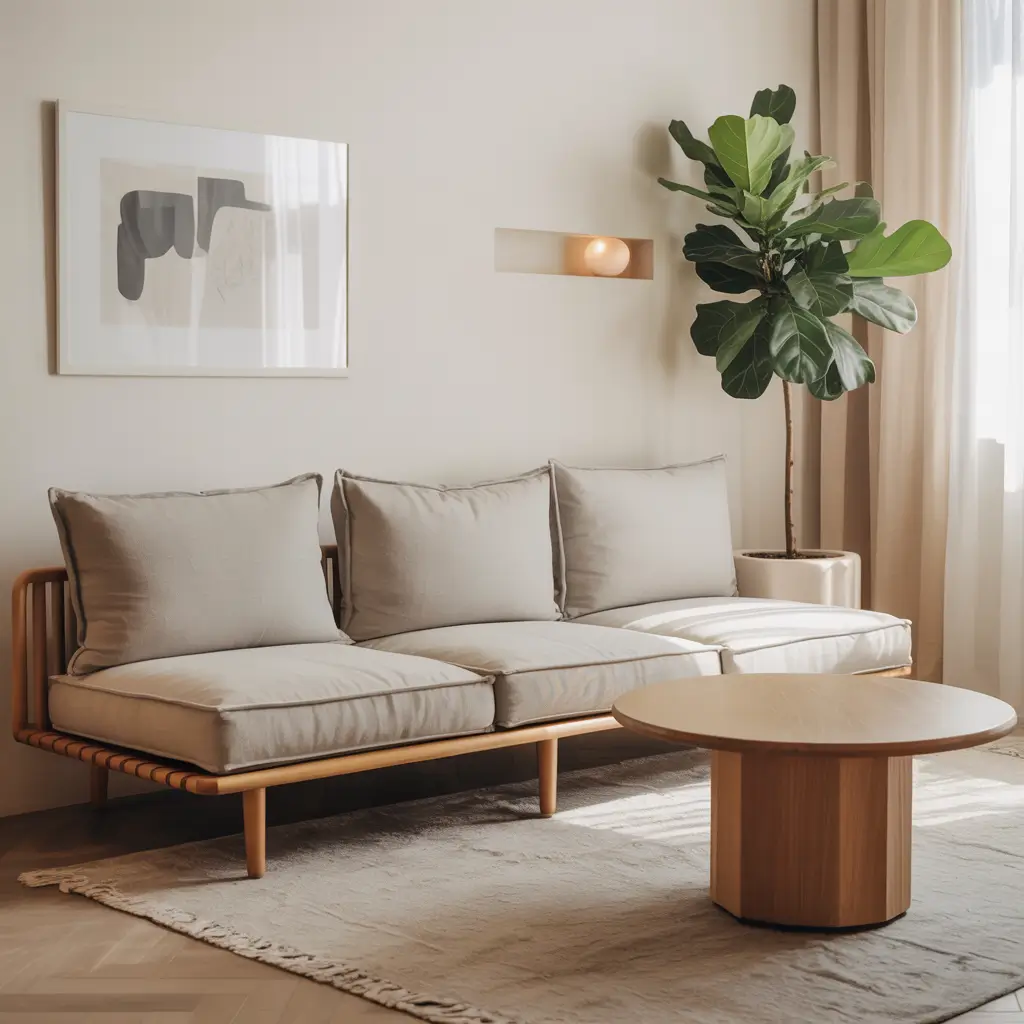
Modular furniture is like LEGO for adults. You can reconfigure pieces based on your needs, which is absolutely perfect for small apartments where flexibility matters.
This approach means investing in furniture that adapts rather than furniture that locks you into one layout forever. Modular sofas, stackable shelving, reconfigurable storage systems—they all give you options.
Modular furniture worth considering:
- Sectional sofas with movable pieces
- Cube storage systems you can rearrange
- Modular shelving units
- Stackable seating
- Expandable tables
- Mix-and-match side tables
- Reconfigurable room dividers
The brilliant part? When you move (and in an apartment, you will), your furniture adapts to your new space. That sectional you arranged in an L-shape? Maybe it becomes a straight sofa in your next place.
I’ve moved five times in seven years, and my modular shelving system has configured itself differently in each apartment. It’s basically the furniture equivalent of a chameleon, and I love it for that.
Quality matters here, though. Cheap modular furniture falls apart when you reconfigure it repeatedly. Spend a bit more upfront for pieces that’ll actually last through multiple moves and arrangements.
Vintage Retro Charm
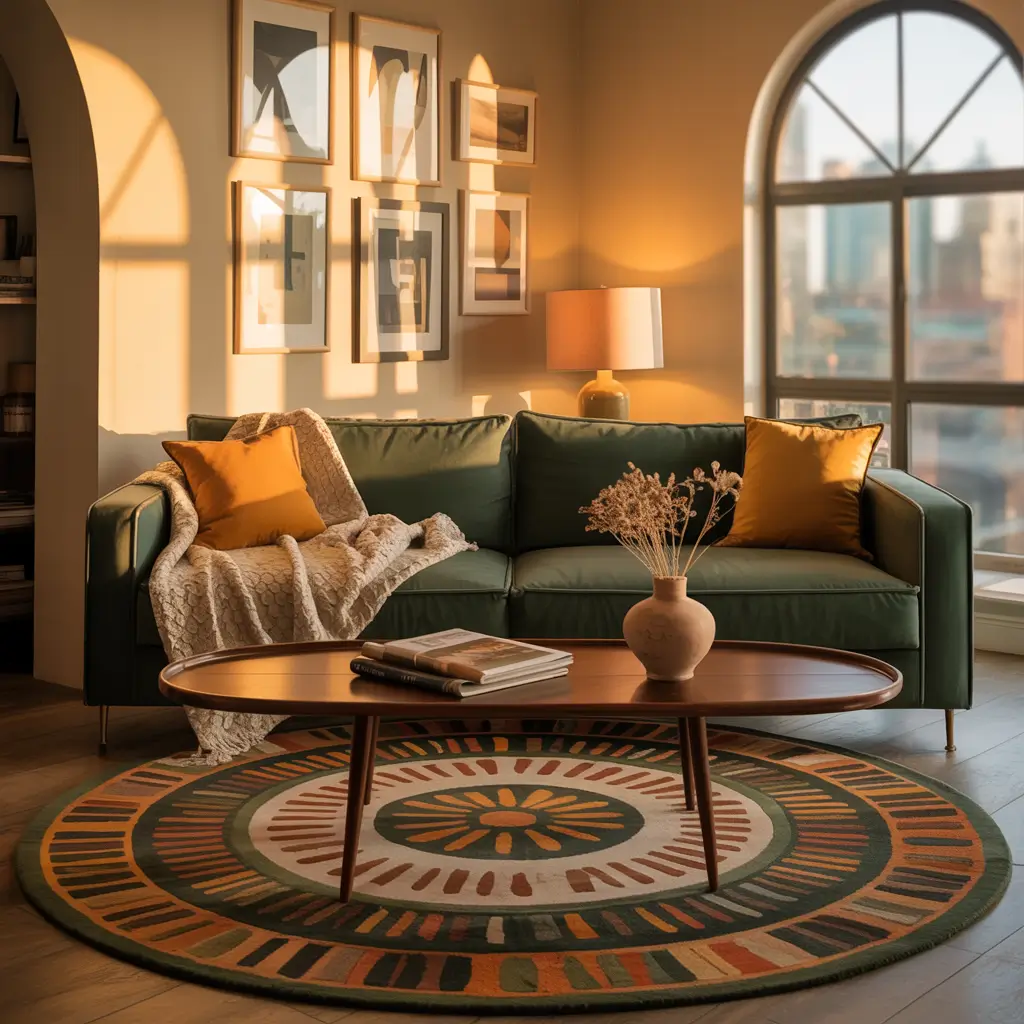
There’s something irresistibly charming about mid-century modern and retro styles. Vintage pieces often have better craftsmanship than modern fast furniture, plus they add instant character to your space.
This style typically pulls from 1950s-1970s design—think tapered legs, bold geometric patterns, warm wood tones, and colors like mustard yellow, avocado green, and burnt orange.
Vintage vibes checklist:
- Mid-century modern sofa with tapered wooden legs
- Vintage credenza or sideboard for storage
- Geometric patterns in rugs and textiles
- Retro color palette (mustard, teal, orange)
- Starburst clock or mirror
- Vintage lighting fixtures
- Record player and vinyl collection display
The beauty of going vintage in a small space? Those mid-century pieces were actually designed for smaller post-war homes, so they’re often perfectly scaled for apartments.
Hunt thrift stores, estate sales, and Facebook Marketplace for authentic pieces. I found my favorite coffee table at a garage sale for $30, and it’s real wood from the 1960s. Your modern IKEA stuff will never have that kind of story.
Warning: vintage furniture hunting becomes addictive. You’ll start recognizing quality craftsmanship and spending your weekends at estate sales. I’m not sorry for what you’re about to become.
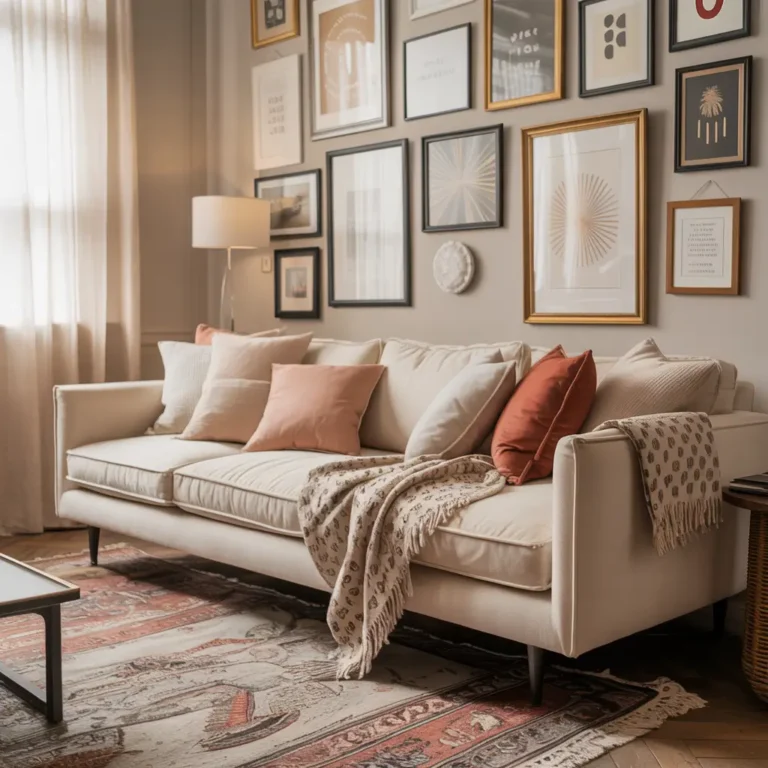
Soft Pastel Serenity
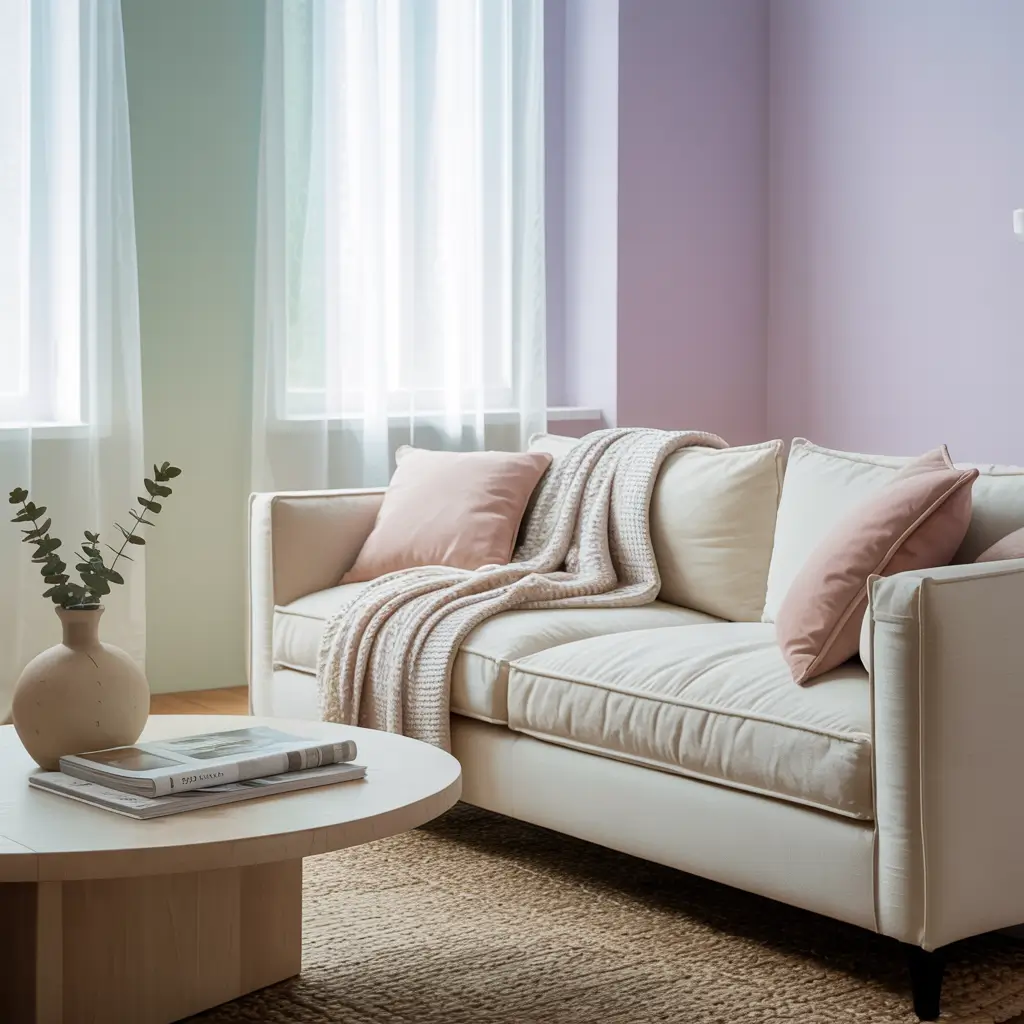
If your small living room feels chaotic and overwhelming, soft pastels create a calming, serene environment that makes limited space feel like a peaceful retreat rather than a cramped box.
We’re talking blush pink, powder blue, sage green, lavender, and soft peach—colors that feel gentle and airy rather than loud and demanding.
Pastel palette essentials:
- Walls in soft, muted pastel tones
- White or cream base furniture
- Pastel accent pillows and throws
- Light wood or white-washed furniture
- Soft, romantic lighting
- Delicate patterns and textures
- Metallic accents in rose gold or brass
The psychological effect is real: soft colors recede visually, making walls feel farther away and your room feel larger. Bold, dark colors do the opposite—they advance and can make spaces feel smaller.
I transformed my high-stress living situation by repainting from bright white to a soft sage green, and honestly, my whole mood shifted. Colors affect us more than we realize.
The challenge with pastels in small spaces? They can feel too sweet or juvenile if you’re not careful. Balance soft colors with sophisticated elements—quality furniture, interesting textures, and grown-up accessories keep things elegant rather than nursery-like.
Also Read: 15 Cozy Apartment Living Room Inspiration Tips for Style
Space-Saving Storage Solutions
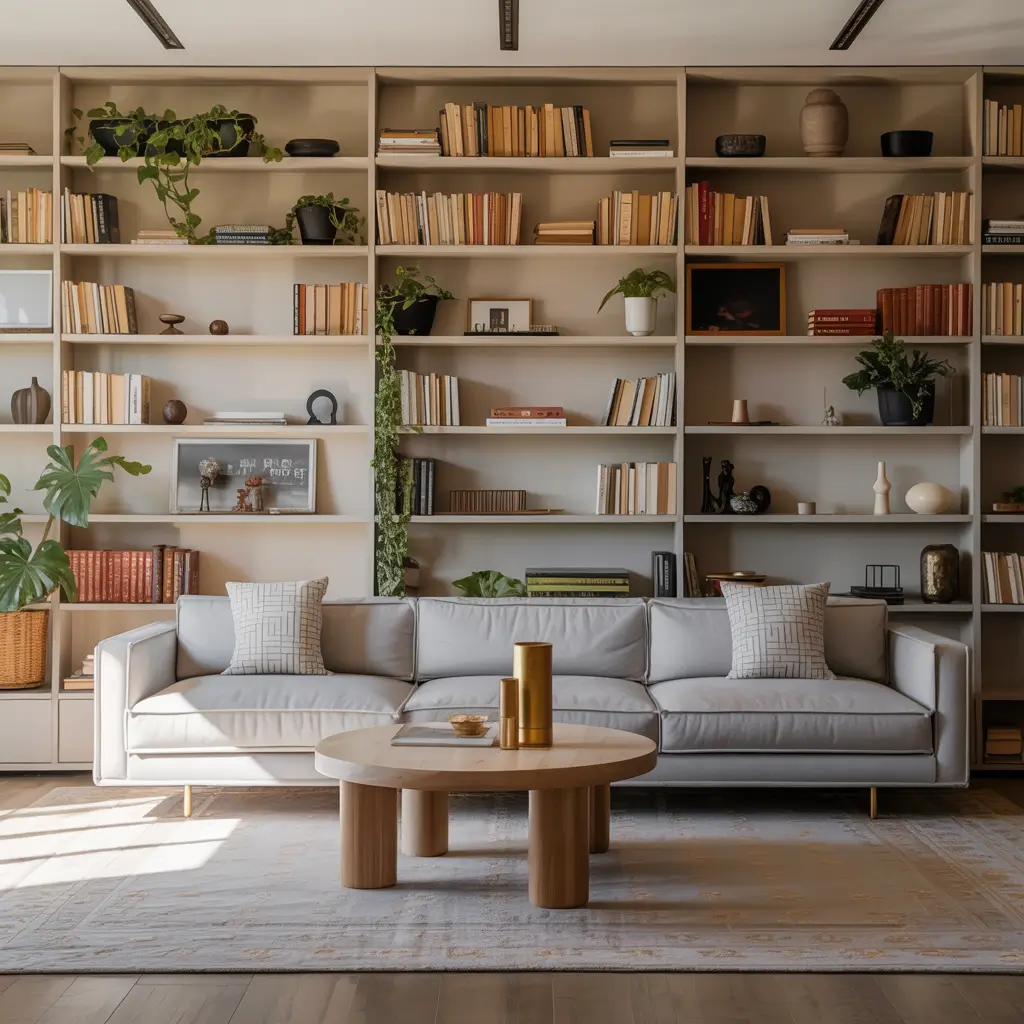
Let’s talk about the elephant in the room—or rather, all your stuff that doesn’t fit in the room. Clever storage is non-negotiable in small apartment living rooms.
You need places to stash your things that don’t make your space look cluttered or chaotic. The goal is hidden storage that keeps your living room looking intentional rather than desperate.
Storage solutions that actually work:
- Ottoman with hidden storage inside
- Sofa with storage underneath
- Floor-to-ceiling shelving maximizing vertical space
- Behind-the-door organizers
- Nested baskets for corralling small items
- TV stand with closed storage cabinets
- Floating shelves to avoid floor space use
- Storage bench along walls
Here’s a truth bomb: you probably have too much stuff for your space. I know, I know—but hear me out. Before you buy more storage solutions, ruthlessly edit your belongings. Storage should organize what you need and love, not hide things you should honestly donate.
I spent two years trying to store everything before I finally admitted I needed to downsize my book collection. Sometimes the problem isn’t storage—it’s acknowledging your space’s actual capacity.
That said, when you do store things, make it attractive. Matching baskets, coordinated boxes, and cohesive shelving make storage look intentional rather than desperate.
Urban Contemporary Vibes
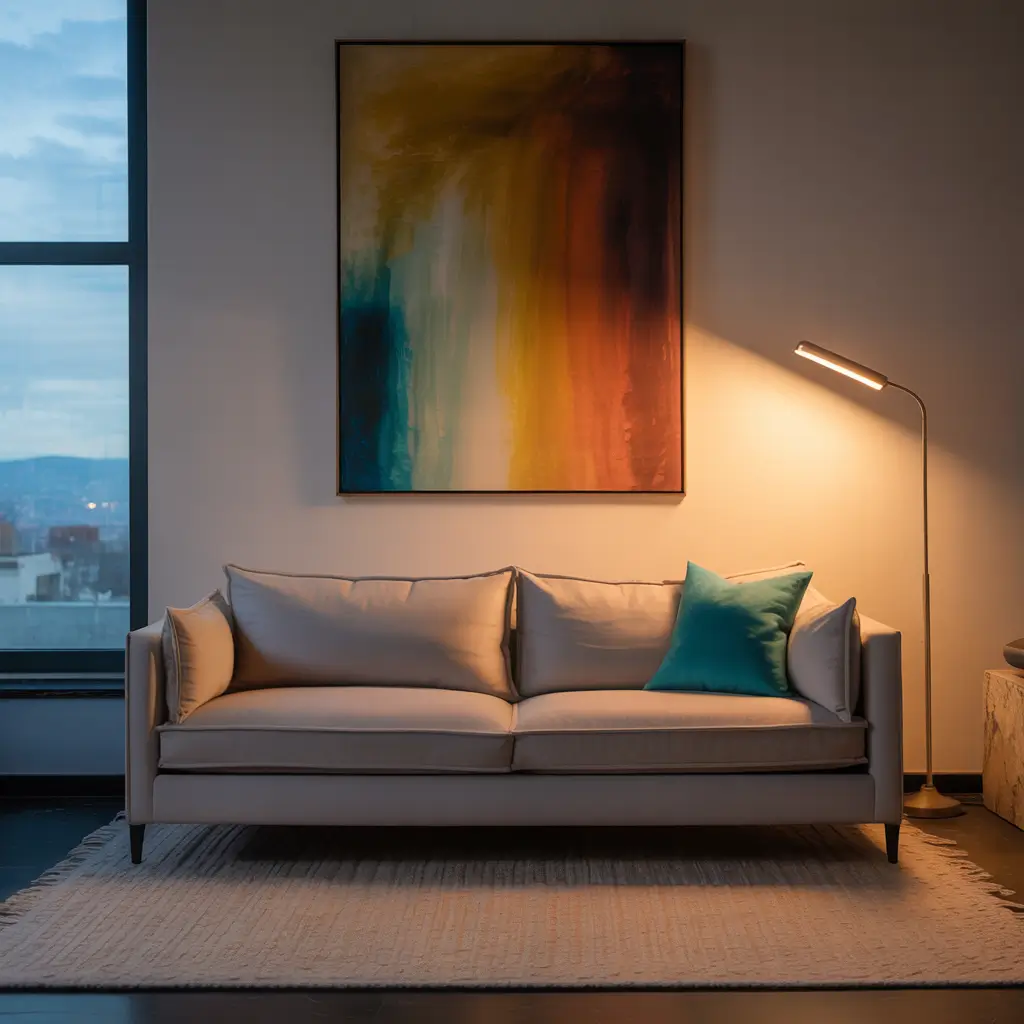
Urban contemporary is like the sophisticated city-dweller aesthetic—sleek, current, and effortlessly cool without trying too hard.
This style mixes modern elements with comfortable, livable pieces. You get clean lines and neutral bases, but with warmer, more welcoming touches than stark modern design.
Urban contemporary elements:
- Neutral color palette with bold accent colors
- Mix of materials (metal, glass, wood, stone)
- Clean-lined furniture with comfortable proportions
- Abstract or modern artwork
- Sleek lighting fixtures
- Minimal but impactful accessories
- Open, airy arrangements
The difference between contemporary and modern? Contemporary refers to what’s current now, while modern technically refers to a specific historical design period. Urban contemporary specifically embraces city-living practicality with style.
This works beautifully in apartments because it acknowledges the reality of multi-purpose, efficient living while maintaining a sophisticated aesthetic. Your living room can handle being a workspace, entertainment zone, and relaxation spot without looking confused about its identity.
I appreciate urban contemporary for its flexibility. You can easily update pieces without completely overhauling your space—swap your accent colors, change your artwork, and suddenly your room feels refreshed.
Coastal Light & Airy Look
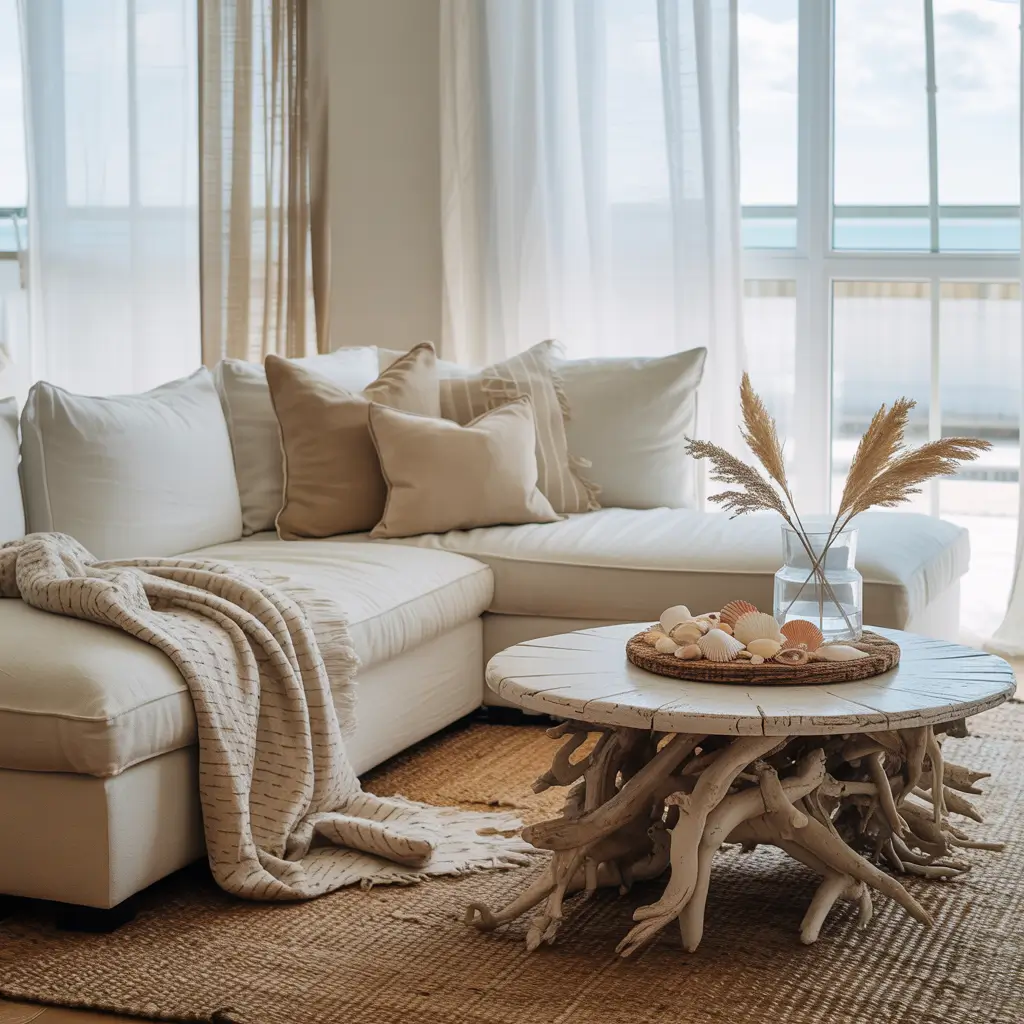
Who says you need ocean views to embrace coastal style? Light, breezy, beach-inspired design works wonderfully in small apartments by maximizing brightness and creating flow.
Coastal style is all about those relaxed, vacation vibes—think whites, soft blues, natural textures, and casual comfort.
Coastal essentials:
- White or light-painted furniture
- Blue and white color scheme with sandy neutrals
- Natural fiber rugs (jute, sisal)
- Light, flowing curtains
- Weathered wood accents
- Nautical touches (used sparingly—no boat wheels, please)
- Plenty of natural light
- Casual, comfortable textiles
The magic here? Light colors and natural materials reflect light, making small spaces feel significantly larger and more open. Dark, heavy furniture absorbs light and makes rooms feel cramped.
I’m gonna be honest: coastal style can quickly become theme-park tacky if you go overboard with anchors, ropes, and seashells. Keep it subtle and sophisticated. Think “expensive beach house” not “tourist trap gift shop.”
Use beach-inspired colors and natural materials without hitting people over the head with literal beach items. A beautiful piece of driftwood? Elegant. Seventeen decorative starfish? Please stop.
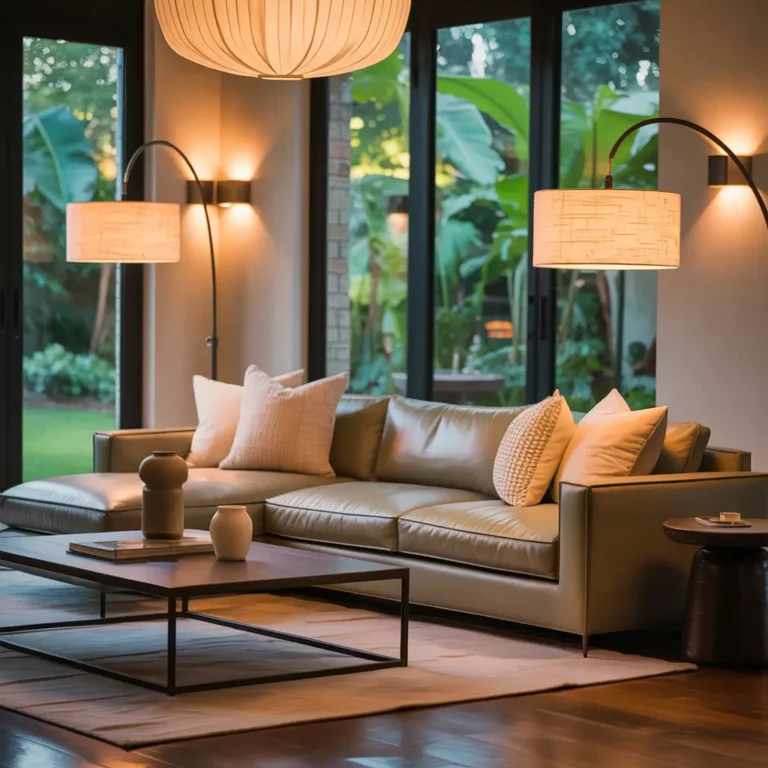
Smart Lighting & Ambiance Design
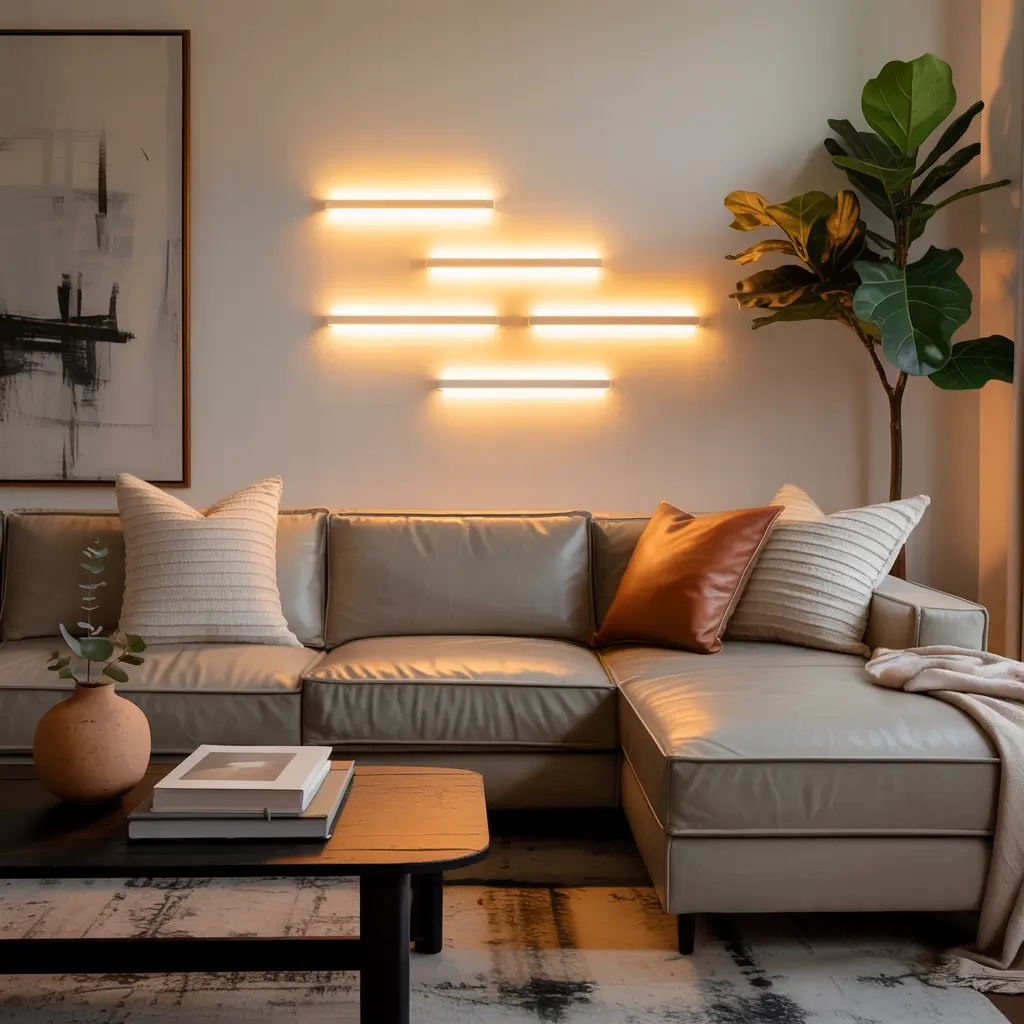
Here’s something most people overlook: lighting can completely transform how large your space feels and dramatically affect your mood.
Small apartments often suffer from inadequate or poorly placed lighting, which makes them feel even smaller and less welcoming than they actually are.
Lighting layers you need:
- Ambient lighting (overhead or main light source)
- Task lighting (reading lamps, work lights)
- Accent lighting (highlighting artwork or features)
- Dimmable options for mood control
- Multiple light sources at different heights
- Warm-toned bulbs for coziness
- Strategic placement to eliminate dark corners
The pro move? Avoid relying solely on harsh overhead lighting. Layer multiple light sources throughout your room—floor lamps, table lamps, wall sconces, even LED strips behind your TV or under shelves.
Dark corners make rooms feel smaller and unwelcoming. I added a slim floor lamp to a dead corner in my living room, and it genuinely made the entire space feel more open and intentional.
Smart bulbs changed my life, IMO. Being able to adjust brightness and even color temperature from my phone means I can shift the entire mood of my living room without moving a single piece of furniture. Dinner party? Warm and dimmed. Working from home? Bright and energizing.
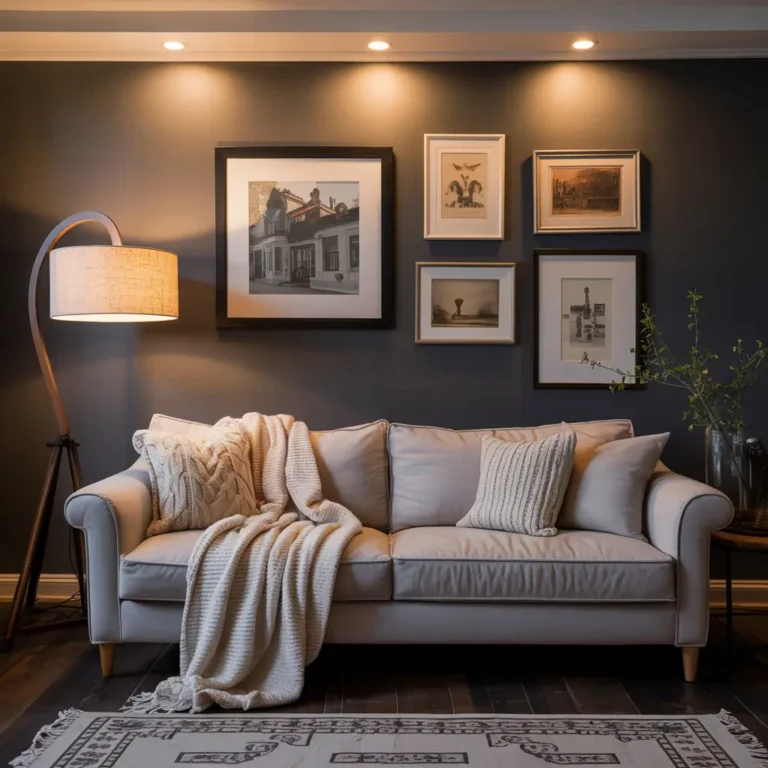
Artistic Gallery Wall Showcase
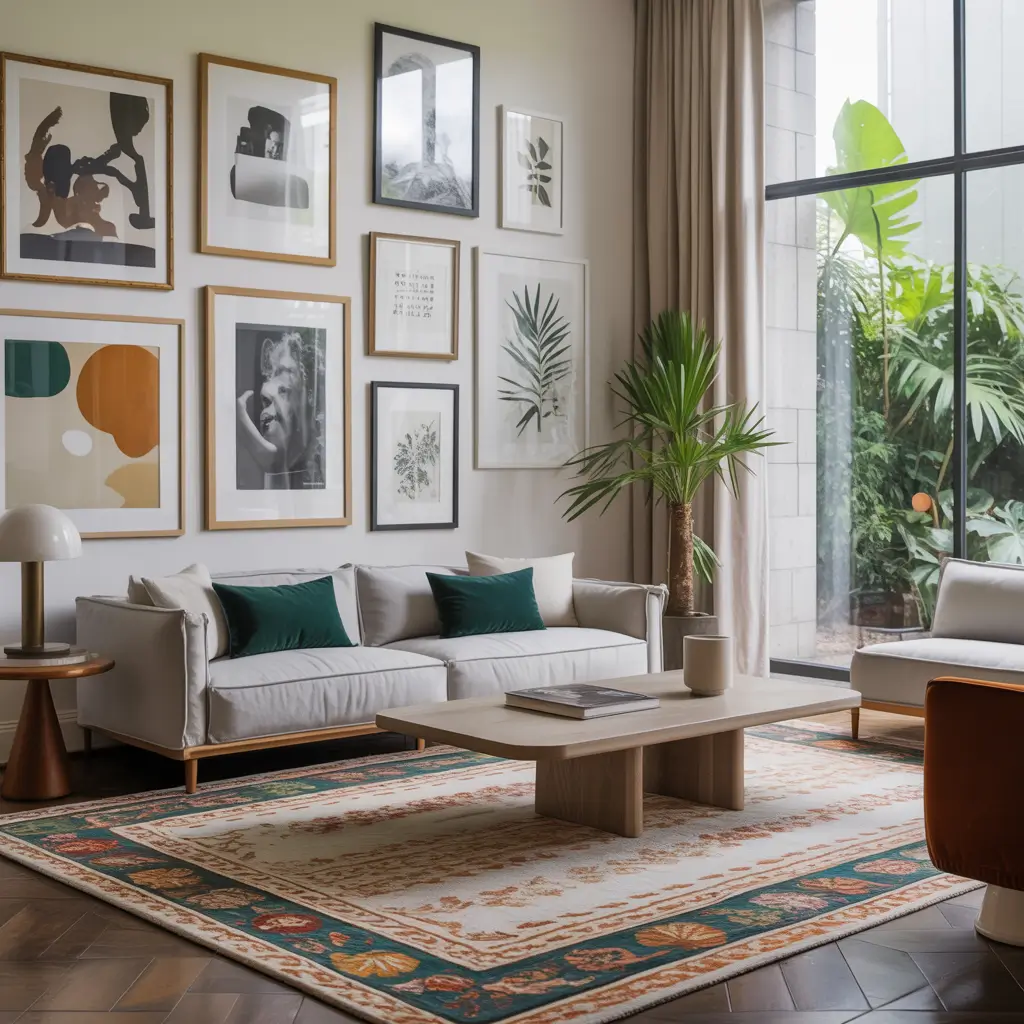
Can’t afford large, expensive furniture? An artistic gallery wall creates massive visual impact for relatively little money and zero floor space.
This is your opportunity to showcase personality, tell your story, and create a genuine focal point that draws eyes upward—which, by the way, makes ceilings feel higher and rooms feel larger.
Gallery wall strategies:
- Mix frame sizes and orientations
- Maintain consistent frame colors (usually black, white, or natural wood)
- Include varied art types (prints, photos, objects, mirrors)
- Plan layout on floor first before hanging
- Keep consistent spacing between frames
- Extend from 57 inches (eye level) upward
- Use existing furniture as anchor point
The spacing matters more than you’d think. Too far apart looks disconnected; too close together looks cluttered. Aim for 2-3 inches between frames as a general rule.
I spent an embarrassing amount of time arranging and rearranging my gallery wall on the floor before committing to hammer and nails. Best decision ever—I would’ve made some truly questionable hanging choices otherwise.
You don’t need expensive art. Print digital downloads from Etsy, frame beautiful magazine pages, showcase your own photography, or hit up thrift stores for interesting vintage pieces. My favorite piece in my gallery wall cost me $5 at a garage sale.
Pro tip: include at least one mirror in your gallery wall. It reflects light and makes your space feel larger while adding variety to your wall composition.
Wrapping It Up
So there you have it—15 completely different approaches to making your small apartment living room actually work for you instead of against you.
The real secret? Pick the style that genuinely resonates with you, not just what’s trending on Instagram. You’re the one living there, and your space should feel like home, not like a staged photograph you’re afraid to touch.
Mix and match ideas if you want. Who says you can’t combine Scandinavian minimalism with a few boho plants and smart lighting? Your apartment, your rules.
Small spaces force you to be intentional, and honestly, that’s a gift. Every piece has to matter. Every color choice makes an impact. You can’t just throw money at a space to make it work—you actually have to think about it.
Start with one idea that excites you most, and build from there. You don’t need to transform your entire living room this weekend. Take your time, hunt for pieces you genuinely love, and create a space that feels authentically yours.
Now go forth and make your small living room absolutely brilliant. You’ve got this!