15 Modern Wardrobe Interior Design Hacks for Small Rooms

Look, I get it. You’re staring at your tiny bedroom, wondering how on earth you’re supposed to fit all your clothes without turning the place into a chaotic mess that resembles a tornado hit a clothing store. Trust me, I’ve been there – cramming sweaters into drawers that barely close and playing Tetris with shoe boxes under the bed.
But here’s the thing: small rooms don’t have to mean cramped wardrobes. After years of wrestling with storage solutions (and maybe crying a little over my overflowing closet), I’ve discovered some game-changing hacks that’ll transform your wardrobe situation from disaster zone to organized paradise.
Ready to make your small space work harder than it ever has? Let’s jump into these 15 wardrobe interior design hacks that’ll revolutionize how you think about storage.
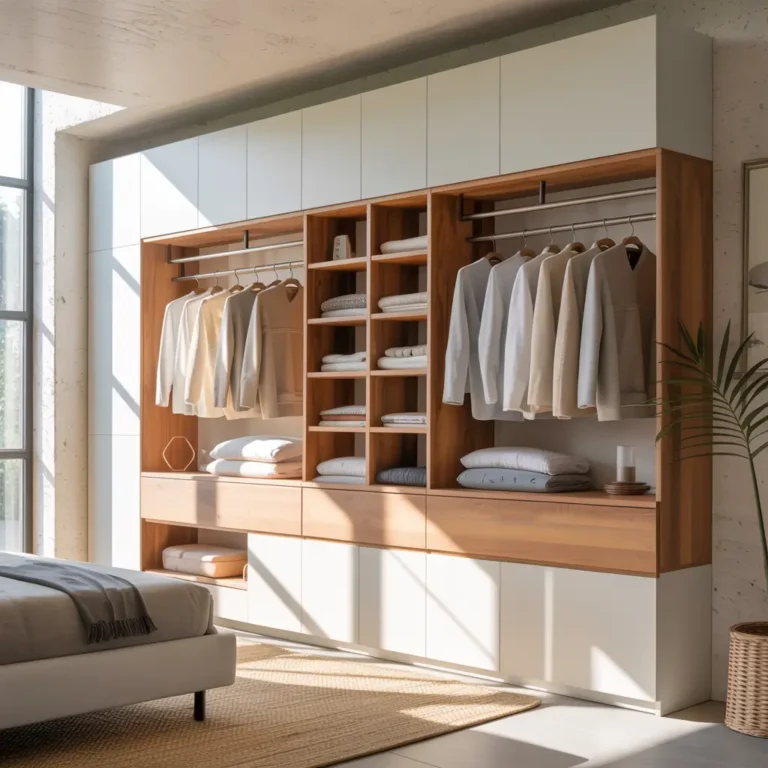
Space-Saving Modular Wardrobe Interior
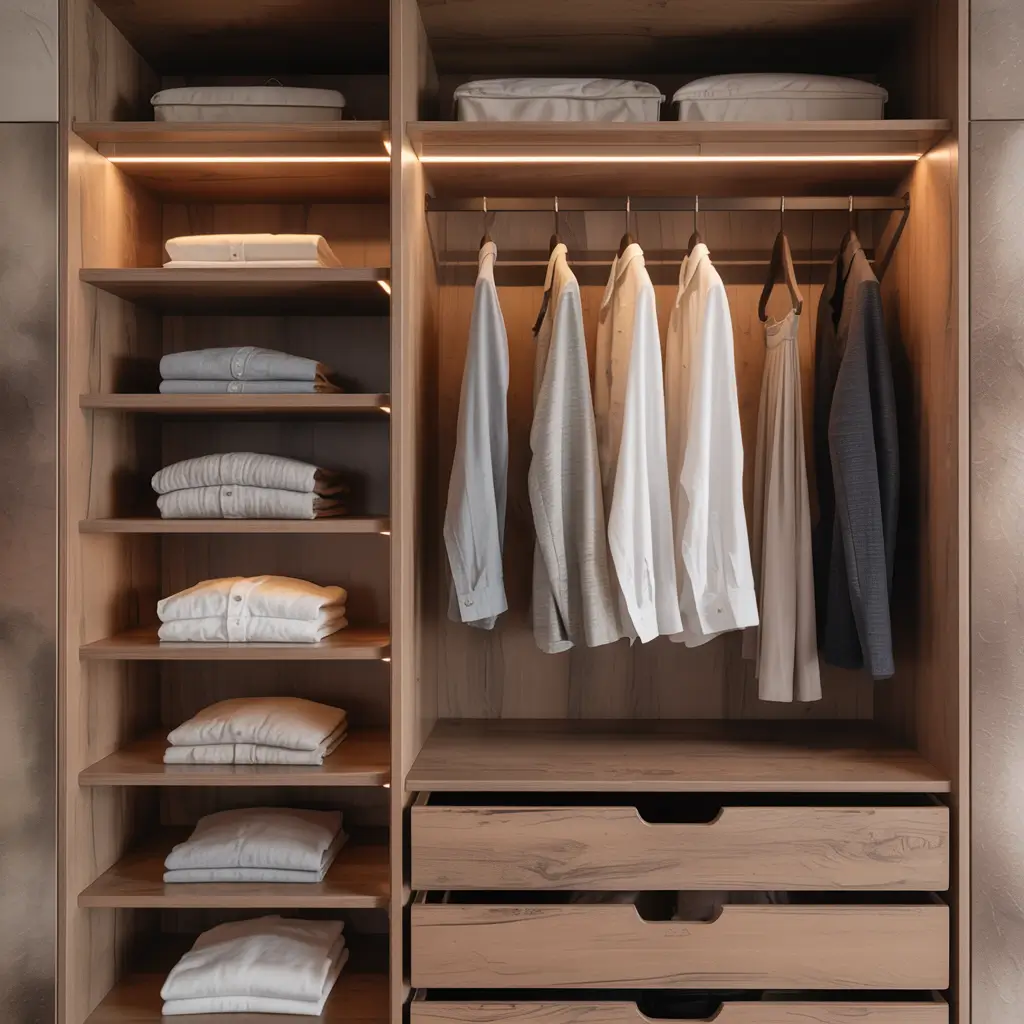
Ever wished you could rearrange your wardrobe like building blocks? Modular wardrobe systems are your new best friend. I discovered this genius solution when I moved into my shoebox apartment and realized my old wardrobe setup wasn’t going to cut it.
Modular wardrobes work with interlocking components that you can mix, match, and reconfigure whenever your needs change. Think of them as adult LEGOs for your clothes. The beauty lies in their adaptability – you can start with a basic setup and add shelves, drawers, or hanging rods as needed.
Key benefits of modular systems:
• Customizable to your exact space dimensions
• Easy to expand or reconfigure
• Perfect for renters who need portable solutions
• Cost-effective since you buy pieces gradually
I started with just two modules and gradually added three more over six months. The flexibility blew my mind – when I got a promotion and upgraded my work wardrobe, I simply added another hanging section. No construction, no headaches, just practical storage that grows with you.
The trick is choosing a system with standardized measurements. This ensures all pieces fit together seamlessly, whether you’re buying from the same manufacturer or mixing brands that follow industry standards.
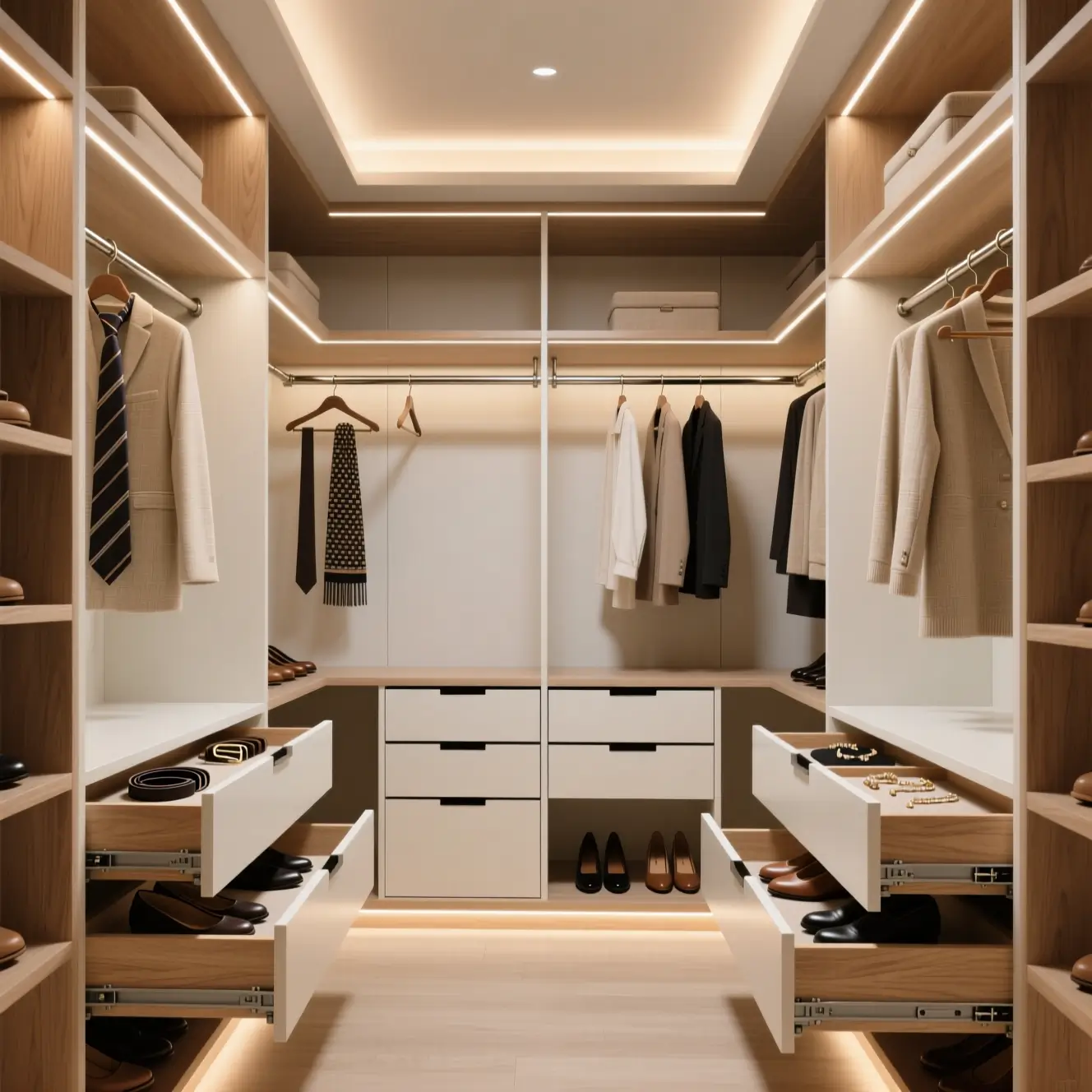
Luxury Walk-In Wardrobe Interior Layout
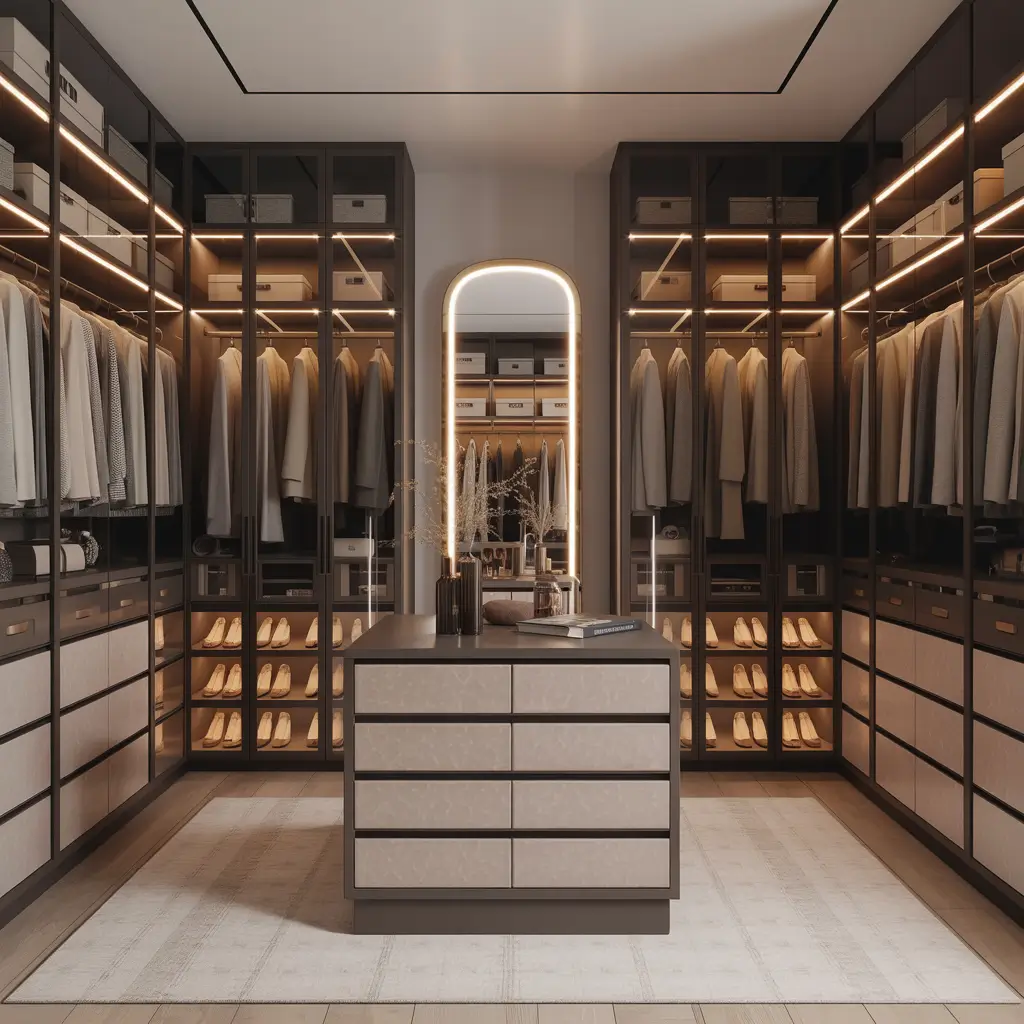
Okay, I know what you’re thinking – “luxury walk-in wardrobe in a small room?” Hear me out! You can absolutely create a boutique-style dressing experience even in compact spaces.
The secret is maximizing every inch vertically and creating zones for different clothing types. I transformed my spare room’s corner into a mini walk-in by installing floor-to-ceiling rails and strategic lighting. The result? Pure magic.
Essential elements for a luxury feel:
• Velvet or wooden hangers (no more wire coat hanger chaos)
• Designated areas for different clothing categories
• Full-length mirror positioned to reflect light
• Soft, warm lighting instead of harsh overhead bulbs
What makes it feel truly luxurious isn’t the size – it’s the attention to detail. I added a small cushioned stool and a decorative tray for jewelry. These tiny touches create an upscale boutique atmosphere that makes getting dressed feel like a treat rather than a chore.
Position your most frequently worn items at eye level and dedicate the highest shelves to seasonal or special occasion pieces. This creates visual balance while keeping your daily essentials easily accessible.
Smart Sliding Door Wardrobe Interior
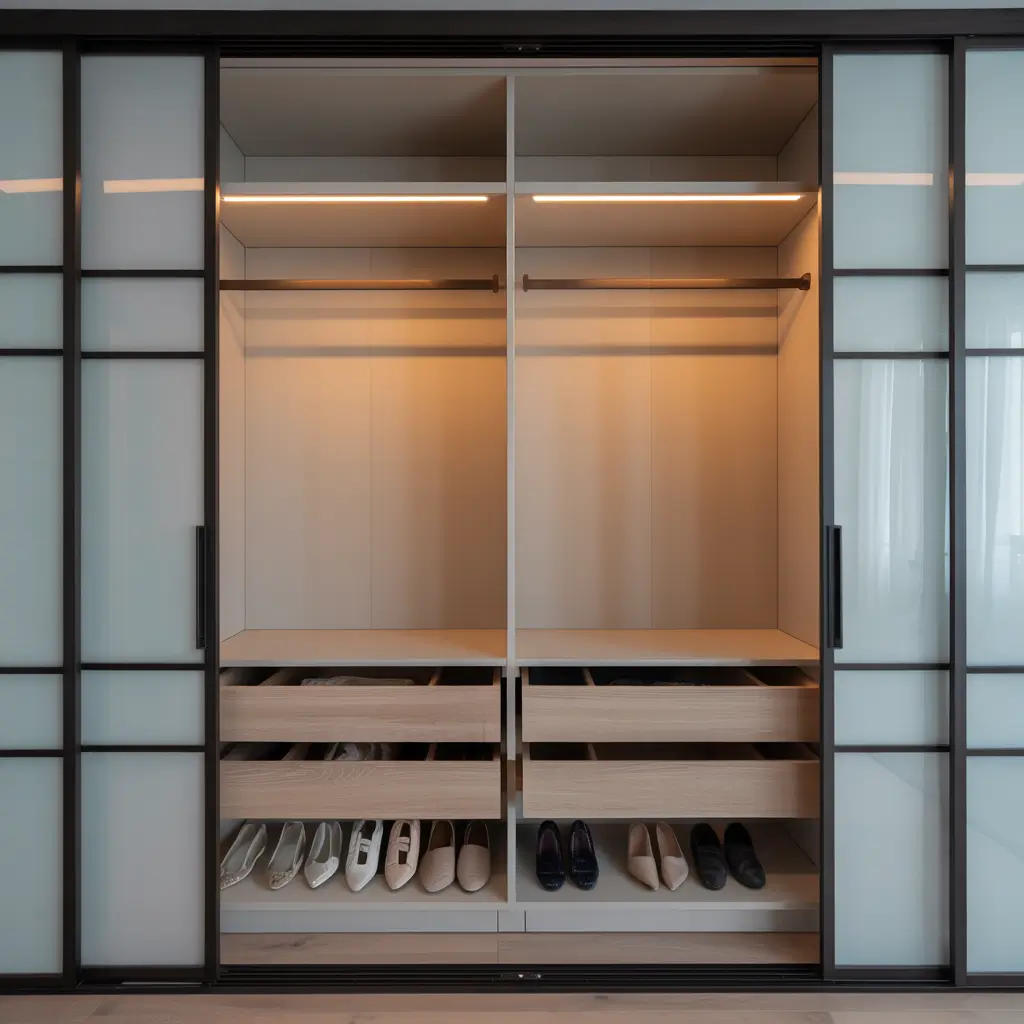
Sliding doors are space-saving heroes, but let’s talk about what happens behind those doors. Traditional hinged doors eat up floor space when opened, but sliding doors give you that precious real estate back.
I installed a smart sliding system with internal organization that makes me feel like I’m living in the future. The doors slide smoothly on tracks, and inside, I’ve created distinct zones using adjustable shelving and hanging systems.
Smart features to consider:
• Soft-close mechanisms that prevent slamming
• Internal LED strips that activate when doors open
• Mirror panels to double your room’s apparent size
• Magnetic closure systems for quiet operation
The game-changer was adding vertical dividers inside the wardrobe. These create separate sections for different family members or clothing types without requiring multiple wardrobes. My partner and I now share one wardrobe seamlessly – his side, my side, and a shared middle section for linens.
Pro tip: Choose doors with different finishes on each side. I have wood grain facing the room and white melamine on the interior – it keeps the inside bright while maintaining the room’s aesthetic.
Minimalist Open Shelf Wardrobe Interior
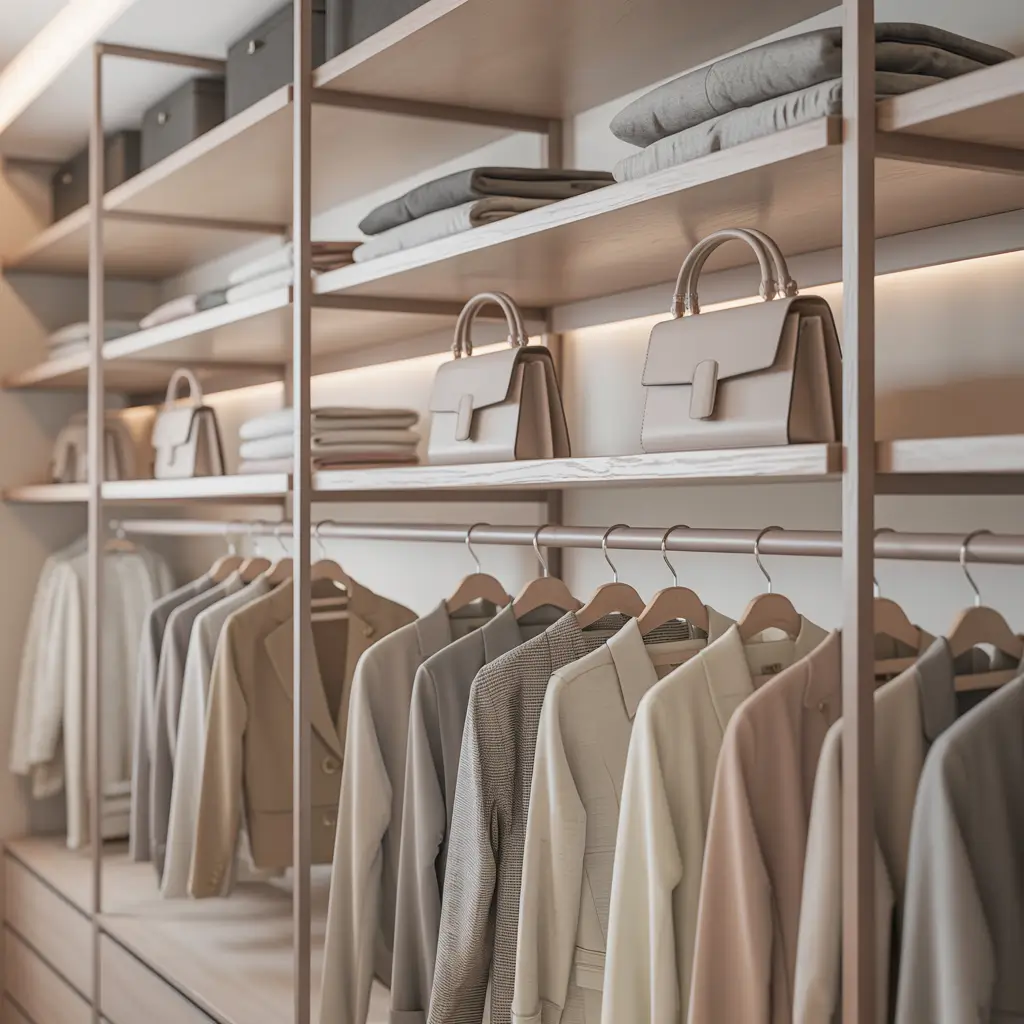
Sometimes the most effective storage solutions are the simplest ones. Open shelving eliminates visual barriers and makes everything instantly accessible. When I embraced minimalist principles, I removed all doors from my wardrobe and created an open system that’s both functional and beautiful.
The key to successful open shelving lies in disciplined organization and aesthetic arrangement. Everything becomes part of your room’s decor, so you need to keep things tidy and visually pleasing.
Organization strategies for open systems:
• Group similar items by color for visual cohesion
• Use uniform storage boxes for smaller items
• Fold clothes using the Marie Kondo method for neat stacks
• Display statement pieces as decorative elements
I use matching wooden boxes for underwear and accessories, creating clean lines throughout the shelving. Seasonal items go in labeled containers on higher shelves, while daily essentials stay at eye level.
The unexpected bonus? I spend less money on clothes because I can see everything I own. No more buying duplicate items because I forgot I already had them buried in the back of a traditional wardrobe.
Small Bedroom Compact Wardrobe Interior
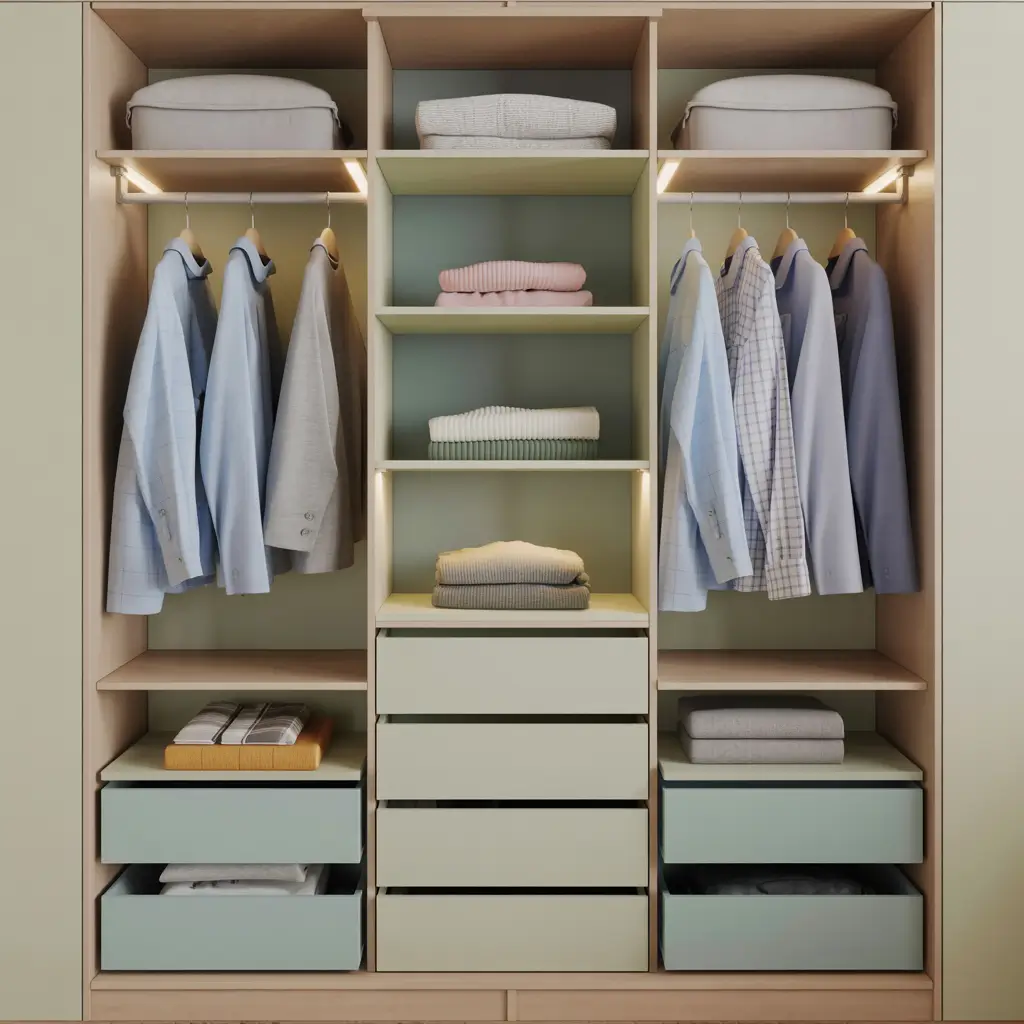
When your bedroom barely fits a bed, every square inch counts. Compact wardrobes require strategic thinking and creative solutions to maximize storage without overwhelming the space.
My tiny bedroom transformation started with measuring everything – and I mean everything. The space between my bed and wall, the height from floor to ceiling, even the depth I could spare without making the room feel claustrophobic.
Space optimization techniques:
• Double-height hanging for shirts and pants
• Narrow pull-out drawers that utilize minimal depth
• Over-door organizers for shoes and accessories
• Under-shelf hanging rods for additional hanging space
The breakthrough came when I realized I could stack different storage solutions vertically. Bottom section for shoes, middle for folded clothes, top for hanging items, and the very top for seasonal storage. This vertical approach tripled my storage capacity.
I also invested in slimline hangers that take up 50% less space than traditional ones. This simple switch gave me room for significantly more hanging clothes without expanding the wardrobe’s footprint.
Also Read: 15 Creative Wardrobe Laminate Design Budget Friendly Ideas
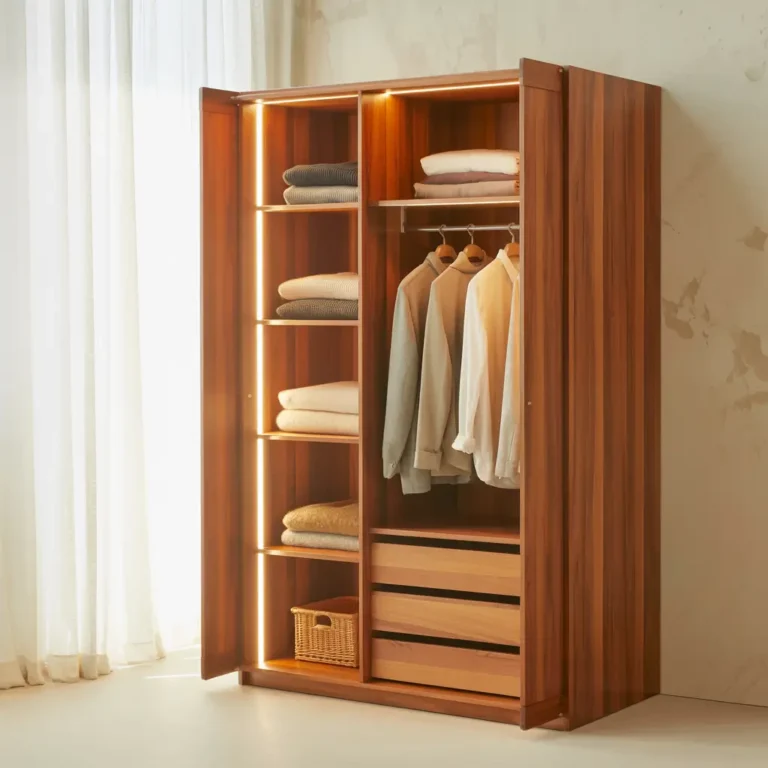
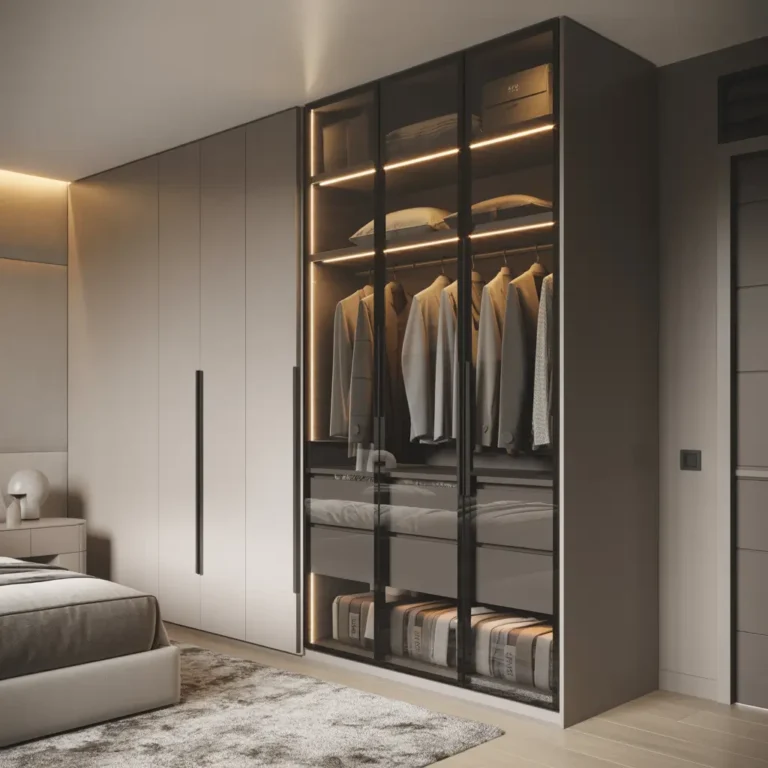
Wardrobe Interior with LED Lighting
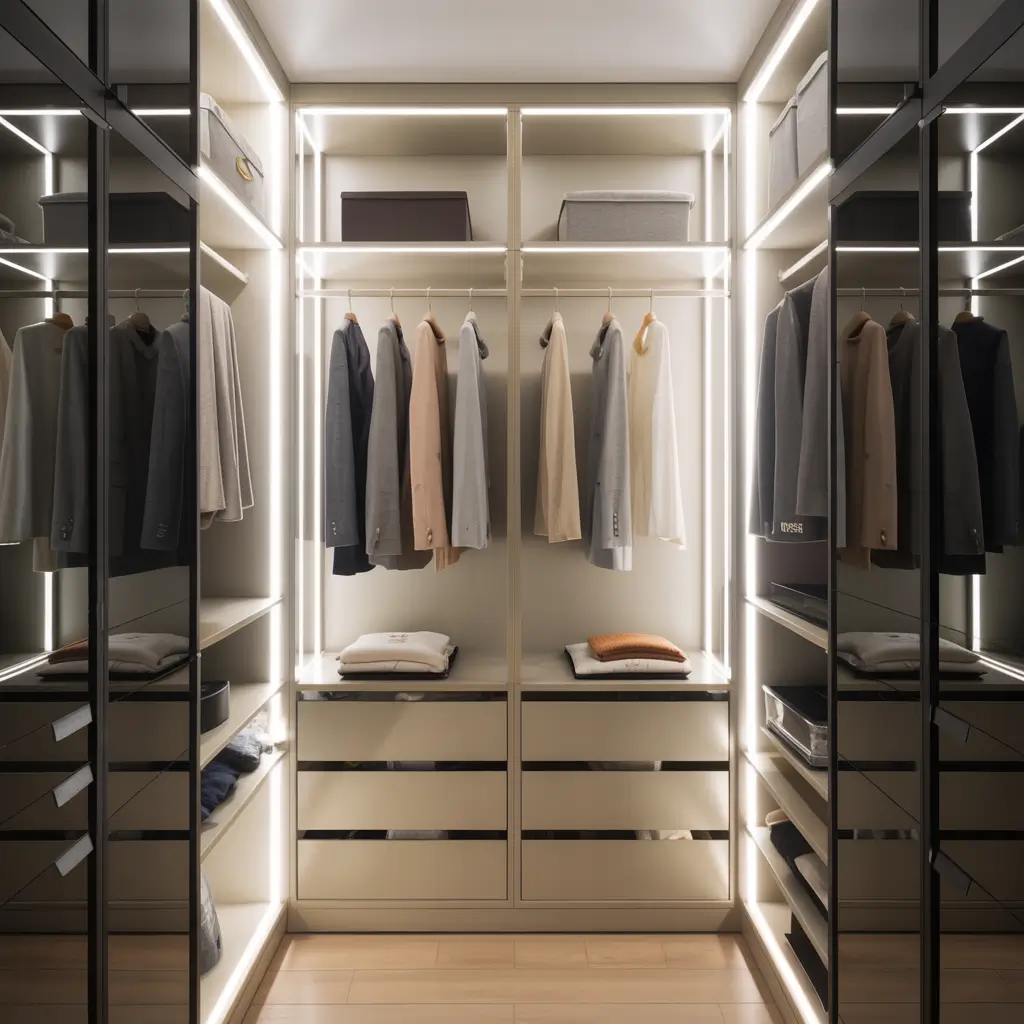
Lighting transforms everything, and wardrobes are no exception. Proper illumination turns getting dressed from a fumbling exercise into a pleasant ritual. I spent too many mornings thinking my navy socks were black until I installed LED strips in my wardrobe.
The beauty of LED lighting lies in its versatility and energy efficiency. You can install strips along shelves, under hanging rods, or around the wardrobe perimeter to eliminate shadows completely.
LED lighting placement strategies:
• Under-shelf strips to illuminate folded clothes
• Behind hanging rods to light hanging garments
• Inside drawers for easy item identification
• Motion-activated options for hands-free operation
I went with battery-operated LED strips initially because they required no electrical work. The motion sensors activate when I open the wardrobe, creating an automatic lighting system that feels incredibly sophisticated.
The color temperature matters too. Warm white LEDs create a cozy atmosphere, while cool white provides better color accuracy for coordinating outfits. I chose cool white because matching colors in the morning became infinitely easier.
Floor-to-Ceiling Wardrobe Storage Design
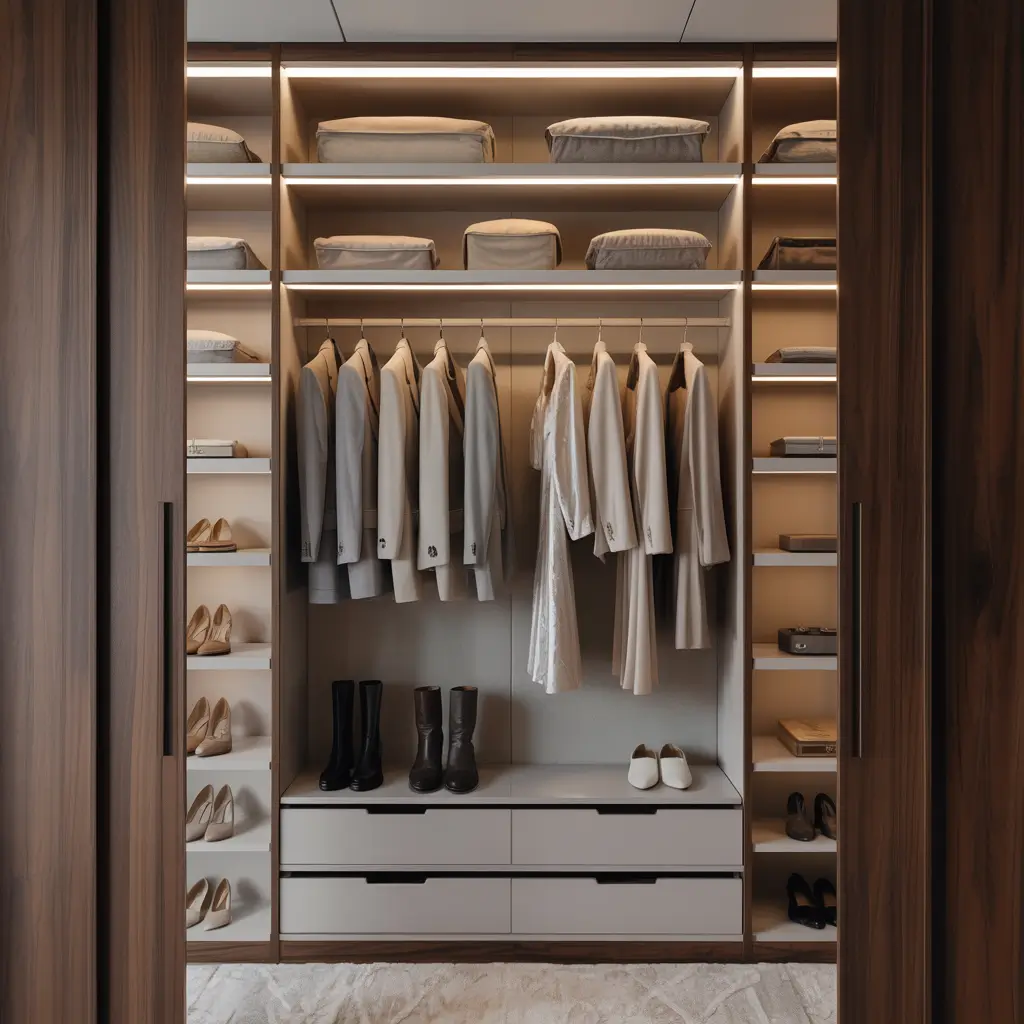
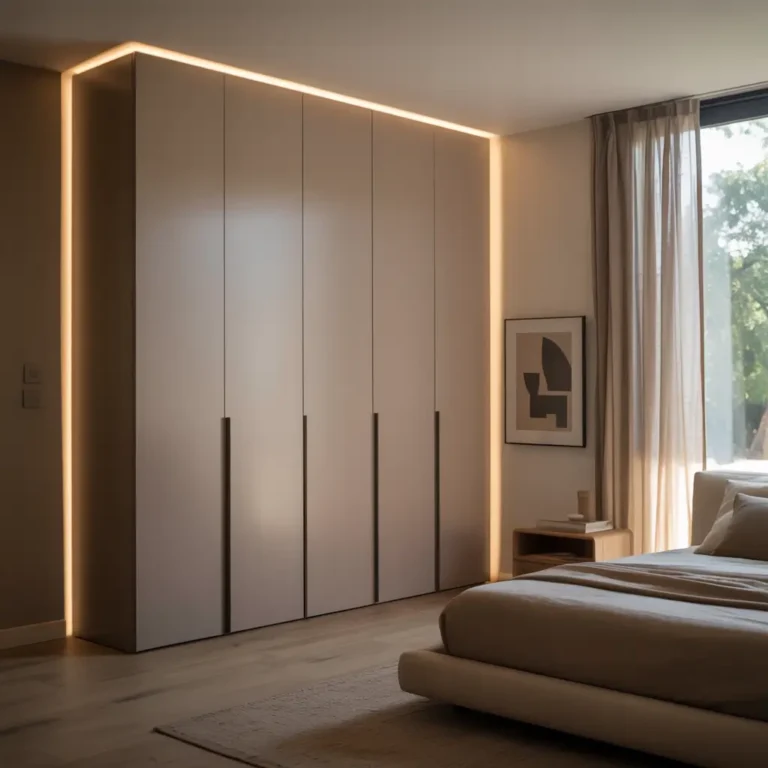
Why waste that precious vertical space near your ceiling? Floor-to-ceiling designs maximize storage potential while creating a built-in look that adds value to your home.
When I extended my wardrobe to the ceiling, I gained 40% more storage space without expanding the floor footprint. The secret is planning the upper sections for items you access less frequently – seasonal clothes, extra bedding, or special occasion wear.
Vertical organization strategies:
• Daily items at eye level for easy access
• Seasonal storage in the uppermost sections
• Heavy items in lower compartments for safety
• Lightweight, bulky items (like comforters) up high
The visual impact is stunning too. Floor-to-ceiling storage creates clean, unbroken lines that make rooms appear larger and more organized. I painted the wardrobe the same color as the walls to make it blend seamlessly with the room’s architecture.
Installing a small step ladder nearby makes reaching high shelves manageable. I chose a sleek, foldable design that tucks away when not needed but provides safe access to upper storage areas.
His and Hers Wardrobe Interior Setup
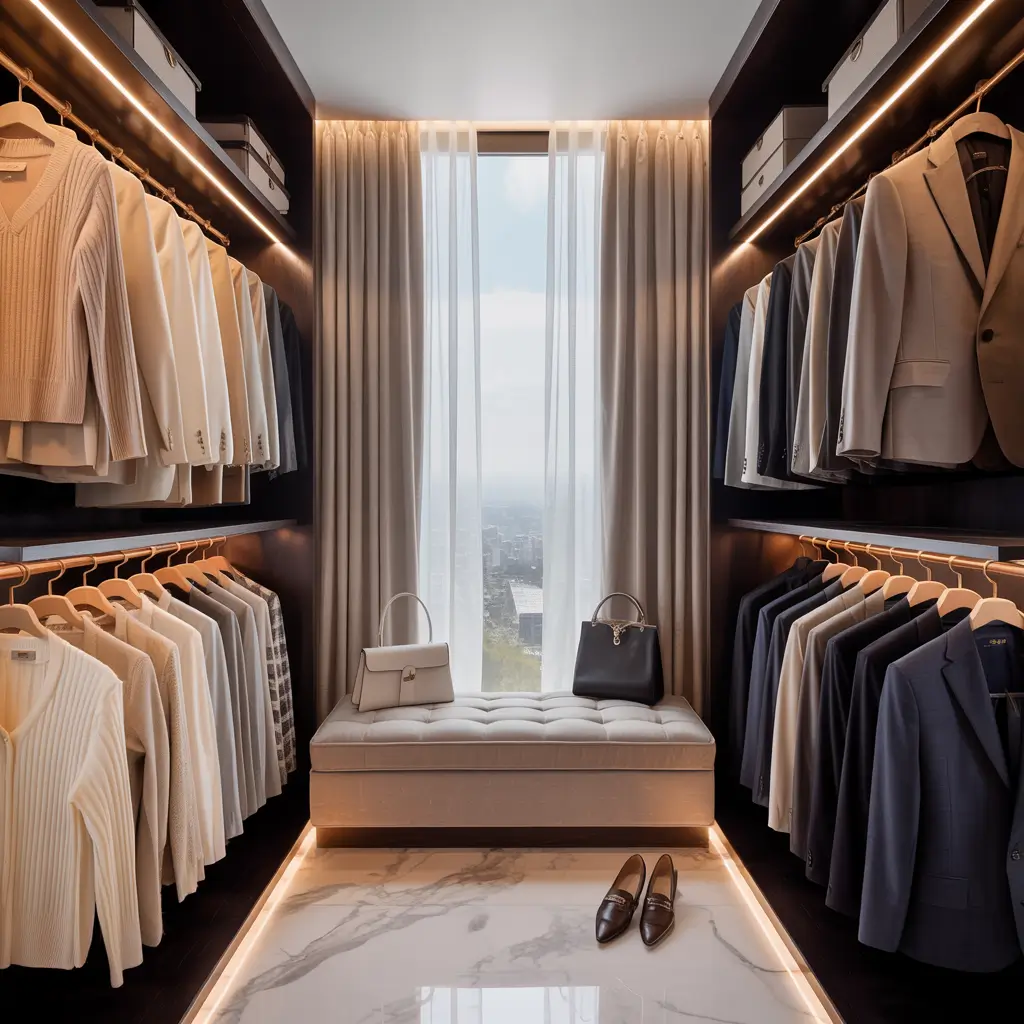
Sharing wardrobe space can be a relationship minefield if not handled correctly. Clear organization and defined territories prevent clothing chaos and morning arguments about missing items.
My partner and I solved our shared wardrobe struggles by creating distinct zones within our storage system. It’s like having two separate wardrobes that happen to share the same physical space.
Effective sharing strategies:
• Assign specific shelves or sections to each person
• Use different colored hangers for easy identification
• Create shared areas for household linens
• Establish clear organizational rules both parties follow
The breakthrough was using adjustable shelf systems that accommodate our different storage needs. I prefer hanging most items, while my partner likes folding clothes. Our wardrobe interior adapts to both preferences without compromise.
We designated the left side for one person, right side for the other, and created a shared middle section for bedding and towels. This clear division eliminated confusion and made maintaining organization much easier.
Wardrobe Interior with Pull-Out Accessories
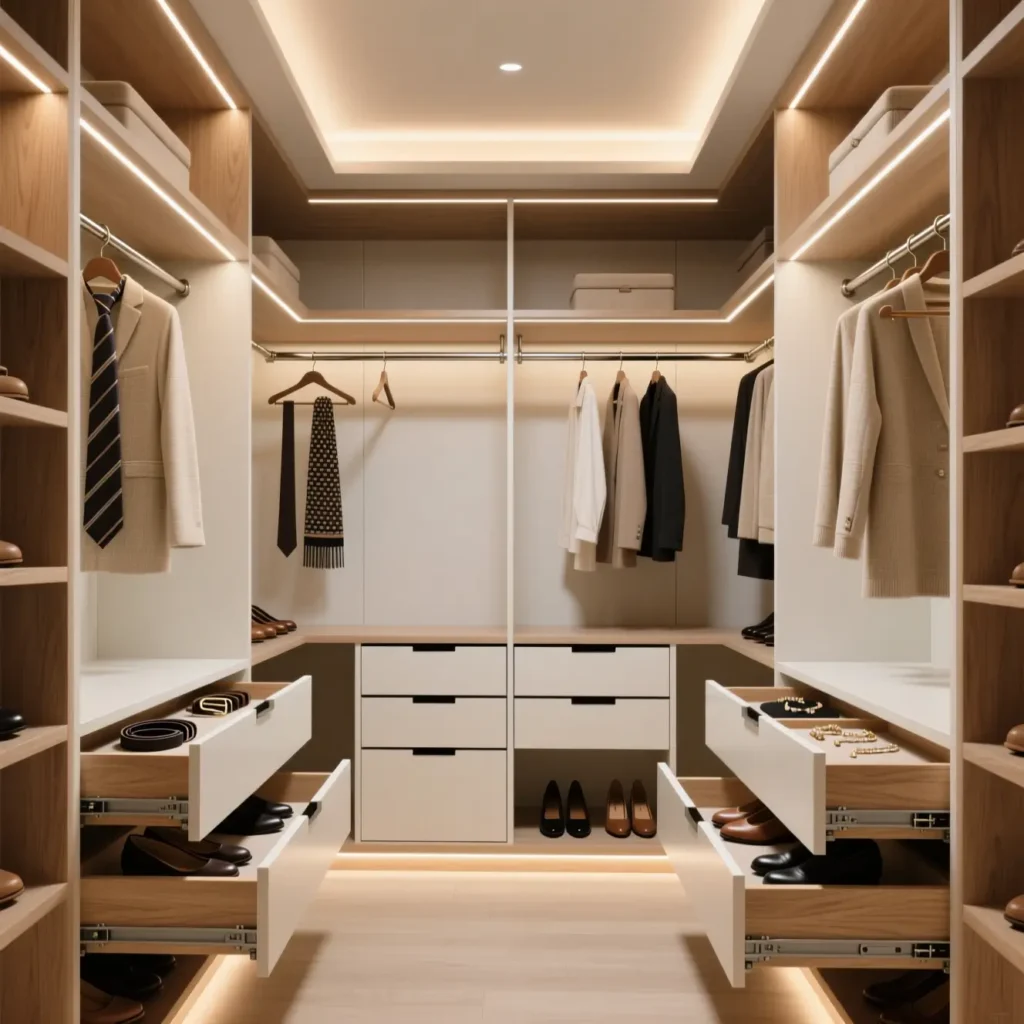
Hidden storage is storage that actually gets used. Pull-out accessories bring everything forward for easy access rather than leaving items buried in wardrobe depths where they’re forgotten.
I installed pull-out baskets and drawers throughout my wardrobe interior, and the difference was immediately noticeable. No more digging through stacks of folded clothes or losing small accessories in dark corners.
Essential pull-out components:
• Wire baskets for underwear and socks
• Jewelry drawers with velvet lining
• Belt and tie racks that extend fully
• Shoe shelves that slide out for easy selection
The soft-close mechanisms were worth the extra investment. They prevent slamming and give the whole wardrobe system a premium, quiet operation that feels luxurious.
My favorite addition was a pull-out mirror that extends when needed and tucks away to save space. It’s positioned at the perfect height for outfit coordination and maintains the wardrobe’s streamlined appearance when closed.
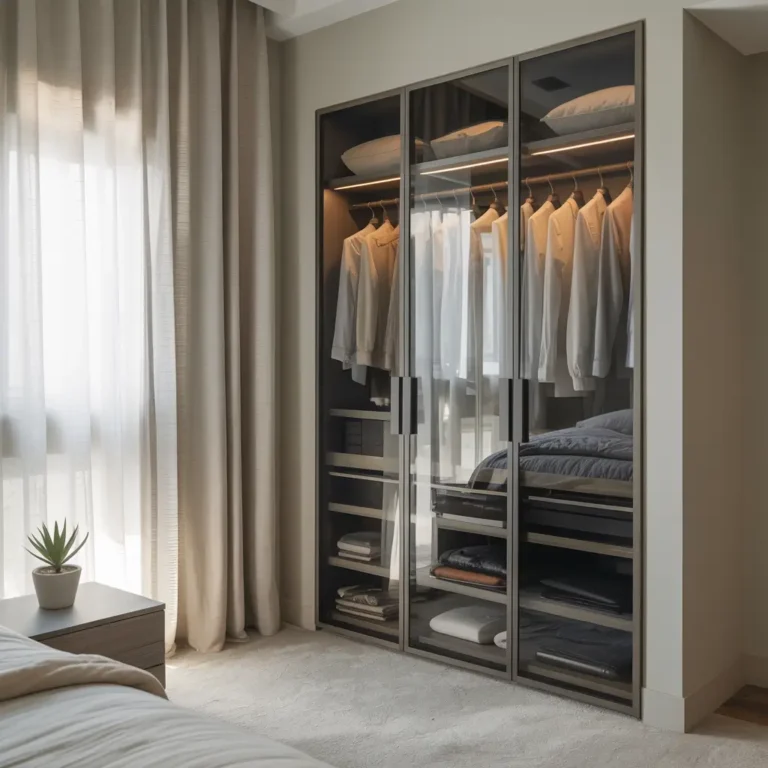
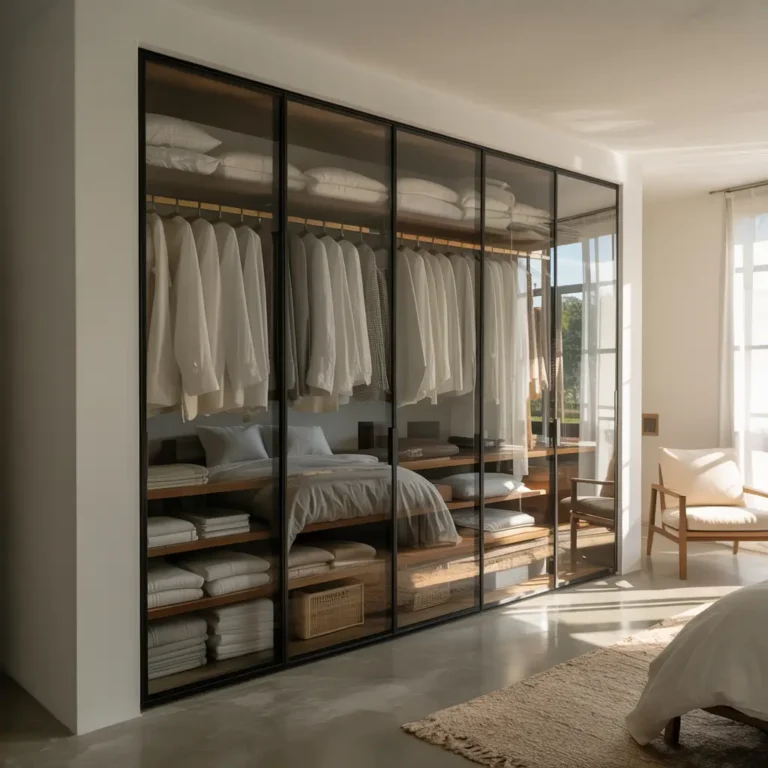
Glass Partition Modern Wardrobe Interior
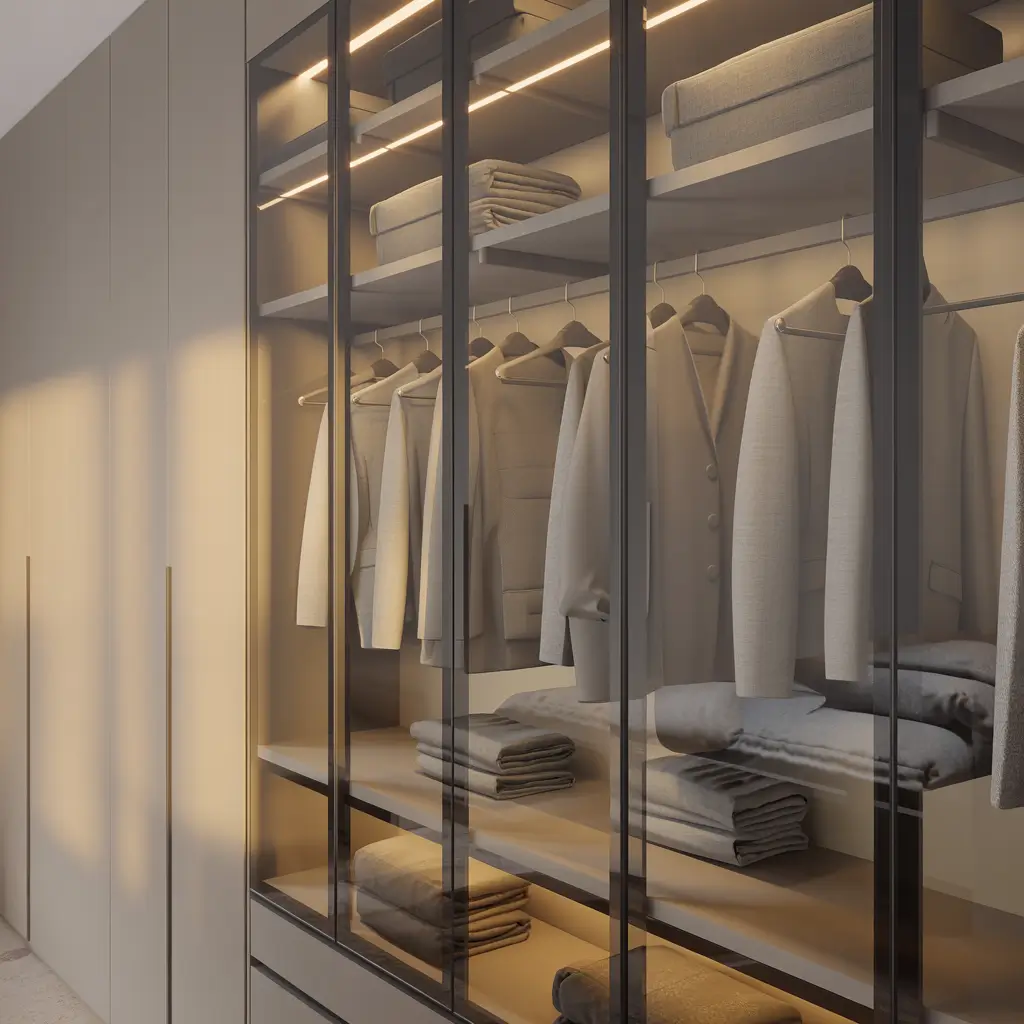
Glass partitions create separation without visual barriers – perfect for small rooms where you want storage solutions that don’t feel heavy or overwhelming. Transparent materials maintain the sense of space while providing practical organization.
I used frosted glass dividers to separate different sections of my wardrobe interior. The result is sophisticated organization that feels open and airy rather than cramped and enclosed.
Glass partition benefits:
• Visual lightness that doesn’t overwhelm small spaces
• Easy cleaning and maintenance
• Reflects light to brighten interior spaces
• Creates sophisticated, modern aesthetic
The key is choosing the right opacity level for your needs. Clear glass shows everything inside, which works well if you maintain neat organization. Frosted glass provides some visual privacy while still allowing light to pass through.
Safety glass is essential – you don’t want sharp edges near your clothing or in case of accidental impact. Tempered glass panels provide durability while maintaining the sleek appearance that makes this design approach so effective 🙂
Budget-Friendly Functional Wardrobe Interior
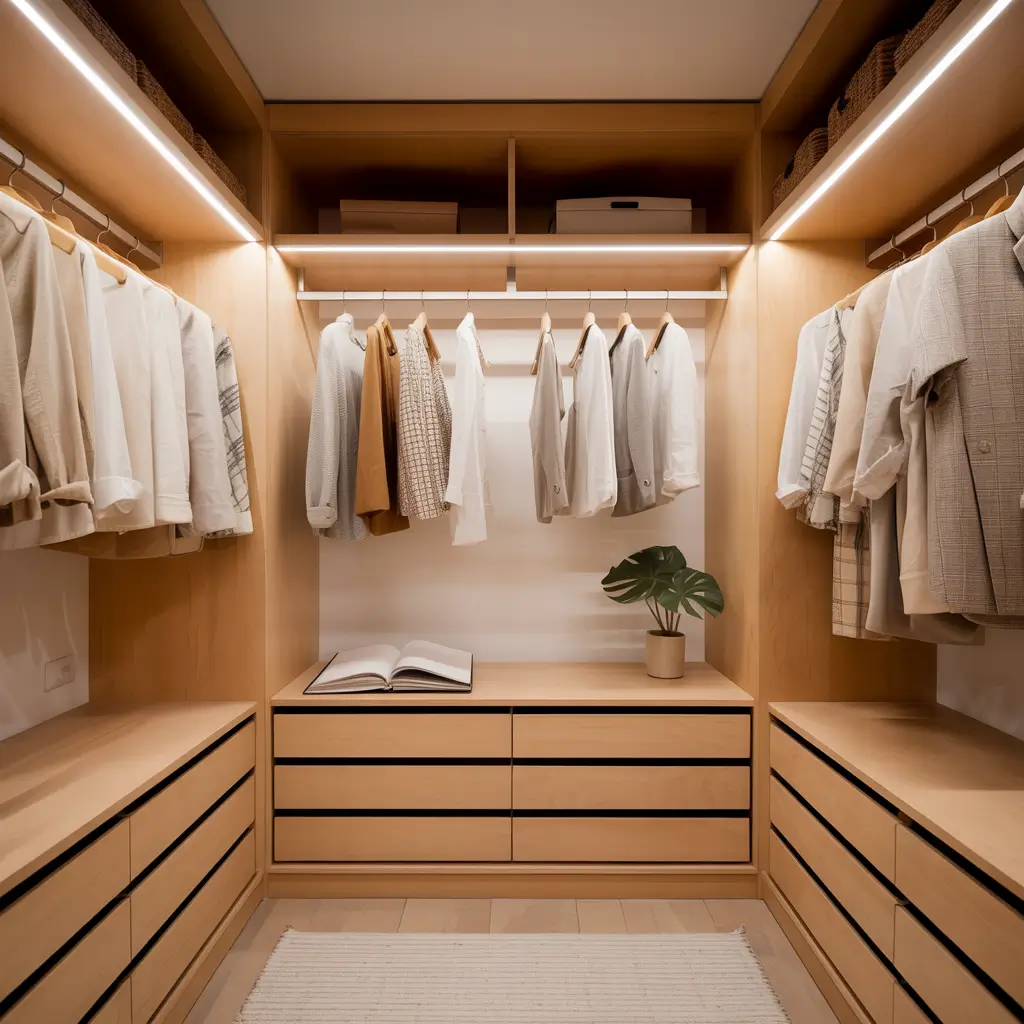
You don’t need a massive budget to create an organized, functional wardrobe interior. Smart shopping and DIY solutions can deliver professional-looking results for a fraction of custom installation costs.
I transformed my wardrobe on a tight budget using a combination of discount store finds, DIY modifications, and strategic investment in a few key pieces. The total cost was less than one month’s rent, but the functionality improvement was enormous.
Budget-conscious strategies:
• Repurpose furniture pieces as wardrobe components
• Use tension rods for additional hanging space
• Create custom dividers from cardboard or foam board
• Shop secondhand stores for vintage storage solutions
The biggest money-saver was making my own shelf dividers using cut plywood and wood stain. They look custom-made but cost about 80% less than store-bought versions. A weekend DIY project that transformed my wardrobe’s functionality.
FYI, some of the most effective solutions are the simplest ones. I use shoe boxes covered in contact paper to create custom drawer organizers. They’re practically free, infinitely customizable, and surprisingly durable.
Also Read: 10 Sophisticated Black Bedroom Furniture Ideas and Cozy Corners
Corner Wardrobe Interior Optimization
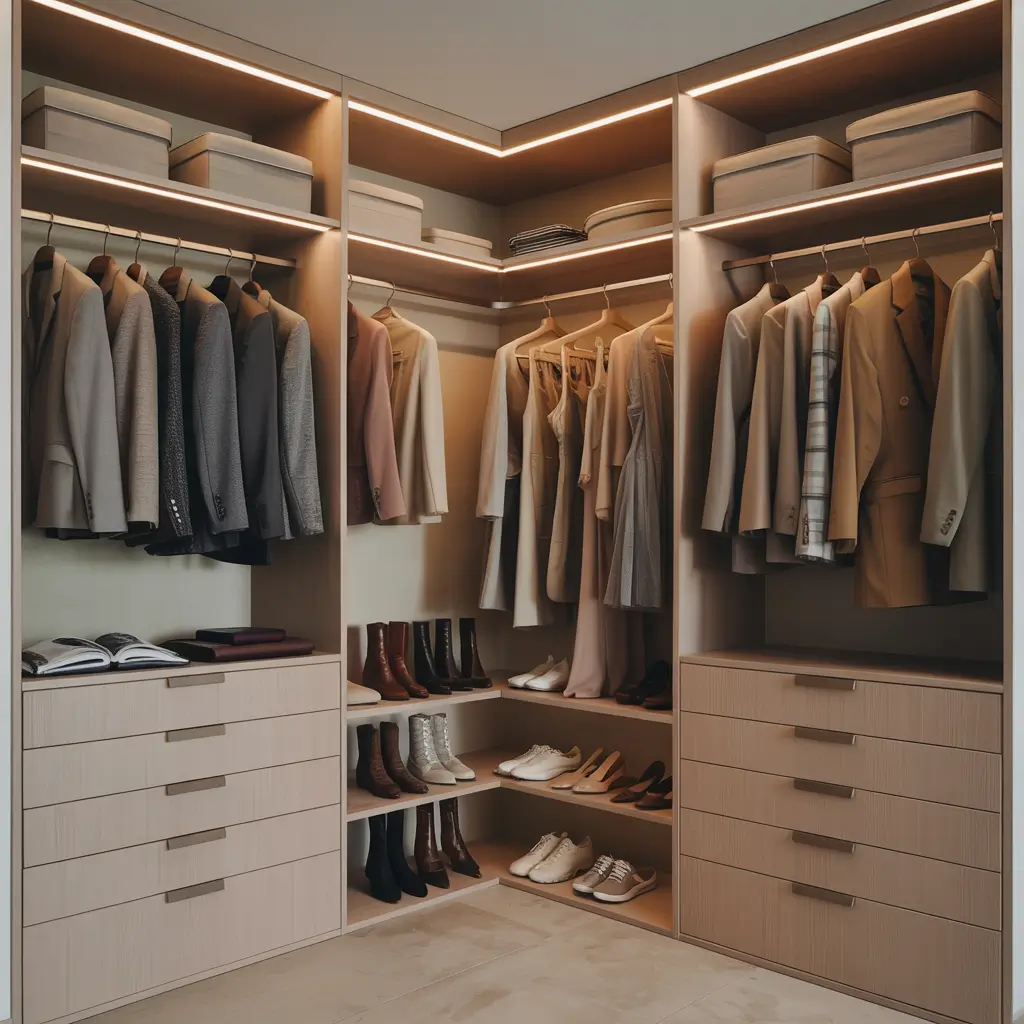
Corner spaces are notoriously difficult to utilize effectively, but smart design turns awkward angles into storage goldmines. I wrestled with my room’s corner for months before discovering solutions that make every inch productive.
The trick is working with the corner’s natural shape rather than fighting against it. Curved hanging rods, lazy Susan turntables, and triangular shelving maximize accessibility while fitting perfectly into angular spaces.
Corner optimization techniques:
• Rotating mechanisms for easy access to back areas
• Triangular shelving that follows corner angles
• Curved hanging rods that utilize all available space
• Multi-level systems that stack storage vertically
My game-changing addition was a lazy Susan system on the wardrobe floor for shoes. It rotates to bring any pair to the front, eliminating the need to reach into dark corners or move other shoes to access what I want.
Corner lighting is crucial because these spaces tend to be naturally darker. I installed battery-operated LED puck lights that illuminate the entire corner area, making everything easily visible and accessible.
Seasonal Smart Storage Wardrobe Interior
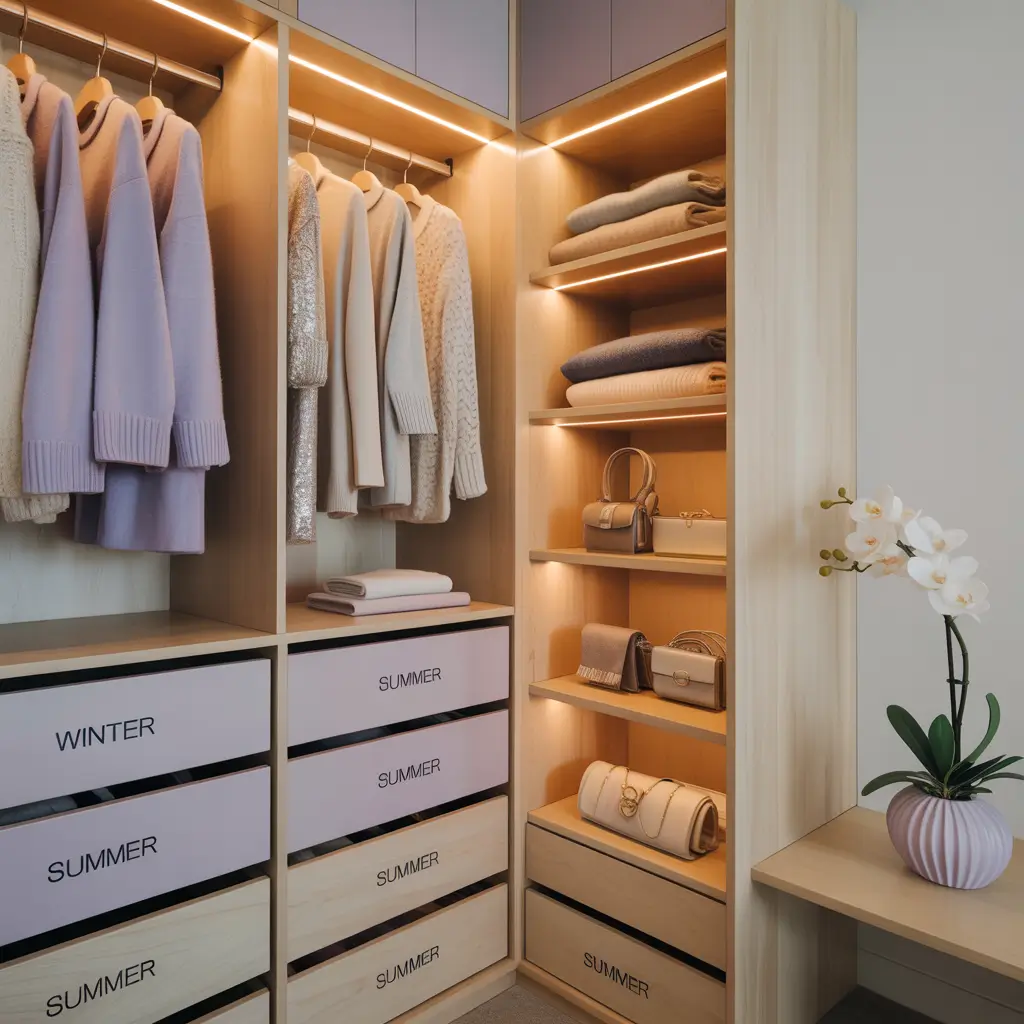
Why let winter coats take up prime real estate during summer months? Seasonal rotation systems maximize available space by storing out-of-season items separately while keeping current weather clothing easily accessible.
I developed a rotation system that transforms my wardrobe’s functionality every few months. Summer clothes get prime positioning during warm months, while winter gear moves to higher shelves or vacuum-sealed storage.
Seasonal organization strategies:
• Use vacuum storage bags for bulky off-season items
• Label everything clearly for easy identification
• Create designated areas for seasonal transitions
• Store rarely used seasonal items in highest locations
The vacuum storage bags were a revelation. My winter coats and sweaters compress to about one-third their normal size, freeing up enormous amounts of space for summer clothes. When seasons change, I simply swap the storage locations.
I keep a “transition bin” for items that bridge seasons – light jackets, long-sleeve shirts, and transitional pieces that might be needed unexpectedly. This prevents constant reorganization when weather patterns fluctuate.
Built-In Drawer and Shoe Rack Wardrobe Interior
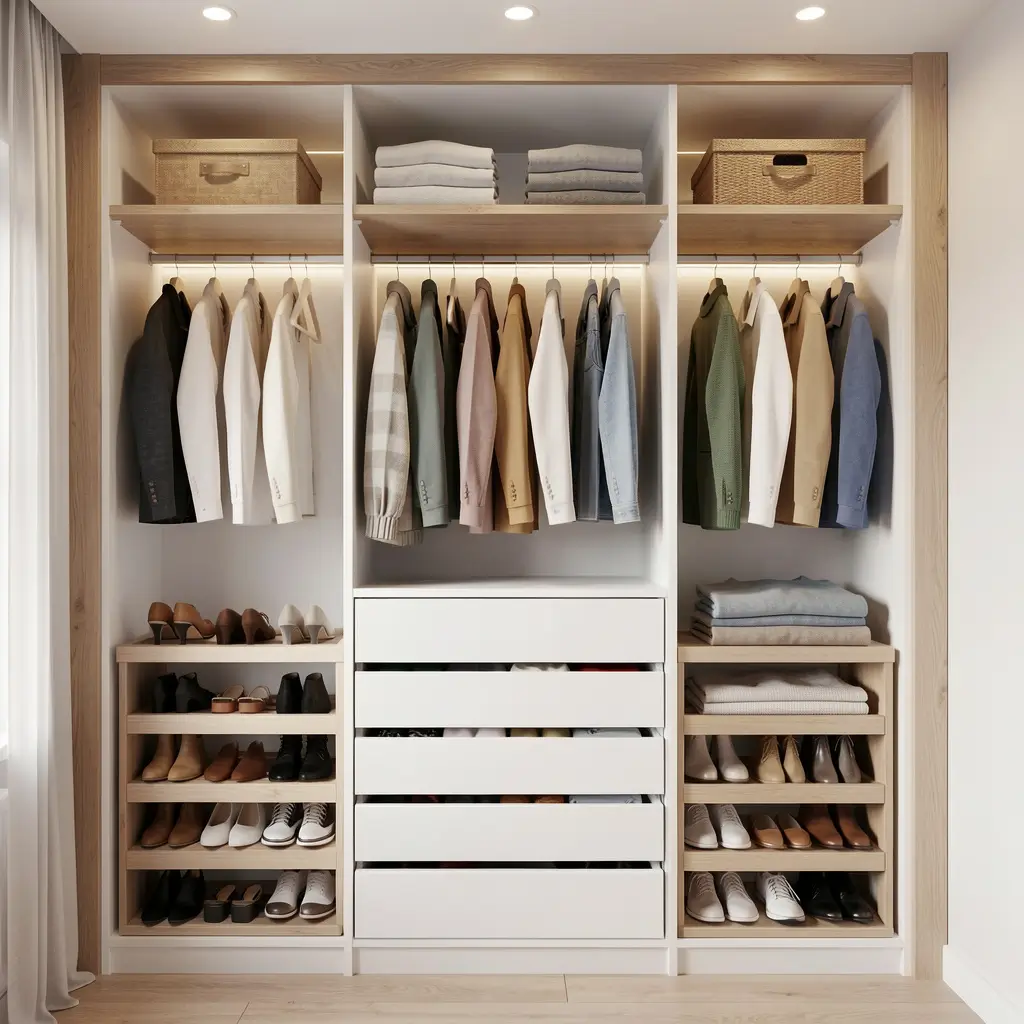
Drawers and shoe storage often become afterthoughts in wardrobe design, but integrated systems create seamless organization that handles all your storage needs within one cohesive unit.
My built-in drawer system eliminates the need for separate bedroom furniture while providing specialized storage for different item types. Each drawer serves a specific purpose, from delicate undergarments to bulky sweaters.
Integration benefits:
• Consistent aesthetic throughout the wardrobe
• Customized sizing for specific storage needs
• Maximized space efficiency
• Reduced furniture clutter in the bedroom
The shoe rack integration was particularly satisfying. Instead of shoes scattered around the room, everything has a designated spot that’s easily accessible but completely organized. I can see every pair at a glance and grab what I need quickly.
Drawer dividers customize each drawer’s interior for specific items. My sock drawer has small compartments, while the sweater drawer uses larger sections. This targeted organization prevents items from becoming mixed up or difficult to find.
Hotel-Style Premium Wardrobe Interior Design
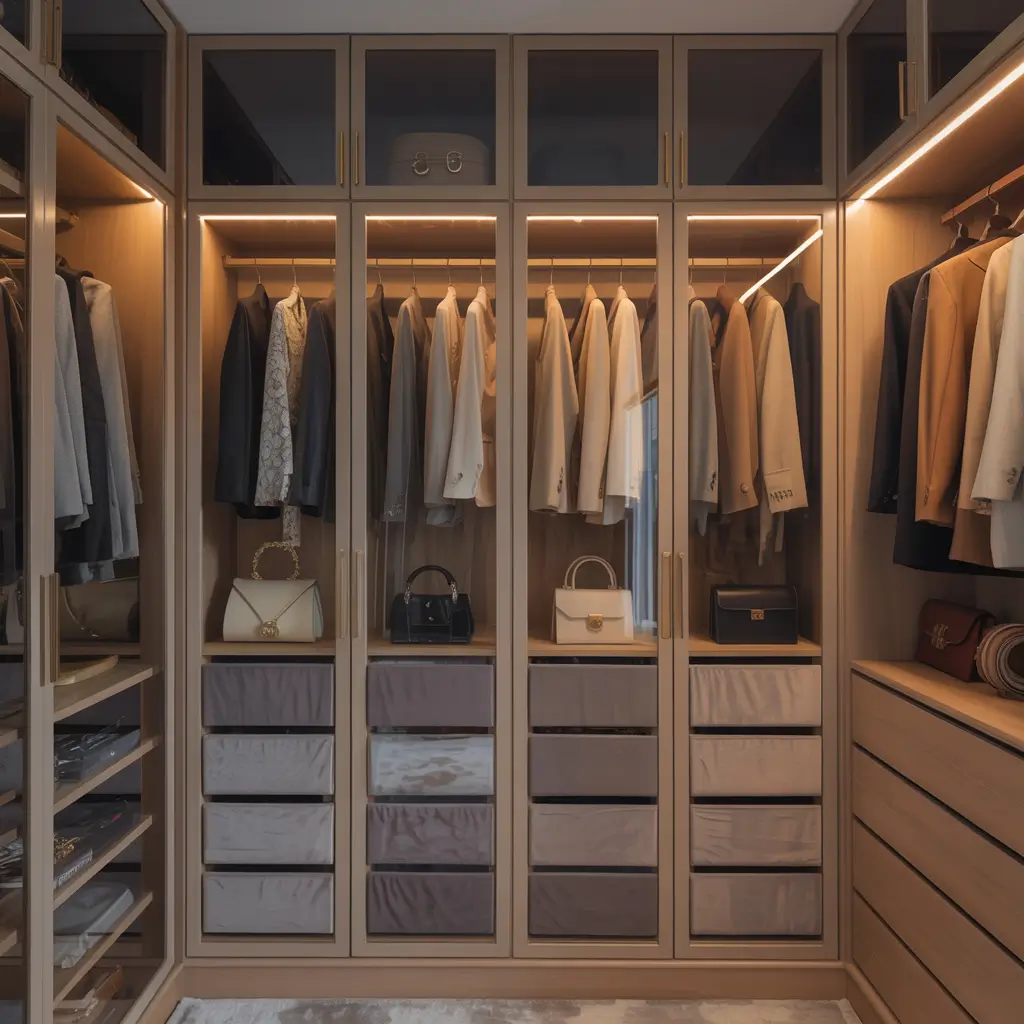
Hotels master the art of luxury storage in minimal space. Their wardrobe designs prioritize both functionality and aesthetics, creating systems that feel upscale while maximizing every available inch.
I studied high-end hotel wardrobes during business trips and implemented their best features in my home wardrobe. The result is storage that feels like a luxury suite experience every day.
Hotel-inspired features:
• Coordinated hangers throughout for visual consistency
• Integrated lighting that activates automatically
• Drawer pulls and hardware that match throughout
• Soft-close mechanisms on all moving parts
The attention to detail makes the biggest difference. Hotels use consistent materials, coordinated colors, and premium hardware to create cohesive, upscale appearances. These elements cost more initially but transform the entire wardrobe experience.
I added a luggage bench that doubles as storage for out-of-season items. It’s upholstered in the same fabric as my bedroom curtains, creating visual continuity while providing practical functionality that mimics luxury hotel amenities.
Making It All Work Together
The beauty of these wardrobe hacks lies in their adaptability and potential for combination. You don’t need to choose just one approach – mix and match elements that work best for your specific space and lifestyle.
Start with one or two hacks that address your biggest storage challenges. Maybe that’s adding LED lighting to eliminate morning fumbling, or installing pull-out accessories to make everything accessible. Build your system gradually, adding elements as your needs evolve or budget allows.
Remember that organization is an ongoing process, not a one-time project. The best wardrobe systems are those that adapt to your changing needs while maintaining their functionality and aesthetic appeal.
Your small room doesn’t have to limit your storage possibilities. With these 15 hacks, you can create a wardrobe interior that’s not only functional but genuinely enjoyable to use. IMO, there’s something deeply satisfying about opening a perfectly organized wardrobe every morning – it sets a positive tone for the entire day.