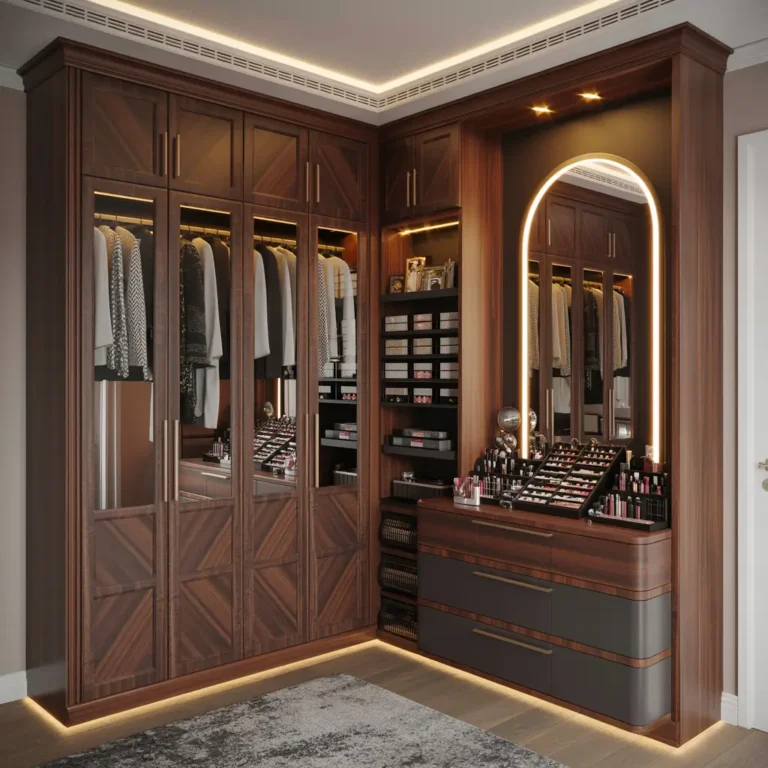
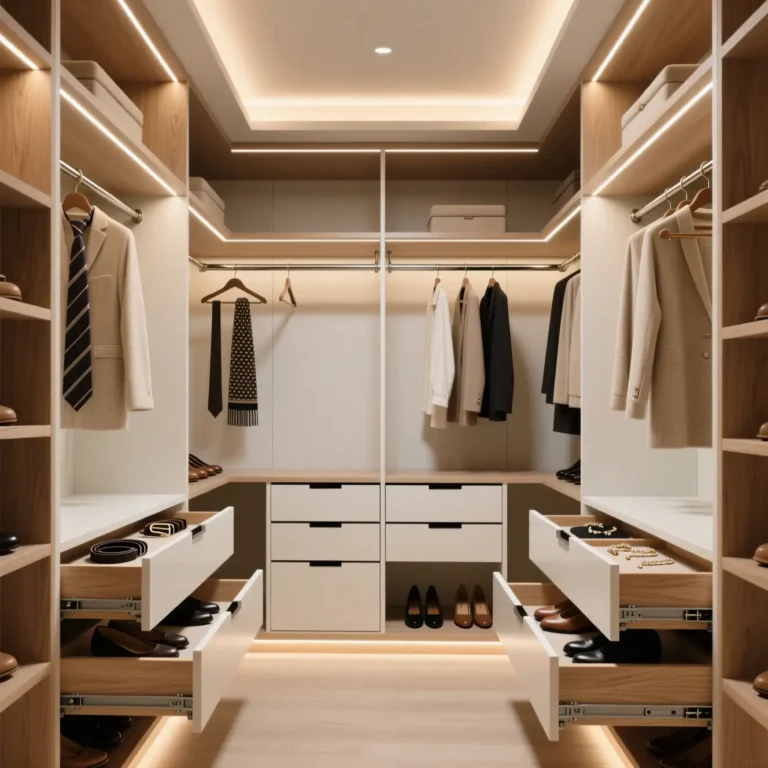
15 Space-Saving Wooden Wardrobe Ideas for Tiny Rooms

You know that moment when you’re standing in your tiny bedroom, staring at the mountain of clothes on your chair (we all have that chair), wondering how on earth you’re supposed to fit a proper wardrobe in here? Yeah, I’ve been there. And honestly, after years of cramming my stuff into whatever storage I could find, I’ve learned that wooden wardrobes aren’t just for spacious master bedrooms anymore.
The thing is, small spaces don’t have to mean sacrificing style or functionality. With the right wooden wardrobe ideas, you can actually make your tiny room feel bigger while keeping everything organized. Trust me, I’ve tried almost every trick in the book – and some of them actually work pretty well.
Space-Saving Wooden Wardrobe Designs
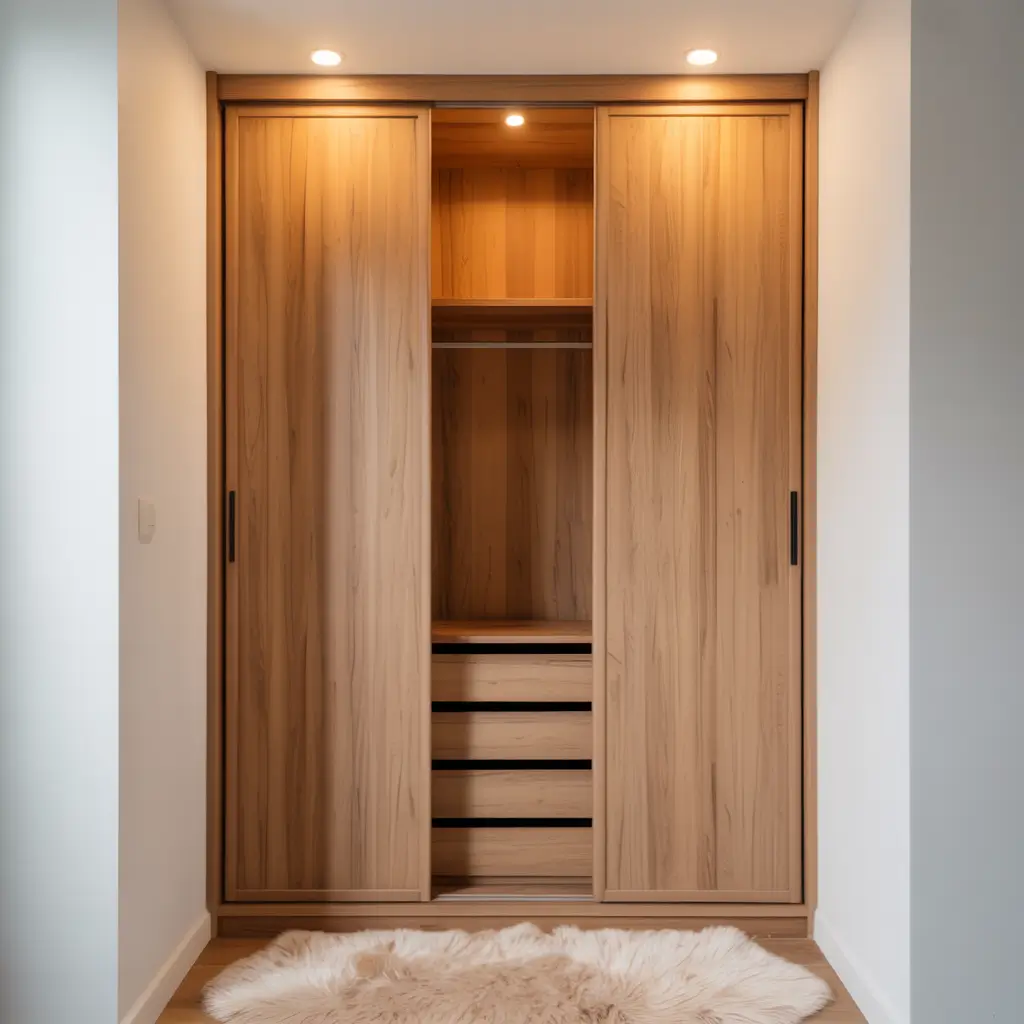
Let’s start with the basics – space-saving wooden wardrobe designs that actually understand your struggle. These aren’t your grandma’s bulky armoires that take up half the room.
The key here is vertical thinking. I’m talking about wardrobes that go up to the ceiling instead of sprawling across your floor space. When I first saw one of these tall, narrow designs, I thought it looked a bit awkward. But after living with one for six months? Game changer.
Smart design features that make a difference include:
- Narrow depth (around 20-24 inches instead of the standard 30)
- Full-height doors that create clean lines
- Internal organizers that maximize every inch
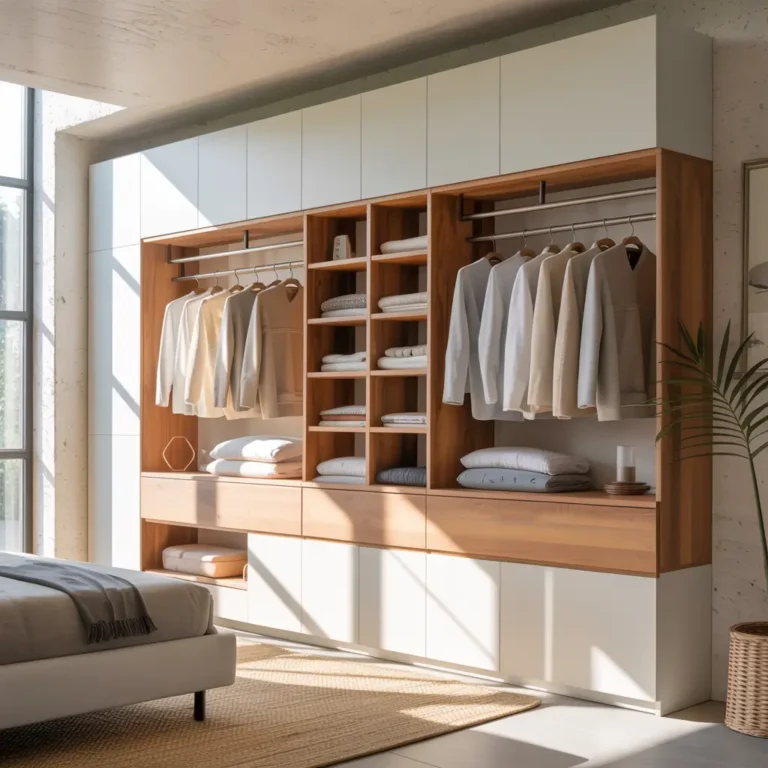
- Stepped shelving that follows the room’s proportions
The trick is choosing light-colored woods like maple or birch. Dark walnut might look sophisticated, but it’ll make your small room feel like a cave. I learned this the hard way when I painted my first tiny wardrobe a deep mahogany – mistake number one.
What really surprised me was how much difference the door style makes. Flat-panel doors create cleaner lines than raised panels, and they don’t catch as much visual weight. It’s one of those details that seems small but adds up to a much more spacious feeling.
Modern Minimalist Wooden Wardrobes
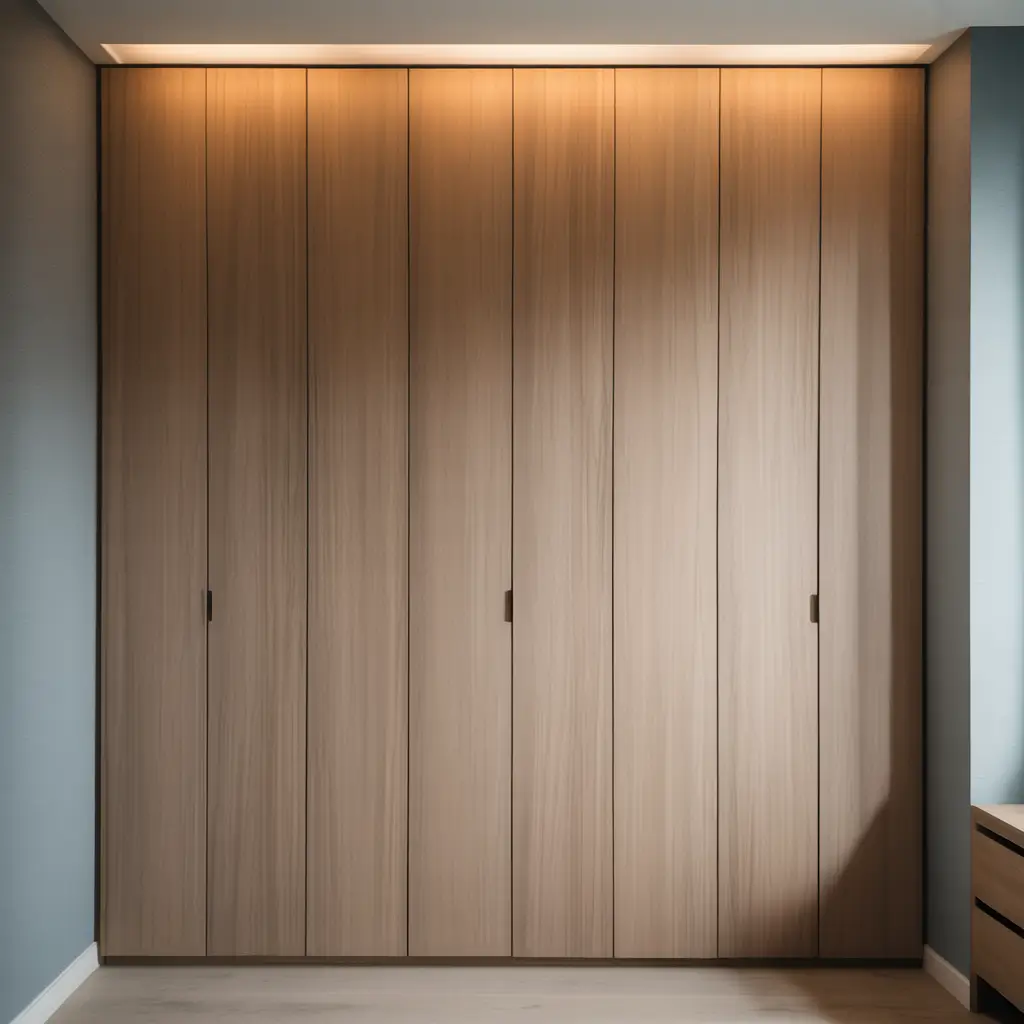
Ever wonder why minimalist designs work so well in small spaces? It’s because they follow the “less is more” philosophy – and honestly, your tiny room will thank you for it.
Clean lines and simple hardware are your best friends here. I’m talking about wardrobes with no unnecessary decorative elements, just pure function wrapped in beautiful wood grain. The beauty comes from the material itself, not from fancy moldings or ornate details.
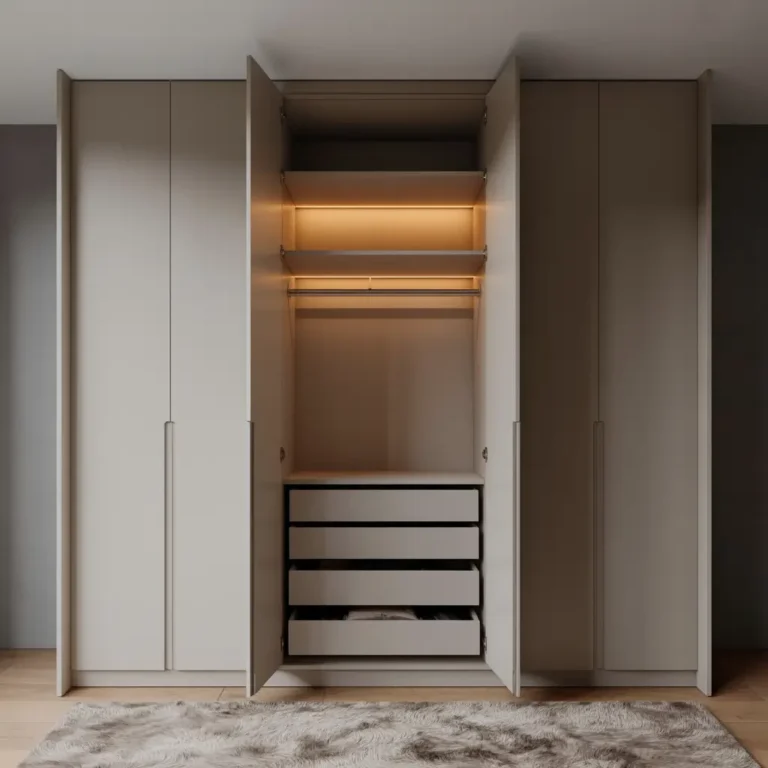
My favorite minimalist approach uses handle-free doors. You know those sleek designs where the doors have a slight indent or push-to-open mechanism? They create this incredibly smooth, uninterrupted surface that makes the wardrobe almost disappear into the wall.
Key minimalist features that work:
- Flat surfaces with no raised elements
- Hidden or integrated handles
- Single wood tone throughout
- Simple geometric proportions
- No visible hardware or joints
The wood choice matters here too. Light oak or ash gives you that Scandinavian vibe that makes everything feel airier. I’ve seen people use pine, but honestly, it can look a bit cheap if you’re not careful with the finish.
Rustic Wooden Wardrobe Inspirations
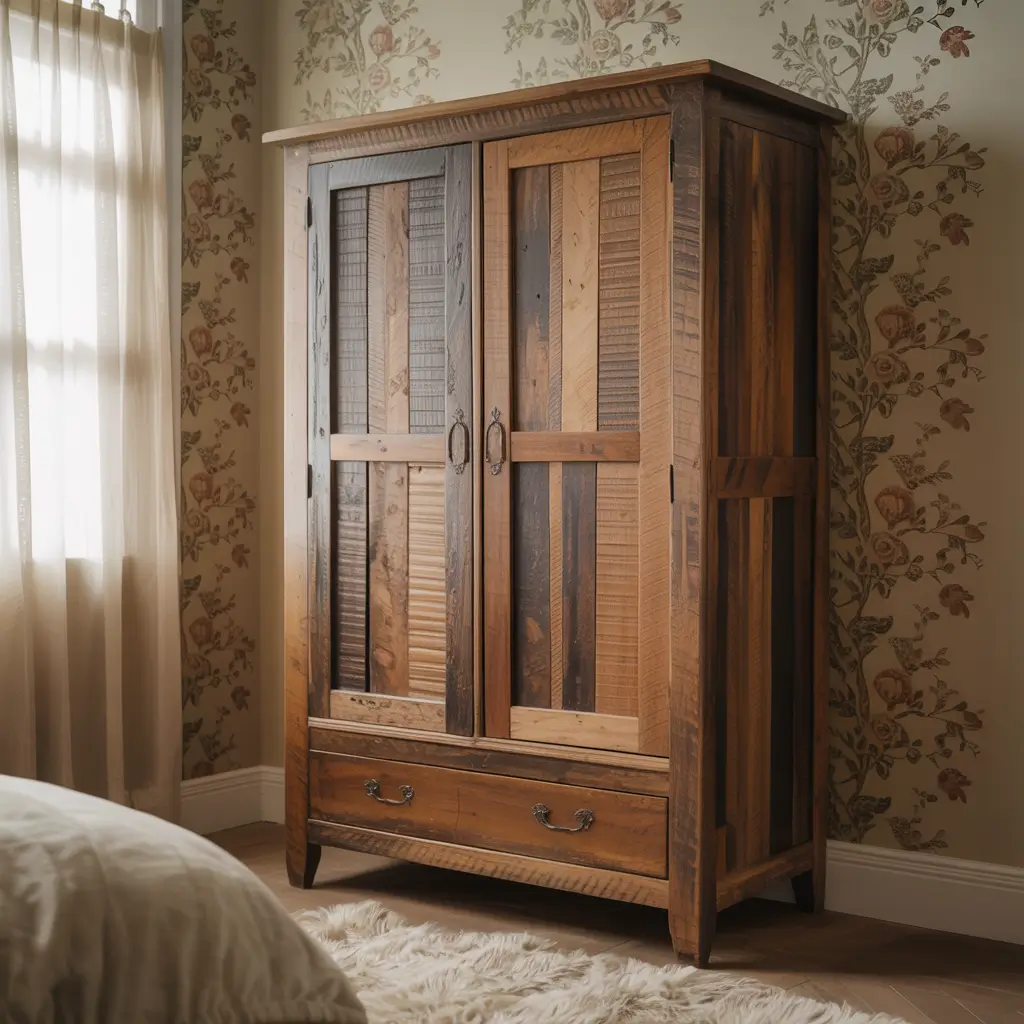
Now, you might think rustic and small space don’t mix, but hear me out. Rustic wooden wardrobes can actually add character to tiny rooms without overwhelming them – you just need to be smart about it.
The secret is in the scale and color choice. Heavy, dark rustic pieces will crush a small room, but lighter rustic styles can add warmth and personality. Think weathered white oak or reclaimed pine with a soft gray wash.
I once helped a friend choose a rustic wardrobe for her studio apartment. We went with a distressed white finish on reclaimed wood, and it became the perfect focal point without dominating the space. The key was keeping the hardware simple – just basic black iron pulls.
Rustic elements that work in small spaces:
- Light-colored distressed finishes
- Simple plank-style doors
- Minimal decorative hardware
- Natural wood grain showing through paint
- Clean, farmhouse-inspired lines
The thing about rustic wardrobes is they tell a story, and that can make your small space feel more like home and less like a cramped box. Just don’t go overboard with the distressing – subtle is the name of the game.
Small Bedroom Wardrobe Ideas
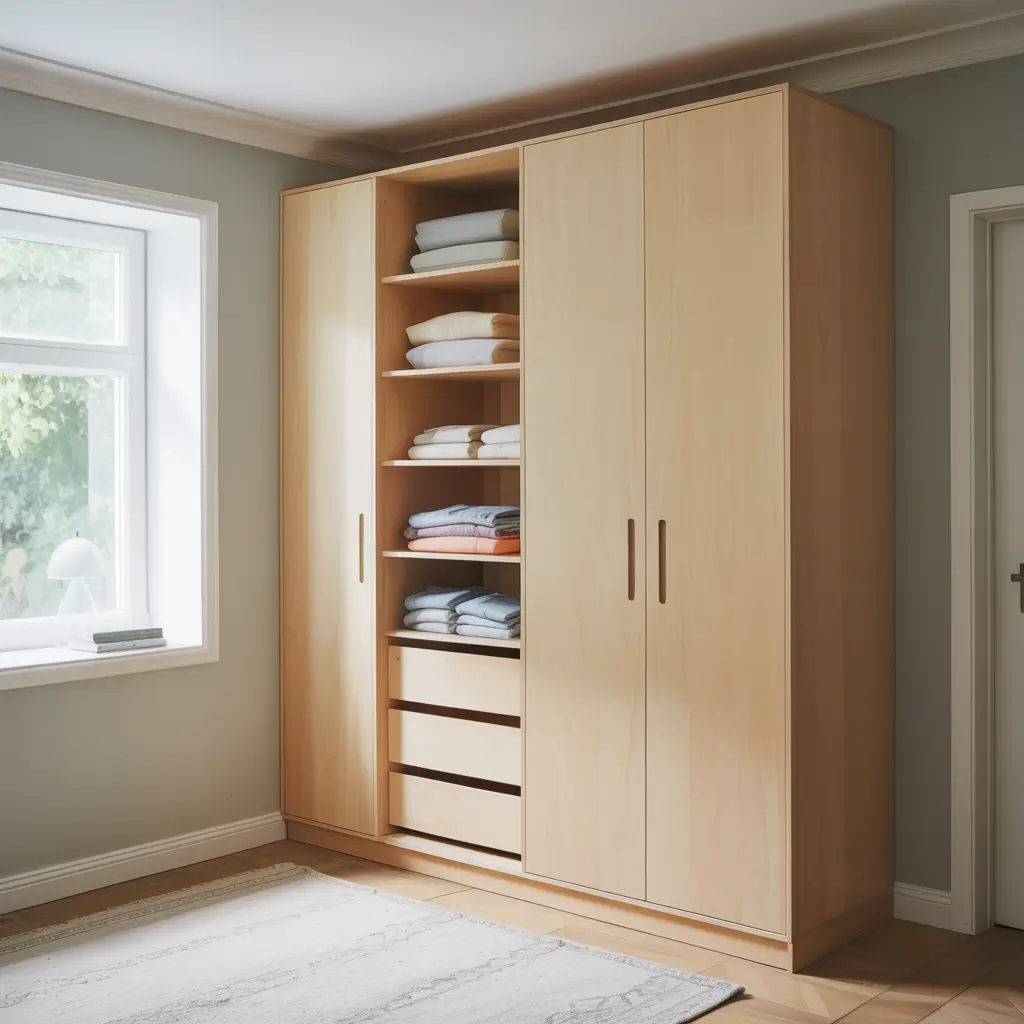
Let’s get real about small bedroom wardrobes for a minute. Your bedroom probably does double duty as your office, your reading nook, and maybe even your dining room (no judgment here). So your wardrobe needs to earn its keep.
Multi-zone storage is crucial. I’m talking about wardrobes that have space for hanging clothes, folded items, shoes, and maybe even that random stuff you don’t know what to do with. The best small bedroom wardrobes I’ve seen divide their interior into specific zones.
Here’s what actually works:
- Top shelf: Out-of-season clothes or bedding
- Upper hanging area: Shirts, blouses, jackets
- Middle section: Folded sweaters and jeans
- Lower hanging area: Pants and longer items
- Bottom drawers: Underwear, socks, accessories
The footprint matters more than you’d think. A wardrobe that’s 36 inches wide but only 20 inches deep will feel less intrusive than a 30-inch cube. It’s all about how the proportions work with your room’s layout.
One trick I love is choosing wardrobes with mirrored doors. Yeah, I know mirrors can be controversial, but in a small bedroom, they genuinely double the visual space. Plus, you get a full-length mirror without taking up additional wall space.
Also Read: 15 Modern Wardrobe Interior Design Hacks for Small Rooms
Modular Wooden Wardrobe Solutions
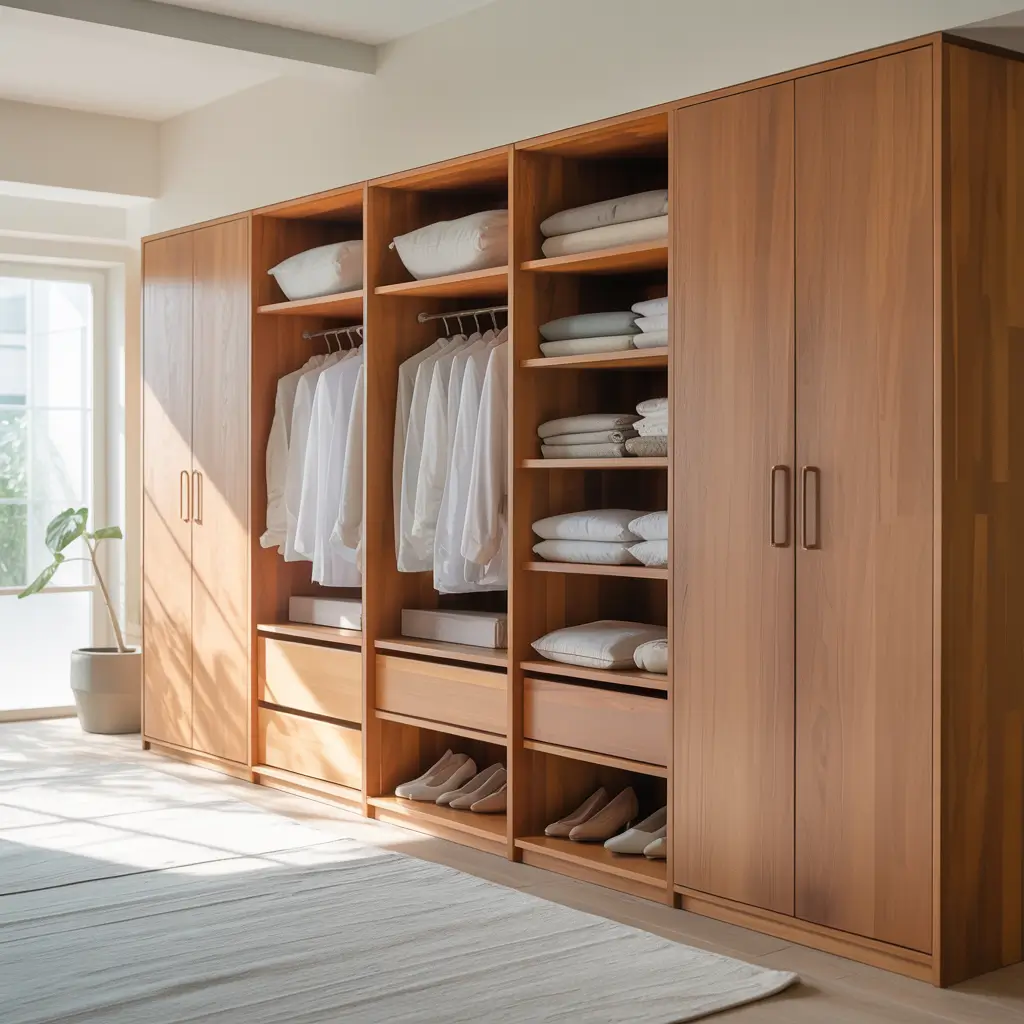
Modular systems are honestly the best thing that’s happened to small space storage. Why commit to one giant wardrobe when you can build exactly what you need?
I started with a basic modular unit – just two sections stacked vertically. As my needs changed (and my shoe collection grew, oops), I added more components. The beauty is you can start small and expand without throwing away what you already have.
Benefits of modular wardrobes:
- Start with what you can afford
- Adapt as your needs change
- Easy to move when you relocate
- Mix and match different functions
- Replace individual pieces if damaged
The key is choosing a system where all the pieces work together visually. I’ve seen people mix different wood finishes thinking it would look “eclectic,” but it usually just looks chaotic.
IKEA’s PAX system gets mentioned a lot, but honestly, there are other options with better wood quality if you’re willing to spend a bit more. The important thing is making sure the modular pieces have consistent proportions and finishes.
Luxury Wooden Wardrobe Styles
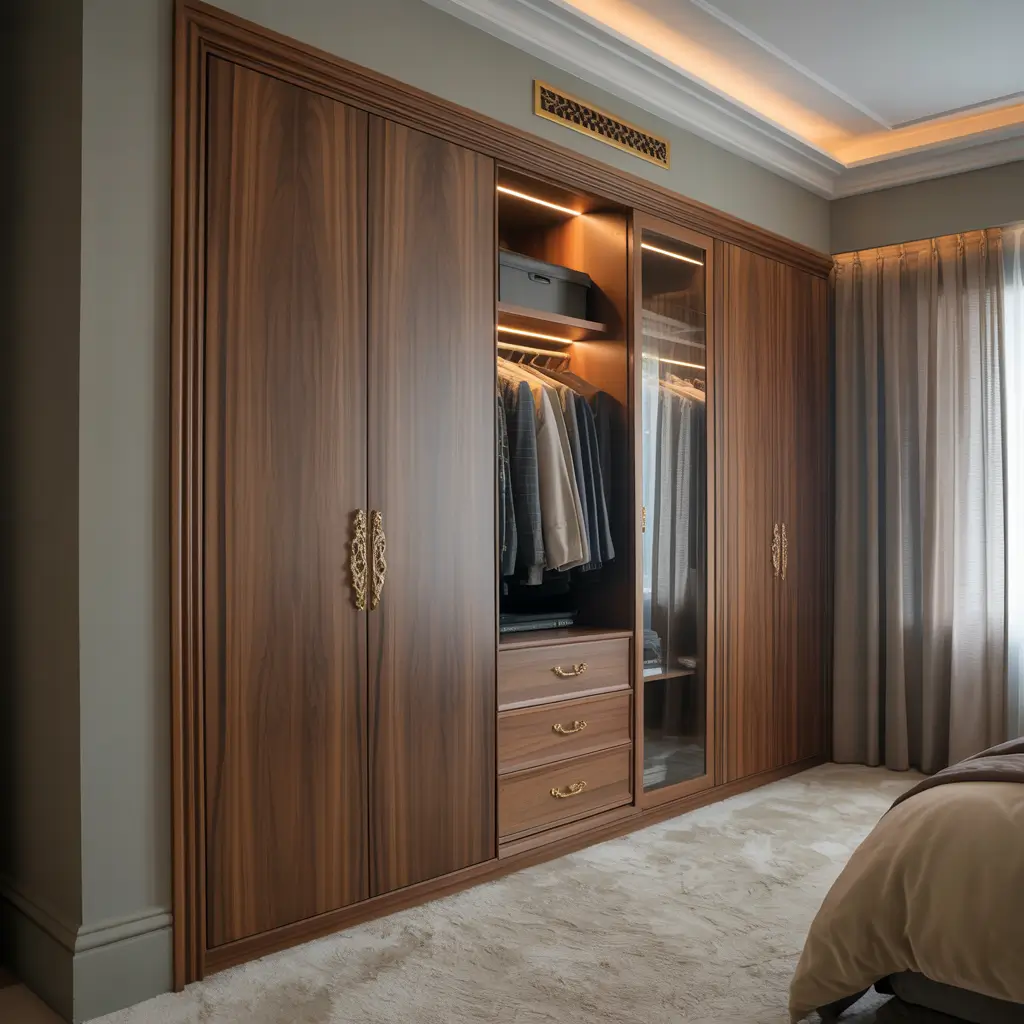
Just because your room is small doesn’t mean you can’t have nice things. Luxury wooden wardrobes for small spaces are all about quality over quantity.
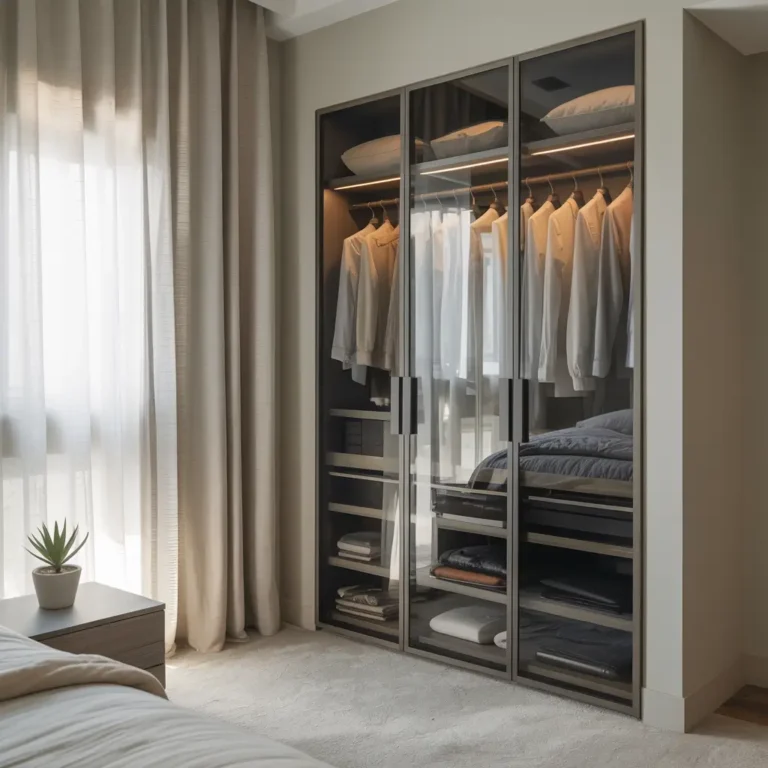
I’m talking about premium materials like solid walnut or cherry, with attention to details like soft-close hinges and interior LED lighting. The difference between a budget wardrobe and a luxury one becomes really obvious when you’re using it every day.
High-end features worth considering:
- Dovetail drawer construction
- Soft-close mechanisms on all doors and drawers
- Interior LED lighting strips
- Velvet-lined jewelry compartments
- Cedar-lined sections for delicate items
- Custom interior configurations
The thing about luxury wardrobes is they’re built to last. I know someone who bought a high-end modular system fifteen years ago, and it still looks brand new. When you calculate cost per year of use, sometimes the expensive option actually makes sense.
Wood choice matters here too. Premium hardwoods like walnut and cherry age beautifully, developing character over time. They’re also more resistant to dings and scratches than softwoods or veneers.
DIY Wooden Wardrobe Projects
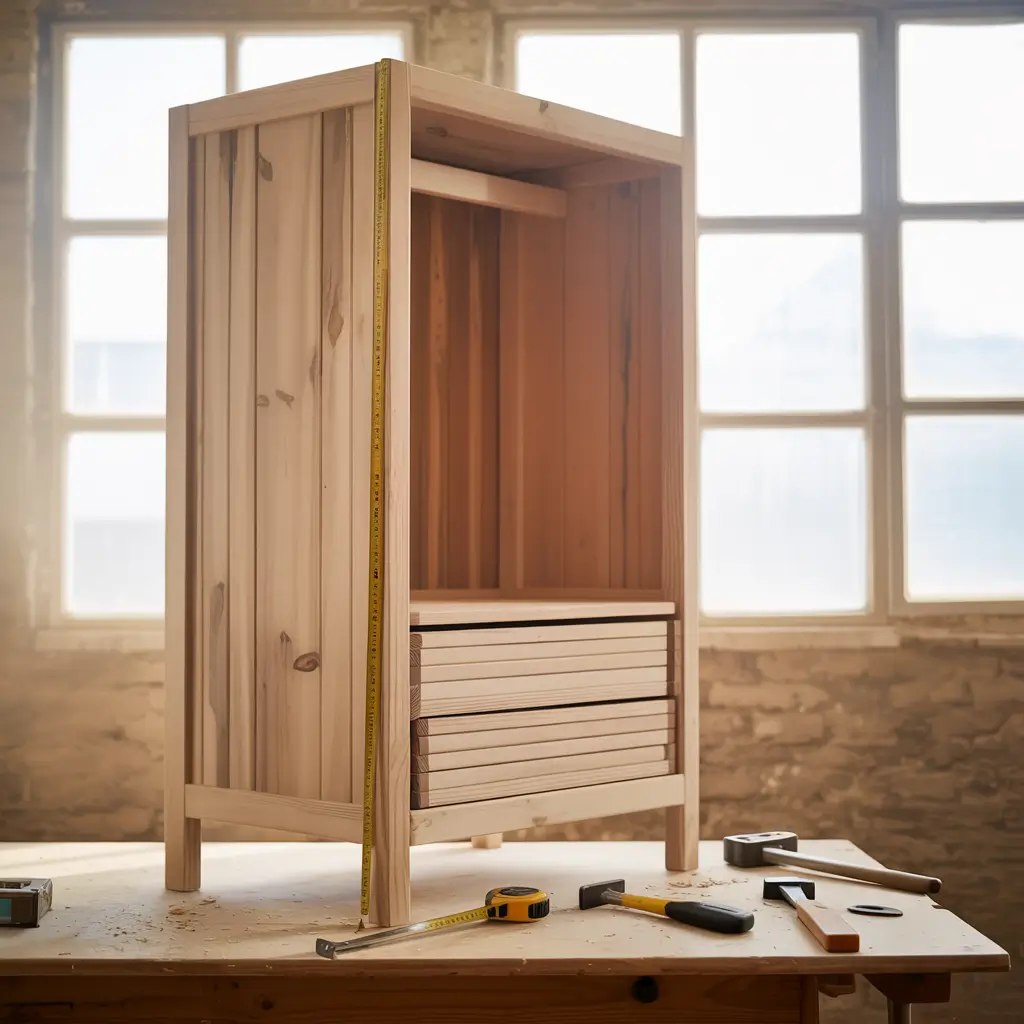
Let’s talk about DIY wooden wardrobes – because sometimes you need exactly what you need, and nobody makes it. Plus, there’s something satisfying about building storage that perfectly fits your weird, tiny space.
I’ll be honest – my first DIY wardrobe attempt was… let’s call it a learning experience. The doors didn’t hang straight, and I may have used the wrong screws for the hinges. But my second attempt? Pretty decent, and it cost about half what a comparable store-bought unit would have.
Essential tools you’ll actually need:
- Circular saw or track saw for straight cuts
- Drill with various bits
- Pocket hole jig for strong joints
- Level (seriously, don’t skip this)
- Clamps for assembly
The biggest mistake people make with DIY wardrobes is overcomplicating the design. Keep it simple – especially for your first project. A basic box with shelves and a hanging rod will serve you better than an elaborate design that doesn’t quite work.
Pro tip: Buy your hardware first, then design around it. I’ve seen too many projects stall because someone couldn’t find the exact hinges or drawer slides they had in mind.
Sliding Door Wooden Wardrobes
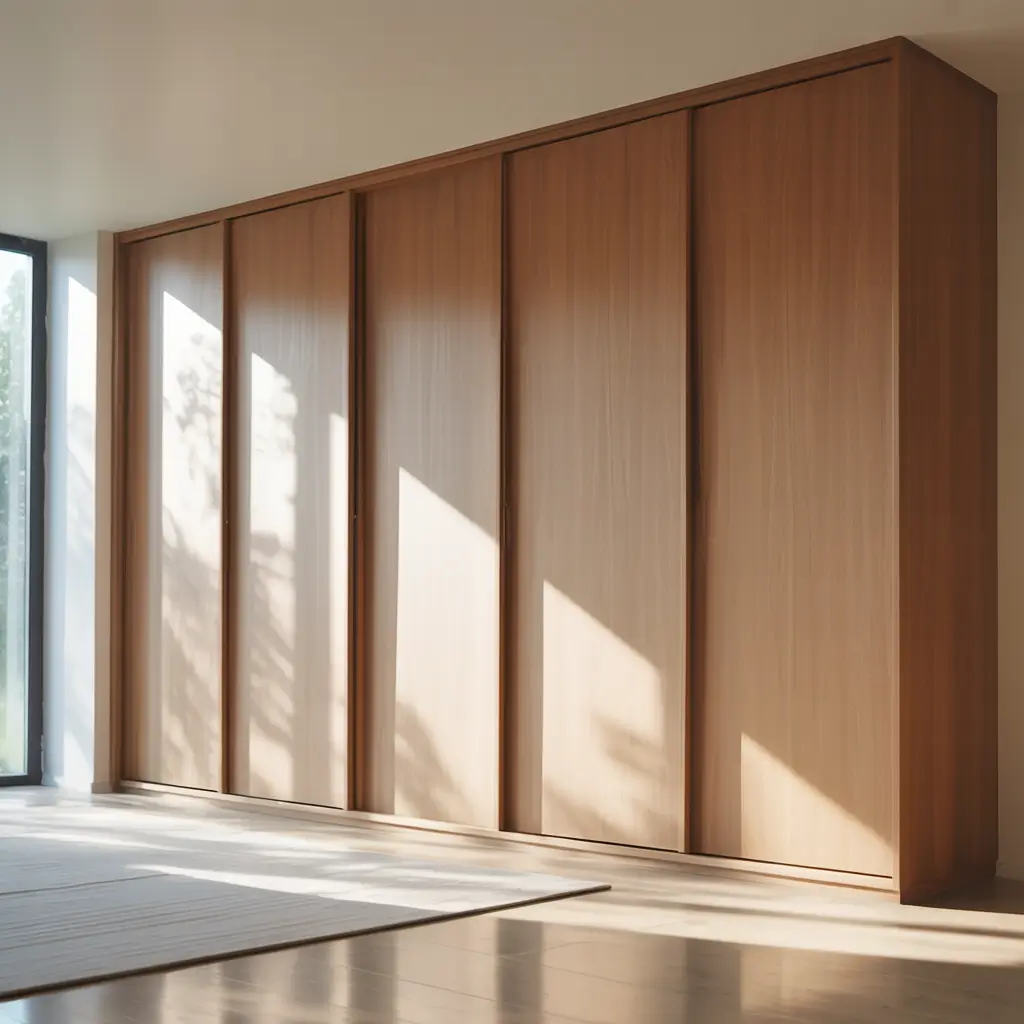
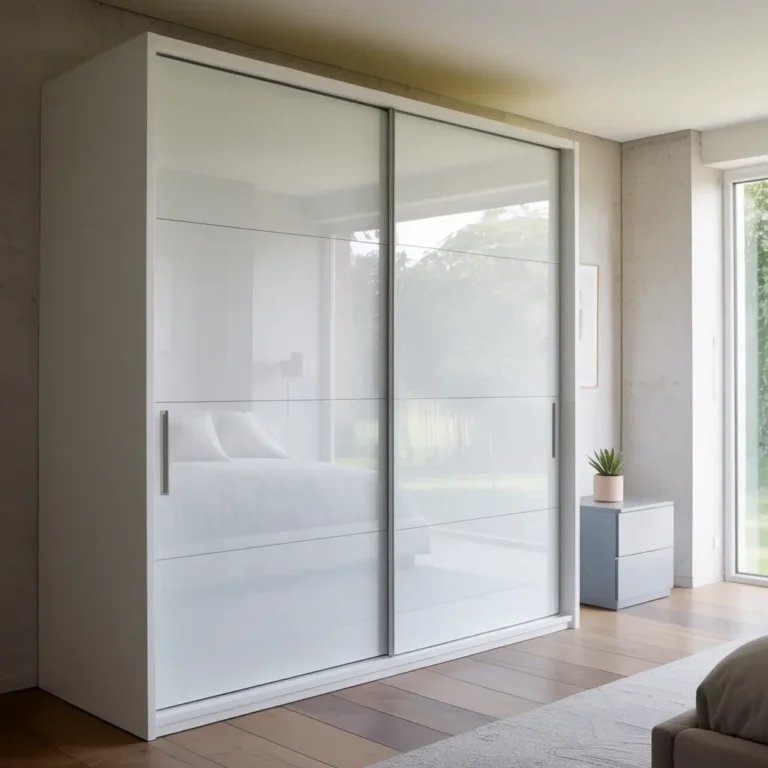
Sliding door wardrobes are practically made for small spaces. Think about it – no door swing means you can put furniture right up against the wardrobe without blocking access.
The key to good sliding door design is the track system. Cheap tracks will stick and bind, making the whole wardrobe frustrating to use. I learned this lesson when I bought a beautiful wardrobe with terrible hardware – it looked great but drove me crazy every morning.
Quality sliding door features:
- Smooth, quiet track systems
- Properly aligned doors that don’t drag
- Floor guides to prevent swaying
- Easy-grip handles or finger pulls
- Doors that overlap properly when closed
One thing to consider is which doors slide where. If you mostly access one side of your wardrobe, make sure that side isn’t blocked when the other door is open. It sounds obvious, but I’ve made this mistake.
Barn door style sliding doors are trendy right now, and they can work in small spaces if you have the wall space for the door to slide to. Just remember – the door needs somewhere to go, so plan accordingly.
Corner Wooden Wardrobe Designs
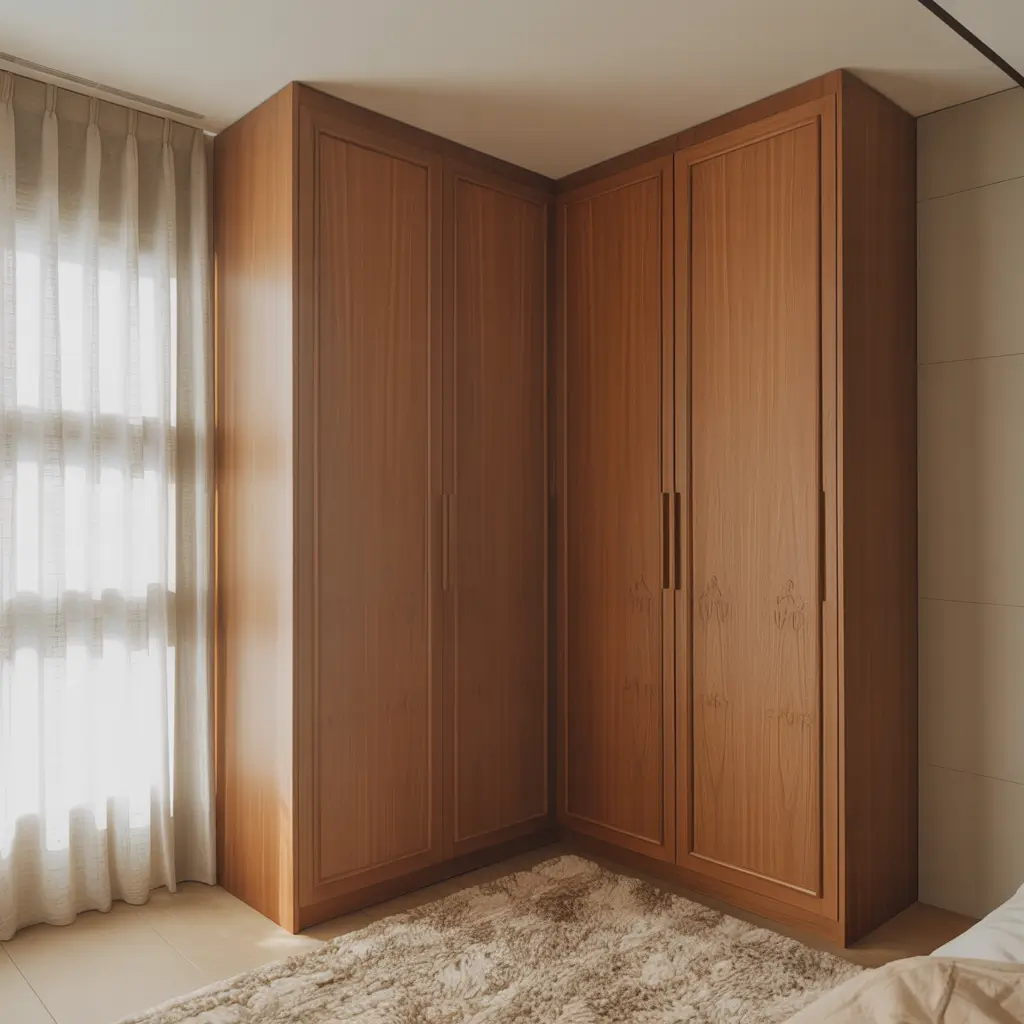
Corner wardrobes are brilliant for tiny rooms because they use space that’s often wasted anyway. That weird corner where two walls meet? Perfect wardrobe territory.
The challenge with corner wardrobes is making the interior accessible. I’ve seen designs where half the storage space was basically unreachable because of awkward corners. The best corner wardrobes solve this with rotating mechanisms or pull-out organizers.
Smart corner wardrobe features:
- Curved or angled doors that follow the corner
- Lazy Susan mechanisms for easy access
- Multiple smaller compartments instead of one big space
- Good lighting to see into the depths
- Easy-glide drawer systems
I helped design a corner wardrobe for a friend’s tiny bedroom, and we used a pie-shaped configuration with rotating shelves. It looked a bit weird from the outside, but the functionality was amazing – she could access everything easily.
The wood choice matters here because corner wardrobes often become focal points. Light woods help them blend into the background, while darker woods make them statement pieces.
Also Read: 15 Modern Wardrobe Interior Design Hacks for Small Rooms
Multi-Functional Wooden Wardrobes
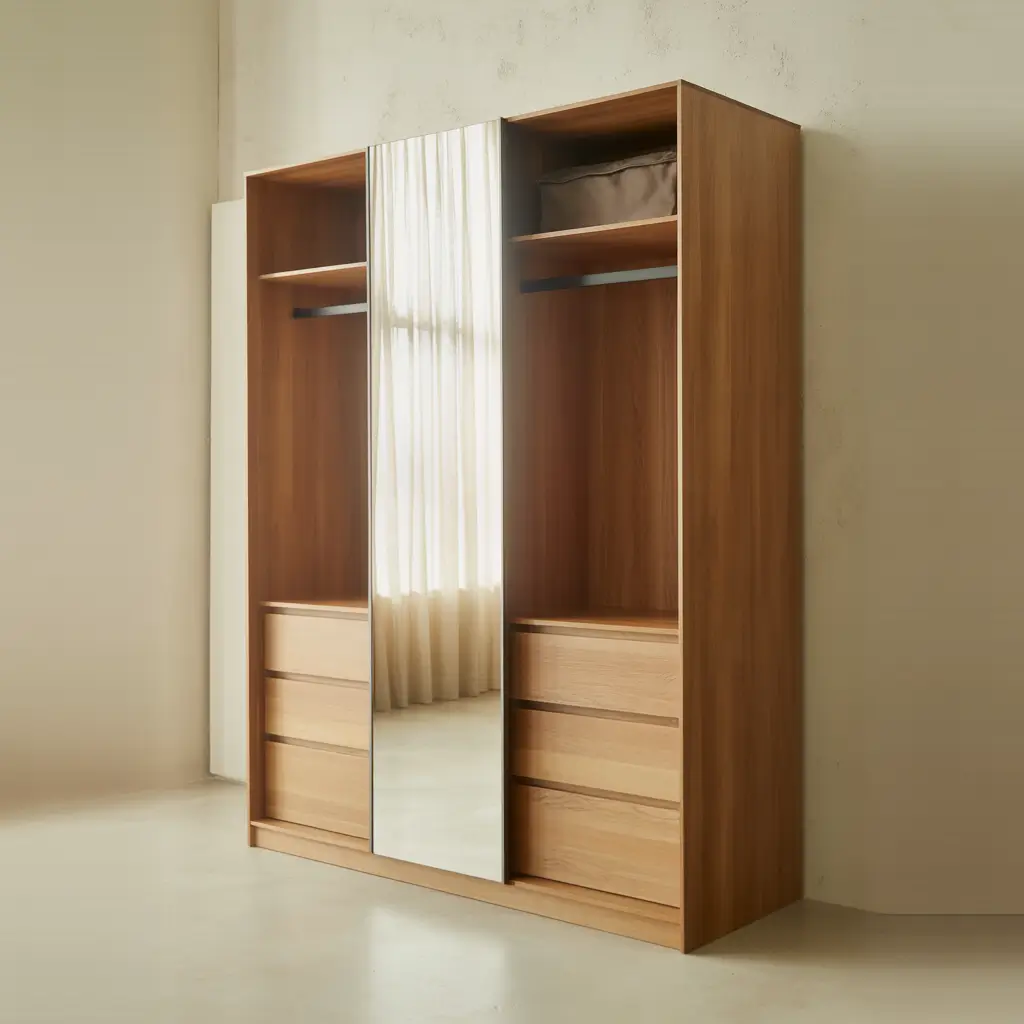
Why should your wardrobe just hold clothes? In a tiny room, every piece of furniture needs to earn its keep by serving multiple functions.
I’ve seen wardrobes that incorporate desks, seating, entertainment centers, and even beds (Murphy bed style). The key is making sure each function works properly – a wardrobe with a terrible desk attached is worse than just having a wardrobe.
Popular multi-functional combinations:
- Wardrobe with fold-down desk
- Wardrobe with built-in seating bench
- Wardrobe with display shelving
- Wardrobe with TV mounting area
- Wardrobe with hidden laundry hamper
The structural requirements change when you add other functions. A wardrobe with a fold-down desk needs stronger construction and proper support for the desk mechanism. Don’t assume any wardrobe can be converted – some modifications require significant engineering.
My favorite multi-functional wardrobe includes a pull-out laundry sorter at the bottom. It’s one of those features that seems small but makes daily life so much easier.
Affordable Wooden Wardrobe Ideas
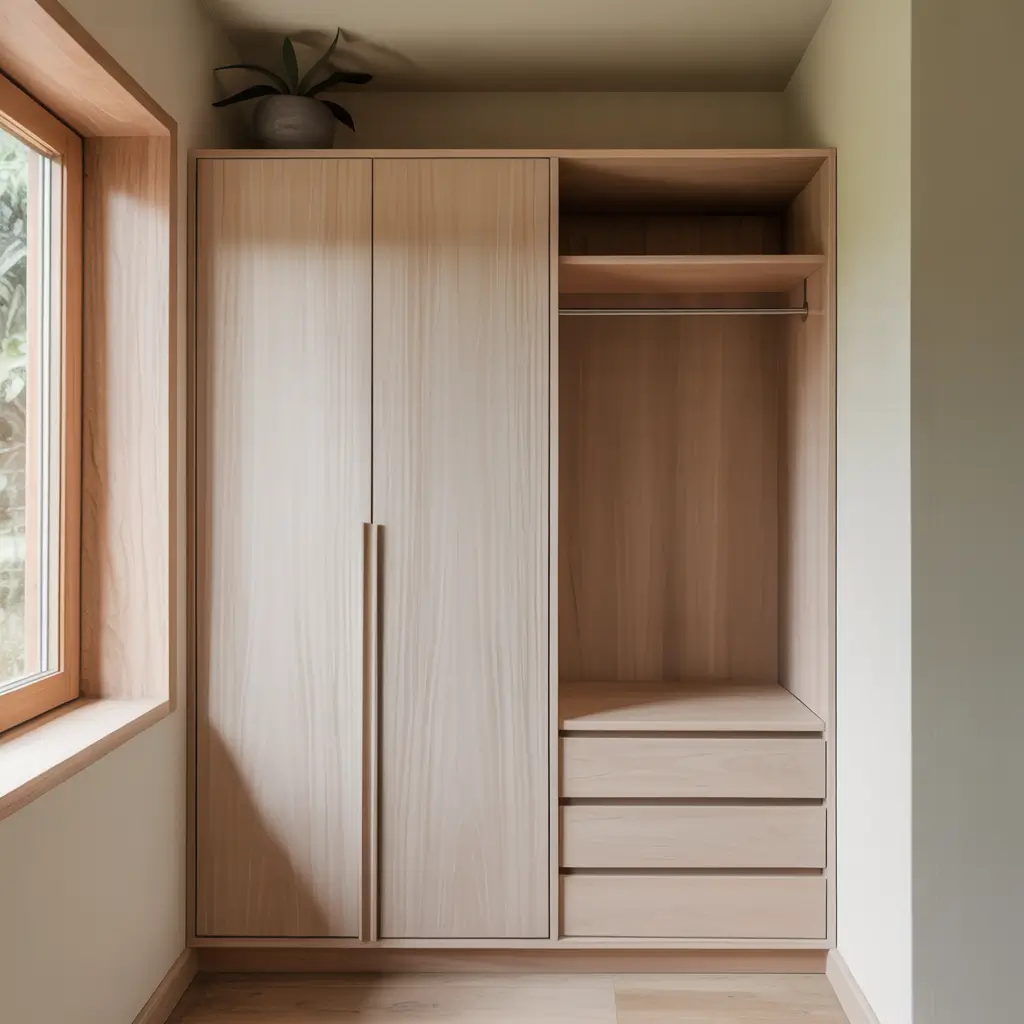
Let’s be real – not everyone has unlimited budget for storage solutions. But affordable doesn’t have to mean cheap-looking or poorly made.
The secret to affordable wooden wardrobes is knowing where to compromise and where not to. Spend money on good hardware (hinges, slides, handles) because that’s what you interact with daily. You can save money on fancy wood species or decorative details.
Smart budget strategies:
- Choose engineered wood with wood veneer instead of solid wood
- Buy unfinished pieces and stain/paint yourself
- Look for simple designs without complex joinery
- Consider flat-pack options for lower shipping costs
- Buy during end-of-season sales
Pine and engineered woods can look great with the right finish. I’ve seen pine wardrobes that look like expensive oak after a good staining job. The key is taking time with the finishing process.
One of my best budget finds was a basic wardrobe from a big box store that I customized with better hardware and interior organizers. Total cost was still less than half of a comparable “designer” piece.
Teak & Oak Wardrobe Inspirations
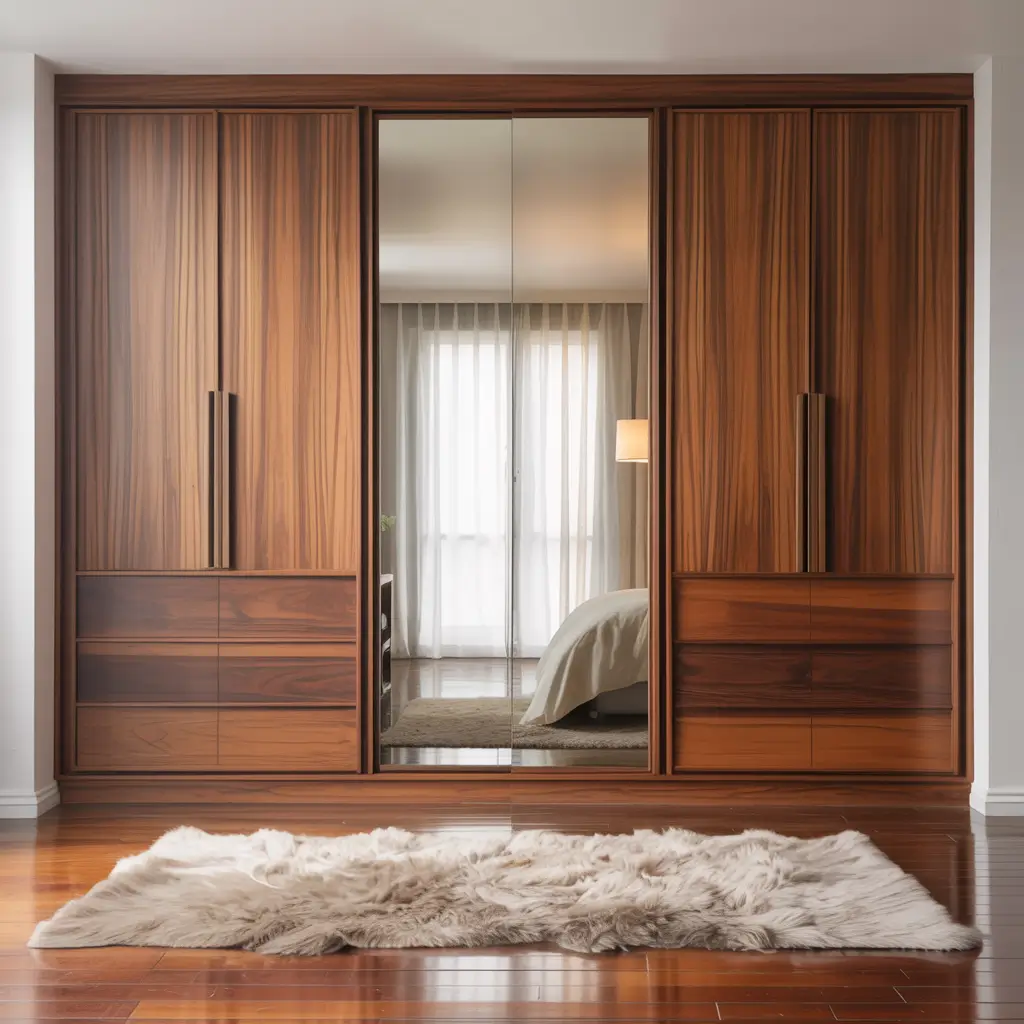
Let’s talk about premium wood species – specifically teak and oak, which are classics for good reason.
Teak is naturally resistant to moisture and insects, making it perfect for wardrobes. It has this beautiful golden color that ages to a silver-gray if you let it. I’ve seen teak wardrobes that are decades old and still look amazing.
Oak comes in so many varieties – red oak, white oak, European oak – each with its own character. White oak is my personal favorite for wardrobes because it has this clean, timeless look that works with any decor style.
Why these woods work well:
- Durable enough for daily use
- Beautiful natural grain patterns
- Age gracefully over time
- Hold their value
- Available in sustainable options
The cost difference between teak/oak and other woods is significant, but consider it an investment. A well-made oak wardrobe can last generations, while a particle board unit might need replacing in five years.
Finishing options for these premium woods range from natural oils that enhance the grain to painted finishes that give a more contemporary look. FYI, painted teak always makes me a little sad – that wood is too beautiful to hide.
Wooden Wardrobe with Built-in Lighting
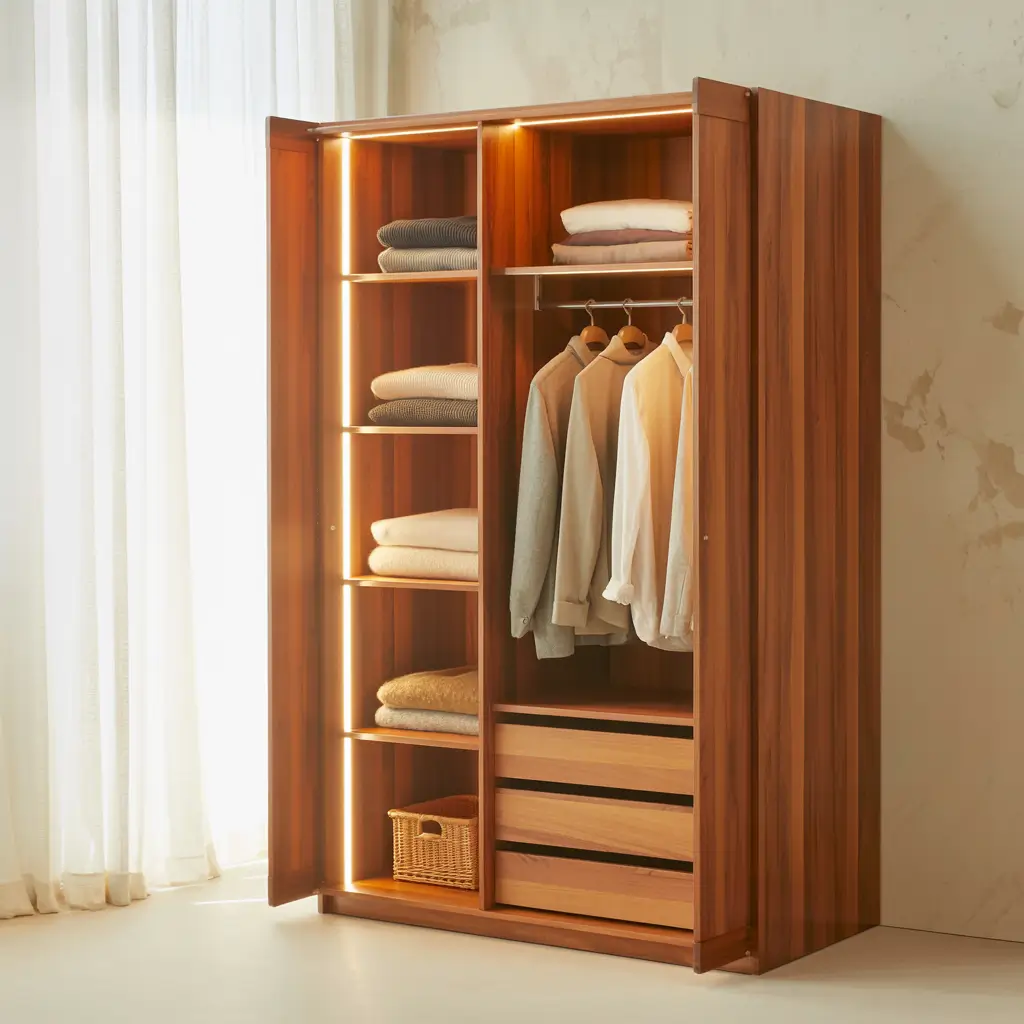
Interior lighting transforms a wardrobe from basic storage to something that feels luxurious. Plus, in a small room where every bit of light counts, wardrobe lighting can actually contribute to the overall ambiance.
LED strip lighting is the most practical option. It’s energy-efficient, doesn’t generate heat, and you can install it in tight spaces. I usually recommend warm white LEDs (around 3000K) because they’re easier on the eyes when you’re getting dressed in the morning.
Smart lighting placement:
- Under each shelf to illuminate contents below
- Behind the hanging rod to light hanging clothes
- Around the interior perimeter for general illumination
- In drawers for small items
- Near mirrors if your wardrobe has them
The wiring can be tricky in retrofits, but many modern wardrobes come pre-wired for lighting. Battery-powered LED strips are an option, but honestly, they’re more hassle than they’re worth because you’re constantly changing batteries.
Motion sensors are a nice touch – the lights come on automatically when you open the doors. It’s one of those small luxuries that makes your daily routine feel a bit more special 🙂
Custom Wooden Wardrobe Layouts
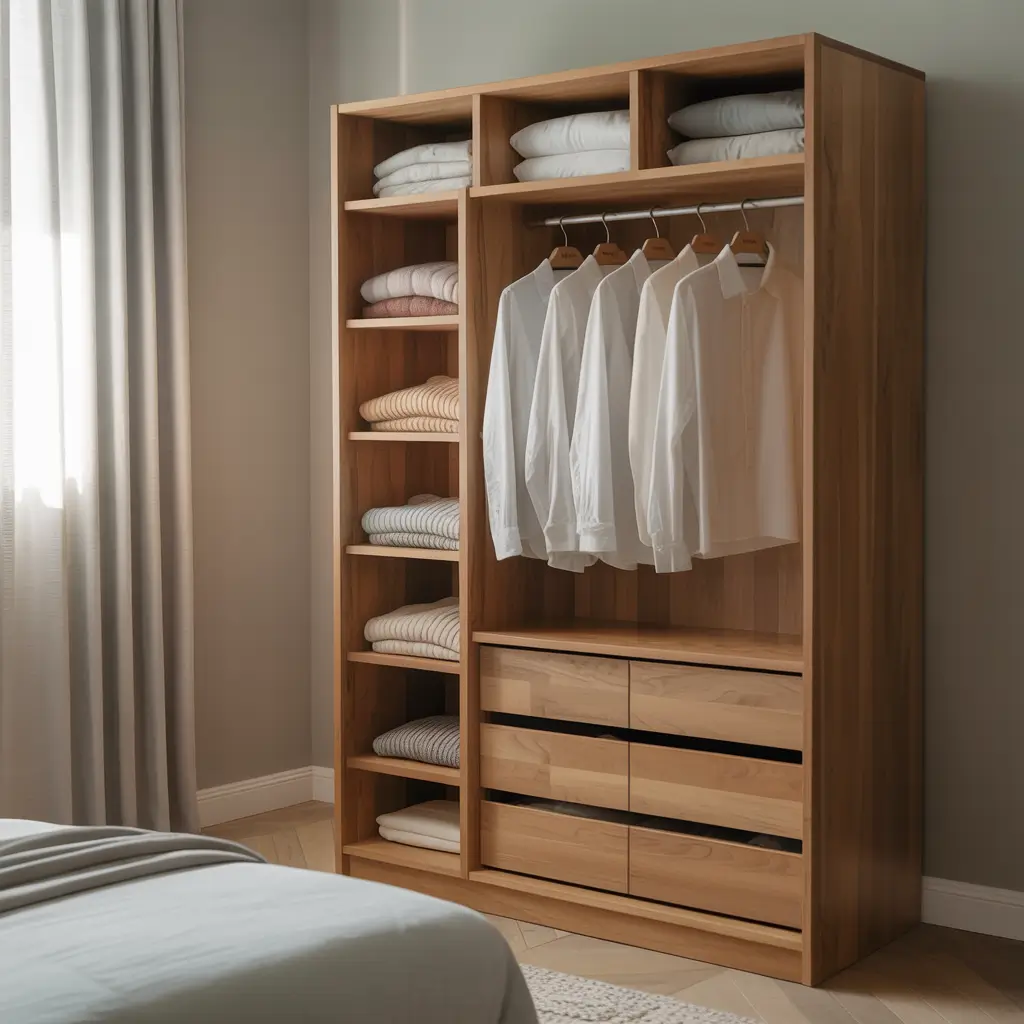
Sometimes you need storage that’s built specifically for your space and your stuff. Custom layouts let you maximize every square inch while accommodating your particular needs.
I worked with a cabinetmaker on a custom wardrobe for a tiny bedroom with sloped ceilings. We designed it to follow the roofline exactly, using space that would otherwise be wasted. The result was about 30% more storage than any off-the-shelf unit could provide.
Benefits of custom layouts:
- Perfect fit for unusual spaces
- Designed around your specific belongings
- Quality materials and construction
- Exactly the features you want
- Built to your style preferences
The process usually starts with detailed measurements and a discussion about how you use your clothes. Do you have lots of long dresses? Need extra shoe storage? Prefer drawers over shelves? All of this influences the final design.
Cost considerations – custom work isn’t cheap, but it can be worth it if you’re planning to stay put for several years. IMO, custom makes the most sense when your space has unusual challenges that standard wardrobes can’t solve.
Contemporary Wooden Wardrobe Trends
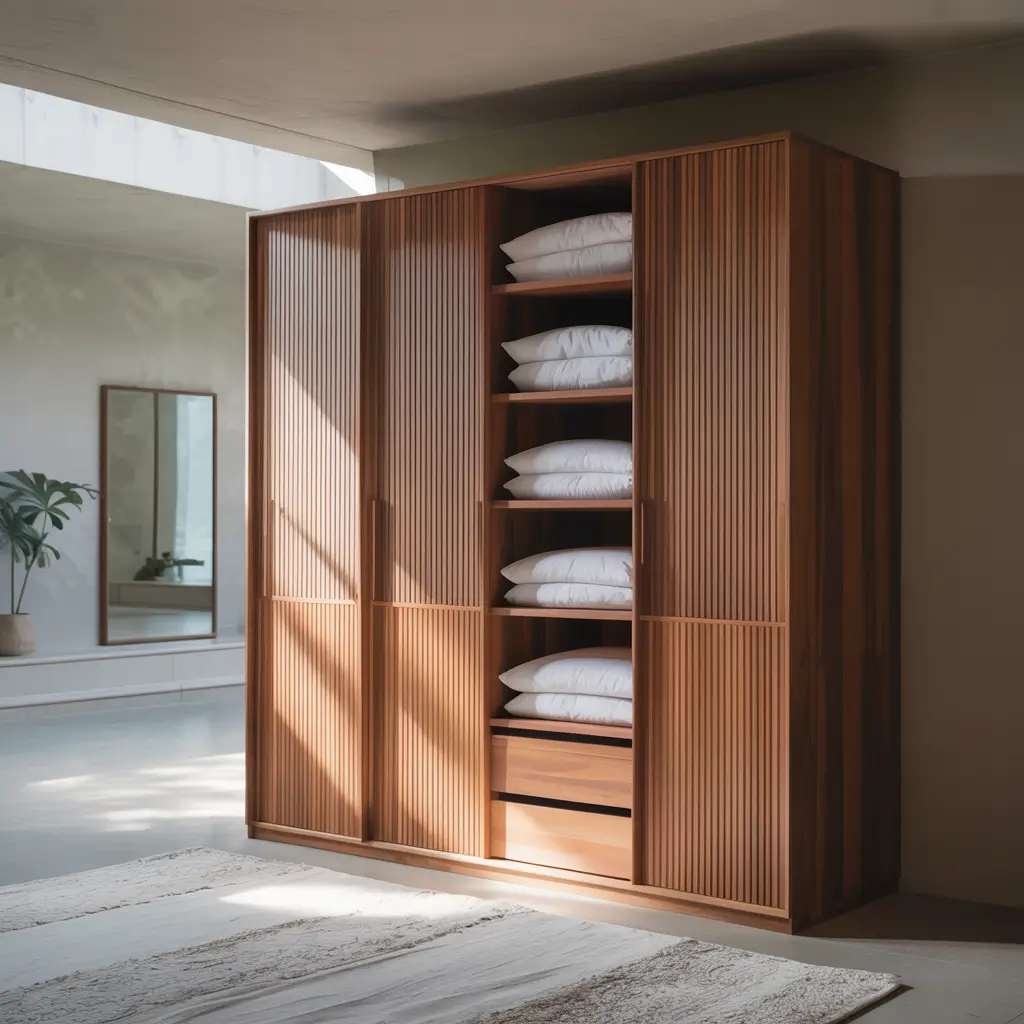
Let’s wrap up with what’s trending in contemporary wooden wardrobe design. Spoiler alert: it’s all about clean lines, mixed materials, and smart technology integration.
Current trends I’m seeing everywhere:
- Mixed wood and metal combinations
- Hidden handles and push-to-open mechanisms
- Integrated charging stations for devices
- App-controlled lighting systems
- Sustainable and reclaimed wood materials
- Modular systems that adapt over time
The mixed materials trend is particularly interesting. Wooden frames with metal accents, fabric-covered sections, or even glass display areas create visual interest without overwhelming small spaces.
Technology integration is becoming standard rather than luxury. USB charging ports, LED lighting with smartphone control, and even smart locks are showing up in high-end wardrobes. It might seem like overkill, but when your wardrobe is one of the few furniture pieces in your tiny room, why not make it smart?
Sustainability is influencing everything from wood sourcing to manufacturing processes. Reclaimed wood wardrobes aren’t just trendy – they’re often higher quality than new construction lumber because the wood is older and more stable.
Conclusion
There you have it – fifteen ways to make wooden wardrobes work beautifully in tiny rooms. The key is remembering that small spaces require smart choices, not compromise on style or function.
Whether you go for a sleek minimalist design, embrace the warmth of rustic wood, or invest in a custom solution, the right wardrobe can transform your tiny room from cramped to cozy. And honestly? Sometimes the constraints of a small space lead to more creative and interesting solutions than you’d ever consider in a larger room.