15 Creative Black and White Tile Kitchen Designs to Steal

Look, I get it. You’re probably scrolling through Pinterest at 2 AM, coffee in hand, wondering why your kitchen doesn’t look like those magazine-worthy spaces. Black and white tiles seem like they should be simple, right? Just two colors. How hard could it be? Well, spoiler alert: there’s a massive difference between “basic” and “breathtakingly chic.”
I’ve spent way too much time obsessing over kitchen designs (my partner would definitely agree), and black and white tiles have this magical ability to transform even the most boring kitchen into something genuinely special. Whether you’re into that vintage vibe or you want something sleek and modern, these two timeless colors have your back.
So grab your notepad—or just bookmark this—because I’m about to show you 15 killer black and white tile kitchen designs that’ll make you want to start a renovation ASAP. Trust me, your kitchen is about to get a serious glow-up.
Classic Checkerboard Tile Kitchen
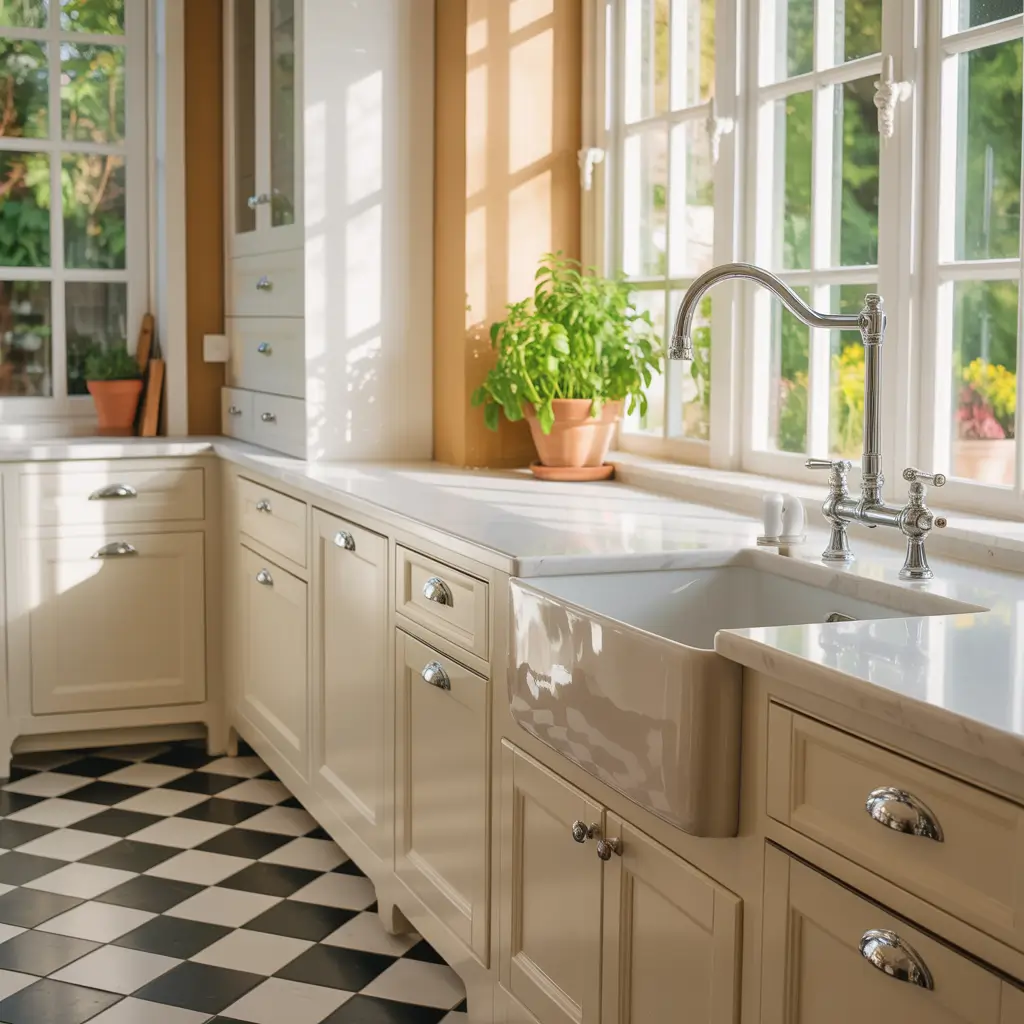
Let’s start with the OG of black and white tile designs. The checkerboard pattern never goes out of style, and honestly? It probably never will.
I remember walking into my grandmother’s kitchen and seeing those perfectly aligned black and white squares stretching across the floor. There’s something nostalgic yet utterly sophisticated about this look. It works because it creates visual interest without overwhelming your space—a perfect balance that’s honestly hard to achieve with other patterns.
Here’s what makes checkerboard floors work so well:
- They make small kitchens appear larger by creating a sense of movement
- The geometric pattern adds personality without requiring colorful accents
- You can adjust the tile size based on your space (larger tiles for big kitchens, smaller for compact ones)
- They’re incredibly forgiving when it comes to hiding dirt and minor imperfections
The trick with checkerboard patterns? Don’t overthink the rest of your kitchen. Let the floor be the star of the show. Pair it with neutral cabinets, simple hardware, and minimal accessories. When you’ve got that much going on underfoot, you want your countertops and walls to breathe a little.
Pro tip from someone who’s been there: if you’re working with a smaller kitchen, go for 12×12 inch tiles instead of those tiny 6×6 squares. The larger format keeps things modern and prevents that “diner bathroom” vibe nobody wants.
Modern Black and White Subway Tile Backsplash
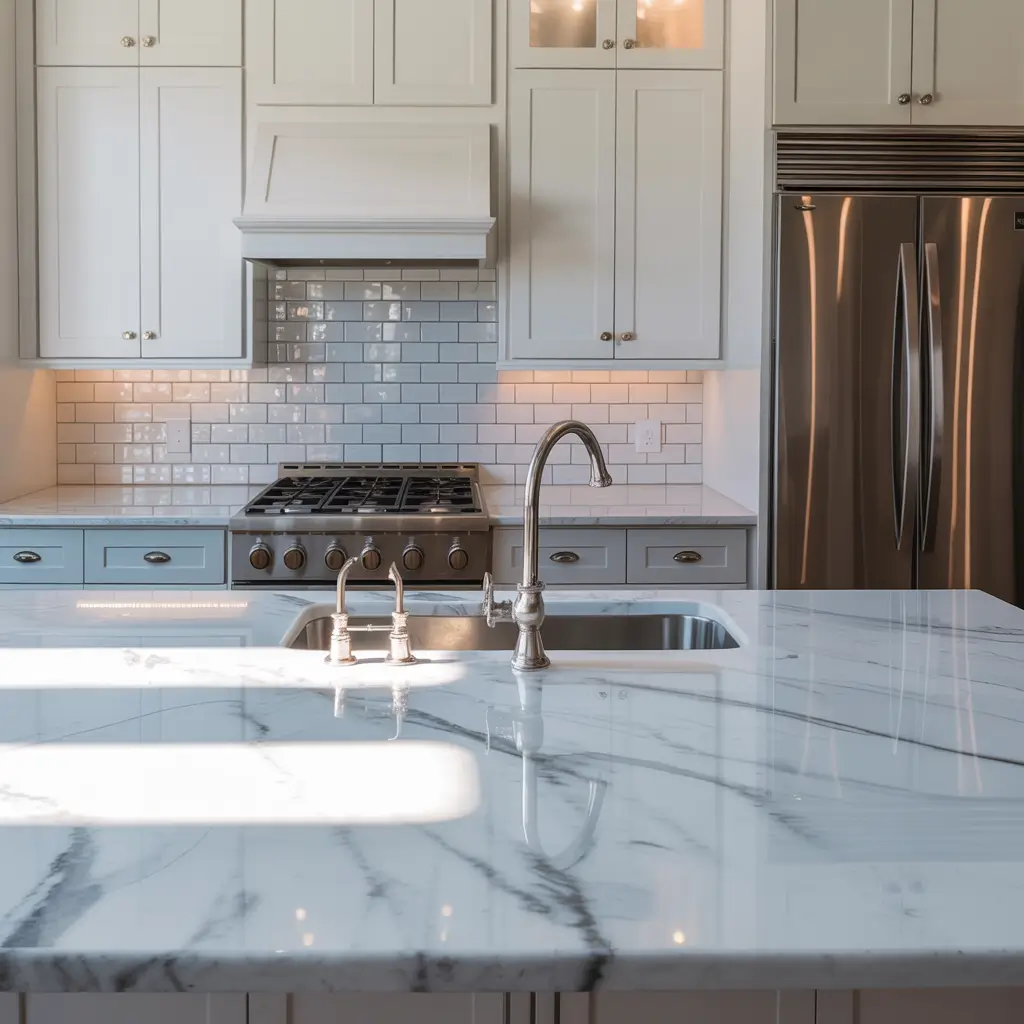
Okay, subway tiles might seem overdone at this point—every kitchen reno on Instagram features them. But here’s the thing: they’re popular for a reason, and when you use them right, they look freaking amazing.
The traditional white subway tile with black grout has become a modern classic. It’s clean, it’s crisp, and it gives your kitchen that effortlessly cool aesthetic without trying too hard. I installed this exact combo in my own kitchen three years ago, and I still get compliments every time someone visits.
What makes this design particularly genius:
- Black grout means less maintenance (because let’s be real, white grout is a nightmare)
- The horizontal lines visually expand your kitchen
- It complements literally any cabinet color or countertop material
- You can play with the installation pattern—traditional, vertical stack, or herringbone
Want to kick it up a notch? Try reversing the color scheme with black subway tiles and white grout. It’s bolder, more dramatic, and gives you that moody kitchen aesthetic everyone’s obsessing over right now. Just make sure you’ve got enough natural light, or your kitchen might feel like a cave (and not the cool kind).
The beauty of subway tiles lies in their versatility. You can keep them simple or get creative with the layout. Herringbone patterns add movement, while vertical stacking creates height. Ever wondered why designers charge so much? It’s because they know these little tricks 🙂
Black and White Hexagon Tile Kitchen Floor
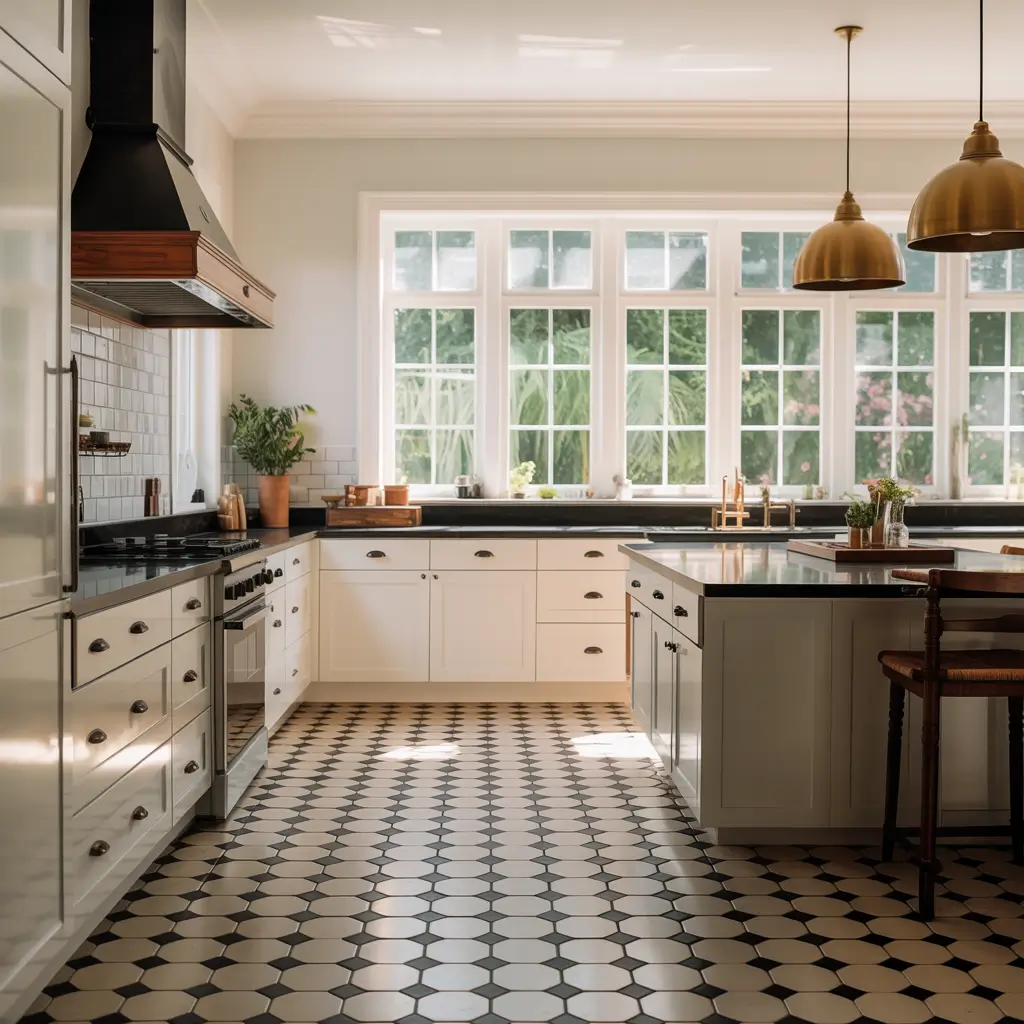
Hexagon tiles are having a major moment, and I’m absolutely here for it. They bring this geometric sophistication that rectangular tiles just can’t match.
I’ll be honest—when I first saw hexagon tiles, I thought they might be too trendy, too “of the moment.” But after seeing them in person and watching how they age, I’ve completely changed my tune. These tiles have serious staying power.
Check out what hexagon tiles bring to the table:
- Unique visual texture that creates a honeycomb effect
- Works beautifully in both modern and vintage-inspired kitchens
- Available in various sizes (small penny tiles to larger 8-inch hexagons)
- The pattern naturally draws the eye, making your floor a conversation piece
Here’s my take: go with white hexagons with black grout for a contemporary look, or flip it for something more dramatic. You can even create custom patterns by mixing black and white tiles in specific arrangements—think random scattering or intentional gradients.
One thing to keep in mind? Installation costs might run higher than standard square tiles because the pattern requires more precision. But FYI, the end result is absolutely worth those extra bucks. Your kitchen floor shouldn’t be an afterthought—it’s literally the foundation of your design.
Minimalist Black and White Mosaic Tile Kitchen
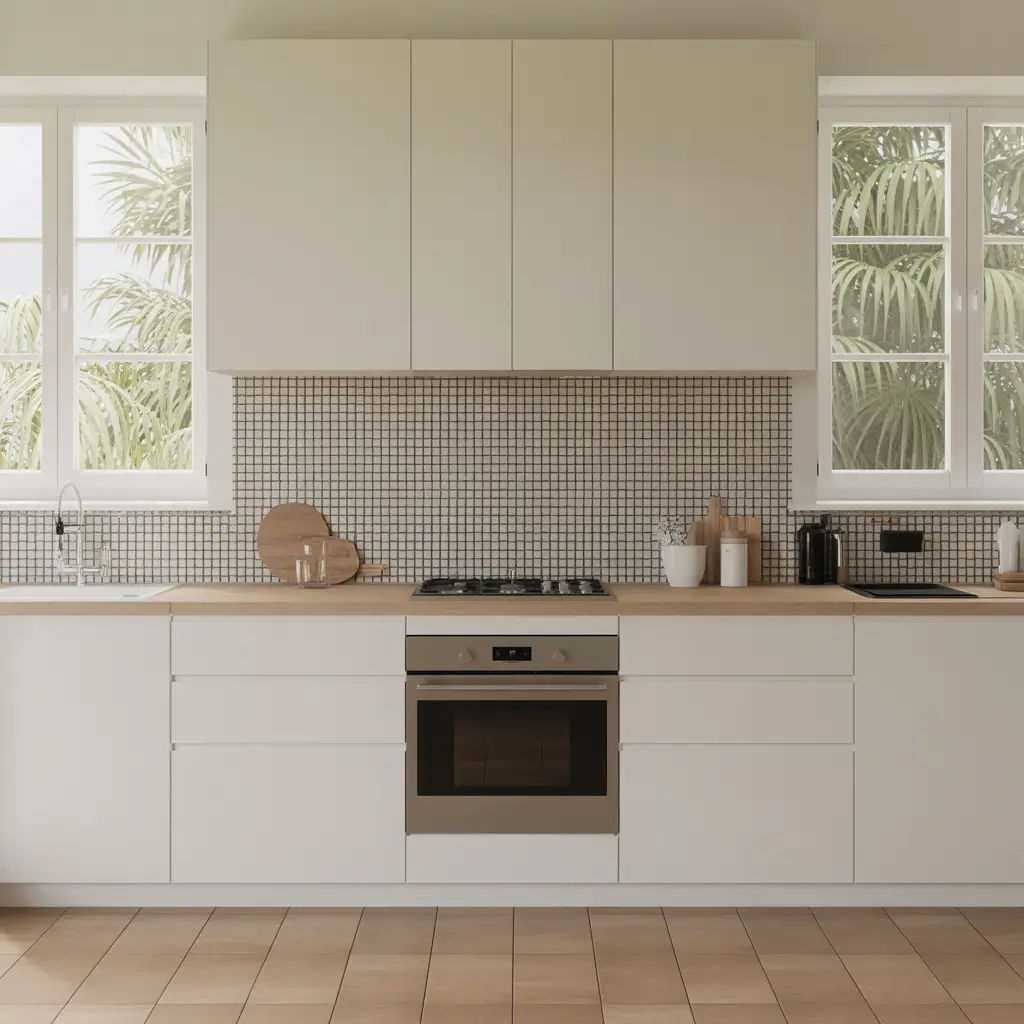
Minimalism doesn’t mean boring, and mosaic tiles prove this point beautifully. When you pair the intricate detail of mosaics with a strict black and white palette, you get something unexpectedly stunning.
The key to pulling off minimalist mosaic is restraint. I’ve seen too many kitchens go overboard, covering every surface in busy patterns. Don’t be that person. Choose one focal area—maybe your backsplash or a single accent wall—and let the mosaic shine there.
What I love about this approach:
- Small-scale mosaics add texture without color chaos
- They create a handcrafted, artisanal feel
- Perfect for adding interest to an otherwise simple kitchen
- Works incredibly well behind ranges or sinks as a focal point
You’ve got options with mosaics—tiny squares, rectangles, or even irregular shapes that create an organic feel. My personal favorite? Elongated rectangular mosaics arranged in a stacked pattern. They’re modern enough to feel current but classic enough to age well.
The minimalist mindset means your cabinets, counters, and hardware should be clean-lined and simple. Let the mosaic do the talking. Think sleek handleless cabinets, minimal open shelving, and matte or honed finishes rather than high-gloss everything.
Also Read: 15 Gorgeous Black and Copper Kitchen Luxury Style Ideas
Vintage-Inspired Black and White Tile Kitchen
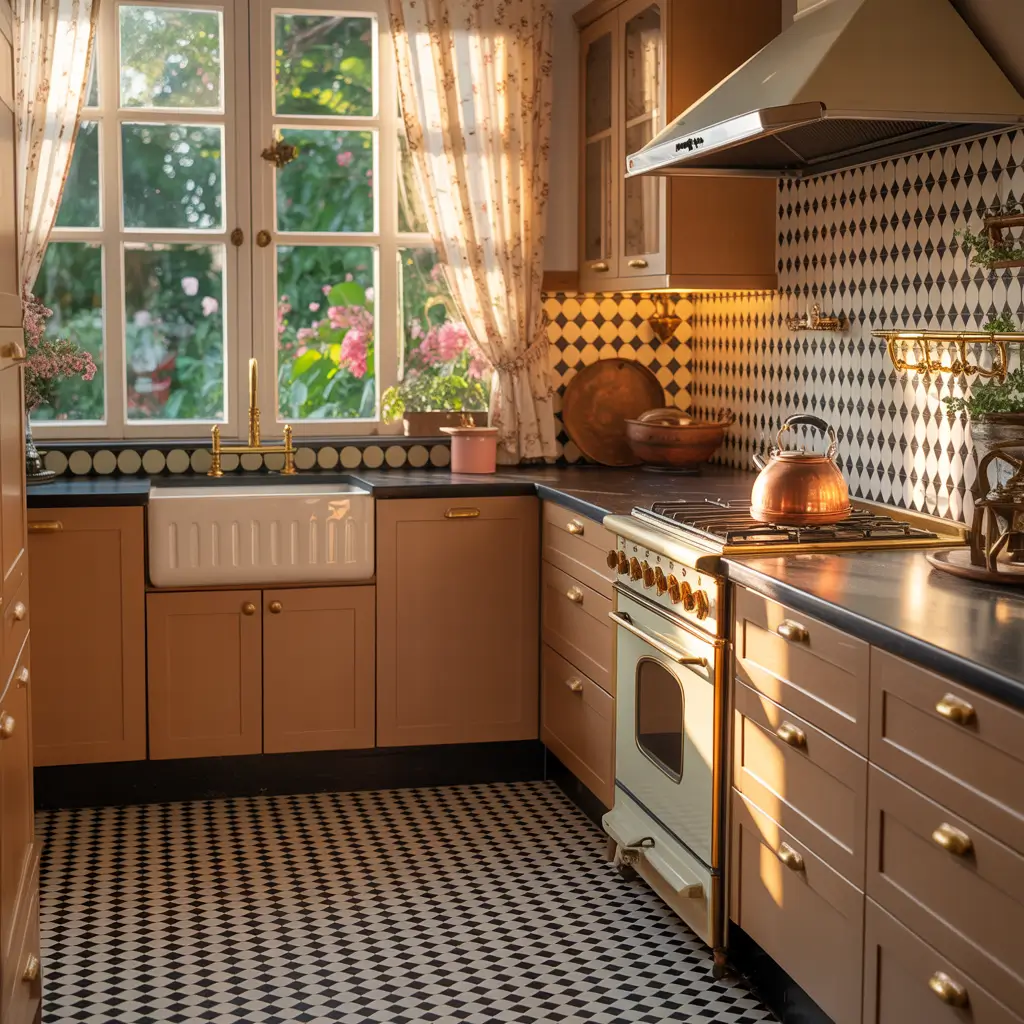
Nothing beats the charm of a vintage-inspired kitchen. I’m talking about those designs that make you feel like you’ve stepped into a 1920s Parisian apartment or a classic American farmhouse.
Vintage black and white tile kitchens have this romantic quality that modern designs sometimes lack. They tell a story, they have character, and they never feel sterile or cold. I helped my aunt design her kitchen with vintage tiles, and guests literally ask for the designer’s contact info (she just shows them my number, which is both flattering and slightly annoying).
Elements that nail the vintage vibe:
- Encaustic or cement tiles with intricate patterns
- Smaller format tiles (think 4×4 or 6×6 inches)
- Detailed borders or decorative tile medallions
- Mixed patterns that feel collected over time
The secret to authentic vintage style? Don’t make everything match perfectly. Real vintage kitchens evolved over decades, accumulating pieces that complemented rather than coordinated. Mix your tile patterns, combine different shapes, and embrace the eclectic nature of the aesthetic.
Pair your vintage tiles with period-appropriate details—farmhouse sinks, unlacquered brass fixtures, and maybe even some glass-front cabinets. But here’s the thing: you can keep modern appliances. Nobody actually wants a vintage refrigerator that breaks down every other month. Blend old-world charm with contemporary functionality, and you’ll have a kitchen that works beautifully on every level.
Black and White Tile Kitchen with White Cabinets
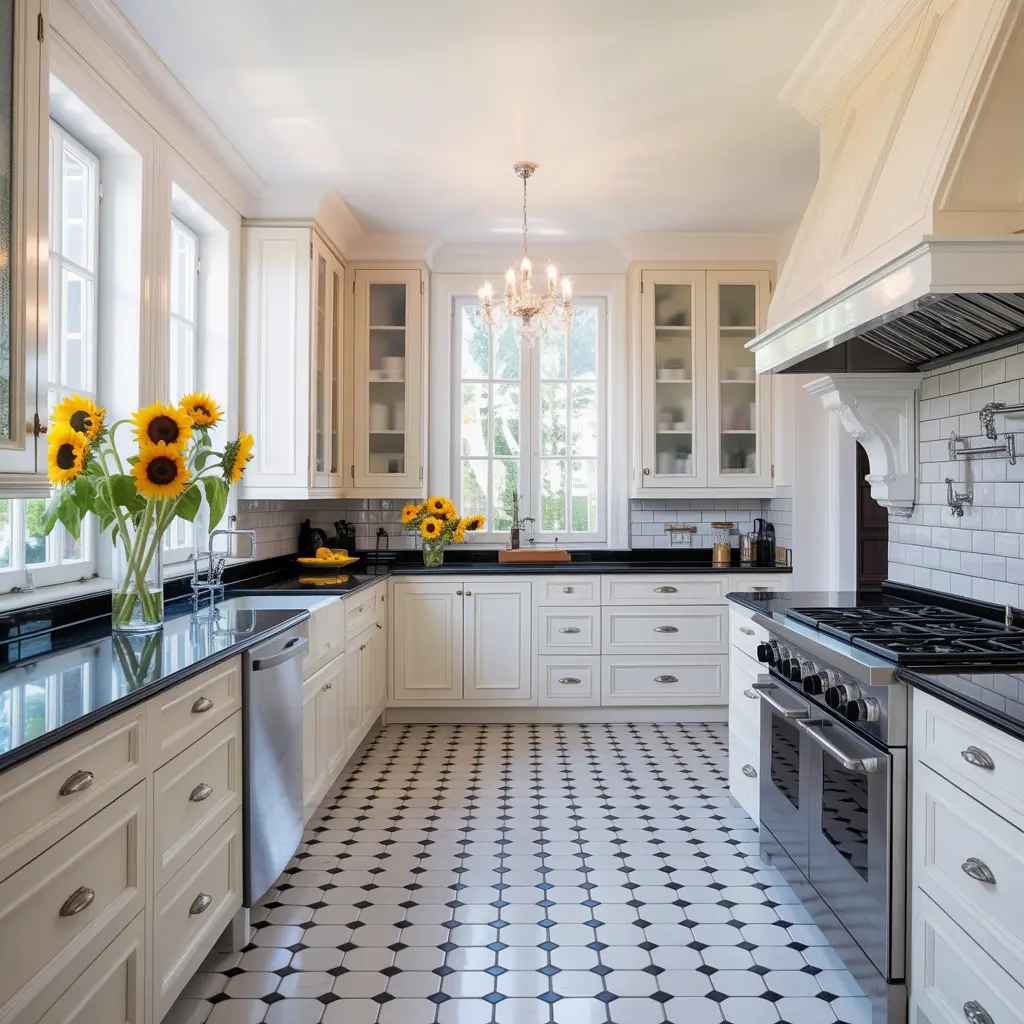
White cabinets are like that little black dress of kitchen design—they never go out of style and work with absolutely everything. When you pair them with black and white tiles, you create a crisp, clean look that feels both timeless and fresh.
This combination is my go-to recommendation for clients who want something safe but not boring. White cabinets provide a neutral backdrop that lets your tile choice shine without competing for attention.
Why this pairing works so well:
- Creates a bright, airy atmosphere perfect for smaller kitchens
- White cabinets reflect light, making your space feel larger
- You can go bold with your tile choice without overwhelming the room
- Easy to update accessories and decor without clashing
The key here is choosing tiles that add personality. Since your cabinets are playing it safe, your floor or backsplash can take some risks. Consider dramatic black and white geometric patterns, bold stripes, or intricate mosaics. The white cabinets will ground all that visual interest and prevent your kitchen from feeling chaotic.
I’ve noticed that people often hesitate with white cabinets because they worry about them looking “builder grade” or generic. The fix? Upgrade your hardware, add interesting textures, and choose quality materials. Shaker-style white cabinets with brushed brass pulls and a stunning black and white tile floor? Chef’s kiss—that’s Instagram-worthy right there.
Black and White Tile Kitchen with Black Cabinets
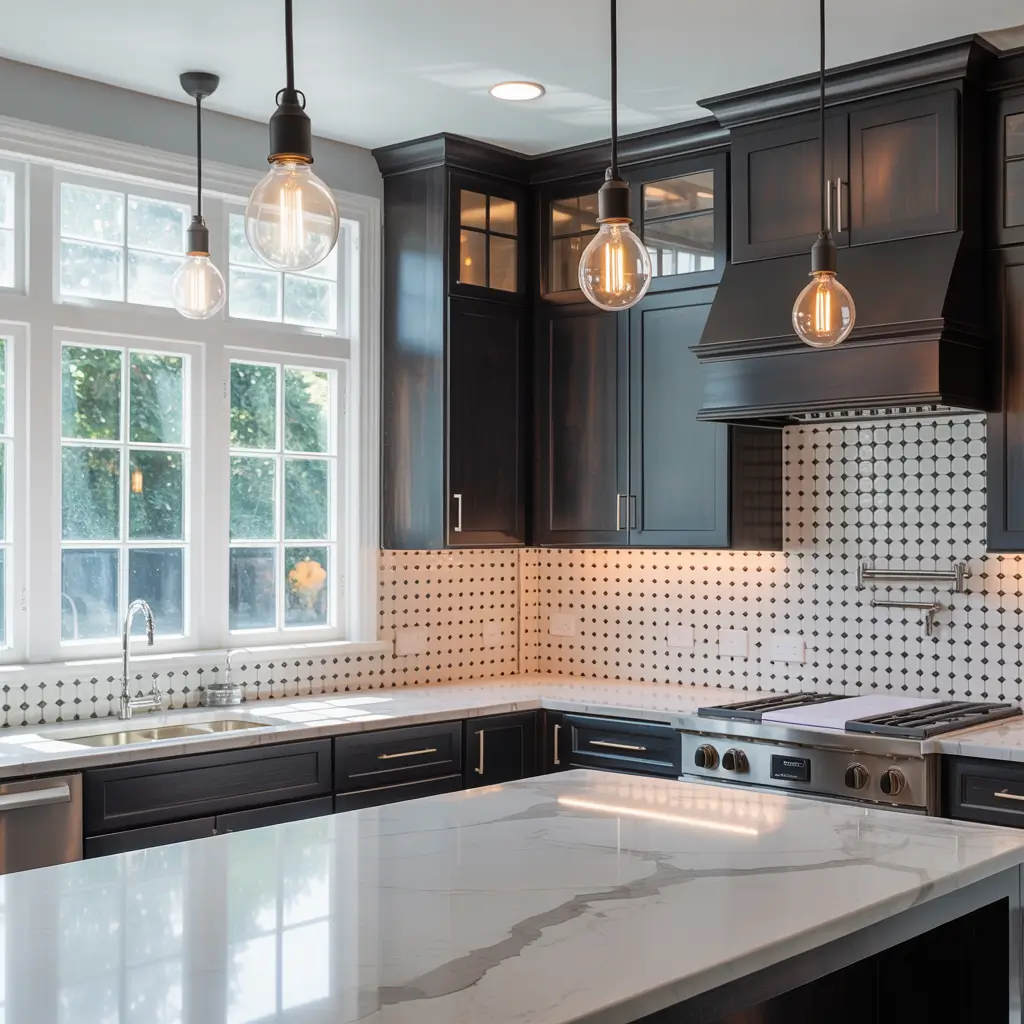
Ready to go bold? Black cabinets might seem intimidating, but when you balance them with the right tiles, they create this incredibly sophisticated, moody aesthetic that’s absolutely gorgeous.
I won’t lie—black cabinets aren’t for everyone. They require commitment and the right space. But if you’ve got good natural light and you’re not afraid of drama, this combination will blow your mind.
What makes black cabinets work with black and white tiles:
- Adds depth and dimension that lighter kitchens can’t achieve
- Creates a cohesive, intentional design scheme
- Perfect for modern, industrial, or contemporary styles
- Makes metallic accents (brass, copper, gold) pop beautifully
Here’s my advice: if you’re going with black cabinets, choose tiles that have more white than black. You need that contrast to prevent your kitchen from feeling like a cave. White subway tiles with black grout, predominantly white mosaic patterns, or white hexagons with black accents all work beautifully.
Lighting becomes crucial with darker cabinets. I’m talking layered lighting—under-cabinet strips, pendant lights, and plenty of natural light if possible. Black cabinets without proper lighting just look dark and depressing, but well-lit black cabinets look luxurious and intentional.
One more thing: keep your countertops light. White marble, white quartz, or light-colored concrete will provide the contrast you need. Trust me on this—I’ve seen too many all-black kitchens that feel more dungeon than design masterpiece.
Scandinavian Black and White Tile Kitchen
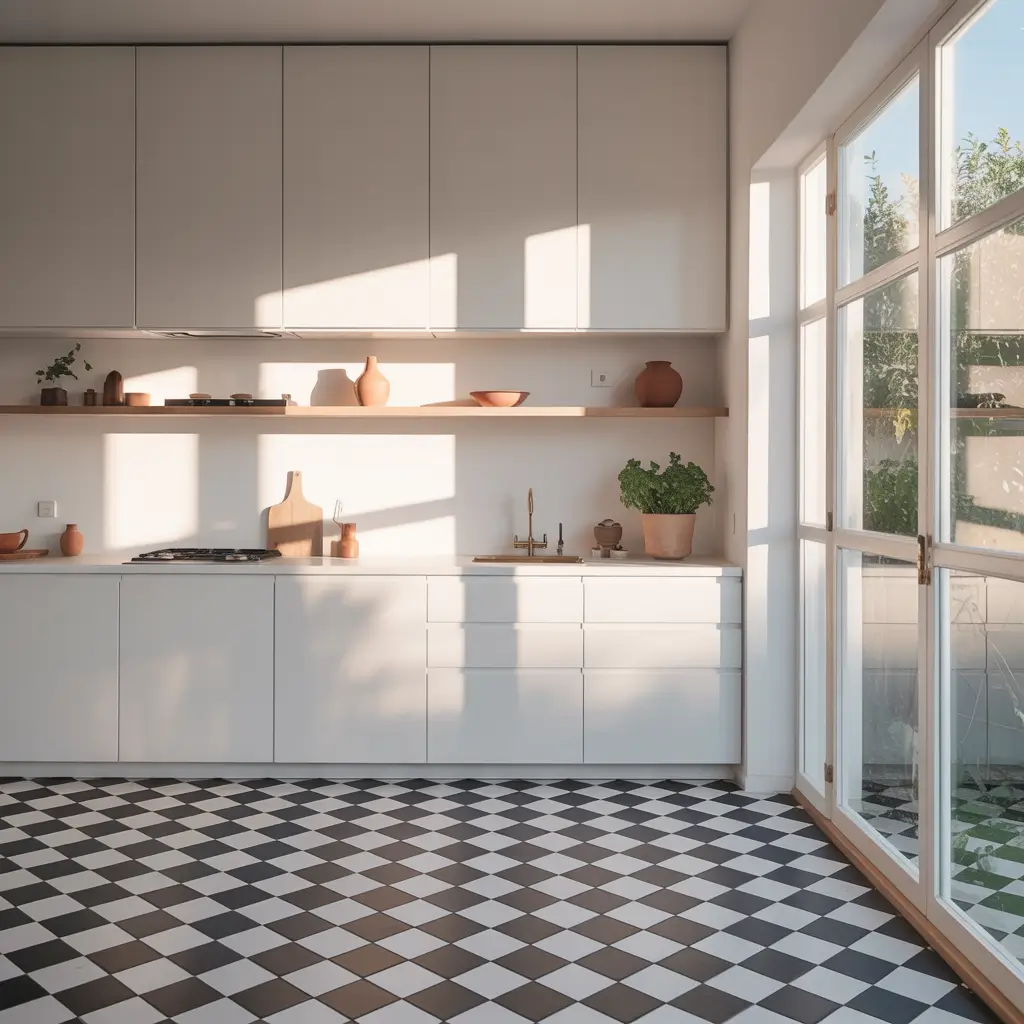
Scandinavian design has this effortless simplicity that I absolutely love. It’s functional, beautiful, and never feels overdone—basically the opposite of my personality, but that’s why I’m drawn to it.
Nordic kitchens embrace the black and white palette naturally because it aligns with their minimalist philosophy. Every element serves a purpose, nothing’s there just for show, and the result is this calm, organized space that actually makes you want to cook.
Key elements of Scandinavian black and white tile kitchens:
- Clean lines and geometric patterns (hexagons and simple subway layouts work great)
- Matte finishes over glossy (they feel more natural and less flashy)
- Minimal grout lines and seamless installations
- Focus on natural light and open, airy layouts
The Scandinavian approach favors white-dominant spaces with black accents. Think white walls, white cabinets, and white tiles with strategic black elements—maybe black grout, black cabinet hardware, or black fixtures. The contrast is there, but it’s subtle and sophisticated rather than in-your-face.
What really sets Scandinavian kitchens apart is the attention to natural materials alongside the tiles. You’ll often see light wood countertops, wooden open shelving, and natural fiber textiles. These warm elements prevent the black and white from feeling too cold or clinical.
IMO, if you want a kitchen that feels zen and organized but still has personality, the Scandinavian approach to black and white tiles is your answer. It’s proof that less really can be more when you get the details right.
Black and White Tile Kitchen with Marble Accents
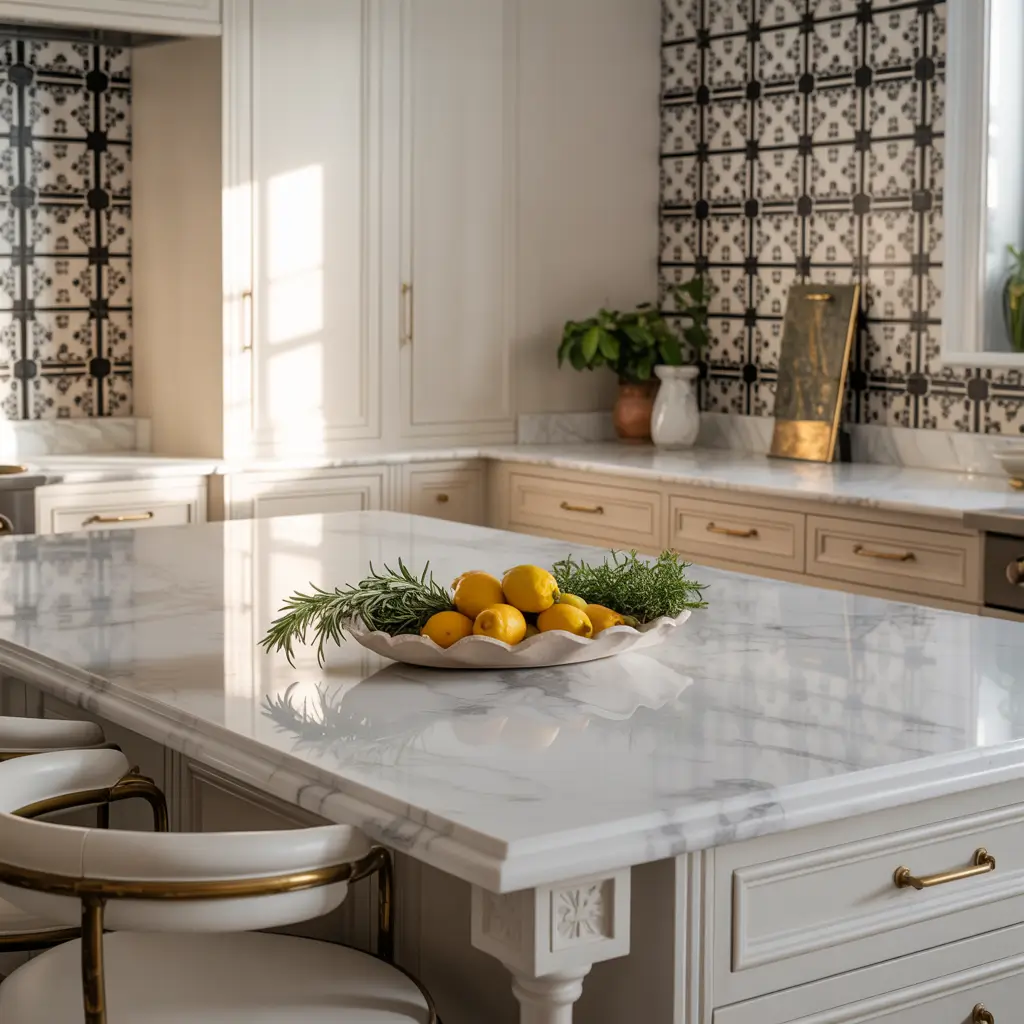
Want to add some luxury to your black and white kitchen? Marble’s your answer. There’s something about natural stone that elevates everything it touches.
I’ve always been a marble enthusiast (even with its high-maintenance reputation), and when you combine it with black and white tiles, you get this layered, textured look that feels expensive and thoughtfully designed.
Here’s how to incorporate marble with your black and white tiles:
- Marble countertops with black and white tile backsplash
- White marble floors with black tile accents or borders
- Marble subway tiles mixed with solid black or white ceramic tiles
- Black marble (like Nero Marquina) paired with white tile
The natural veining in marble adds organic movement that contrasts beautifully with the geometric precision of tile work. Even budget-friendly marble alternatives (looking at you, quartz) can achieve this effect if real marble isn’t in the cards.
One thing I always tell people: embrace marble’s imperfections. Those veins aren’t flaws—they’re character. Each slab is unique, which means your kitchen will be one-of-a-kind. Yeah, marble stains and etches, but if you’re prepared for the maintenance, it’s absolutely worth it.
Pair your marble and tile combination with warm metals like brass or gold. The warm tones complement marble’s cool elegance and add another layer of sophistication. Chrome and silver work too, but they can feel a bit cold against all that black, white, and grey veining.
Bold Patterned Black and White Tile Backsplash
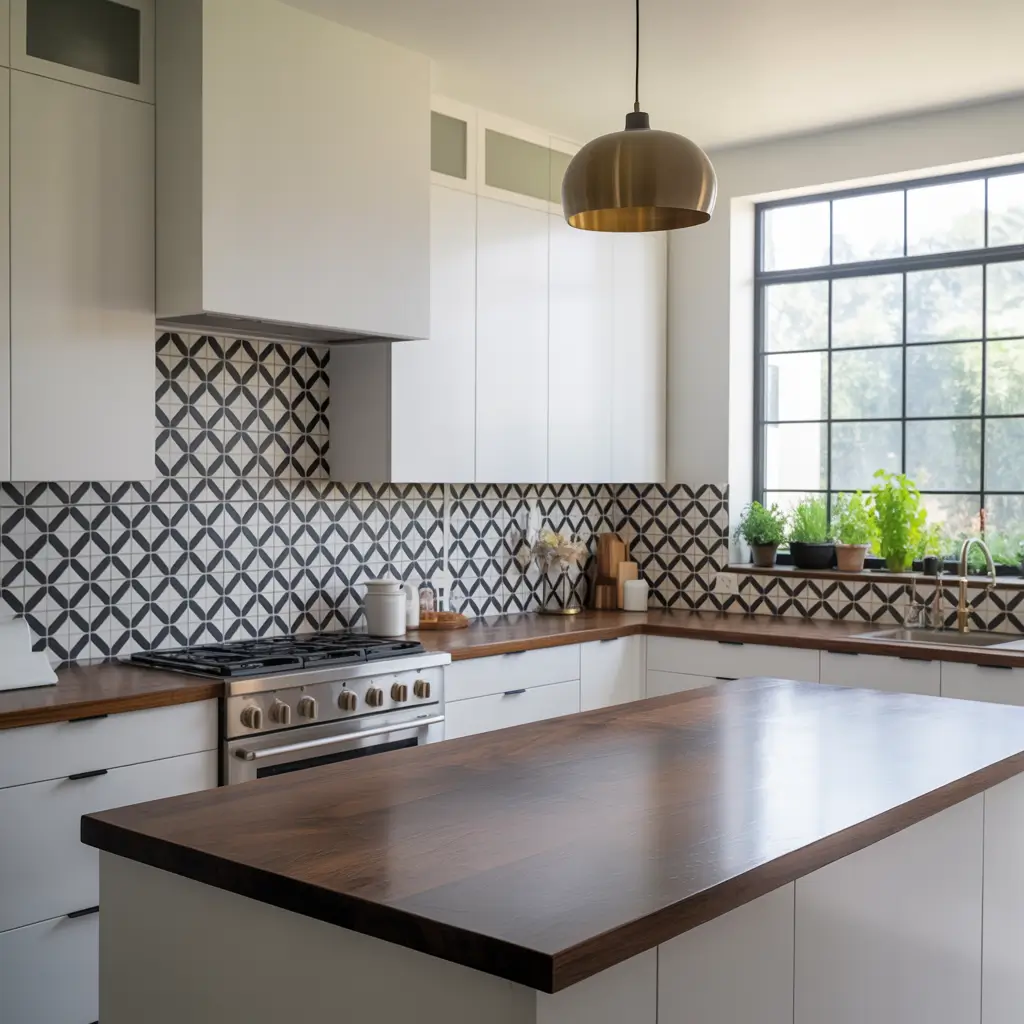
Sometimes you just need to make a statement, you know? A bold patterned backsplash does exactly that—it grabs attention and becomes the focal point of your entire kitchen.
I’m talking about Moroccan-inspired zellige tiles, geometric art deco patterns, or intricate cement tiles that look like they belong in a design museum. These aren’t your basic subway tiles; they’re conversation starters.
Why bold patterns work:
- They add instant personality to even the most basic kitchen
- Create a custom, high-end look without renovating everything
- Allow you to express your style in a relatively small, changeable area
- Work beautifully as the single statement piece in an otherwise neutral kitchen
The key to pulling off bold patterns? Keep everything else simple. I’ve seen too many kitchens where people got pattern-happy, and the result is visual chaos. Your cabinets should be solid and simple, your counters should be understated, and your hardware should be minimal.
One pattern I’m particularly obsessed with right now is the Moroccan fish scale (or scallop) tile in alternating black and white. It’s playful without being childish, unique without being weird, and it photographs incredibly well (because yes, we all want an Insta-worthy kitchen).
Here’s an honest tip: order samples before committing. Patterns look completely different in your actual space versus online photos. What seems perfect on Pinterest might be overwhelming on your wall, or vice versa. Spend the extra twenty bucks on samples—it’s the cheapest insurance policy for your renovation.
Also Read: 15 Luxurious Black and Brown Kitchen Looks for Dream Spaces
Black and White Tile Kitchen Island Accent
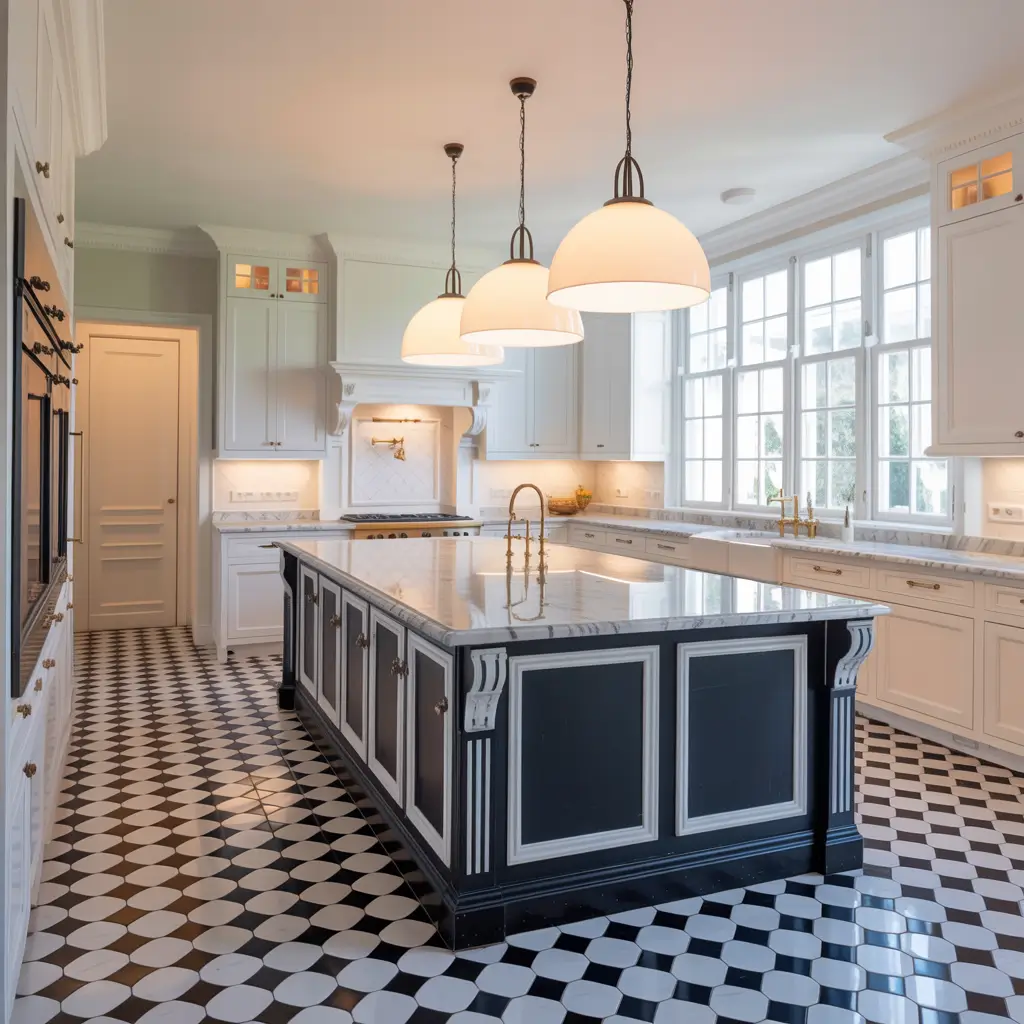
Your kitchen island doesn’t have to match the rest of your floor. Actually, it shouldn’t. Using different tiles for your island creates visual interest and defines the space in an open-concept layout.
I love this approach because it lets you have your cake and eat it too (pun totally intended). Maybe you want to keep your main floor simple but add personality through your island. Or perhaps you’re working with existing floors and need to create separation without a full renovation.
Smart ways to use tile on or around your island:
- Different pattern or size than your main floor (hexagons on the island, subway elsewhere)
- Reverse color scheme (black dominant on island, white dominant on main floor)
- Create a tile “rug” underneath your island to define the space
- Extend patterned tile up the sides of your island for a cohesive look
This approach works especially well in open-concept homes where your kitchen flows into living or dining areas. The tile accent creates a visual boundary without needing walls or awkward room dividers. It says “this is the kitchen zone” without actually saying anything.
I recently saw a kitchen where they used plain white subway tiles throughout but created an island accent with intricate black and white encaustic tiles underneath. The island became this beautiful focal point that drew people into the kitchen. Smart, right?
Just make sure your tile choices complement rather than clash. They should feel like they belong in the same family—maybe different patterns but similar scale, or different colors but compatible styles. You’re going for “intentionally different,” not “we ran out of materials halfway through.”
Small Kitchen Black and White Tile Design
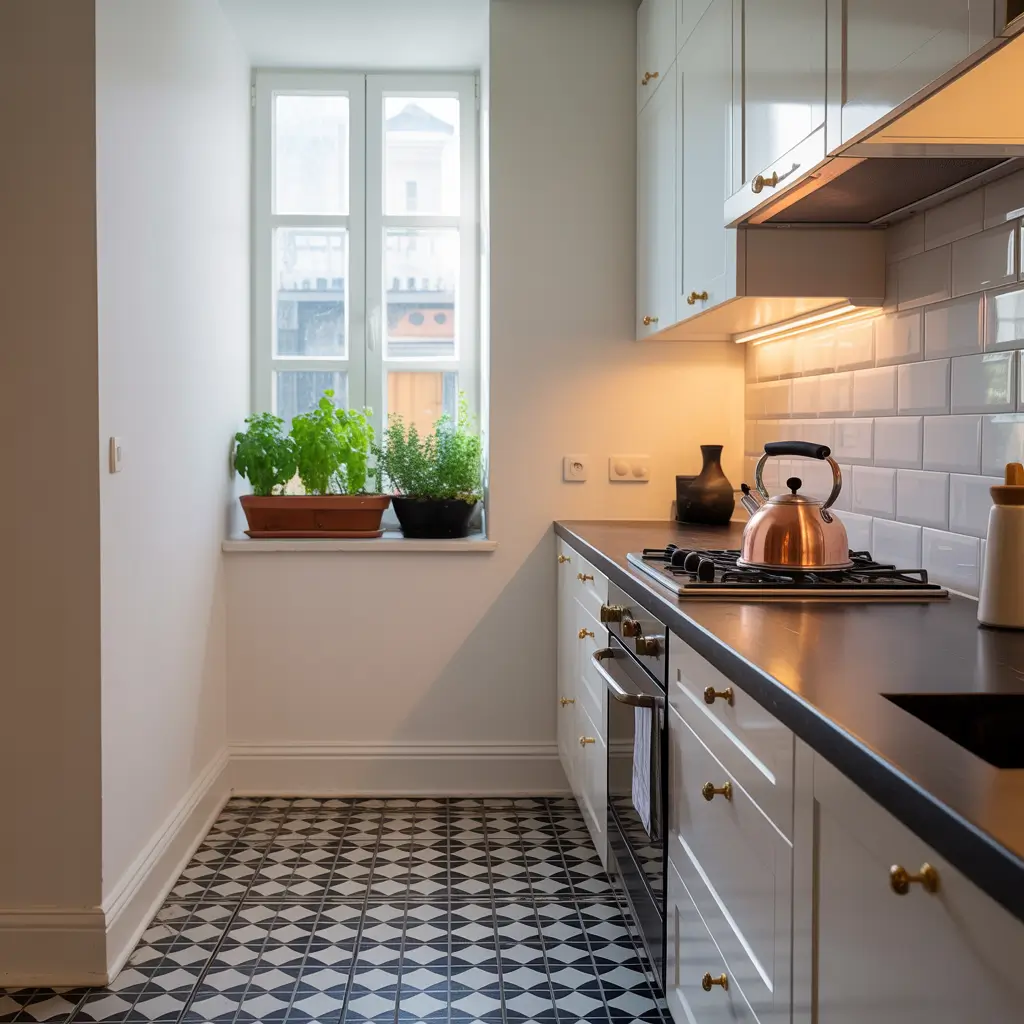
Small kitchens come with challenges, but black and white tiles can actually make your compact space feel larger and more intentional. It’s all about strategy.
I’ve worked with my fair share of tiny kitchens (NYC apartment living taught me a lot), and the right tile choice can completely transform how spacious your kitchen feels. The wrong choice? Yeah, that can make your small kitchen feel like a cramped closet.
Best tile strategies for small kitchens:
- Larger format tiles create fewer grout lines and make the space feel bigger
- Light-dominant schemes (more white than black) keep things bright and airy
- Diagonal installations trick the eye into seeing more square footage
- Reflective or glossy finishes bounce light around and open up the space
Here’s what I’ve learned: resist the urge to go too busy with patterns in small kitchens. A simple subway tile or clean geometric pattern works better than intricate designs that can overwhelm. Save the bold patterns for a small backsplash area rather than covering your entire floor.
One trick I absolutely swear by? Running your tile up the wall. If you use the same floor tile on your backsplash (or at least partway up the wall), you create vertical continuity that makes your ceiling feel higher. It’s a designer trick that costs nothing extra and makes a noticeable difference.
Also, don’t be afraid of black tiles in small kitchens—just use them strategically. A black tile floor with white cabinets and walls can actually ground the space and create depth. Just make sure you’ve got good lighting, or you’ll negate all the benefits.
Luxury Black and White Tile Kitchen
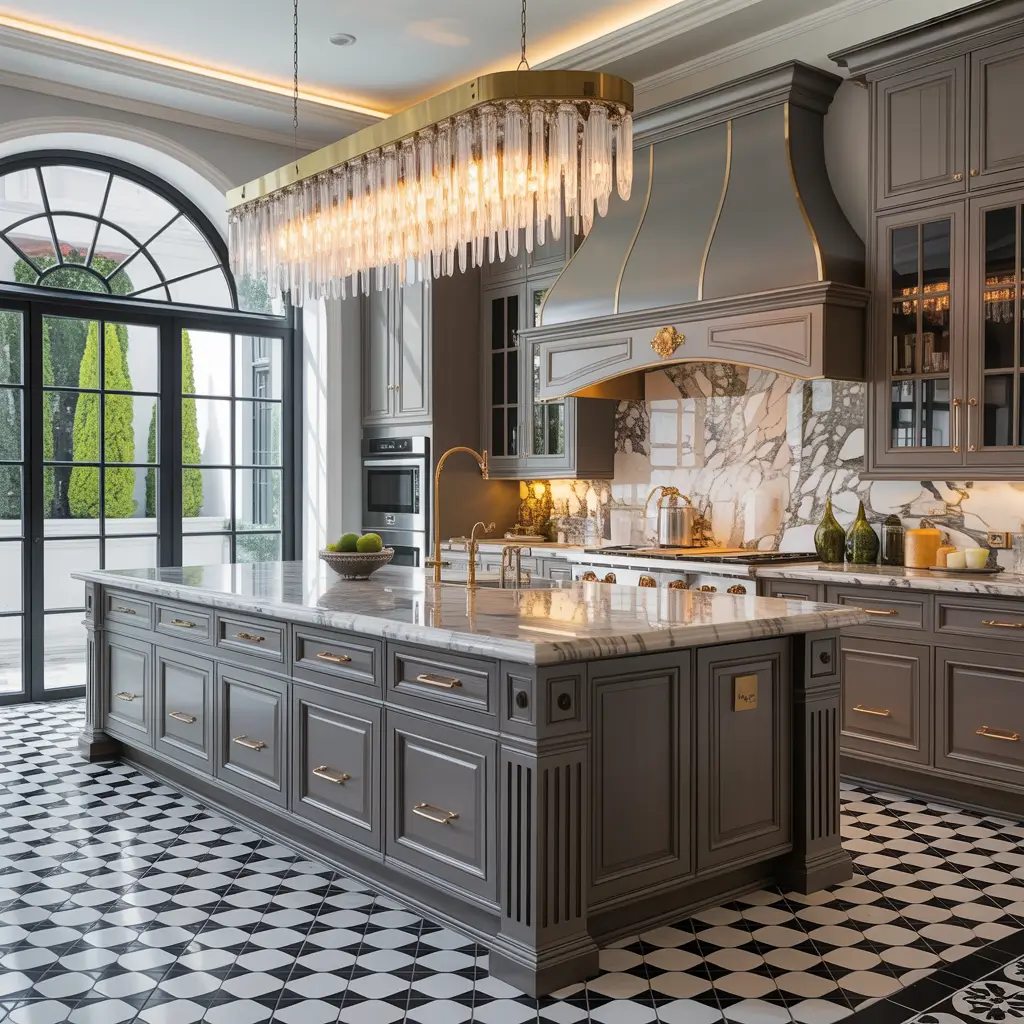
Want your kitchen to feel like a high-end showroom? Luxury black and white tile designs bring that opulent, sophisticated vibe that screams “I hired a designer” even if you DIY’d the whole thing.
Luxury isn’t about spending the most money—it’s about choosing quality materials and installing them with precision. I’ve seen expensive kitchens that look cheap because of poor installation and budget kitchens that look luxurious because of thoughtful design choices.
What defines luxury in black and white tile kitchens:
- Large-format tiles with minimal grout lines (think 24×24 or larger)
- Premium materials like marble, porcelain with marble-look, or high-end cement tiles
- Precision installation with perfectly aligned patterns and tight grout lines
- Mix of finishes (matte floors with glossy backsplash, or vice versa)
- Integrated design elements like tile baseboards or ceiling details
The luxury approach often involves mixing different tile types in the same space. Maybe you’ve got polished marble counters, matte porcelain floors, and a textured mosaic backsplash—all in black and white. The variation in texture and finish creates depth and sophistication.
Here’s my luxury kitchen secret: lighting is everything. You can have the most expensive tiles in the world, but without proper lighting, nobody will appreciate them. Under-cabinet lighting, toe-kick lighting, and strategic pendant placement will showcase your tiles and create that high-end ambiance.
Another hallmark of luxury? Custom details. Think about tile borders, medallions, or unique patterns that you won’t find in every other kitchen. Yes, custom work costs more, but even small custom touches can elevate your entire design from nice to extraordinary.
Black and White Tile Kitchen with Wood Accents
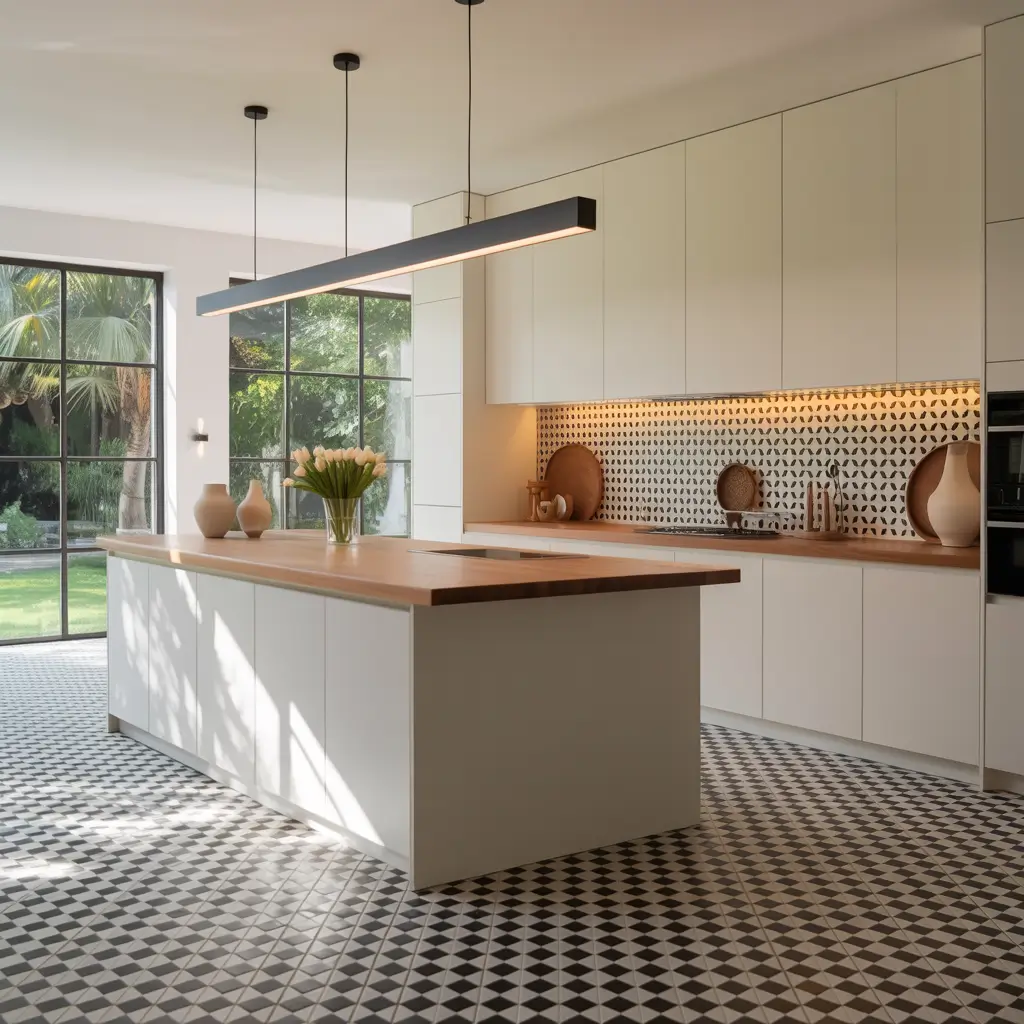
Wood and black-and-white tiles might seem like an unexpected combination, but they create this perfectly balanced warmth that I absolutely adore. The tiles provide structure and graphic interest, while the wood softens everything and makes the space feel livable.
This combination works because it hits all the right notes—modern but warm, structured but organic, bold but inviting. I renovated a friend’s kitchen with this exact approach, and it completely changed how she used the space. Suddenly her kitchen wasn’t just functional; it was the room where everyone wanted to hang out.
Ways to incorporate wood with black and white tiles:
- Wood floating shelves against a black and white tile backsplash
- Butcher block or wood countertops paired with black and white tile floors
- Wood-tone cabinets (especially mid-tone or natural finishes) with black and white tile
- Exposed wood beams or wood ceiling details above black and white surfaces
The type of wood matters. Light woods like oak, ash, or maple feel Scandinavian and contemporary. Darker woods like walnut bring richness and traditional elegance. Even wood-look tile (yeah, I know, tile that looks like wood in an article about tile—meta, right?) can bring warmth while maintaining durability.
What I love about this combination is its versatility. You can lean modern with sleek tile patterns and minimal wood shelving, or go rustic with reclaimed wood and vintage tile patterns. The wood doesn’t compete with your black and white tiles—it complements them by adding a completely different texture and warmth.
One warning: avoid orange-toned woods. They can clash with the cool, crisp nature of black and white and make your kitchen feel dated. Stick with neutral or grey-toned woods that harmonize with your tile palette.
Matte Black and White Tile Modern Kitchen
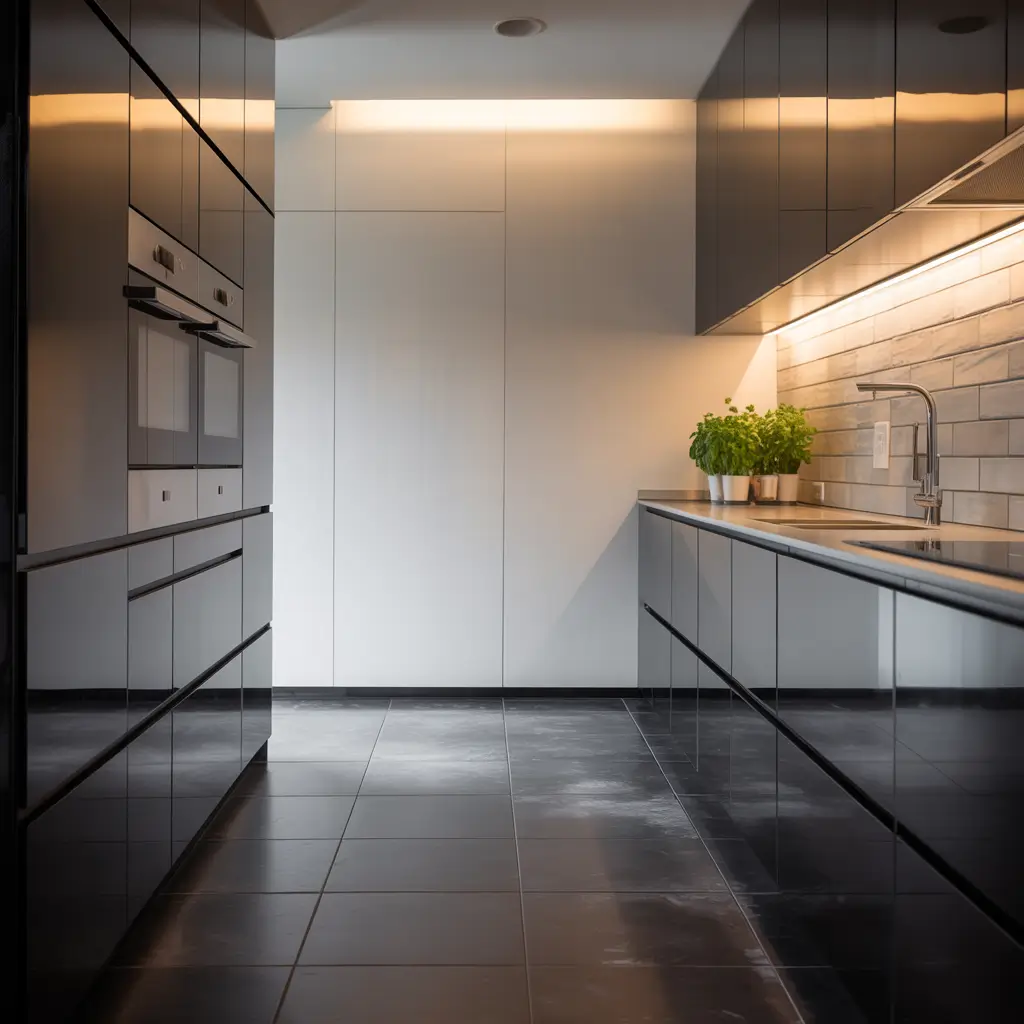
Let’s wrap this up with my current obsession: matte finishes. Glossy tiles have their place, but matte black and white tiles bring this contemporary, sophisticated edge that feels incredibly current.
Matte tiles have exploded in popularity, and honestly, they deserve the hype. They photograph beautifully (no weird reflections or glare), they hide water spots and fingerprints better than glossy tiles, and they feel more natural and refined.
Why matte tiles work for modern kitchens:
- Creates a cohesive, monochromatic look that feels high-end
- Less visual noise than glossy tiles (no light bouncing everywhere)
- Feels more tactile and organic despite being modern
- Works beautifully with other matte finishes (black fixtures, matte cabinets)
A modern kitchen with matte black and white tiles is all about clean lines, minimal fuss, and intentional design. You’re not trying to show off—you’re creating a calm, functional space that happens to look amazing. It’s that effortless cool that’s actually quite hard to achieve.
I’m particularly drawn to large-format matte tiles with minimal grout lines. The seamless appearance feels sleek and contemporary, almost like you’ve created surfaces from single sheets rather than individual tiles. Pair this with handleless cabinets, integrated appliances, and simple fixtures, and you’ve got a modern masterpiece.
Here’s the thing about matte tiles in modern kitchens: they rely on subtle contrast and texture rather than bold statements. Maybe your floor and walls are both matte but in slightly different shades or textures. The variation is subtle, sophisticated, and endlessly interesting without being loud about it.
Final Thoughts
So there you have it—15 creative black and white tile kitchen designs that prove two colors can create infinite possibilities. From vintage charm to modern minimalism, from bold patterns to subtle sophistication, black and white tiles offer something for literally every taste and style.
The beauty of this color combo? It never goes out of style. You’re not gambling on a trend that’ll look dated in five years. Black and white is as timeless as it gets, which means your renovation investment will pay off for decades.
My biggest piece of advice? Don’t rush the decision. Live with samples for a few days. See how they look in different lighting. Consider your lifestyle (white grout in a house with three kids might be asking for trouble). And most importantly, choose something you genuinely love, not just what’s trending on Instagram right now.
Your kitchen should make you happy every single day. If black and white tiles do that for you—whether in a classic checkerboard or a bold geometric pattern—then you’re making the right choice. Now go forth and create that stunning kitchen you’ve been dreaming about.