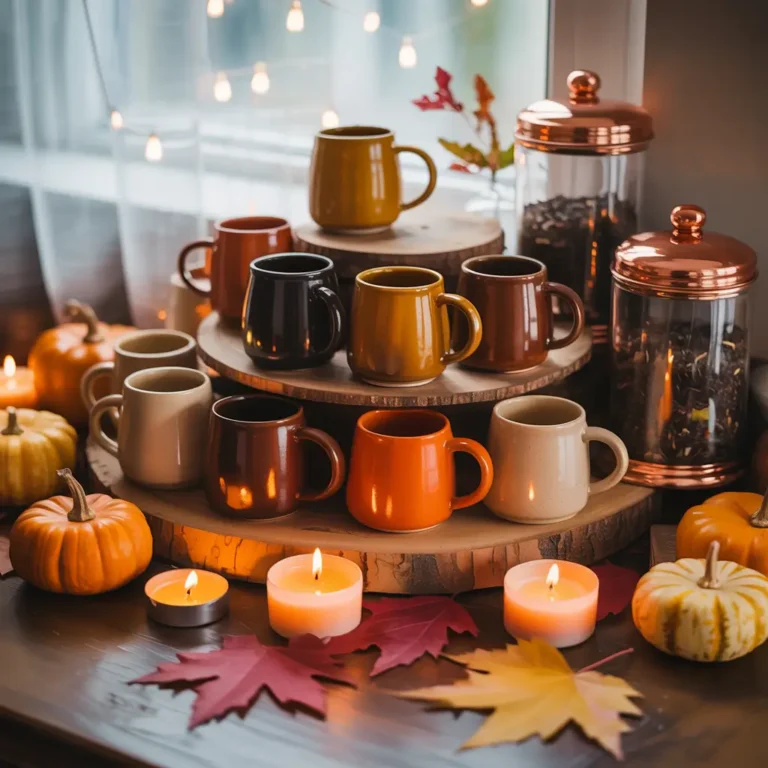
15 Stylish Built-In Coffee Bar Ideas and Functional Corners

So, you’re tired of cluttering your countertop with coffee gear every morning? Yeah, me too. There’s something absolutely magical about having a dedicated coffee spot—a little corner of heaven where your espresso machine lives, your mugs hang perfectly, and you don’t have to play Tetris with the toaster just to make your morning brew. I’ve been obsessing over built-in coffee bars lately, and honestly, once you go built-in, you never go back.
Here’s the thing: a well-designed coffee bar doesn’t just organize your caffeine station. It becomes this functional piece of art that makes your kitchen feel like a legitimate café. Whether you’re working with a massive kitchen or a shoebox-sized space, there’s a built-in coffee bar solution that’ll make you actually excited to wake up in the morning (well, that and the coffee itself).
Let me walk you through 15 coffee bar ideas that range from minimalist chic to full-blown luxury. I’ve tested some of these concepts myself, stalked countless Instagram feeds, and talked to way too many people about their coffee setups. Let’s get into it.
Minimalist Floating Coffee Bar
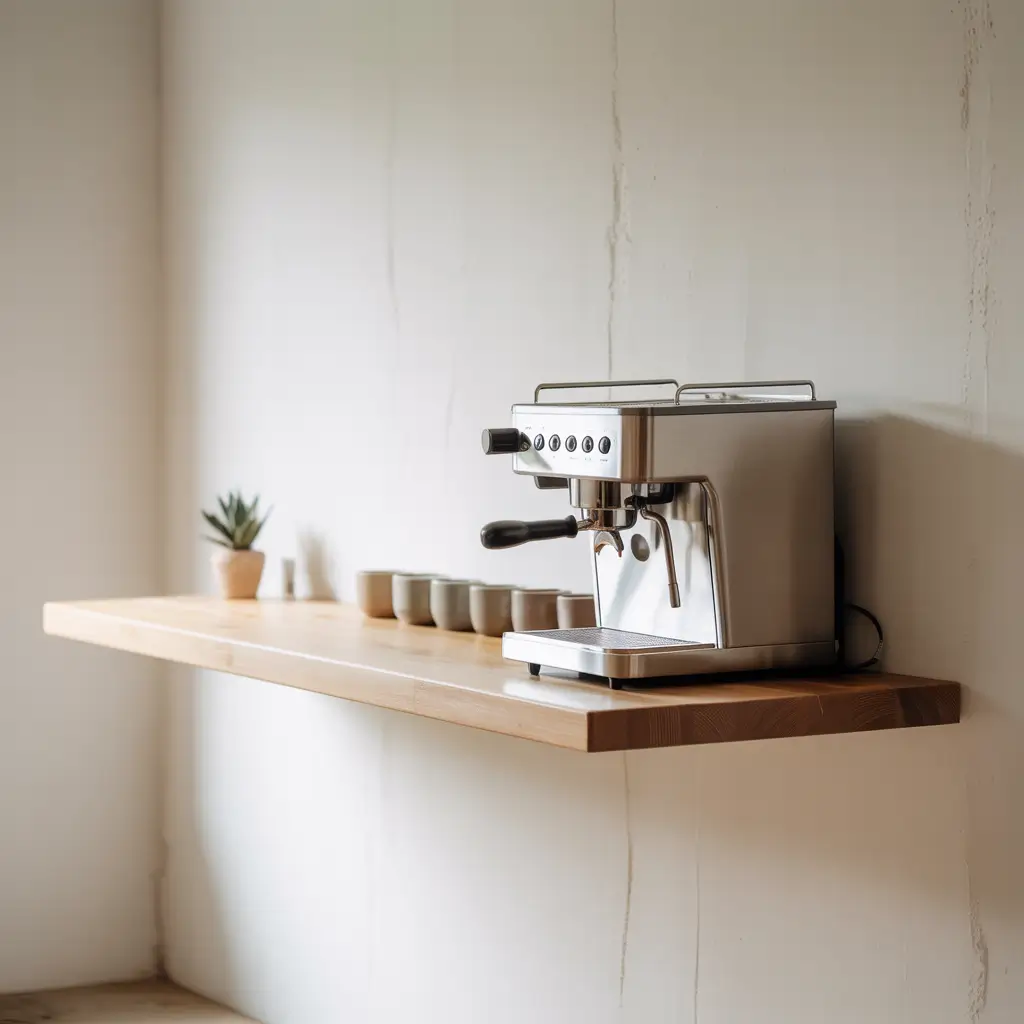
You know what’s absolutely brilliant? Floating shelves that don’t scream “look at me” but still deliver maximum functionality. The minimalist floating coffee bar is perfect for those of us who appreciate clean lines and hate visual clutter.
I installed two thick floating shelves in my kitchen last year, and the transformation was instant. The bottom shelf holds my espresso machine and a sleek coffee canister, while the top one displays my favorite mugs. No cabinets, no doors, no fuss. Just pure, unadulterated coffee station simplicity.
The beauty of this setup lies in its flexibility. You can mount these shelves at whatever height works for your space and workflow. I placed mine at 36 inches from the counter—high enough to give the illusion of more space but low enough that I’m not doing shoulder exercises every time I grab a mug.
Pro tip: Choose shelves with hidden brackets for that true floating effect. Nothing kills the minimalist vibe faster than clunky metal supports jutting out. Also, stick to a monochromatic color scheme. My setup is all white and stainless steel, and it looks ridiculously expensive even though the whole thing cost me less than $150.
The only downside? Everything is on display, so you can’t be messy. Those of you who like to stockpile seventeen different coffee syrups might want to look elsewhere 🙂
Rustic Farmhouse Built-In Coffee Nook
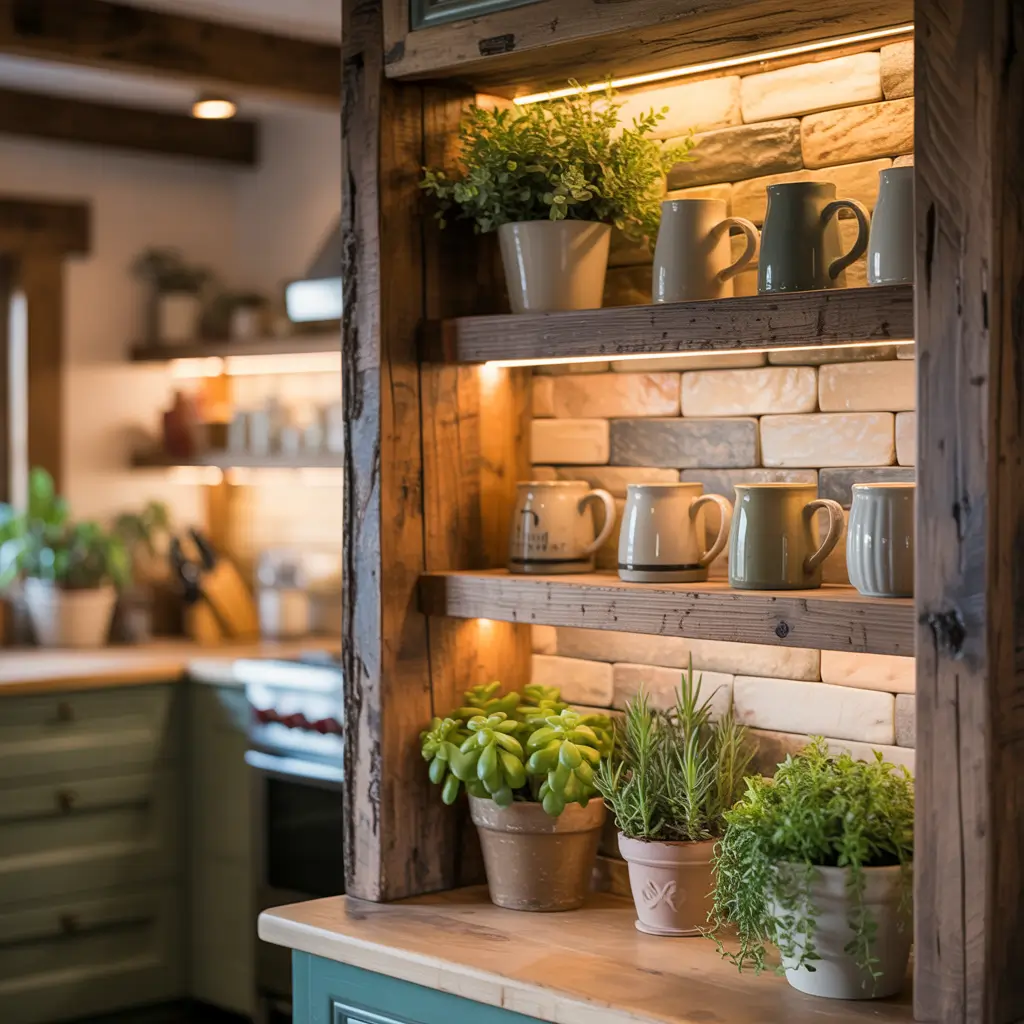
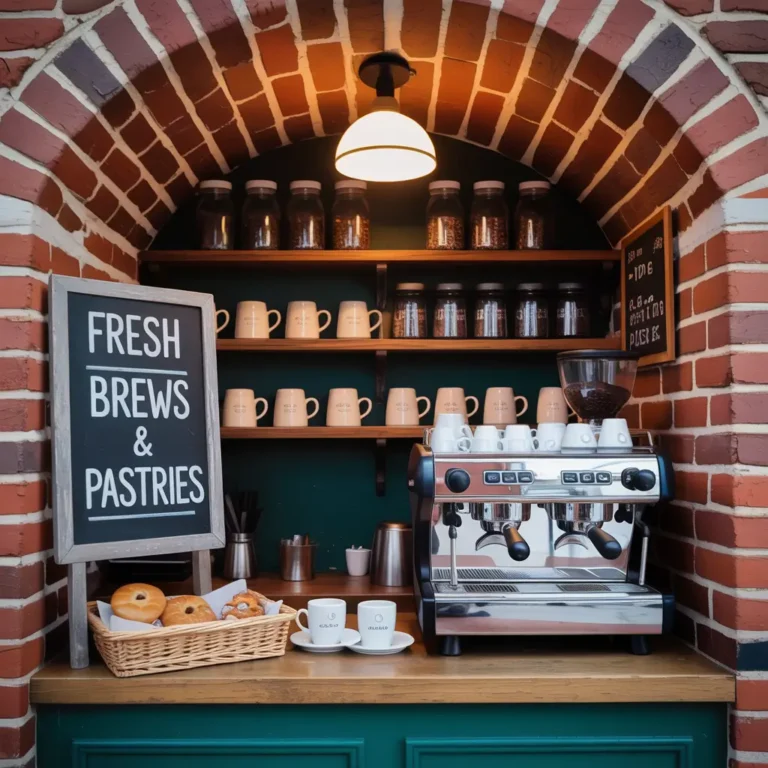
Ever walked into one of those farmhouse-style homes and felt immediately cozier? That’s the vibe we’re chasing here. The rustic farmhouse coffee nook combines reclaimed wood, open shelving, and that lived-in charm that makes you want to curl up with a latte and a good book.
I helped my sister build one of these in her kitchen, and I’m not gonna lie—I was jealous. We used barnwood for the shelves and painted the cabinet base in this gorgeous sage green. She added some vintage canisters, a copper-finish espresso machine, and boom—instant Pinterest-worthy coffee corner.
What makes this style work so well is the layering of textures. You’ve got rough wood against smooth ceramics, matte paint against shiny metal. The contrast creates visual interest without feeling busy. Plus, farmhouse style forgives imperfections. That chip in the wood? Character. The slightly uneven shelves? Charm.
Key elements for nailing this look:
- Reclaimed or distressed wood shelving
- Shaker-style cabinet doors in muted colors
- Mason jars for coffee bean storage
- Vintage-inspired hardware (think brushed bronze or oil-rubbed bronze)
- A cute chalkboard sign because apparently that’s mandatory 🙂
The farmhouse coffee nook works beautifully in both large and small spaces. You can scale it down to a simple two-shelf setup or go full-blown with floor-to-ceiling cabinetry. Either way, you’ll nail that cozy cottage aesthetic.
Modern Cabinet-Integrated Coffee Station
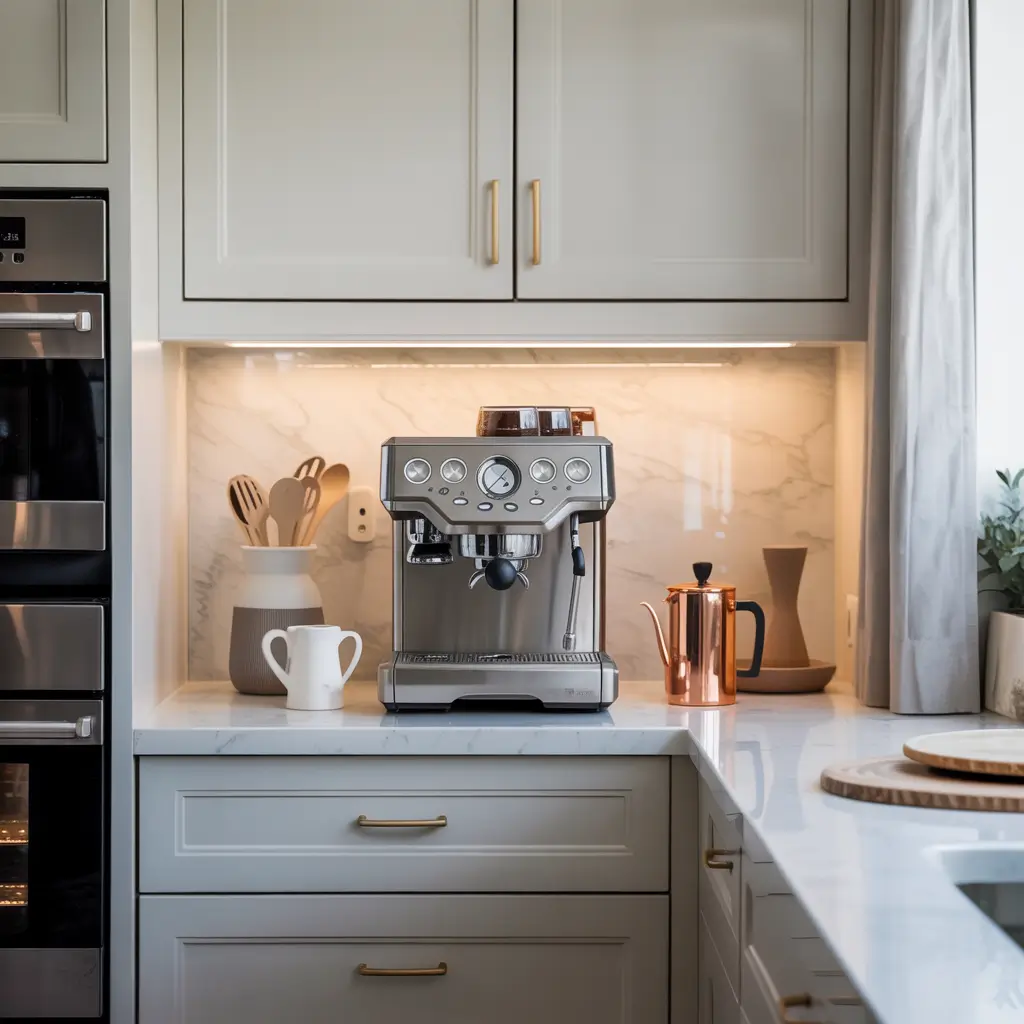
Alright, let me talk about the coffee bar for people who want everything hidden until the moment they need it. The cabinet-integrated coffee station is sleek, sophisticated, and screams “I have my life together” even when you absolutely don’t.
Picture this: smooth, handleless cabinet doors that blend seamlessly with your kitchen cabinetry. You press one, and it pops open to reveal your entire coffee operation—machine, grinder, accessories, the works. When you’re done brewing, you close it up, and poof, it’s like your coffee station never existed.
I saw this setup at a friend’s place, and I nearly lost my mind. She has a pull-out platform inside the cabinet that brings the espresso machine forward when she’s using it. Behind it, there’s organized storage for pods, beans, filters, and all those little things that usually create counter chaos. It’s basically coffee bar inception.
The genius of this design is that it keeps your kitchen looking clean and uncluttered. No appliances competing for counter space, no visual noise. Just smooth, modern simplicity. It’s particularly perfect if you’re one of those people who prefers a “nothing on the counters” kitchen aesthetic.
What you’ll need:
- Custom or semi-custom cabinetry with deep shelves
- Pull-out or lift-up platform for your machine (if you’re fancy)
- Electrical outlet installed inside the cabinet
- Soft-close hinges because loud cabinet slams pre-coffee are criminal
- Interior lighting to avoid making coffee in the dark
The investment is higher than most other options, but IMO, the clean aesthetic is worth every penny.
Compact Corner Coffee Bar
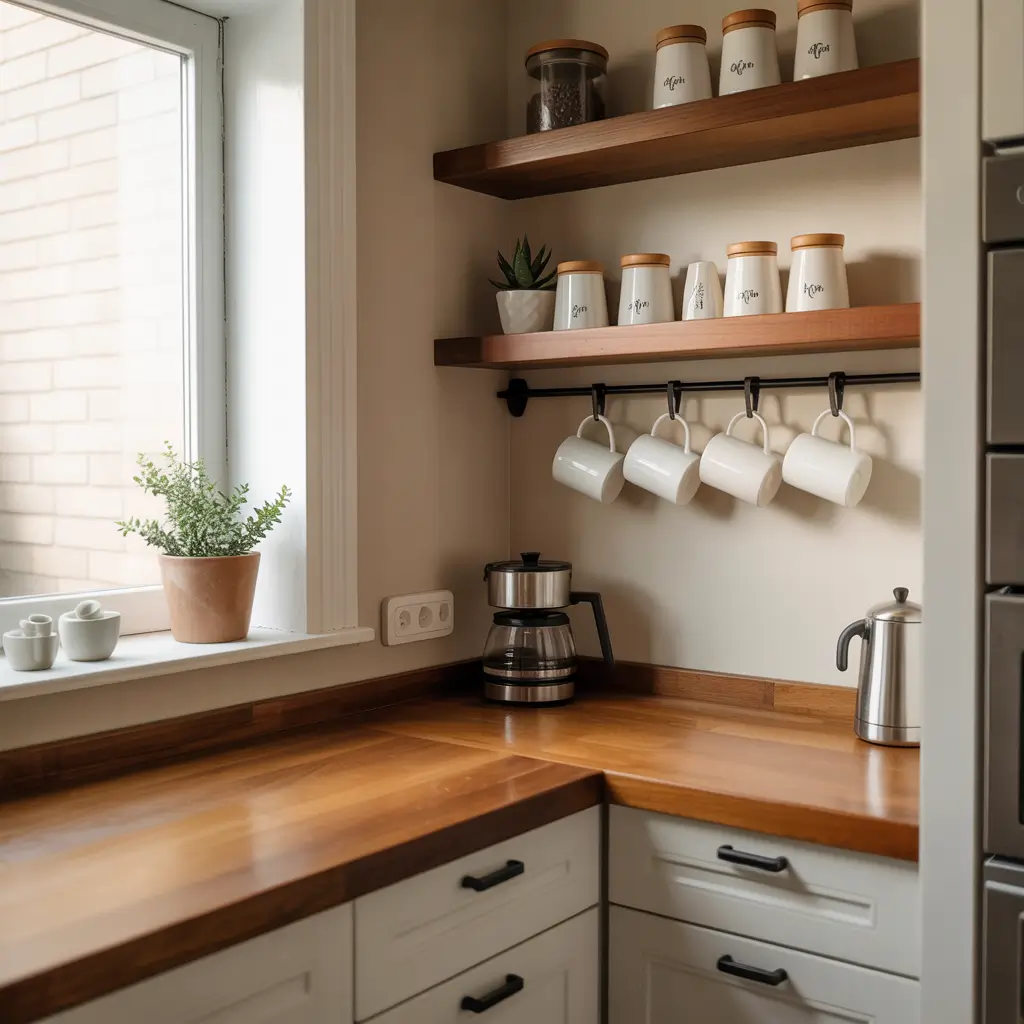
Got an awkward corner in your kitchen that’s currently collecting dust and that weird serving platter you used once in 2019? Transform that dead space into a compact corner coffee bar, and suddenly you’ve got prime real estate.
Corners are criminally underutilized in kitchen design. I turned a 24-inch corner space in my previous apartment into a fully functional coffee station, and it became my favorite spot in the entire place. The trick is thinking vertically—stack your storage upward instead of outward.
I used a small corner shelf unit (the kind that fits snugly into 90-degree angles) and added a small countertop extension. My single-serve coffee maker fit perfectly on the counter, and the shelves above held mugs, sweeteners, and my embarrassingly large tea collection. The whole setup took up less than three square feet but delivered full coffee bar functionality.
Corner coffee bar essentials:
- Corner-specific shelving or a small corner cabinet
- Compact coffee maker (this isn’t the space for your industrial-sized espresso machine)
- Vertical mug storage (hooks or a mug tree work great)
- A small tray to corral daily essentials like sugar and stirrers
The compact corner coffee bar proves you don’t need a ton of space to create something special. It’s efficient, it’s cute, and it makes use of space that was probably just wasted before. Plus, there’s something satisfying about having your coffee corner feel like a secret little nook.
Also Read: 15 Elegant DIY Coffee Bar Setups for a Cozy Corner
Hidden Pull-Out Coffee Bar
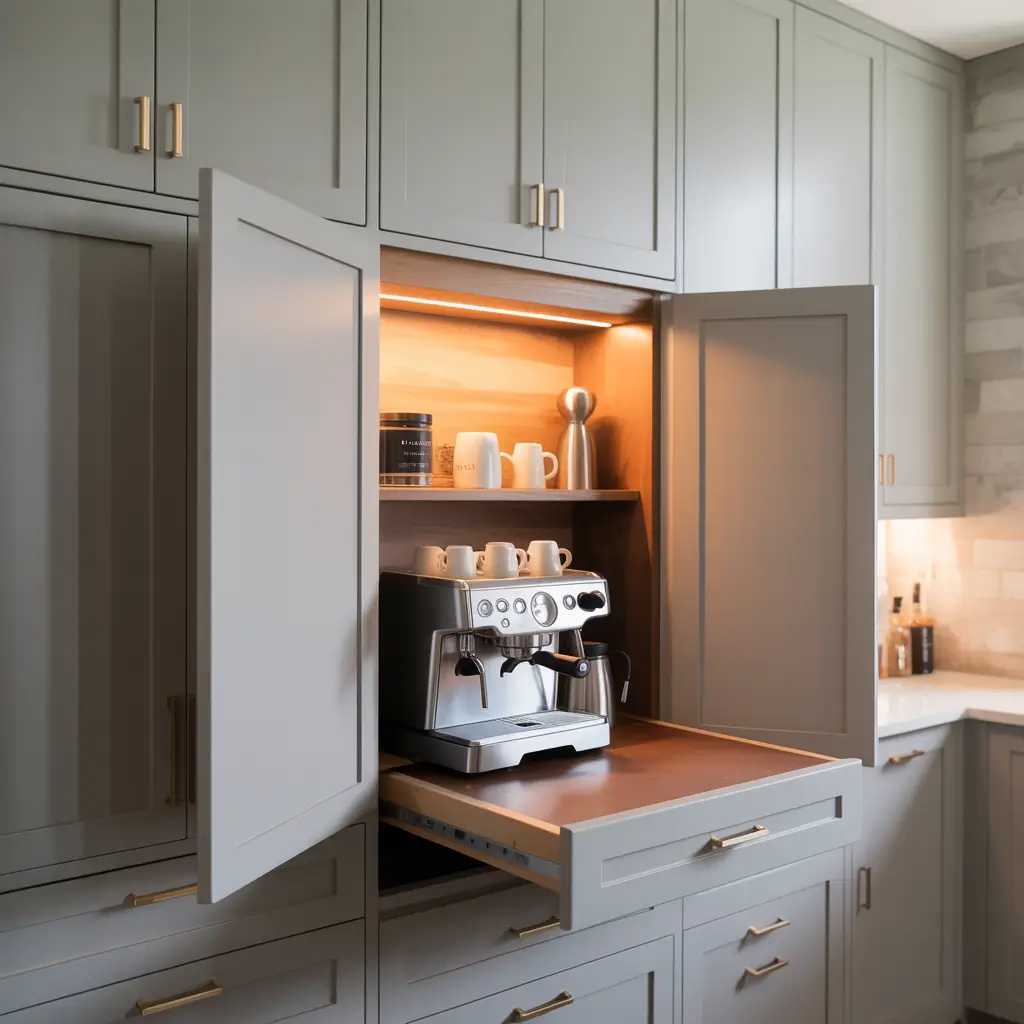
Want to know what feels like actual magic? Pulling out a drawer and discovering an entire coffee station waiting inside. The hidden pull-out coffee bar is for people who love gadgets, smart design, and impressing dinner guests.
My cousin has one of these in her pantry, and every single person who visits asks for a demonstration. She pulls out what looks like a regular deep drawer, and there’s her coffee maker, already plugged in and ready to go. Beans, grinder, filters—everything lives in that one pull-out unit.
The brilliance here is the built-in power supply. You wire an outlet directly into the drawer cabinet, so your coffee maker is always plugged in. When you pull out the drawer, your machine comes with it, sitting at the perfect height for operation. No plugging and unplugging, no moving heavy equipment around. Just pull, brew, enjoy, push back in.
This setup requires some planning and probably a professional installation (unless you’re handy with electrical work, in which case, can you come to my house?). You’ll need deep drawers, sturdy glides that can handle the weight, and proper ventilation because coffee machines generate heat.
Installation considerations:
- Heavy-duty drawer glides rated for at least 100 pounds
- Electrical outlet installed with a licensed electrician
- Ventilation holes to prevent heat buildup
- Non-slip liner to keep everything stable when pulling out
- Adequate depth (at least 20-24 inches)
It’s not the simplest project, but the wow factor is unmatched. Plus, you get a completely clean counter when the drawer is closed.
Industrial Pipe Shelf Coffee Setup
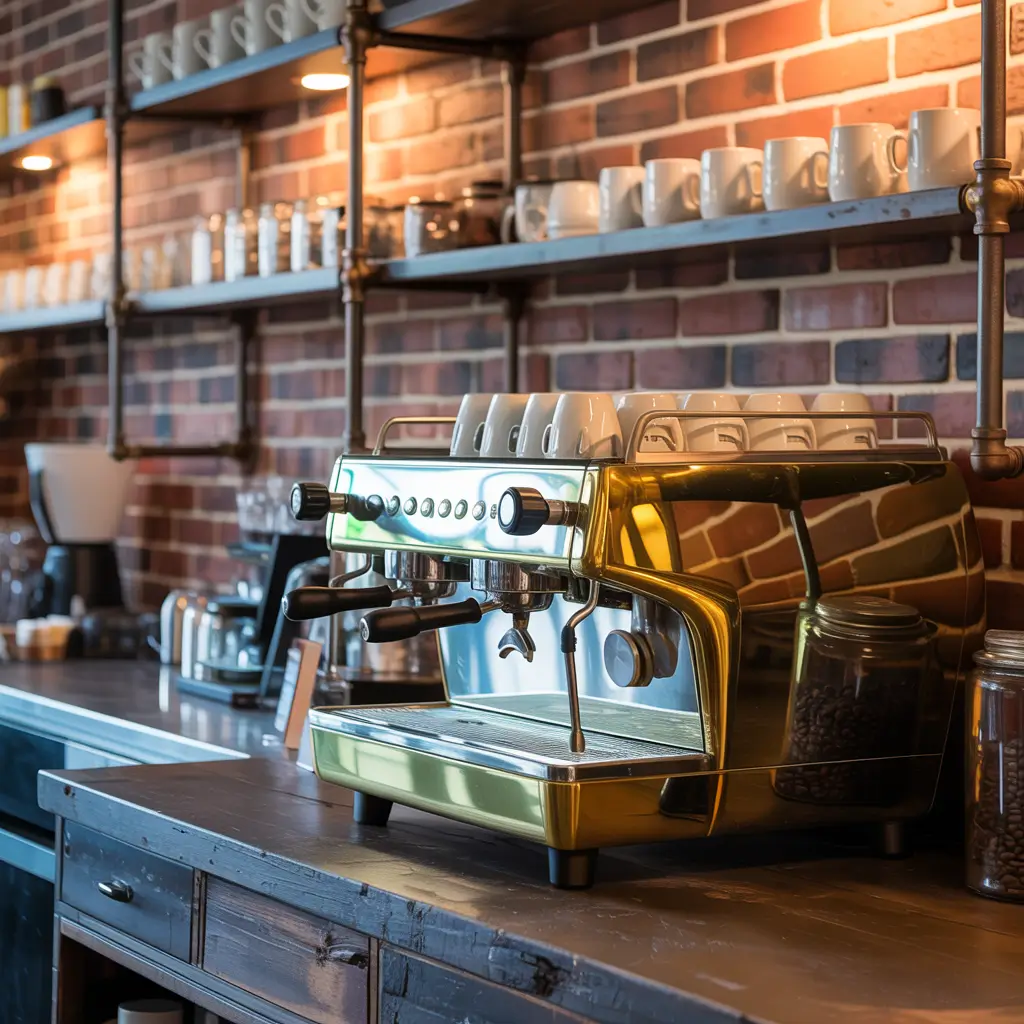
If you’re into that urban loft, exposed brick, Edison bulb aesthetic, the industrial pipe shelf coffee setup is calling your name. This style combines metal pipes, reclaimed wood, and a deliberate “unfinished” look that somehow ends up looking incredibly polished.
I built one of these in my current apartment, and I’ll be honest—it was way easier than I expected. You can buy pipe shelf kits online, or if you’re feeling adventurous, head to the hardware store and assemble your own pipes and fittings. Add some thick wooden planks, and you’ve got yourself an industrial-chic coffee bar.
The pipes serve as both brackets and design elements. They’re typically made of black or galvanized steel, and they create this sturdy, almost architectural frame for your shelves. The wood planks (I used reclaimed barn wood) rest on the pipes, creating a rugged contrast that screams “I’m interesting and have good taste.”
What makes this style pop:
- Black iron pipes and fittings
- Thick wooden shelves (2 inches thick looks best)
- Exposed Edison bulbs for lighting
- Industrial-style coffee equipment (French press, manual grinder, etc.)
- Minimal color palette—stick to blacks, grays, and natural wood tones
This setup works especially well in smaller spaces because the open shelving doesn’t feel heavy or cramped. It’s also budget-friendly. My entire setup cost under $200, including the wood, pipes, and all the fittings. FYI, that’s less than most pre-made coffee bar furniture.
The vibe is effortlessly cool, and it pairs perfectly with a modern or eclectic kitchen design.
Luxury Marble Counter Coffee Bar
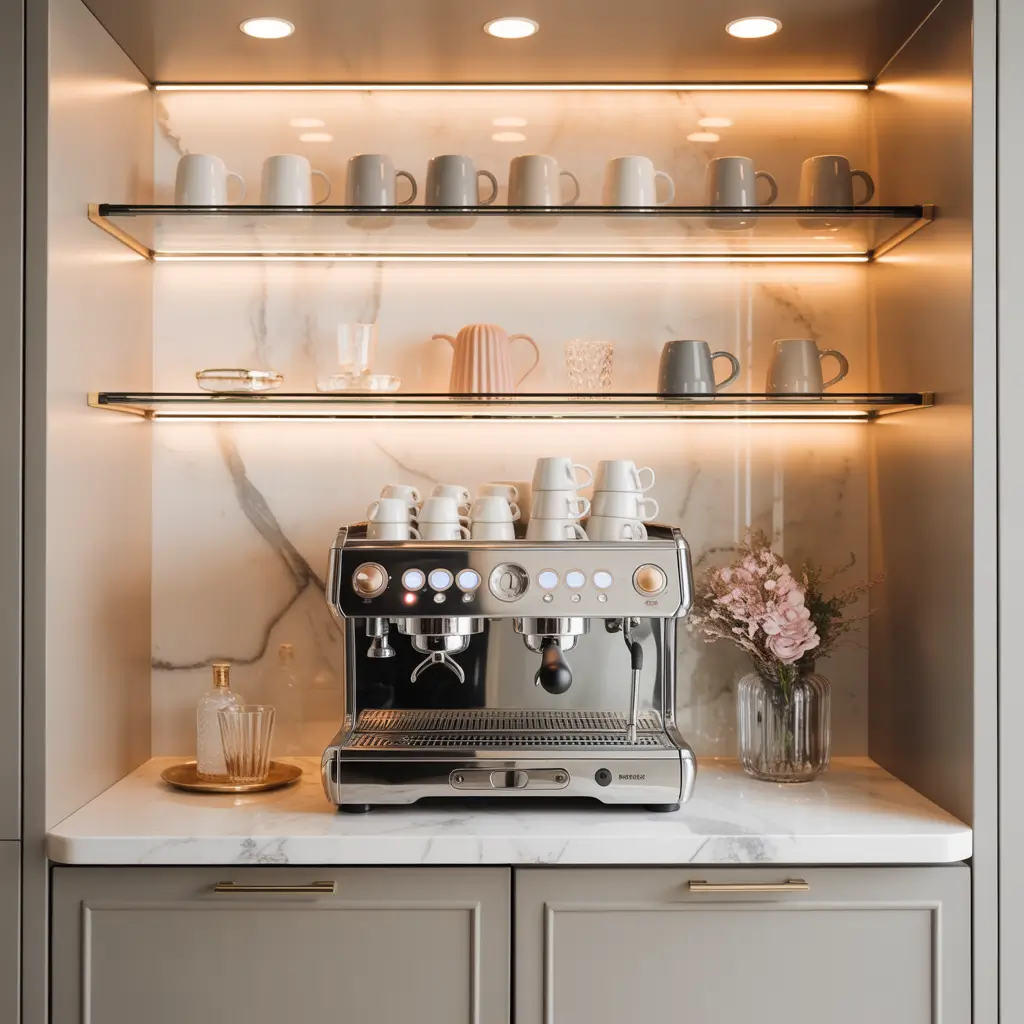
Alright, let’s talk about going full-on bougie. The luxury marble counter coffee bar is for those moments when you want your morning coffee to feel like a five-star hotel experience. Am I being extra? Absolutely. Do I care? Not even a little bit.
Marble immediately elevates any space. That smooth, cool surface with those gorgeous veining patterns—it’s kitchen jewelry. I’ve seen these setups in high-end homes and boutique hotels, and they never fail to make me pause and appreciate the sheer elegance.
The luxury marble coffee bar typically features a dedicated marble countertop section, often with a subtle backsplash in the same material. You’ll pair it with high-end equipment—think a professional espresso machine, a precision grinder, and maybe even a built-in water filtration system because apparently, tap water isn’t good enough for luxury coffee.
What really sells this look is the attention to detail. Everything is coordinated and intentional. Your storage containers match, your mugs are artfully displayed, and there’s probably a small vase with fresh flowers because why not?
Elements of a luxury marble coffee bar:
- Genuine marble countertop (Carrara and Calacatta are popular choices)
- High-end espresso machine with chrome or copper finish
- Under-cabinet lighting to make the marble glow
- Minimal accessories, all in complementary metals
- Possibly a small built-in fridge for milk and cream
- Gold or brass hardware for that extra touch of glam
Real talk: marble requires maintenance. It stains, it etches, it needs sealing. But if you’re willing to baby it a bit, the visual payoff is stunning. And if you’re not ready to commit to real marble, quartz can give you a similar look with way less stress.
Wall-Mounted Espresso Bar
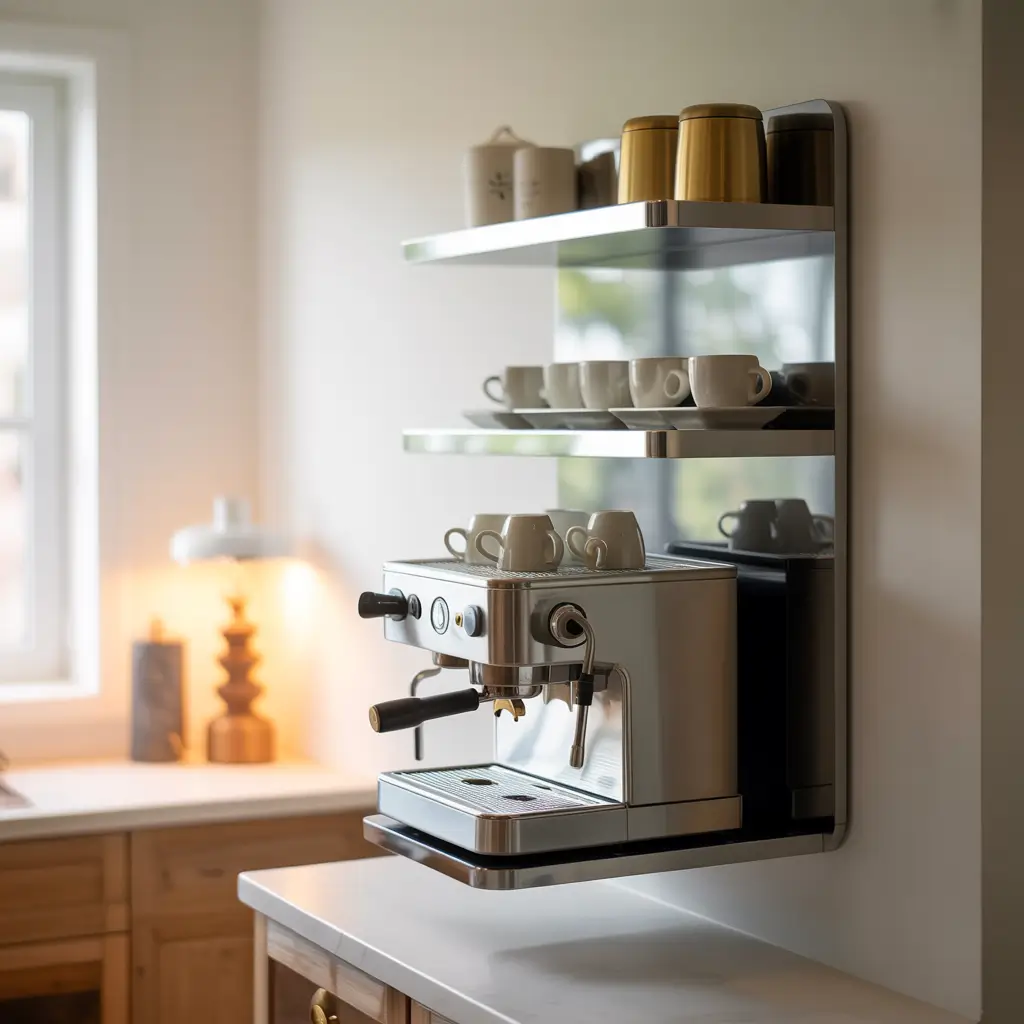
Running out of counter space? Mount your entire coffee operation on the wall and reclaim that precious real estate. The wall-mounted espresso bar is compact, modern, and surprisingly functional.
I experimented with this in a tiny rental kitchen, and it was a game-changer. I mounted a floating shelf strong enough to hold my espresso machine, added hooks underneath for mugs, and installed a small shelf above for beans and supplies. The whole setup occupied about two square feet of wall space and zero counter space.
The key to making this work is ensuring your wall shelf can handle the weight of your coffee equipment. Espresso machines aren’t light, and you’ll be putting pressure on the setup every time you tamp grounds or pull a shot. I used heavy-duty floating shelf brackets anchored directly into wall studs, and that bad boy didn’t budge.
Wall-mounted setup checklist:
- Heavy-duty floating shelf or mounted platform
- Anchor points in wall studs (not just drywall)
- Nearby electrical outlet (or hire an electrician to install one)
- Mug hooks or a small wall-mounted mug rack
- Drip tray or small pan to catch coffee spills
- Small shelf or magnetic strip for accessories
This style works brilliantly in small apartments, breakfast nooks, or any space where floor and counter area is limited. It’s also incredibly budget-friendly—my entire setup cost less than $100.
The aesthetic is clean and modern, and it makes your coffee gear feel like an art installation. Plus, there’s something satisfying about having your coffee station literally at eye level.
Scandinavian Open-Shelf Coffee Nook
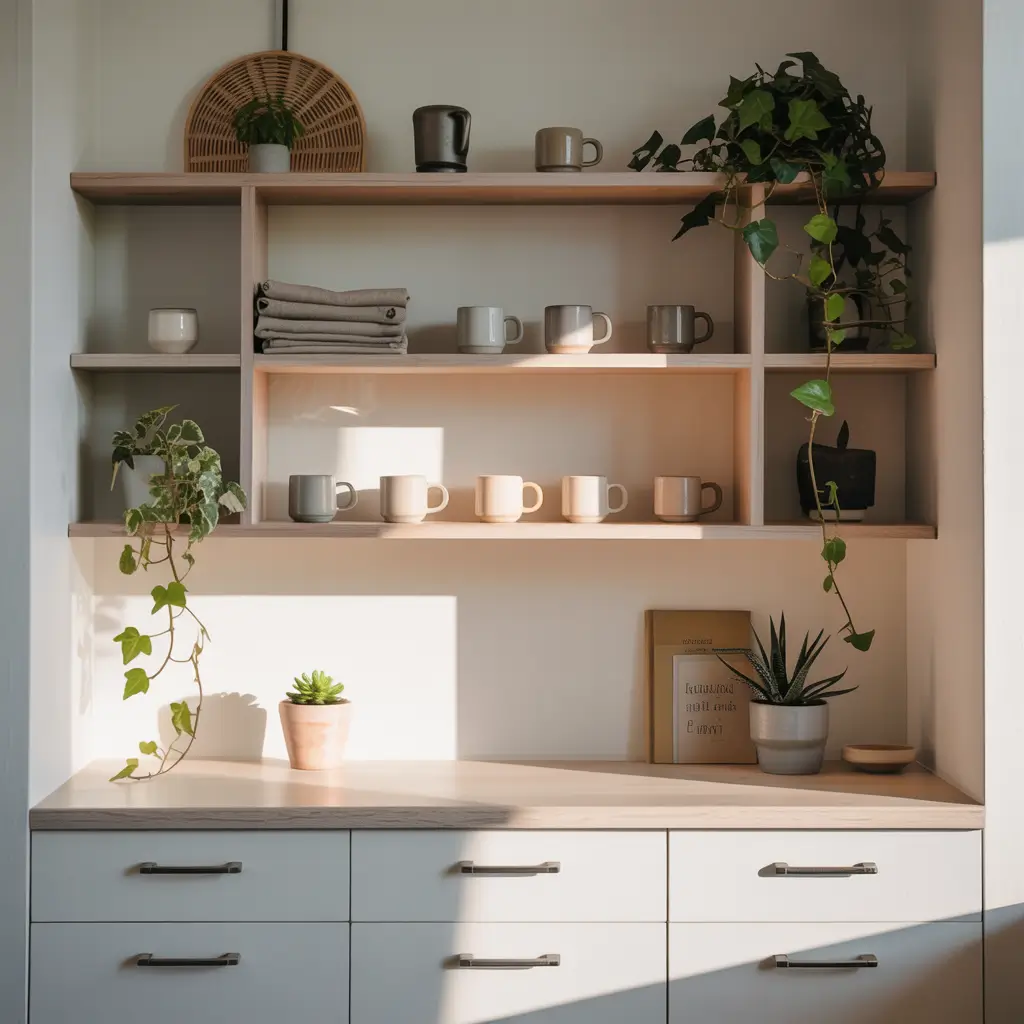
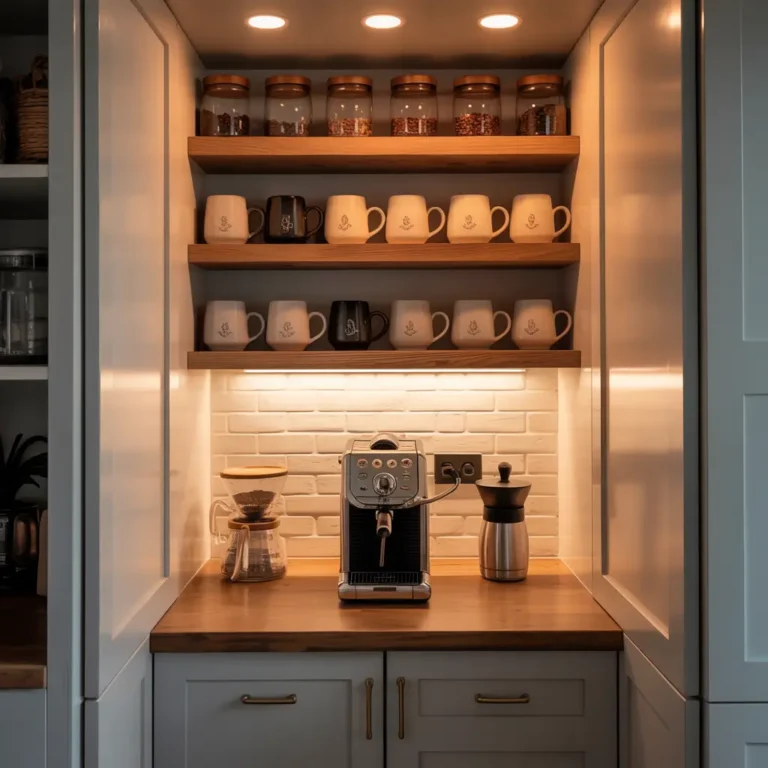
If you’re familiar with Scandinavian design, you know it’s all about simplicity, functionality, and that effortless sense of calm. The Scandinavian open-shelf coffee nook brings that hygge feeling straight to your morning routine.
This style embraces light colors, natural materials, and practical design. Think white or light wood shelves, ceramic canisters, and plenty of breathing room. Nothing feels crowded or excessive—every item has a purpose and looks good doing its job.
I modeled part of my kitchen after Scandinavian design principles, and the coffee nook became the centerpiece. Light birch wood shelves, white subway tile backsplash, and a small collection of neutral-toned mugs. The vibe is peaceful and uncluttered, which is exactly what I need before I’ve had my caffeine.
Scandinavian coffee nook essentials:
- Light-colored wood shelves (birch, ash, or blonde oak)
- White or cream cabinetry if you’re including lower storage
- Simple, clean-lined coffee equipment
- Neutral color palette with maybe one muted accent color
- Natural light (position near a window if possible)
- Live plants—a small succulent or herb plant adds life
- Open storage that keeps things visible but organized
The Scandinavian approach teaches you to edit ruthlessly. You don’t need 47 mugs on display. Choose your favorites, store the rest elsewhere, and let your coffee nook breathe. The result is a space that feels calm, welcoming, and effortlessly stylish.
This design works particularly well in smaller kitchens because the light colors and open shelving create an illusion of more space.
Also Read: 15 Cozy Small Coffee Bar Ideas and Perfect Nooks
Built-In Coffee Bar with Wine Storage
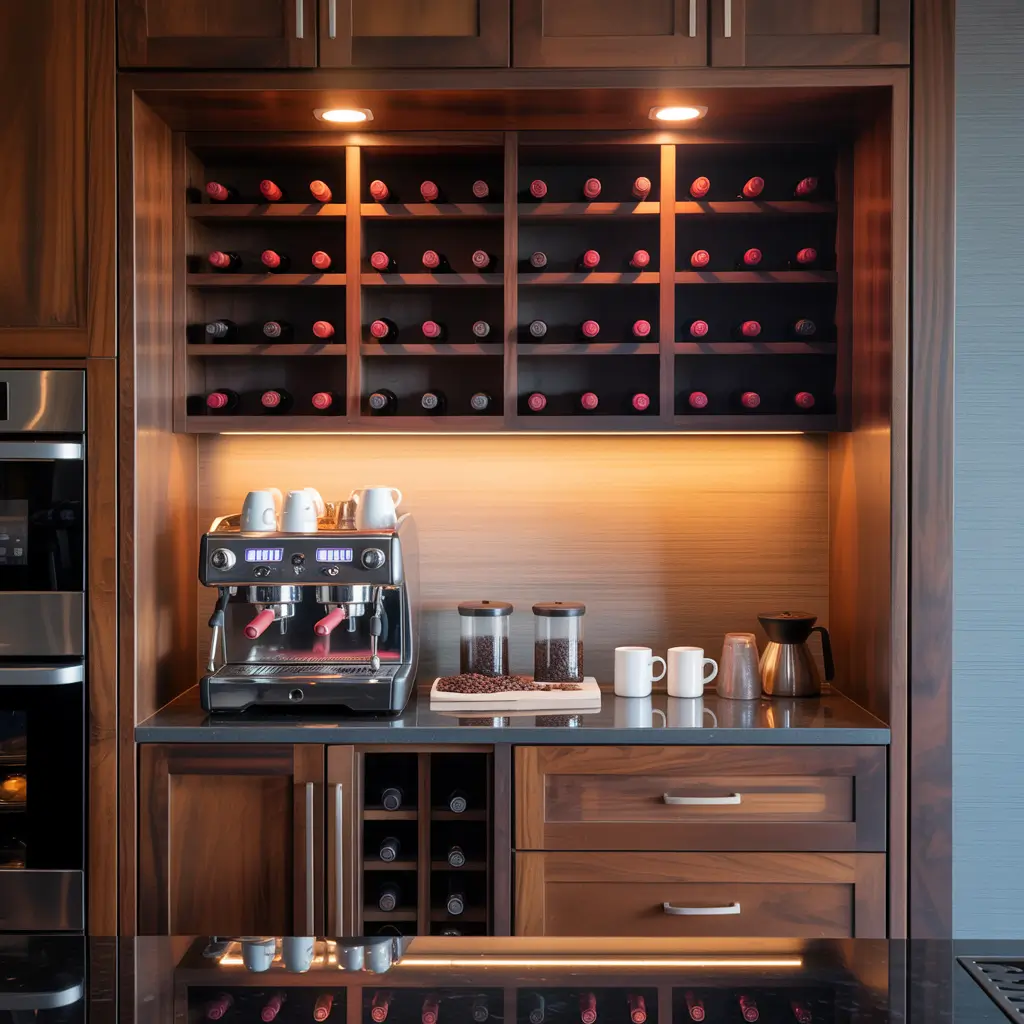
Why should you have to choose between coffee and wine? The built-in coffee bar with wine storage lets you have both, and honestly, it’s the kind of life balance we should all be striving for.
This dual-purpose design combines coffee station essentials with built-in wine storage—usually a wine rack, cubbies, or even a small wine fridge. It’s perfect for entertaining because your morning coffee setup transforms into your evening wine bar without missing a beat.
I’ve seen this executed brilliantly in open-concept kitchens where the bar becomes a focal point. The upper section houses coffee supplies—machine, mugs, grinder, beans. The lower section features wine bottle storage, stemware racks, and maybe a small fridge. It’s like having a full beverage center in one cohesive unit.
Design elements that make this work:
- Divided storage: Clear separation between coffee and wine zones
- Glass-front cabinets for displaying wine bottles and fancy mugs
- Stemware racks mounted under shelves
- Small beverage fridge (dual-zone if you’re feeling fancy)
- Adequate counter space for both coffee prep and wine service
- Good lighting to highlight both sections
The practicality is off the charts. Instead of creating two separate stations, you’ve got one streamlined area that handles all your beverage needs. Plus, the visual interest of combining coffee and wine elements creates a more dynamic design than either would alone.
This setup does require more space than a simple coffee bar, but if you’ve got the room, it’s absolutely worth it. And let’s be real—starting your day with coffee and ending it with wine from the same beautiful bar? That’s just good design.
Vintage Cabinet Coffee Station
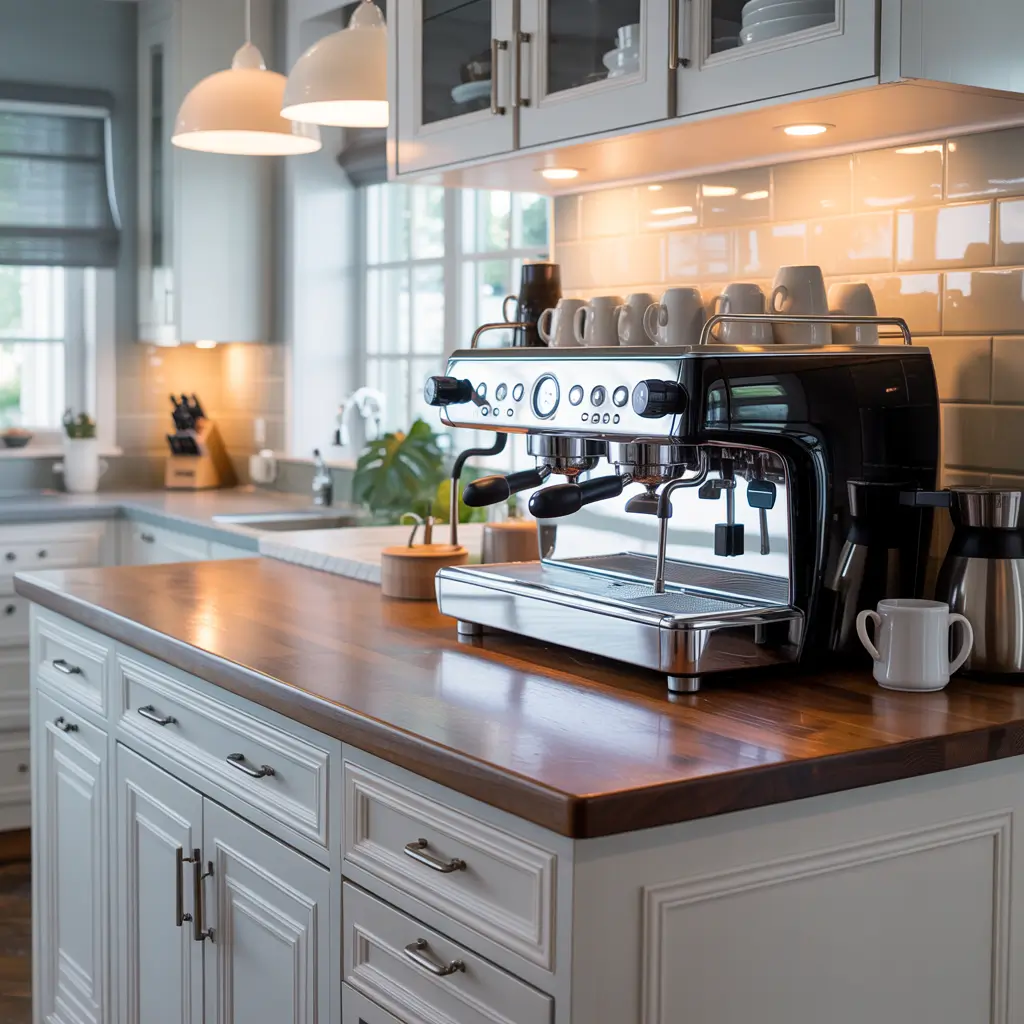
There’s something charming about repurposing an old cabinet into a dedicated coffee station. The vintage cabinet coffee bar combines nostalgia with functionality, and it brings character that new furniture just can’t match.
I scored an old hutch at an estate sale a few years back, and it became my favorite DIY project. I stripped the old finish, repainted it in a soft blue-gray, and converted the interior into a coffee station. The top section displays mugs and canisters, while the bottom section (originally a cabinet) now houses my coffee maker and supplies.
The beauty of vintage furniture is that every piece is unique. Your coffee bar won’t look like everyone else’s cookie-cutter setup. You might find an old Hoosier cabinet, a mid-century credenza, or a farmhouse hutch—each brings its own personality to your kitchen.
Tips for converting vintage furniture:
- Choose a piece with adequate depth (at least 18 inches) for equipment
- Drill a small hole in the back for electrical cords
- Remove or modify interior shelves to fit your coffee maker
- Add interior lighting for both function and ambiance
- Consider adding hooks for mugs or tea towels
- Seal the interior with polyurethane to protect against spills
The vintage approach also tends to be more budget-friendly than custom cabinetry. Even after purchasing the piece and investing in refinishing materials, you’ll typically spend less than buying new built-in cabinetry.
Plus, there’s something satisfying about giving old furniture new life. Your morning coffee literally becomes part of a bigger story.
Small Kitchen Island Coffee Bar
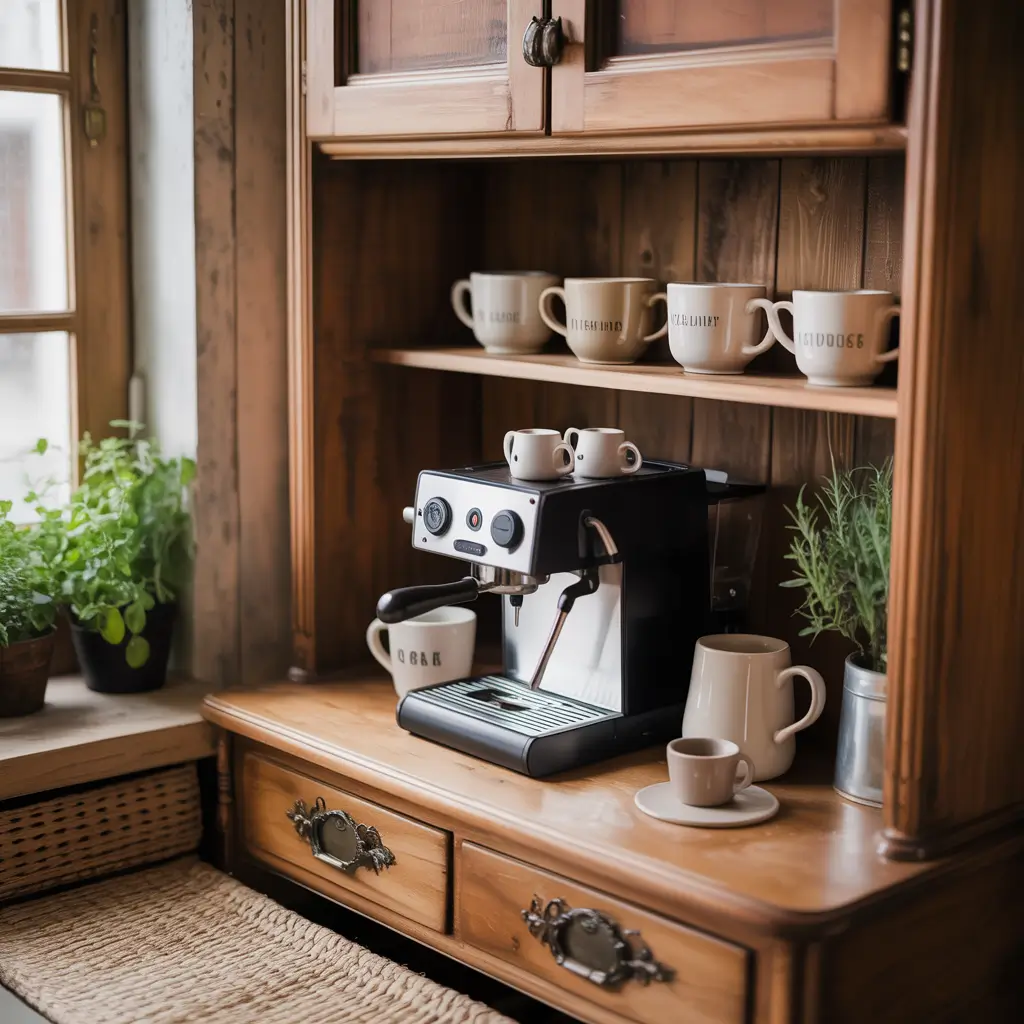
Got a kitchen island? Turn one end into a dedicated coffee station, and suddenly you’ve got a functional coffee bar without sacrificing any floor space. The small kitchen island coffee bar is perfect for people who want accessibility and style.
I love this setup because the island becomes your coffee command center. You’ve got workspace all around for prep, everything is at a comfortable height, and you can easily chat with family or guests while you brew. It’s social, it’s practical, and it’s efficient.
The trick is dedicating a specific zone of your island exclusively to coffee. This might mean one end or one side, depending on your island’s configuration. You’ll keep your coffee maker, mugs, and supplies in that zone, leaving the rest of the island free for regular food prep.
Making the island coffee bar work:
- Install electrical outlets on the side or end of your island
- Use drawer dividers to organize coffee supplies
- Add a small shelf or riser to maximize vertical space
- Keep a tray or mat to define the coffee zone
- Consider a pull-out shelf for the coffee maker
- Store mugs in nearby cabinets or on a mug tree
This setup is incredibly flexible. You can adjust the size of your coffee zone based on your needs and your island’s dimensions. Even a small 2×2 foot area can comfortably handle a coffee maker and essential supplies.
The kitchen island coffee bar also creates natural flow in your kitchen. You’re already working in the island area for meal prep, so having your coffee there feels intuitive and integrated.
Pantry-Integrated Coffee Corner
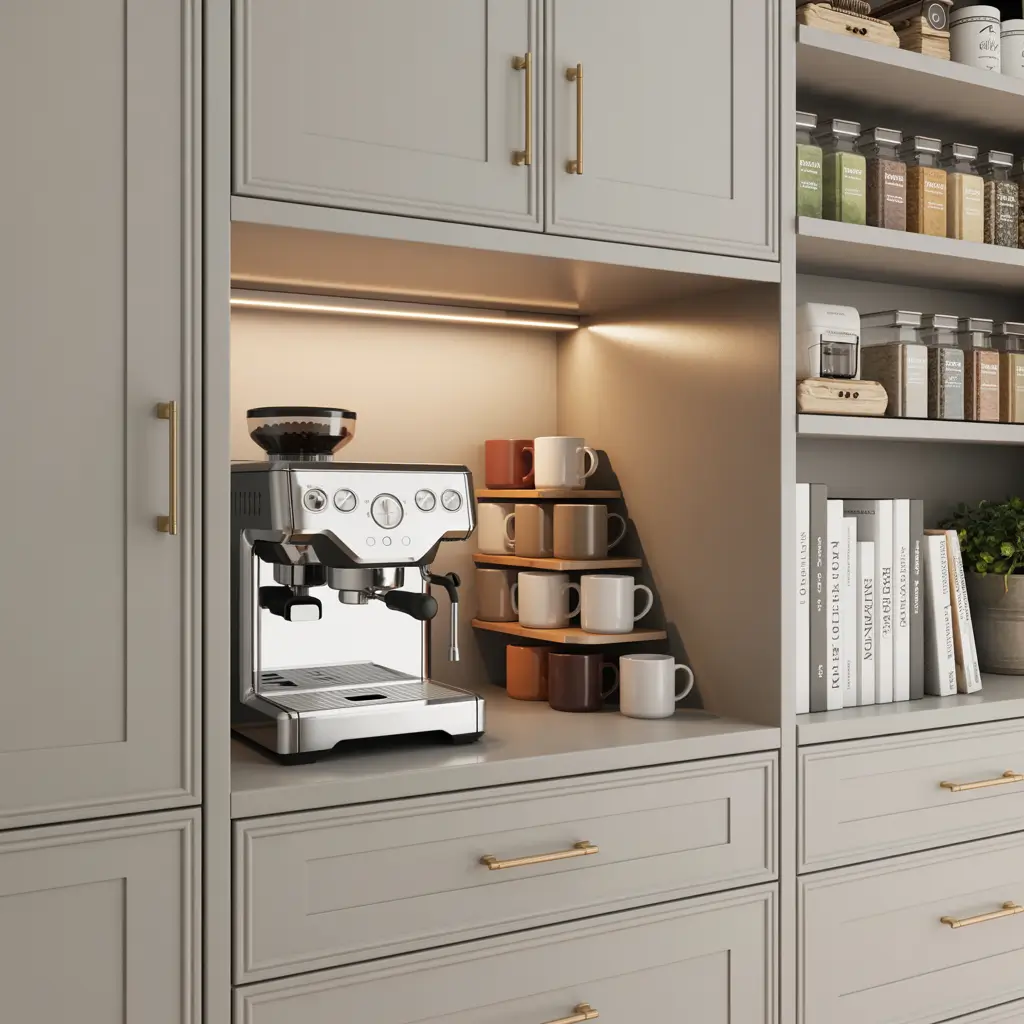
If you’ve got a walk-in pantry (lucky you), why not dedicate a section to coffee? The pantry-integrated coffee corner tucks your entire coffee operation away from the main kitchen, creating a secret little cafe within your storage space.
A friend of mine did this renovation last year, and I’m still jealous. She converted one wall of her pantry into a coffee station with a small countertop, shelving above, and storage below. She can walk into the pantry, make her coffee, and walk out without cluttering the main kitchen at all.
The pantry coffee corner works especially well if you have limited main kitchen counter space or if you want to keep appliances out of sight. It’s also brilliant for households where one person wakes up way earlier than everyone else—you can make coffee without disrupting the main kitchen area.
Pantry coffee corner requirements:
- Electrical outlet (you might need to add one)
- Small countertop or shelf deep enough for your equipment
- Adequate lighting (pantries are often poorly lit)
- Ventilation to prevent heat and moisture buildup
- Storage for beans, filters, mugs, etc.
- Small sink nearby (bonus, not required)
The main consideration is making sure your coffee maker’s steam and heat don’t create problems in an enclosed pantry space. Adequate ventilation is key. Some people install a small exhaust fan or simply leave the pantry door open while brewing.
This setup is perfect for people who love organization and want everything in its designated place. Your coffee supplies live with your other pantry items, creating one central hub for all your kitchen storage.
Contemporary LED-Lit Coffee Bar
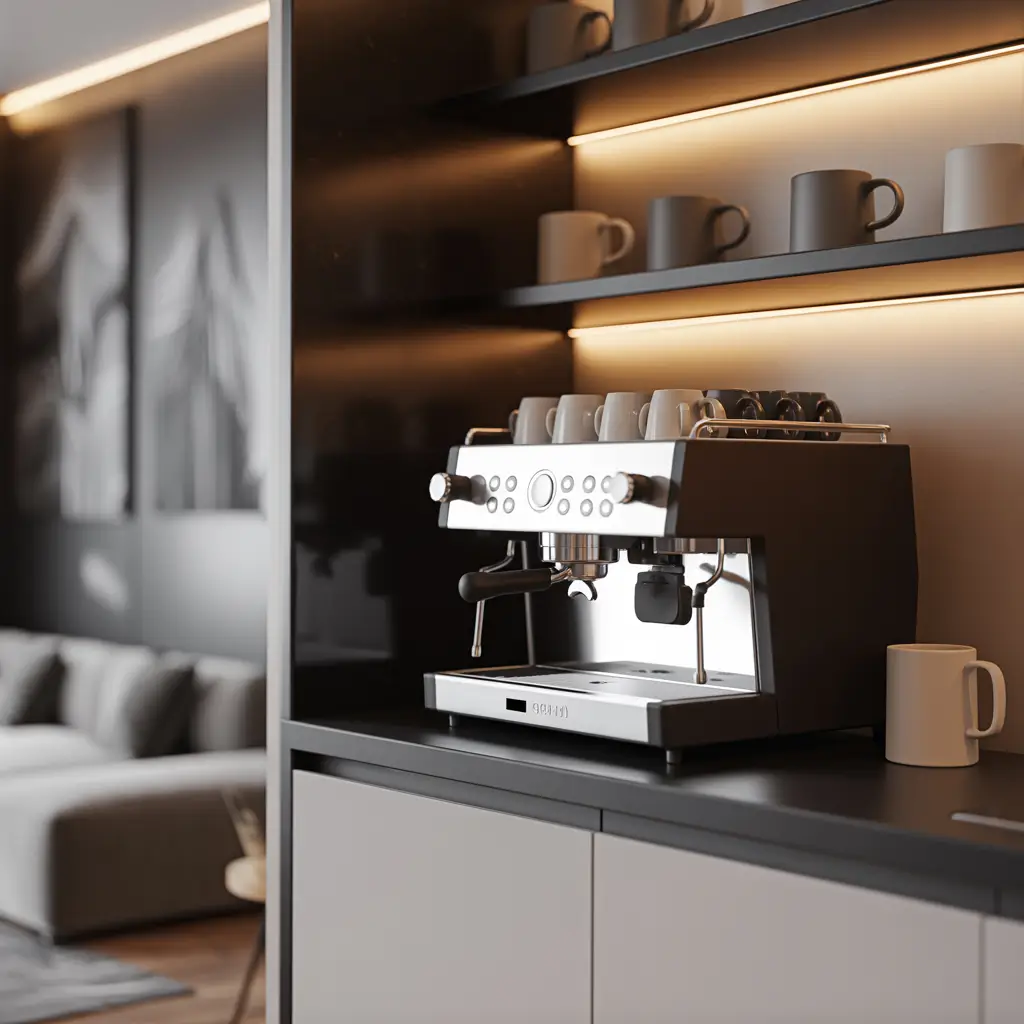
Ready to feel like you’re brewing coffee in a nightclub? The contemporary LED-lit coffee bar uses modern lighting to create drama, highlight your equipment, and honestly just make your coffee corner look incredibly cool.
LED strip lighting has become super affordable and easy to install, and it transforms an ordinary coffee bar into something that looks professionally designed. I added LED strips under my floating shelves last month, and the difference is stunning. The light washes over my espresso machine and creates this gorgeous glow that makes everything look expensive.
You can go subtle with warm white LEDs that just provide practical task lighting, or you can go bold with color-changing LEDs that let you match your coffee bar lighting to your mood. Monday morning blues? Literally blue lights. Friday energy? Maybe some energizing green. (Okay, I might be getting carried away, but the options are there.)
LED lighting options for coffee bars:
- Under-cabinet LED strips for task lighting
- Inside glass cabinets to illuminate displayed items
- Toe-kick lighting at the base for ambient glow
- Backlighting behind open shelves for drama
- Color-changing LEDs for customizable ambiance
- Motion-sensor activation for automatic lighting
The contemporary LED-lit coffee bar pairs beautifully with modern design—sleek cabinets, glossy finishes, and minimalist accessories. The lighting becomes part of the design language, not just a functional add-on.
Installation is surprisingly easy for basic LED strips. Most come with adhesive backing, and you just plug them in or wire them to a switch. For more complex installations with dimmers or color controls, you might want to consult an electrician.
The result? A coffee bar that looks like it belongs in a design magazine, and it makes your morning coffee routine feel like an event.
Multi-Level Tiered Coffee Station
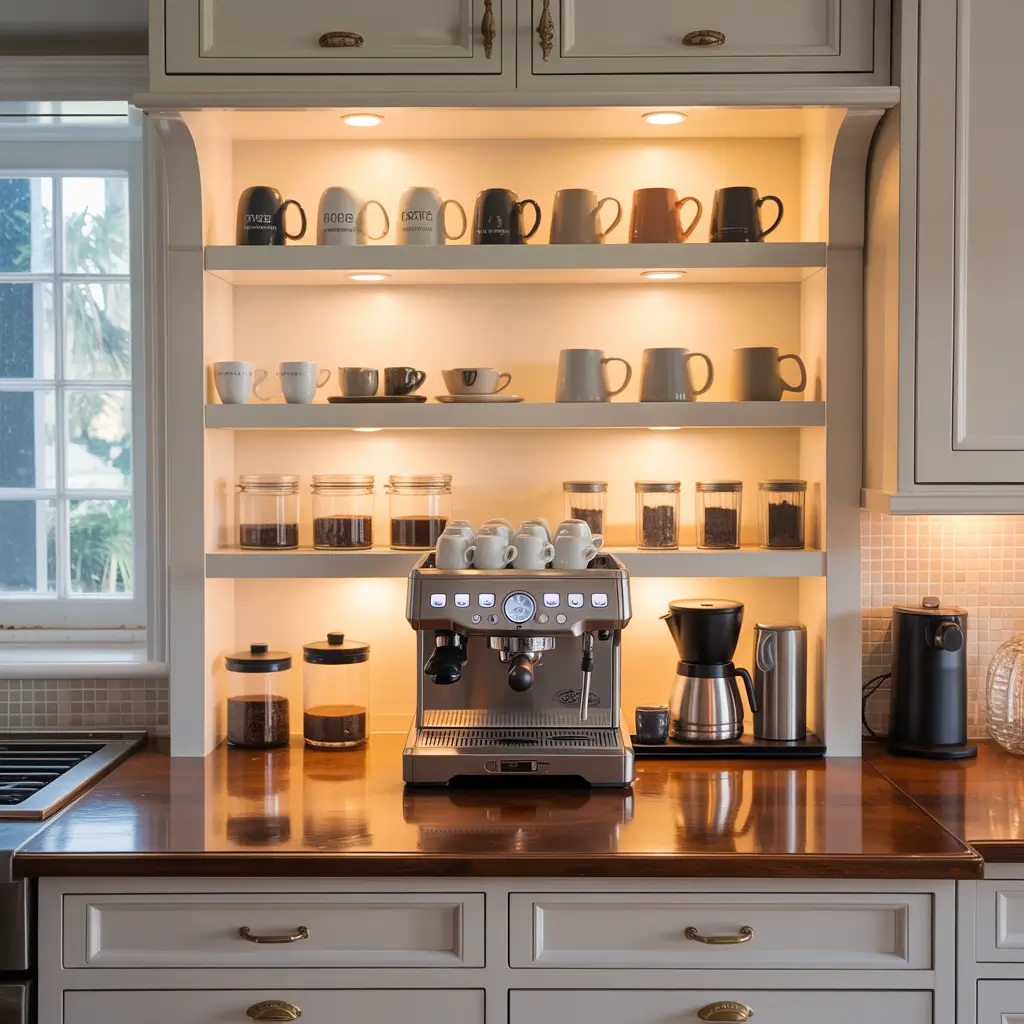
Last but definitely not least, let’s talk about maximizing vertical space with a multi-level tiered coffee station. This setup uses different shelf heights and levels to create visual interest while packing serious functionality into a compact footprint.
Think of it like stadium seating for your coffee supplies—everything gets a front-row view, nothing gets lost in the back, and you can access everything easily. I built a three-tier coffee station in my last apartment using simple brackets and wood planks, and it held my coffee maker, grinder, mugs, beans, and accessories in about 30 inches of wall space.
The tiered approach works because it uses vertical real estate efficiently. Instead of spreading everything horizontally across precious counter space, you stack upward. Each tier has a specific purpose—maybe the bottom level holds your coffee maker, the middle tier stores daily supplies, and the top tier displays decorative mugs.
Creating an effective tiered station:
- Use varying shelf depths (deeper on bottom, shallower on top)
- Space tiers 10-14 inches apart for accessibility
- Ensure the bottom tier is at comfortable working height
- Keep frequently used items on the most accessible tier
- Use the top tier for display or occasional-use items
- Add hooks or hanging storage between tiers
You can create this look with floating shelves, a modular shelf unit, or even a repurposed bookshelf. The key is making sure each level is clearly defined and serves a specific function. Random shelf placement just looks messy, but intentional tiering looks designed and sophisticated.
The multi-level tiered station is perfect for small spaces because it goes up instead of out. It’s also endlessly customizable—add tiers, remove tiers, adjust heights based on what works for your specific needs and equipment.
Wrapping It Up
So there you have it—15 different ways to transform a corner of your kitchen into a coffee bar that actually makes you happy. Whether you’re team minimalist floating shelves or team luxury marble counters, there’s a setup here that’ll work for your space, your budget, and your style.
The best coffee bar is the one that makes your morning routine smoother and maybe even enjoyable (shocking, I know). It doesn’t have to be expensive or complicated. Sometimes a simple corner setup with a few shelves does the job better than an elaborate built-in system.
My advice? Start with what you have. Assess your space, figure out your non-negotiables (is counter space crucial? do you need hidden storage?), and pick a style that speaks to you. You can always start simple and upgrade later. I started with basic floating shelves and eventually upgraded to a more elaborate setup once I knew exactly what I needed.
And hey, if all else fails, just remember that the best coffee bar is the one that actually gets used. No point in creating a gorgeous setup if it’s too precious or complicated to use every day. Function first, style second—though ideally, you get both.